
Zebra Plant Care

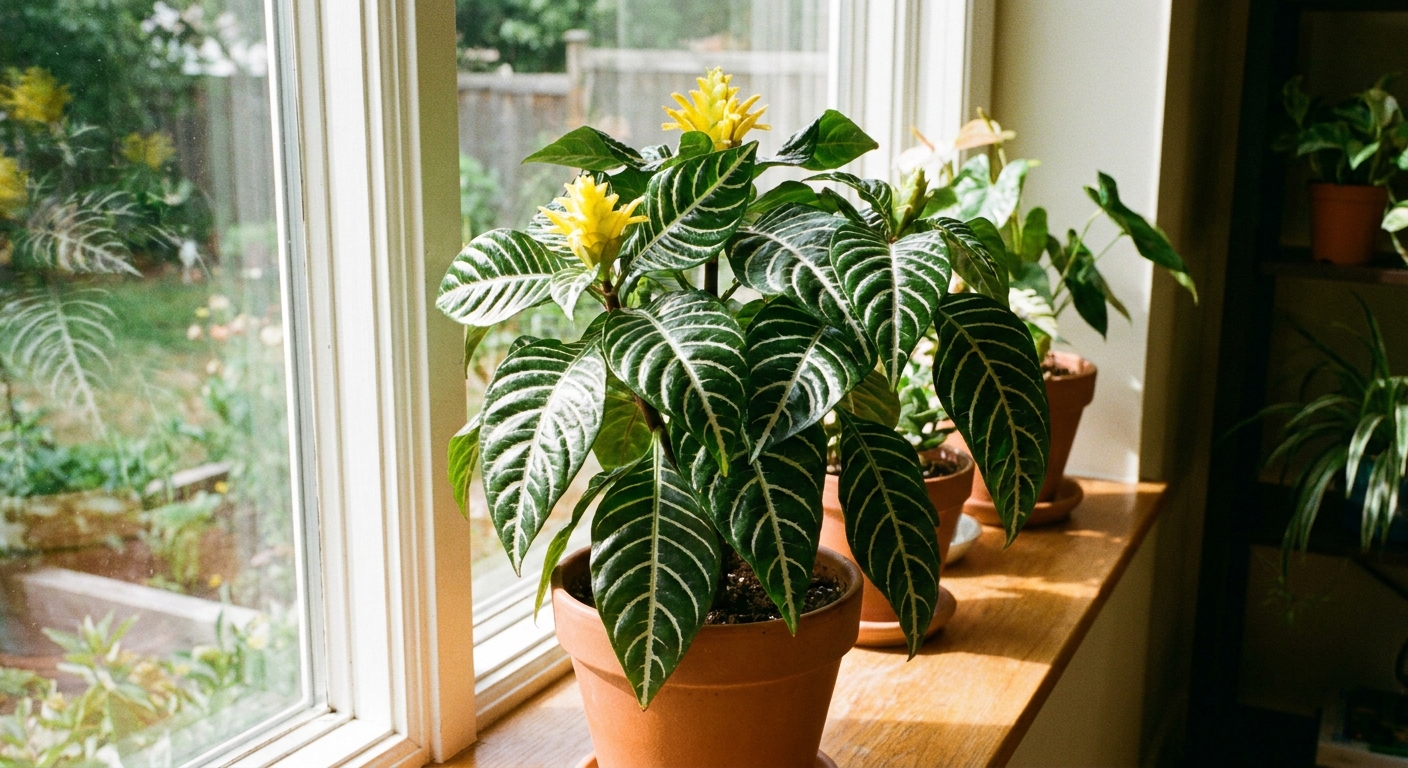
If pothos feels a little too predictable lately, let me introduce you to the zebra plant, Aphelandra squarrosa. It has glossy, deep-green leaves with crisp white “zebra” veins that look painted on, plus bright yellow flower bracts when it is happy. Its care is not hard, but it does require specific conditions. Think warm, steady air, bright indirect light, and humidity that makes it feel like it never really left the tropics.
Good news for many homes: zebra plant is often listed as non-toxic to cats and dogs (for example, many gardeners reference the ASPCA’s non-toxic listings). Still, “non-toxic” does not mean “a snack.” If a pet chews it, mild stomach upset is possible, so it is smart to discourage nibbling and call your veterinarian if you notice vomiting, drooling, or unusual behavior.

Quick care snapshot
- Light: Bright, indirect light. Gentle morning sun is usually fine.
- Water: Keep evenly moist, not soggy. Water when the top 1 to 2 inches feel dry and do not let it fully dry out.
- Humidity: Higher is better. Aim for 60%+ for best results, with 50% as a realistic minimum in many homes.
- Temperature: Warm and stable, ideally 65 to 80°F (18 to 27°C). Avoid drafts.
- Soil: Airy, moisture-retentive mix with excellent drainage.
- Growth habit: Shrubby houseplant that can get leggy without good light.
- Blooms: Yellow bracts can last weeks, true flowers are shorter-lived.
Light: bright and consistent
Zebra plants crave light, but not the kind that scorches. In the wild, they live under filtered canopy light. Indoors, that translates to bright indirect light for most of the day.
- Best spots: A few feet back from an east or south window, or behind a sheer curtain in a bright south window. Another easy test: place it where you can read comfortably during the day without squinting.
- Can it take sun? Gentle morning sun can be helpful. Hot afternoon sun can bleach leaves or brown edges.
- If it is too dim: Leaves get smaller, stems stretch, and blooming becomes unlikely.
If you only have medium light, a small grow light placed above the plant can make a surprising difference. Your zebra plant wants “clear day” brightness, not “cozy lamp” vibes.
Watering: steady, not soggy
The biggest beginner mistake is swinging between bone-dry and swampy. Zebra plants prefer even moisture, but they still need oxygen around their roots. Here is the simple rhythm I use:
When to water
- Check the soil with your finger.
- Water when the top 1 to 2 inches feel dry, but the soil beneath is still slightly damp.
- In winter, the plant often drinks slower, so the interval stretches.
How to water
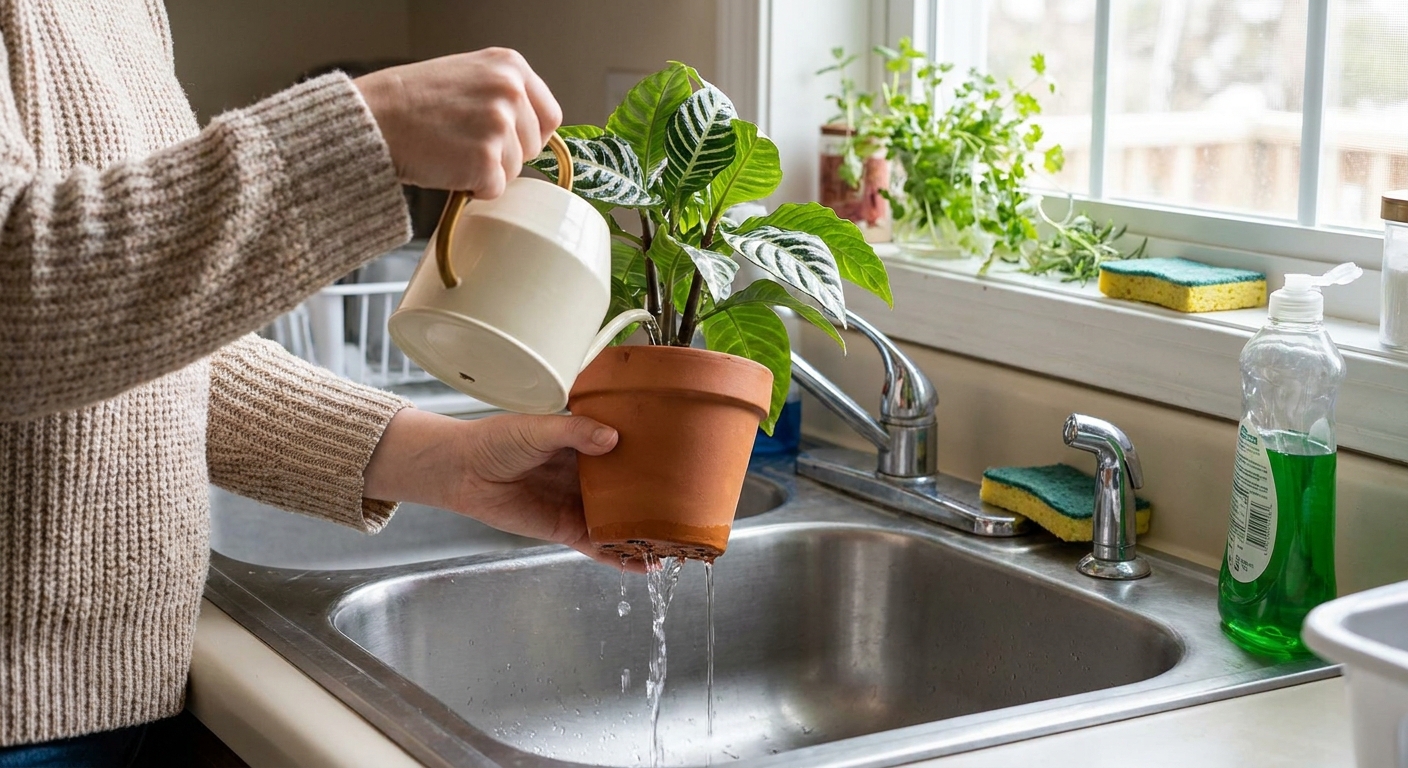
- Water thoroughly until it runs from the drainage holes.
- Empty the saucer after 10 to 15 minutes.
- Do not let the pot sit in standing water.
How root rot happens (and how to avoid it)
Root rot is usually a combo of too much water + not enough air . If your mix is dense or your pot lacks drainage, the roots suffocate. Keep the soil airy, use a pot with drainage, and do not water again just because the calendar says so.
Water quality: a quiet factor
If your zebra plant is doing “mostly fine” but you keep seeing leaf spots or tip burn, water quality can be the sneaky culprit. Some plants are sensitive to hard water or fluoride. If you suspect that is happening, try filtered water, rainwater, or tap water that has sat out overnight, and see if new growth looks cleaner.
Humidity: the glow-up
If your zebra plant is dropping leaves or crisping at the edges while everything else seems correct, humidity is usually the missing piece. Many homes sit at 30 to 40% humidity, especially with heating or air conditioning. Zebra plants are happiest closer to 60%+, with 50% as a practical baseline.
Easy humidity upgrades
- Humidifier: The most reliable option, especially in winter.
- Plant clustering: Group plants together to create a slightly more humid micro-zone.
- Pebble tray: Helps a little if done correctly, but it is not magic. Keep the pot above the water line.
- Bathroom placement: If you have bright light in a bathroom, zebra plants often love it.
I do not rely on misting. It evaporates quickly and can encourage leaf spotting if air is stagnant. If you mist, do it lightly and make sure there is airflow.
Temperature and placement
Zebra plants do best when their environment is steady. That means avoiding heater blasts, cold windows at night, and frequent temperature swings.
- Ideal range: 65 to 80°F (18 to 27°C)
- Avoid: Cold drafts, AC vents, radiators, and doors that open frequently in winter
If you notice sudden leaf drop after moving the plant, it may be reacting to a new pattern of temperature, light, or humidity. This is common with zebra plants. Give it a couple of weeks to settle, then adjust care.
Soil and potting
Zebra plant roots like moisture, but they also need air. Aim for a mix that holds some water while draining fast.
A beginner-friendly potting mix
- 2 parts high-quality indoor potting mix
- 1 part perlite or pumice
- 1 part fine orchid bark or coco chips
Choose a pot with drainage holes. I also like keeping zebra plants slightly snug in their pots. Oversized pots stay wet too long, which is a fast track to root issues.
When to repot
- Roots circling the bottom or poking out of drainage holes
- Soil drying out extremely fast due to root density
- Plant becoming top-heavy and unstable
Repot in spring if possible, and only go up one pot size.
Feeding: gentle and seasonal
Zebra plants are not heavy feeders, but they appreciate a little support during active growth.
- Spring through early fall: Fertilize every 4 weeks with a balanced liquid fertilizer at half strength.
- Late fall and winter: Pause or reduce significantly, depending on growth and light.
If you are using a grow light and the plant is actively growing in winter, you can keep feeding lightly, but watch for salt buildup. A monthly flush with plain water helps.
Flowering: what blooms mean
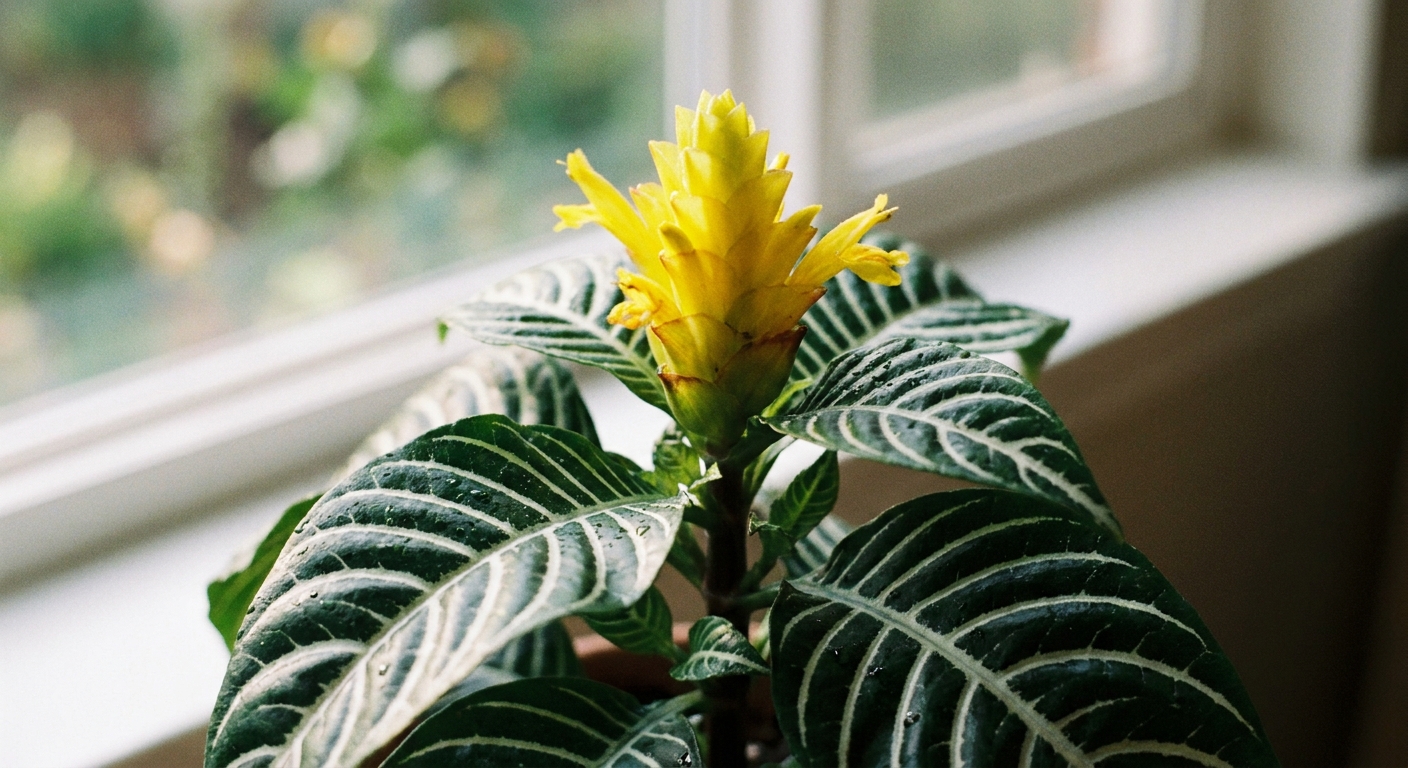
Zebra plants bloom from a yellow, cone-like bract. The tiny true flowers emerge from that bract and fade faster, while the bract can look good for weeks.
How to encourage blooms
- Increase light: Bright indirect light is the number one factor.
- Keep humidity up: Consistent humidity supports bud development.
- Feed lightly: During spring and summer growth.
- Avoid stress: Drafts, underwatering, and big swings can make buds abort.
After flowering
Once the bract starts to fade, trim the flower stalk back. Some zebra plants get dramatic after blooming if conditions slip. Keep light, warmth, and humidity steady, and let it rest and rebuild. In many homes, zebra plants bloom once a year or less, and that is not a failure, it is just indoor life.
Pruning for fullness
Zebra plants can get leggy, especially if light is a little low. A gentle prune helps them branch and look lush again.
- Pinch tips: Pinch back the newest growth to encourage branching.
- Trim long stems: Cut just above a leaf node.
- Best time: Spring and summer when the plant is actively growing.
Save healthy cuttings for propagation. I love a plant that turns a haircut into more plants.
Pests: spider mites
Zebra plants can attract common houseplant pests, but spider mites are the one I watch for most, especially in dry air.
Signs to look for
- Fine webbing in leaf joints or under leaves
- Speckled, dusty-looking leaves
- Leaf yellowing and drop that feels “mysterious”
What to do
- Isolate the plant if possible.
- Rinse leaves thoroughly, especially the undersides.
- Wipe leaves with a soft cloth and mild soapy water.
- Repeat every 5 to 7 days for a few cycles.
If the infestation is persistent, an insecticidal soap or horticultural oil can help. Always test on one leaf first, and avoid applying in direct sun.
Propagation: stem cuttings
Zebra plant propagation is most successful in spring and summer. It is doable, but it can be slower and a bit more finicky than pothos. Warmth and high humidity make a noticeable difference, and rot is the main risk if the medium stays too wet.
How to propagate in soil
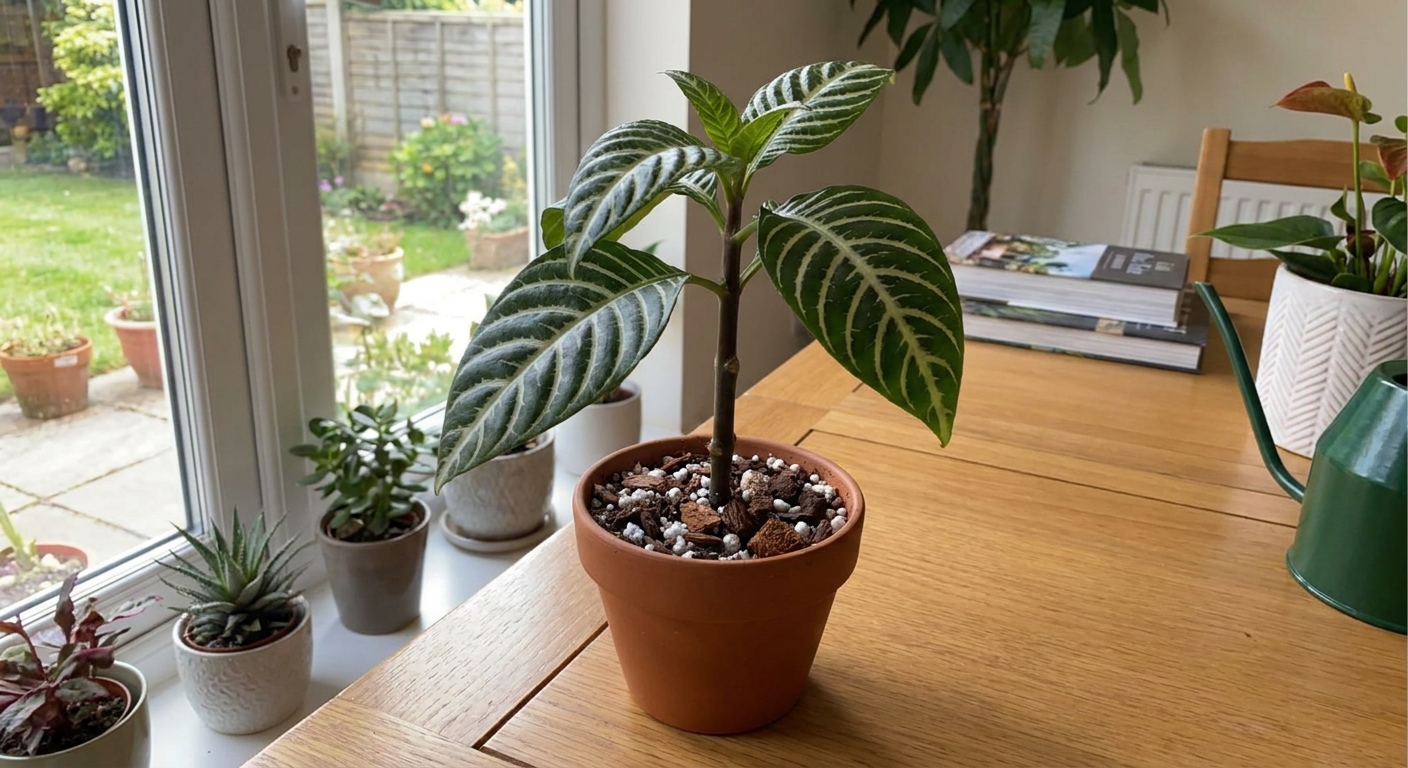
- Take a 3 to 5 inch cutting with at least 2 sets of leaves.
- Remove the lowest leaves to expose a node.
- Dip the end in rooting hormone (optional, but helpful).
- Plant in a small pot with a lightly moist, airy mix.
- Cover loosely with a clear bag to hold humidity, and vent daily.
- Keep warm in bright indirect light. Bottom heat can help if your home runs cool.
Roots typically form in a few weeks. Tug gently. If you feel resistance, you have roots.
Troubleshooting
Leaves dropping
- Most likely: A change in environment (moving it), cold drafts, low humidity, or inconsistent watering. Zebra plants can drop older leaves when they are stressed.
- Fix: Stabilize temperature, raise humidity, and follow the top-1-to-2-inch dry rule. Avoid moving it repeatedly while it recovers.
Brown, crispy edges
- Most likely: Low humidity, too much direct sun, or mineral-heavy water.
- Fix: Add a humidifier, pull the plant back from harsh rays, and try filtered or aged water if the issue keeps repeating.
Yellow leaves
- Most likely: Overwatering, dense soil, or poor drainage.
- Fix: Let the soil dry slightly, check roots, and repot into an airier mix if needed.
Leggy growth
- Most likely: Not enough light.
- Fix: Move to brighter indirect light, then prune to encourage branching.
No blooms
- Most likely: Light is not bright enough, humidity is too low, or the plant is still maturing.
- Fix: Increase light, keep humidity steady, and feed lightly in the growing season.
A simple weekly routine
If zebra plant care feels like a lot, here is my calm, repeatable routine.
- Once a week: Check soil moisture with your finger and water only if the top 1 to 2 inches are dry. Do not let it go bone-dry.
- Twice a month: Wipe dust off the leaves. Those dramatic stripes look even better clean, and the plant photosynthesizes more efficiently.
- Monthly (spring to early fall): Fertilize at half strength.
- Anytime: Quick pest check under leaves, especially if your air is dry.
Zebra plants reward steadiness. Give them warmth, humidity, and bright filtered light, and they will stop acting fussy and start acting like the tropical housemate they really are.
Pets and safety
Zebra plant is often sold and shared as a pet-friendly choice because it is widely listed as non-toxic. Still, any plant can cause stomach upset if chewed, and individual pets can react differently. When in doubt, keep plants out of reach, and if you suspect ingestion with symptoms, contact your veterinarian or an animal poison control resource.