Yucca Plant Care Indoors

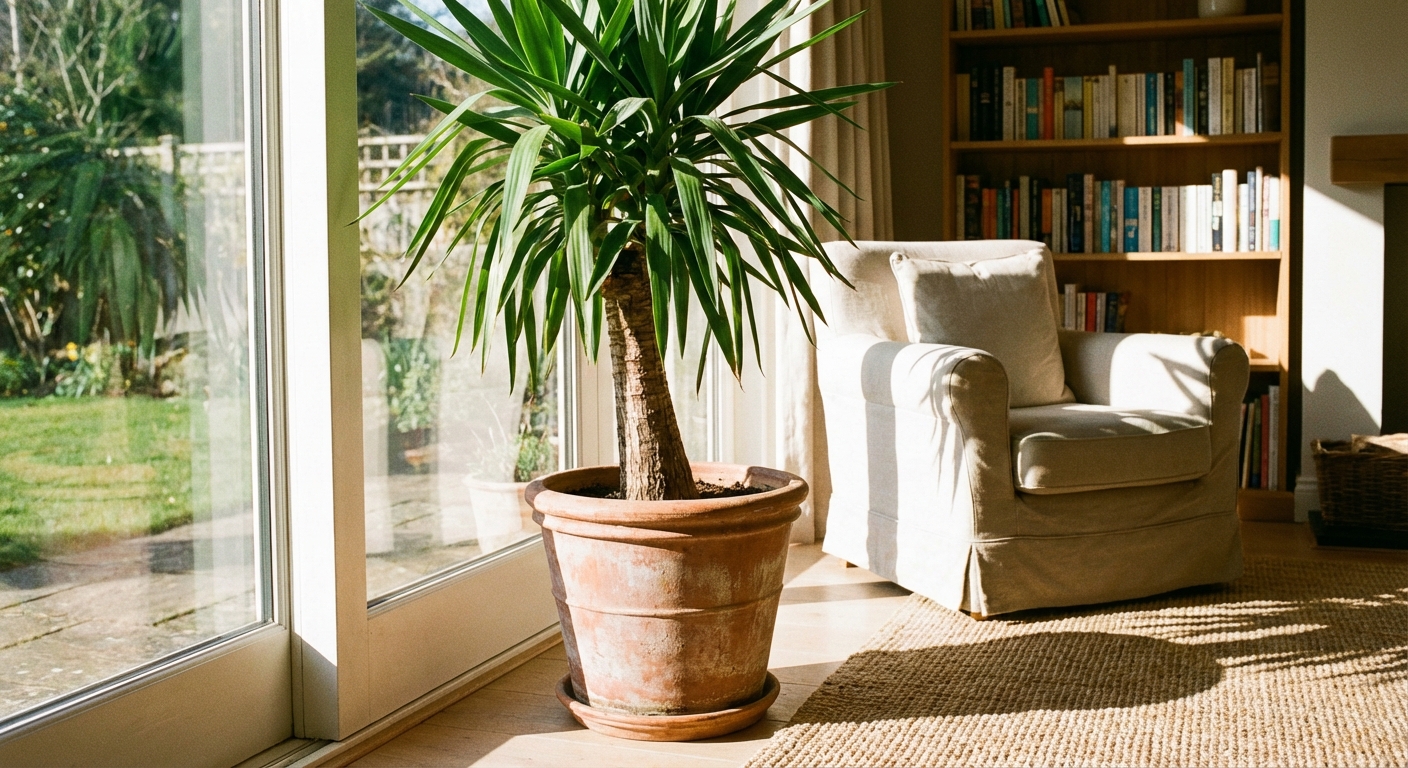
Yucca elephantipes (also commonly sold as Yucca gigantea), often called spineless yucca, is one of those houseplants that looks bold and architectural but behaves like a low-drama roommate. Give it strong light, let its soil dry well between waterings, and it will happily hold down a sunny corner for years.
I love yucca for beginners because it forgives missed waterings far more readily than it forgives soggy roots. If you remember just one thing: bright light, dry soil, and a pot with drainage.
Quick care snapshot
- Light: Bright light, including some direct sun once acclimated
- Water: Infrequent. Water only when the pot is mostly dry
- Soil: Fast-draining cactus or succulent style mix
- Humidity: Normal home humidity is fine
- Temperature: Comfortable indoor temps, avoid cold drafts
- Growth: Slow to moderate indoors, can get tall over time
- Toxicity: Toxic if chewed (saponins). Typically causes GI upset like drooling, vomiting, and diarrhea in pets
Light: the make or break factor
Yucca is a sun-lover pretending to be a houseplant. Indoors it does best in the brightest spot you have.
Best placement
- Ideal: Right next to a south or west window.
- Good: East window if it gets solid morning sun.
- Possible but slower: Bright indirect light a few feet back from a sunny window.
If your yucca is leaning or reaching, it is asking for more light. Rotate the pot a quarter turn weekly so it grows straighter.
Can it handle direct sun?
Yes, and it usually prefers it. If your plant has been living in lower light, step it up gradually over 1 to 2 weeks so leaves do not scorch.
One caveat: behind glass, summer midday sun in a south or west window can be intense. If you see pale, crispy patches, back it off a foot or two or add a sheer curtain while it adjusts. A little bronzing during the transition can be normal.
Watering: less often than you think
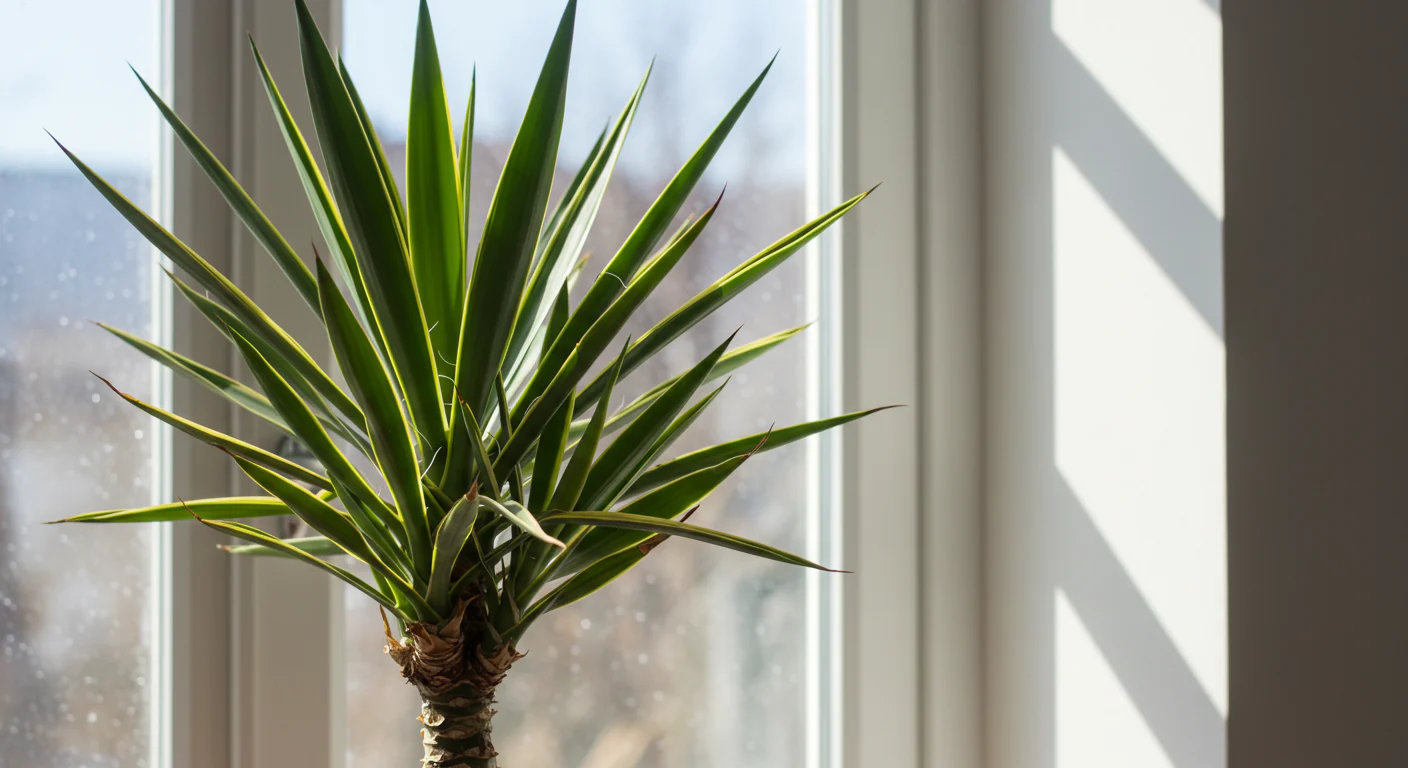
Yucca stores water in its trunk and roots. Indoors, the most common cause of decline is frequent watering in a pot that stays damp.
When to water
Use the soil, not the calendar. Water only when the soil is dry at least two thirds of the way down, and in many homes that means letting the pot dry almost completely.
- Spring and summer: Often every 2 to 4 weeks, but a small pot in strong light can need water sooner.
- Fall and winter: Often every 4 to 6+ weeks.
The simple finger-and-skewer method
- Stick a finger into the top 2 inches. If it is dry, keep checking deeper.
- Use a wooden skewer or chopstick to probe near the center. If it comes out mostly dry and clean, you can water.
How to water correctly
- Water slowly until it runs out of the drainage holes.
- Let it drain fully, then empty any saucer or cachepot.
- Do not give "little sips" frequently. That keeps the lower soil wet and invites rot.
If you are torn between watering now or waiting a few more days, wait. Yucca prefers a dry pause. Just do not leave it bone-dry for months in blasting sun.
Soil and pot: drainage is your insurance policy
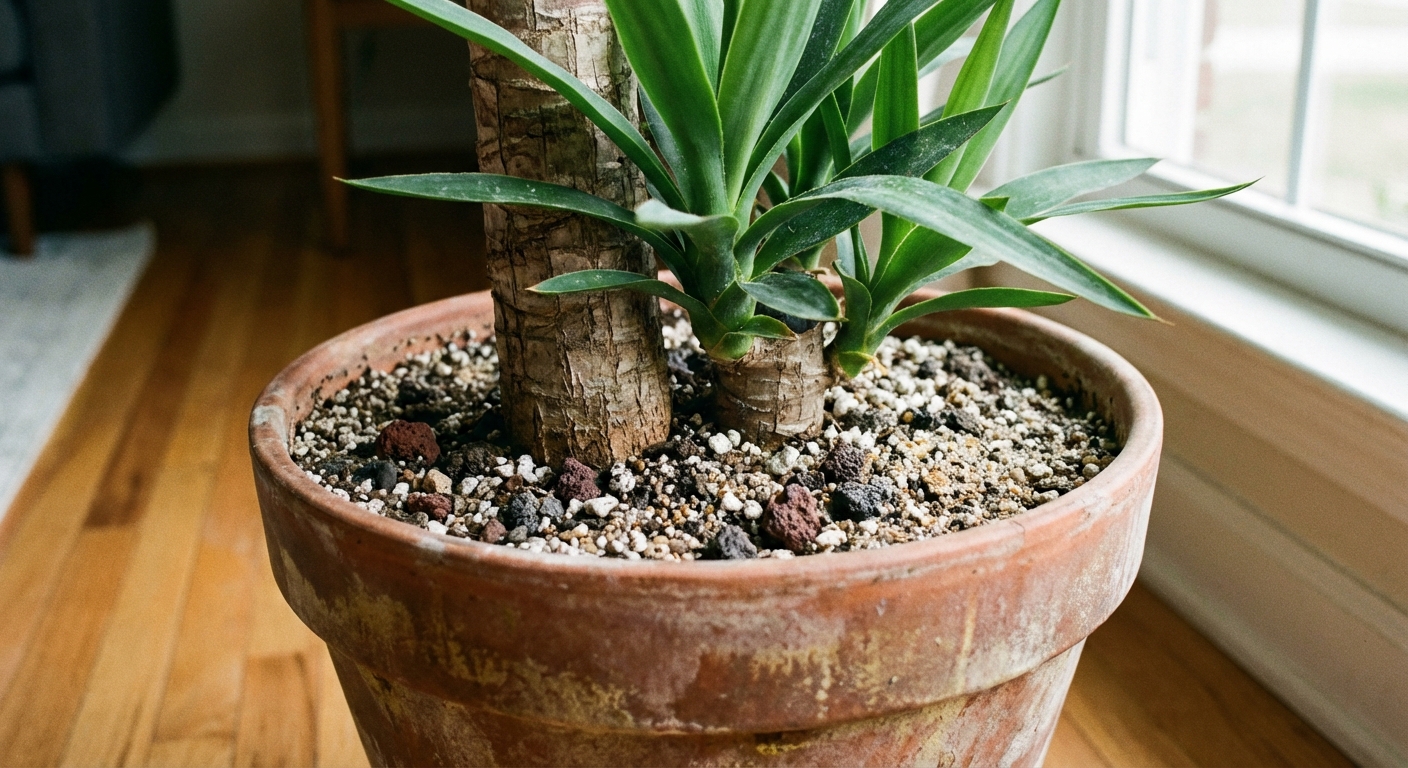
Think desert-y. You want a mix that dries quickly and does not collapse into a dense, airless brick.
Best soil mix
- Easy option: Cactus and succulent mix straight from the bag.
- Even better: Cactus mix plus extra perlite or pumice (about 20 to 30% added) for faster drainage.
Pick the right pot
- Must have: A drainage hole.
- Material: Terracotta is great because it breathes and helps soil dry faster. Plastic works too if you are careful with watering.
- Size: Do not oversize. A pot that is too large stays wet too long.
Temperature and humidity
Yucca is comfortable in typical indoor conditions.
- Temperature: Aim for 60 to 80 F. Brief dips cooler are usually fine, but avoid cold drafts and frosty windows.
- Humidity: Average household humidity is perfect. High humidity plus wet soil is where trouble starts.
Feeding: a light touch
Yucca does not need much fertilizer indoors. Too much can cause weak, stretched growth and crusty salt buildup.
- When: Spring through early fall.
- How often: Every 4 to 8 weeks.
- What: A balanced houseplant fertilizer at half strength, or a cactus fertilizer.
Skip fertilizing in winter when growth naturally slows.
Pruning and managing size
Yucca can get tall indoors, especially in bright rooms. The good news is that it responds well to pruning, and you can control height without hurting the plant.
Quick safety note: Yucca leaves can be sharp. Wear gloves, protect your eyes, and give yourself space when moving or cutting a plant.
How to prune a tall yucca cane
You can cut the trunk (cane) to reduce height. It feels dramatic, but yucca typically resprouts below the cut.
- Choose timing: Late spring to summer is best.
- Use clean tools: A sharp pruning saw or sturdy loppers, wiped with alcohol.
- Pick a cut point: Cut the cane to the height you want. Many people cut 6 to 12 inches above the soil line, but you can cut higher if you want branching above that point.
- Let it recover: Place it back in bright light and water sparingly until you see new growth.
The cut top can sometimes be rooted as a cutting. Success varies indoors, but the odds improve if you let the cut end callus and keep the medium airy.
- Let the cut end dry and callus for several hours to overnight.
- Root in a gritty mix (cactus mix with extra perlite) and keep it barely moist, not wet.
Even if you do not root it, the base plant usually rebounds with new shoots.
Removing old leaves
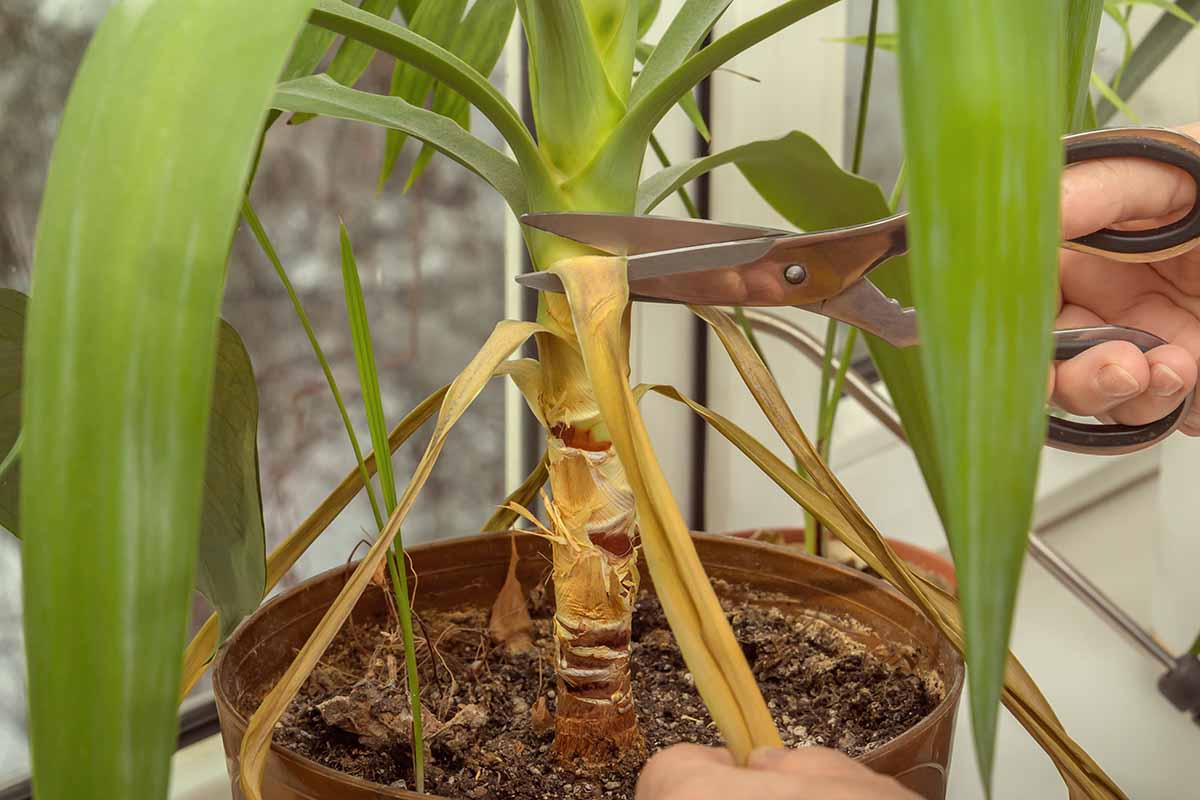
Lower leaves naturally yellow and dry as the plant grows. You can pull or snip them off once they are mostly brown. If they resist, do not force them. Wait another week.
Repotting
Yucca likes being slightly snug in its pot. Repot only when it is truly root-bound or top-heavy.
- How often: Typically every 2 to 4 years.
- Best time: Spring.
- Pot step-up: One size larger, about 1 to 2 inches wider.
If the plant is very tall, consider a heavier pot (terracotta or ceramic) for stability, and use a gritty mix so it still drains fast.
Common problems and how to fix them
Brown tips
Brown tips on yucca are common and usually cosmetic. The key is figuring out whether it is dry stress, salt buildup, or inconsistent watering.
- Most common cause: Underwatering followed by heavy watering, or simply very dry indoor air plus strong sun.
- Other cause: Mineral salts from fertilizer or hard tap water.
What to do:
- Check your watering rhythm. Let it dry, yes, but do not leave it bone-dry for months in bright sun.
- Flush the pot every couple of months: water deeply until lots drains out to wash away salts.
- If your water is very hard, try filtered water occasionally.
- Trim brown tips with clean scissors, following the natural leaf shape.
Drooping or soft leaves
Yucca leaves should be firm and upright. Droop can mean either not enough light or root trouble from too much water.
What to check first:
- Light: Is it farther than a few feet from a bright window? Move it closer and rotate it weekly.
- Soil moisture: If the soil feels damp days after watering, the mix is staying wet too long.
What to do: Increase light, extend the time between waterings, and consider repotting into a faster-draining mix if the current soil stays soggy.
Yellowing leaves
A few older lower leaves yellowing is normal as the plant grows. Widespread yellowing, especially higher up, points to overwatering or low light.
- Give it brighter light.
- Let the soil dry more between waterings.
- Make sure water is not pooling in a decorative outer pot.
Root rot
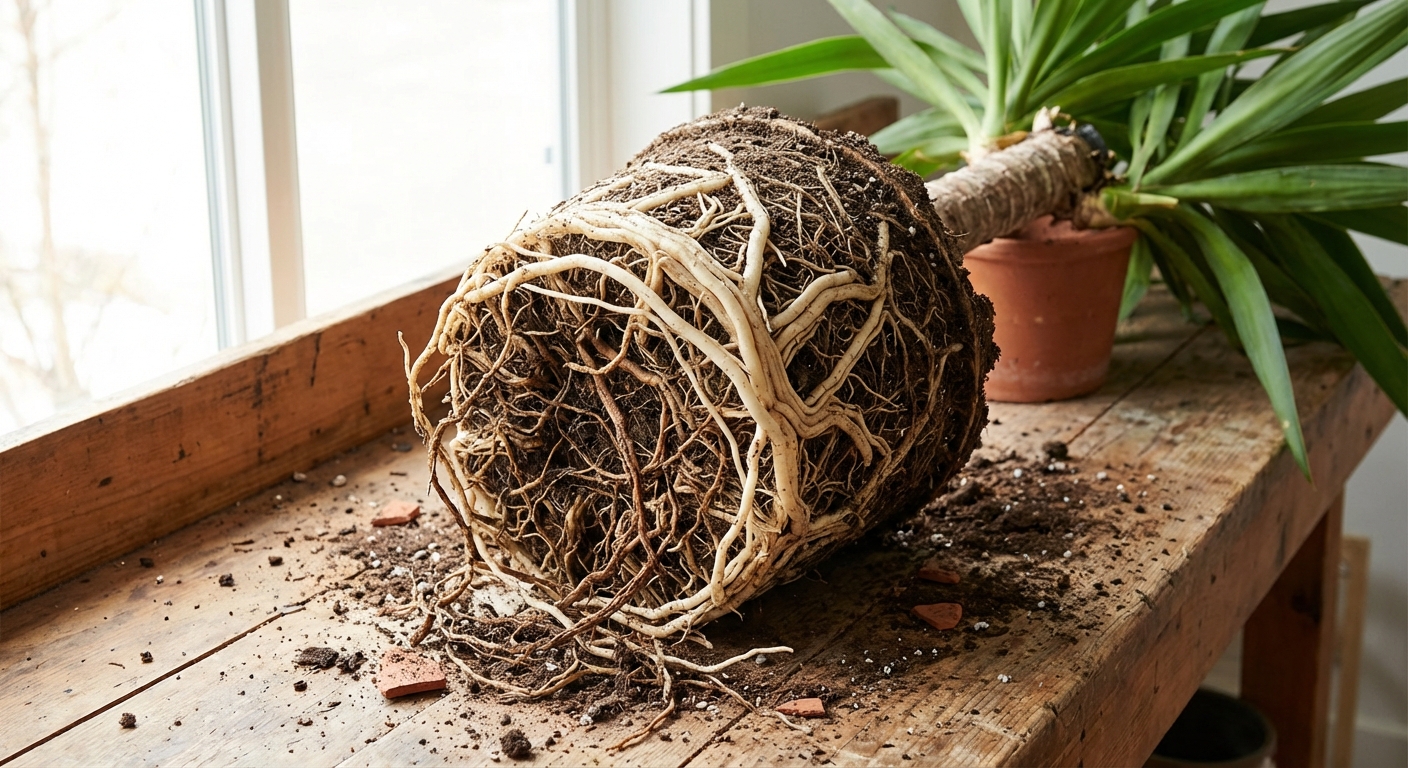
Root rot is the big one for indoor yucca. Signs include a sour smell, persistently wet soil, a softening trunk near the base, and drooping leaves that do not perk back up.
What to do right away:
- Unpot the plant and inspect the roots.
- Trim away any black, mushy roots with sterilized scissors.
- Let cut areas dry and callus. A couple of hours can be enough, but overnight is often safer if a lot was trimmed.
- Repot into dry, fresh, gritty mix in a pot with drainage.
- Hold off on watering for about a week, then water lightly.
If the cane is mushy through the center, the plant may not be salvageable. If only part of the cane is soft, you can sometimes cut above the damaged area and attempt to root the healthy top.
Pests: usually minimal
Yucca is not a pest magnet, but stressed plants can attract a few common houseplant troublemakers.
- Spider mites: Fine webbing and speckled leaves, often in dry winter air.
- Mealybugs: White cottony clusters in leaf joints.
- Scale: Small brown bumps on stems and leaves.
What to do: Isolate the plant, wipe leaves with a damp cloth, and treat with insecticidal soap or horticultural oil, repeating every 7 to 10 days for a few rounds. Most infestations improve quickly once the plant is back in bright light and on a sane watering schedule.
Yucca care FAQ
How fast does Yucca elephantipes grow indoors?
Slow to moderate. In bright light it may push noticeable growth in spring and summer. In low light it often just holds steady.
Should I mist my yucca?
No need. Misting does not meaningfully raise humidity, and wet leaf bases can invite issues. A simple occasional leaf wipe is better.
Why is my yucca leaning?
Almost always uneven light. Move it closer to the window and rotate it weekly. A stake can help temporarily, but better light is the real fix.
Can I put my yucca outside in summer?
Yes, if nights are consistently warm. Acclimate it gradually to sun over 1 to 2 weeks, starting in bright shade, or leaves can scorch. Bring it back inside before nights drop below about 50 F (10 C), and check for hitchhiking pests before it returns to your windowsill.
Do variegated yuccas need different care?
Same basics, but they often need brighter light to keep their striping crisp. In low light, variegation can fade and growth can stretch.
A calm routine that works
If you want a simple rhythm that keeps yucca happy, try this:
- Weekly: Glance at the soil and rotate the pot a quarter turn.
- Every 2 to 6 weeks: Water deeply only when mostly dry.
- Monthly in growing season: Light fertilizing (optional).
- Seasonally: Wipe dust off leaves so it can photosynthesize like a champ.
And if you slip up, do not panic. Yucca is resilient. It wants you to succeed, even if you are still earning your plant-parent confidence one dry inch of soil at a time.