
Yellow Mushrooms in Houseplant Soil: Harmless or a Warning Sign?

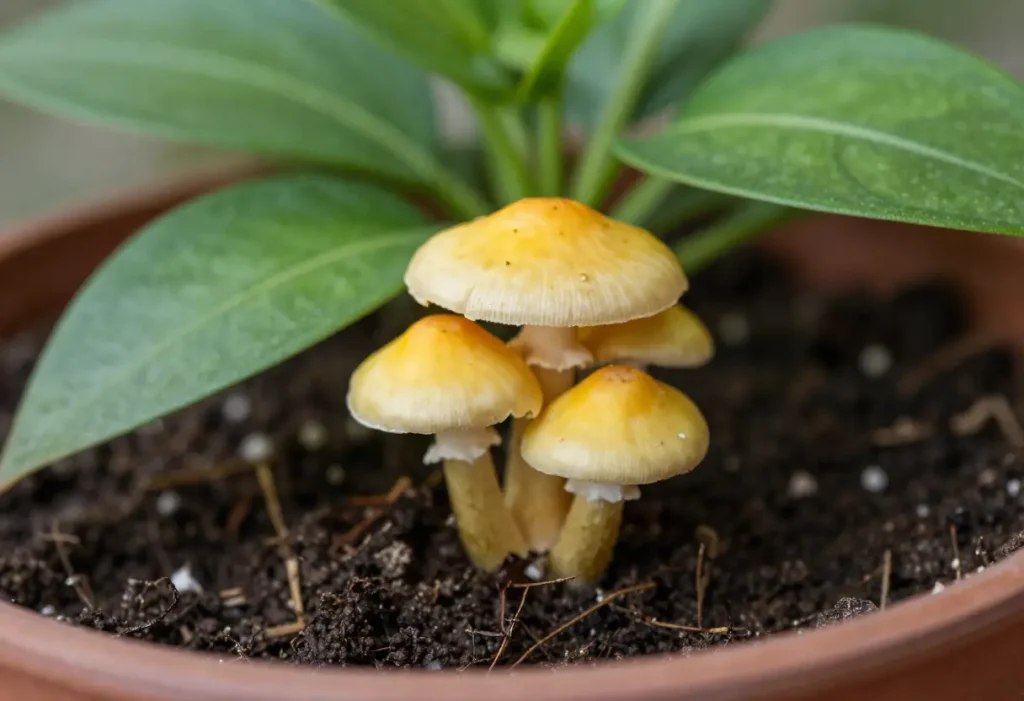
If you have ever glanced down at your favorite pothos and found a few sunny yellow mushrooms peeking up like tiny umbrellas, take a breath. Indoor mushrooms are a very common houseplant surprise. Most of the time, they are not hurting your plant at all. They are simply telling you a story about your potting mix: it is staying on the damp side, it has plenty of organic material, and the fungal network in the soil is doing what fungi do best, breaking things down.
This article is focused specifically on yellow mushrooms in houseplant pots, not the mushrooms that pop up in lawns after rain. Lawn mushrooms are tied to turf, outdoor soil ecology, and weather patterns. Pot mushrooms are tied to indoor watering habits, drainage, potting mix, light, and airflow, which means you can troubleshoot them with a few practical tweaks.

What are the yellow mushrooms in potting soil?
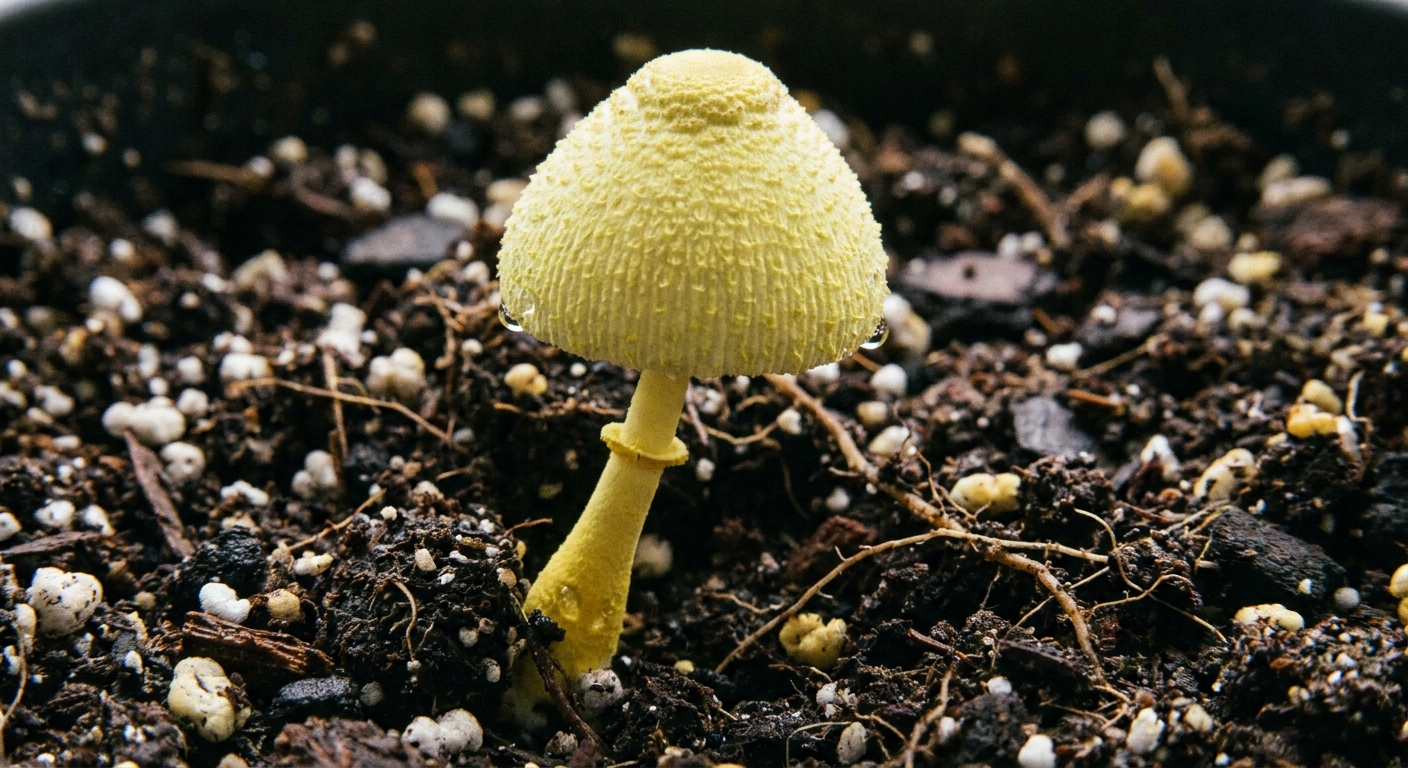
The most common bright yellow mushroom found in houseplant containers is Leucocoprinus birnbaumii, often called the yellow houseplant mushroom or flowerpot parasol. It is cheerful-looking, lemon-yellow, and it loves warm, humid, organic potting mixes.
That said, identification from looks alone is not guaranteed. A few other closely related Leucocoprinus species can look similar in a pot, and lighting can change how “yellow” something appears. If you need certainty (especially after ingestion), treat any ID from a photo as best-guess and ask a local expert.
You might see:
- Small yellow caps that open like little parasols
- Slender yellow stems
- Spore dust that may appear as a fine yellow powder on the cap, rim, or soil surface
- Yellow or whitish threadlike fuzz in the soil or at the base (mycelium)
If it is bright yellow and looks like a tiny umbrella, Leucocoprinus birnbaumii is the usual suspect. Just keep that tiny “similar species exist” asterisk in the back of your mind.
Harmless or a warning sign?
Harmless to the plant, usually
In most cases, these mushrooms are not parasitizing your houseplant. They are saprophytic, meaning they feed on decaying organic matter in the potting mix like wood particles, compost, bark, and peat or coco coir. In that sense, they are more like a cleanup crew than a plant attacker.
A helpful clue about conditions
While the fungus itself is not typically dangerous to your plant, mushrooms are a pretty clear sign that your potting soil is staying consistently moist (at least long enough to fruit). That matters because many common houseplants prefer a dry-down cycle. Soil that stays damp for too long can invite:
- Root rot from waterlogged conditions
- Fungus gnats that breed in moist organic media
- Slower growth from reduced oxygen around roots
So I treat mushrooms like a friendly nudge: the soil biology is active, but your watering, light, or drainage might need a tune-up.
Why they appear in indoor pots
Yellow mushrooms pop up when three things line up: spores are present, the potting mix has food, and conditions stay moist enough for fruiting.
Common triggers
- Overwatering or frequent “sips”: A little water every day can keep the top layer constantly damp.
- Poor drainage: No drain hole, a clogged hole, or a saucer that stays full.
- Potting mix that holds water too long: Heavy mixes with lots of peat and fine particles can stay wet.
- Low light: Plants use less water in low light, so soil dries slowly.
- Warmth and humidity: Especially near kitchens, bathrooms, or humidifiers.
- Organic-rich ingredients: Compost, worm castings, bark fines, or decomposing wood bits can feed fungi.
One more note: mushroom spores can ride in on nursery plants, bags of potting mix, or even air currents. Their appearance does not mean your home is “dirty.” It means you have a tiny ecosystem in a pot.
Should you remove the mushroom caps?
Yes, I usually do, but mostly for practical reasons rather than plant health.
Reasons to remove them
- To reduce spores: Fewer spores drifting around can mean fewer surprise mushrooms later.
- For pet and child safety: Better to remove temptation.
- For aesthetics: Not everyone wants a mini mushroom garden indoors.
How to remove them cleanly
- Pinch the stem at the base and gently twist upward.
- Try to remove the whole stem, but do not dig aggressively and damage roots.
- Place mushrooms in a bag and toss them in the trash, not your indoor compost bin.
- Wash hands afterward.
Important: removing caps does not remove the fungus. The mycelium remains in the soil. Think of the mushrooms as the fruit. The main body is below the surface.
When to repot (and when you can skip it)
Repotting can help, but it is not always necessary. I repot based on the plant’s health and the soil’s structure, not just the presence of mushrooms.
You can usually skip repotting if
- Your plant is growing well and leaves look normal
- The pot has a drainage hole and the mix dries at a reasonable pace for your home
- The mushrooms appeared once or twice and then stopped after you adjusted watering
Consider repotting if you notice
- The mix stays wet for a long time after watering (often more than a week in average indoor conditions), especially in low light or cool rooms
- Sour or swampy smell from the pot
- Wilting in wet soil, yellowing leaves, or mushy roots
- Persistent fungus gnats despite letting the top layer dry
- Compact, shrunken, or hydrophobic mix that no longer absorbs evenly
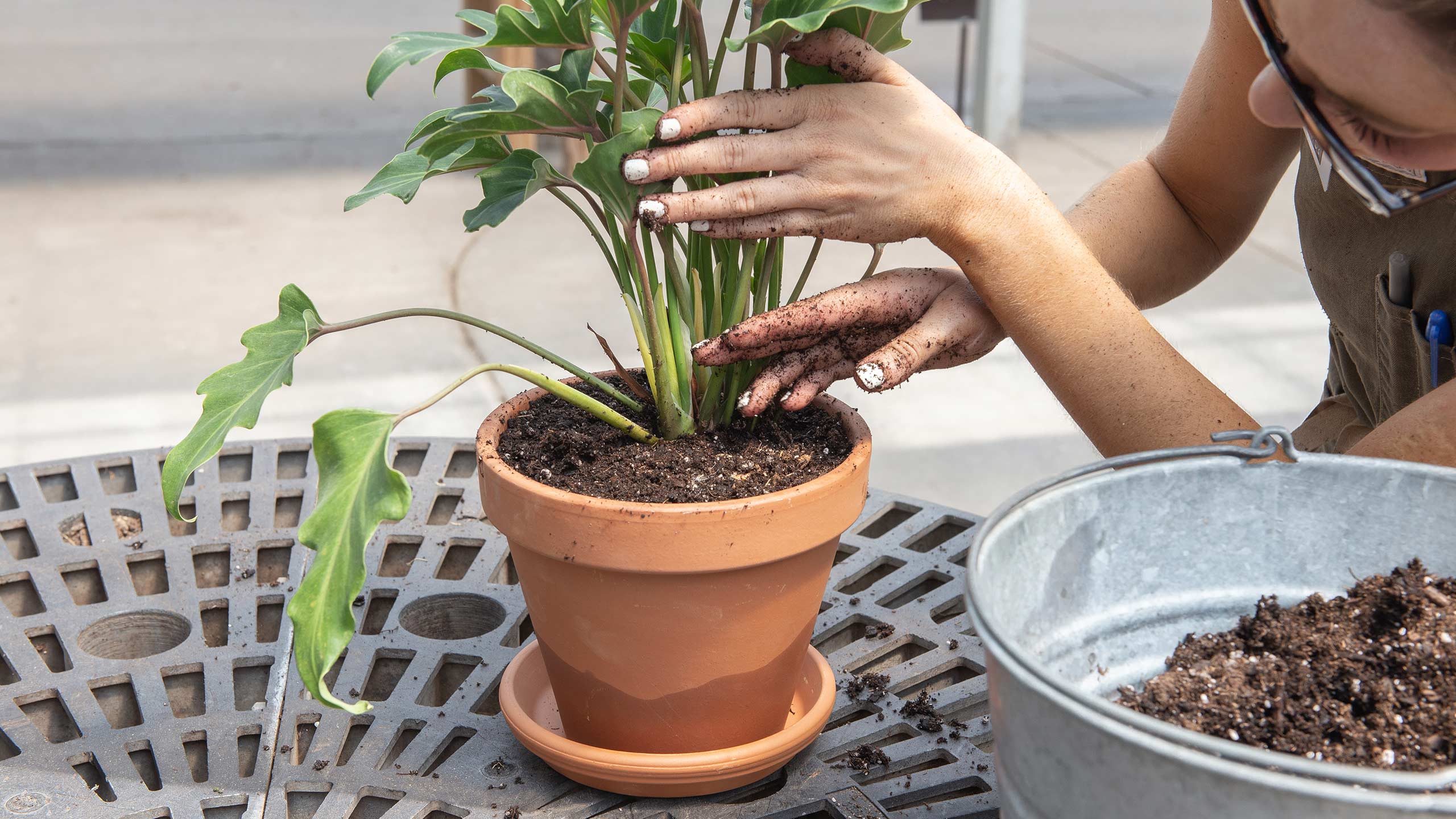
If you repot, do it this way
- Use a pot with a drainage hole. For most plants, this is strongly recommended.
- Use fresh, airy mix appropriate for the plant type (more on that below).
- Slide the plant out and inspect roots. Healthy roots are usually firm and pale or tan. Rotten roots are brown or black and squishy.
- Trim truly rotten roots with clean scissors.
- Repot, water once to settle, then let the soil dry down normally.
Drainage fixes that work
If I could sneak one habit into every plant parent’s routine, it would be this: let the soil breathe. Roots need oxygen as much as they need water.
Quick drainage checklist
- Confirm a drain hole: If your pot is decorative, keep the plant in a nursery pot inside the cachepot.
- Empty the saucer: Do not let the pot sit in runoff water for hours.
- Raise the pot: A cork mat, pot feet, or a small rack helps water drain freely.
- Adjust watering method: Water thoroughly, then wait until the mix partially dries (how much depends on the plant).
- Increase light if possible: More light generally equals faster drying and stronger growth.
- Add airflow: A gentle fan in a plant corner can make a big difference.
Should you add rocks to the bottom of the pot?
Skip it. A layer of rocks does not improve drainage through the soil the way people hope. What it actually does is reduce the amount of soil and can leave the root zone wetter by creating a perched water area above the rock layer. A better fix is the right mix and a real drain hole.
Best potting mix tweaks
Mushrooms love consistently damp, fine-textured, organic material. Your goal is not to sterilize the soil, it is to create a healthier wet-dry rhythm for your plant.
Easy mix upgrades
- For most tropical foliage plants: Use a quality indoor potting mix and add 20 to 30 percent perlite or pumice for air space.
- For aroids (pothos, philodendron, monstera): Add chunky orchid bark plus perlite for a more breathable mix.
- For succulents and cacti: Use a gritty cactus mix and ensure the pot is not oversized.
Also: do a quick surface cleanup. Removing fallen leaves and decomposing bits on top of the soil takes away some of the fungus buffet.
If you are seeing repeated mushrooms plus gnats, it often means the mix is staying damp near the surface. Top-dressing with a thin layer of coarse horticultural sand can help reduce gnat egg-laying, but it will not fix waterlogged soil. Drainage and watering habits come first.
What not to do
- Do not eat them, and do not let pets or kids sample them.
- Do not panic-repot a healthy plant just because you saw one mushroom.
- Do not “fix” it by underwatering to the point your plant suffers. Aim for appropriate dry-down, not drought.
- Do not seal the soil surface with impermeable layers that trap moisture.
- Do not reach for fungicide or a bleach drench as a first step. It is usually unnecessary, can stress roots and beneficial microbes, and it does not address the real cause (too-wet conditions). Focus on drainage, light, airflow, and a better mix.
Pet and kid safety
Treat yellow houseplant mushrooms as toxic if ingested. Leucocoprinus birnbaumii is commonly described as poisonous or suspected toxic, and ingestion may cause gastrointestinal upset. Severity can vary, and the safest move is still the same: do not eat them.
If you have pets or toddlers
- Remove mushrooms as soon as you spot them.
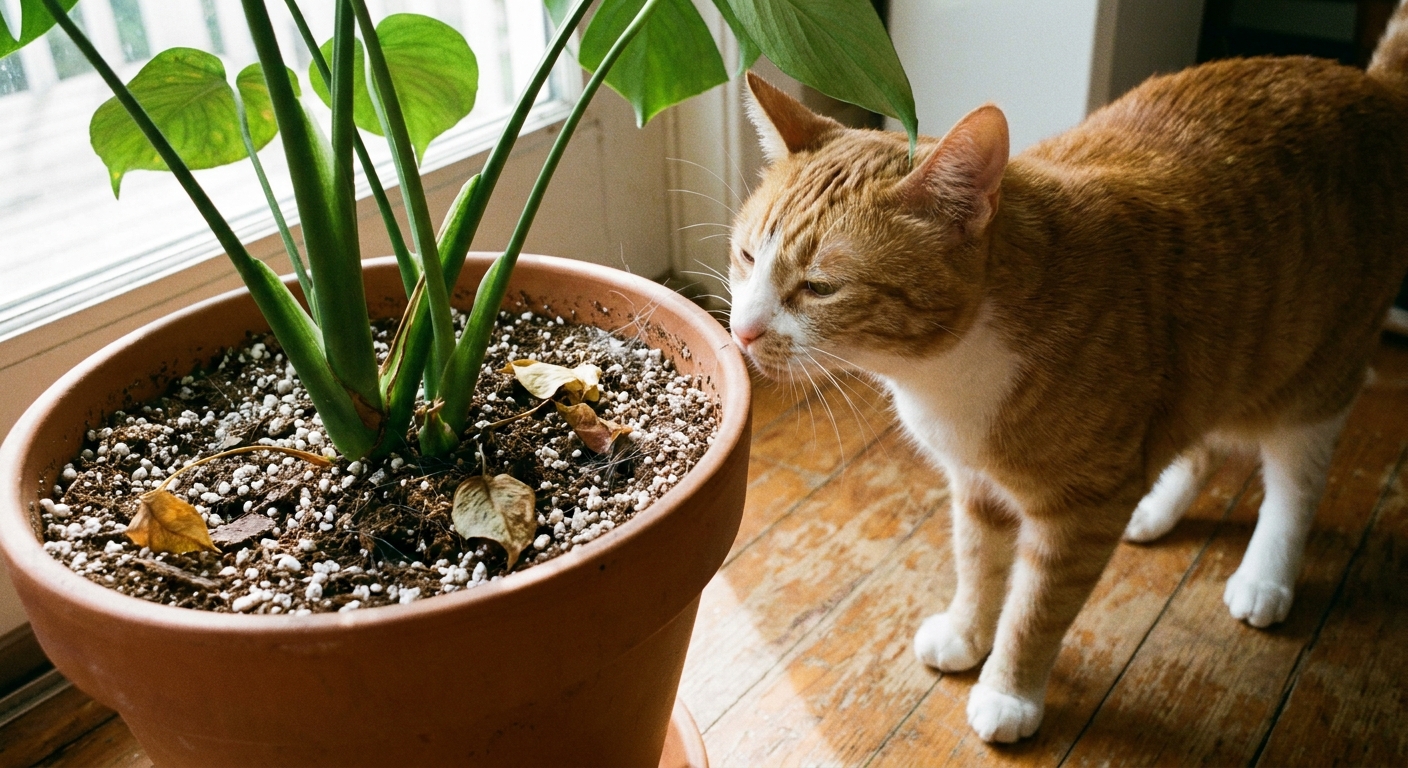
- Place plants out of reach or use a barrier, especially for curious cats.
- Consider repotting if mushrooms keep returning and access cannot be controlled.
If ingestion happens
Contact your veterinarian, pediatrician, or local poison control promptly. If you can do so safely, take a clear photo of the mushroom and note when it was eaten.
Will mushrooms spread to other houseplants?
They can, especially if you have multiple pots with similar conditions: warm rooms, consistently moist mix, and plenty of organic material. Spores are light and can drift. That said, spores are everywhere already. The bigger factor is whether the next pot offers the same cozy, damp environment for fruiting.
To reduce repeat appearances:
- Water less frequently and allow the top layer to dry between waterings
- Improve light and airflow
- Use a chunkier, better-aerated mix when repotting
- Quarantine a new plant for a couple of weeks if it arrives with mushrooms or gnats
Quick troubleshooting
Yellow mushrooms + fungus gnats
Let the top 2 inches dry, switch to bottom watering temporarily if appropriate, and consider sticky traps for adults. If the soil stays soggy, repot into a better-draining mix.
Yellow mushrooms + plant wilting
Check soil moisture. Wilting in wet soil can signal root stress. Slide the plant out and inspect roots. If roots are mushy or smell bad, repot and trim rot.
Yellow mushrooms + white fuzzy mold on soil
Often the same story: moisture and low airflow. Remove surface growth, increase air circulation, and adjust watering. A thin scrape of the top half inch of soil can help, but it is not a substitute for drainage fixes.
When to get an expert ID
If the mushrooms look very different from the classic tiny yellow parasols (unusual colors, very large flushes, strong odors, or anything that makes you pause), or if a person or pet may have eaten one, get local help. A local extension office, mycology group, or poison control resource can help you figure out next steps quickly.
My calm bottom line
Yellow mushrooms in houseplant soil are usually harmless to the plant, but they are a useful clue that your potting mix is staying a bit too wet. Pluck the mushrooms, double-check drainage, and adjust watering so the soil gets a chance to breathe between soakings.
If your plant looks happy, you do not need to panic-repot. If the pot stays wet for ages, smells sour, or your plant is struggling, that is your sign to refresh the mix and improve the root environment.
And if you catch me chatting with my ferns while I do it, no you did not.