
Wisteria Plant Care

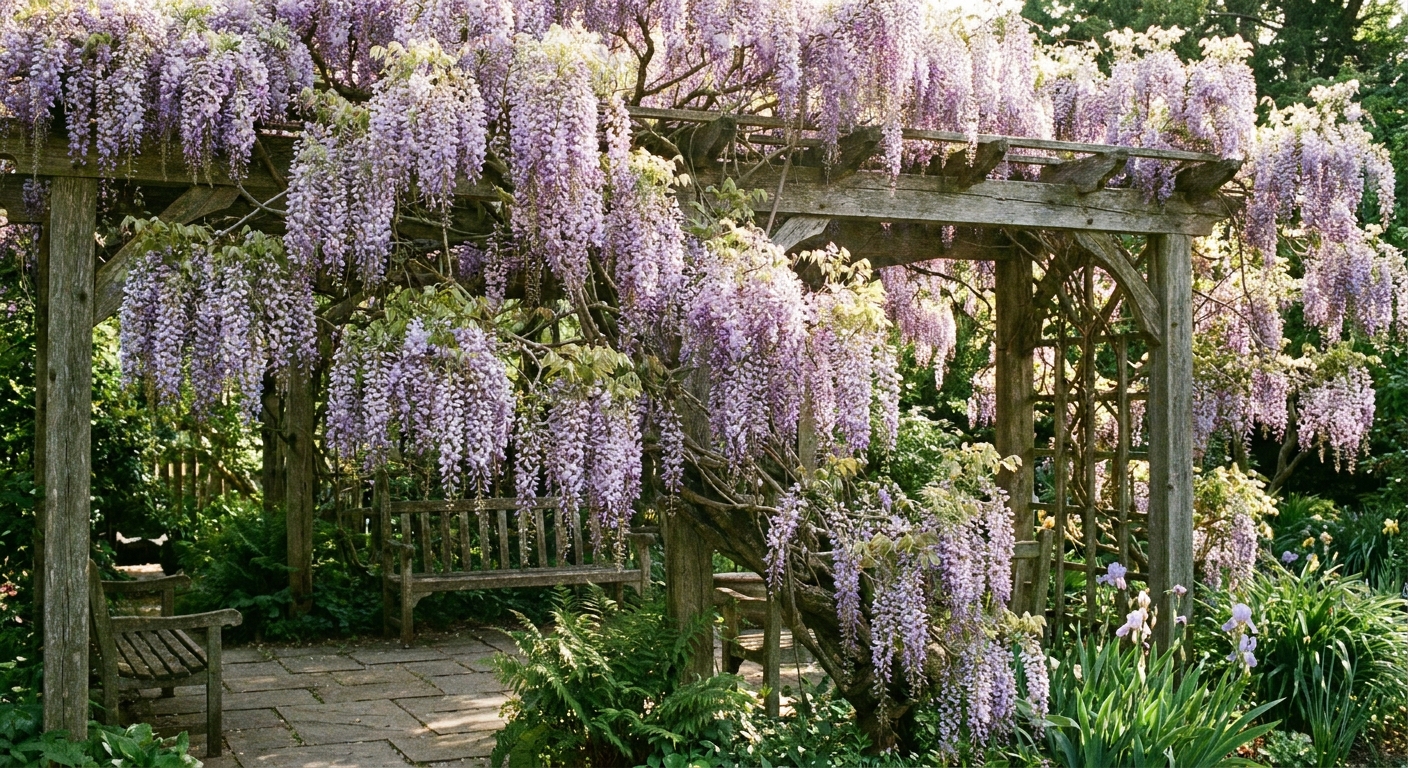
Wisteria is the kind of plant that makes you stop mid-walk and stare. Those waterfall flower clusters feel almost unreal. But under all that romance is a vine with very practical needs, especially in year one. Give it the right soil, sun, water, and support early, and you are setting the stage for decades of healthy growth and the kind of blooming that makes neighbors “casually” drift past your fence.
This care guide focuses on what to do from planting through maturity. Later, once your vine is established, the big bloom questions usually come down to when and how you prune , whether it is getting enough sun, and whether it is being overfed with nitrogen. We will connect those dots without turning this into a pruning manual.

Before you plant: choose the right wisteria
Care starts with selection. Some wisterias are more polite than others, and the difference matters for long-term maintenance. That said, aggressiveness and invasiveness are regional. What behaves in one area can run in another, so it is worth checking your local invasive plant list or extension guidance before you buy.
- American wisteria (Wisteria frutescens) and Kentucky wisteria (Wisteria macrostachya): Often less aggressive than the Asian species and a better fit for smaller gardens, but they can still spread in the right conditions. They are also a safer ecological choice in many parts of North America.
- Chinese (W. sinensis) and Japanese (W. floribunda) wisteria: Stunning, vigorous, and more likely to overwhelm weak structures or nearby trees if you are not on top of training, pruning, and containment. These are considered invasive in many parts of North America.
If you are buying a plant, look for one that is healthy and sturdy, not a pot full of skinny, pale whips. A thicker main stem, clean leaves, and no circling roots bulging out of the pot are good signs.
Bloom timeline: set expectations
Wisteria can be a long game. Plants grown from seed can take many years to flower. If you want blooms sooner, choose a plant that is cutting-grown or grafted from a known flowering vine, and ask the nursery how it was propagated.
Sun: the bloom-making ingredient
If I could “gift” a wisteria one thing, it would be sun. Wisteria can survive in part shade, but it is much more likely to grow lots of leafy vines and give you sparse blooms.
- Aim for: 6 to 8+ hours of direct sun per day.
- Best placement: A sunny wall, fence line, pergola, or arbor where it can be trained with intention.
- Avoid: Planting at the base of a mature tree. Wisteria will try to climb it, and you will not enjoy the next chapter.
Bloom connection: strong sun encourages flower bud formation on mature spurs. If your vine is healthy but not blooming well, light is one of the first things to evaluate before you blame pruning.
Soil and drainage: keep roots happy
Wisteria is adaptable, but it is not fond of wet feet. In the first year especially, you want moist, oxygen-rich soil that drains well. That is the sweet spot where roots expand quickly and stress stays low.
Ideal soil texture
- Best: Loamy soil that holds moisture but does not stay waterlogged.
- Workable: Clay soil, as long as you improve drainage and avoid planting in a low spot where water collects.
- Challenging: Very sandy soil, unless you add organic matter and commit to more frequent deep watering in heat.
Quick drainage check
Dig your planting hole about 12 inches wide and 12 inches deep. Fill it with water and let it drain completely once (this pre-soak matters). Then fill it again and time the drop.
- Good drainage: roughly 1 to 2 inches per hour.
- Potential problem: if it is still holding a lot of water after 12 hours, or not close to empty by 24 hours, you likely have drainage issues to solve before planting.
Improve drainage the organic way
- Mix in compost to improve structure and microbial life.
- Plant slightly high, creating a gentle mound if your soil is heavy.
- Use a wide mulch ring to protect soil moisture and reduce compaction from foot traffic.
Skip the temptation to add gravel to the bottom of the hole. In many garden soils it can create a perched-water effect at the soil interface, meaning water can linger right where you least want it.
Planting: start strong
Wisteria is a long-term vine. A calm, careful planting day pays you back for years.
When to plant
- Spring: Great in colder regions, gives roots a full growing season.
- Fall: Ideal in many mild climates, roots establish in cooler, moist conditions.
Step-by-step basics
- Dig a hole about as deep as the root ball and 2 to 3 times as wide.
- Gently loosen circling roots so they grow outward, not around.
- Set the plant so the top of the root ball is level with the surrounding soil, or slightly high in heavy soil.
- Backfill with native soil amended with compost if needed, then water deeply to settle air pockets.
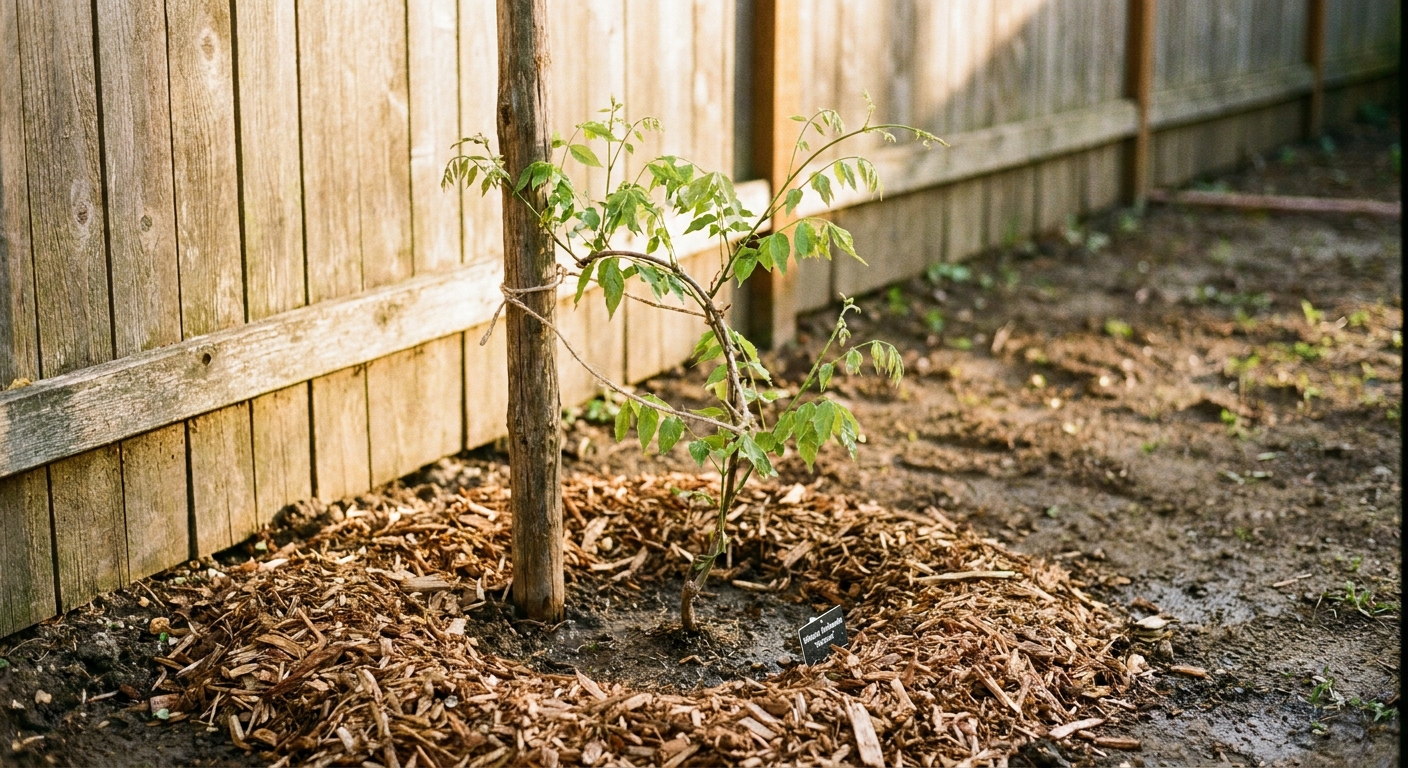
- Mulch 2 to 3 inches deep, keeping mulch a few inches away from the stem.
Spacing and placement
- Give it room from siding, gutters, and railings. This vine thickens with age and can push, pry, and wrap.
- Plant a few feet away from foundations and brittle structures, and train deliberately from day one.
First-year mindset: you are growing roots and a strong framework. Flowers may come later depending on variety, maturity, and how the plant was propagated.
Water: deep and steady
Watering is where most new wisterias struggle. Too little water slows establishment. Too much water in poorly draining soil invites root stress. The goal is deep watering that encourages roots to explore.
Year one watering schedule
- First 2 to 4 weeks: Keep soil consistently moist. Water deeply 2 to 3 times per week if there is no rain, adjusting for your soil type.
- After it starts establishing (usually weeks 6 to 10, once you see steady new growth): Water deeply about once per week in typical weather, more often in sandy soil or high heat.
How much water is “deep”?
- Target: wet the soil 6 to 12 inches deep in the root zone.
- Simple approach: use a slow hose trickle or soaker hose for 30 to 60 minutes, then check moisture depth with a trowel or finger test.
- Container-to-ground reference: for many young in-ground plants, 2 to 5 gallons per watering is a common starting point, then adjust based on how quickly your soil dries.
Watering in heat waves
In sustained heat, wisteria can wilt dramatically in the afternoon even when soil moisture is decent. Check before you panic-water.
- Do a finger test 2 to 3 inches down. If it is dry, water.
- Water early morning so the plant is hydrated before peak heat.
- Increase soak depth, not just frequency. A slow trickle beats a quick sprinkle.
- Refresh mulch and expand the mulch ring as the vine grows.
Signs you are overwatering
- Yellowing leaves with soft growth
- Soil that stays wet and smells sour
- Little new growth despite “plenty” of water
Bloom connection: mature vines are more drought-tolerant, but repeated stress can reduce performance. Consistent care supports healthy wood and spur development, which sets you up for better flowering once pruning and maturity line up.
Feeding: keep nitrogen in check
Wisteria does not want heavy feeding, especially with high nitrogen. Nitrogen is the “leaf and vine” nutrient, and wisteria is already excellent at making vines. Too much nitrogen often means a gorgeous green monster with few flowers.
What to feed and when
- At planting: Skip strong fertilizers. Focus on compost and good watering.
- Year one: If growth is weak and leaves are pale, top-dress with compost in spring. In very poor soils, use a gentle, balanced organic fertilizer at a light rate.
- Established vines: If the vine grows well but blooms poorly, avoid nitrogen-heavy products and consider a fertilizer with lower nitrogen and higher phosphorus and potassium, based on a soil test.
Nitrogen fixation: do not count on it
Wisteria is in the legume family, but it does not reliably “feed itself” with nitrogen the way peas and beans often do in the home garden. Nodulation and meaningful nitrogen fixation are inconsistent, so treat it like a normal ornamental vine and let a soil test guide you.
Bloom connection: many “no bloom” stories are actually “too much nitrogen” stories, sometimes from lawn fertilizer drifting into the wisteria root zone.
Support: build for weight
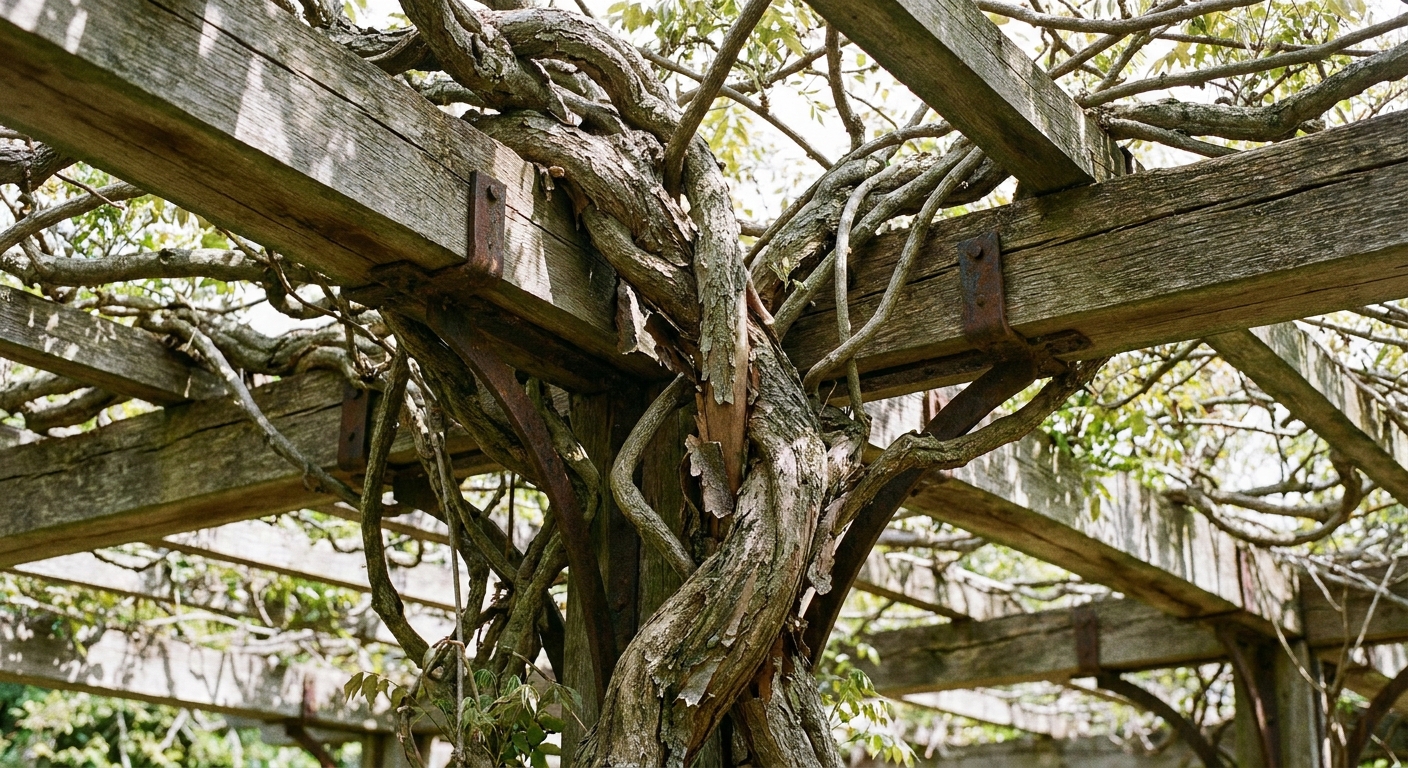
Wisteria is not a lightweight climber. It becomes woody, thick, and surprisingly strong. It can pull down flimsy trellises, pry apart railings, and swallow a pergola that was built for grapes or jasmine. Plan for the mature vine, even if your plant is currently the size of a broomstick.
What support should look like
- Posts: 4x4 is the minimum, and 6x6 is better for large pergolas and arbors.
- Hardware: Exterior-rated brackets, bolts, and screws, not tiny nails or light staples.
- Anchoring: Set posts properly or attach to structural framing, not decorative trim.
Wall and wire systems
If you are training wisteria along a wall or fence, a wire system can work beautifully, but it must be stout.
- Use heavy-gauge wire and strong eye bolts anchored into studs or masonry anchors.
- Space wires so you can fan out main stems and let light reach the whole plant.
- Keep a little air gap off the wall to reduce moisture issues and make later maintenance easier.
Tying and training
- Use soft ties or stretchy plant tape, and check them twice a season.
- Train 1 to 3 main leaders early. Think of them as the vine’s “skeleton.”
- Direct side shoots where you want future flowering spurs to develop, then rely on seasonal pruning for refinement.
Bloom connection: good training creates a structure that gets sun and air across the vine. When everything is a tangled shade ball, flower bud formation tends to suffer. Support is not just safety, it is bloom strategy.
Climate and cold notes
- Hardiness varies by species and cultivar: check the plant tag and match it to your USDA zone.
- Winter and spring matter: cold snaps and late frosts can damage forming buds, even on otherwise healthy vines.
- Heat and drought: intense summer heat can stress new plantings, so mulch and deep morning watering are your best friends in year one.
First-year to mature care
Year 1: roots and framework
- Prioritize sun, drainage, and consistent deep watering.
- Choose main leaders and begin training them onto your support.
- Mulch and keep weeds out of the root zone.
- Go easy on fertilizer, especially nitrogen.
Years 2 to 3: structure and control
- Expand the framework, tying in leaders and spacing growth.
- Monitor for runaway shoots and keep the vine from entering gutters, roofs, trees, and soffits.
- Water during extended dry spells to reduce stress and encourage steady development.
Mature vines: maintenance mode
- Inspect supports yearly for strain, loosening hardware, or wood rot.
- Top-dress with compost if soil is tired, and rely on soil tests for fertilizer decisions.
- Keep the canopy open enough that sunlight reaches interior wood where spurs form.
And yes, pruning matters a lot for mature wisteria. If your vine is thriving but bloom is inconsistent, your next stop should be Leafy Zen’s pruning and bloom troubleshooting resources . Think of today’s care as the foundation that makes those techniques actually work.
Pests and problems
Wisteria is generally tough, but a stressed plant is more likely to invite trouble.
- Aphids and scale: look for sticky residue and clustered insects on new growth. A firm hose spray and horticultural soap (when needed) usually handle light infestations.
- Powdery mildew: more likely in shade and still air. Increase sun exposure where possible and keep the canopy open with training and pruning.
- Chewing damage: rabbits and deer may browse young plants in some regions, especially in winter and early spring. Protect new vines if browsing is common in your yard.
Safety note: toxicity
Wisteria is considered toxic if ingested, especially the seeds and pods. If you garden with small kids, curious dogs, or livestock, plant and manage accordingly (and do not let pods become snack-sized yard “toys”).
Common mistakes
- Planted in shade: Move it while it is young, or thin nearby canopy. Sun is non-negotiable for best flowering.
- Soil stays wet: Rework drainage, plant high, or consider a raised planting area.
- Overfed with lawn fertilizer: Keep lawn fertilizer away from the root zone, and do not “correct” with more products. Let the vine settle, then soil test.
- Weak trellis: Upgrade sooner rather than later. A mature vine can turn a small trellis into kindling.
- Letting it climb a tree: Train it away immediately. Wisteria can girdle branches and create hazardous weight.
Quick care checklist
- Sun: 6 to 8+ hours
- Soil: Loamy, well-draining, enriched with compost
- Water: Deep soaks in year one, morning watering in heat
- Fertilizer: Light touch, avoid high nitrogen
- Support: Built for serious weight, with strong hardware and yearly inspections
- Local check: Confirm invasiveness status where you live
If you take care of these basics, you are not just growing a vine. You are building the conditions for flowering wood and future bud formation. Wisteria is a long game, but it is a very rewarding one.