
Why Your String of Pearls Is Shriveling or Dropping Beads

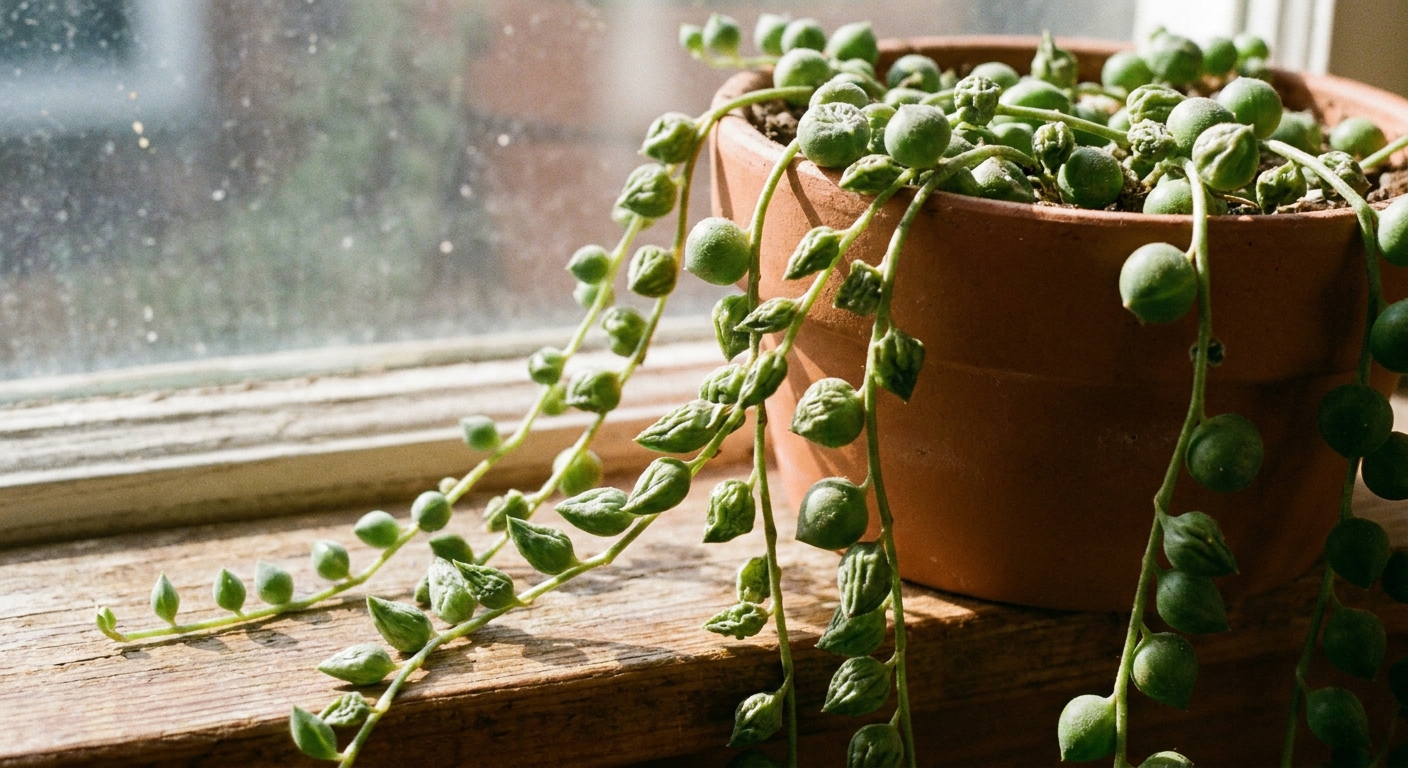
String of pearls (Curio rowleyanus, often still sold as Senecio rowleyanus) has a way of making even confident plant parents second-guess themselves. One week it is plump and adorable, the next it is shriveling, dropping beads, or going bald near the crown.
Take a breath. Most string of pearls problems come down to a handful of repeat culprits: watering timing, light intensity, root health, pests, soil that stopped behaving like a succulent mix (compacted, hydrophobic, or too peat-heavy), plus a couple of very real stressors like handling and seasonal slowdown. Below is the troubleshooting flow I use at home, plus the exact fixes and what “recovery” realistically looks like.

Quick diagnostic flow
Start here. It is faster than guessing, and it keeps you from “fixing” the wrong thing twice.
Step 1: Gently squeeze a few beads
- Wrinkled, soft, deflated and the soil is bone-dry: most likely underwatering or hydrophobic soil that is not absorbing.
- Wrinkled, soft but the soil is damp or the pot feels heavy: likely root rot or roots that are failing from staying wet.
- Firm beads with tan, crispy patches on the sun-facing side: likely sunburn.
- Beads falling with a slight tug or stems look pinched at the soil line: suspect crown rot or a pest weakening tissues.
Step 2: Check the top inch and the pot weight
- Top inch dry and pot feels very light: thirst or mix not wetting properly.
- Top inch damp and pot feels heavy for days after watering: drainage or soil is too dense, or the pot is too large (or conditions are cool and low-light).
Step 3: Inspect the crown and stems at soil level
- Dark, mushy, translucent stems at the crown: rot. Act fast.
- Dry, tan, papery stem sections: dehydration, sun stress, or old growth, depending on pattern.
Step 4: Look for pests with a flashlight
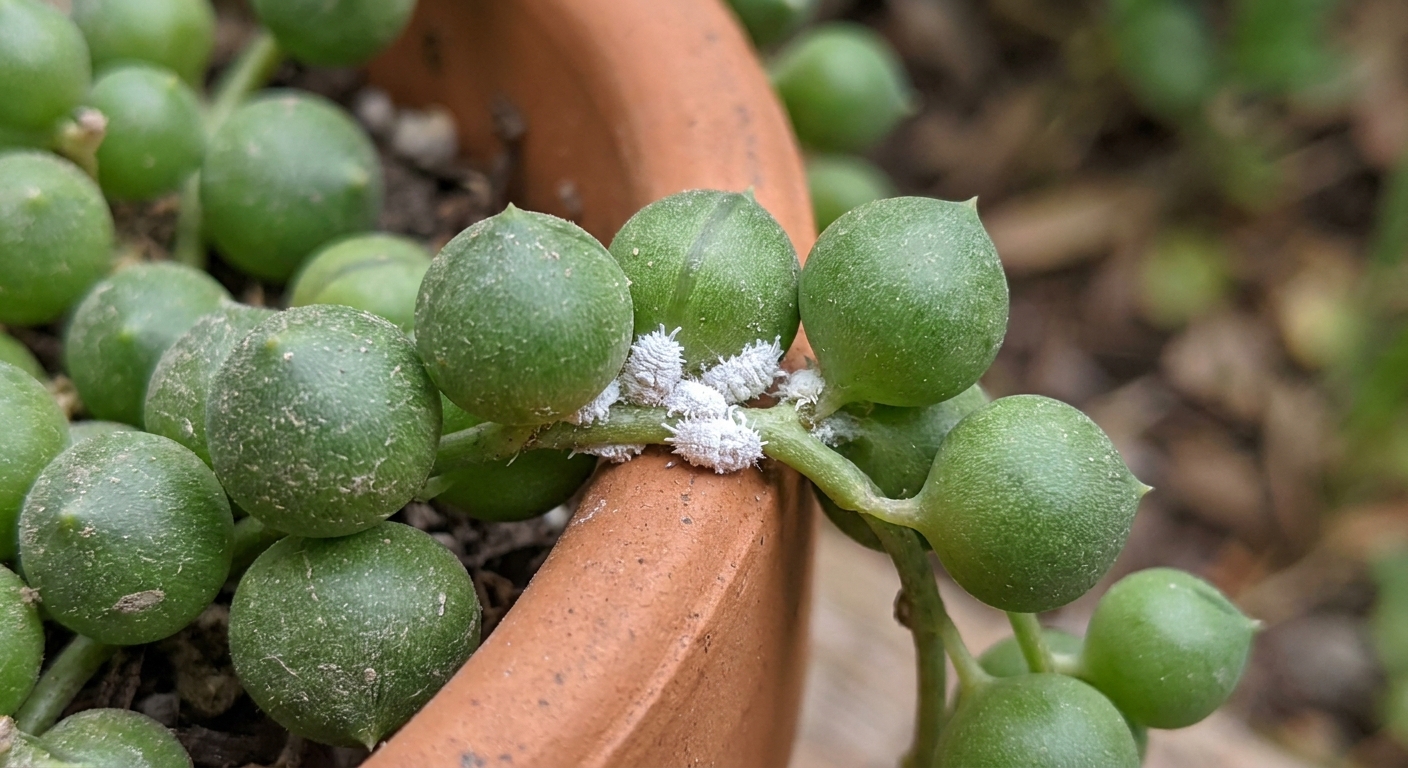
- White cottony clusters in nodes or near soil: mealybugs.
- Tiny moving dots and fine webbing: spider mites.
- Brown bumps that scrape off: scale.
If you are still unsure after these steps, skip ahead to the “When to repot” section. A quick root check answers a lot.
Cause 1: Underwatering and thirst wrinkles
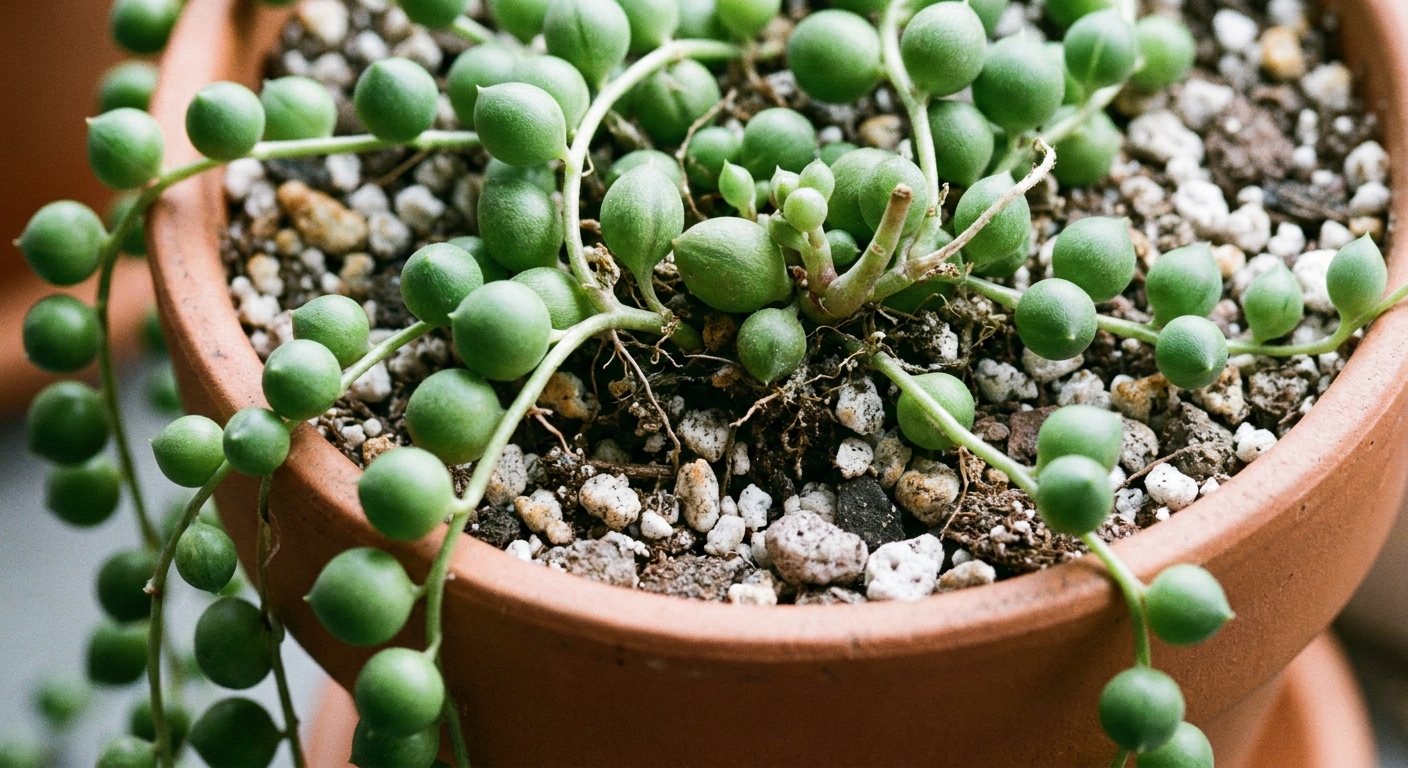
Shriveled pearls are often a simple thirst signal. Each bead stores water. When reserves run low, the bead wrinkles and the little translucent “window” line can look less clear.
How to confirm
- Soil is fully dry throughout the pot.
- Pot feels unusually light.
- Stems feel flexible, not mushy.
- No sour smell from soil.
Fix: Rehydrate the right way
- Aerate first (optional, very helpful for hydrophobic soil): If the mix is peat-heavy and water tends to run through or bead on top, gently poke a few holes into the soil with a chopstick. Do not shred the roots. You are just giving water a path back in.
- Bottom-water for about 20 to 40 minutes. Set the pot in a bowl of water and let the mix drink from the drainage holes.
- Lift, let it drain thoroughly, then wait. Do not “top it off” again.
- If the soil still refuses to wet evenly, plan to repot into a fresh gritty mix.
What recovery looks like
If roots are healthy, many beads plump back up often within 1 to 3 days. Older, severely wrinkled beads may stay a bit smaller, but new growth should look round and glossy.
Common slip-up: watering a little bit, frequently. String of pearls prefers a deep soak, then a full dry-down.
Cause 2: Overwatering and root rot
If shriveled pearls are paired with damp soil, you are likely dealing with struggling roots. A plant with damaged roots cannot take up water, so it looks dehydrated even while sitting in moisture.
How to confirm
- Soil stays wet longer than about 4 to 7 days in bright, warm conditions with a fast-draining mix. In winter or low light, it can take longer, so look at the full picture.
- Beads shrivel and may turn yellow, translucent, or drop easily.
- Stems near the crown darken or feel mushy.
- Soil smells sour or musty.
Fix: Emergency triage for rot
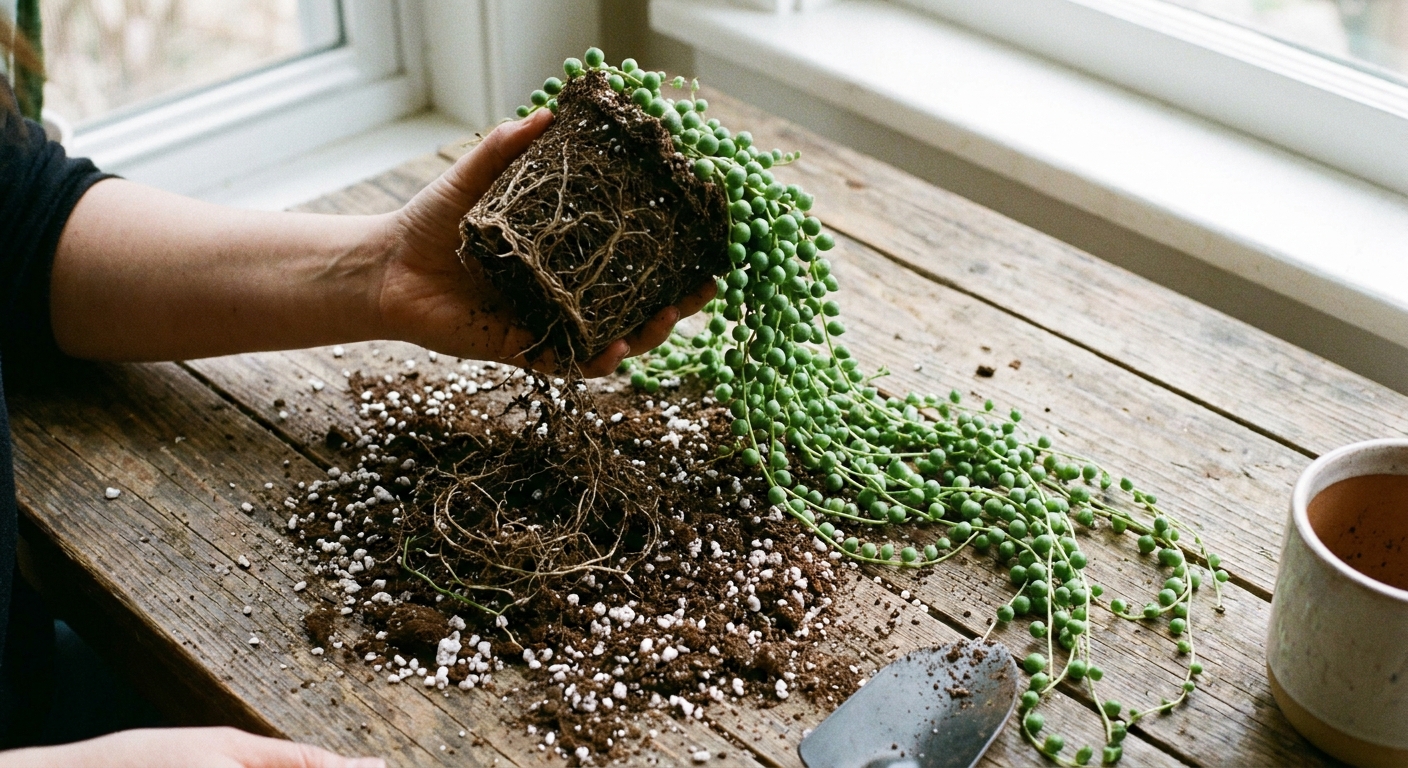
- Unpot the plant and gently shake away soil.
- Inspect roots. Healthy roots are pale and firm. Rotten roots are brown or black and slough apart.
- Using clean scissors, trim away rot back to firm tissue.
- Let the plant air-dry on a clean surface for several hours (up to overnight) so cut areas can callus.
- Repot into a small pot with a drainage hole using a fast-draining cactus or succulent mix amended heavily with pumice or perlite. If you are battling rot, consider unglazed terracotta. It wicks moisture and speeds dry-down.
- Wait 5 to 10 days before watering. Then water once and allow a full dry-down.
If the crown is mushy: treat the healthy trailing strands like cuttings. Snip above the damaged area and propagate. This is often the quickest save.
Cause 3: Sunburn and heat stress
String of pearls likes bright light, but sudden intense sun can scorch those tender beads. This is especially common when a plant is moved closer to a south or west window, or put outdoors without a slow transition.
How to confirm
- Firm beads with tan, bleached, or reddish-brown patches.
- Damage is concentrated on the sun-facing side.
- Soil may be drying extremely fast if the pot is overheating.
Fix
- Move to bright, indirect light or a gentler morning-sun spot.
- If you want it in stronger sun, acclimate slowly over 10 to 14 days.
- Trim only the worst crispy strands after you see new healthy growth. Sunburn scars do not heal, but the plant can outgrow them.
Note: Window glass itself can get very hot, and beads pressed against it can scorch. If strands are touching the glass, pull the pot back a few inches.
Cause 4: Soil compaction and drainage failure
Even if you water “correctly,” string of pearls can shrivel if the potting mix has compacted. Over time, peat-based mixes collapse, air pockets disappear, and roots suffocate. Water then lingers too long, and rot follows.
Clues your mix is the problem
- Water runs down the sides and out the bottom too fast, but the center stays dry (classic hydrophobic peat).
- Or the opposite: water soaks in, then the mix stays wet for ages.
- The soil surface looks crusty or pulls away from the pot edges.
Fix: Refresh the mix
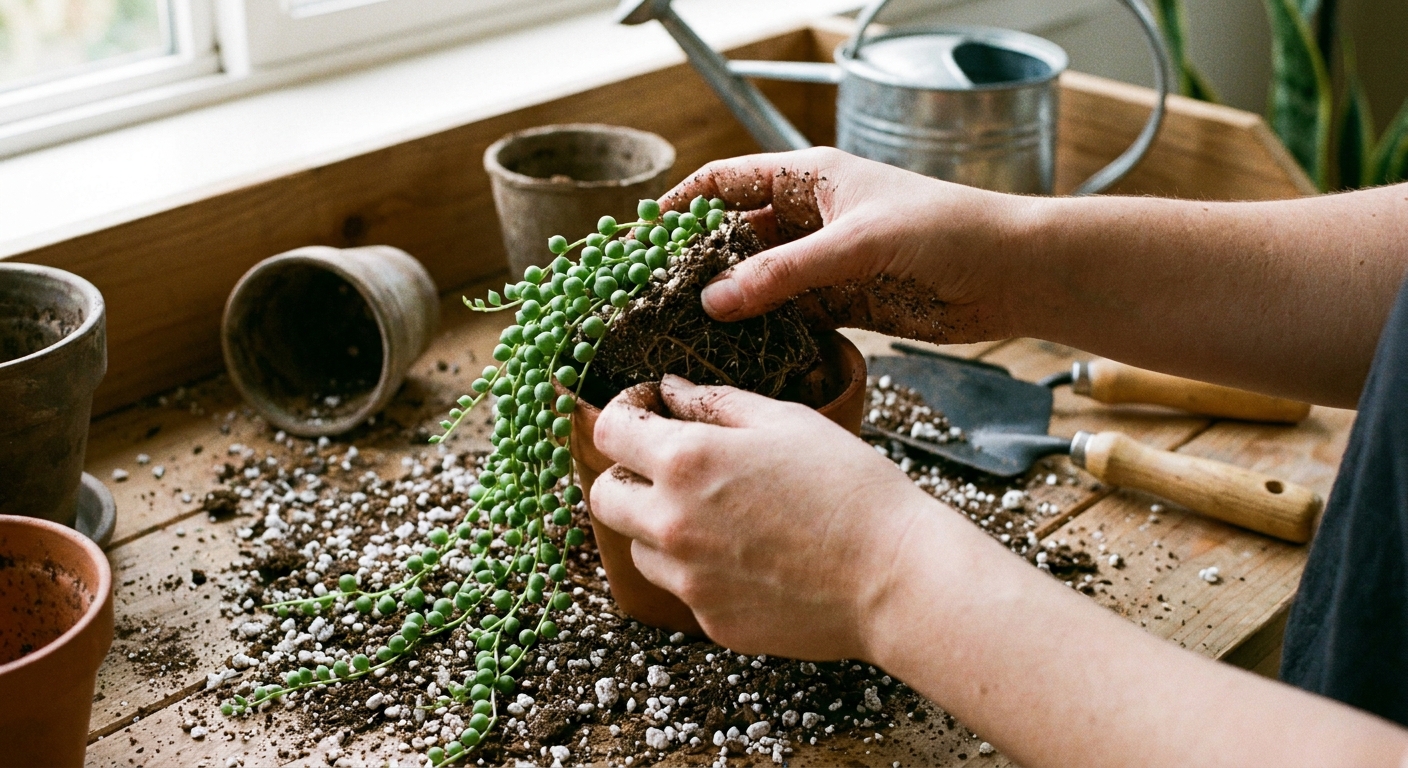
Repot into a gritty blend that dries reliably. A simple home recipe:
- 2 parts cactus or succulent soil
- 1 part pumice or perlite
- Optional: a small handful of orchid bark for structure
Choose a pot only slightly larger than the root ball. Oversized pots hold moisture too long. If your home runs cool, low-light, or humid, unglazed terracotta can be a real ally because it helps the mix dry faster than plastic or glazed ceramic.
Cause 5: Bead drop from stress or handling
Sometimes the plant is not dying. It is just being dramatic. Pearls can pop off with rough handling, repeated brushing against the strands, or when a long trail gets heavy and tugs on the crown.
How to confirm
- Beads are plump and healthy, but drop where the strand is frequently touched.
- Long trails are pulling from one side of the pot.
- The crown looks healthy and dry, not dark or mushy.
Fix
- Move it away from high-traffic areas and curious pets.
- Rotate the pot every week or two so one side does not carry all the weight.
- Use hairpins or small U-shaped wire to gently pin a few strands onto the soil. They can root along the stem and thicken the top.
Cause 6: Pests that make pearls shrivel
Pests are less common than watering issues, but when they show up, they can cause shriveling, yellowing, sticky residue, and sudden bead drop.
What to look for
- Mealybugs: white cottony fluff in leaf nodes, along stems, and near the soil.
- Spider mites: dusty stippling on beads, fine webbing, especially in dry indoor air.
- Scale: small brown or tan bumps that cling to stems.
Fix: A gentle, effective treatment plan
- Isolate the plant.
- For mealybugs or scale, dab pests with 70% isopropyl alcohol on a cotton swab.
- Rinse strands with lukewarm water, then let dry fully. Tip: cover the soil with plastic wrap (or tilt the pot) while rinsing so you do not accidentally flood the mix and create a root-rot situation.
- Follow up with insecticidal soap or a light horticultural oil, testing a small area first. Apply in the evening and keep out of hot sun while treating.
- Repeat every 7 to 10 days for 3 rounds.
Tip: If the infestation is concentrated at the crown, it can be faster to take healthy cuttings and restart while you sanitize the pot and discard old soil.
Cause 7: Seasonal slowdown and normal shedding
String of pearls grows in pulses. In lower light or cooler months, it may pause, drink less, and drop a few older beads. That is not failure. It is metabolism.
Signs it is seasonal, not an emergency
- Bead drop is light and gradual, mostly on older strands.
- No mushy crown, no widespread yellow translucency.
- Soil is drying slower because temperatures and light are lower.
Fix
- Back off watering frequency. Water only when the mix is dry throughout.
- Increase light with a brighter window or a grow light.
- Avoid fertilizing heavily during slow growth. It can stress roots.
When to repot vs. leave it alone
Repotting is a powerful tool, but it is also a stress. Here is my rule of thumb.
Repot now if
- Soil stays wet longer than a week in normal indoor conditions.
- You suspect rot or smell sour soil.
- The mix is compacted, hydrophobic, or mostly peat.
- The pot has no drainage hole, or the drainage hole is blocked.
Wait (and adjust care) if
- The plant is simply wrinkled from missed watering and plumps up after a soak.
- There is mild sunburn but the crown is healthy.
- It is winter slowdown and the plant looks stable.
Revival timelines
String of pearls rewards patience. Here is what “better” usually looks like, assuming you have corrected the main issue.
- Within 1 to 3 days: thirsty pearls can plump after proper rehydration.
- 1 to 2 weeks: bead drop often slows once light and watering are stabilized.
- 3 to 6 weeks: new growth appears at strand tips in active season.
- 2 to 4 months: top-of-pot fullness improves if you pin strands down or propagate back into the pot.
If the crown was lost to rot, the timeline resets. Cuttings often root in 2 to 6 weeks depending on warmth, light, and how dry the mix stays between sips.
How to thicken a bald top
A leggy or bald crown is extremely common. The fix is simple: turn your healthiest strands into helpers.
Pin-and-root method
- Lay a long strand across the soil surface.
- Remove a few beads where the stem will touch the soil.
- Pin the bare stem section down with a bent paperclip or floral pin.
- Keep the soil barely damp in that small zone for a short period, then return to normal succulent watering once you feel resistance from new roots.
Propagation note: I am keeping this page focused on troubleshooting. If you want a full propagation walkthrough (water vs. soil methods, callusing, and pot-filling tricks), that belongs on a dedicated propagation page.
Common mistakes
- Misting: it does not “water” a succulent and can encourage rot at the crown.
- No drainage hole: string of pearls is not a “no-hole pot” plant. Use a cachepot if you love the look.
- Overpotting: a big pot holds moisture too long, even in a gritty mix.
- Frequent sips: shallow watering trains roots to stay near the surface and can lead to weak growth.
- Sudden sun exposure: acclimation prevents scorch.
- Ignoring airflow and heat sources: heaters and hot drafts can dehydrate fast, while stagnant cool corners can keep soil wet too long.
FAQ
Why are my pearls shriveling even though I watered?
If the soil is still wet and pearls are shrinking, suspect root damage or compacted soil. Check the roots and repot into a fast-draining mix if needed.
Do shriveled pearls recover?
Often, yes. If the roots are healthy, pearls can plump within a few days after a deep soak. If beads are translucent, mushy, or falling off easily, focus on saving healthy stems and rebuilding.
Should I cut off shriveled strands?
Not immediately. First fix the cause. Once you see healthy new growth, you can trim dead or ugly strands and use healthy pieces to thicken the pot.
What is the fastest way to save a rotting plant?
Take clean cuttings from firm, healthy strands above the rot and root them in dry, gritty soil after a short callus period. Discard wet soil and sanitize the pot.
If you tell me two things, I can help you diagnose with almost no guesswork: how long the pot stays wet after watering, and what the crown looks like at the soil line. That is where string of pearls tells the truth.