
Why Your Calathea Is Drooping or Limp

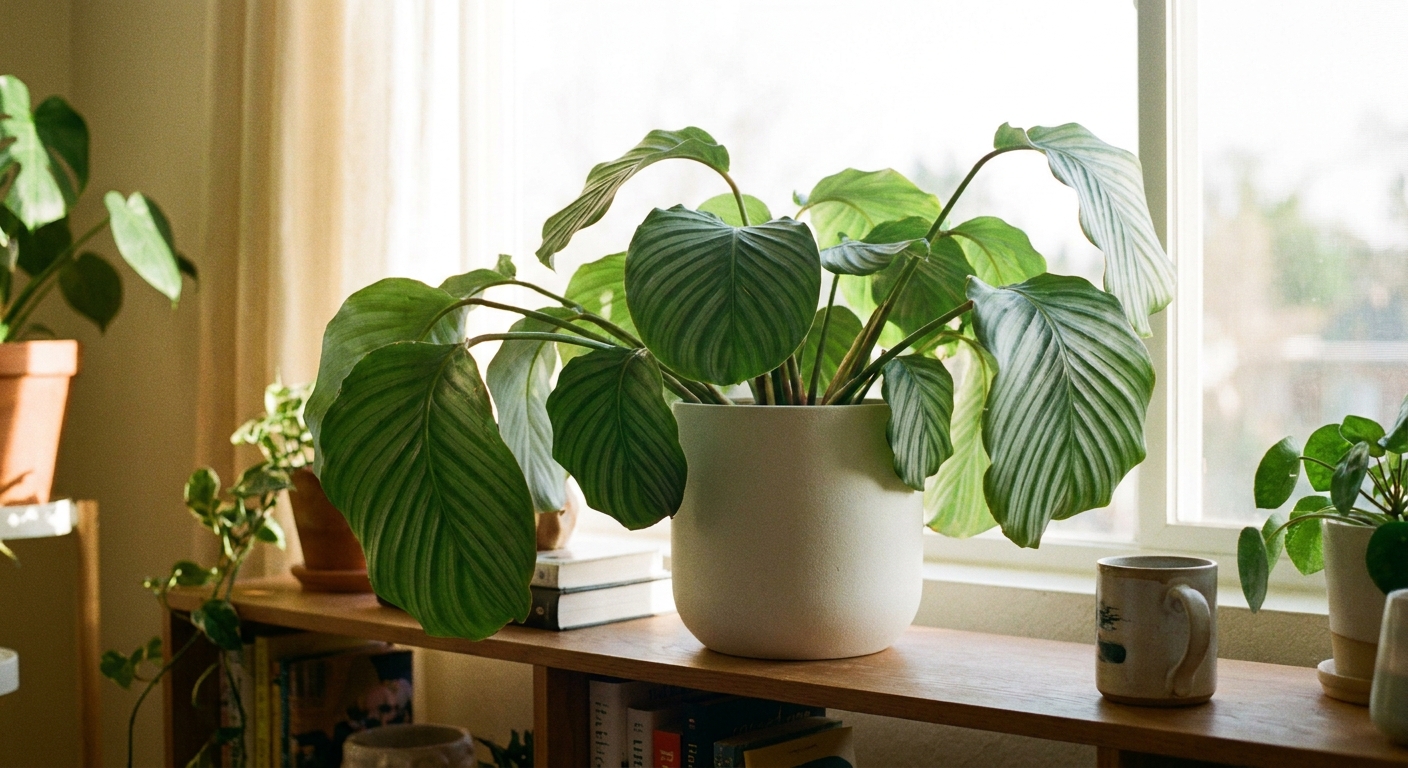
Droopy calathea leaves can look dramatic, like your plant has given up overnight. The good news is that many “limp” moments are either normal leaf movement (nyctinasty) or a fixable care mismatch like dry soil, wet feet, low humidity, or a sneaky draft.
Let’s sort the harmless from the urgent, then walk through a simple decision tree with safe first-aid steps you can do today.

First: is it wilting or just prayer-plant behavior?
Calatheas and their prayer-plant cousins (Maranta, Stromanthe, Ctenanthe) move their leaves on a daily rhythm called nyctinasty. At night, many calatheas lift or fold their leaves upward like they are “praying.” In the daytime, they relax and lower again. Depending on your plant and your lighting, that daytime “resting” position can look like drooping if you are used to stiff, static houseplants.
Normal nyctinasty looks like this
- Timing is predictable. Leaf posture changes mostly at dusk and dawn.
- Leaves still feel firm. They are repositioned, not limp like cooked spinach.
- Stems are stable. Petioles are not collapsing at the soil line.
- No new damage. No sudden yellowing, mushy spots, or crispy edges appearing at the same time.
True wilting looks like this
- Leaves feel soft and flaccid and may curl inward.
- Multiple leaves slump at once and stay down all day.
- Soil or stems tell a story, either bone dry and pulling from the pot edge or wet and sour-smelling.
If it is true wilting, go straight to the decision tree below.
Fast decision tree for droopy calatheas
Grab a finger, a chopstick (or skewer), and two minutes of curiosity.
Step 1: Check the soil moisture the right way
- Push a finger into the soil to the second knuckle, or slide a wooden skewer down near the pot edge.
- Pull it out and feel. Dry and clean means thirsty. Cool and damp with soil sticking means wet.
If the soil is dry
Likely cause: underwatering, hydrophobic peat, or a root system that dried out faster than you expected.
If the soil is wet or soggy
Likely cause: overwatering, poor drainage, compacted mix, or early root rot.
If the soil is slightly damp but the plant still droops
Likely cause: low humidity, heat or AC draft, repot shock, or pests.
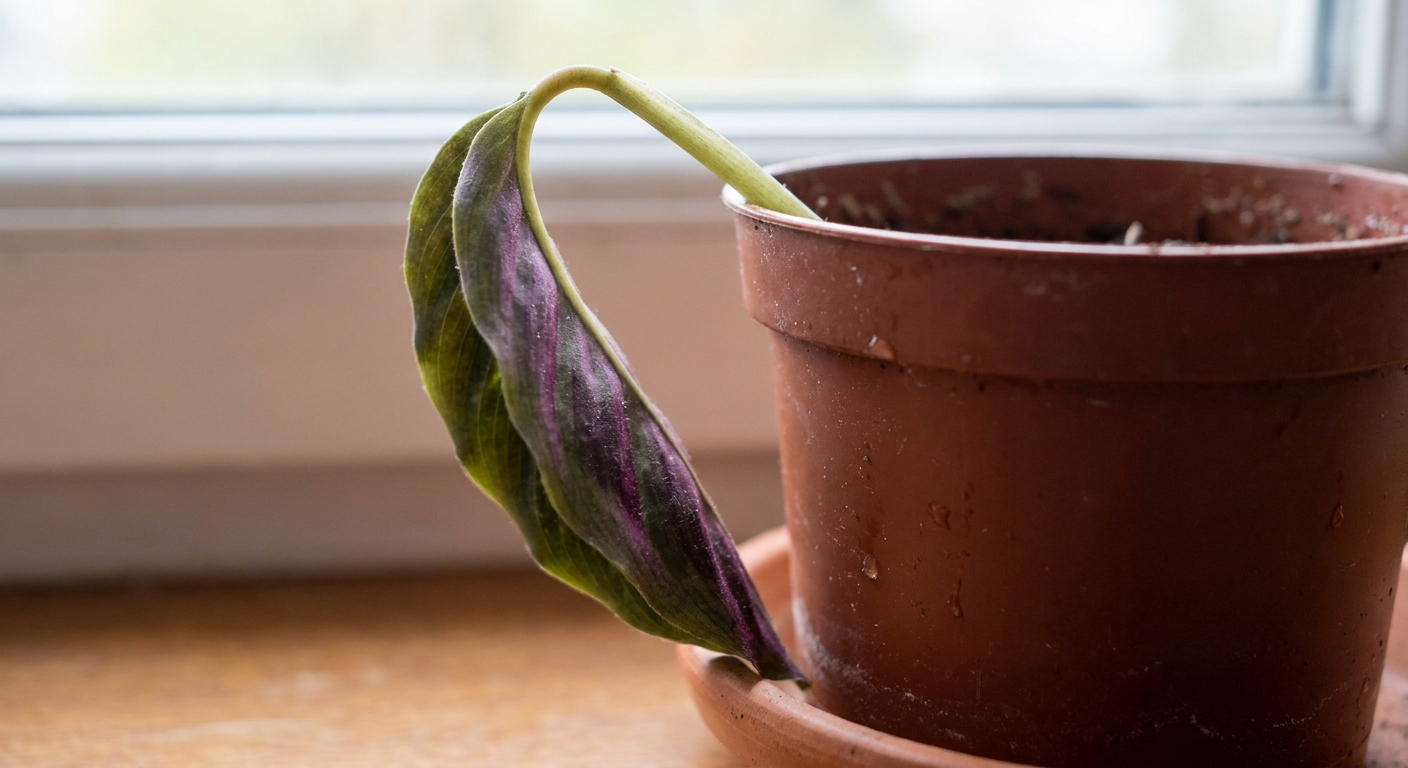
Cause 1: Soil is too dry (true thirst)
Calatheas are famous for being moisture sensitive. They do not want to sit in mud, but they also hate drying out completely. When the pot dries too far, leaves lose turgor pressure and slump.
How to confirm
- Top 2 to 3 inches are dry, or the skewer comes out dry.
- Pot feels noticeably lighter than usual.
- Leaves droop and may slightly curl, but stems are not mushy.
Safe first-aid (today)
- Water slowly and deeply. Use room-temperature water. Pour until water runs from the drainage holes.
- Let it drain fully. Never leave the pot sitting in a saucer of water.
- If water runs straight through and the mix seems to repel it, do a 20 to 30 minute bottom soak in a bowl, then drain well.
What to do next
- Move toward a “evenly moist” rhythm: water when the top inch feels dry, not when the whole pot is crispy.
- Consider a slightly more water-retentive but airy mix if you are watering constantly (more on mixes below).
Cause 2: Wet feet, poor drainage, or early root rot
This is the sneaky one because overwatered calatheas can droop just like underwatered ones. If roots cannot breathe, they cannot move water up to the leaves. The plant looks thirsty even while sitting in soggy soil.
How to confirm
- Soil feels wet for many days after watering.
- Pot has little to no drainage, or a cachepot traps runoff.
- Leaves droop plus you see yellowing (often lower leaves first).
- Soil smells sour, swampy, or “off.”
Safe first-aid (today)
- Stop watering. Let the top few inches dry before doing anything else.
- Increase airflow. Give the plant space and gentle air movement, but avoid blasting it with a fan.
- Check the pot setup. Empty the saucer or outer pot. Make sure the nursery pot is not sitting in water.
If you suspect rot
If drooping is severe and the mix stays wet, it is worth a gentle inspection. Slide the plant out of the pot and look for firm, light-colored roots versus dark, mushy, smelly roots.
- Trim rotted roots with clean scissors.
- Repot into a fresh, airy mix in a pot with drainage holes.
- Water once to settle, then let the top inch dry before watering again.
Note: If more than half the roots are mushy, recovery can be slow. Keep conditions warm, humid, and bright but indirect.
Cause 3: Low humidity (the limp, sulky droop)
These are rainforest understory plants. In many homes, especially in winter, humidity drops low enough that calatheas transpire faster than their roots can keep up. Leaves can droop, curl, and develop crispy edges.
How to confirm
- Soil is not bone dry and not soggy, yet leaves look tired.
- Brown tips or edges accompany the droop.
- Drooping worsens near heaters, vents, or sunny windows with dry air.
Safe first-aid (today)
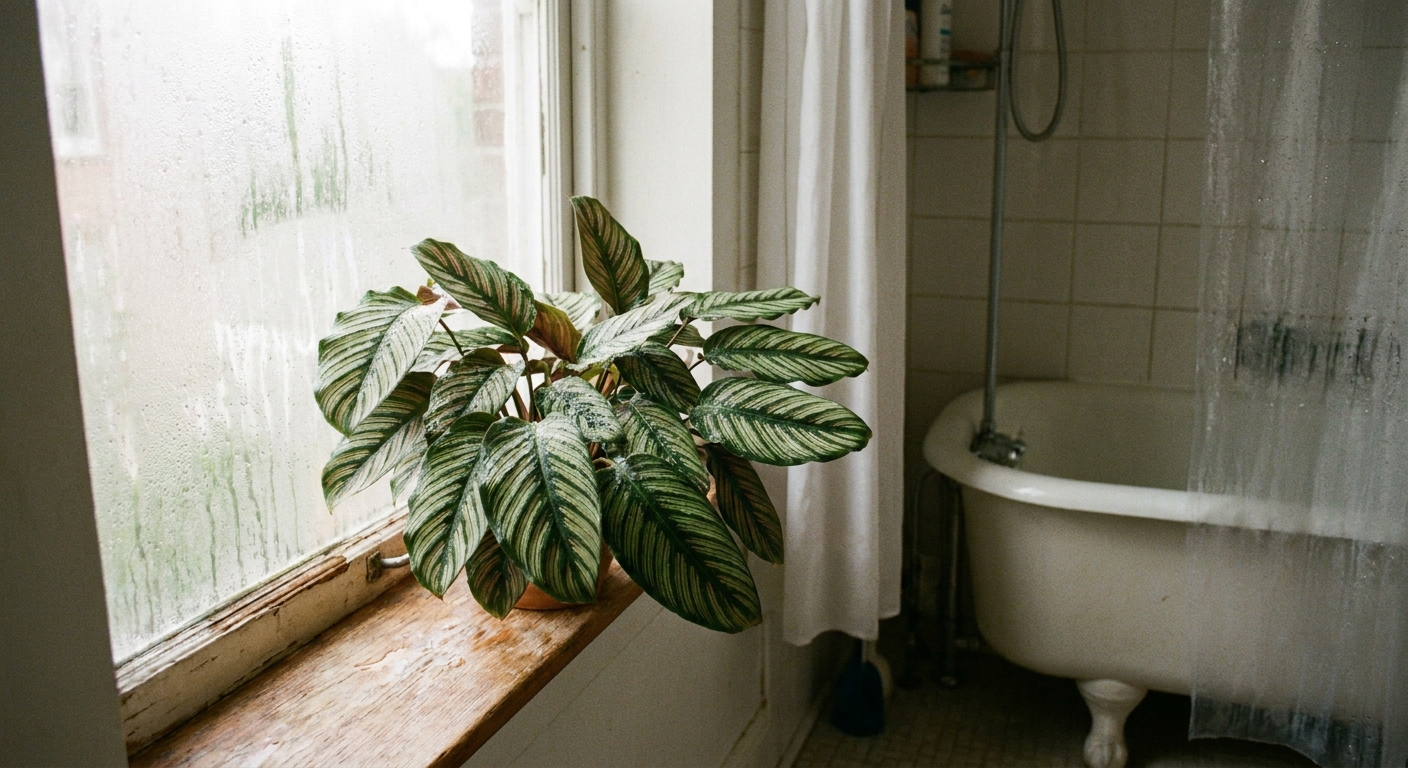
- Move it to a gentler microclimate. A bathroom with a window can be magic.
- Group plants together to create a humid pocket.
- Use a humidifier if you can. Aim for roughly 50 to 65 percent humidity for happiest leaves.
Skip the misting habit as your main fix. It raises humidity for minutes, not hours, and wet leaves can invite spotting if airflow is poor.
Cause 4: Heat and cold drafts (yes, one blast can do it)
Calatheas are sensitive to temperature swings. A hot radiator, a cold windowpane at night, or an AC vent can trigger drooping fast.
How to confirm
- Drooping appeared after moving the plant, turning on heating or AC, or a weather change.
- Leaves closest to the draft look worst.
- Soil moisture is not the main issue.
Safe first-aid (today)
- Place the plant 3 to 6 feet away from vents, radiators, and drafty doors.
- Keep it out of direct sun, especially through hot glass.
- Try for steady temps, roughly 65 to 80 F, avoiding cold nights.
Cause 5: Repot shock (it happens, even when you do everything right)
After repotting, calatheas may droop for a week or two while roots re-establish. This is especially common if roots were disturbed, the plant went into a much larger pot, or the new mix is very different from the old one.
How to confirm
- Drooping started within 24 to 72 hours of repotting.
- No major yellowing or mushy stems.
- Soil is evenly moist but not waterlogged.
Safe first-aid (today)
- Give bright, indirect light and steady warmth.
- Keep moisture consistent, not soaking.
- A little extra humidity helps while roots recover.
- Avoid fertilizer for 4 to 6 weeks.
If you upsized the pot dramatically, consider moving it back to a pot only 1 to 2 inches wider than the root ball. Oversized pots hold extra moisture that can lead to droop from wet feet.
Cause 6: Pests that cause limp leaves
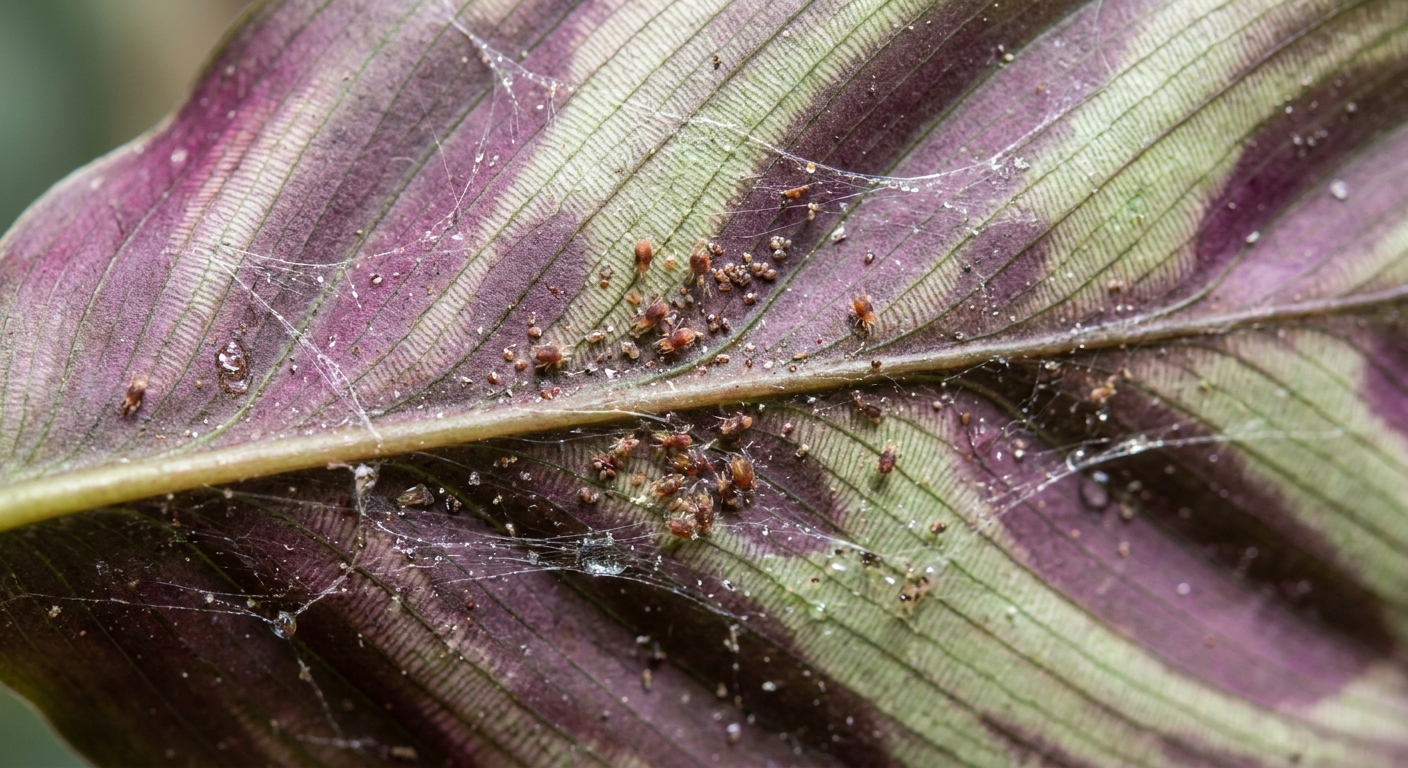
Sometimes drooping is not about water at all. Sap-sucking pests can drain the plant and leave it looking tired, especially on tender new growth.
Common culprits on calatheas
- Spider mites: fine webbing, speckled leaves, dusty look, worse in dry air.
- Thrips: silvery streaks, tiny black specks (frass), distorted new leaves.
- Mealybugs: cottony clusters in leaf joints.
- Scale: small tan or brown bumps on stems and leaf undersides.
How to check
- Inspect leaf undersides with a bright light.
- Look along the midrib and where petioles meet the crown.
- Tap a leaf over white paper to spot moving insects.
Safe first-aid (today)
- Isolate the plant. Calatheas share pests easily.
- Rinse thoroughly. Lukewarm shower, focusing on undersides.
- Treat gently. Insecticidal soap is often safer for calatheas than heavy oils. Test on one leaf first and treat in low light.
- Repeat. Most pest life cycles require treatments every 5 to 7 days for several rounds.
Your calathea droop checklist
If you only do one thing, do this: match your fix to the soil and the roots, not to the drama of the leaves.
- Dry soil + limp leaves: deep watering and better consistency.
- Wet soil + limp leaves: pause watering, improve drainage, consider root check.
- Slightly damp soil + limp leaves: raise humidity, reduce drafts, check for pests.
- After repot: stabilize conditions, no fertilizer, patience.
Dial in watering and soil so drooping stops happening
Watering rhythm that works for most homes
- Water when the top inch is dry, not on a calendar.
- Use room-temperature water.
- Water until it drains, then empty the saucer.
Water quality matters
If your calathea is getting crispy edges, spotting, or constant stress even when watering seems “right,” look at the water itself. Many calatheas are sensitive to minerals, fluoride, and chlorine.
- If possible, use filtered, distilled, or rainwater.
- If tap water is your only option, letting it sit out overnight can help with chlorine, but it does not reliably remove fluoride. A basic filter or mixing tap with distilled is often a better compromise.
A calathea-friendly potting mix (airy but moisture-holding)
You want roots to breathe while still staying evenly moist.
- 2 parts high-quality indoor potting mix or coco coir based mix
- 1 part perlite or pumice
- 1 part fine orchid bark
If your home is very dry, you can add a small handful of worm castings for gentle nutrition and moisture buffering. If your home is humid or you tend to overwater, increase the perlite.
When to worry: signs you should act fast
- Stems are mushy at the base or the crown feels soft.
- Drooping is paired with rapid yellowing across many leaves.
- You see pests and the plant is declining week to week.
- The potting mix smells rotten even after drying a bit.
If any of these show up, prioritize a root inspection and a reset into fresh, airy mix. Calatheas can bounce back, but they need healthy roots to do it.
Quick Q and A
Why does my calathea change position at night?
Most likely nyctinasty, the normal daily movement of prayer plants. Many calatheas lift or fold their leaves upward at night and relax lower during the day. If the leaves feel firm and the pattern is consistent, your plant is simply keeping time.
Should I water a drooping calathea right away?
Only if the soil is actually dry. If the mix is wet, watering will make drooping worse by starving roots of oxygen.
Can low light cause drooping?
Low light usually causes slow growth and legginess more than sudden limp leaves. But low light can indirectly contribute by keeping soil wet too long. If your plant is in a dim corner and drooping with damp soil, brighter indirect light can help the pot dry at a healthier pace.
A gentle pep talk from one plant whisperer to another
Calatheas are not “hard.” They are simply honest. They show you, very clearly, when something in the root zone or the air feels off. Once you learn their signals, drooping becomes less of a crisis and more like a little note that says: “Hey friend, can we tweak our routine?”
If you want, tell me what type of calathea you have, what your light looks like, and what the soil feels like right now. I can help you narrow it down quickly.