
Why Your Anthurium Isn’t Blooming

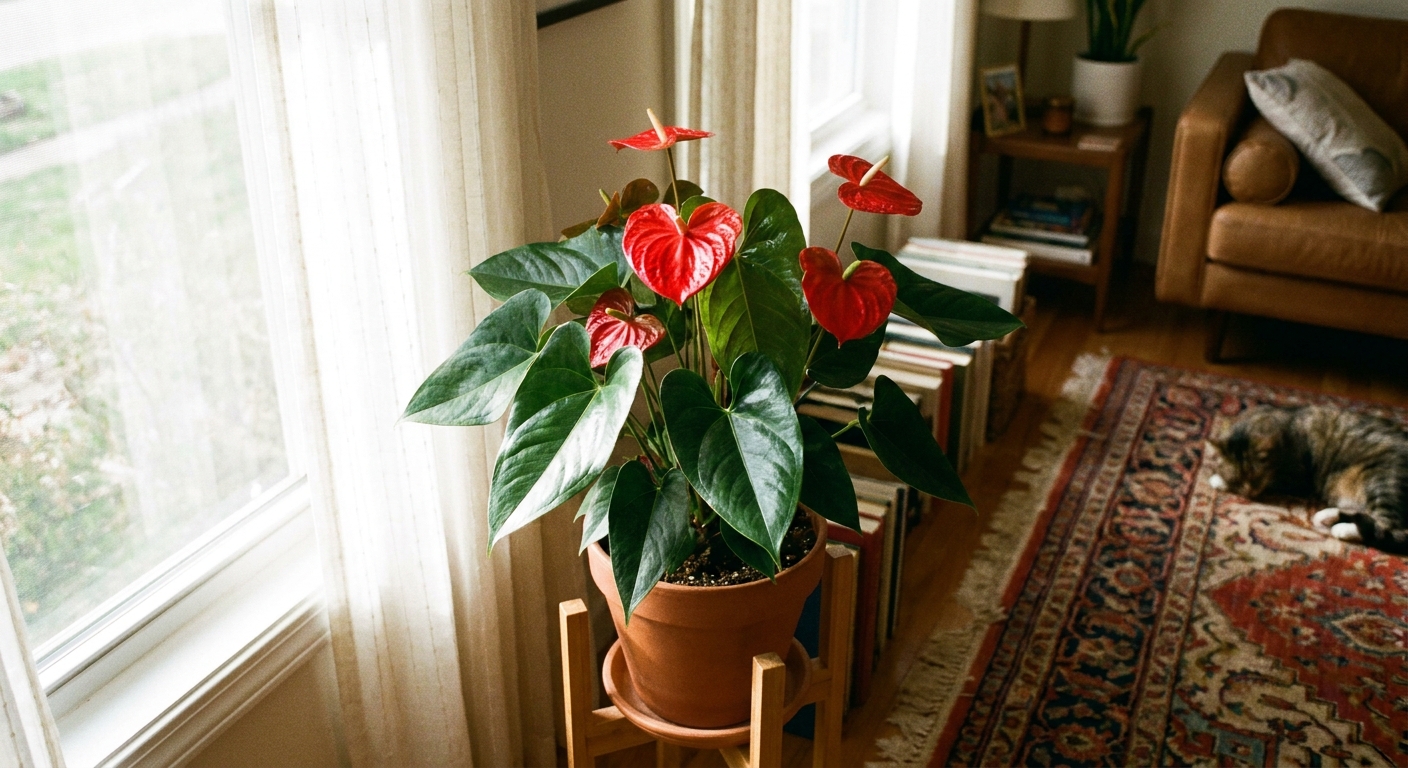
Anthuriums are the houseplants that look like they were designed by a jewelry maker: glossy leaves, waxy heart-shaped “flowers,” and a little bright spadix that looks like it is holding court. So when yours is pumping out leaves but refusing to bloom, it can feel personal.
It is not personal, I promise. Anthurium bloom cycles are tightly tied to light, steady warmth, moisture balance, and nutrition. In other words: they bloom when they feel like they are living their best tropical life.

Before we troubleshoot, one quick sanity check: some “anthuriums” sold as houseplants are foliage types (like crystallinum, clarinervium, and friends). They can bloom, but the blooms are usually smaller, greener, and less showy than the classic flamingo flower. If you expected red spathes and you own a velvet-leaf collector plant, nothing is wrong. It is just a different vibe.
Below are 7 common causes of anthurium not blooming, how to diagnose each one quickly, and what to do. I will also walk you through what results to expect month to month so you are not staring at your plant like it owes you rent.
What counts as a bloom?
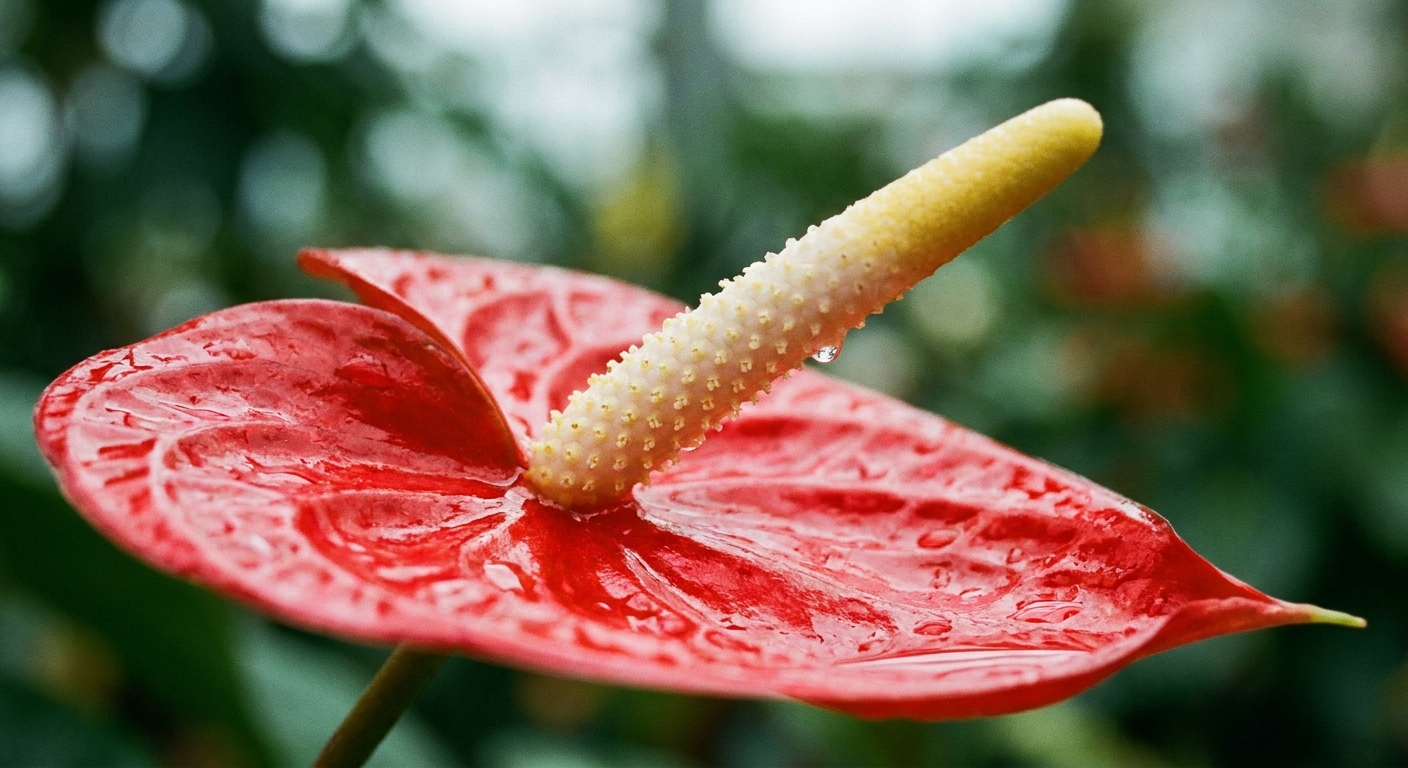
What we call anthurium flowers are actually two parts:
- Spathes: the colorful, waxy “petal” (often red, pink, white, or green).
- Spadix: the finger-like center where the true tiny flowers live.
On many Anthurium andraeanum types, a spathe often lasts several weeks, and in great conditions it can hang on longer. If your plant has not produced a spathe for a while during brighter months, that is a useful clue. A practical rule of thumb: if nothing has appeared in roughly 3 to 6 months while the plant is otherwise growing, it is commonly fair to say it is “not blooming,” but some indoor plants simply bloom less frequently.
1) Not enough light
Anthuriums are often sold as “low light tolerant,” and that is true for survival. Blooming is a different job entirely. To flower, they need bright, indirect light for many hours a day.
Signs this is the issue
- Long stretches of new leaves but no flower stalks
- Leaves slowly getting smaller over time
- Plant leaning toward the window
- Very dark green leaves with longer internodes (more space between leaf stems)
What to do
- Move it closer to a bright window: East is lovely. South or west can work if you diffuse with a sheer curtain.
- Watch for direct sun: strong rays hitting the leaves or spathes can scorch them. If you see bleached patches or crispy edges, back it off a bit or add more diffusion.
- Aim for “bright shade”: you should be able to comfortably read a book nearby during the day.
- Add a grow light if your home is dim: 10 to 12 hours daily can be enough to trigger blooms.
What to expect: If light was the main issue, you may see new growth tighten up and a flower stalk begin within 6 to 10 weeks, especially in spring and summer.
2) It is not mature yet
Young anthuriums can be enthusiastic leaf-makers before they are ready to bloom consistently. Many smaller plants sold in 4 inch pots are still settling into adulthood.
Signs this is the issue
- Plant is small with only a few leaves
- No history of flowering since you bought it
- Leaves are healthy and sizing up, but no flower stems appear
What to do
- Be steady, not intense: consistent light, even moisture, and gentle feeding beats constant changes.
- Avoid overpotting: a too-large pot encourages root exploration and leaf growth, not blooms.
What to expect: With good light, many anthuriums begin blooming more reliably once the plant has a fuller crown and a stronger root system. Think in seasons, not days.
3) Winter slowdown
Anthuriums can bloom at different times of year, but in most homes they slow down in winter because light levels drop and days shorten. Even if you keep the heat on, the plant still “feels” the seasonal shift.
Signs this is the issue
- It bloomed in warmer months, then stopped in late fall or winter
- Growth is slower overall
- No other major stress symptoms
What to do
- Do not force it with heavy fertilizer in low light months.
- Increase light: move closer to a window or use a grow light.
- Keep temperatures steady: ideal is roughly 65 to 80°F (18 to 27°C). Avoid cold windowsills.
What to expect: If seasonality is the main factor, you often see new flower stalks resume in early spring as light returns.
4) Fertilizer issues
Blooming takes energy. In potting mix, nutrients get used up over time. But overfeeding can backfire, especially with salts building up and stressing roots. Also, gentle reminder: light is usually the main limiter for blooms. Fertilizer supports the process, it does not replace sun.
Common feeding mistakes
- No fertilizer for 6+ months while the plant is actively growing
- High-nitrogen fertilizer that pushes leaves at the expense of blooms
- Full-strength feeding too often, leading to root stress
What to do
- Use a balanced, gentle fertilizer during active growth. Many growers do well with a balanced houseplant fertilizer at quarter to half strength every 2 to 4 weeks in spring and summer.
- If you try a “bloom” formula, keep it modest: a slightly bloom-leaning ratio can be fine, but do not expect it to outperform better light. Think of it as a small nudge, not a magic switch.
- Flush periodically: water thoroughly so excess salts drain out, especially if you fertilize regularly or have hard water. Every 4 to 8 weeks is a reasonable rhythm for many homes, or simply whenever you notice a white crust on the soil or pot rim.
What to expect: If nutrition was the missing piece, you may notice thicker stems and a more “upright” posture within a month, then blooms in the next 1 to 3 months depending on light and season.
5) Watering problems
Anthuriums like evenly moist conditions, but not soggy feet. Flowering often stalls when roots are stressed. The tricky part is that both overwatering and underwatering can look like “not blooming,” because the plant goes into preservation mode.
Signs of overwatering
- Pot stays heavy for many days
- Yellowing lower leaves
- Mushy roots or a sour smell from the soil
- Fungus gnats hovering near the pot
Signs of underwatering
- Drooping or curling leaves that perk up after watering
- Dry, crisp leaf edges
- Potting mix pulling away from the pot
What to do
- Use the finger test: water when the top 1 to 2 inches of mix feel dry, then water thoroughly until it drains.
- Never leave it soaking in a saucer of water.
- Adjust by season: less frequent in winter, more frequent in summer, always based on dryness not the calendar.
What to expect: Once moisture is steady, your plant typically returns to active growth within 2 to 4 weeks, and blooming follows after the plant rebuilds energy reserves.
6) Root-bound or tired mix
Anthuriums can bloom while slightly snug in their pots, but there is a line where “cozy” becomes “crowded.” If roots are circling tightly, there is not enough fresh medium to hold moisture and nutrients evenly.
Signs this is the issue
- Roots coming out of drainage holes
- Water runs through too quickly and the mix dries fast
- Plant feels top-heavy or lifts out of the pot easily as one root mass
- No blooming despite good light and reasonable feeding
What to do
- Repot one size up: usually 1 to 2 inches wider, not a big jump.
- Refresh the mix: anthuriums do best in a chunky, airy aroid mix that drains well yet holds some moisture. A practical blend is potting mix plus orchid bark and perlite.
- Check roots: trim only mushy, dead roots and keep healthy ones intact.
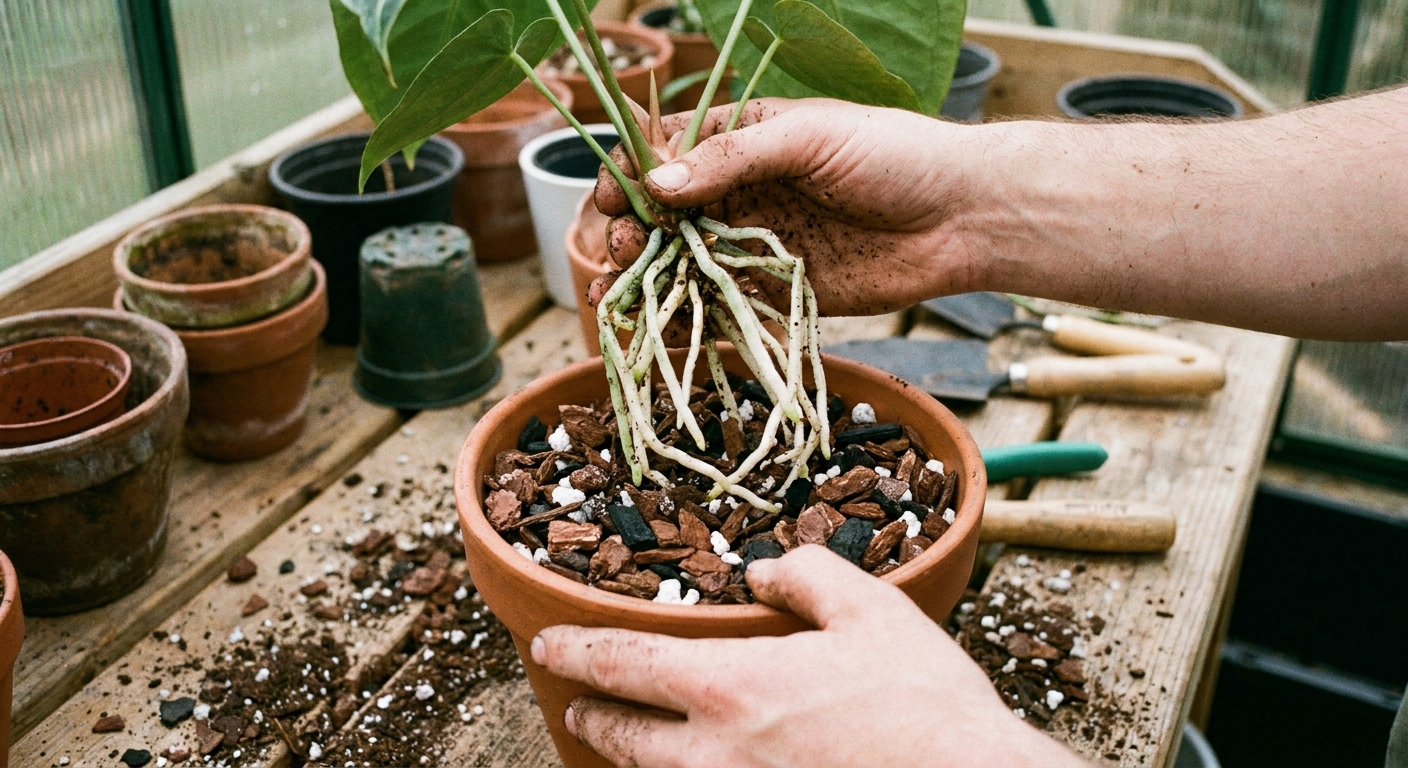
What to expect: Repotting is a short-term stress. You may see a pause for a few weeks. Once new roots grab hold, blooms often return in 2 to 4 months if light is adequate.
7) Drafts, temp, humidity
Anthuriums are tropical understory plants. They can tolerate average household humidity, but consistent dryness and cold drafts can reduce bloom production fast.
Signs this is the issue
- Brown leaf tips or edges despite decent watering
- Buds start, then stall or dry up
- Plant sits near an AC vent, heater blast, or a frequently opened door
- Night temperatures drop significantly
What to do
- Keep it away from drafts: even a “fine” spot can be drafty at night.
- Raise humidity in a real way: grouping plants can help a little, and a humidifier is the most effective option. Pebble trays may offer minor, very local benefit, but they rarely move the needle for an entire room. Aim for roughly 50 to 70% if you can.
- Wipe leaves: clean leaves photosynthesize better. It is not a bloom button, but it supports the whole system.
What to expect: With steadier conditions, anthuriums often stop crisping at the edges within a few weeks, and bloom initiation becomes more likely over the next couple of months.
Basic maintenance
If your anthurium has old, tired-looking spathes, you can snip the flower stalk off near the base once it fades. It will not force new blooms overnight, but it does tidy the plant and can redirect energy toward new growth. If you prefer to leave spent blooms in place until they dry, that is usually fine too. It is rarely the reason a plant stops blooming.
Month-by-month reset
If you are not sure which factor is the main one, this gentle reset works for most non-blooming anthuriums without shocking the plant.
Weeks 1 to 2
- Move to brighter indirect light (or add a grow light).
- Check watering habits and drainage. Empty saucers.
- Wipe leaves with a damp cloth.
Weeks 3 to 6
- Start a light fertilizer routine if it is growing (quarter to half strength).
- Flush the pot once if you fertilize regularly or notice crusty salts.
Weeks 6 to 12
- If it is root-bound or the mix is compacted, repot one size up into a chunkier medium.
- Stabilize temperature and drafts. Consider modest humidity support.
Most anthuriums reward consistency. The plant needs time to build the reserves required for a long-lasting spathe, so think of your care as “setting the stage” rather than “pushing the button.”
Quick checklist
- Plant type: flamingo flower types have showy spathes; foliage types bloom quietly
- Light: bright indirect for many hours daily (grow light if needed, avoid harsh direct sun)
- Water: top 1 to 2 inches dry, then soak and drain
- Feed: balanced fertilizer at low dose during active growth
- Pot: snug is fine, severely root-bound is not
- Season: winter can pause blooms without anything being “wrong”
- Environment: warm, stable temps, no drafts, moderate humidity
When to worry
If your anthurium is not blooming and it is declining, look for these red flags:
- Root rot: persistent yellowing, mushy stems, foul smell
- Pests: thrips (silvery streaks), spider mites (fine webbing), mealybugs (cottony clusters)
- Severe stress: repeated dry-outs, constant soggy soil, or cold exposure
Addressing health comes first. Flowers return after the plant feels safe again.
One last reminder
Anthuriums are not stingy, they are just honest. If the light is a bit dim, the roots are stressed, or winter has the sun clocked out early, they will choose leaves over blooms every time.
Give yours brighter days, steadier watering, and a little food during growth season, and chances are excellent you will see a flower stalk rise like a tiny flag that says: “Okay, we are thriving now.”