
Why Your African Violet Won’t Bloom

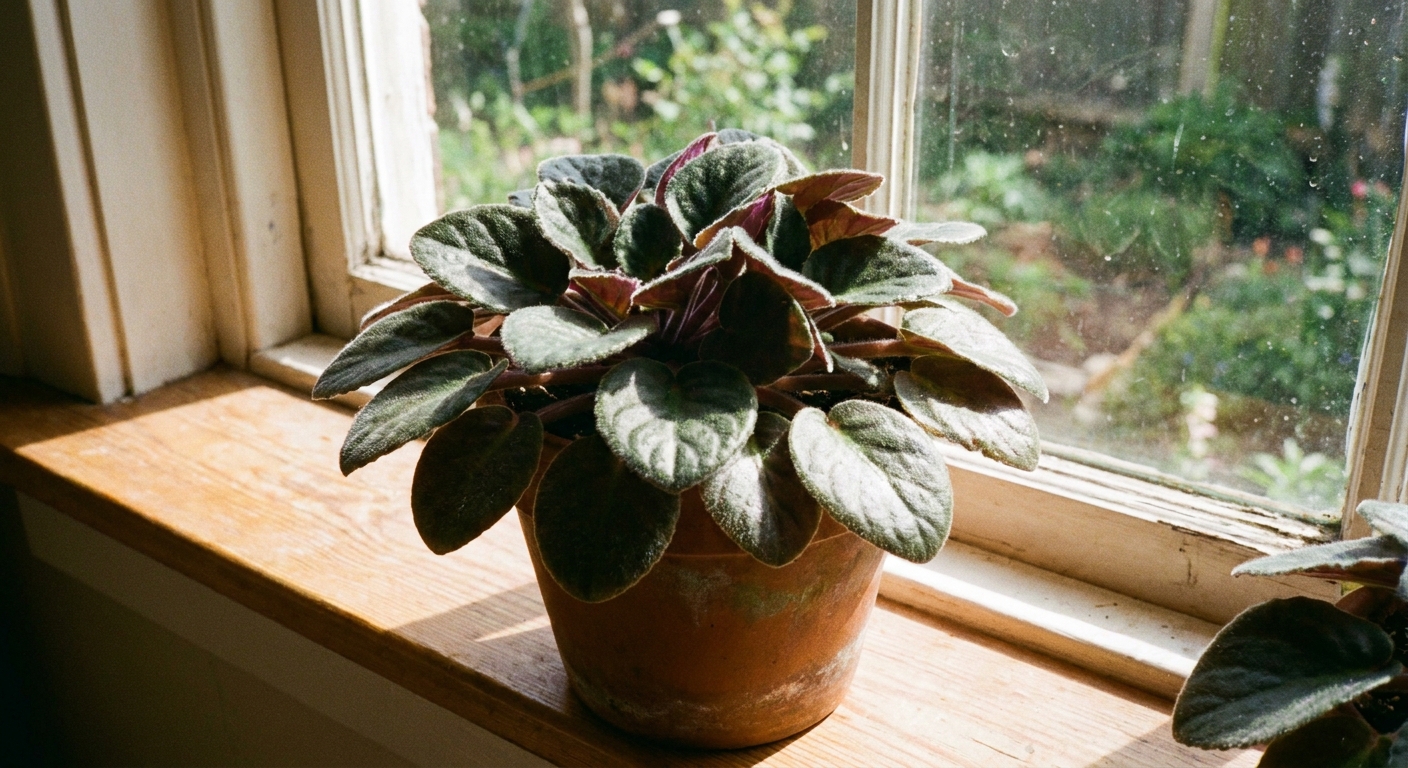
If your African violet is all leaves and zero flowers, you are not alone. These little fuzzy charmers are famous for making us feel like we did everything right, then stubbornly refusing to bloom. The good news: African violets are wonderfully predictable once you learn what triggers buds.
In this Leafy Zen guide, we are skipping the general care basics and going straight to the reasons blooms stall, plus exactly how to fix each one. I will also give you a simple month-by-month rhythm so you are not constantly guessing.

Bloom-first checklist
If you do nothing else, walk through this quick checklist in order. Most no-bloom issues come down to the first three.
- Light: Bright, indirect light daily. Aim for long, consistent days (often 10 to 12+ hours), using supplemental light if natural light is short.
- Fertilizer: Regular, diluted feeding with a bloom-friendly formula.
- Pot size: Slightly snug pot, excellent drainage, fresh mix.
- Crown health: One main crown, suckers removed.
- Watering: Even moisture, never soggy, no long drought cycles.
- Temperature and humidity: Warm and steady, modest humidity.
Read your plant
African violets tell you what is wrong if you know where to look. Use these visual cues to narrow the culprit fast. (These are strong clues, not courtroom evidence. Cultivars, root issues, and pests can mimic symptoms.)
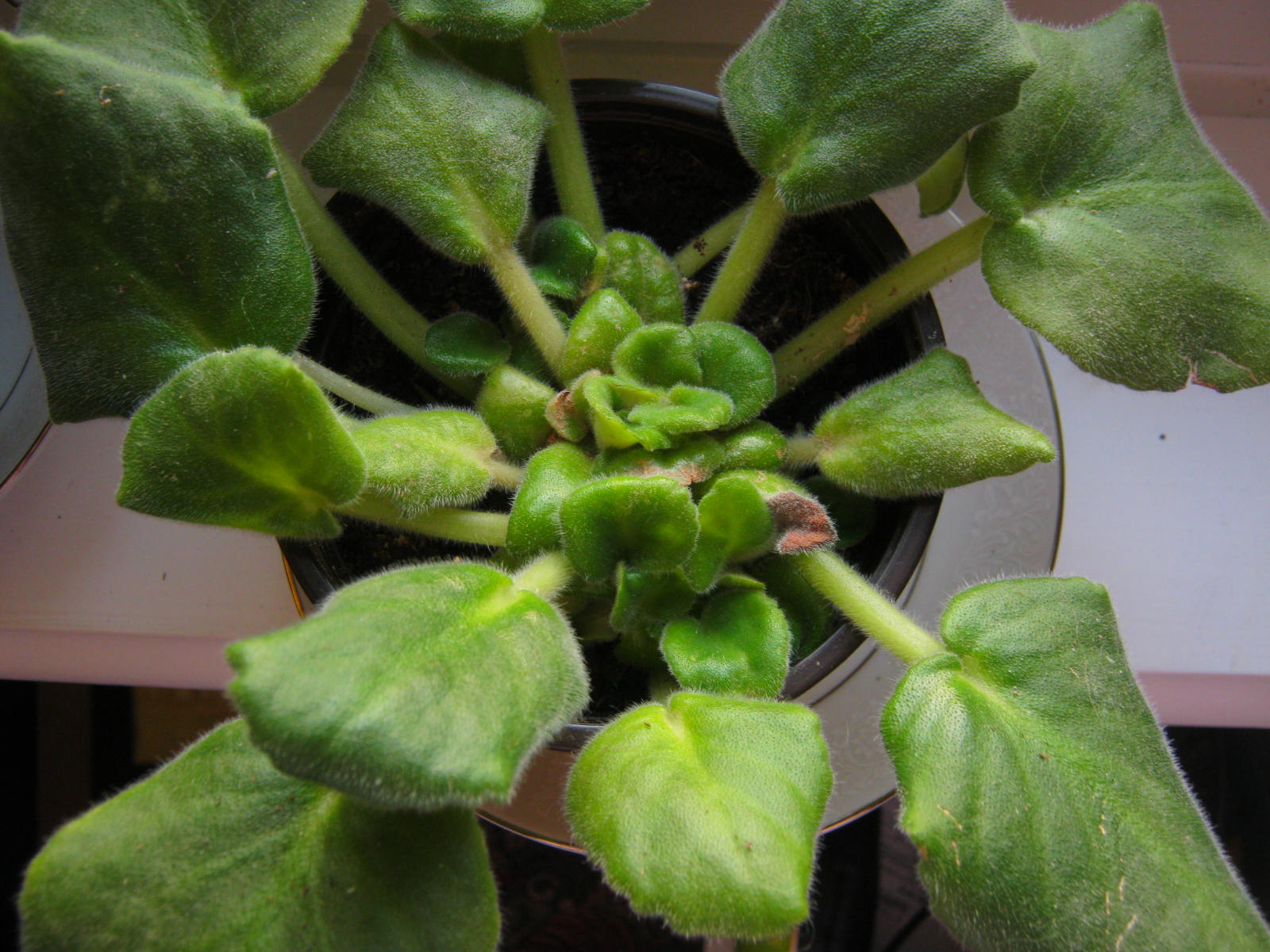
- Leaves reaching up like a sea anemone: can indicate not enough light.
- Very tight, stacked center growth: can indicate too much light, temperature stress, or a crown issue.
- Big beautiful leaves, no buds, soft growth: often too much nitrogen, inconsistent light, or a plant that is still maturing.
- Lots of small crowns clustered together: suckers diverting energy away from flowering.
- Outer leaves drooping, mix wet for days: roots staying too cold or too soggy.
- Brown crispy leaf edges: low humidity, salt buildup, or cold drafts.
Problem 1: Not enough light
African violets can survive in medium light, but blooming takes bright, indirect light and consistency. Many plants sit in “nice-looking” spots that are simply too dim for buds.
Signs it is a light issue
- Leaves tilt upward and petioles elongate as the plant reaches.
- New leaves are smaller and spaced farther apart.
- The plant grows, but buds never appear or they abort early.
Fix it
- Window placement: East windows are the easiest. South or west can work if you use a sheer curtain and keep the plant a bit back from the glass.
- Rotate weekly: A quarter turn each week supports even growth and more balanced bud stalks.
- Consider a grow light: If your home is dim (hello, winter), an LED grow light for about 10 to 14 hours can be the fastest route back to blooms.
Leafy Zen tip: If you can comfortably read a book in that spot during the day without squinting, your violet is closer to “bloom light.” If it feels cozy and dim, it is probably leaf-only light.
Problem 2: Too much light
Excessive direct sun or a grow light that is too close can stress the plant, tighten the crown, and scorch leaves. A stressed violet will focus on survival, not flowers. This is less common than too little light, but it is real.
Signs of too much light
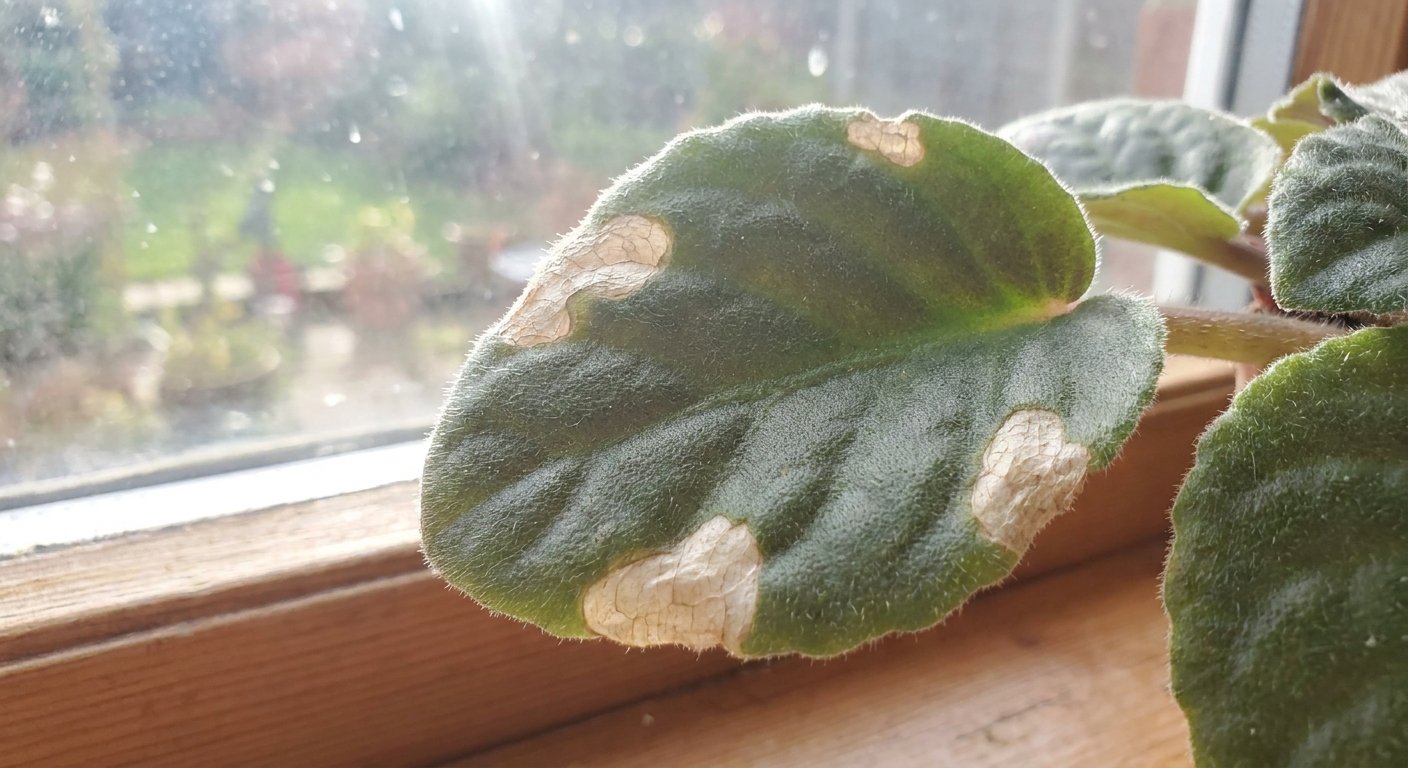
- Bleached patches or tan areas on leaves.
- A very tight, compact center with smaller, thickened new leaves.
- Leaf edges curling down or looking brittle.
Fix it
- Move it 1 to 3 feet back from the window or add a sheer curtain.
- Under grow lights, raise the light a few inches or shorten the duration slightly.
- Keep leaves from touching hot window glass in summer or cold glass in winter.
Problem 3: Fertilizer is off
African violets are steady feeders when they are actively growing. Two common bloom issues are no fertilizer and too much nitrogen (lots of leaves, no flowers).
What blooms like
- A balanced African violet fertilizer or a “bloom” formula that is not overly nitrogen-heavy.
- Consistent feeding. Violets prefer a rhythm over a random feast.
Fix it (simple routine)
- Choose a gentle fertilizer: Look for one labeled for African violets or flowering houseplants.
- Dilute: Mix at 1/4 to 1/2 strength unless your label specifically recommends otherwise.
- Pick a cadence and stick to it: You can feed lightly every 2 to 4 weeks, or go “weakly, weekly” with a very diluted dose during active growth. Either can work. Consistency matters most.
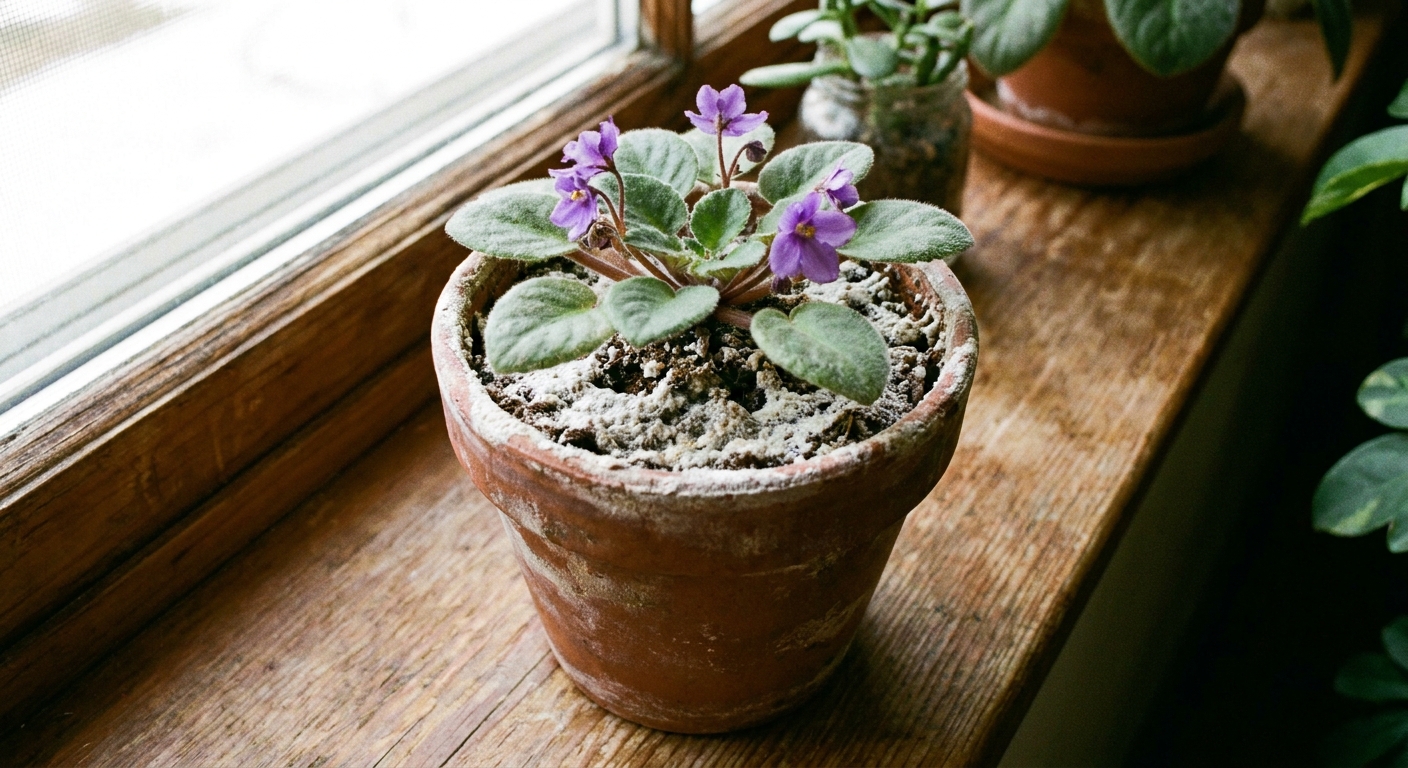
- Flush salts periodically: Every 4 to 8 weeks (or whenever you see crust), water thoroughly until water runs out the drainage holes, then discard runoff. Frequency depends on water hardness, fertilizer type, and how you water.
Photo cue: A white crust on the soil surface or pot rim often signals mineral or fertilizer salt buildup, which can quietly sabotage blooming.
Problem 4: Pot too big or mix tired
This one surprises people. African violets typically bloom best when they are a little snug. In an oversized pot, they often pour energy into roots and leaves instead of flowers.
What to aim for
- Pot size: As a guideline, many growers use a pot about 1/3 the diameter of the leaf span (the width of the plant). Minis often like even smaller pots.
- Mix: Light, airy, and fast-draining. Old compacted mix can suffocate roots and stall blooms.
Fix it
- If the pot looks huge compared to the plant, downsize one step.
- Repot into fresh African violet mix (or a similarly light mix) if the soil feels dense, stays wet too long, or has been in the pot for a long time.
- Always use a pot with drainage holes. “Pretty cachepots” are fine only if the plant is inside a draining nursery pot.
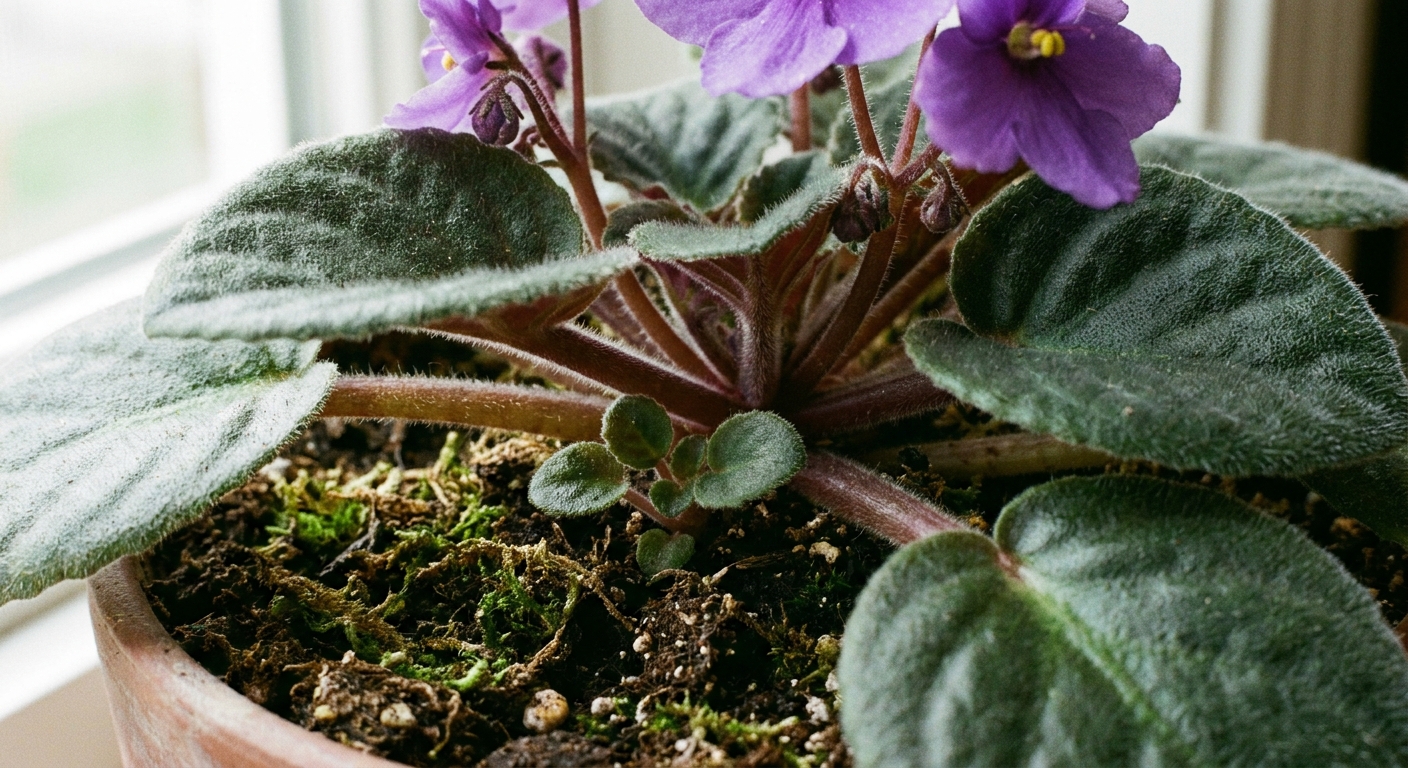
Problem 5: Suckers stealing energy
Suckers are little side crowns that sprout where leaves join the main stem. They are not evil, but they do divide the plant’s energy. A violet trying to be three plants at once often blooms poorly.
How to spot them
- Multiple centers of new growth instead of one neat rosette.
- Leaves emerging at odd angles from the base, creating a crowded, uneven shape.
Fix it
- Gently remove small suckers while they are young using clean fingers, tweezers, or a small sterile blade.
- If the plant is very crowded, consider repotting and separating suckers to root as new plants.
Problem 6: Watering swings
African violets bloom best with even moisture. Long dry spells followed by heavy watering can cause stress that delays buds. Constantly wet soil can rot roots and quietly shut down flowering.
Signs your watering rhythm is off
- Leaves feel limp even though the soil is wet (possible root trouble).
- Lower leaves yellowing and dropping, especially with a musty smell in the pot.
- Soil pulling away from the sides of the pot (too dry too often).
Fix it
- Water when the top feels slightly dry: Not dust-dry, just lightly dry to the touch.
- Use room-temperature water: Cold water can shock roots and leaves.
- Bottom water when possible: Set the pot in a shallow tray for 20 to 30 minutes, then let it drain well. This reduces crown splash and keeps the leaves tidy.
- Never leave it sitting in water: After bottom watering, empty the saucer.
Photo cue: If the crown looks wet or the center is staying damp, you may be watering from above and trapping moisture where rot can start.
Problem 7: Temp and humidity
African violets are tropical understory plants. They like it warm, steady, and not too dry.
Bloom-friendly range
- Temperature: Roughly 65 to 75 F is a comfortable zone for most plants.
- Humidity: Moderate humidity helps buds develop smoothly, especially in winter heating season.
Fix it
- Keep the plant away from cold drafts, AC vents, and radiators.
- Use a pebble tray under the pot (pot above the water line) or group plants together. This can help a little right around the plant, but a small humidifier is more effective if your air is very dry.
- If you see bud stalks forming but buds dry up, low humidity or temperature swings are common culprits.
Also check: Age and pests
If you have nailed the basics and your violet still will not bloom, these two are worth a quick look.
Plant age
Recently propagated plants (especially from leaf cuttings) can take time to mature before they bloom. If your plant is small, newly established, or recently repotted, “not yet” may be the answer.
Pests
Thrips can ruin blooms and buds, and cyclamen mites can distort new growth. If buds are deformed, fail to open, or the center growth twists and looks unhappy despite decent care, isolate the plant and inspect closely. When in doubt, treat and reset conditions.
Bloom recovery rhythm
You do not need a complicated schedule. You need a steady one. Here is a simple rhythm that supports blooming without turning your plant shelf into a science experiment.
Every week
- Rotate the pot a quarter turn.
- Check soil moisture with your finger and water as needed.
- Remove spent blooms and any tired outer leaves.
Once a month
- Check for salt crust. If you see buildup (or you have hard water), flush the pot with plain water, then let it drain fully.
- Inspect for suckers and gently remove small ones.
- Gently brush dust from leaves with a soft, dry brush.
Every 2 to 3 months
- Refresh your feeding routine. If you have been inconsistent, restart with a diluted fertilizer on a regular cadence.
- Assess light. Seasonal shifts matter. What was bright in summer can be dim in winter.
Every 6 to 12 months
- Repot into fresh mix if the soil has compacted, drains slowly, or the plant looks stalled despite good light and feeding.
- Downsize the pot if you accidentally upsized too far.
Quick recovery reset
If your plant seems healthy but has not bloomed in ages, try this gentle reset. It is not a harsh overhaul, just a return to what violets love. You can do the setup in about 10 minutes, then give it 10 days of steady conditions. Buds typically take a few weeks to show up, so think of this as starting the turnaround, not finishing it.
- Move to brighter indirect light or set up a grow light for about 12 hours daily.
- Check the pot size and confirm it is snug, with drainage.
- Water evenly with room-temperature water. No drought, no swamp.
- Feed lightly once with a diluted African violet fertilizer.
- Remove suckers if you see more than one crown.
Then hold steady. When the light is right, many African violets start forming bud stalks within a few weeks, but timing depends on variety, season, and how long the plant has been stressed.
Common questions
My African violet has buds, but they never open. Why?
This is often a mix of low humidity, temperature swings, or inconsistent watering. Improve stability first. Buds are sensitive to stress. If buds look damaged or deformed, also consider thrips.
Should I cut off leaves to force blooms?
Only remove old, damaged outer leaves or those that crowd the crown. Heavy leaf removal can stress the plant and delay flowering. Think tidy, not drastic.
Do African violets need dormancy?
No true dormancy like some bulbs. They can bloom year-round indoors when light and care are steady, though many slow down in winter if light drops.
One last gentle nudge
If your violet is not blooming, it is not judging you. It is simply asking for a tweak. Start with light, then feeding, then pot and crown. Those three fix the majority of no-bloom cases I see on windowsills and plant stands.
And if you catch me whispering encouragement to my ferns while I rotate a violet for the hundredth time, just know it is part of the process.