
Why Squash and Zucchini Leaves Turn Yellow

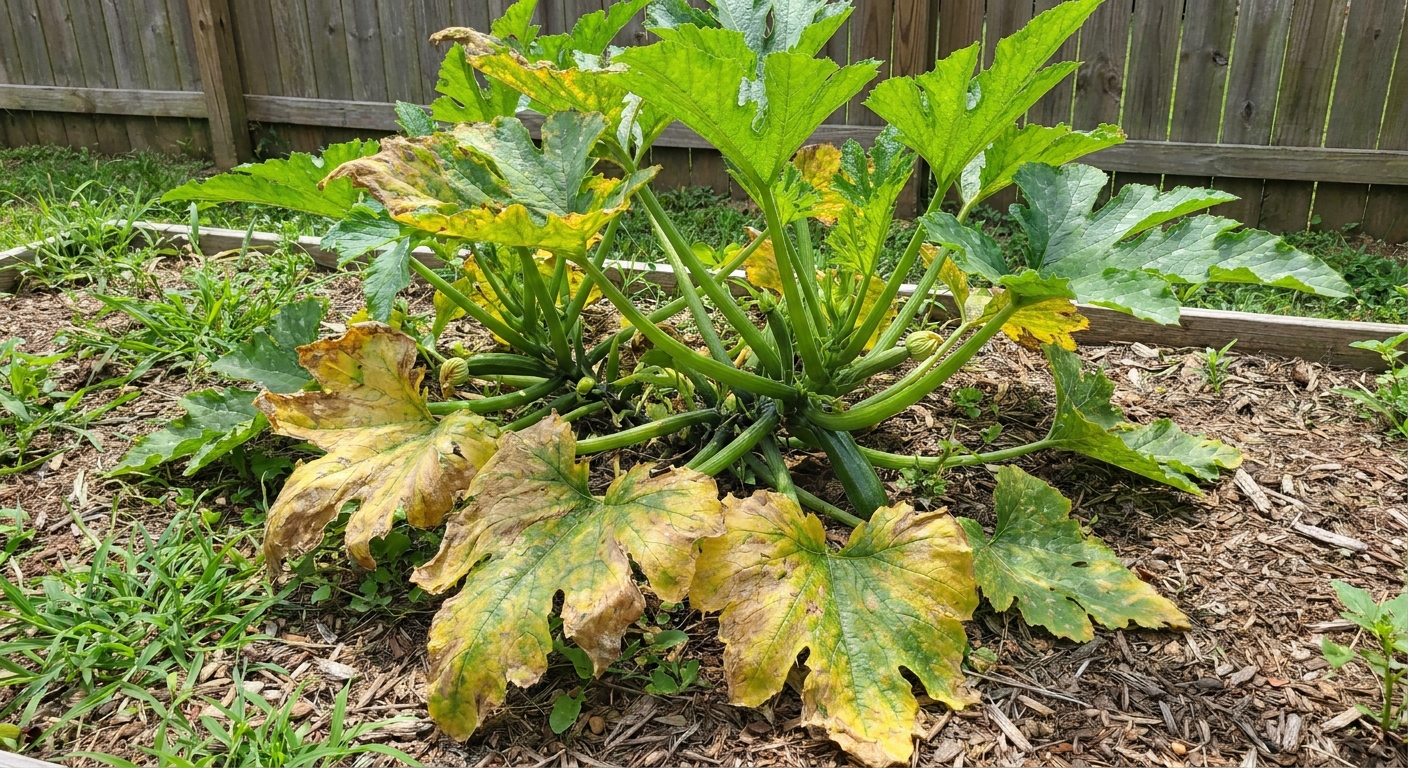
Yellow leaves on squash and zucchini can feel like a personal insult, especially when the plant was looking lush a week ago. Take a breath. With cucurbits, yellowing is usually a very specific message about water, nutrients, pests, or disease. The trick is to read where the yellow starts, how fast it spreads, and what else is happening on the plant.
This guide will help you diagnose the most common culprits and fix them using Leafy Zen’s organic, soil-first approach.

First, a quick reality check
Some yellowing is normal. Squash and zucchini are fast growers and fast replacers. Older leaves near the base will eventually yellow and fade as the vine focuses energy on new growth and fruit.
Normal yellowing looks like
- Only the oldest, lowest leaves yellow
- New growth stays green and perky
- No spotting, fuzzy coating, or sudden collapse
Not normal, investigate now
- Yellowing races through the plant in days
- Leaves wilt during the day and do not recover at night
- Yellow leaves have spots, angular patches, mottling, or powdery coating
- Stems show holes, sawdust-like frass, or soft rot
- Leaves crisp at the edges and the plant looks “drained,” even with moist soil
Fast field tests (5 minutes in the garden)
1) The finger test for watering swings
Push your finger 2 to 3 inches into the soil a few inches away from the stem.
- Bone dry: drought stress is likely.
- Wet and heavy: overwatering or poor drainage is likely.
- Moist like a wrung-out sponge: watering is probably not the main issue.
2) The “pattern test” on the leaf
- Yellow between green veins (interveinal chlorosis): think magnesium deficiency, sometimes iron issues in containers.
- Whole leaf pale yellow, especially older leaves: think nitrogen deficiency or root stress.
- Yellow patches bounded by veins (angular): suspect downy mildew or bacterial leaf spots depending on conditions.
- Yellow mottling with patchy light and dark green (a “mosaic” look), leaf distortion, or stunting: suspect a virus.
- Powdery white film: powdery mildew, even if the leaf is also yellowing.
3) The squash bug check (undersides and stems)
Flip a few leaves, especially older ones near the crown.
- Look for clusters of coppery eggs (often in neat groups) on leaf undersides
- Look for gray nymphs or flat brown adults hiding at the crown
- Notice yellowing that turns crisp, often starting on one section of the plant
If you find eggs or nymphs, jump to the squash bug section below.
4) The vine borer check at the crown
Look at the base of the plant where the stem meets the soil.
- Do you see tan sawdust-like crumbs (frass)?
- Any small holes in the stem?
- Does the stem feel soft or collapsing?
If yes, jump to the squash vine borer section below.
5) The bacterial wilt “string test”
Only do this if the plant is wilting and yellowing quickly and you are seeing cucumber beetles. Note: zucchini and squash are generally less susceptible to bacterial wilt than cucumbers, so treat this as a confirmation tool, not the first assumption.
- Cut a wilted leaf stem (petiole) close to the vine.
- Press the cut end to the cut end of another piece of stem or your fingernail.
- Slowly pull apart.
If you see sticky strands that stretch like glue, bacterial wilt is likely.
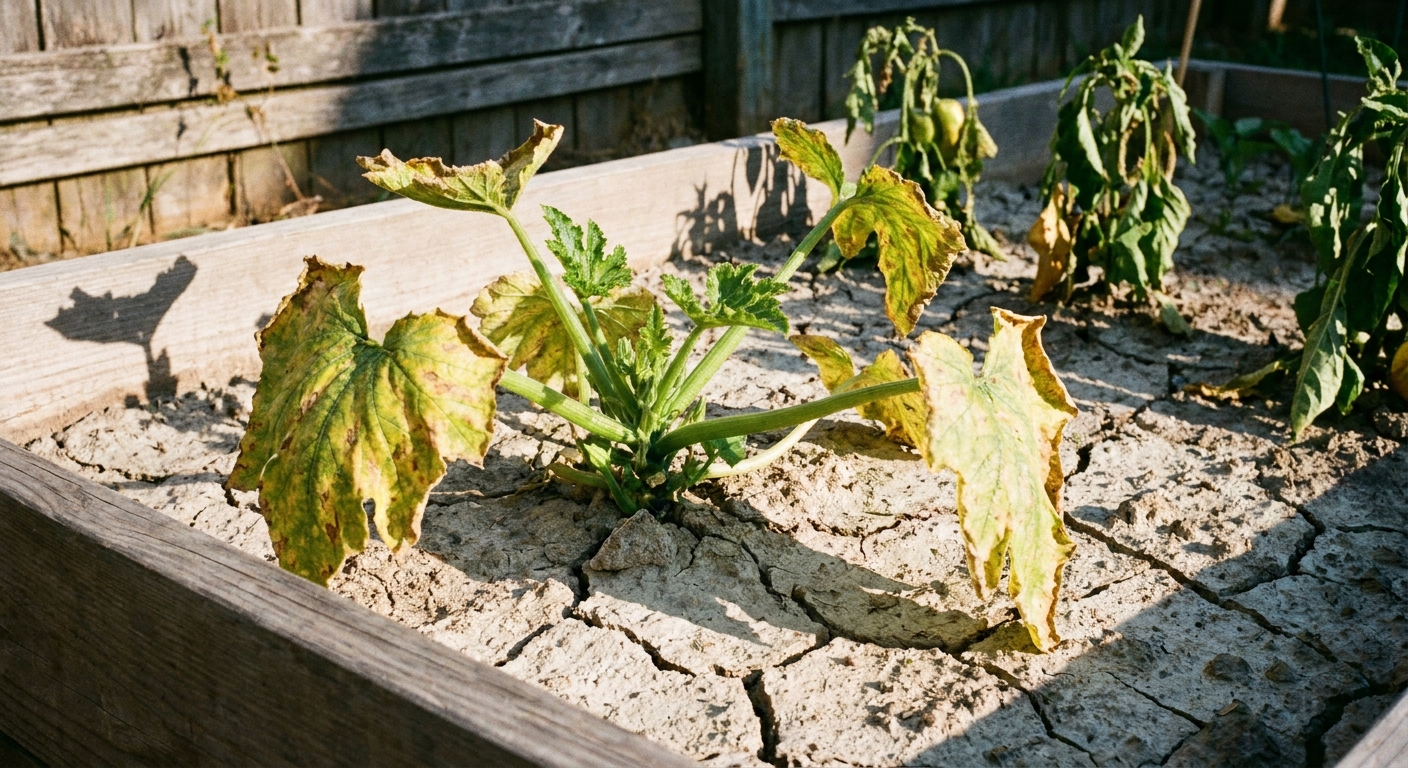
Watering swings (the most common cause)
Squash and zucchini like consistent moisture. Big swings from dry to soaked can yellow leaves because roots get stressed and stop taking up nutrients efficiently.
Photo-style symptom cues
- Leaves yellow, then brown at edges
- Plants droop in midday heat, sometimes recovering at night
- Fruit may abort or look misshapen
Organic fix
- Water deeply at the soil line, not overhead, aiming for 1 to 2 inches per week total from rain and irrigation.
- Mulch 2 to 3 inches with clean straw, shredded leaves, or untreated grass clippings to smooth out moisture swings.
- Improve drainage if soil stays soggy: add compost, grow on mounds, or switch to a raised bed. Soggy roots often look like “mystery nutrient deficiency” from above.
My rule of thumb: keep the soil consistently moist, but never swampy. Think “wrung-out sponge,” not “mud pie.”
Nitrogen deficiency (pale plant, slow growth)
Nitrogen is the engine behind leafy growth. When it is low, older leaves often turn uniformly pale yellow first because the plant moves nitrogen to new growth.
Photo-style symptom cues
- Overall pale green plant
- Older leaves turn lemony yellow with little spotting
- Growth slows and leaves look smaller
Quick confirmation
If your soil is sandy, heavily mulched with fresh wood chips, or you had lots of rain recently, nitrogen deficiency becomes more likely. Containers also run out fast.
Organic fix
- Top-dress with compost: 1 to 2 inches around the plant, keep it a few inches back from the stem.
- Fast organic boost (choose one): fish emulsion, alfalfa meal tea, or well-diluted urine (yes, it is old-school and effective if used responsibly).
- Longer-term: incorporate compost and a balanced organic fertilizer before planting next season.
After feeding, give the plant a week. Yellow leaves may not turn green again, but new growth should look richer and healthier.
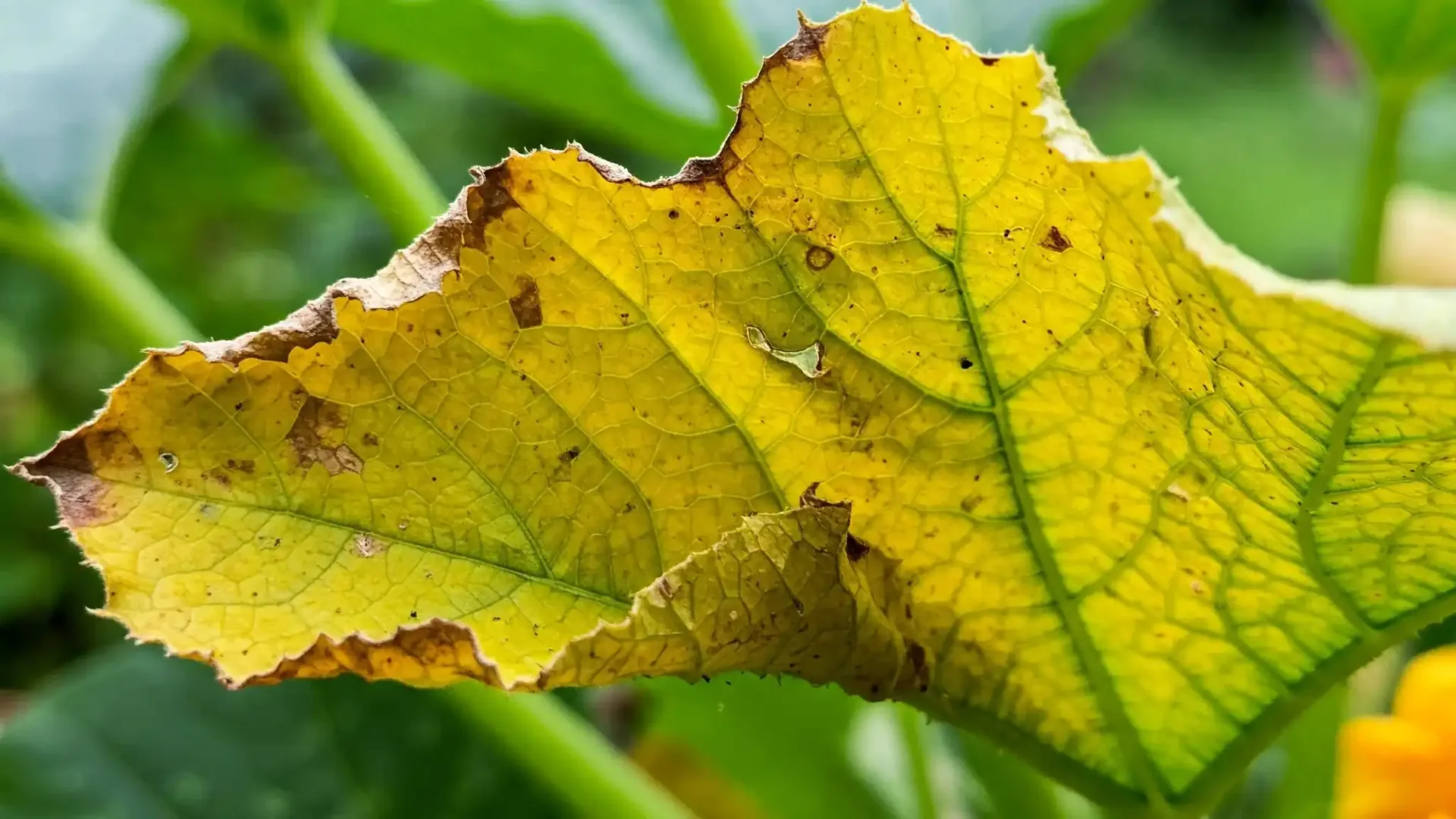
Magnesium deficiency (yellow between veins)
Magnesium is central to chlorophyll. When it is low, leaves can yellow between green veins, often starting on older leaves first.
Photo-style symptom cues
- Interveinal yellowing that leaves a “green vein network”
- Older leaves affected first
- Edges may curl slightly as it worsens
Organic fix
- Epsom salt can help if magnesium truly is the issue: dissolve 1 tablespoon per gallon of water and drench the soil around the root zone. Repeat once in 2 to 3 weeks if needed.
- Check potassium and calcium balance: heavy applications of high-potassium fertilizers can interfere with magnesium uptake.
- Container note: potting mixes leach nutrients quickly. Refresh the mix with compost and a gentle organic fertilizer midseason.
Clara-style caution: Epsom salt is not a cure-all. Use it when the symptom pattern fits, not as a routine supplement.
Squash bugs (yellowing, crisping, sudden wilt)
Squash bugs are one of the biggest reasons zucchini and squash go from “fine” to “what happened?” They feed by piercing leaves and stems, which can cause yellowing, crisp edges, and a tired, wilted look. Heavy feeding can trigger a fast decline sometimes called Anasa wilt.
Photo-style symptom cues
- Leaves develop yellow speckling that turns into bronzing or crispy patches
- Sections of the plant wilt while soil remains reasonably moist
- Egg clusters on leaf undersides, especially near veins
- Nymphs clustered at the crown or under leaves
Quick field test
Go out early morning or at dusk and check the crown. If you see bugs piled in the shade, you found your culprit.
Organic, low-drama fixes
- Remove eggs daily: scrape them off with a fingernail or a piece of tape and destroy.
- Hand-pick: drop nymphs and adults into a cup of soapy water. Morning is easiest.
- Board trap: set a board or shingle near the plant overnight. In the morning, lift and squish or collect the bugs sheltering underneath.
- Improve airflow and reduce hiding spots: keep weeds down and avoid thick ground clutter right at the crown.
- Row cover early: cover young plants until flowering, then remove for pollination (or hand-pollinate and re-cover).
- End-of-season cleanup: remove vines and debris. Squash bugs overwinter in garden litter and nearby sheltered spots.
Note: If you are seeing squash bugs and also suspect bacterial wilt, bet on squash bugs first for zucchini and squash. Bacterial wilt is much more common in cucumbers.
Squash vine borer (sudden decline, yellowing, collapse)
If your squash or zucchini was thriving and then started yellowing and wilting with alarming speed, especially in early to mid-summer, squash vine borer is a prime suspect.
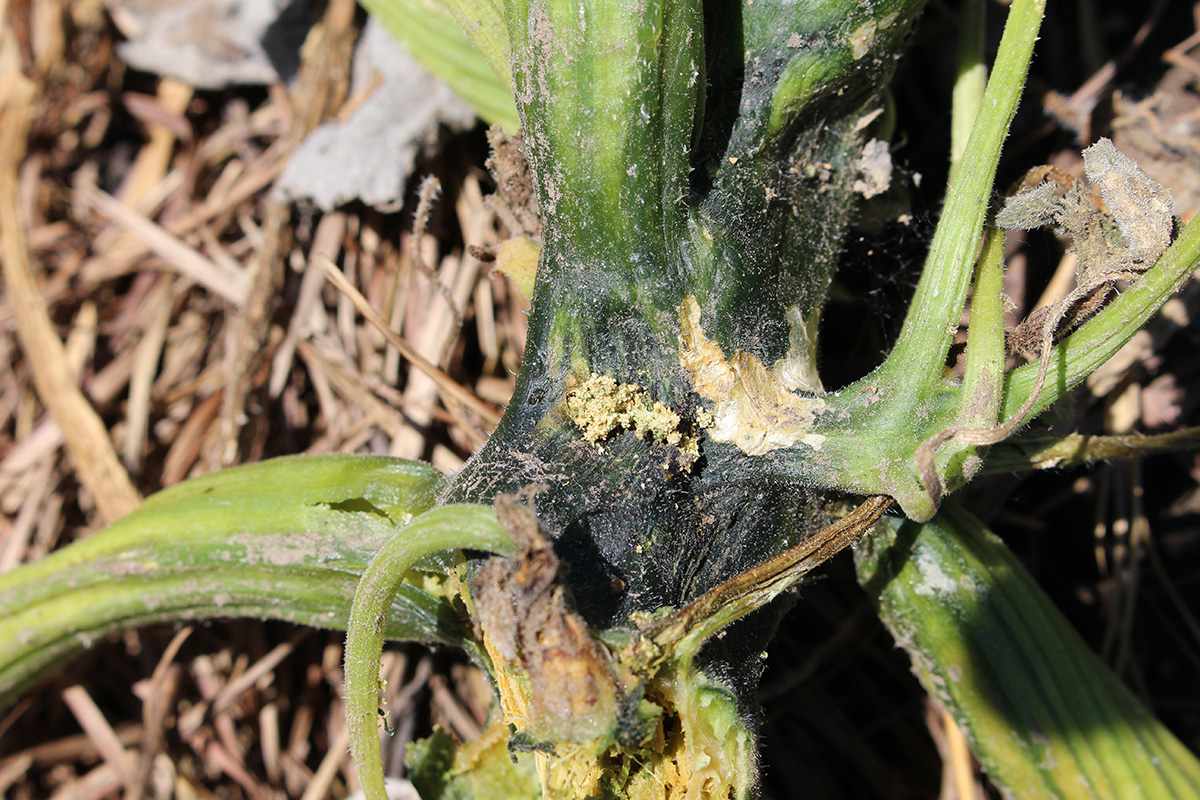
Photo-style symptom cues
- Leaves yellow and wilt even when soil is moist
- Plant may perk up at night early on, then collapses
- Frass (tan sawdust-like material) near the base of the stem
- Small holes or split areas at the crown
Quick field test
Gently scrape soil away from the stem base. If you see frass or a chewed tunnel, you have your answer.
Organic, crop-specific fixes
- Emergency triage: If the plant is still partly upright, you can carefully slit the stem lengthwise over the tunnel with a clean knife and remove the larva. Then mound moist soil over the wounded section to encourage new roots.
- Support rooting: For vining types, bury portions of the vine (nodes) in moist soil so the plant can form backup roots.
- Prevention next time: use insect netting or row cover until flowering, then remove for pollination. Alternatively, hand-pollinate and re-cover.
- Trap and reduce pressure: yellow bowl traps can catch some adults, but physical exclusion and crop rotation are more reliable.
- End-of-season sanitation: remove and destroy vines after harvest to reduce overwintering larvae.
Note: Many gardeners switch to Cucurbita moschata types (like butternut) for borer-heavy areas because stems are more resistant. Zucchini is C. pepo and tends to be a borer magnet.
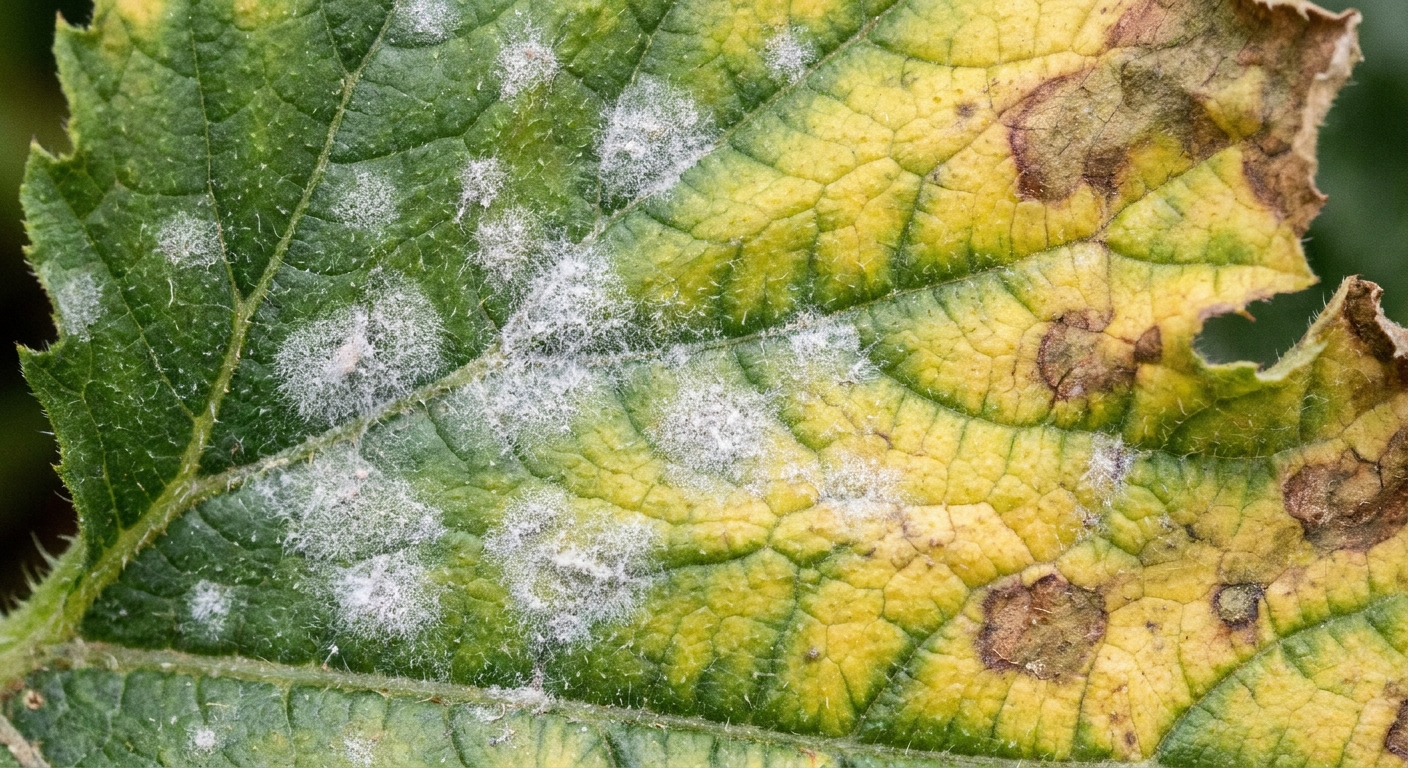
Powdery mildew (yellowing plus white dusting)
Powdery mildew is the classic late-summer guest that never brings snacks. It often starts as white, floury patches on leaves and can lead to yellowing and leaf dieback.
Photo-style symptom cues
- White powdery spots on upper leaf surfaces
- Leaves yellow, then brown and crispy
- Spreads in warm days and cool nights
Organic fix
- Prune for airflow: remove the worst affected leaves (do not strip the plant bare). Always leave enough foliage to shade fruit.
- Water at the base: keep foliage as dry as practical.
- Spray options: potassium bicarbonate or sulfur can work well when used early. Neem can help in some situations but is best as a preventative, not a rescue for heavy infections. Follow label directions and avoid spraying in high heat.
- Resistant varieties: if you battle this yearly, choose PM-resistant zucchini varieties and give plants generous spacing.
Powdery mildew is often survivable. The goal is to slow it down long enough to finish harvesting.
Downy mildew (angular yellow patches)
Downy mildew is less common on zucchini than on cucumbers, but it can show up, especially in humid, cool nights and wet weather patterns. It causes angular yellowing that looks “blocked in” by leaf veins, and it tends to move fast once it gets going.
Photo-style symptom cues
- Angular yellow patches bounded by veins
- Gray to purple fuzz on the underside of the leaf, especially early morning
- Leaves collapse faster than typical nutrient issues
Quick confirmation
Check the underside of an affected leaf at dawn. If you see a smoky gray or purplish fuzz under the yellow angular patches, downy mildew moves to the top of the suspect list.
Organic fix
- Remove worst leaves: bag and trash. Do not compost infected foliage.
- Water at the base and avoid splashing soil onto leaves. Mulch helps.
- Open up airflow: space plants well, prune lightly, and trellis if that is part of your system.
- Spray option: copper-based fungicides are commonly used in organic gardening for downy mildew. Use as directed, start early, and reapply per label, especially after rain.
- Reset when needed: if the plant is crashing and the season allows, pull it and replant in a different area with clean starts. Downy mildew is hard to “turn around” once established.
Viral diseases (mosaic mottling)
Mosaic viruses (like zucchini yellow mosaic virus or watermelon mosaic virus) can cause yellow mottling that is easy to confuse with nutrient deficiency, especially early on. Viruses usually show a pattern, not a simple fade, and they often come with distortion.
Photo-style symptom cues
- Patchy mottled yellow and green pattern (mosaic)
- New leaves may look twisted, narrowed, or puckered
- Stunted growth or reduced yields
- Aphids may be present (common virus vectors)
Organic response
- Remove the plant if symptoms are strong and spreading. Bag and trash it. Do not compost.
- Control vectors: manage aphids with a strong water spray, insecticidal soap as needed, and encourage beneficial insects.
- Weed control: many weeds host viruses and aphids. Keeping edges tidy helps.
- Replant smart: plant fresh starts in a different spot, and protect young plants with row cover early (remove for pollination).
Hard truth: you cannot cure a viral infection in a plant. The win is preventing spread and protecting the rest of your patch.
Bacterial wilt (rare in squash, serious when present)
Bacterial wilt is spread mainly by cucumber beetles. While it is a big concern for cucumbers and melons, squash and zucchini are significantly less susceptible. That matters because squash bugs and vine borers are far more common look-alikes in zucchini.
Photo-style symptom cues
- One or more leaves suddenly wilt and dull
- Yellowing follows quickly
- Wilting does not improve overnight
- Cucumber beetles may be present (striped or spotted)
Quick field test
Do the string test described above. Sticky strands strongly suggest bacterial wilt.
Organic response
- Remove the plant if confirmed. Bag it and trash it. Do not compost.
- Control cucumber beetles early next season: use row cover until flowering, kaolin clay barriers, hand-picking in the morning, and garden sanitation.
- Replant strategy: in the same season, you can replant in a different bed or container with fresh soil, and protect seedlings immediately.
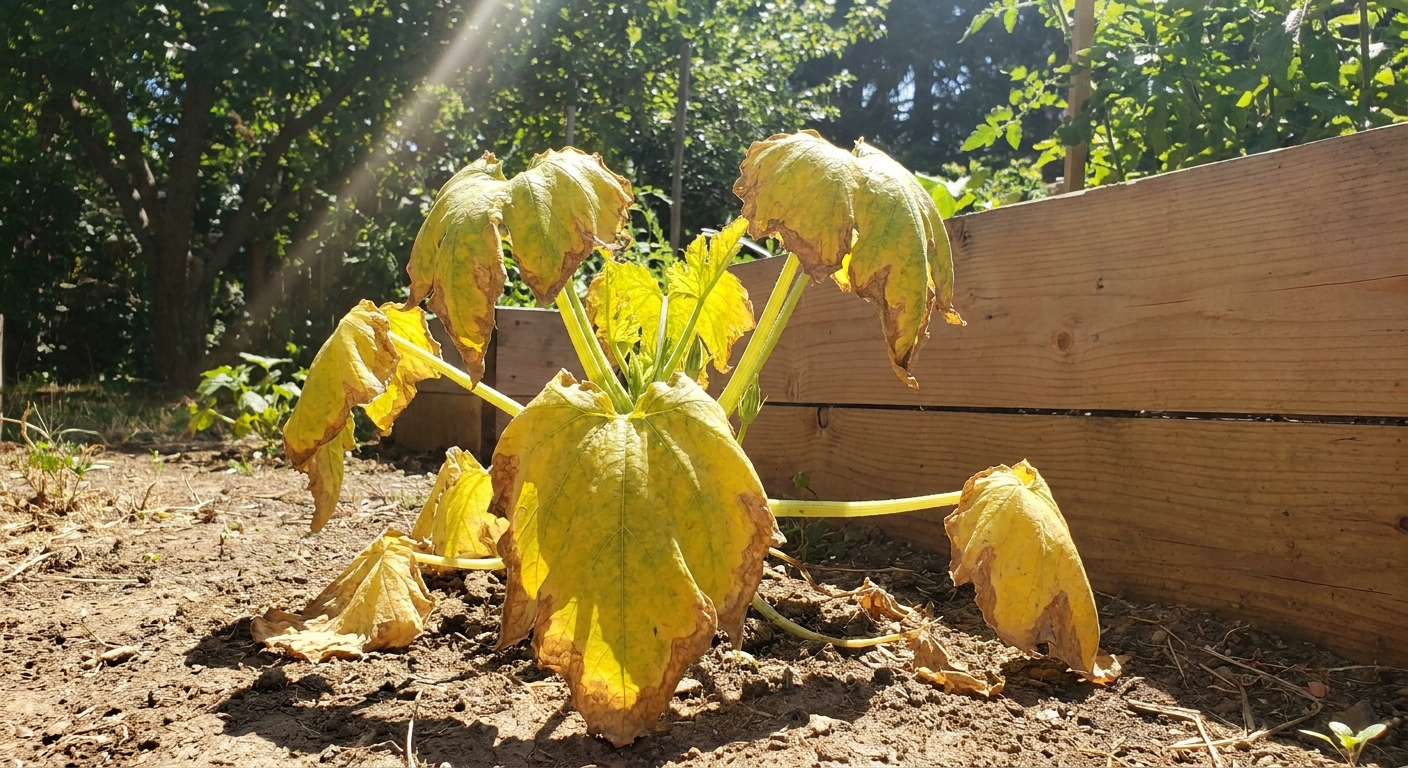
Sun and heat stress (yellowing, scorch, tired leaves)
Even sun-loving squash can get overwhelmed during extreme heat, especially in containers or windy spots where soil dries fast. Heat stress can look like general yellowing, leaf edge scorch, or drooping that turns into decline if it repeats daily.
Photo-style symptom cues
- Yellowing with brown, crispy edges
- Leaves droop in afternoon sun
- Fruit may get pale patches from sunscald if foliage thins
Organic fix
- Water in the morning so plants go into the heat well hydrated.
- Mulch to keep roots cooler and moisture steadier.
- Temporary shade during heat waves: a piece of shade cloth or a lightweight row cover propped above the plant can reduce stress.
- Do not overfertilize during a heat spike. Salt buildup can worsen leaf burn, especially in pots.
Other yellow-leaf causes
Aging plus crowding
Big, overlapping leaves shade each other. The shaded leaf often yellows and drops. That is normal, but you can help by removing a couple of the oldest leaves to improve airflow.
Overhead watering and splash-back
Wet leaves and soil splatter invite disease. Water at the base and mulch to reduce splash, especially after rain.
Root damage
Hoeing too close, digging weeds near the crown, or transplant shock can cause temporary yellowing. Keep cultivation shallow and let the plant recover with steady moisture.
Decision tree
- Oldest leaves yellow first, whole leaf pale → nitrogen deficiency or normal aging. Feed lightly and observe new growth.
- Yellow between veins on older leaves → magnesium deficiency. Treat once, then reassess.
- Yellowing plus white powder on leaves → powdery mildew. Prune, improve airflow, use organic sprays early.
- Angular yellow patches bounded by veins → downy mildew. Check leaf undersides and act fast.
- Yellow mottling, distorted new growth → mosaic virus. Remove plant if strong, manage aphids.
- Sudden wilt and yellowing, moist soil, frass at stem base → squash vine borer. Remove larva if possible, mound soil, plan prevention.
- Yellowing that turns crisp, eggs and bugs present → squash bugs. Remove eggs, hand-pick, trap.
- Sudden permanent wilt, sticky string test positive, cucumber beetles present → bacterial wilt (less common in squash). Remove plant and focus on beetle prevention.
- Yellowing with crisp edges during heat waves → heat stress. Mulch, morning water, temporary shade.
When to remove yellow leaves
I am all for a little selective snipping, but squash needs leaf area to make energy and shade fruit.
Remove leaves if
- They are more than 50 percent yellow or spotted
- They are touching the soil (disease highway)
- They are heavily mildewed
Leave leaves if
- Only lightly yellowing and the plant is otherwise vigorous
- They are shading developing fruit from harsh sun
Always use clean pruners, and avoid pruning when leaves are wet.
If you want, I can help you diagnose yours
If you tell me:
- Is it yellowing on old leaves, new leaves, or both?
- Do leaves wilt, and do they recover overnight?
- Any white powder, angular yellow patches, mosaic mottling, or crisp edges?
- Any eggs or bugs under leaves or clustered at the crown?
- Any frass at the base?
- Are you growing in ground, raised bed, or container?
I can narrow it down quickly and suggest the most organic, least-fussy fix for your setup.