
Why Is My ZZ Plant Turning Yellow?

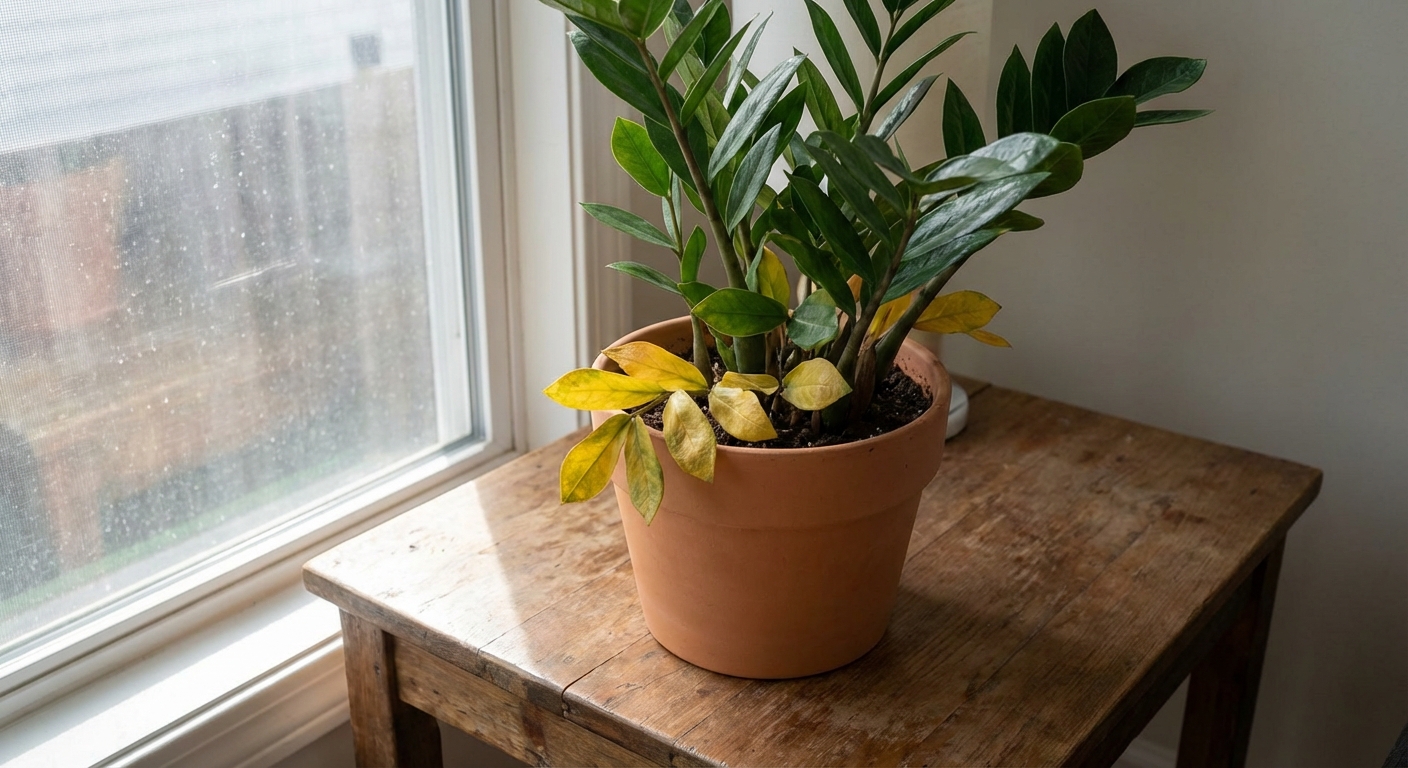
If your ZZ plant is turning yellow, take a deep breath. ZZ plants (Zamioculcas zamiifolia) are famously forgiving, but yellow leaves are their way of quietly tapping you on the shoulder. In typical home conditions, most of the time it comes down to one thing: too much water. Still, light, nutrients, temperature swings, pests, and root health can all play a role.
Below, I will help you diagnose what is happening and then walk you through the exact fix. I talk to my ferns, so yes, I will also gently encourage you to talk to your ZZ while you check its roots.
First, identify the yellowing pattern
Before you change anything, spend two minutes observing. This tiny pause prevents the classic houseplant mistake: fixing the wrong problem.
- Only 1 to 2 older leaves yellowing at the bottom: often normal aging, especially if the plant is otherwise healthy.
- Several stems yellowing at once, starting near the base: watering or root trouble is likely.
- Pale yellow overall, slower growth: could be low light, depleted soil, or mild nutrient deficiency.
- Yellow with brown, crispy patches: often sun stress; heat can make crisping worse (low humidity can contribute, but ZZ plants usually tolerate average indoor air).
- Yellow plus mushy stems or a funky smell: suspect root rot.
Quick moisture check: stick a finger 2 to 3 inches into the pot for small to medium pots. For larger pots, use a chopstick (or a moisture meter) to check deeper. If the mix feels cool and wet, pause all watering. If it is dry most of the way down, your yellowing may be from underwatering or stress, but with ZZ plants, overwatering is still the most common culprit.
Cause #1: Overwatering (most common)
ZZ plants store water in thick rhizomes, like little potatoes under the soil. That survival skill becomes a weakness when we water “just to be safe.” If the soil stays wet, roots suffocate, stems weaken, and leaves turn yellow.
How to diagnose overwatering
- Soil feels damp days after watering
- Pot feels heavy for its size
- Yellowing begins on lower leaves or entire stalks
- New growth stalls
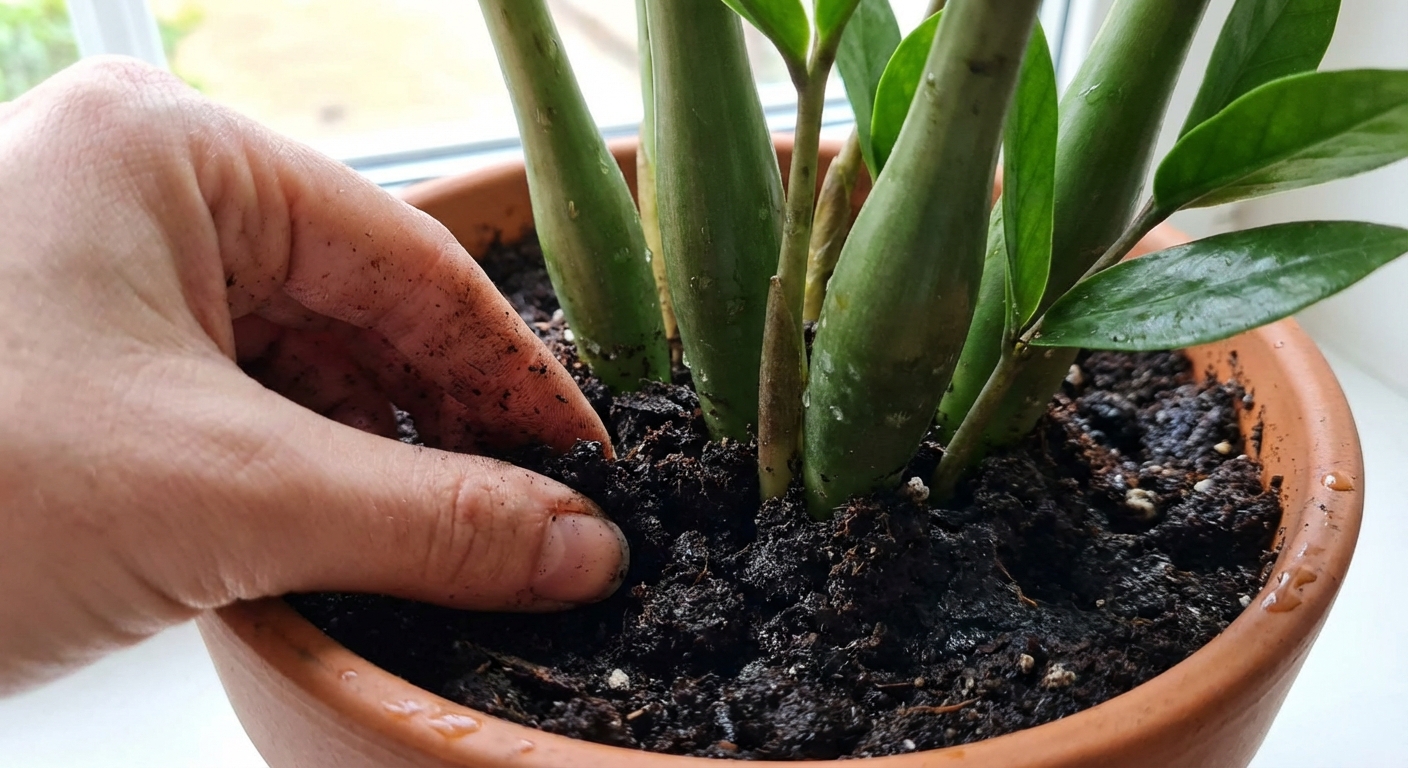
Fix: dry it out and reset your watering
- Stop watering immediately. Let the pot dry until the mix is dry at least halfway down (and for big pots, closer to most of the way down).
- Check drainage. Your pot must have a drainage hole. If it is in a decorative cachepot, empty standing water every time.
- Adjust your schedule. In many homes, ZZ plants only need water every 2 to 4 weeks, sometimes longer in winter.
- Water correctly. When you do water, water thoroughly until it runs out the bottom, then let it drain fully.
Clara tip: I treat my ZZ like a camel, not a fern. It prefers a full drink and then a long rest.
Cause #2: Root rot (often from overwatering)
If yellowing is paired with soft stems or a musty smell, your ZZ may have progressed from “too wet” to root rot. The good news: ZZ plants can often be saved if you act quickly.
How to diagnose root rot
- Yellow leaves plus mushy or collapsing stalks
- Soil smells sour or swampy
- When you unpot it, roots are brown, slimy, or hollow
- Rhizomes feel soft instead of firm
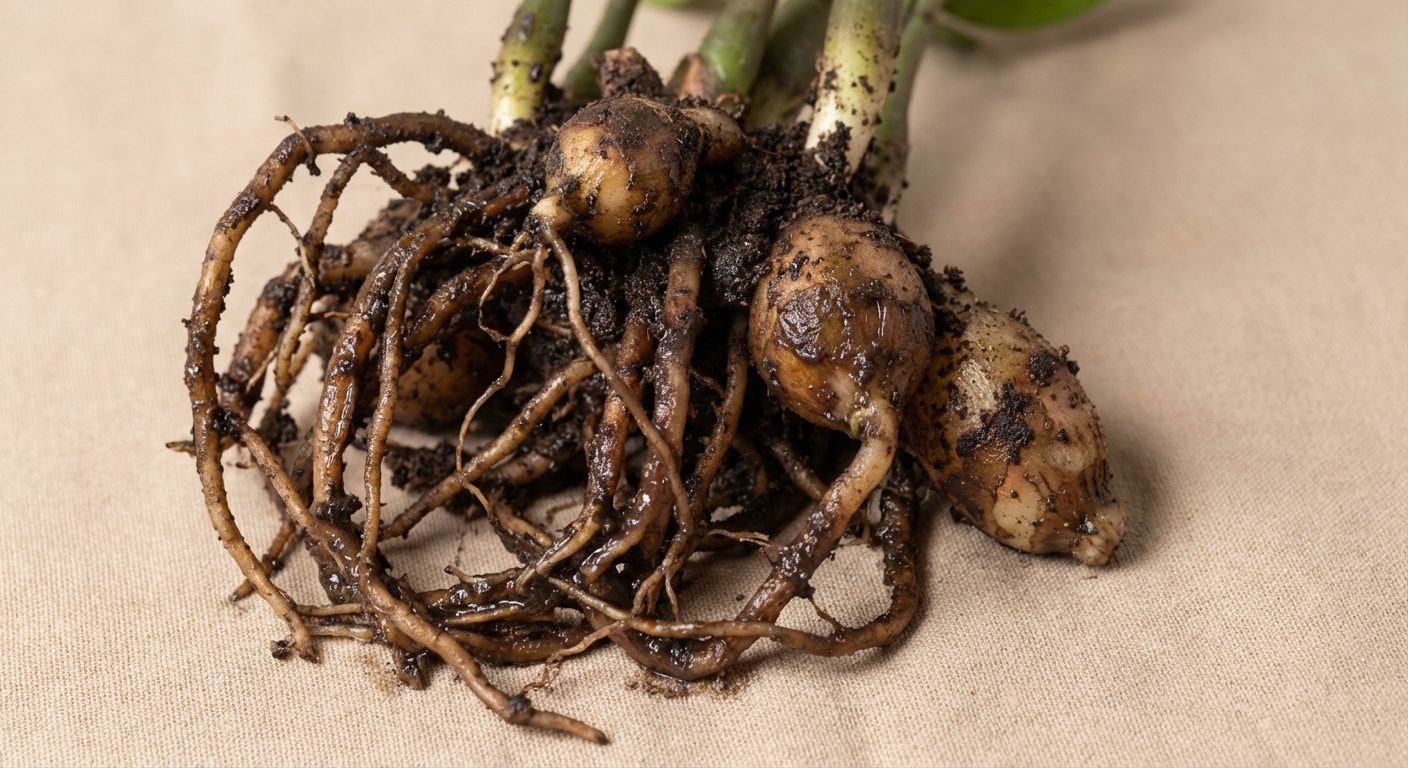
Fix: repot and trim the damage
- Unpot the plant. Gently remove as much wet soil as you can.
- Rinse and inspect. Rinse roots with lukewarm water so you can see what is healthy.
- Trim rot. With clean scissors, cut away mushy roots and any soft rhizome sections. Healthy tissue is firm and light-colored.
- Let it dry. Set the plant out so cut areas can dry and callus. A few hours is good, and overnight is even better if you had to cut rhizomes.
- Repot in fast-draining mix. Use a pot with drainage and a chunky blend like: 2 parts indoor potting mix + 1 part perlite + 1 part orchid bark (or pumice).
- Wait to water. After repotting, wait about 5 to 7 days before watering so roots can recover.
If multiple stalks are mushy: do not be afraid to cut the plant back. If a few healthy rhizomes remain, the ZZ can regrow.
Cause #3: Too much direct light
ZZ plants tolerate low light, but they do best in bright, indirect light. Direct sun, especially hot afternoon rays, can bleach leaves to yellow and then scorch them.
How to diagnose sun stress
- Yellowing appears on the side facing the window
- Leaves look faded or washed out
- Brown, crispy spots show up after the yellowing
- The plant sits in strong direct sun (south or west window without a sheer)
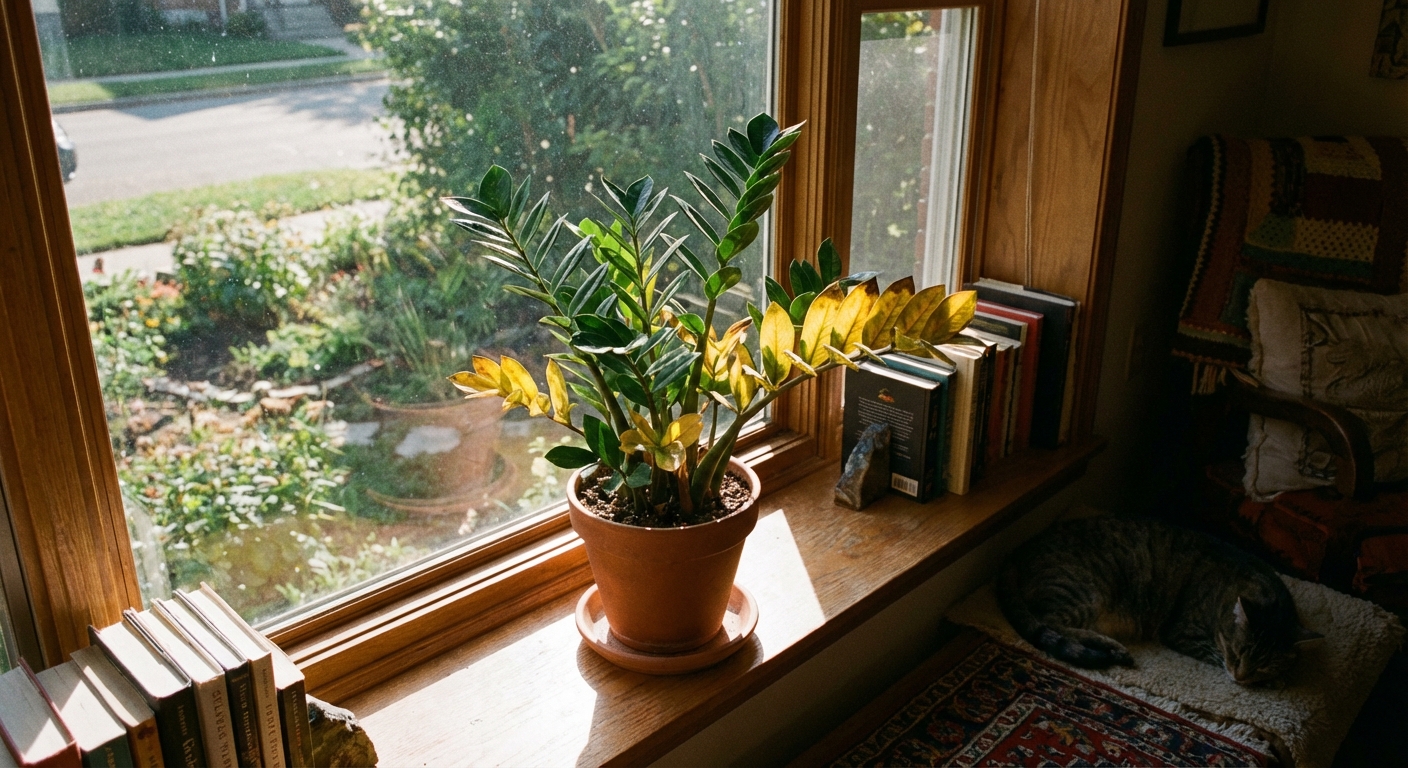
Fix: soften the light
- Relocate the plant 2 to 6 feet from the window, or use a sheer curtain to soften light.
- Rotate weekly for even growth and to prevent one-sided stress.
- Do not remove all yellow leaves at once. If a leaf is mostly yellow, it will not turn green again, but it can still photosynthesize a little while the plant adjusts.
Cause #4: Low nutrients or old soil
ZZ plants are not heavy feeders, but after a year or two in the same potting mix, nutrients get depleted. This usually shows as overall paleness, smaller new growth, or gradual yellowing with no mushiness.
How to diagnose a nutrient issue
- You have not fertilized in 6 to 12+ months
- The plant is in the same soil for 2+ years
- Yellowing is mild and spread out, not sudden
- Soil drains well and roots look healthy
Fix: feed lightly, or refresh the mix
- During spring and summer: fertilize lightly every 6 to 8 weeks at half strength with a balanced houseplant fertilizer (for example, 10-10-10 or similar). In bright light, monthly can be fine. In low light, less is more.
- If you prefer organic: use a gentle liquid organic fertilizer or top-dress with a small amount of worm castings.
- If the plant is rootbound or the mix is tired: repot into fresh, chunky soil. Fresh mix often solves “mystery yellowing” all by itself.
Note: Over-fertilizing can also cause yellowing, often paired with brown tips or crusty fertilizer salts on the soil. If you suspect that, flush the pot with plain water and let it drain thoroughly.
Cause #5: Temperature stress and drafts
ZZ plants are tough, but they do not love sudden temperature swings. Cold drafts, blasts from AC vents, and chilly windows at night can trigger yellowing, especially in winter.
How to diagnose temperature stress
- Yellowing starts after a cold snap or heat wave
- Plant sits near an exterior door, drafty window, or HVAC vent
- Leaves may look slightly droopy or dull before yellowing
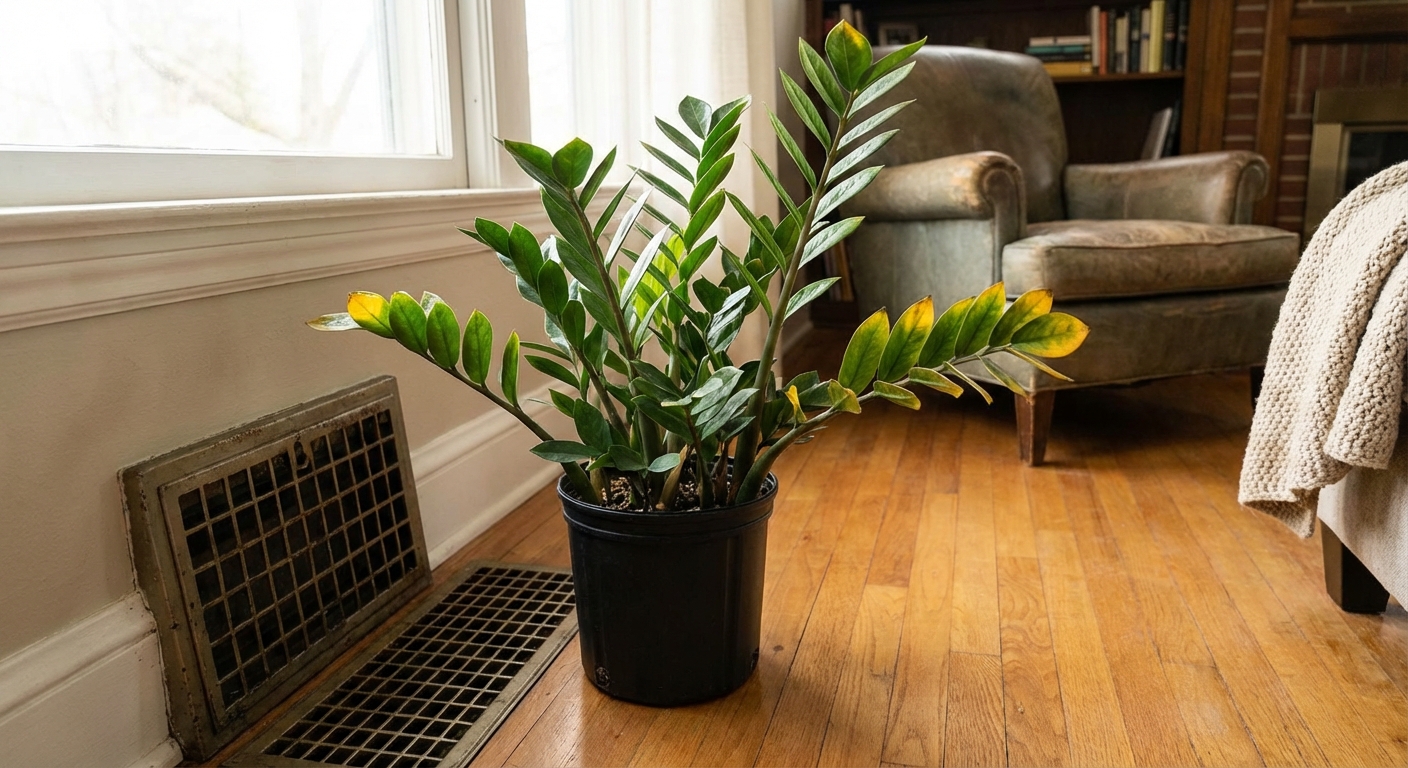
Fix: stabilize the environment
- Keep it in the comfort zone: aim for about 65 to 80°F (18 to 27°C).
- Move it away from vents, heaters, fireplaces, and drafty doors.
- In winter: pull it a few inches away from cold window glass at night.
Cause #6: Underwatering (less common)
Overwatering gets all the attention, but a ZZ that is kept too dry for too long can also yellow. This is more likely in very bright light, near heat sources, or in a pot that dries out fast.
How to diagnose underwatering
- Mix is dry most of the way down for a long stretch
- Pot feels unusually light
- Leaflets may look dull, thinner, or a bit curled
- Soil may pull away from the pot edges (very dry peat can turn hydrophobic)
Fix: rehydrate thoroughly
- Water slowly and deeply until water runs from the drainage hole.
- Let it drain fully, then do not water again until the mix dries most of the way down.
- If water beads off the top and races down the sides, bottom-water for 20 to 30 minutes once to rehydrate the mix, then return to normal watering.
Also check: pests and water quality
Not common, but worth a quick look. Pests like mealybugs, scale, and spider mites can cause stress and yellowing over time.
- Pest check: inspect undersides of leaves and the base of stems for webbing, cottony bits, or sticky residue. If you spot anything, isolate the plant and treat with insecticidal soap or horticultural oil.
- Water quality clue: if you see crusty white buildup on the soil or pot rim, salts may be accumulating (more common with softened water). Flush the pot occasionally and consider using filtered or distilled water if buildup returns quickly.
Step-by-step diagnosis routine
- Check soil moisture. If damp, assume overwatering first.
- Smell the soil. Musty or sour points to root rot risk.
- Look for pests. Check undersides and stems.
- Check the light. Any direct sun on the leaves for hours a day?
- Consider timing. Did this start after moving the plant, repotting, or a season change? A little yellowing after a move can be simple adjustment stress.
- Review the pot and mix. Drainage hole present? Mix compacted or staying wet too long?
- If unsure, unpot and inspect. Root health ends the guessing game.
Should you cut off yellow leaves?
If a leaf is fully yellow, it is not going to turn green again. You can remove it for looks, but I usually wait until it is mostly yellow and easy to pull away.
- To remove: use clean snips and cut the stalk close to the soil line.
- Do not strip the plant bare. Leaves still help the plant recover, even if they are not perfect.
How long until it looks better?
ZZ plants recover slowly but steadily. After you correct the cause:
- Yellow leaves: usually will not green up again.
- New growth: often appears in 4 to 12 weeks in the growing season.
- After root rot treatment: it may take a couple of months to see confident new shoots.
Try not to “help” too often. ZZ plants love calm, consistent conditions more than constant tinkering.
Prevention: stop yellowing for good
- Use a draining pot and never let it sit in water.
- Choose a chunky soil mix that dries out in a reasonable time.
- Water only when the mix is mostly dry. When in doubt, wait a few more days.
- Bright, indirect light is the sweet spot.
- Keep temperatures steady and avoid drafts.
- Feed lightly in spring and summer, or refresh soil every couple of years.
If you want, tell me what your light is like (window direction), what size pot you have, and how often you water. I can help you narrow it down to the most likely cause in about three questions.