
Why Is My Succulent Dying?

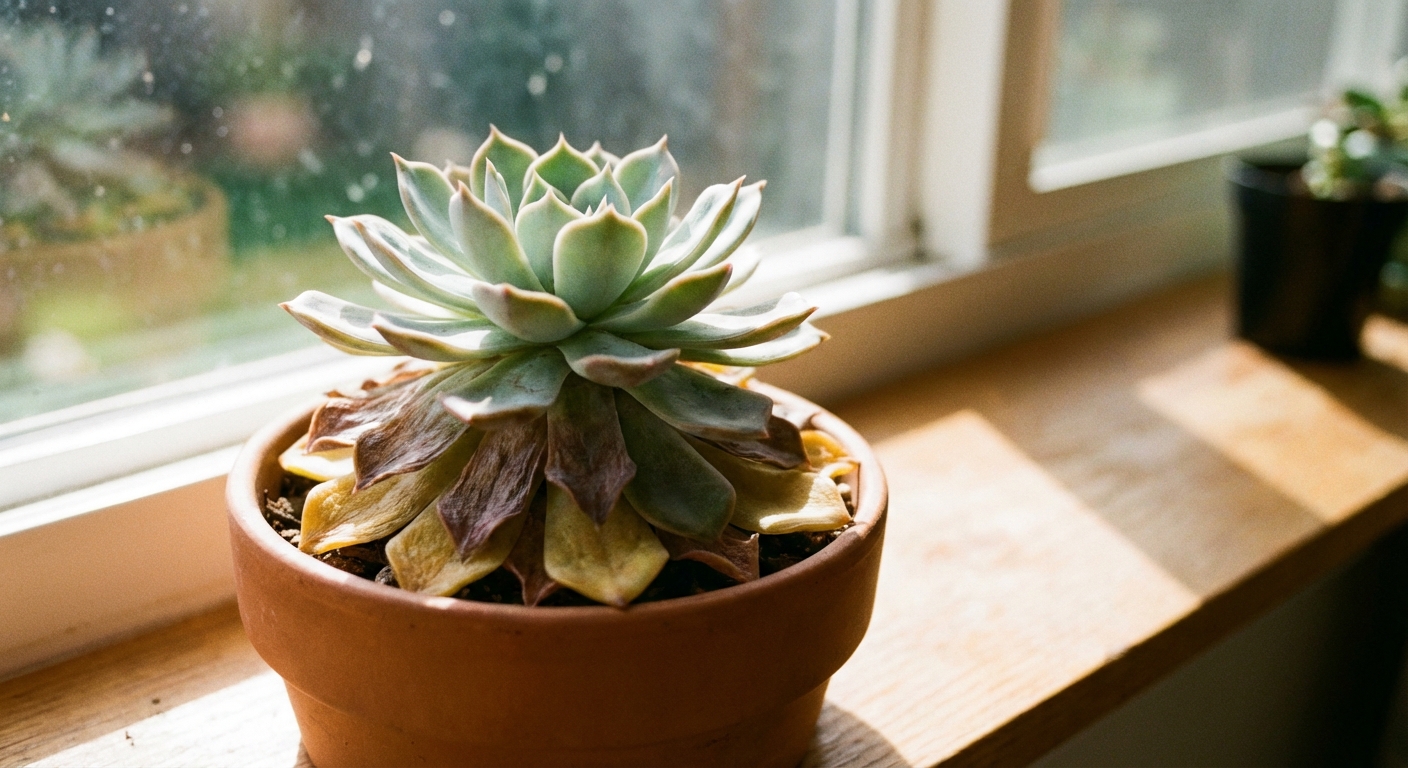
When a succulent starts looking sad, it can feel personal. I promise it is not. Succulents are tough, but they are also very specific about a few basics: light, water, airflow, and temperature. When one of those goes off, they show it fast.
This page is built for that panicky moment when you find mushy leaves, a stretched rosette, or a plant that suddenly looks like it is giving up. Use the quick triage below, then jump to the matching fix.
Quick reality check: a few lower leaves drying up and dropping can be totally normal, especially on rosette types. If the rest of the plant is firm, plump, and growing, you might be seeing routine leaf turnover, not a crisis.
Quick triage: what are you seeing?
Match the main symptom to the most likely cause. If you see more than one symptom, start with the one that happened first.
- Mushy, translucent leaves or a soft stem: overwatering, rot, or poor drainage
- Wrinkled, limp leaves that feel thin: underwatering, heat stress, or root damage
- Long gaps between leaves, leaning toward light: not enough light (etiolation)
- Tan, white, or dark crispy patches: sunburn or heat stress
- Sticky residue, cottony fuzz, tiny webs: pests
- Blackened, watery tissue after a cold night: cold or frost damage
Cause #1: Overwatering and rot
This is the big one. Succulents store water in their leaves and stems. When the potting mix stays wet, roots cannot breathe, and rot moves in.
Visual symptoms
- Leaves look translucent, yellowing, or jelly-soft
- Lower leaves drop easily with a gentle touch
- Stem feels soft or looks dark at the base
- Soil smells sour or musty
Why it happens
- Watering on a schedule instead of when the mix is fully dry
- Pot without a drainage hole
- Soil that holds too much moisture (peat-heavy mixes)
- Oversized pots that stay wet for too long
- Low light or cool temperatures slowing water use
- Top-dressing with rocks that keeps the surface damp and traps moisture
Rescue steps (do this today)
- Stop watering immediately.
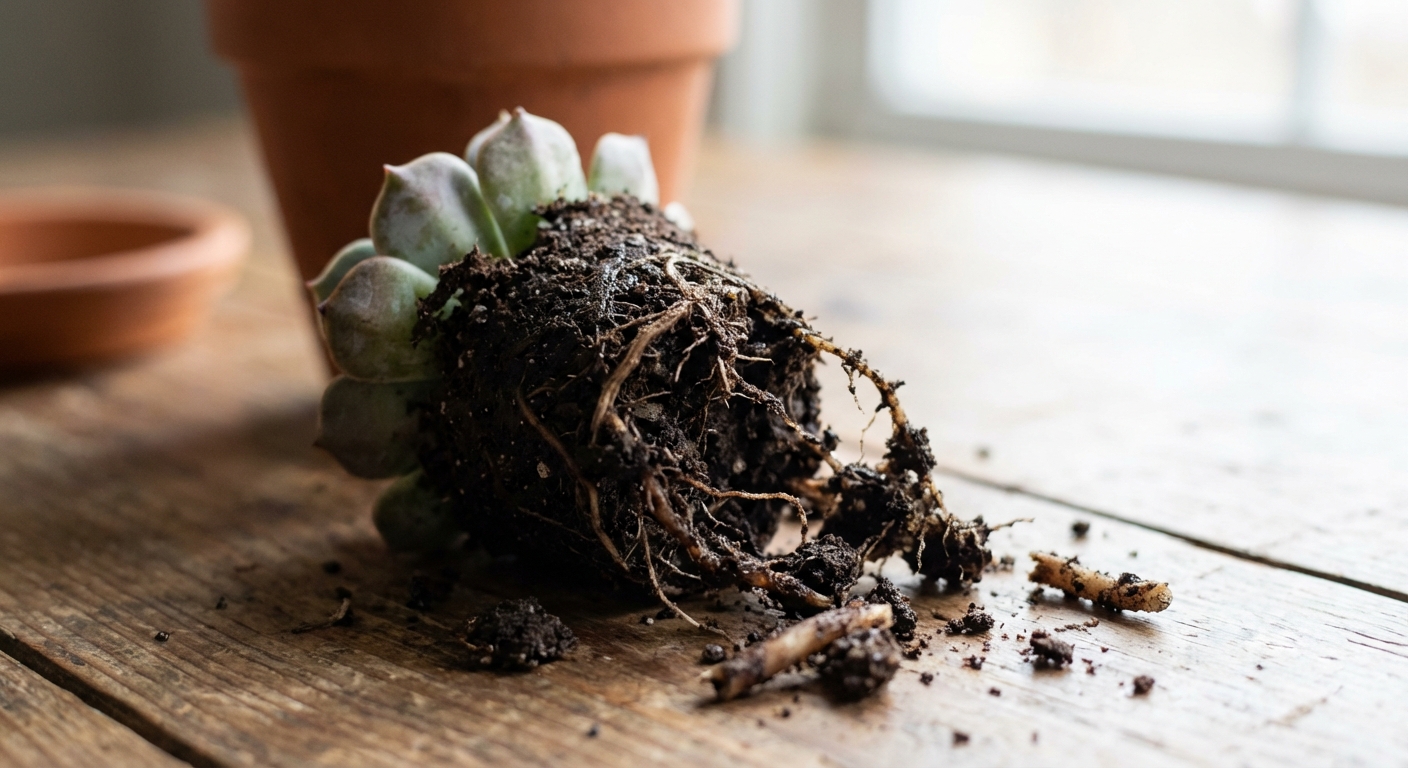
- Unpot the plant. Gently remove wet soil from the roots.
- Inspect roots and stem. Healthy roots are pale and firm. Rot is dark, slimy, and smells off.
- Trim rot. Use clean scissors to cut away mushy roots and any soft stem tissue. If the stem is rotting upward, you may need to take a healthy top cutting.
- Let it dry until it calluses. Place the plant in a warm, shaded spot with airflow. In many homes this takes about 24 to 72 hours, sometimes longer in cool or low-light conditions.
- Repot into dry, gritty mix. Use a pot with a drainage hole. A good beginner blend is cactus mix plus extra pumice or perlite (aim for fast drainage). Terracotta can help the mix dry faster than plastic.
- Wait to water. Hold off until any cuts are fully callused and the plant is settled. This is often 5 to 10 days, and longer if your home is cool, dim, or humid. Then water deeply once and let it dry fully again.
If the base is mushy: take a cutting
If the stem near the soil line is soft, the roots are often a lost cause. Snip a healthy top rosette or branch above the rot, let it callus for a few days, then place it on dry mix. Once it has roots, start watering lightly.
Cause #2: Underwatering (and the sneaky look-alike)
Succulents do like drought, but they still need a proper drink sometimes. The trick is watering thoroughly, then letting the pot dry all the way before the next soak.
Visual symptoms
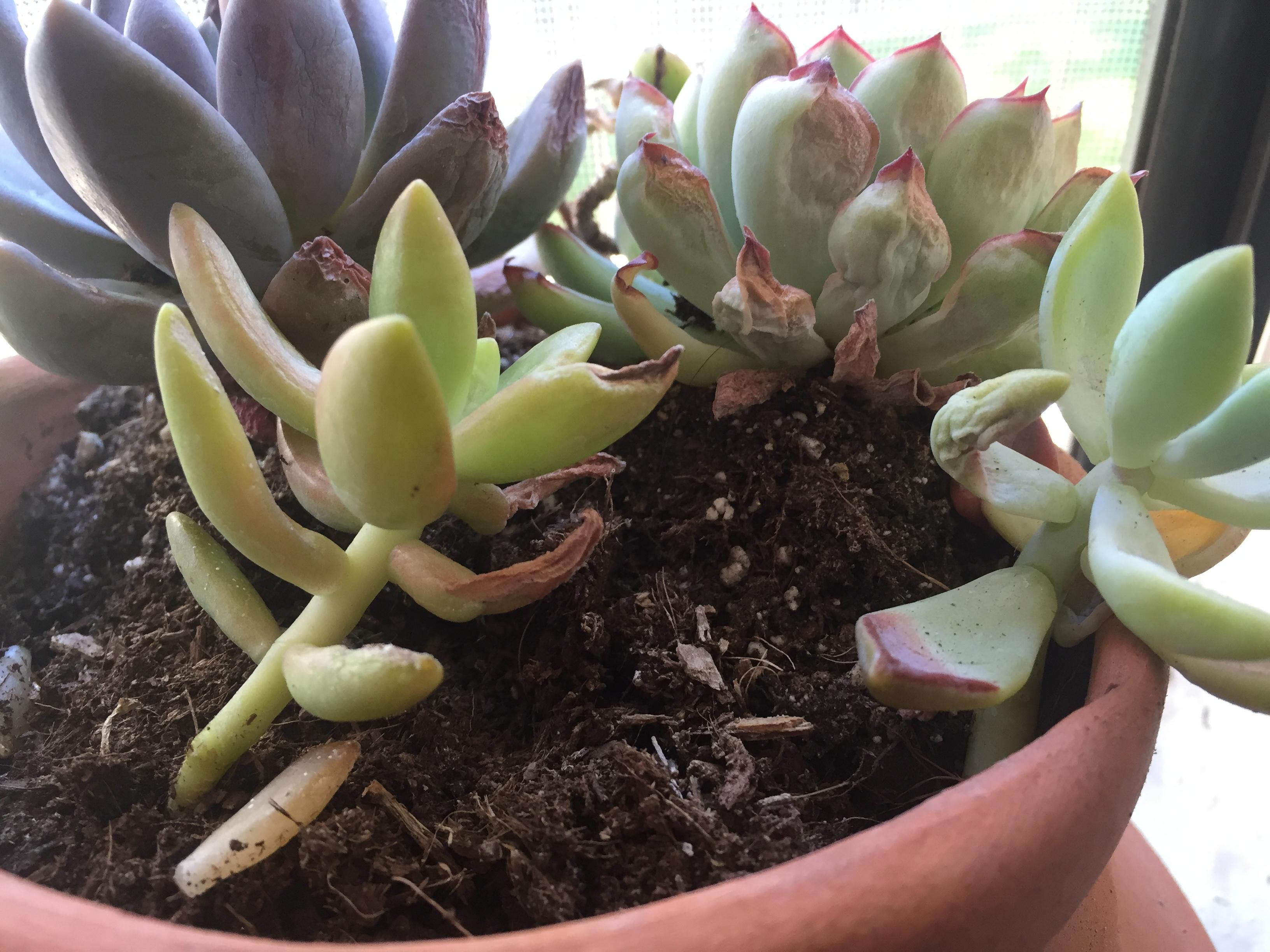
- Leaves are wrinkled, limp, or curling inward
- Leaves feel thin instead of plump
- Plant may drop older leaves to save itself
- Soil is bone-dry and pulling away from the pot edges
The look-alike: root damage
A succulent can look underwatered even if you have been watering, if the roots are damaged from past overwatering or compacted soil. In that case the plant cannot take up water, so it stays wrinkled.
Rescue steps
- Check the mix. If it is hydrophobic (water runs down the sides and out), bottom-water the pot for 20 to 30 minutes, then drain well.
- Water correctly. When you do water, soak until water runs freely out of the drainage hole. Do not give tiny sips.
- Watch the dry-down. Drying time varies a lot by species, pot size and material, soil, season, humidity, and light. In many homes, a healthy setup dries within about 1 to 2 weeks. If your pot is still wet much longer than that (or stays soggy), treat it as a red flag and adjust soil, pot, and light.
- If wrinkles persist after a good soak, unpot and check roots. Trim dead roots and repot into a gritty mix.
Cause #3: Not enough light (etiolation)
Etiolation is the fancy word for “stretching to find the sun.” Succulents grown in low light trade their compact shape for survival. It is common in winter, on shelves far from windows, or in rooms that feel bright to us but are dim to plants.
Visual symptoms
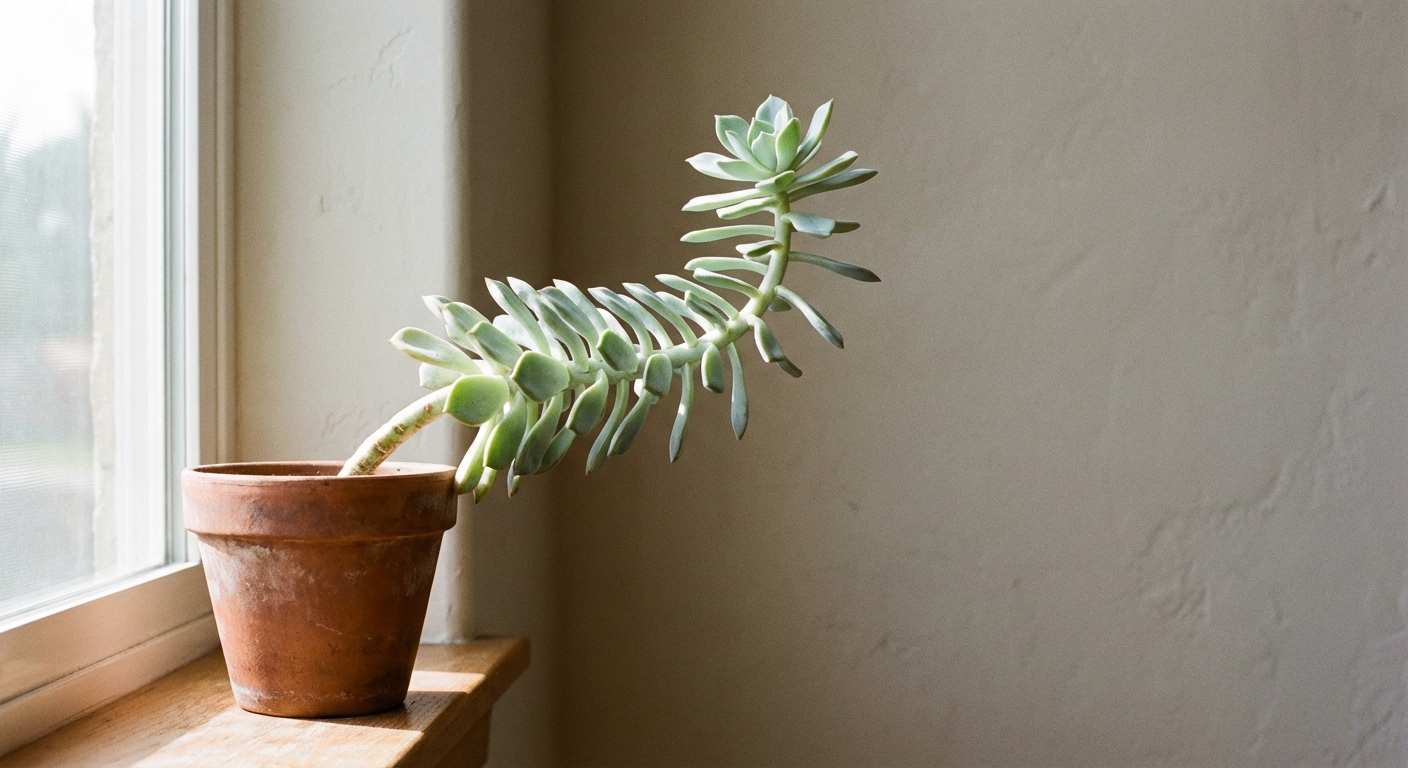
- Long stem with wide spaces between leaves
- Rosettes that look loose, open, or lopsided
- Plant leans dramatically toward the window
- Colors fade to pale green
Fix (and what cannot be reversed)
Stretched growth will not tighten back up. Your goal is to give better light so new growth comes in compact, then optionally prune and re-root for a prettier shape.
Rescue steps
- Increase light gradually. Move the plant closer to a bright window over 7 to 14 days to avoid sunburn. Rotate the pot weekly.
- Consider a grow light. For many homes, a simple LED grow light 6 to 12 inches above the plant for 10 to 14 hours a day is a game changer.
- After light improves, prune. Once you see tighter new growth, cut the top rosette with a few inches of stem, let it callus, and replant to “reset” the look.
Cause #4: Sunburn and heat stress
Succulents love light, but they need time to acclimate. A plant that was happy in indirect light can burn if it is suddenly shoved into harsh afternoon sun.
Visual symptoms
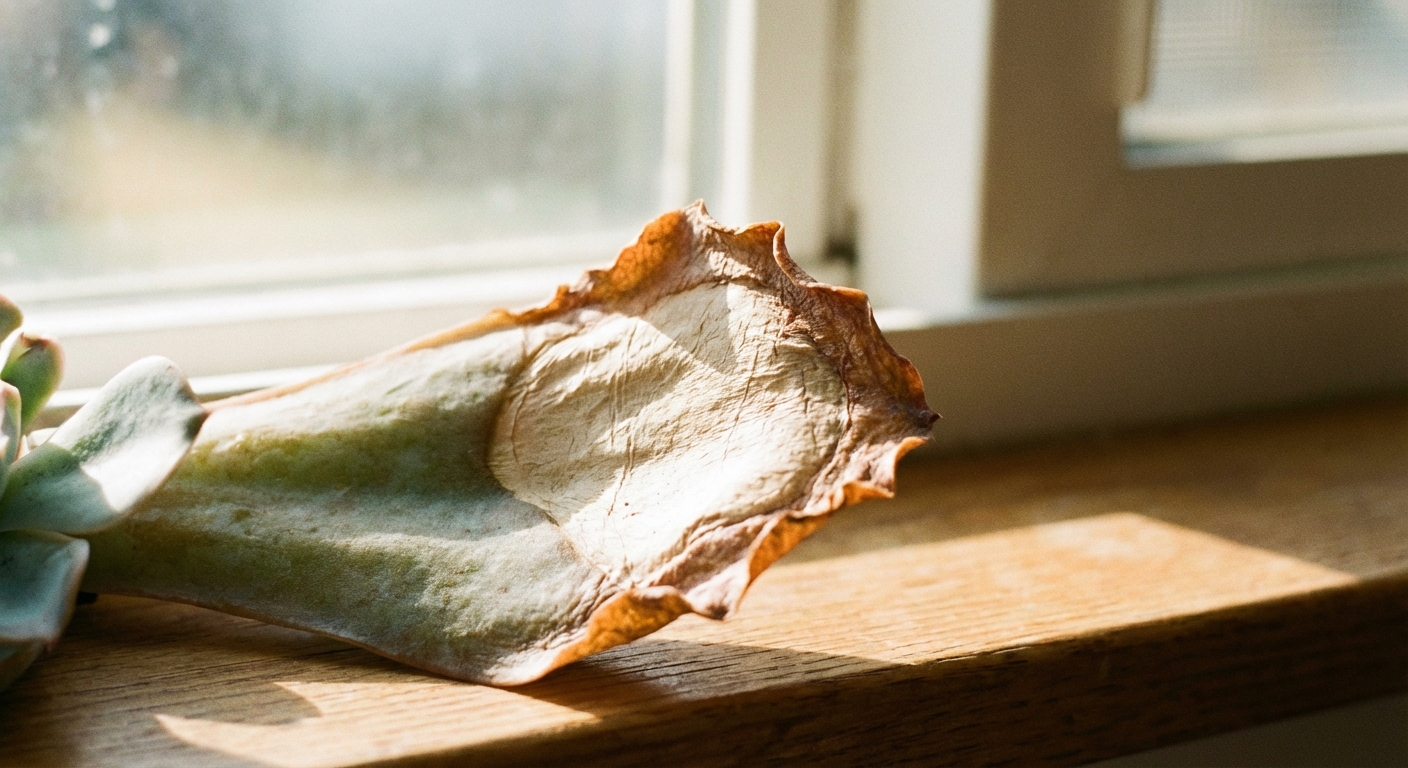
- Irregular patches that are tan, white, or rust-colored
- Damaged areas look dry, papery, or scarred
- Burn spots usually appear on the side facing the sun
Rescue steps
- Move to bright shade. Give strong indirect light for 1 to 2 weeks.
- Do not peel burned tissue. Those scars will not turn green again, but they can protect the leaf underneath.
- Adjust watering carefully. Heat can increase thirst, but stressed plants are easier to rot. Water only when the mix is fully dry.
- Acclimate slowly. If you want it in sunnier conditions, increase sun exposure by 30 to 60 minutes every few days, especially with outdoor moves.
- Remove severely damaged leaves only if they are mushy or attracting pests.
Cause #5: Pest infestations
Most succulent pests are tiny and sneaky. The earlier you catch them, the easier they are to evict.
Common pests and visual clues
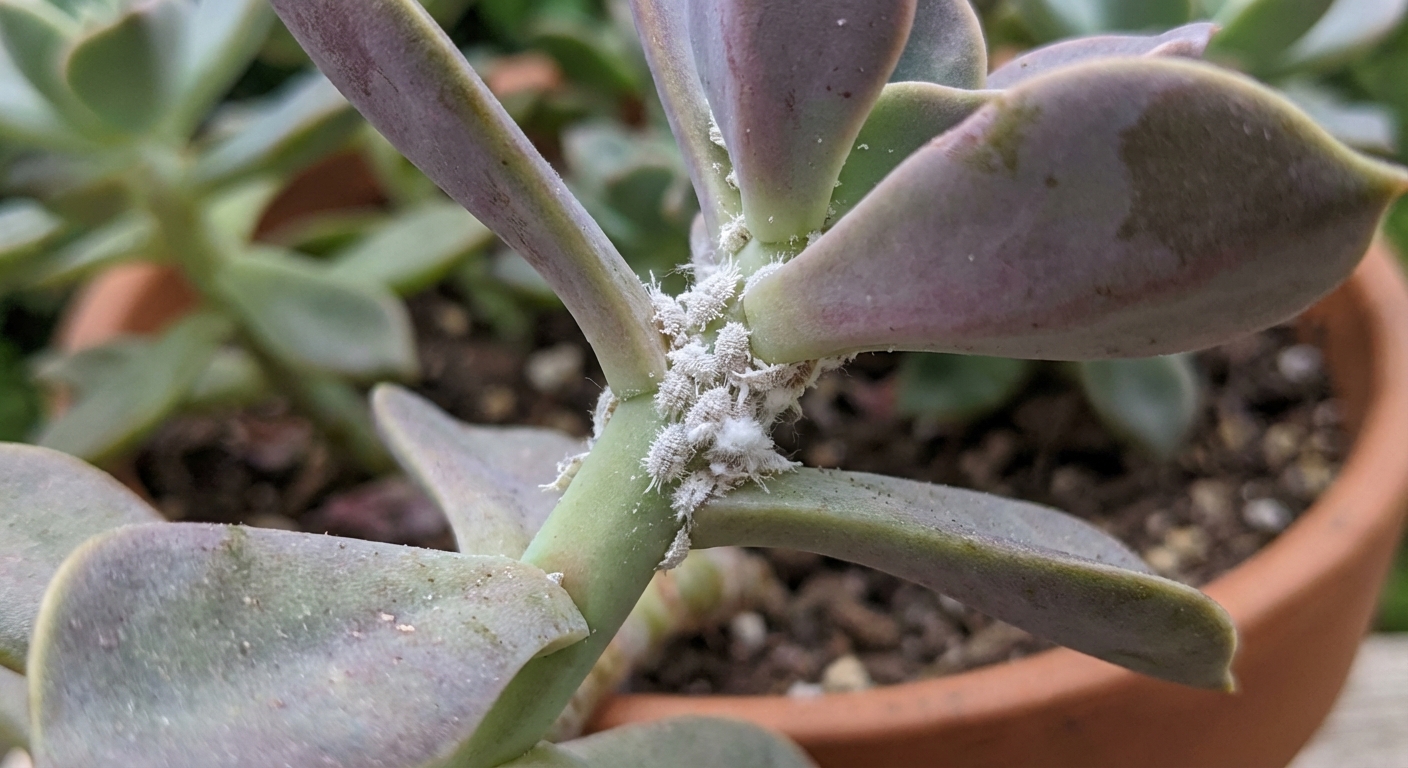
- Mealybugs: white cottony clusters in leaf joints, new growth, or roots; sticky residue
- Scale: small brown or tan bumps that do not move; yellow stippling
- Spider mites: fine webbing and speckled, dull leaves, often in dry indoor air
- Fungus gnats: tiny flying gnats around wet soil, a sign the mix is staying too moist
Rescue steps
- Isolate the plant. Move it away from other houseplants immediately.
- Physically remove pests. Use a cotton swab dipped in 70% isopropyl alcohol to dab mealybugs and scale. For spider mites, rinse the plant thoroughly with water (avoid soaking the soil).
- Treat weekly. Repeat alcohol dabbing or use insecticidal soap or horticultural oil, following the label. Re-treat every 7 days for 3 to 4 rounds to catch hatchlings.
- Check the roots. If mealybugs are in the soil, unpot, rinse roots, discard old mix, and repot into fresh dry gritty soil.
- Fix the conditions that invited them. Improve airflow and light, and avoid overwatering.
Important note about sprays
Alcohol, soaps, and oils can cause spotting on some succulents, especially in heat or direct sun. Test one small area first, treat in the evening or in bright shade, and keep the plant out of harsh sun for 24 hours after treatment.
Cause #6: Cold damage and frost
Many popular succulents are not frost-hardy. A chilly windowsill, a drafty door, or one unexpected cold snap outdoors can turn leaves to mush overnight.
Visual symptoms
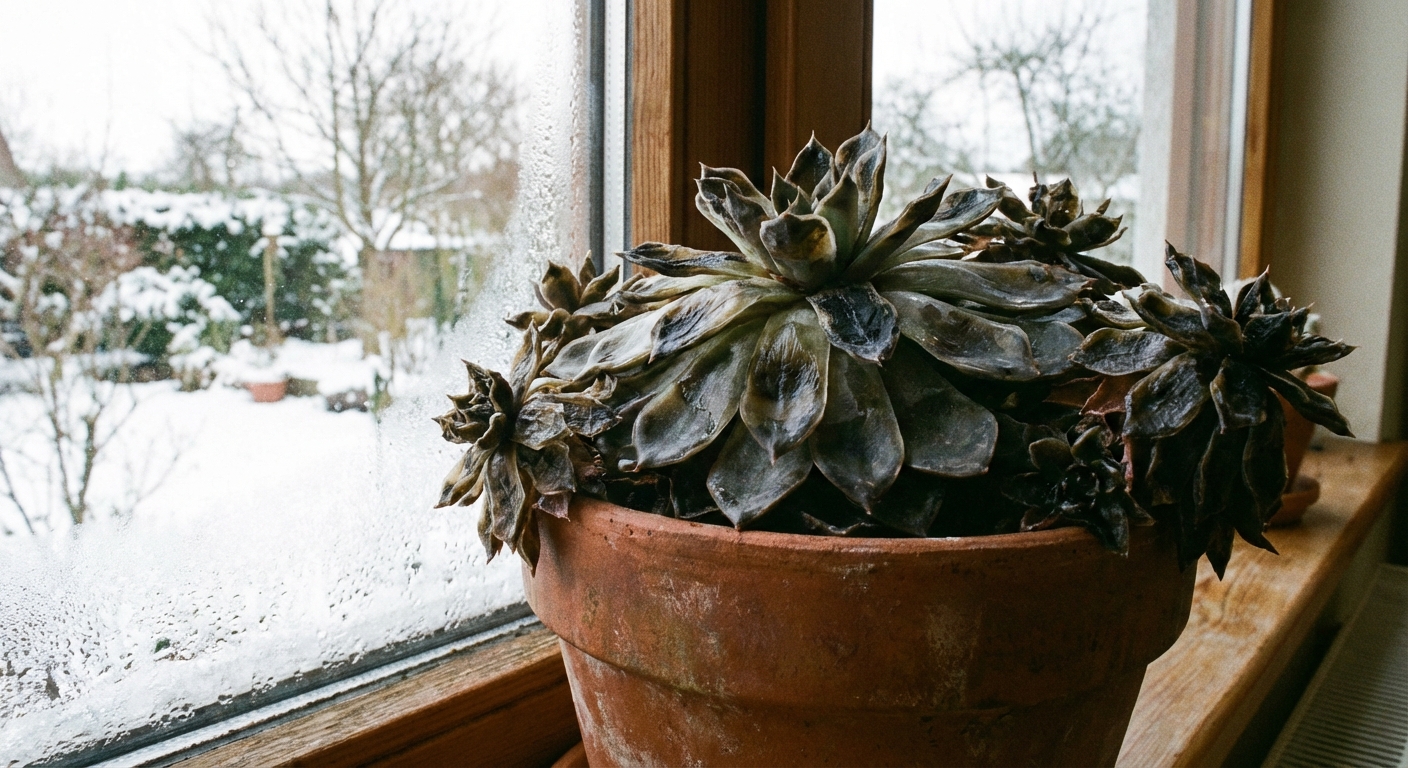
- Leaves turn dark, watery, and translucent after cold exposure
- Tissue collapses and may blacken over the next few days
- Damage often starts on outer leaves or the side facing the cold source
Rescue steps
- Move to a stable temperature. Aim for 60 to 75°F (16 to 24°C) with bright indirect light.
- Hold water for a bit. Cold-damaged tissue is prone to rot. Wait until the mix is fully dry and the plant shows signs of active growth.
- Remove mushy leaves. Once damage is clearly soft and collapsing, gently pull or trim those leaves to reduce rot risk. Use clean snips.
- If the crown is damaged, take a healthy cutting above the affected area and re-root it.
Prevention
- Keep tender succulents away from icy glass and drafts in winter
- For many tender succulents, bring outdoor pots in before nights regularly dip below about 45 to 50°F (7 to 10°C), especially if the soil is wet. If you know your species is cold-hardy, follow its specific limits.
Pot and soil setup checks
If your succulent keeps “mysteriously” struggling, the issue is often the setup, not your effort.
- Drainage hole: non-negotiable for most succulents.
- Pot size: slightly snug beats oversized. Big pots stay wet longer.
- Pot material: terracotta dries faster than plastic or glazed ceramic.
- Soil texture: gritty and fast-draining usually wins indoors. If your mix feels spongy or stays wet, add pumice or perlite or switch mixes.
- Top-dressing rocks: pretty, but they can slow evaporation and keep the surface damp. Use sparingly if you tend to overwater.
How to rescue a struggling succulent
If you are not sure what is wrong, this gentle reset covers the most common issues without making things worse.
- Pause watering. Unless the plant is clearly wrinkled and the soil is dust-dry, give it a few days while you assess.
- Check the pot. No drainage hole is a real problem for most succulents. Switch to a pot with drainage.
- Check the soil. If it feels heavy, stays wet, or looks peat-dense, plan to repot into a gritty mix.
- Inspect for pests. Look in leaf joints and under the rim of the pot.
- Evaluate light. If it is stretching or leaning, increase light gradually or add a grow light.
- Repot only if needed. If you suspect rot, pests in soil, or poor drainage, repot. Otherwise, changing too many variables at once can add stress.
Symptom cheat sheet
- Leaves yellow and mushy: overwatering or rot
- Leaves wrinkled and thin: underwatering, heat stress, or root loss
- Plant tall and floppy: etiolation from low light
- Brown crispy patches: sunburn
- Sticky spots or white fuzz: mealybugs or scale
- Black watery tissue after cold: cold damage
- A few dry lower leaves only: often normal leaf turnover
When to let go (and when to propagate)
Even if the main plant is failing, you can often save it through propagation.
- If the stem base is rotting: take a healthy top cutting and re-root.
- If only a few leaves are healthy: try leaf propagation (works best for many Echeveria, Graptopetalum, and Sedum types). Let leaves callus, then set on dry mix in bright shade.
- When to add water for leaf props: keep things mostly dry at first. Once you see roots and tiny pups, you can moisten sparingly. The goal is damp, not wet.
- If everything is mushy or black: compost it, sanitize the pot, and start fresh. No guilt. Every gardener has a plant graveyard.
If you want, take a clear photo of your succulent (whole plant, plus a close-up of the base and soil) and compare it to the symptom lists above. Your plant is giving you clues. We just have to learn its language.