
Why Is My Spider Plant Turning Yellow? Causes and Fixes

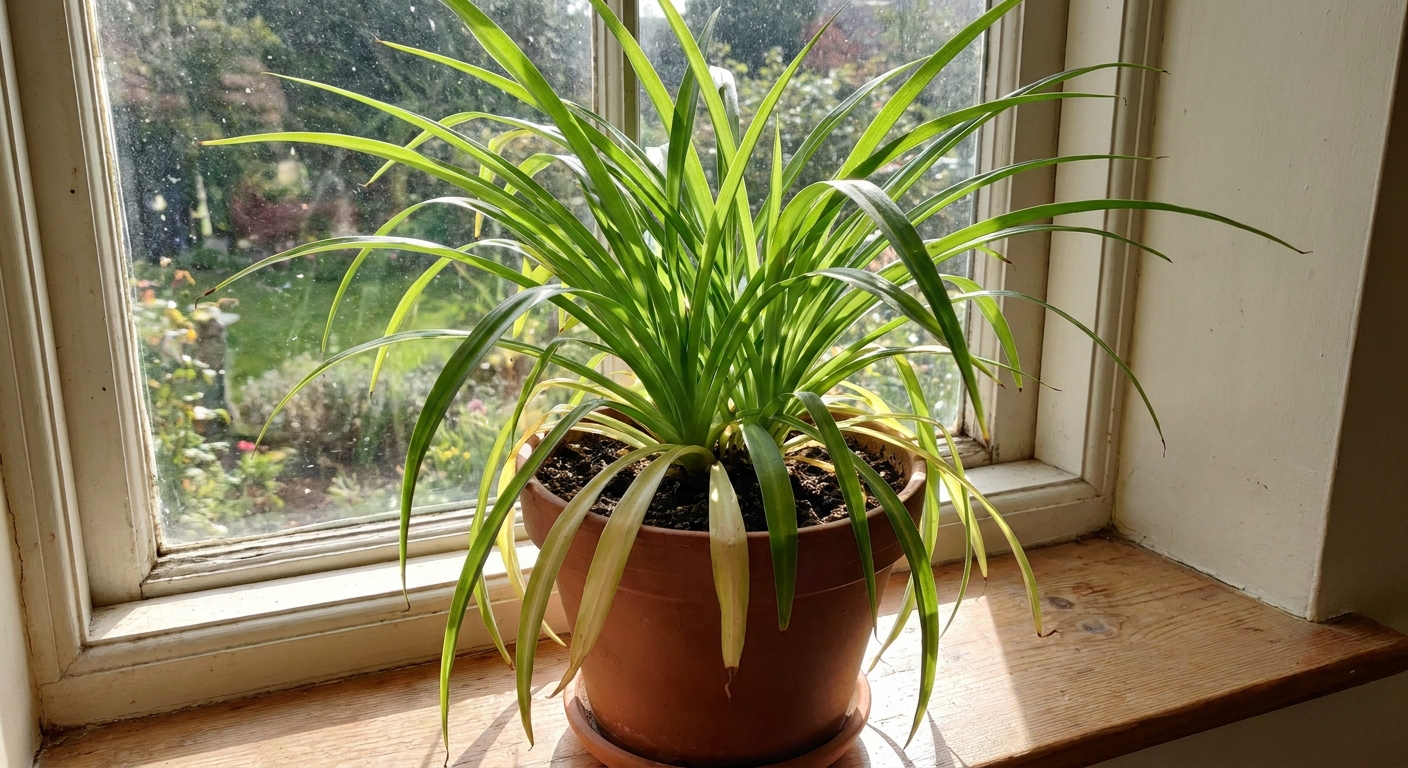
Yellowing leaves on a spider plant can feel like a betrayal. These are supposed to be the “I forgot to water it” champions. The good news is that yellow leaves are your plant’s way of signaling what it needs, and spider plants bounce back quickly once the basics are back in balance.
Below, I will walk you through the most common yellow-leaf causes, how to confirm each one, and exactly what to do next. Grab a cup of tea, and yes, you are allowed to gently apologize to your plant. I do.

Quick decision flow
If you want the fastest route to the likely culprit, follow this simple checklist in order. Yellowing often comes down to one of the first three.
Step 1: Where is the yellow?
- Oldest, outer leaves only: often natural aging or mild stress.
- New growth is pale or yellow: usually light issues, nutrient imbalance, temperature stress, or root stress.
- Yellow plus mushy base or sour soil smell: overwatering and root trouble.
- Yellow plus crispy tips and very dry mix: underwatering or hot sun stress.
Step 2: Touch the soil
- Wet for days: back off watering and check drainage and mix.
- Bone dry and pulling from pot edge: water thoroughly and reassess your routine.
- Evenly moist but yellowing continues: look at light, fertilizer, temperature, water quality, pests, or crowding.
Step 3: Check temperature and drafts
If the plant is near an AC vent, heater, exterior door, or cold window glass, temperature swings can trigger yellowing. Jump to the temperature section below if this fits your setup.
Step 4: Scan for pests
Check leaf undersides and the crown where leaves emerge. If you see sticky residue, webbing, cottony tufts, or tiny moving dots, jump to the pest section below.
Cause 1: Lighting problems
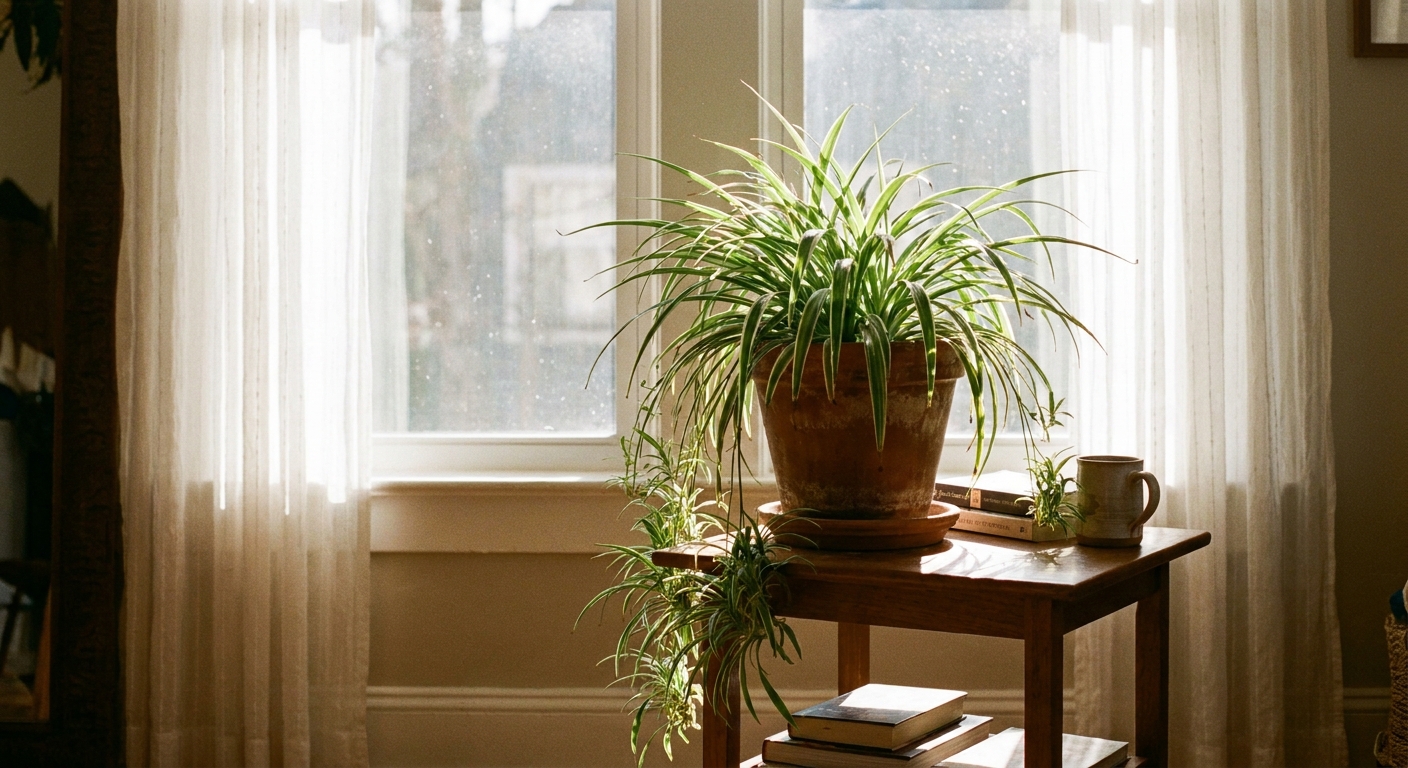
Spider plants love bright, indirect light. Too little light can make foliage fade to a washed out yellow-green. Too much direct sun can bleach leaves and cause yellow patches that later turn tan.
How to tell
- Too little light: slow growth, smaller leaves, overall pale tone, and soil stays wet longer.
- Too much sun: yellowing on the side facing the window, sun-bleached streaks, or patches that feel papery.
Fix it
- Move the plant to a spot with bright, filtered light, like near an east window or a few feet back from a south or west window.
- If it is getting direct afternoon sun, add a sheer curtain or shift it back from the glass.
- Rotate the pot weekly so growth stays even.
What to expect: existing yellow leaves rarely turn fully green again, but new growth should look healthier within about 2 to 6 weeks, depending on light, temperature, and season.
Cause 2: Overwatering and low oxygen at the roots
Yellow leaves can be an early sign that roots are not getting enough air. Spider plants want a thorough watering, then a chance to dry a bit. Constantly soggy soil crowds out oxygen and can start root decline.
How to tell
- Soil stays wet for more than a week.
- Pot feels heavy days after watering.
- Yellowing is gradual and widespread, sometimes paired with limp leaves.
- In worse cases, you may notice a sour smell or soft, dark roots.
Fix it
- Pause watering until the top 1 to 2 inches of soil are dry.
- Confirm the pot has a drainage hole, and the plant is not sitting in a saucer of water.
- If the mix is dense or old and compacted, repot into an airy blend: a quality houseplant soil plus perlite or pumice for drainage.
- If you suspect root rot, unpot and trim away dark, mushy roots. Repot into fresh mix.
What to expect: perkier posture can happen in about 7 to 14 days. Cleaner new leaves typically show up in about 3 to 8 weeks, depending on season, light, and root recovery.
Cause 3: Underwatering and inconsistent moisture
Spider plants store some moisture in their chunky roots, but they still dislike living in a cycle of “bone dry” then “flood.” That swing can show up as yellowing, especially if the plant is also in bright light or a warm room.
How to tell
- Soil is very dry, pulling away from the pot edge.
- Leaves look a little dull, then begin yellowing from the tips or mid-leaf.
- Pot feels extremely light.
Fix it
- Water slowly until it runs freely from the drainage hole, then empty the saucer.
- If the soil is hydrophobic (water runs down the sides), bottom-water for 20 to 30 minutes, then drain well.
- Use a simple cue instead of a rigid schedule: water when the top 1 to 2 inches are dry.
What to expect: leaf firmness often improves within 24 to 72 hours. New growth color stabilizes over about 2 to 6 weeks, depending on light and temperature.
Cause 4: Fertilizer burn or nutrient imbalance
Yellow leaves can come from both ends of the feeding spectrum: too much fertilizer can damage roots and cause yellowing, while too little can leave growth pale over time. Spider plants are light feeders, especially indoors.
How to tell
- Too much fertilizer: yellowing that appears after feeding, possible white crust on soil, leaf tips may also look stressed.
- Too little fertilizer: slow growth and overall fading, especially during spring and summer.
Fix it
- If you recently fertilized and yellowing followed, flush the pot: run room-temperature water through the soil for a few minutes, letting it drain fully.
- Skip fertilizer for 4 to 6 weeks.
- Going forward, feed lightly in active growth: a balanced liquid fertilizer at quarter to half strength every 4 to 6 weeks in spring and summer.
- Do not fertilize a stressed, dry, or freshly repotted plant for at least 3 to 4 weeks.
What to expect: damage from burn does not reverse, but new leaves should emerge stronger in about 3 to 8 weeks, depending on growth conditions.
Cause 5: Water quality and salt buildup
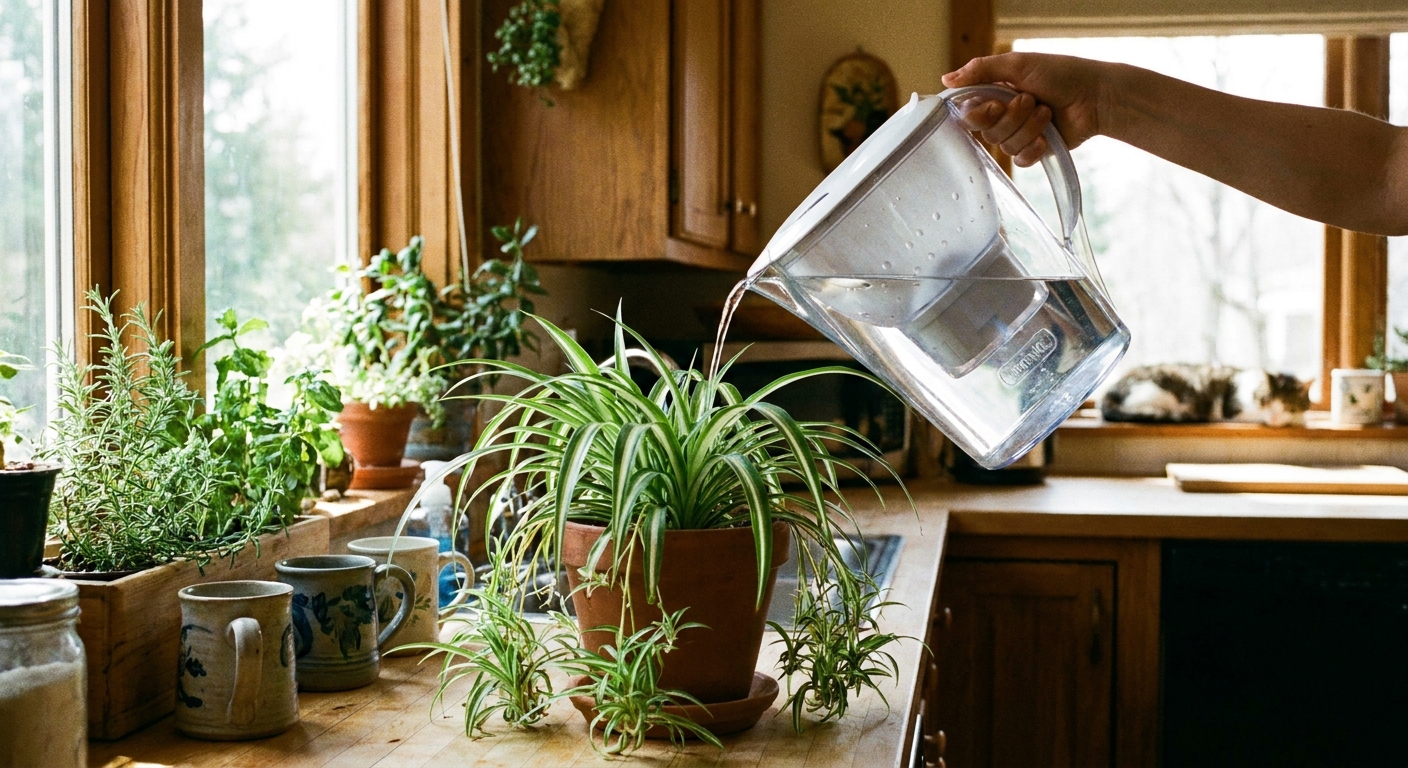
Spider plants are famous for reacting to minerals and salts, including chlorine, fluoride, and fertilizer salts that accumulate in soil. The most classic symptom is brown, crispy tips, but over time you may also see a general “tired” look and slower, paler growth. If you suspect water quality, it is best to diagnose it after you have ruled out light and watering issues.
How to tell
- Brown tips along with yellowing or dull foliage.
- White crust on the soil surface or pot rim.
- You use very hard tap water or heavily chlorinated municipal water.
Fix it
- Switch to filtered, rain, or distilled water for the next month.
- Flush the soil monthly to wash out salts, especially if you fertilize.
- If buildup is heavy, repot with fresh mix and rinse the pot before reuse.
What to expect: you may see improvement in vigor within about 2 to 6 weeks, with the biggest change showing in new growth.
Cause 6: Crowding and rootbound stress
Spider plants tolerate being a little snug, but a severely rootbound plant can struggle to take up water and nutrients evenly. That can lead to yellowing, especially if watering dries too fast or runs straight through the pot.
How to tell
- Roots circling the bottom or pushing up out of the soil.
- Water runs through immediately and the plant dries out fast.
- Yellowing continues despite reasonable light and watering.
Fix it
- Repot into a container slightly larger. For most plants, 1 to 2 inches wider than the current pot is right. If your current pot is very small, aim for one size up rather than a big jump.
- Gently loosen the outer roots. You can trim a small amount of circling roots if they are extremely tight.
- Use fresh, airy mix and water in thoroughly once.
What to expect: a repotted spider plant may pause for a week or two, then new leaves typically look better within about 3 to 8 weeks, depending on season and light.
Cause 7: Pests (yes, even on spider plants)
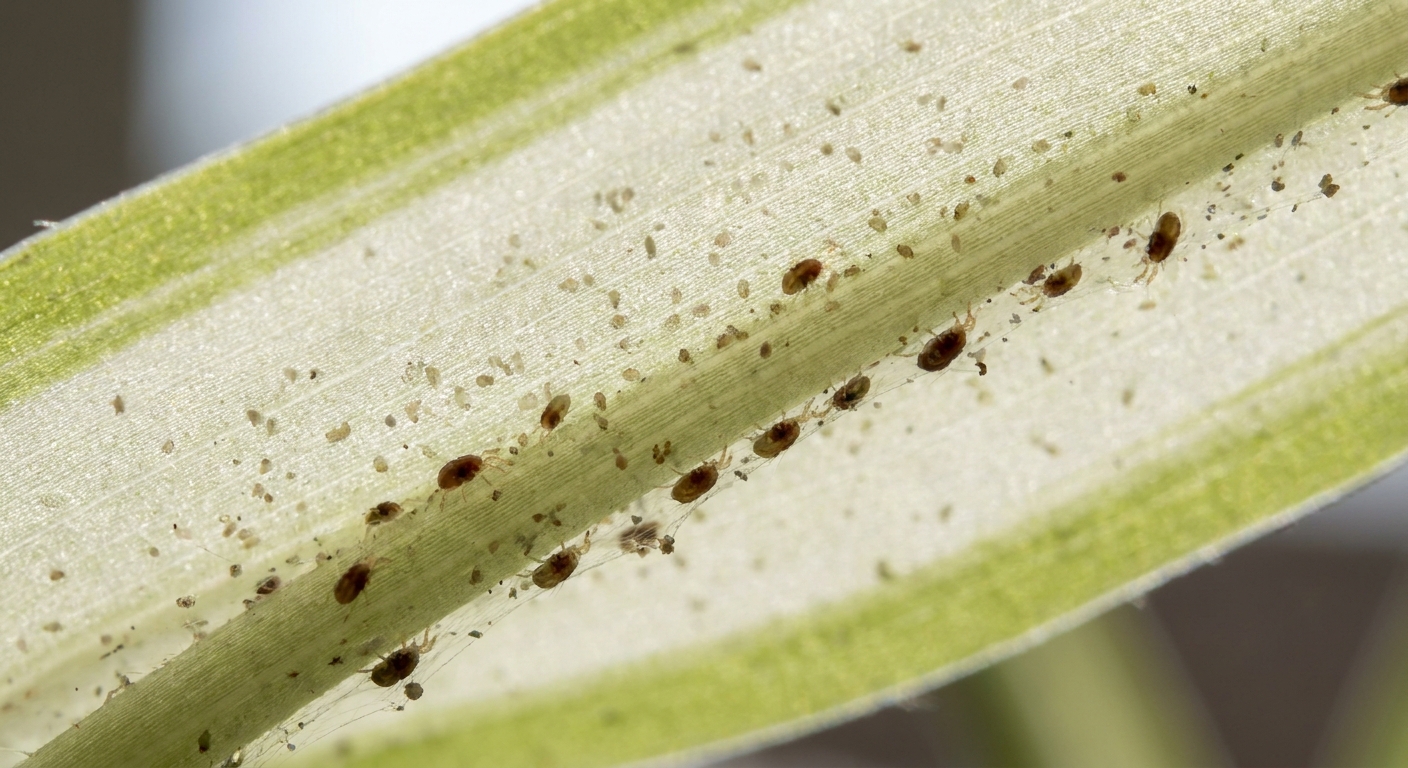
Spider plants are fairly tough, but pests can still sneak in, especially on plants that spent time outdoors or came home from a crowded garden center. Sap-suckers can cause stippling, yellowing, and overall decline.
What to look for
- Spider mites: fine webbing and tiny speckles, leaves look dusty and yellowed.
- Mealybugs: cottony white clusters in leaf joints.
- Scale: small brown bumps along stems or leaf bases.
- Aphids: soft-bodied insects and sometimes sticky residue.
Fix it
- Isolate the plant.
- Rinse leaves in the shower or sink, focusing on undersides.
- Use a ready-to-use insecticidal soap (or mix per label directions) as a first-line option. Spray thoroughly, including leaf undersides. Repeat every 7 days for 3 to 4 rounds.
- If you use a gentle DIY soap solution, keep it very mild (for example, about 1/4 to 1/2 teaspoon of liquid castile soap per quart of water), test on one leaf first, and avoid applying in direct sun.
- For persistent pests, use neem oil or a horticultural oil, following label directions and keeping the plant out of harsh sun for 24 hours after application.
What to expect: once pests are controlled, yellowing should slow within about 1 to 3 weeks. Fresh, clean growth usually appears within about 3 to 8 weeks, depending on the plant’s growing conditions.
Cause 8: Natural aging
If only a few of the oldest leaves are yellowing near the outer edge of the plant, you may simply be seeing normal leaf turnover. Spider plants shed older leaves as they focus energy on new growth and baby “spiderettes.”
How to tell
- Yellowing is limited to a few older, outer leaves.
- The center crown is pushing new green leaves.
- No mushy soil, no pest signs, no rapid spread.
Fix it
- Snip yellow leaves off at the base with clean scissors.
- Keep care steady. Do not overhaul everything if the plant looks otherwise happy.
What to expect: immediate cosmetic improvement after pruning, with ongoing healthy growth as long as conditions stay consistent.
Cause 9: Temperature stress and drafts
Spider plants are easygoing, but they do not love sudden temperature swings. Cold drafts, hot blasts from vents, or leaves pressed against chilly window glass can show up as yellowing, sometimes with droop or stalled growth.
How to tell
- The plant sits near an exterior door, drafty window, AC vent, or heater.
- Yellowing started after a weather change or HVAC use.
- Leaves look stressed without obvious watering problems.
Fix it
- Move the plant away from vents and drafts, and avoid contact with cold glass.
- Aim for steady indoor temperatures and decent airflow (gentle, not blasting).
- Do not “correct” with extra fertilizer. Just stabilize the environment and keep watering consistent.
What to expect: once conditions stabilize, new growth often looks better within about 2 to 6 weeks.
A quick note on variegated types
If you have a variegated spider plant, the lighter stripes and overall paler look are normal. What you are watching for is a shift toward overall yellowing, limp growth, or a sudden change in color compared with how it usually looks in your home.
How to help your spider plant recover faster
Once you identify the cause, these gentle steps support recovery without adding extra stress.
- Trim strategically: remove fully yellow leaves at the base. If a leaf is partly yellow, you can trim just the damaged section for appearance and to keep things tidy. Leaving the healthy green portion is also fine.
- Stabilize the environment: avoid drafts, heating vents, and big temperature swings.
- Hold off on heavy feeding: most yellow-leaf situations are not solved by more fertilizer right away.
- Check drainage every time: a pot without a drainage hole is the fastest path to mystery yellowing.
Recovery timeline
Spider plants are resilient, but leaves do not always “un-yellow.” Focus on the new growth. Timing depends on season, temperature, light, and how stressed the roots are.
- First 48 hours: posture often improves after proper watering, especially if it was too dry.
- 7 to 21 days: yellowing should stop spreading if you corrected the main issue.
- 2 to 6 weeks: new leaves begin to show stronger color and steadier growth.
- 4 to 10 weeks: after repotting, flushing salts, or pest treatment, the plant typically looks noticeably fuller and greener.
If yellowing keeps spreading after 2 to 3 weeks of consistent care, unpot the plant and inspect the roots. Healthy roots are creamy white or light tan and firm. Dark, mushy roots need intervention.
When to repot
Repotting is not always the answer, but it is the right move if:
- Roots are circling tightly and the plant dries out extremely fast.
- Soil has a heavy mineral crust and flushing is not helping.
- The mix is old, compacted, and stays wet too long.
Choose a pot only slightly larger, refresh the soil, and give it bright indirect light while it settles in.
FAQ
Can yellow spider plant leaves turn green again?
Usually not fully. A mildly pale leaf can regain some color if light improves, but leaves that are clearly yellow typically will not return to deep green. The goal is healthy new growth.
Should I cut off yellow leaves?
Yes, if they are mostly yellow. Snip at the base with clean scissors. This tidies the plant and helps you monitor whether the problem is continuing.
Is yellowing a sign I should water more?
Sometimes, but not always. Yellowing can come from both overwatering and underwatering. Always check soil moisture first.
A quick pep talk
Yellow leaves are not a moral failing. They are feedback. Make one change at a time, give your spider plant a couple of weeks to respond, and watch the new leaves. That is where the truth lives, and where the comeback starts.