
Why Is My Snake Plant Turning Yellow? 9 Common Causes and What to Do

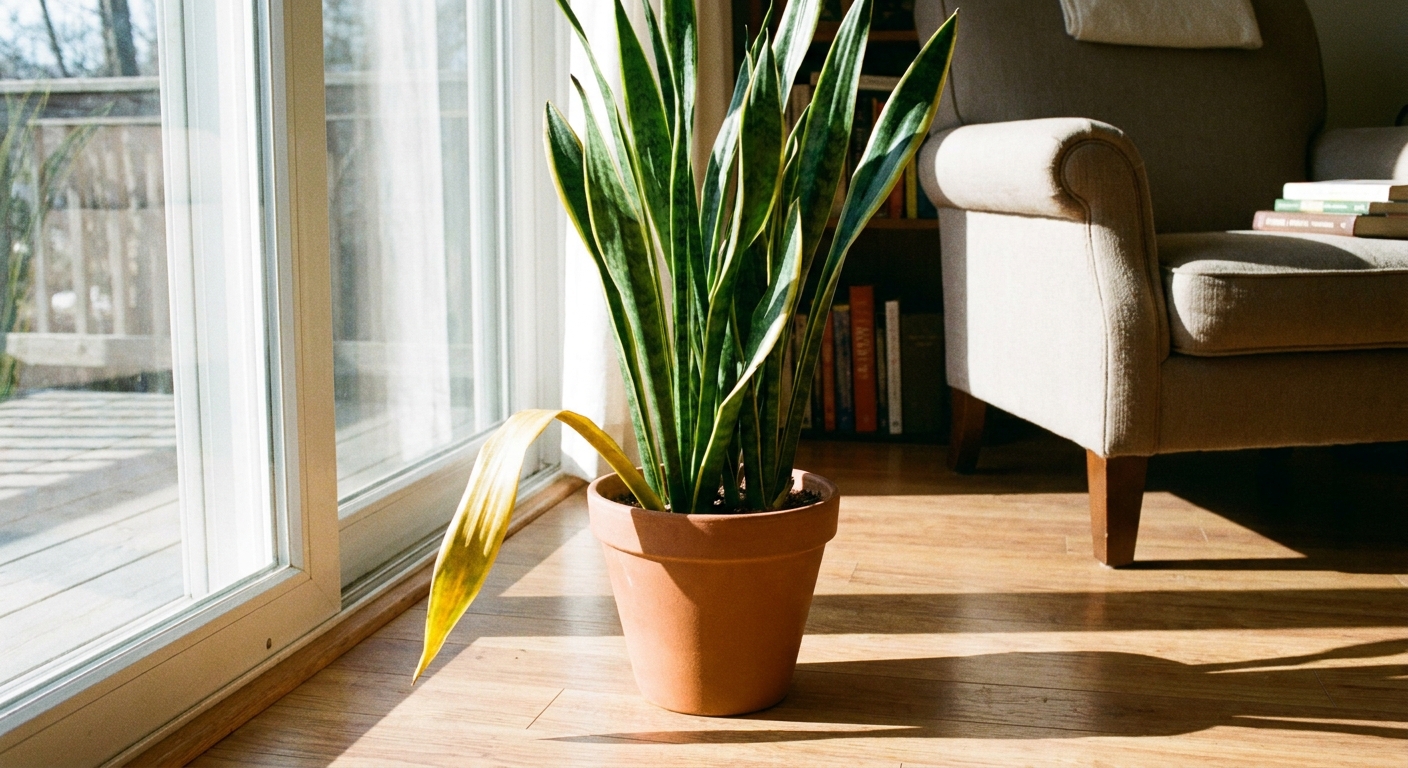
Snake plants are famous for being tough, so a yellowing leaf can feel like a personal betrayal. I get it. But yellow is your sansevieria’s way of whispering, “Something in my setup is a little off.” The good news: most causes are easy to spot once you know what you’re looking for, and even easier to fix.
Quick name note: You will still see this plant called Sansevieria, but its updated botanical name is Dracaena trifasciata. Same plant, same care, and both names show up in shops and care guides.
Below are the most common reasons snake plants turn yellow, plus exactly what to do next. I’ll also help you decide when a yellow leaf is normal aging and when it is a red flag.

First, a quick check
Before you change anything, take 60 seconds to observe. This little pause saves a lot of guesswork.
- Which leaves are yellow? Just one older leaf near the base, or several across the plant?
- What does the yellow look like? Pale overall, yellow with mushy spots, or yellow with crispy edges?
- How does the soil feel? Bone dry, slightly moist, or wet and heavy?
- Any smell? A sour, swampy smell is often root trouble.
- Quick pest scan: Check the leaf creases and the base for cottony bits, tiny bumps, or black specks.
If you want the fastest diagnosis, use this cheat sheet:
- Yellow + mushy base + wet soil = overwatering and possible rot
- Yellow patches that turn crispy = too much direct sun
- Yellow + wrinkled or curled leaves + soil stays dry = underwatering
- Yellow + dull leaves + pests or speckling = pest stress
- Yellowing after a cold night or near a vent = temperature stress
Now let’s troubleshoot, starting with the most common culprit.
1) Overwatering (the classic)
If I could put a tiny sign in every snake plant pot, it would say: “Please ignore me for a while.” Yellowing often begins when the roots stay damp too long. Snake plants store water in their leaves and rhizomes, so constantly moist soil is a fast track to stress and rot.
Clues it is overwatering
- Soil feels wet days after watering
- Leaves yellow from the base upward
- Leaf bases feel soft or a little squishy
- Pot feels heavy for a long time
What to do
- Stop watering immediately. Let the mix dry throughout (top to bottom).
- Check drainage. Make sure water can exit freely (more on that next).
- If you suspect rot: slide the plant out of the pot, inspect the roots and rhizomes (firm is good, mushy is not), trim any black or slimy parts with clean scissors, and repot into fresh, dry mix.
- Tool tip: Sterilize your blade first, and toss rotten debris in the trash, not your compost.
My rule of thumb: Water only when the mix is dry all the way down. For many homes, that is every 2 to 4 weeks, sometimes longer in winter.
2) Poor drainage (or no hole)
You can water “correctly” and still end up with yellow leaves if the pot holds water like a bathtub. Snake plants want a quick drink and then a fast dry-down.
Clues drainage is the issue
- Water pools on top or drains very slowly
- Soil looks compacted and stays dark for days
- The pot is a decorative cachepot without a drainage hole
What to do
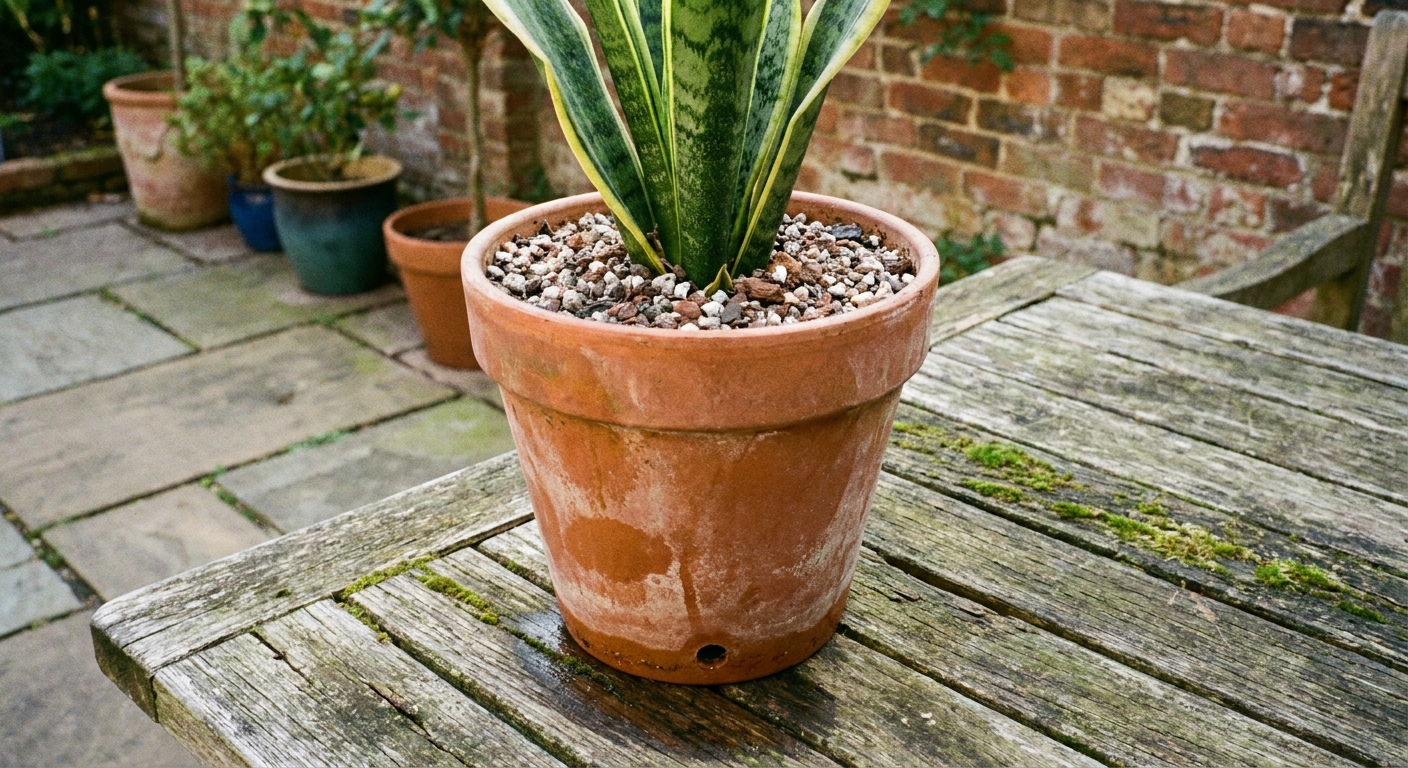
- Use a pot with a drainage hole. If you love a decorative pot, keep the plant in a nursery pot inside it and empty standing water after watering.
- Switch to a gritty mix. A cactus or succulent mix works well. For extra breathing room, add perlite or pumice.
- Skip the rocks at the bottom. They do not improve drainage. They reduce effective soil volume and can create a perched water table, meaning the wettest zone sits higher in the pot, closer to roots.
3) Pot size (too big or too small)
Snake plants like to be a little snug. When the pot is too large, there is extra soil that stays wet longer than the roots can use, increasing the chance of yellowing from damp stress. When the pot is too small, the plant can get chronically thirsty or struggle to access nutrients, especially if it is rootbound.
Clues the pot is too big
- Soil takes a long time to dry
- Plant looks stalled and leaves slowly discolor
Clues the pot is too small
- Roots circling the bottom or pushing the plant upward
- Water runs straight through because the pot is mostly roots
- Leaves yellow along with slowed growth
What to do
- Choose the right upgrade: move up just 1 to 2 inches wider than the root mass.
- If the pot is too big: downsize into a smaller pot with fresh mix, especially if you have overwatering symptoms.
4) Light (too strong or too weak)
Snake plants tolerate low light, but “tolerate” and “thrive” are not the same thing. Light issues can show up as yellowing, especially when the plant is suddenly moved.
Too much direct sun
Harsh afternoon sun can bleach leaves to a yellowish tone or cause yellow patches that later turn crispy.
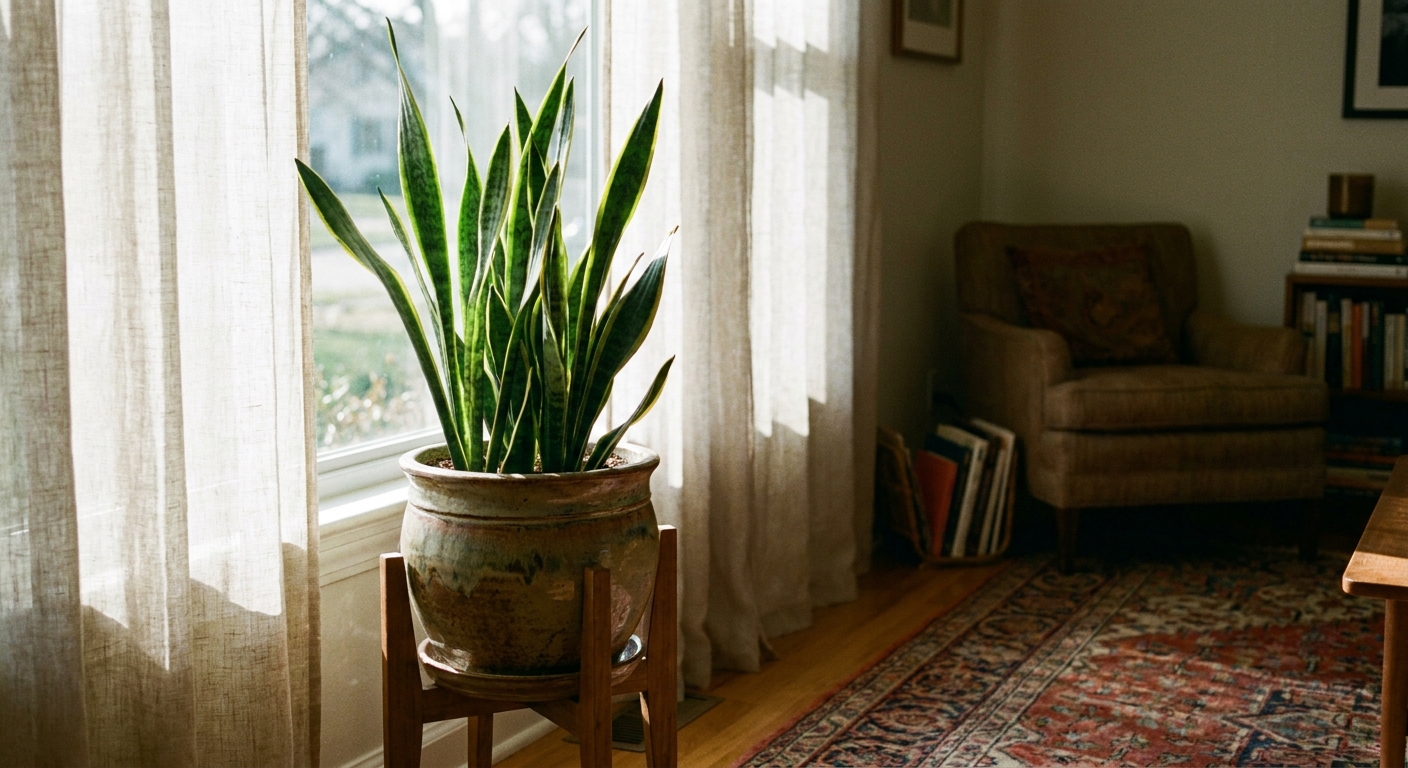
- Fix: Move it back from the window or use a sheer curtain. Bright, indirect light is the sweet spot.
Too little light
In very low light, growth slows and the plant uses water slowly. That combination can lead to yellowing because the soil stays moist longer than expected.
- Fix: Shift to brighter indirect light, or add a grow light. Start around 10 to 12 hours a day and adjust based on intensity and how your plant responds.
5) Underwatering (yes, it happens)
Snake plants can go a long time without water, but they are not indestructible. If the mix stays bone dry for weeks and weeks, the plant may start pulling moisture from older leaves first, and they can yellow, thin, curl, or wrinkle.
Clues it is underwatering
- Soil is dry throughout and pulls away from the pot sides
- Leaves look a bit wrinkled, curling inward, or feel less firm
- Yellowing comes with crispy tips and slow overall growth
What to do
- Water deeply. Soak the mix thoroughly until water runs out the drainage hole, then let it drain completely.
- Do not “sip water” weekly. For snake plants, a full drink followed by a full dry-down is usually healthier than tiny frequent top-ups.
- If the soil is hydrophobic: bottom-water for 20 to 30 minutes, then drain.
6) Normal aging
If just one lower, oldest leaf is turning yellow while the rest of the plant looks firm and green, you might be witnessing normal turnover. Snake plants slowly retire older leaves as they focus on newer growth.
What to do
- Leave it until it is mostly yellow so the plant can reabsorb some nutrients.
- Then remove it cleanly: use a sterilized blade and cut the leaf at the base, close to the soil line.
If multiple leaves yellow at once, or if the change is fast, jump back to the other causes.
7) Temperature stress and drafts
Snake plants are tougher than most houseplants, but cold snaps and hot blasts can still upset them. Yellowing can appear after a chilly night near a window, a winter draft, or a heating vent baking the pot.
Clues temperature is the trigger
- Yellowing started after moving the plant or after a weather change
- Leaves feel slightly soft and look dull
- Plant sits near an exterior door, drafty window, AC unit, or heater
What to do
- Aim for steady indoor temps. Keep it away from drafts and vents.
- Let it dry more between waterings during cool seasons, when evaporation slows.
8) Pests (thrips, mealybugs, more)
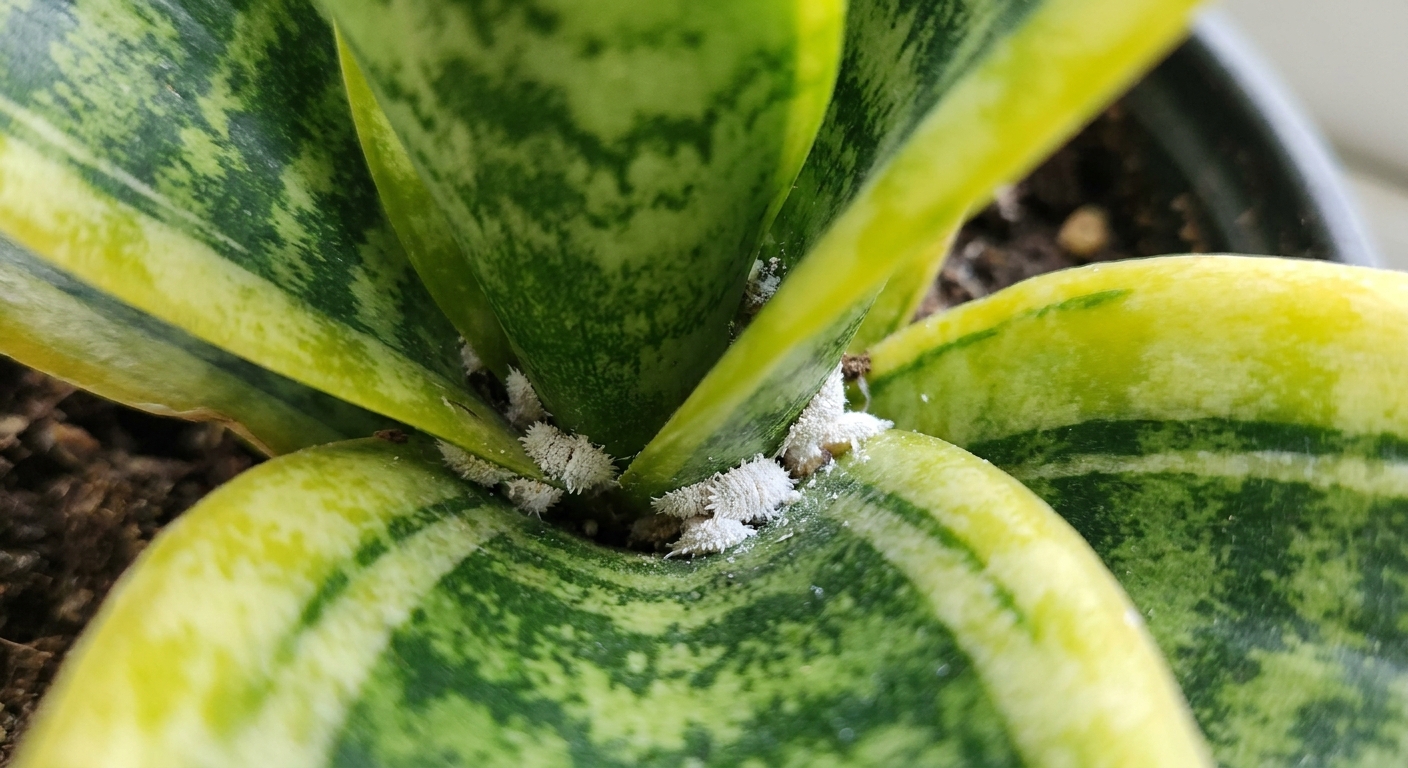
Snake plants are not pest magnets, but they are not immune either. Sap-sucking pests can cause yellowing, mottling, and a tired look that no amount of “more water” will fix.
What to look for
- Mealybugs: white cottony clusters in leaf joints or near the base
- Spider mites: very fine webbing, dusty stippling, leaf dullness
- Thrips: silvery streaks, tiny black specks (frass), distorted newer growth
- Scale: small brown bumps that scrape off with a fingernail
What to do
- Isolate the plant from your other houseplants.
- Wipe leaves thoroughly with a damp cloth, including the undersides and creases.
- Treat: use insecticidal soap or neem oil, repeating every 7 to 10 days for several rounds.
- For mealybugs: spot-treat with a cotton swab dipped in isopropyl alcohol.
9) Nutrients, old mix, and fertilizer burn
Snake plants do not need heavy feeding, but yellowing can happen at both ends of the fertilizer spectrum: too much or too little. Old, compacted mix can also reduce airflow around roots and mimic overwatering symptoms.
Too much fertilizer (burn)
Excess salts can damage roots and cause yellowing or brown tips, especially if you fertilize often or at full strength. In real life, it often looks like: your plant is not growing much, but it keeps collecting crusty residue on the soil surface and the leaf tips start to look toasted.
- Fix: Flush the pot with water (let it drain fully) or repot into fresh mix if buildup is severe. Reduce feeding to a gentle schedule.
Too little nutrition (long-term deficiency)
If your plant has lived in the same pot for years, the mix can become depleted. You may see pale, slow growth and more frequent yellowing of older leaves.
- Fix: In spring and summer, feed lightly with a balanced houseplant fertilizer at half strength every 4 to 6 weeks, or repot with fresh mix.
- Low-light caution: If your plant lives in low light and grows slowly, feed even less, or skip fertilizer entirely.
Old, compacted soil
Even if you water perfectly, a mix that has broken down can hold water too long and starve roots of oxygen.
- Fix: Repot into a fresh, airy mix (succulent mix plus perlite or pumice). This one change solves a surprising number of “mystery yellow” cases.
Timing tip: Skip fertilizer in fall and winter unless the plant is under strong grow lights and actively growing.
Water quality (optional but useful)
Most snake plants do fine on tap water, but in some homes very hard water or fluoride-heavy water can contribute to tip burn and gradual decline.
- If you suspect water quality: try filtered water, rainwater, or letting tap water sit out overnight, and flush the pot occasionally to reduce salt buildup.
How to save it
If your plant is already turning yellow, use this simple rescue path. Think of it like first aid for roots.
- Pause watering. Most yellowing snake plants are not asking for more water.
- Check soil moisture deeply. Use your finger, a chopstick, or a moisture meter to test the bottom half of the pot.
- Inspect roots and rhizomes if needed. If the pot stays wet or you smell rot, unpot and look for black, mushy roots or a soft rhizome.
- Repot if drainage or rot is involved. Fresh gritty mix, pot with a hole, and do not water for several days to a week after repotting to let trimmed roots callus (longer in cool, dim conditions).
- Adjust light and location. Bright indirect light, stable temperatures, no vents.
- Remove only the worst leaves. Fully yellow leaves will not turn green again, but partially yellow ones can sometimes stabilize once conditions improve.
When yellow is urgent
Snake plants move slowly, so fast changes are worth taking seriously. Act promptly if you notice any of the following:
- Yellowing spreads quickly across multiple leaves
- Leaf bases feel soft, watery, or collapse at the soil line
- The pot smells sour or moldy
- New growth is turning yellow or mushy
Those signs often point to root or rhizome rot. The sooner you unpot, trim, and repot, the better your chances.
Prevention (low effort)
Want your snake plant to stay that calm, upright green it is famous for? Here is the simple routine I rely on.
- Use a fast-draining mix and a pot with a drainage hole.
- Water deeply, then wait. Do not top off “just a little.”
- Give bright indirect light if you can, and rotate the pot occasionally.
- Keep leaves clean. A quick wipe helps you spot pests early and keeps photosynthesis humming.
- Fertilize lightly only during the growing season, and even less in low light.
If you take one thing from this page, let it be this: yellow leaves are information, not failure. Your plant is simply helping you dial in the conditions it prefers. Once you do, it will go back to being the quietly heroic houseplant it was born to be.