
Why Is My Snake Plant Drooping?

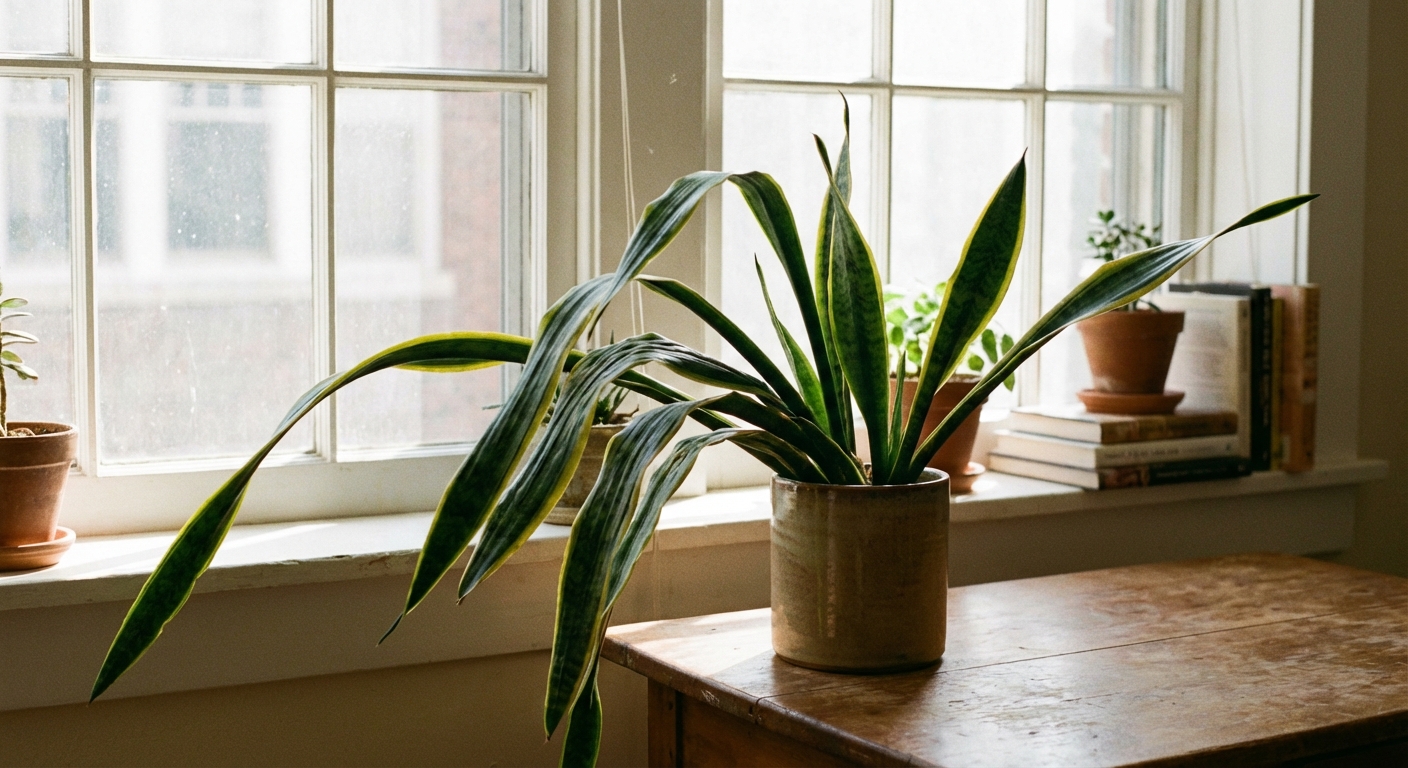
Snake plants are famous for being tough, so when those upright leaves suddenly start leaning like they need a nap, it can feel personal. Take a breath. Drooping is your plant’s way of whispering, “Something’s off,” and it is usually fixable.
Most drooping comes down to a handful of usual suspects: overwatering and root rot, temperature stress, poor drainage, pot-bound roots, low light stretching, or simple mechanical instability (a top-heavy plant leaning toward the window). Less often, pests weaken leaves over time. The trick is diagnosing the right one before you change everything at once.
Note: Snake plant is commonly sold as Sansevieria, but the current botanical name is Dracaena trifasciata.
Quick diagnosis in 2 minutes
Before you repot, prune, or panic-water, do these quick checks. They will point you toward the most likely cause.
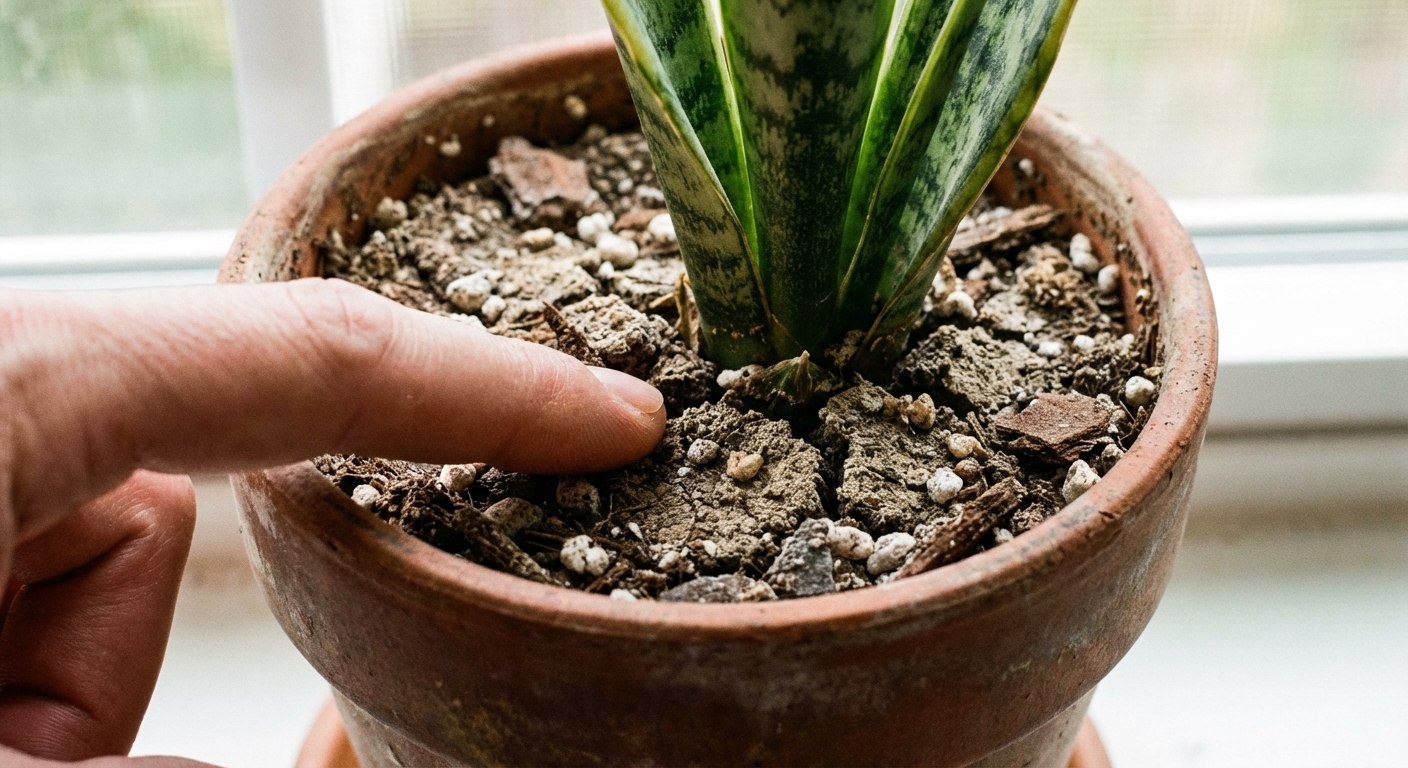
1) Feel the soil
- Soil is wet or cool and stays wet 7 to 10 days after watering: likely overwatering or poor drainage.
- Soil is bone dry and pulling away from the pot: underwatering is possible, and severely dry mix can turn hydrophobic (water-resistant).
2) Gently wiggle the base
- Leaf bases feel soft, mushy, translucent, or smell funky: root rot or crown rot is very likely.
- Base feels firm, but leaves are flopping: look at light, temperature, roots, or stability.
3) Check the environment
- Near a drafty door, AC vent, heater, or cold window: temperature stress can cause drooping.
- Very low light for months: leaves can stretch and weaken, then lean.
4) Peek at the pot situation
- Roots circling the top or coming out drainage holes: pot-bound roots can lead to instability and inconsistent watering.
- No drainage hole: that is a flashing red sign for chronic soggy roots.
- Plant is tall in a light plastic pot: it may simply be top-heavy.
5) Quick pest check
- Look at leaf bases and undersides: cottony clumps (mealybugs), fine webbing (spider mites), or sticky residue can contribute to weakening and droop.
Cause 1: Overwatering and root rot
This is the big one. Snake plants store water in their thick leaves and rhizomes, so frequent watering can drown roots long before the plant looks thirsty. Once roots start rotting, leaves lose their support system and begin to slump.
How to tell
- Soil stays wet more than 7 to 10 days after watering.
- A sour, swampy smell from the pot.
- Leaf bases feel soft or translucent.
- Yellowing at the base, not just at the tips.
- Plant feels loose in the soil, like it is no longer anchored.
Fix it
- Stop watering immediately. Put the watering can in time-out.
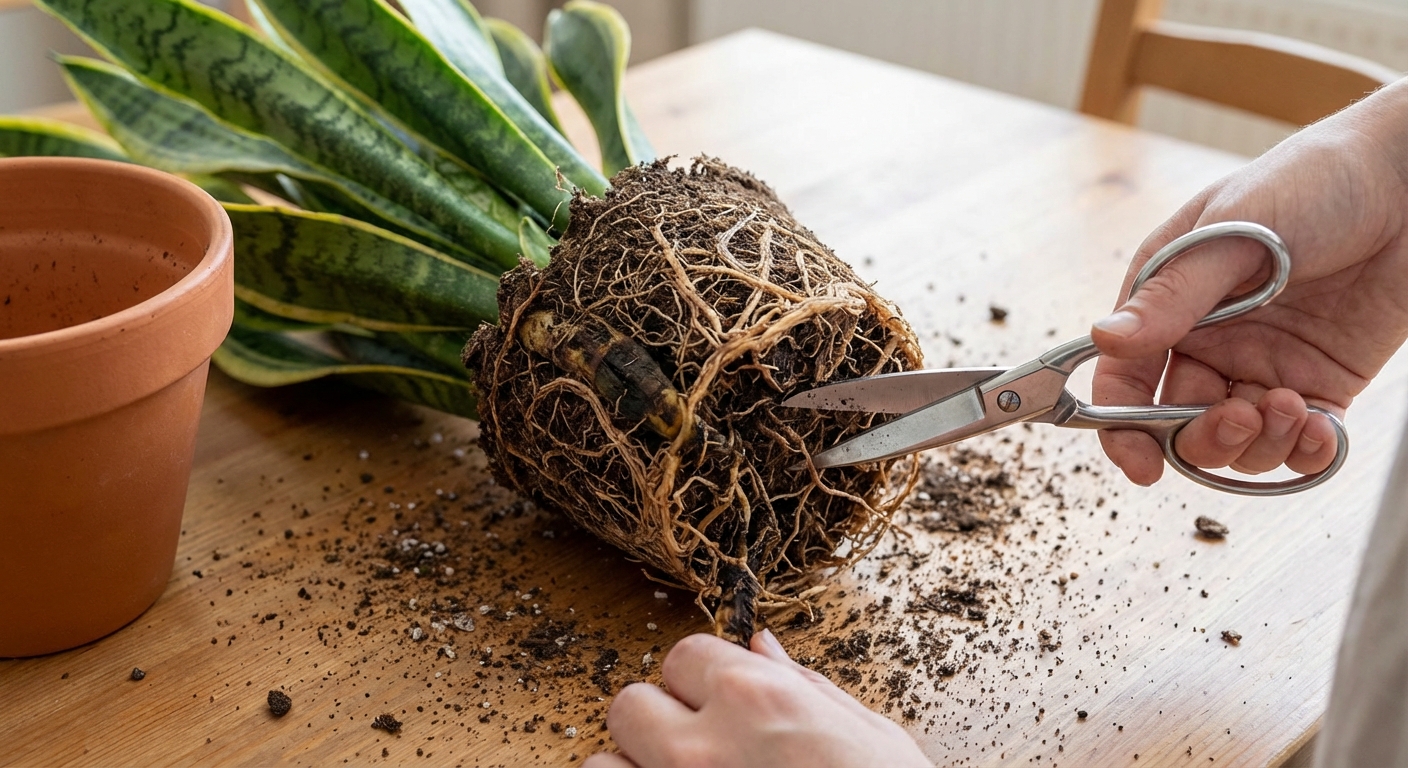
- Unpot the plant. Slide it out and gently shake away as much soil as you can.
- Inspect roots, rhizomes, and the crown. Healthy roots are firm and pale. Rotten roots are brown, black, mushy, or hollow. If the plant is mushy at the crown (where leaves meet the rhizome), do not replant that soft tissue.
- Trim rot. Use clean scissors or pruners to remove all mushy roots and any soft rhizome sections. If a leaf is mushy at the base, remove it completely.
- Let cuts callus in a safe spot. Rest the plant on a towel in a warm, airy place with gentle indirect light for 24 to 48 hours. Avoid harsh sun while it is bare-root.
- Repot in a dry, fast-draining mix. Use a cactus or succulent mix, or amend potting soil with perlite or pumice. The pot must have a drainage hole.
- Wait to water. Hold off about a week, then water lightly only when the mix is fully dry.
Prevention tips
- Water only when the potting mix is fully dry. For many homes, that is every 2 to 4 weeks, and less in winter.
- Empty saucers. Never let the pot sit in water.
- Use the soak-and-dry method. Water thoroughly, let it drain completely, then do not water again until dry.
Cause 2: Temperature stress
Snake plants like it warm and steady. Cold drafts, chilly windows, and sudden temperature swings can damage tissues and make leaves fold or droop. Cold is the more common culprit indoors.
Clues
- Drooping started after moving the plant or after a weather change.
- Leaves feel limp but not mushy.
- Soft, water-soaked patches may appear after cold exposure.
- Plant sits near a draft, heater, or AC vent.
Fix it
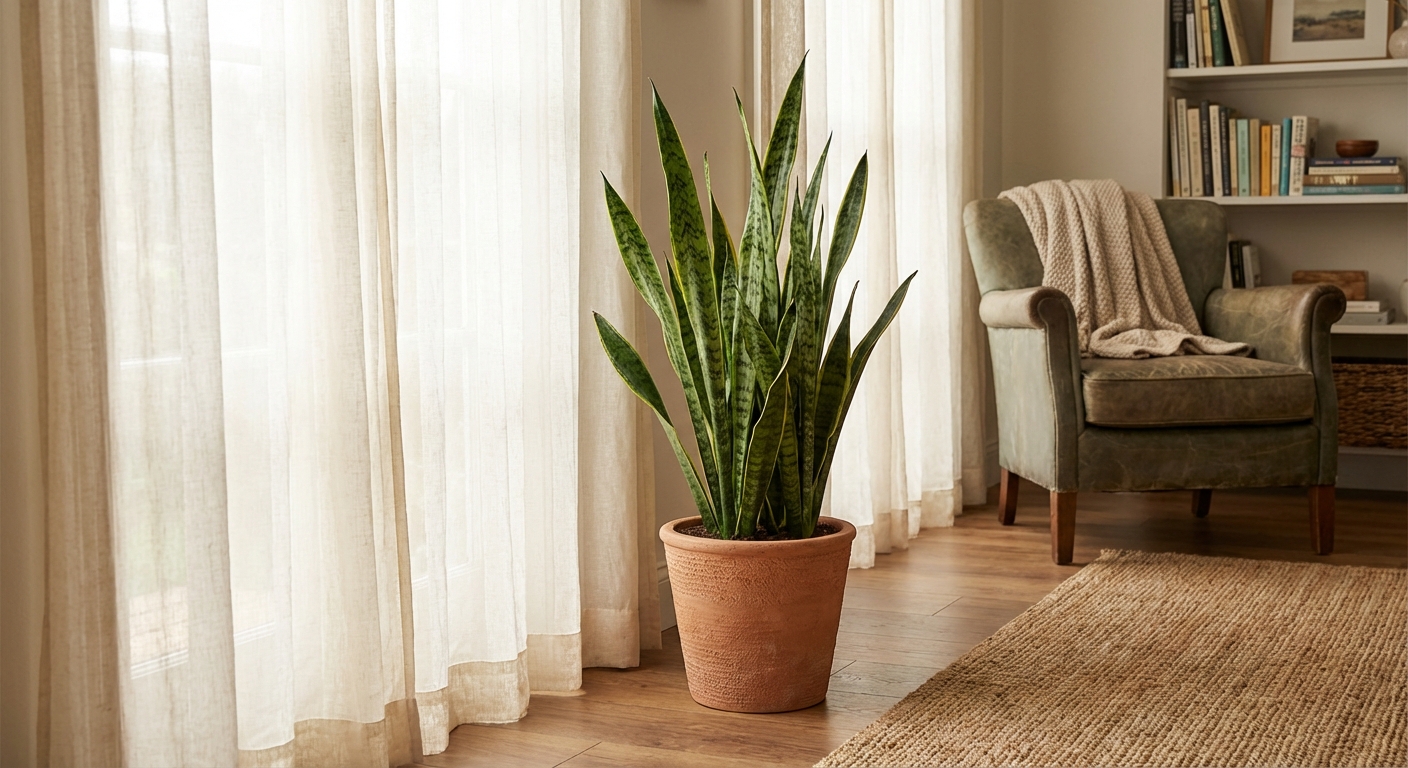
- Move it to a stable spot. Aim for 65 to 85°F (18 to 29°C). Try to avoid prolonged exposure below about 55°F (13°C), and definitely protect it from anything near 50°F (10°C) or colder.
- Check the soil before watering. Cold soil dries slowly. If it is even slightly damp, wait.
- Give bright, indirect light. Good light helps the plant regain strength without overheating.
- Remove damaged leaves if needed. If a leaf turns mushy from cold injury, cut it at the base with clean pruners.
Prevention tips
- In winter, keep snake plants a few inches back from cold windows at night.
- Avoid placing them directly under HVAC airflow.
- Do not water right before a cold snap if your home runs chilly at night.
Cause 3: Poor drainage
Sometimes you are not “overwatering” as much as you are over-retaining. A pot with no drainage hole, compacted soil, or a clogged outlet can trap water around the roots. The result looks the same: drooping leaves and unhappy roots.
Signs drainage is the issue
- Pot has no drainage hole, or the hole is tiny and clogged.
- Soil looks dense and stays wet in the lower half of the pot.
- Water pools on top or runs down the sides without soaking in.
- Fungus gnats hang around the pot.
Fix it
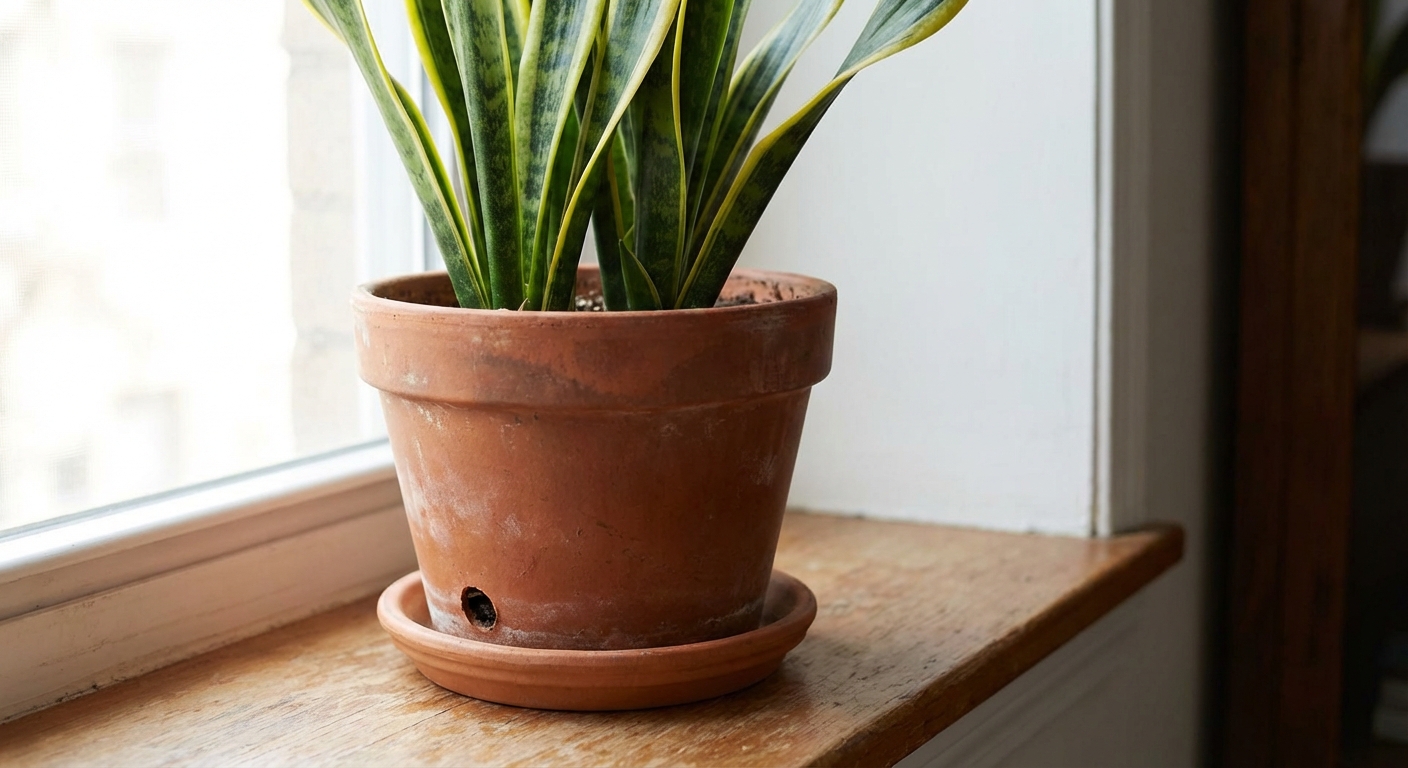
- Confirm you have a drainage hole. If you do not, plan to repot. A cachepot setup is fine, but the inner pot needs drainage.
- Swap to a chunkier mix. Choose cactus or succulent soil and add extra perlite or pumice if your home is humid.
- Clear the drainage path. Make sure excess water can escape freely.
- Repot at the same depth. Keep the base of the leaves above the soil line to prevent rot.
Prevention tips
- Skip “drainage layers” of gravel. In most potting mixes, they reduce effective soil volume and can raise the saturated zone (the wettest part of the pot) closer to the roots.
- Use a terracotta pot if you tend to over-love with water. It breathes and dries faster.
- In low light, water even less. Low light equals low water use.
Cause 4: Pot-bound roots
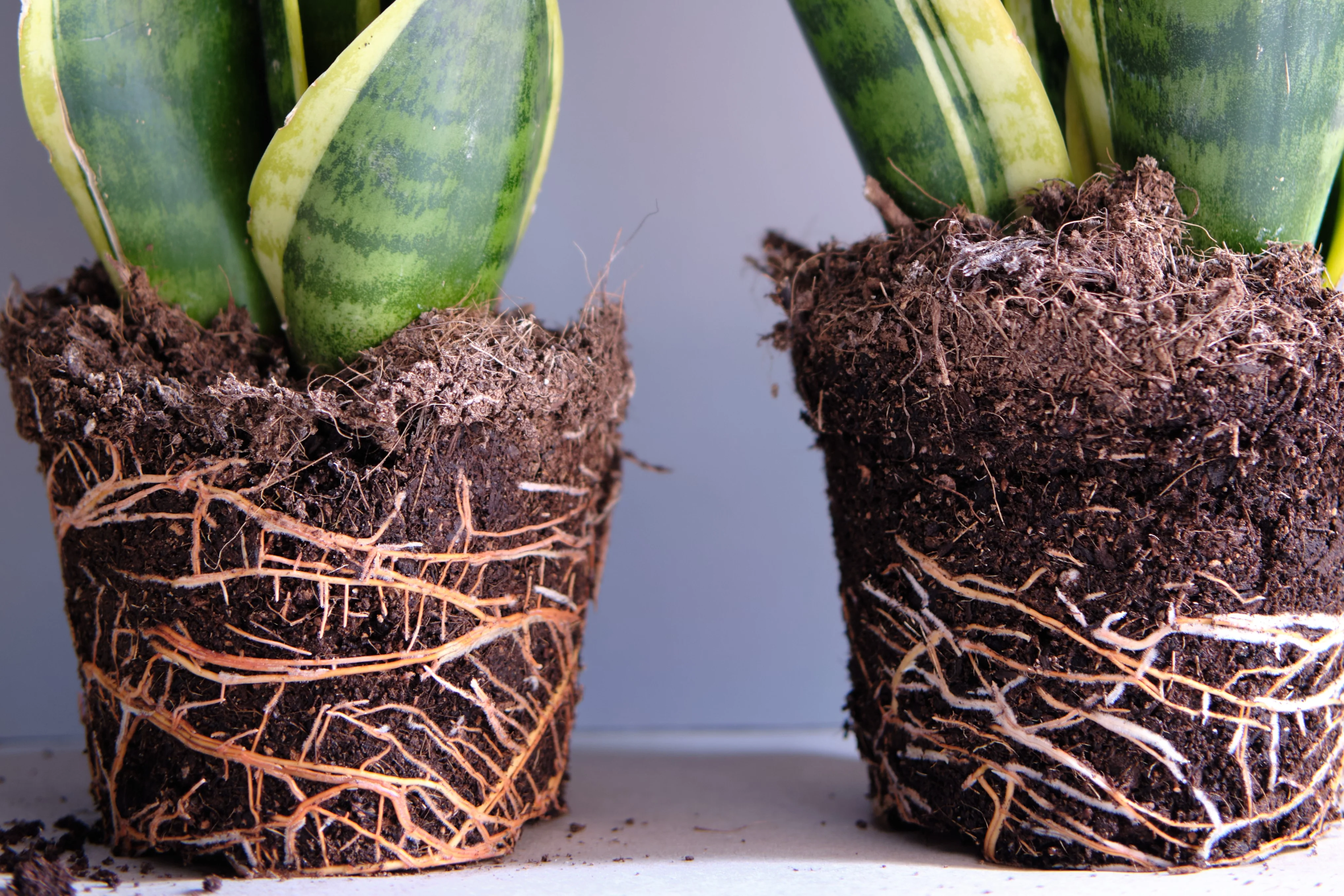
Snake plants actually tolerate being snug, but there is a point where the root mass becomes so tight that watering becomes inconsistent. Water may rush down the sides, the root ball may resist wetting, or the mix may stay damp in pockets if it is heavy. Tall leaves plus a crowded root ball can also equal a plant that leans or flops outward.
How to tell
- Roots circle the pot densely or push up at the surface.
- The plant dries out unusually fast, or watering seems to run straight through.
- Pot bulges or cracks (snake plants can be impressively strong).
- New leaves emerge thinner and weaker.
Fix it
- Choose a pot one size up. Typically 1 to 2 inches wider than the current pot. Too big can hold extra moisture.
- Loosen the root ball. Gently tease the outer roots. If it is extremely tight, you can make a few shallow vertical slices with a clean knife to encourage new root growth.
- Refresh the soil. Use a fast-draining mix and discard old compacted soil.
- Replant and stabilize. Set the plant upright and firm the soil around the root ball. Do not bury leaf bases.
- Wait to water. For a routine repot, wait 2 to 4 days. If you had to trim roots or rot, wait about a week.
Prevention tips
- Repot every 2 to 4 years, or when you see clear crowding.
- Rotate the pot monthly so leaves grow more evenly and do not lean toward light.
Cause 5: Low light stretch
Snake plants survive low light, but they do not always thrive in it. Over time, leaves can stretch toward the brightest direction, growing longer and thinner. Eventually, they simply cannot hold themselves up like they used to.
Clues
- Leaves are longer, narrower, and paler than older leaves.
- The whole plant leans toward the window or lamp.
- Soil takes a long time to dry because the plant is using less water.
Fix it
- Increase light gradually. Move to brighter indirect light, not harsh midday sun.
- Rotate monthly. A small turn keeps growth more balanced.
- Adjust watering. In brighter light, it may dry a bit faster. Still water only when fully dry.
Cause 6: Top-heavy or bumped
Sometimes the plant is fine and the problem is physics. Tall, mature leaves in a lightweight pot can topple outward, especially if the plant has been nudged, rotated suddenly, or is leaning hard toward light.
Fix it
- Use a heavier pot (terracotta or a heavier ceramic) with a drainage hole.
- Repot at the correct depth. Planting too deep can trap moisture at the crown and lead to rot.
- Top-dress lightly if you want. A thin layer of gritty mulch can add a bit of stability, but do not block drainage or bury the crown.
What about underwatering?
Underwatering can cause flopping, but it usually shows up as wrinkled, thinner leaves and very dry soil that has pulled away from the pot. If your plant has been ignored for a long time, a deep drink can help, but go gently.
How to rehydrate safely
- Check drainage first. Always.
- Bottom-water. Place the pot in a basin of water until the top of the mix feels slightly damp. That is often 20 to 30 minutes, but very dry or hydrophobic soil may need longer or a second soak later the same day.
- Let it drain completely. No standing water afterward.
- Reassess in a week. Leaves may firm up gradually, not overnight.
Step-by-step: droop flow
If you prefer a straightforward path, follow this sequence:
- Is the soil wet 7 to 10 days after watering? Yes: suspect overwatering or poor drainage. Unpot if there is smell, mush, or ongoing wetness. No: continue.
- Is anything mushy at the base or crown? Yes: treat as rot. Trim to firm tissue, let it callus, and repot dry. If the crown is soft, skip replanting and salvage by division or leaf cuttings. No: continue.
- Is the plant near cold drafts or vents, or below 55°F (13°C)? Yes: move to stable temperatures and pause watering. No: continue.
- Is light very low, or is the plant leaning hard toward the brightest spot? Yes: increase bright indirect light gradually and rotate monthly. No: continue.
- Are roots crowded or coming out the bottom? Yes: repot one size up. No: continue.
- Is the soil extremely dry and leaves wrinkled? Yes: rehydrate with a thorough soak, then return to a dry-down schedule.
- Do you see pests? Yes: isolate the plant and treat (insecticidal soap or neem, and repeat weekly until resolved).
How long to perk up?
It depends on the cause:
- Cold stress: you may see improvement within 1 to 2 weeks once conditions stabilize, but damaged leaves might not fully stand up again.
- Underwatering: leaves often firm up within days to a couple of weeks after a proper soak.
- Overwatering and root rot: recovery can take 4 to 8+ weeks, and you may lose some leaves. Focus on healthy new growth.
- Pot-bound: you might notice better stability within 2 to 3 weeks after repotting.
- Low light stretch: newer leaves will be stronger, but older stretched leaves may stay a bit floppy.
One gentle truth from my own windowsill jungle days: sometimes a drooped leaf will not straighten, even after the plant is healthy again. That is okay. New leaves are your real report card.
When to propagate
If rot has spread into the base and most roots are gone, propagation can be the fastest path back to a healthy plant.
Division (best option)
- Separate healthy clumps with roots and rhizome intact.
- Repot each division into fresh, fast-draining soil.
Leaf cutting (slower)
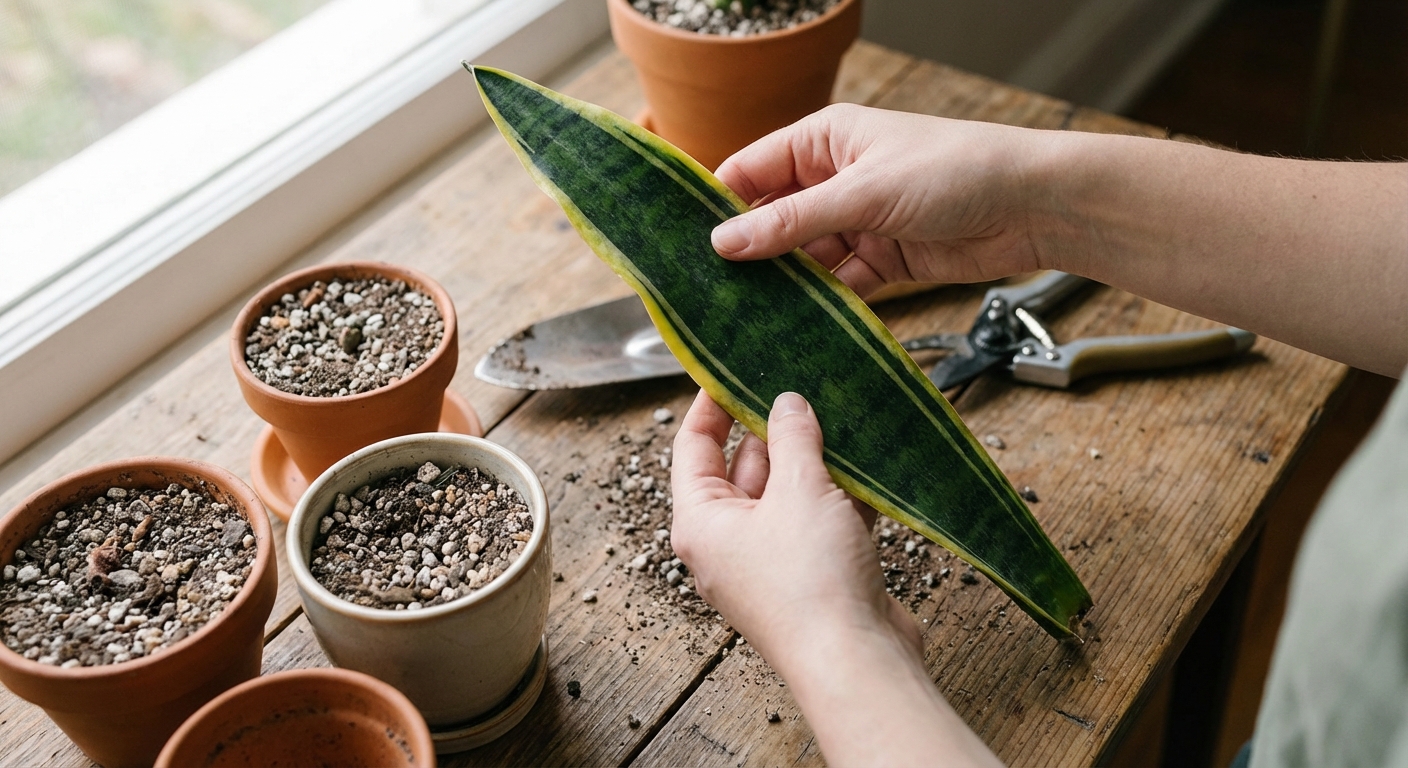
- Cut a firm, healthy leaf into 3 to 4 inch sections.
- Mark the bottom end so you keep the original orientation (up is up, down is down).
- Let cut ends callus for 24 to 48 hours.
- Place in barely moist soil or perlite. Water propagation can work, but it can also increase rot risk if the water is not kept very clean.
Note: some variegated snake plants can lose variegation when propagated from leaf cuttings. Division preserves the look.
Common mistakes
- Watering on a schedule. Water based on dryness, not the calendar.
- Upsizing the pot too much. Extra soil stays wet longer and invites rot.
- Leaving the plant in a decorative pot with trapped water. If you use a cachepot, empty it every time.
- Trying to stake a rotting plant. Support does not fix failing roots.
- Fertilizing a stressed plant. Fix conditions first, then feed lightly in spring and summer.
- Planting too deep. Burying the crown or leaf bases makes rot much more likely.
Drooping FAQs
Can drooping leaves stand back up?
Sometimes. If the issue is mild thirst or a temporary cold draft, leaves may firm up. Leaves that have creased, rotted at the base, or stretched in low light often stay bent even after the plant recovers.
Should I cut off drooping leaves?
If the leaf base is mushy or smells bad, yes, remove it at the base with a clean cut. If the leaf is simply leaning but still firm, you can leave it and focus on fixing the cause.
Why are only the outer leaves drooping?
Outer leaves are older and often take the brunt of low light stretching or root stress first. Check for pot-bound roots, review watering habits, and rotate the pot so growth stays balanced.
Is drooping a sign my snake plant needs more light?
It can be. In very low light, leaves may grow longer, thinner, and less able to hold themselves upright. Move the plant to brighter indirect light and rotate the pot monthly.
Simple routine
If you want your snake plant to stay upright and sturdy, this simple routine is the sweet spot:
- Light: bright, indirect is ideal, but it tolerates lower light.
- Water: only when fully dry, then water thoroughly and drain.
- Soil: fast-draining succulent mix.
- Pot: drainage hole, snug fit, repot when clearly crowded.
- Temperature: steady and draft-free, avoid prolonged time below about 55°F (13°C).
If you tell me what your soil feels like right now and where the plant sits in your home, I can help you narrow the cause quickly. I promise, your snake plant is not judging you. Mine certainly is not, and I talk to it anyway.