
Why Is My Rubber Plant Turning Yellow? 8 Causes and Fixes

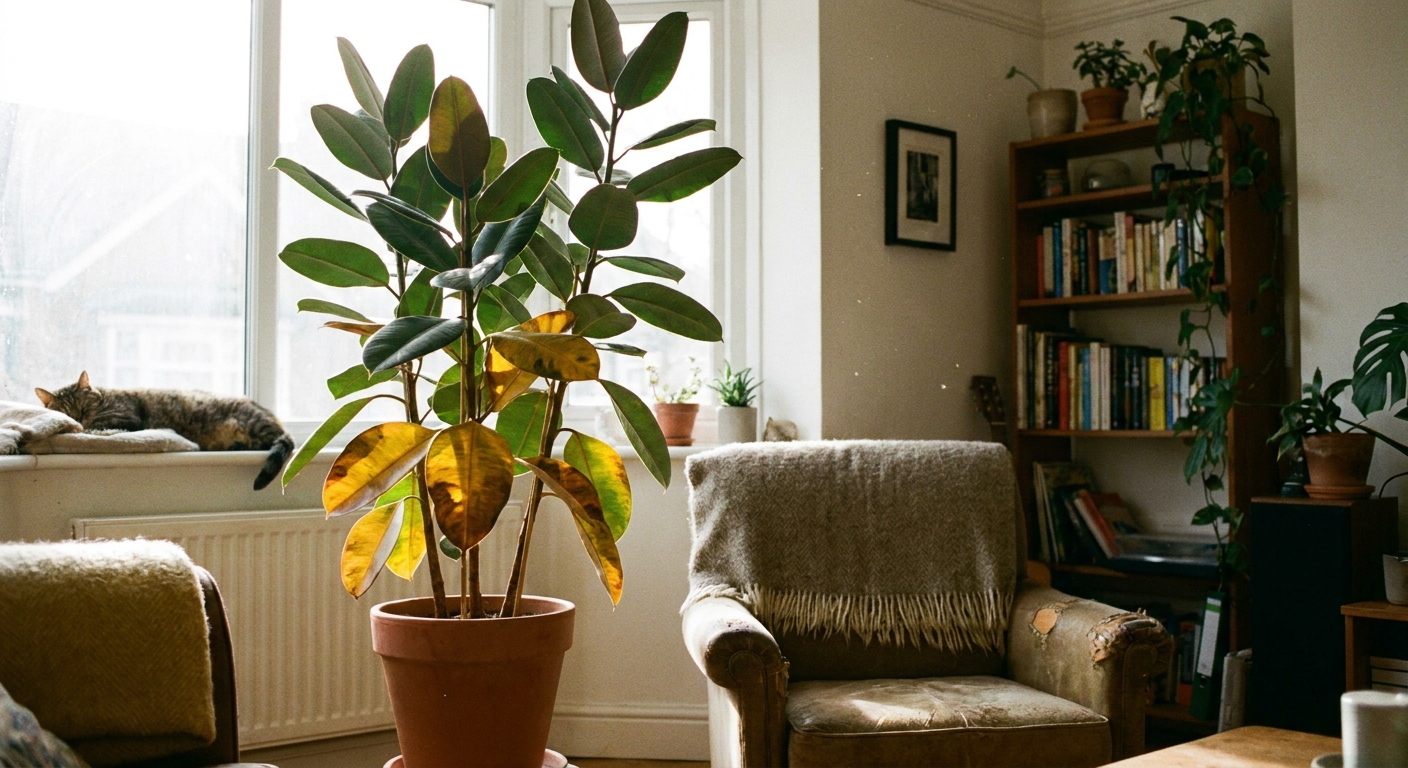
Yellow leaves on a rubber plant (Ficus elastica) can feel personal, especially when it was glossy and dramatic last month. The good news is that yellowing is usually your plant’s way of saying, “Hey, my conditions changed.” Rubber plants are sturdy, but they like consistency.
Below are the 8 most common causes, plus quick tests you can do in two minutes, the fix that actually works, and what recovery typically looks like. Keep in mind: a leaf that has turned fully yellow rarely turns green again. The goal is to stop the spread and protect the newer growth.

Quick diagnosis first (2 minutes)
1) The finger-and-skewer soil test
- Finger test: Push your finger 2 inches into the potting mix. If it feels wet or cool and muddy, suspect overwatering or poor drainage.
- Skewer test: Slide a wooden chopstick or skewer to the bottom of the pot and pull it out. If it comes out with wet soil clinging to it, the root zone is staying too wet.
2) Read the yellowing pattern
- Lower, older leaves yellowing first: often watering issues, normal aging, seasonal shedding, or being a bit potbound.
- New leaves yellowing: often light stress, fertilizer issues, cold damage, or pests.
- Yellow with brown crispy edges: underwatering, hot sun scorch, or low humidity combined with irregular watering.
- Yellow with soft brown spots: overwatering, cold damage, or root trouble.
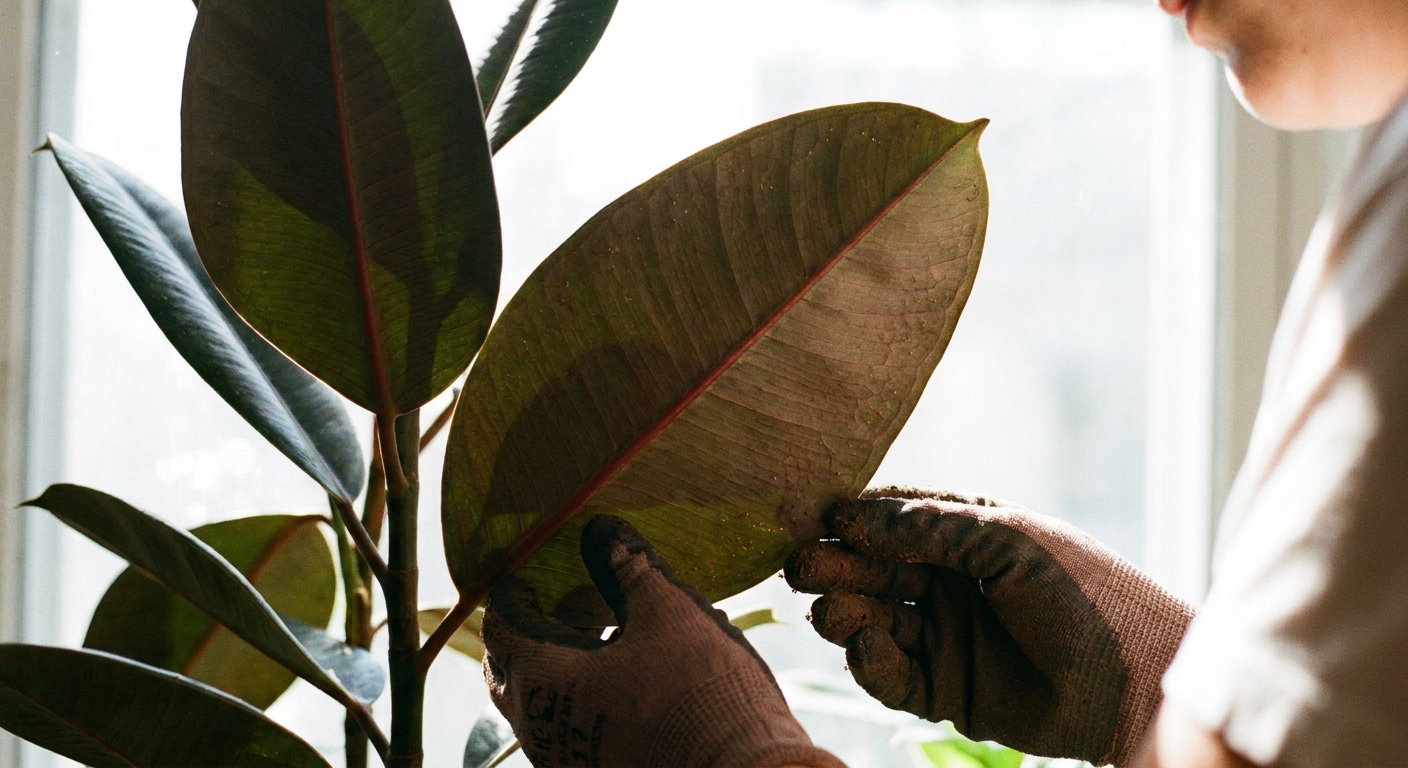
3) Check for pests in bright light
Look under leaves and along the midrib. If you see tiny moving dots, webbing, sticky residue, or little brown bumps, pests may be draining the plant and causing yellowing.
Cause #1: Overwatering (the most common)
Rubber plants like a wet-to-dry rhythm. If the pot stays consistently damp, roots get starved of oxygen and begin to fail, and yellow leaves are often the first signal.
Signs
- Several leaves yellowing at once, often starting lower down
- Soil feels wet days after watering
- Leaves may feel a bit soft or droopy, not crisp
- Musty smell from soil or fungus gnats hovering
Quick test
Skewer comes out damp from the bottom, even when the surface looks dry.
Fix
- Pause watering until the top 2 to 3 inches are dry.
- Confirm drainage: the pot must have a drainage hole. Empty any saucer after 10 minutes.
- Improve airflow and light: brighter indirect light helps the mix dry more evenly.
- If it is very soggy: slip the plant out of the pot and check roots. Black, mushy roots or a foul smell means “repot now.” Trim damaged roots and repot into fresh, chunky mix (see Cause #6 for mix tips).
Recovery timeline
If roots are mostly healthy, you should see yellowing slow within 1 to 2 weeks and new growth normalize in 3 to 6 weeks. If roots were rotting, recovery can take 6 to 10 weeks after repotting.
Cause #2: Underwatering or inconsistent watering
Rubber plants can tolerate a little dryness, but repeated bone-dry episodes followed by a big soak stresses the roots and shows up as yellow leaves, sometimes with crisp edges.
Signs
- Yellowing accompanied by crispy brown edges
- Leaves may curl slightly inward
- Pot feels very light, soil pulls away from the sides
- Water runs straight through without soaking the mix
Quick test
Water beads on the surface and races out the drainage hole, and the root ball still feels dry afterward.
Fix
- Bottom-water once to rehydrate: set the pot in a bowl of water for 20 to 30 minutes, then let it drain thoroughly.
- After that, water when the top 2 inches are dry.
- Consider a slightly larger pot only if you are watering correctly and it still dries out in 2 to 3 days (often a sign of being potbound).
Recovery timeline
Within 7 to 14 days, leaves should feel firmer and yellowing should slow. New growth steadies in 3 to 5 weeks.
Cause #3: Too much direct sun (sun scorch)
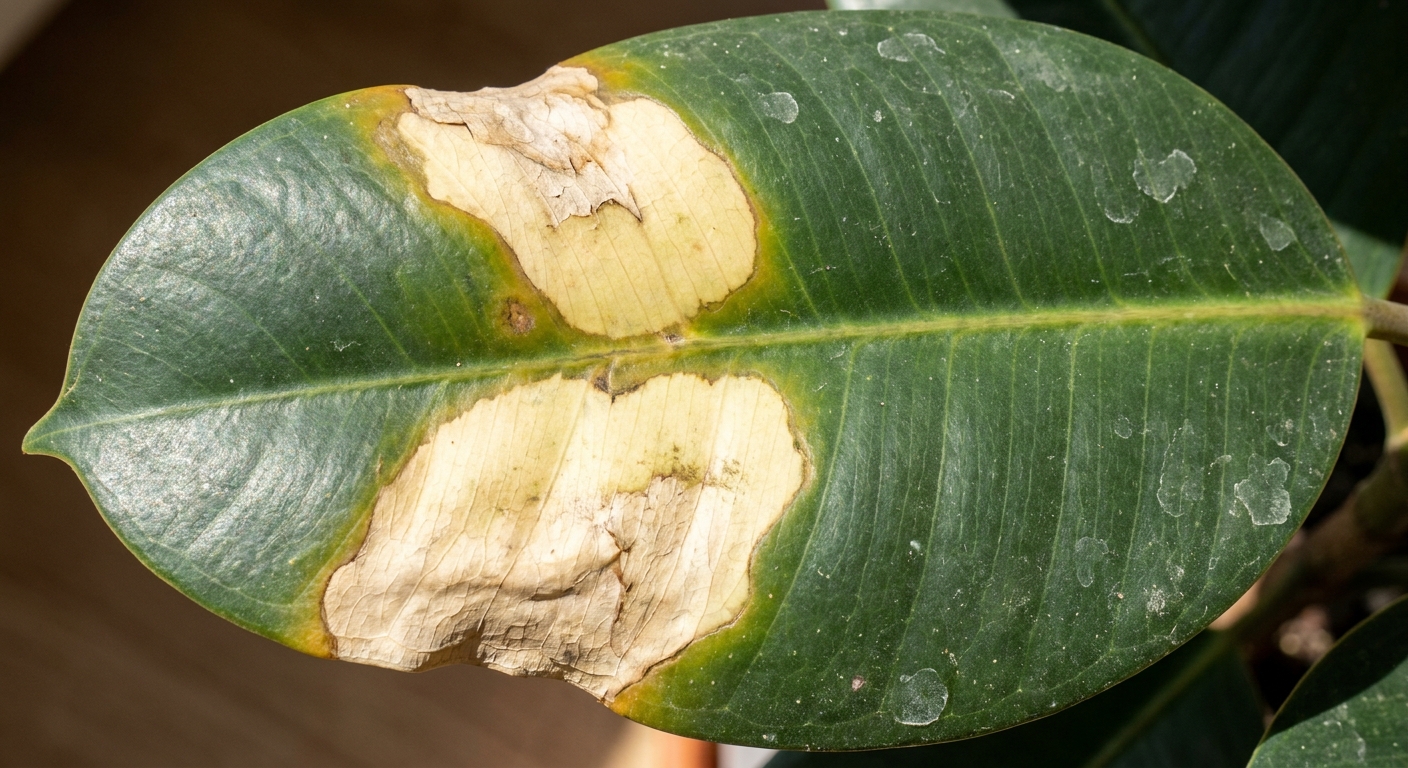
Rubber plants love bright light, but hot direct sun can bleach leaves to a yellow-green, then tan, especially after a sudden move to a sunnier window.
Signs
- Yellowing is strongest on the sun-facing side
- Pale patches that later turn papery or brown
- Leaf edges may look toasted
Quick test
Hold your hand between the glass and the plant at midday. If the sun feels hot on your hand, it can be too intense for prolonged exposure.
Fix
- Move it back 1 to 3 feet from the window, or use a sheer curtain.
- Acclimate slowly if you want it in stronger light: increase sun exposure by 30 minutes every few days.
Recovery timeline
Scorched areas will not heal, but you should see no new bleaching within 1 week. Healthy new leaves appear in 4 to 8 weeks in the growing season.
Cause #4: Not enough light
In low light, rubber plants slow down. Water sits longer in the pot, photosynthesis drops, and older leaves may yellow and fall as the plant rebalances.
Signs
- Leggy growth with longer gaps between leaves
- Smaller new leaves
- Yellowing mostly on older leaves
- Soil stays wet for many days
Quick test
If you can comfortably read a book in that spot without turning on a lamp during the day, it is usually “bright enough.” If it feels like a cozy cave, your rubber plant agrees.
Fix
- Move to bright indirect light. East or bright north windows work well, and south or west windows can also be great with a sheer curtain or a bit of distance from the glass.
- Rotate the pot weekly so the plant grows evenly.
- In very dim homes, add a grow light for 8 to 12 hours daily.
Recovery timeline
You may see improved leaf color and firmer posture within 2 to 4 weeks. New growth typically improves in 4 to 8 weeks.
Cause #5: Acclimation stress after moving (or after purchase)
Rubber plants are dramatic about change. A new home, a different window, heating season, or even a new pot can trigger yellowing and leaf drop while the plant adjusts.
Signs
- Yellowing begins within 1 to 3 weeks of a move
- Leaves drop but stems remain firm
- No obvious pest activity
- Watering and light are otherwise reasonable
Quick test
Think back: did anything change recently, even “small” things like moving it away from the window or turning on a heater nearby?
Fix
- Pick one good spot and stop relocating it.
- Keep watering consistent: water when the top couple inches are dry.
- Avoid fertilizing until you see fresh growth.
Recovery timeline
Most acclimation yellowing stabilizes in 2 to 6 weeks. Full “settled in” growth can take 6 to 10 weeks.
Cause #6: Fertilizer burn or salt buildup
Too much fertilizer, or fertilizing a dry plant, can burn roots and cause leaf yellowing, browning tips, and a tired, dull look. Even if you fertilize lightly, minerals from hard water can build up in soil over time.
Signs
- Yellowing with brown, crispy tips
- White crust on soil surface or pot rim
- Leaf drop soon after feeding
Quick test
Check your calendar. If you fertilized in the past 1 to 3 weeks and symptoms appeared soon after, suspect fertilizer stress.
Fix
- Flush the soil: run room-temperature water through the pot, letting it drain completely. A good rule is 2 to 4 times the pot’s volume in water.
- Skip fertilizer for 4 to 6 weeks.
- Going forward, feed only in spring and summer at 1/4 to 1/2 strength, and only when the soil is already slightly moist.
- If the potting mix is old and compacted, repot into a fresh, airy mix.
Simple rubber plant mix: 2 parts high-quality indoor potting mix + 1 part perlite + 1 part orchid bark or pine bark fines.
If crusty buildup keeps coming back: consider using filtered water, rainwater, or tap water that has sat out overnight, and flush the pot occasionally.
Recovery timeline
Leaf drop should slow within 1 to 2 weeks. Strong new growth typically returns in 4 to 8 weeks during active growing months.
Cause #7: Pests (spider mites, scale, mealybugs, thrips)
Pests can cause stippling, dullness, yellowing, and slow decline. Rubber plants are not the biggest pest magnets, but dry indoor air makes spider mites especially happy.
Signs by pest
- Spider mites: fine webbing, tiny specks, leaves look dusty or stippled and then yellow
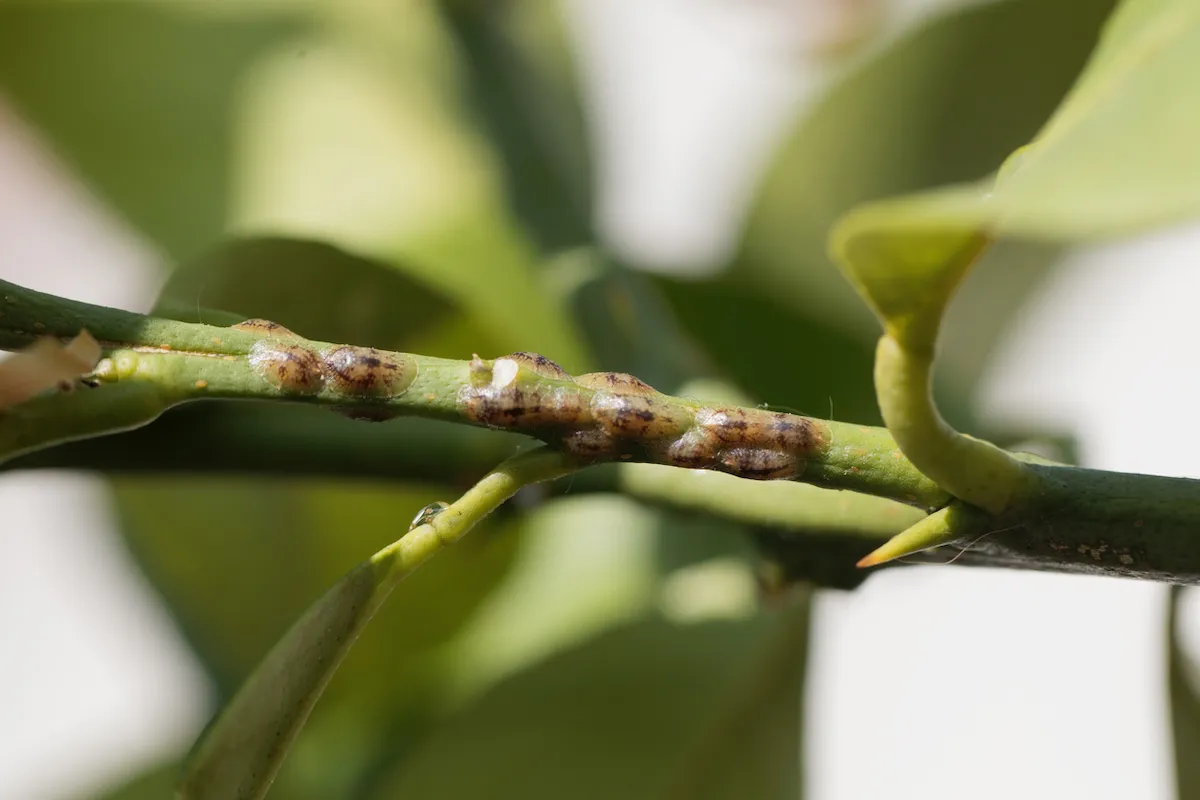
- Scale: small brown bumps on stems or leaf veins, sticky residue
- Mealybugs: white cottony clusters in leaf joints
- Thrips: silvery scarring, black specks, distorted new growth
Quick test
Wipe the underside of a leaf with a damp white tissue. If you see rusty streaks or tiny moving dots, treat for mites or thrips.
Fix
- Isolate the plant.
- Rinse leaves in the shower with lukewarm water.
- Treat with insecticidal soap, following label directions. If using a DIY soap (like diluted castile soap), mix gently, test on one leaf first, and avoid spraying in strong light to reduce the risk of leaf burn.
- Repeat every 7 days for 3 to 4 rounds.
- For scale, physically remove bumps with a cotton swab dipped in 70% isopropyl alcohol, then follow with soap sprays.
- Thrips note: thrips can be stubborn. If soap is not making a dent, you may need a stronger option like spinosad (where available and used per label), or another appropriate treatment for houseplants in your area.
Recovery timeline
Pest pressure often improves visibly within 2 to 3 weeks, but expect a full treatment cycle of 4 to 6 weeks. New leaves should emerge cleaner and darker green.
Cause #8: Cold damage or drafts (plus heater stress)
Rubber plants are tropical. Cold windows, blasts from an AC vent, or a chilly entryway can cause yellowing and sudden leaf drop. On the flip side, a heater vent can dry foliage and cause edge burn.
Signs
- Yellow leaves shortly after a cold night
- Soft, darkened patches on leaves (cold injury)
- Yellowing concentrated on the side facing a window or vent
Quick test
Place your hand where the leaves sit at night. If the air feels noticeably colder than the room, or you feel airflow, the plant is in a stress stream.
Fix
- Keep it in the 65 to 80°F range if possible, and try to avoid prolonged dips below about 55 to 60°F.
- Pull it a few inches away from cold glass in winter.
- Redirect vents or move the plant out of the draft path.
Recovery timeline
Damage on affected leaves is permanent, but the yellowing should stop spreading within 1 to 2 weeks once temperatures stabilize.
Bonus cause: Potbound roots and poor drainage
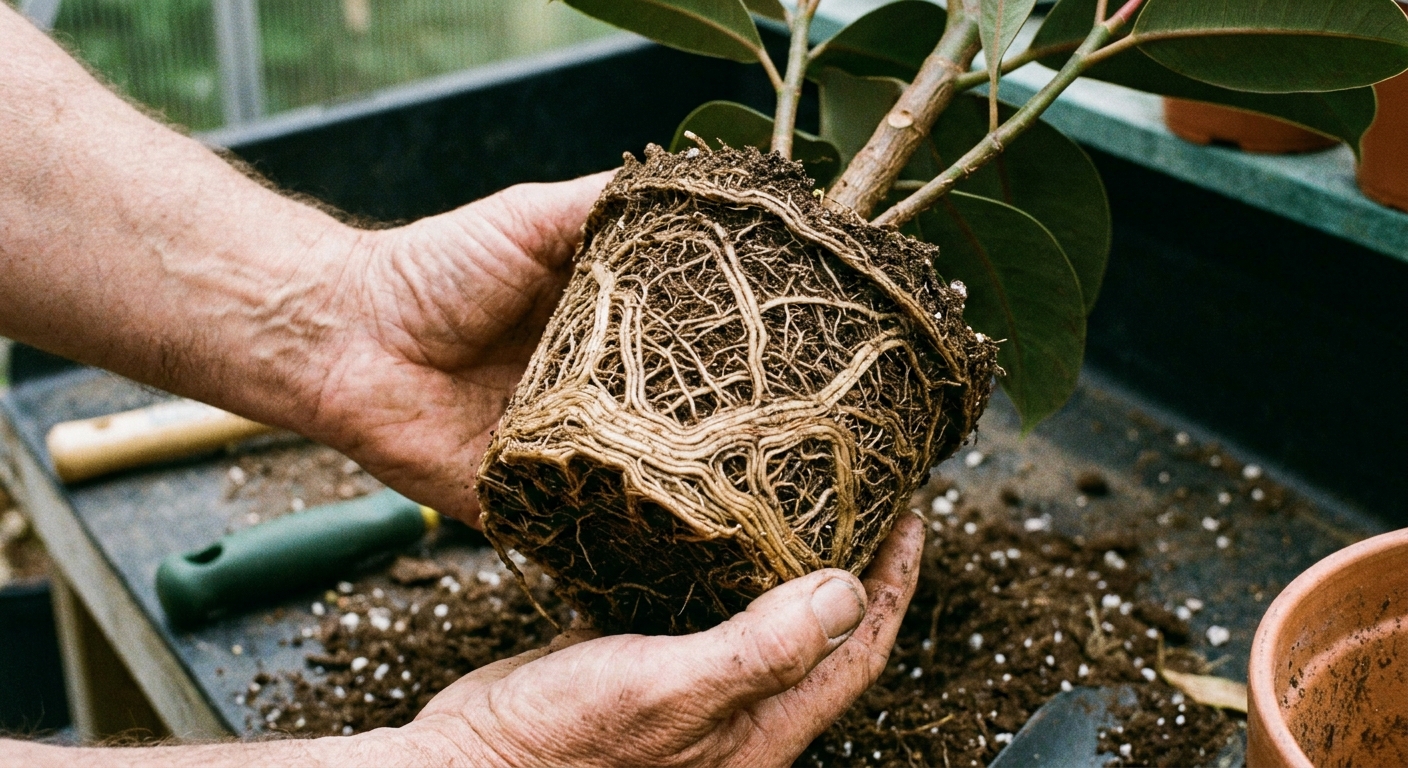
If your rubber plant dries out too fast, or stays wet too long, the root system may be telling you the pot situation is off. Potbound plants can yellow because roots cannot access water evenly, while compacted mix can stay soggy and suffocate roots.
Signs
- Roots circling the drainage holes or soil surface
- Water runs through too quickly
- Plant dries out in 2 to 3 days in moderate light
- Stunted new leaves
Quick test
Gently slide the plant out of the pot. If you see a dense root spiral with very little soil, it is time.
Fix
- Repot in a container 1 to 2 inches wider, not a huge jump.
- Use a chunky mix (potting mix + perlite + bark).
- After repotting, water thoroughly once, then wait until the top couple inches are dry again.
Recovery timeline
Expect a brief pause in growth for 1 to 3 weeks. New leaves usually improve within 4 to 8 weeks.
Normal yellowing: aging and seasons
Even in perfect conditions, your rubber plant will eventually retire an older leaf or two as it grows, especially lower leaves that get shaded. In autumn or winter, this is more common as light levels drop.
Green flags
- Only 1 to 2 older leaves yellow at a time
- New growth looks healthy
- No pests, no soggy soil
What to do
- Water a little less often in lower light, because the plant uses less.
- Give it the brightest indirect light you can manage.
- Hold fertilizer until spring.
What to do with yellow leaves
- If a leaf is more than 50% yellow, it is usually safe to remove it with clean snips.
- If it is only slightly yellow, leave it for now while you correct the cause. It is still contributing some energy, and mildly yellow leaves can occasionally rebound if the stress is fixed quickly.
- Always sanitize scissors between plants to avoid spreading pests or disease.
Safety note: Rubber plants exude a milky sap (latex) when cut. It can irritate skin and eyes and is mildly toxic if ingested. Wear gloves or wash hands after pruning, avoid touching your face, and keep sap and clipped leaves away from pets and kids.
A simple rubber plant reset plan
If you are not sure which cause fits, this gentle reset covers the most common issues without shocking the plant.
- Move to bright indirect light.
- Check drainage holes and empty the saucer.
- Water only when the top couple inches are dry, then water deeply until it drains.
- Wipe leaves and inspect for pests once a week for a month.
- Pause fertilizer for 4 to 6 weeks.
And if you want reassurance from a fellow plant-talker: your rubber plant is not “ruined.” It is communicating. Once you translate the message, it usually bounces back beautifully.