
Why Is My Rubber Plant Dropping Leaves?

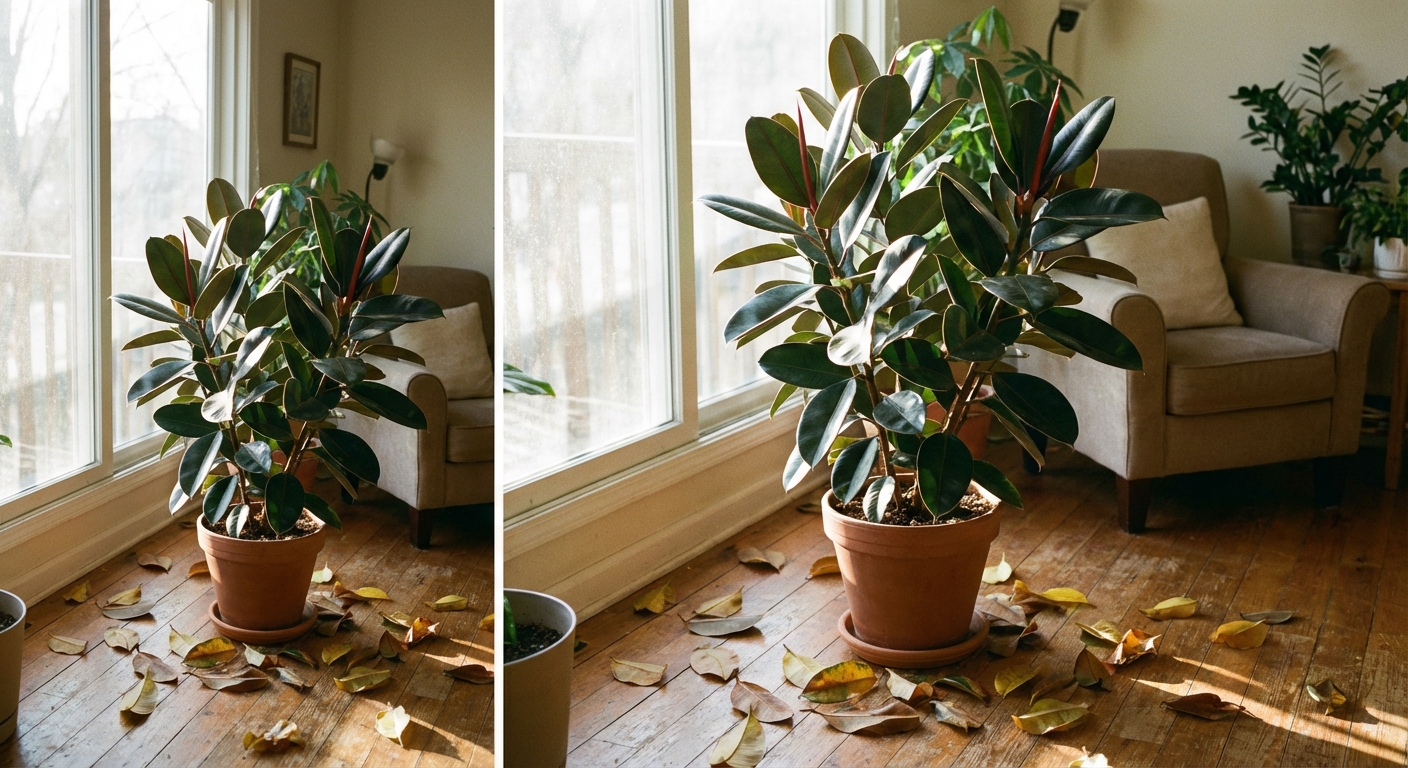
Few things make your stomach drop faster than hearing that little thunk of a rubber plant leaf hitting the floor. I have been there. The good news is that Ficus elastica is tougher than it looks, and leaf drop is usually your plant’s way of saying, “Something changed, and I’m not thrilled.”
This page will help you diagnose the most common causes, fix them step by step, and keep your rubber plant glossy and leafy for the long haul.
First, a quick reality check
Some leaf loss is normal. Rubber plants will occasionally shed an older, lower leaf as they grow, especially in fall and winter when indoor light drops.
Normal leaf drop looks like
- One leaf at a time, every so often
- Mostly older bottom leaves
- New growth still appearing at the top
Stress leaf drop looks like
- Multiple leaves in a week
- Leaves dropping green (not just yellow and old)
- Leaf drop after a move, repotting, or weather change
- Soft stems, black spots, or a musty soil smell
If your plant is dropping several leaves quickly, jump to the sections below. The cause is usually one of the “big six”: overwatering, underwatering, cold shock, low light, repotting stress, or drafts.
Cause 1: Overwatering (the most common culprit)
Rubber plants love evenly moist soil, but they hate sitting in soggy mix. When roots run out of oxygen, they start to fail, and the plant sheds leaves to reduce demand.
Signs it is overwatering
- Leaves turn yellow, then drop (often from the bottom upward)
- Soil feels wet days after watering
- Pot feels heavy
- Musty smell or fungus gnats hovering near the soil
- Soft or darkened stems near the soil line
Confirm it with a simple check
Stick your finger 2 inches into the soil. If it is still wet or cool and muddy, wait. For extra clarity, use a wooden chopstick or skewer: push it down near the root zone and pull it out. If it comes out with damp soil stuck to it, the plant does not need water yet.
Recovery steps
- Pause watering until the top 2 to 3 inches of soil dry out.
- Increase airflow and light (bright, indirect light helps the pot dry more evenly).
- Check drainage. Make sure the pot has a drainage hole and the saucer is not holding water.
- If soil stays wet for more than a week, consider repotting into a faster draining mix (see below).
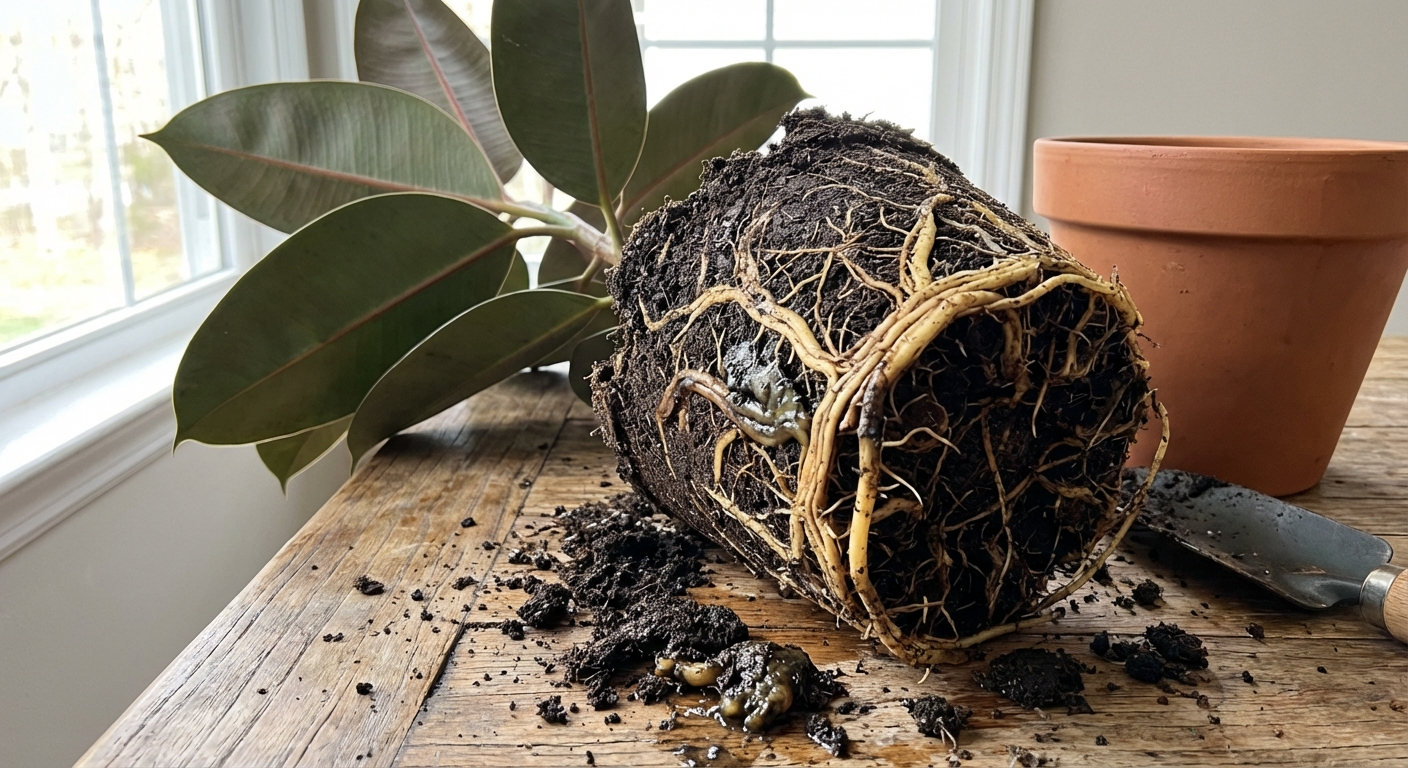
- If you suspect rot (sour smell, mushy roots), unpot and inspect roots. Trim brown, slimy roots with clean scissors and repot into fresh mix.
Prevention tips
- Water only when the top 2 to 3 inches are dry.
- Use a chunky, airy potting mix (see the soil section below).
- Empty the saucer 10 minutes after watering.
- In winter, expect to water less often.
Cause 2: Underwatering (or inconsistent watering)
Rubber plants can handle a little dryness, but if they swing between bone dry and drenched, they protest. Underwatering commonly causes older leaves to droop, then drop, and the leaf edges may crisp.
Signs it is underwatering
- Soil pulls away from the pot edges
- Pot feels very light
- Leaves droop, curl slightly, or feel thinner than usual
- Brown, crispy edges or tips
- Leaves drop after you “remember” to water (a big swing after a long drought)
Recovery steps
- Rehydrate slowly. Water thoroughly until water drains from the bottom.
- If water runs straight through and the soil stays dry, the mix is likely hydrophobic. Bottom water by setting the pot in a bowl of water for 20 to 30 minutes, then let it drain.
- Remove severely damaged leaves only if they are mostly brown. Slight cosmetic damage can stay.
- Resume a steadier schedule based on soil dryness, not the calendar.
Prevention tips
- Use the finger or chopstick test weekly.
- Consider a pot with a little more soil volume if your plant dries out in 2 days.
- Keep the plant out of hot, direct afternoon sun that bakes the pot.
Cause 3: Cold shock
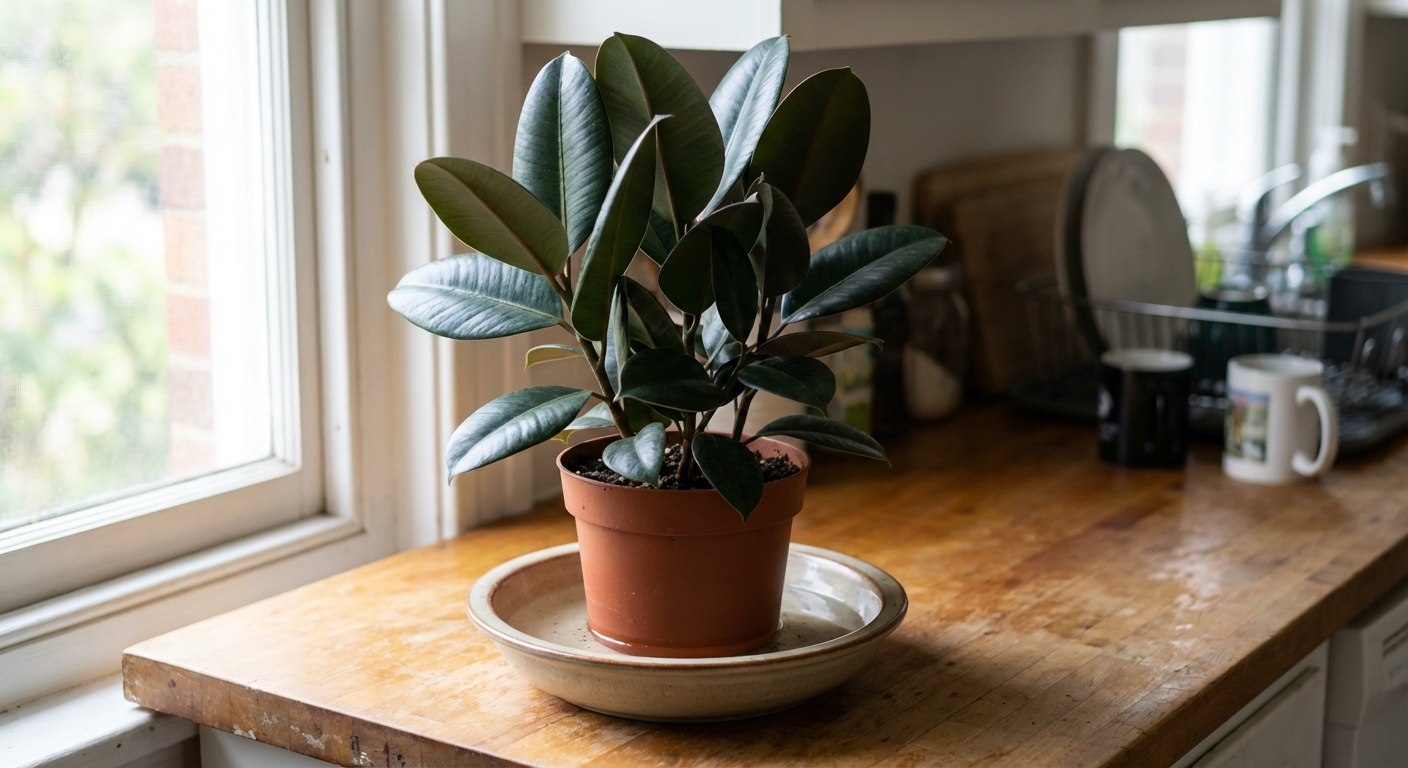
Rubber plants are tropical. A quick chill, like a cold window at night, a winter door opening, or a car ride home on a freezing day, can trigger sudden leaf drop. Sometimes the leaves fall while still green.
Signs of cold stress
- Leaf drop after a cold night or transport
- Leaves look dull, limp, or slightly translucent
- Blackened patches on leaves in severe cases
Recovery steps
- Move the plant to a stable spot where temps stay roughly 65 to 80 F.
- Keep it away from cold glass. A few inches of distance helps a lot.
- Do not overcompensate with extra watering or fertilizer. Let it stabilize.
- Remove only leaves that are fully yellow or damaged.
Prevention tips
- Avoid placing rubber plants right against single pane windows in winter.
- Wrap plants for transport in cold weather (even a large bag helps).
- Keep away from uninsulated entryways at night.
Cause 4: Low light
Rubber plants tolerate medium light, but “tolerate” is not the same as “thrive.” In low light, they shed older leaves and stretch toward the window. The plant is budgeting its energy.
Signs it is too dim
- Slow or no new growth
- Long gaps between leaves on the stem (leggy growth)
- Older leaves yellow and drop
- Soil stays wet longer because the plant is not using water
Recovery steps
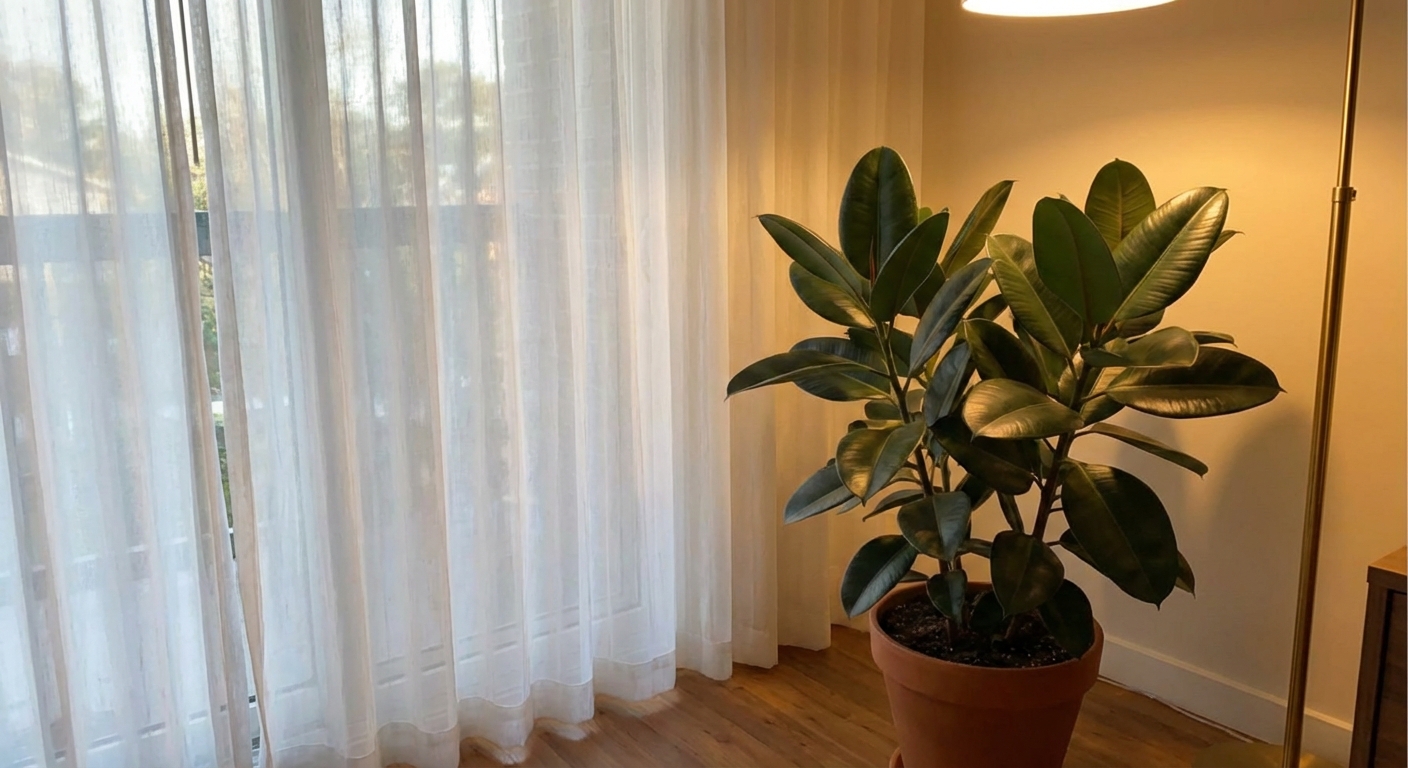
- Move to bright, indirect light, near an east or bright north window, or a few feet back from a south or west window.
- Rotate the pot a quarter turn weekly for balanced growth.
- If natural light is limited, add a grow light for 10 to 12 hours daily.
Prevention tips
- Watch seasonal light changes. A summer spot can become a winter cave.
- Clean leaves monthly. Dust blocks light and rubber plants are dust magnets.
Cause 5: Repotting stress
Rubber plants can sulk after repotting. Root disturbance, a jump to an oversized pot, or a very different soil mix can cause temporary leaf drop.
Signs it is repotting stress
- Leaf drop within 1 to 3 weeks after repotting
- Plant otherwise looks healthy, no mushy stem, no pests
- Growth pauses while roots reestablish
Recovery steps
- Place in bright, indirect light and keep temperatures steady.
- Water only when the top 2 to 3 inches are dry.
- Skip fertilizer for 4 to 6 weeks after repotting.
- Stake the plant if it wobbles. Movement can stress new roots.
Prevention tips
- Size up gradually: choose a pot only 1 to 2 inches wider than the old one.
- Repot in spring or early summer when growth is active.
- Use a similar mix to what it was thriving in, or transition slowly.
Cause 6: Drafts and HVAC blasts
Rubber plants dislike rapid changes. A steady stream of hot, dry air from a vent can crisp leaves and cause drop. A cool draft can do the same.
Signs of drafts
- Leaf drop on the side facing a vent or door
- Crispy edges or curling leaves (often with heating vents)
- Plant dries out faster than expected (hot air)
Recovery steps
- Move the plant out of the direct path of vents, fans, and frequently opened doors.
- Increase humidity modestly if your air is very dry (a pebble tray or a humidifier nearby).
- Keep watering consistent. Drafty spots create confusing dry-wet cycles.
Prevention tips
- Stand where your plant sits for 30 seconds. If you feel air moving, your plant does too.
- In winter, aim for a calm corner with stable temperatures.
Other leaf drop causes to rule out
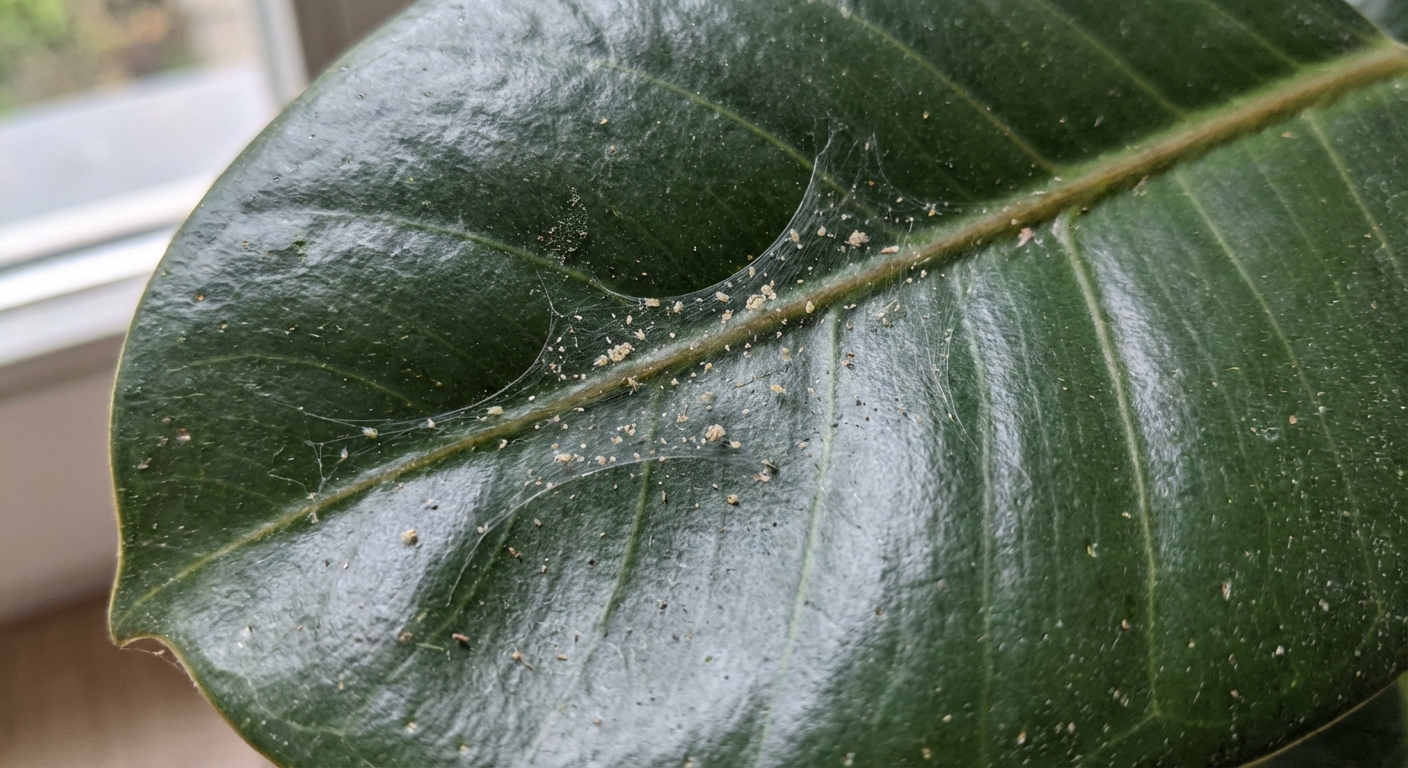
Pests (especially spider mites)
Rubber plants can get spider mites, mealybugs, and scale, especially in dry indoor air. Pests can lead to yellowing, stippling, and leaf drop.
- Check undersides of leaves and along stems.
- Look for fine webbing (mites), cottony clusters (mealybugs), or brown bumps (scale).
- Treat with a thorough rinse, then insecticidal soap or horticultural oil, repeating every 7 to 10 days for a few rounds.
Sudden change in location
Moving a rubber plant from one room to another can change light, temperature, and humidity all at once. A little leaf drop is a common adjustment.
- Keep care steady and resist the urge to “fix” everything at once.
- Give it 2 to 4 weeks to settle before making more changes.
Natural aging
If only the oldest leaf drops occasionally and the plant looks great otherwise, celebrate. That is just growth.
A simple diagnosis flow you can do in 3 minutes
- Check soil moisture 2 inches down. Wet: suspect overwatering or low light. Bone dry: underwatering.
- Think back 2 weeks. Any move, repot, cold night, or door draft?
- Look at the dropped leaves. Yellow and soft often points to too much water. Crispy edges suggest too little water or hot, dry air.
- Inspect for pests under leaves and along stems.
- Assess light. Can you comfortably read a book there in daytime without turning on a lamp? If not, it is probably too dim for steady growth.
Best “reset” care while your rubber plant recovers
If you are not 100 percent sure what caused the leaf drop, this gentle baseline will help most rubber plants rebound:
- Light: bright, indirect light
- Water: only when top 2 to 3 inches are dry, then water thoroughly and drain
- Temperature: steady, away from drafts, ideally 65 to 80 F
- Humidity: average home humidity is fine, but avoid bone-dry vent blasts
- Fertilizer: pause until you see new growth, then feed lightly in spring and summer
And my favorite bit of reassurance: a leaf that dropped will not come back, but your plant can absolutely grow a fresh set of leaves once conditions improve.
Soil and pot tips that prevent leaf drop
Use a fast-draining mix
A rubber plant’s roots want air as much as they want moisture. A simple, reliable blend is:
- 2 parts quality indoor potting mix
- 1 part perlite or pumice
- 1 part orchid bark or fine bark chips
Pick the right pot
- Always choose a pot with a drainage hole.
- Do not jump to a pot that is too big. Oversized pots stay wet longer.
- If you tend to overwater, terracotta can help soil dry faster.
When to worry (and what to do)
Reach for a closer inspection if you see any of the following:
- Rapid leaf drop plus a soft stem: unpot and check for root rot right away.
- Black spots spreading or a foul smell: remove affected leaves, improve airflow, and consider repotting into fresh mix.
- No new growth for months plus ongoing leaf drop: increase light and re-check roots and pests.
Rubber plant leaf drop FAQs
Why is my rubber plant dropping leaves but they are still green?
Green leaf drop usually points to shock: cold exposure, drafts, a sudden move, or a big watering swing. Stabilize light and temperature, and water only when the top few inches dry.
Will the bare stem grow leaves again?
Often, yes. Rubber plants can push new growth from the top, and sometimes from nodes along the stem. Bright, indirect light and consistent watering are the quickest path back to a fuller look.
Should I prune after leaf drop?
Only if you want to encourage branching or remove a damaged section. Otherwise, let the plant recover first. If you do prune, use clean shears and cut just above a node.