
Why Is My Peace Lily Not Blooming?

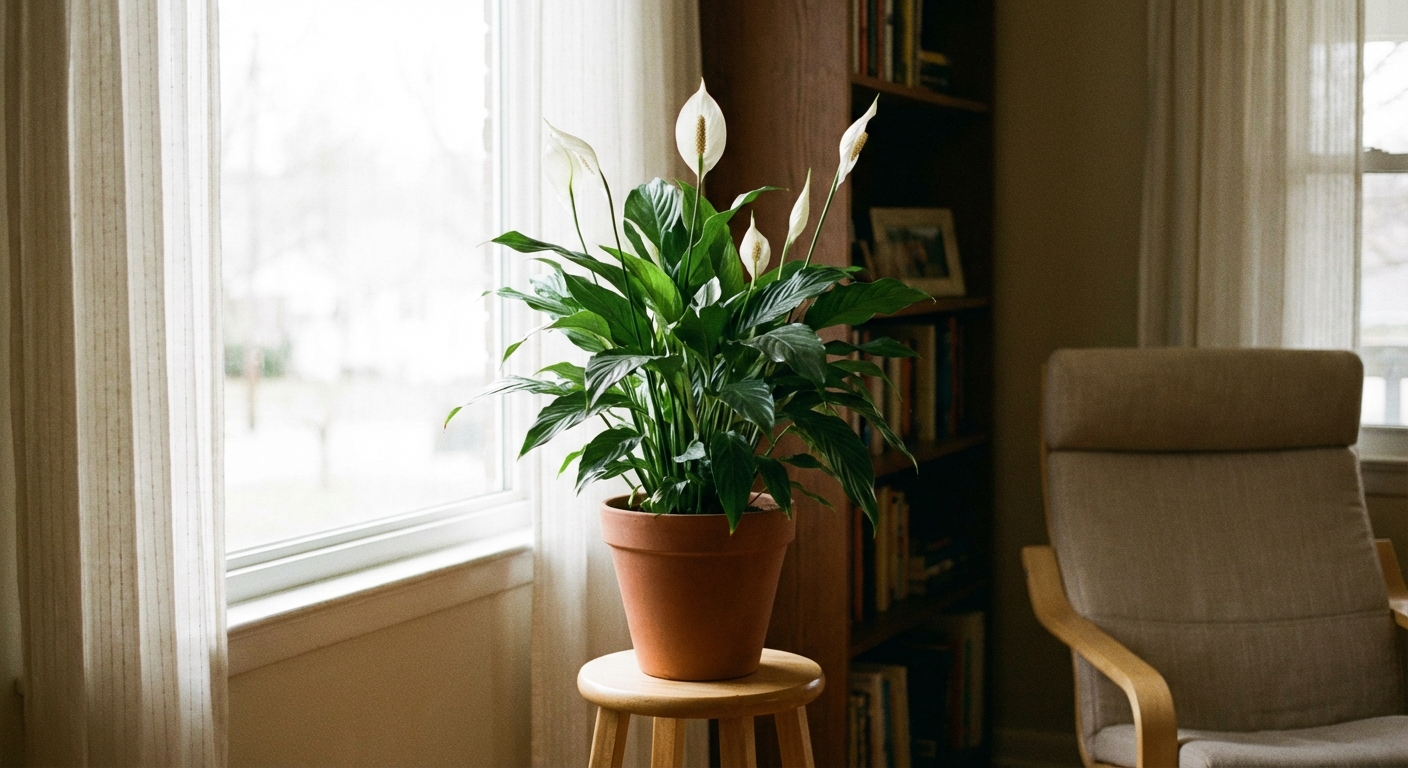
A peace lily (Spathiphyllum) can be the most polite houseplant you own right up until you realize it has not produced a single white “flower” in months. The good news is this is usually a blooming conditions issue, not a dying-plant emergency.
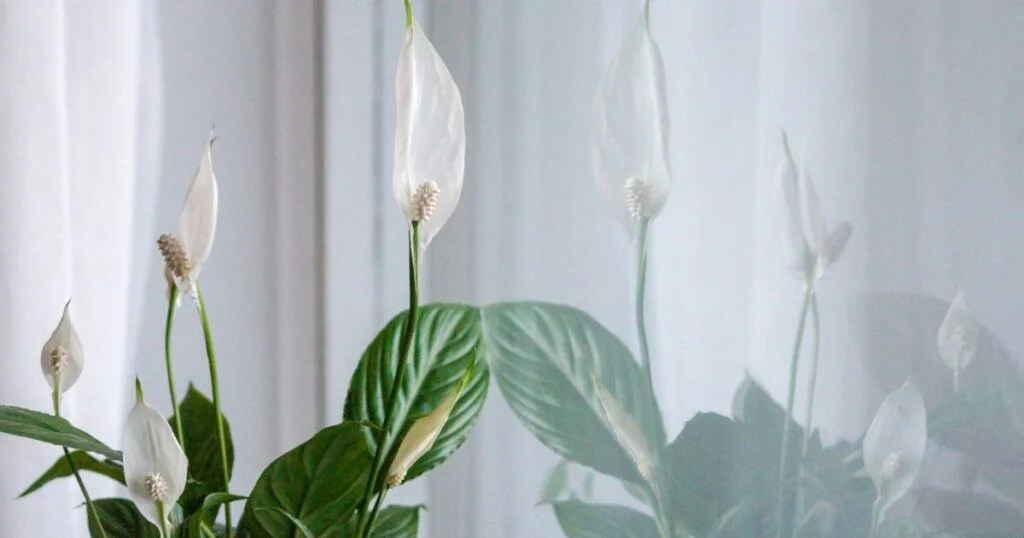
First, a quick clarity moment: what we call the peace lily “flower” is actually a spathe (the white hood) wrapped around a finger-like spadix (the cream spike). If you see only shiny green leaves with no spathes, let’s troubleshoot the most common reasons and get you back to blooms.
Not blooming vs drooping
I want to separate two issues that get mashed together online:
- Drooping or wilting is often a water timing problem (too dry, sometimes too wet), but it can also show up with heat stress, root binding, transplant shock, or pests.
- Not blooming is usually a slow, quiet “I am not in the mood” signal. The plant can look perfectly healthy.
If your peace lily is drooping, solve that first. A stressed plant focused on survival is not going to spend energy making spathes.
1) Insufficient light (most common)
Peace lilies are famous for tolerating low light, and they do, but tolerance is not the same as blooming. Most peace lilies need bright, indirect light to flower consistently.
What low light looks like
- Leaves are dark green and healthy, but growth is slow
- Long leaf stems that stretch toward a window
- No blooms, or very occasional blooms
Fix it
- Move your plant to a spot with brighter indirect light, ideally near an east window or a few feet back from a south or west window with a sheer curtain.
- If you only have dim rooms, add a grow light for 10 to 12 hours per day.
- Rotate the pot a quarter turn weekly so it grows evenly instead of leaning.
My rule of thumb: if you can comfortably read in that spot most of the day without turning on a lamp, your peace lily is far more likely to bloom. If you want a more concrete check, bright indirect light often creates a soft shadow (not a sharp one) on the wall or floor.
2) Your plant may be immature
Many peace lilies bloom best when they have reached a certain size and maturity. If your plant is small, recently propagated, or you just divided it, it may pause blooming while it rebuilds roots and foliage.
Clues this is the issue
- The plant is still putting out new leaves steadily
- No signs of stress or pests
- It is a smaller variety or a young plant in a small pot
What to do
- Give it time. Focus on steady care and better light.
- Avoid frequent repotting. Peace lilies often bloom better when slightly snug in their pot.
Think of blooms as “extra credit.” Your peace lily needs a solid base of leaves and roots first.
3) Over-fertilizing
If you are feeding your peace lily like it is a tomato plant, it may respond with lush foliage and skip blooming. Excess fertilizer can also lead to salt buildup in the potting mix, which stresses roots.
Common signs
- Fast, leafy growth with no spathes
- Brown leaf tips even though watering seems consistent
- White crust on soil surface or pot rim
Fix it gently
- Pause fertilizer for 6 to 8 weeks.
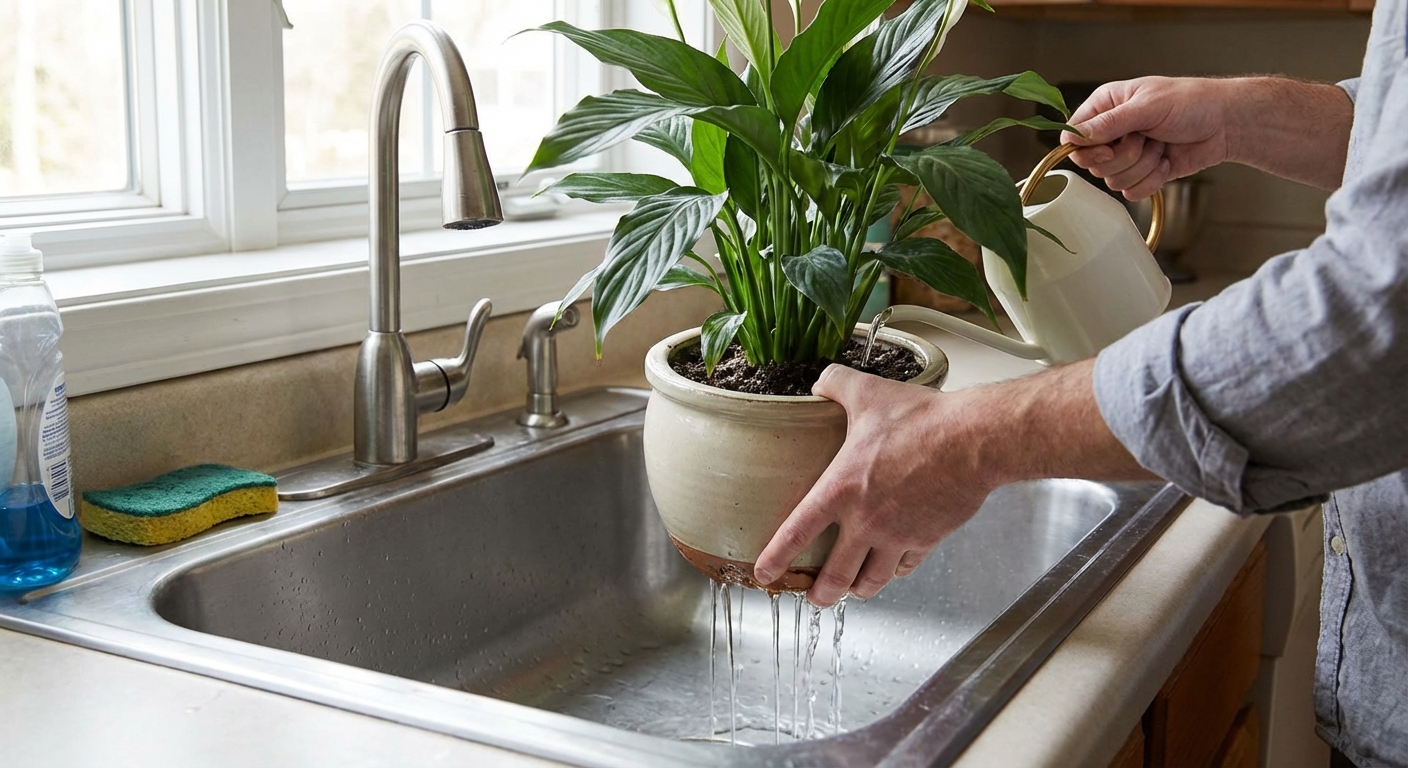
- Flush the pot: run room-temperature water through the soil for a minute or two, then let it drain fully. Do this in a sink or shower.
- When you resume, feed lightly: half-strength balanced fertilizer every 4 to 6 weeks in spring and summer.
Peace lilies are light eaters indoors. In decent potting mix, they usually want less fertilizer than we think.
4) Temperature and drafts
Peace lilies are tropical understory plants. They can handle typical home temperatures, but blooms are more likely when conditions are stable.
Bloom-friendly range
- 65 to 80°F (18 to 27°C) is the sweet spot
- Avoid prolonged temps below 60°F (16°C)
Common household culprits
- Cold drafts from winter windows
- Heat blasting from vents
- AC blowing directly on the plant
Move the plant a foot or two away from vents and drafty glass. Small changes make a big difference.
5) Water, drainage, and humidity
Peace lilies generally prefer evenly moist soil, not soggy soil and not repeated dramatic wilting. Inconsistent moisture is a quiet bloom-blocker because the plant keeps switching from growth mode to recovery mode.
Keep it simple
- Drainage matters: use a pot with drainage holes, and do not let it sit in standing water in a saucer.
- When to water: water when the top 1 inch (2 to 3 cm) feels dry, then water thoroughly and let excess drain.
- Humidity: it is not the main key to flowering, but very dry air can contribute to crispy tips and low-level stress. If your home is dry, a small humidifier nearby or grouping plants can help.
6) Pot size and “good stress”
This one sounds contradictory, but it is real: some peace lilies bloom more readily when they are slightly snug in their pot. This is not a license to neglect your plant. Think “steady care with a gentle nudge,” not “make it suffer.”
Safe ways to encourage blooming
- Skip overpotting: if you repot often into much larger containers, the plant may prioritize roots and leaves over flowers.
- Moist, not bone-dry: letting the top inch dry slightly between waterings is fine, but chronic dryness (or repeated full wilts) can reduce blooming.
- Pair with brighter light: light is still the most reliable trigger.
When to repot
- Roots circling tightly inside the pot or poking from drainage holes
- Water runs through very quickly and the plant dries out unusually fast
- The plant is so root-bound it cannot stay evenly moist
If you do repot, go up just one pot size and use a mix that stays moist but airy, like a quality indoor potting soil cut with perlite (or another aeration amendment).
7) The nursery factor (GA3)
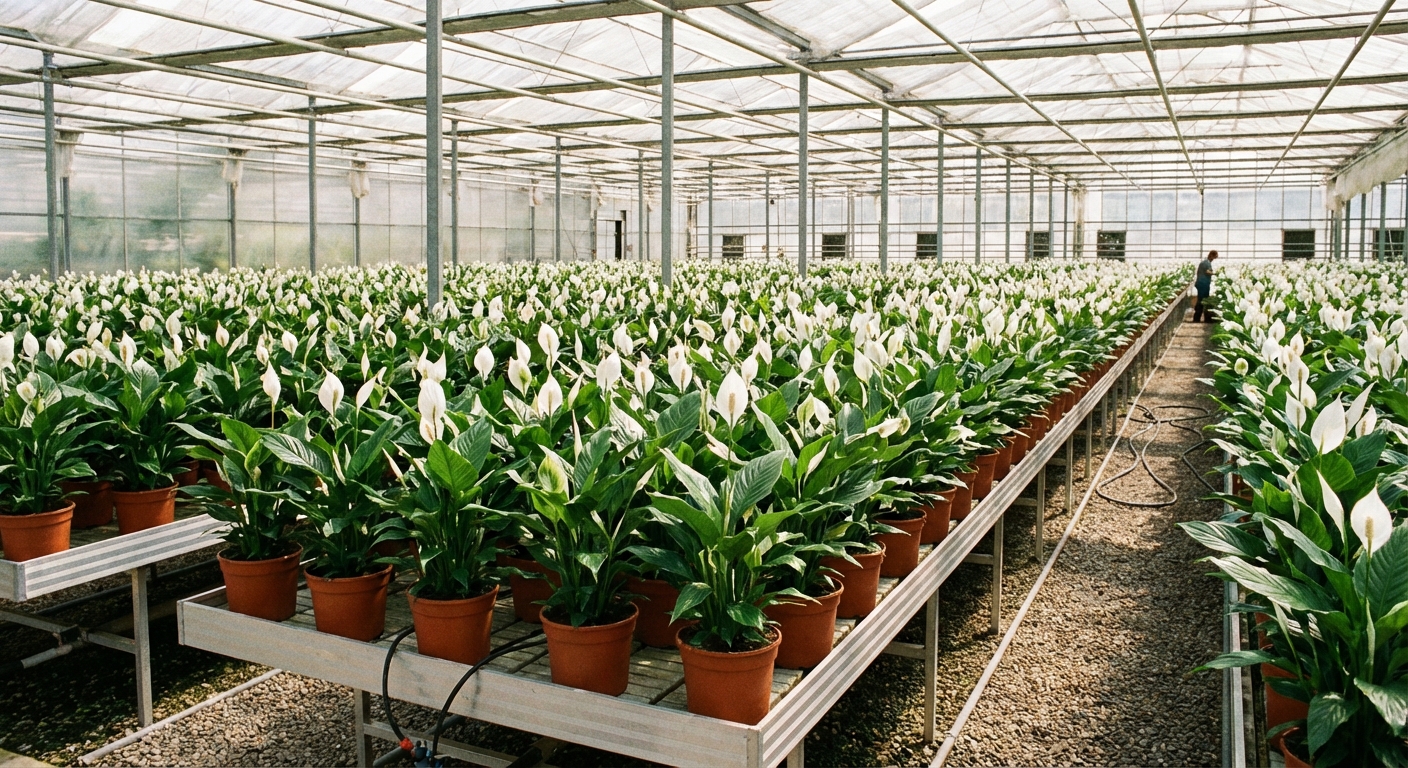
If you bought your peace lily blooming like crazy and then it never bloomed again at home, you are not imagining things. In commercial production, some growers use plant growth regulators such as gibberellic acid (GA3) to encourage flowering on a schedule. This practice is documented in ornamental crop production, but it is not universal across all growers and all cultivars.
What this means for you:
- Your peace lily may have been “nudged” into blooming at the store under greenhouse light and controlled conditions.
- At home, it returns to its natural rhythm, which can mean fewer blooms unless light and care are dialed in.
- This does not mean your plant is unhealthy. It just means it is back to being a regular peace lily.
So if you are chasing the exact bloom show it had on the retail bench, aim for brighter indirect light first. It is the closest home equivalent to greenhouse energy.
Quick checklist
- Light: bright indirect light, or add a grow light
- Feeding: go light, half-strength, spring through summer
- Pot: slightly snug is fine, avoid overpotting
- Temperature: stable 65 to 80°F, no vent blasts
- Water: evenly moist, good drainage, no standing water
If you make one change, make it light. If you make two, make it light and fertilizer restraint.
How long until it blooms again?
With improved light and steady care, many peace lilies can produce blooms in roughly 8 to 16 weeks during spring and summer. That said, timing varies by cultivar, plant maturity, and season, and some varieties are simply heavier bloomers than others.
One more gentle nudge: remove spent blooms (cut the flower stalk at the base) so the plant can redirect energy into new growth and future flowers.
When to worry
If there are no blooms and the plant looks unhappy, check for these issues:
- Root problems: sour smell, mushy roots, soil that stays wet for many days
- Pests: especially spider mites and mealybugs (check leaf undersides and stem joints)
- Very hard water: chronic tip browning and crusty soil can signal mineral buildup
In those cases, fixing the underlying stress often brings blooms back later.
A final reassurance
Peace lilies are not stingy. They are just honest. When the light is right and the routine is steady, blooms usually follow. And if yours still only flowers once in a while, that is not failure. It is a plant living a calm indoor life, saving its energy for the long haul.