
Why Is My Peace Lily Drooping?

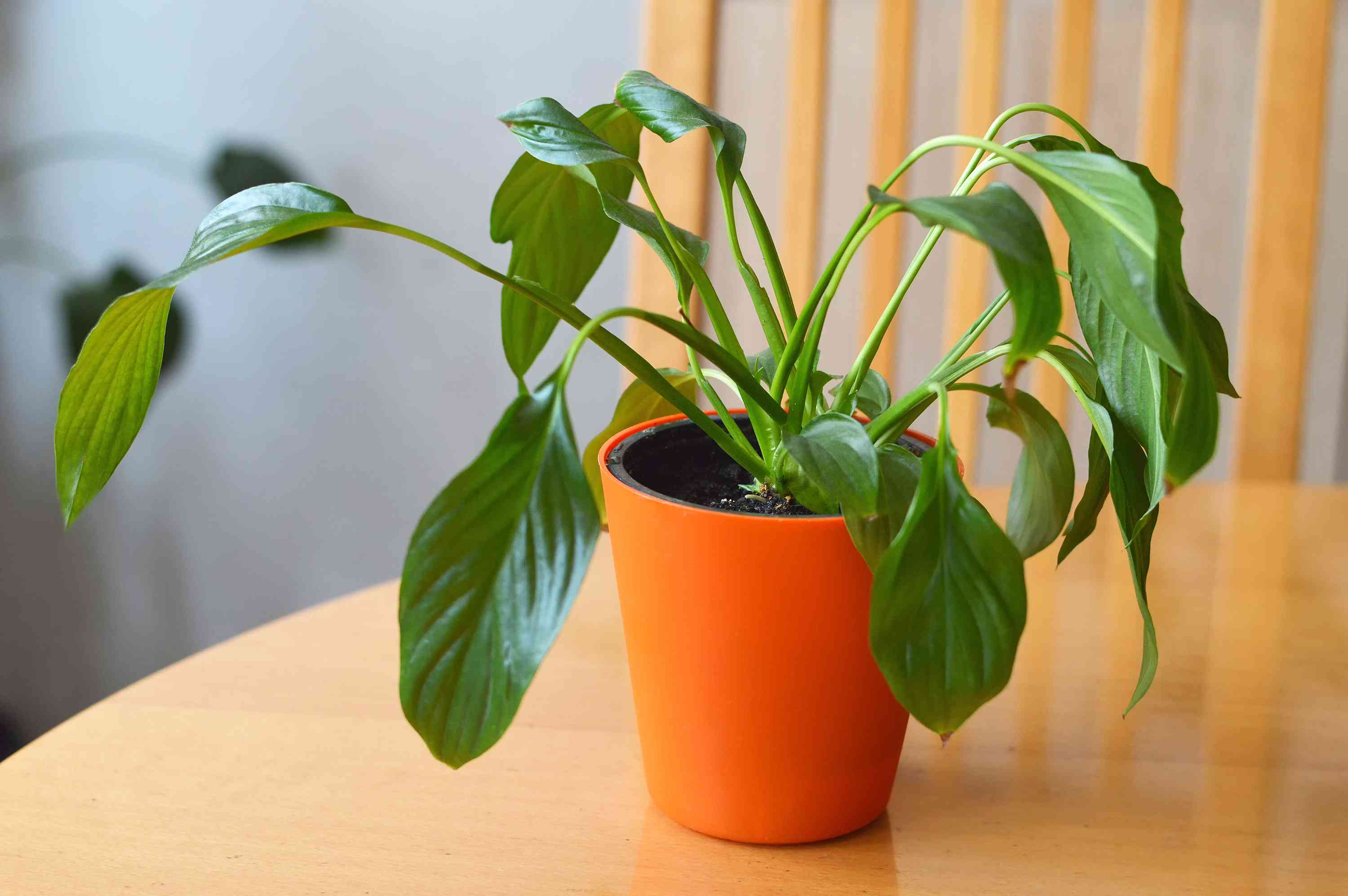
If your peace lily looks like it’s having a dramatic fainting spell, you’re not alone. Spathiphyllum is famous for drooping fast, but the good news is that droop is also a very readable signal. With a few quick checks, you can usually figure out what it’s asking for and get those leaves standing tall again.
This page focuses on the most common culprits: underwatering, overwatering, root rot, temperature shock, transplant stress, and too much direct sunlight. We’ll start with a quick flowchart, then walk through fixes step by step.
Timing note: Many cases (especially underwatering) improve within hours to a couple of days. If roots are stressed (overwatering, rot, transplant shock), recovery can take a week or more.
Quick troubleshooting flowchart
Grab your plant, a finger, and a little patience. Work through these questions in order.
START: Peace lily drooping
  |
  |-- Q1: Is the top 1 to 2 inches of soil dry and the pot feels light?
  |       |-- YES -> Underwatering (go to Fix A)
  |       |-- NO  -> Q2
  |
  |-- Q2: Is the soil wet/soggy, pot feels heavy, or there is standing water in the saucer?
  |       |-- YES -> Overwatering (go to Fix B)
  |       |-- NO  -> Q3
  |
  |-- Q3: Do you smell funk, see yellowing + limp leaves, or roots look brown/mushy?
  |       |-- YES -> Root rot (go to Fix C)
  |       |-- NO  -> Q4
  |
  |-- Q4: Was it moved near an AC/heater vent, cold window, or hot car recently?
  |       |-- YES -> Temperature shock (go to Fix D)
  |       |-- NO  -> Q5
  |
  |-- Q5: Was it recently repotted or divided in the last 1 to 3 weeks?
  |       |-- YES -> Transplant stress (go to Fix E)
  |       |-- NO  -> Q6
  |
  |-- Q6: Is it getting direct sun (sunbeams on leaves) or crispy brown patches?
          |-- YES -> Too much direct light (go to Fix F)
          |-- NO  -> Check potbound roots, pests, old compacted mix, or low humidity (see Extra checks)
Tip from my own windowsill jungle days: peace lilies can droop from underwatering and overwatering. The soil feel and pot weight usually tell the truth faster than the leaves do.
First, do a 60-second check
1) Check soil moisture
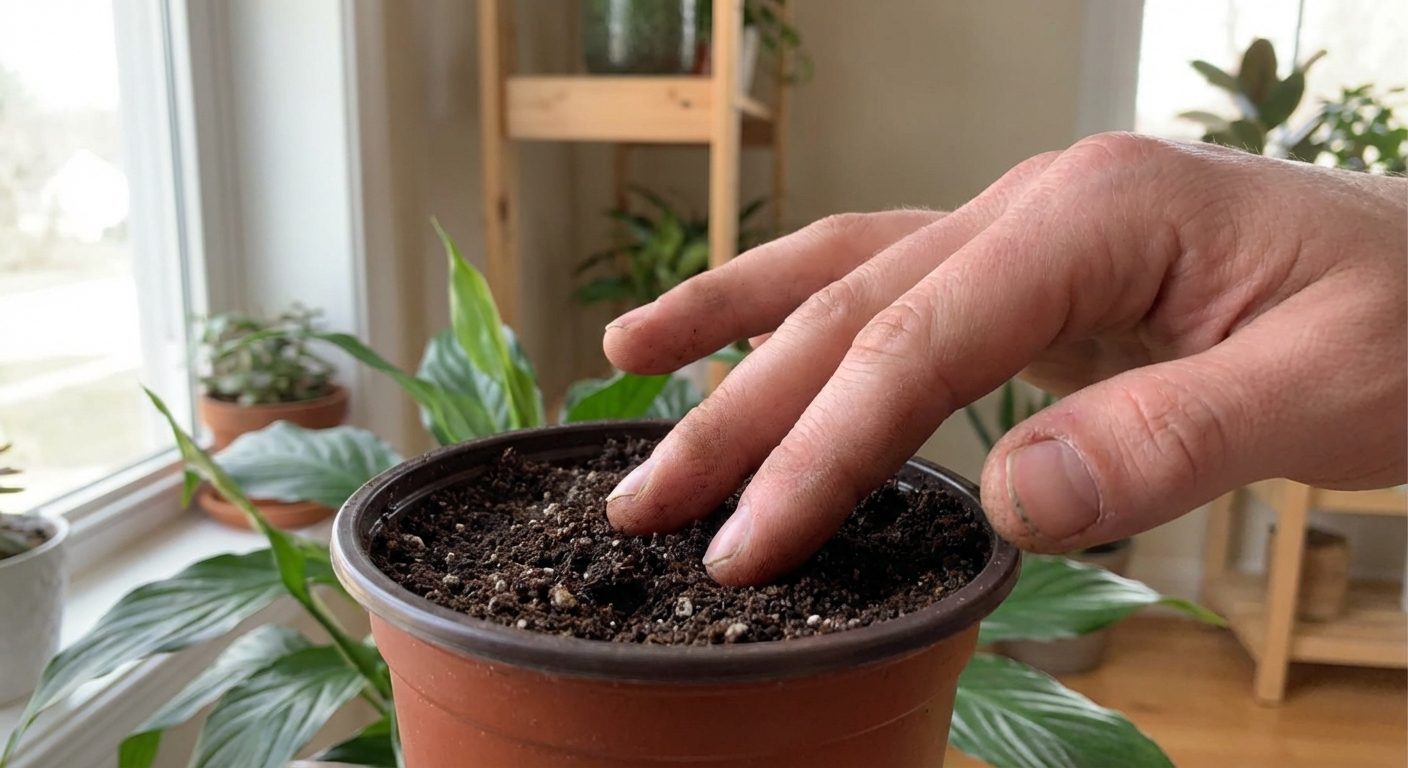
- Push your finger 1 to 2 inches into the soil (not just the crusty top).
- If it’s dry at that depth, your plant is likely thirsty.
- If it’s wet and cool, hold off on watering and check drainage.
2) Lift the pot
- Light pot often means dry soil.
- Heavy pot often means saturated soil.
3) Look at the leaves
- Uniform droop on most leaves is commonly water-related.
- Yellowing plus droop can point to chronic overwatering or early rot.
- Crispy brown patches often show sun scorch, dry air, or mineral buildup.
Top causes and fixes
Fix A: Underwatering
Classic signs: Soil is dry 1 to 2 inches down, pot feels light, leaves droop dramatically, and the plant perks up quickly after watering.
Why it happens: Peace lilies use a lot of water when actively growing, especially in brighter light, warm rooms, or when rootbound.
Step-by-step recovery
- Water deeply until water runs from the drainage holes.
- Empty the saucer after 10 to 15 minutes so the pot is not sitting in runoff and the roots can breathe.
- If the soil is very dry and pulling away from the pot edges, it may have turned hydrophobic (it repels water). Bottom-water for 20 to 30 minutes in a sink or tub, then let it drain well.
- Recheck in 24 hours. Many peace lilies noticeably improve within a day when thirst is the main issue.
Prevent it: Use the top 1 to 2 inches drying out as your cue, then water thoroughly. Consistency beats a strict schedule.
Fix B: Overwatering
Classic signs: Soil stays wet for many days, pot feels heavy, leaves droop but also look soft, and you may see yellowing lower leaves.
Why it happens: Frequent small waterings, poor drainage, an old compacted mix, or a potting mix that holds too much moisture can keep roots oxygen-starved. Roots need air as much as they need water.
Step-by-step recovery
- Stop watering for now.
- Let the top 2 inches dry before watering again (this deeper dry-down is intentional when you suspect overwatering).
- Dump any standing water from the saucer or cachepot immediately.
- Increase airflow nearby (not a blasting vent, just gentle air movement).
- If your peace lily is in a decorative pot with no hole, move it to a draining pot or keep it in a nursery pot inside the cover pot and always empty runoff.
Decision point: If the soil is still wet and drooping persists or worsens after 3 to 5 days, prioritize a root check and consider a rescue repot (Fix C).
Fix C: Root rot
Classic signs: A swampy smell, persistent droop in wet soil, yellowing, and roots that are brown, mushy, or hollow. Peace lilies can look thirsty while literally sitting in waterlogged soil because damaged roots cannot drink.
Step-by-step recovery
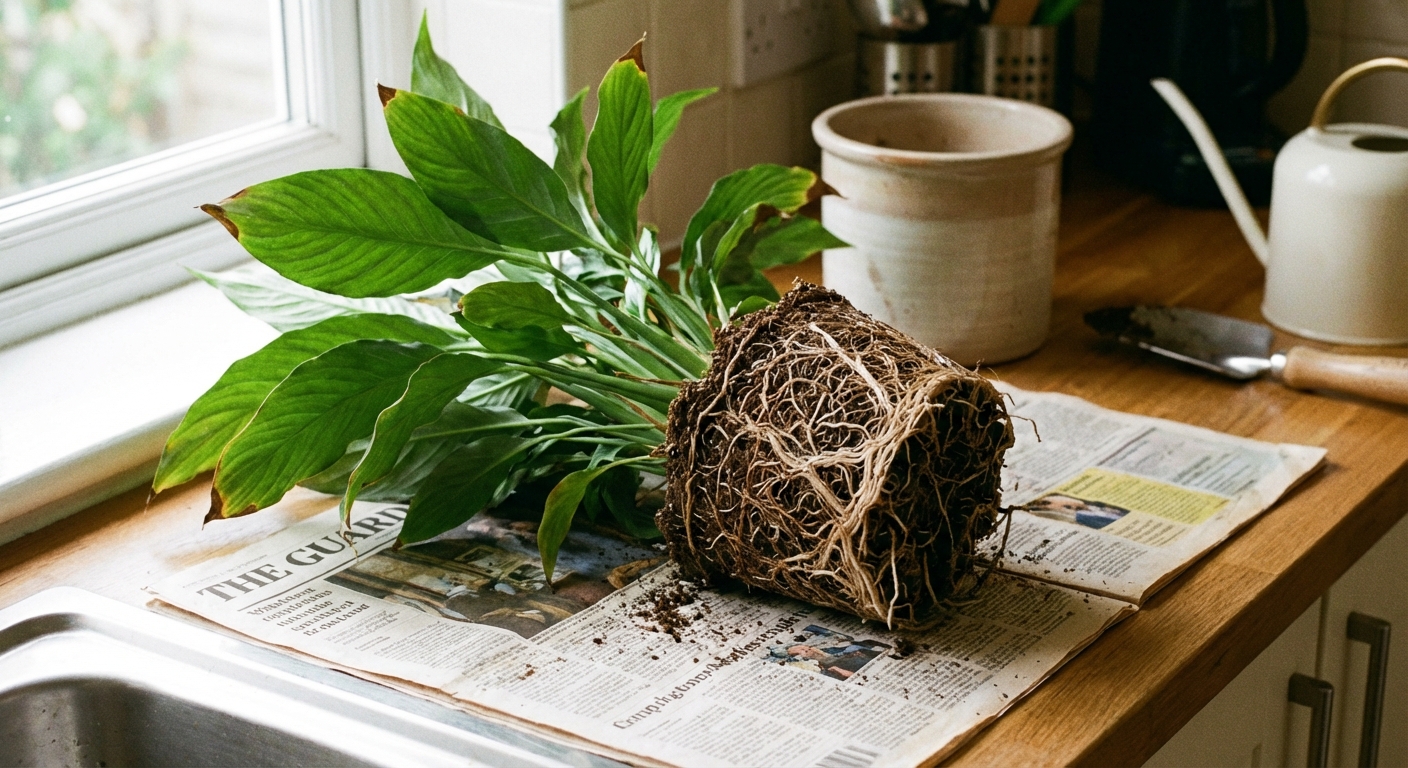
- Slide the plant out of the pot and inspect the roots.
- With clean scissors, trim off rotted roots (brown, mushy) back to firm, pale roots.
- Remove as much sour, soggy soil as you can without shredding healthy roots.
- Repot into a clean pot with drainage using a fresh, airy mix (a quality indoor potting mix plus extra perlite or orchid bark for airflow).
- Water lightly to settle the mix, then let the top 1 to 2 inches dry before watering again.
- Keep it in bright, indirect light while it regrows roots.
Aftercare note: A rescued peace lily may look rough for a week or two. New, upright growth is your sign it’s recovering.
Fix D: Temperature shock
Classic signs: Sudden droop after moving locations, exposure to cold drafts, an AC vent, heater, or being left in a hot or cold car. Leaves can also get blackened edges after cold damage.
Peace lily comfort zone: roughly 65 to 80°F (18 to 27°C). Avoid prolonged dips below about 55°F (13°C).
Step-by-step recovery
- Move it to a stable spot away from vents and exterior doors.
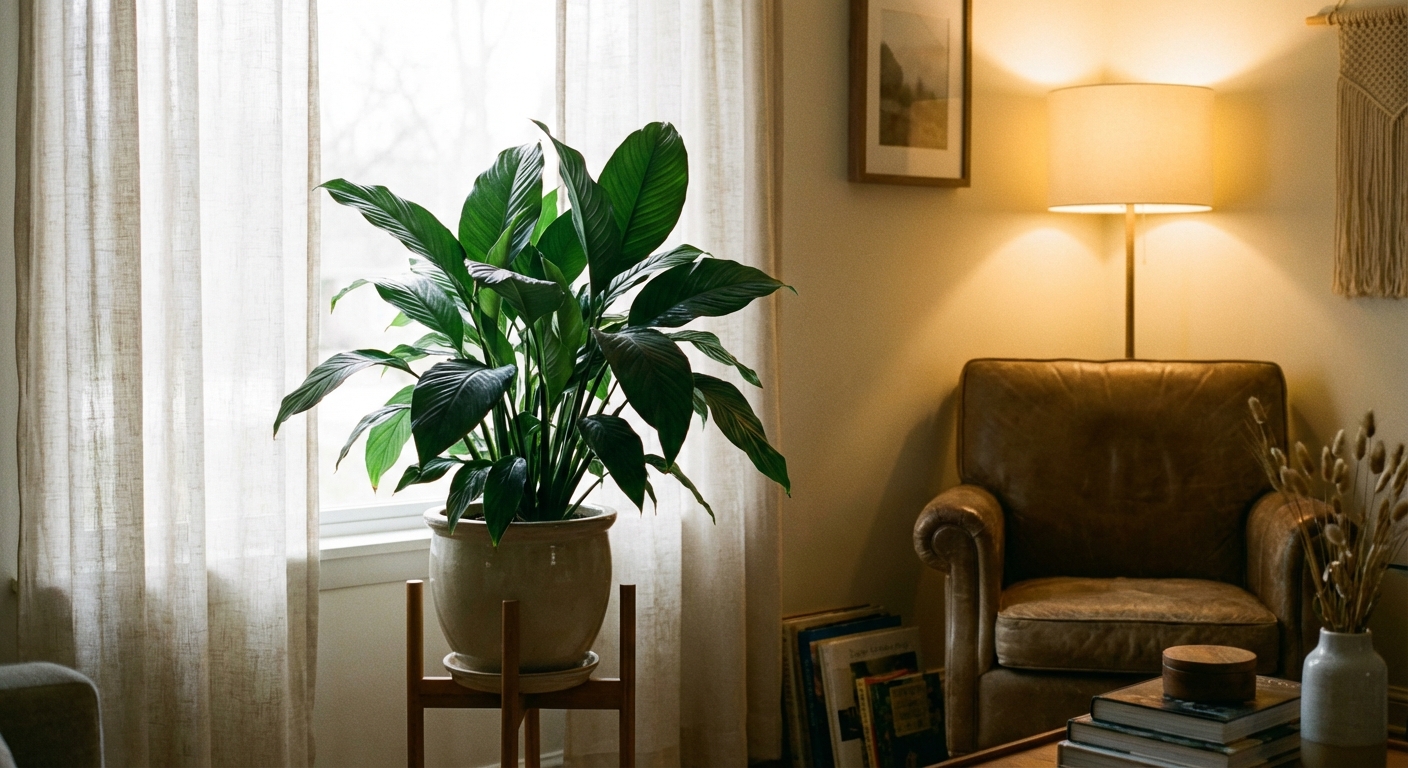
- Aim for steady, indirect light (bright is great, direct rays are not).
- Water only when the top 1 to 2 inches are dry. Temperature stress plus wet soil is a rough combo.
- Trim leaves only after you see what rebounds. Damaged tissue will not heal, but healthy parts still photosynthesize.
Fix E: Transplant stress
Classic signs: Drooping shortly after repotting, dividing, or root disturbance. The plant may act sulky even if the soil moisture is correct.
Why it happens: Repotting can break fine feeder roots. The plant temporarily loses some water uptake capacity.
Step-by-step recovery
- Place in bright, indirect light, not direct sun.
- Keep the soil evenly moist (not soggy). Let the top 1 to 2 inches dry slightly between waterings.
- Skip fertilizer for 4 to 6 weeks. Tender roots burn easily.
- Increase humidity gently if your home is dry (pebble tray, humidifier, or grouping plants).
Fix F: Too much direct sunlight
Classic signs: Droop during the brightest part of the day, faded leaves, and crispy brown patches where sun hits. Peace lilies love bright light, but they prefer it filtered.
Step-by-step recovery
- Move the plant out of direct rays. A few feet back from a bright window often works.
- If you only have a sunny window, use a sheer curtain to soften the light.
- Water appropriately (check soil first). Sun stress often increases water use.
- Remove severely scorched leaves once new growth appears.
Recovery plan
If you are not sure which cause you’re dealing with, this gentle plan avoids the two big mistakes: drowning it or letting it stay bone-dry.
Day 1: Stabilize
- Check soil 1 to 2 inches down.
- If dry: deep water, then drain. If wet: do not water, and empty the saucer.
- Place in bright, indirect light and away from vents.
Day 2 to 3: Recheck
- If it perked up fast after watering, you found the issue.
- If soil is still wet and droop worsens, inspect roots for early rot.
- If droop improves but leaves stay a bit soft, keep conditions steady and avoid extra changes.
Week 1 to 2: Support recovery
- Water based on soil feel, not the calendar. Let the top 1 to 2 inches dry between waterings.
- No fertilizer until the plant is clearly pushing new growth.
- Wipe leaves with a damp cloth so they can breathe and photosynthesize efficiently.
Extra checks
Potbound roots
If you water and it runs straight through, or roots are circling the bottom, the plant may be rootbound. A slightly larger pot (1 to 2 inches wider) and fresh, airy mix can help. Peace lilies like being a little snug, just not strangled.
Old or compacted soil
Even if you are not overwatering, an old mix can compact and stay wet too long, which mimics overwatering symptoms. If the soil feels dense, dries unevenly, or smells musty after watering, a refresh with a lighter mix can make a big difference.
Low humidity
Very dry air can make leaves look tired, especially in winter heating season. Aim for moderate humidity and keep it away from heaters. A humidifier is the easiest fix.
Water quality
If you see persistent brown tips or edges (especially without obvious sunburn), your peace lily may be reacting to hard water, chlorine, or fluoride. If that sounds like your home, try using filtered or dechlorinated water and flush the pot thoroughly once in a while to rinse out salts.
Pests
Check leaf undersides and stems for fine webbing (spider mites) or cottony clusters (mealybugs). If you spot them, isolate the plant and treat with insecticidal soap according to label directions.
Pet safety note
Peace lilies are toxic if chewed by pets or people. If you have curious nibblers, place the plant out of reach.
Common mistakes
- Watering on a schedule instead of watering based on soil moisture.
- Leaving runoff in the saucer, which keeps the mix saturated and the roots stressed.
- No drainage hole in the pot.
- “Fixing” with fertilizer when the plant is stressed. Fertilizer is not a tonic.
- Moving it repeatedly from spot to spot. Peace lilies like steady conditions.
When to worry
A peace lily that droops once in a while is usually just communicating. But it’s time to take action quickly if you notice any of these:
- Drooping plus wet soil for more than a week
- A rotten smell from the pot or drainage holes
- Rapid yellowing across many leaves
- Black, mushy stems at the soil line
Those are your “check the roots today” signs. Root rot is fixable, but it rewards speed.
FAQ
How long does a peace lily take to perk up after watering?
If underwatering is the cause, many peace lilies improve noticeably within a few hours and look much better by 24 hours. If it does not perk up after a thorough watering and draining, reassess for overwatering, transplant stress, or root issues (which can take longer to recover).
Can peace lilies droop even when the soil is wet?
Yes. Overwatering and root rot can damage roots so they cannot absorb water, which causes drooping even in wet soil.
Should I mist a drooping peace lily?
Misting can temporarily raise humidity at the leaf surface, but it rarely fixes droop on its own. Focus first on soil moisture, drainage, and light. If your air is very dry, a humidifier helps more than misting.
Is drooping normal after repotting?
Some droop is normal for a week or two after repotting, especially if roots were disturbed. Keep light indirect, soil lightly moist, and skip fertilizer until you see new growth.