Why Is My Orchid Losing Leaves?

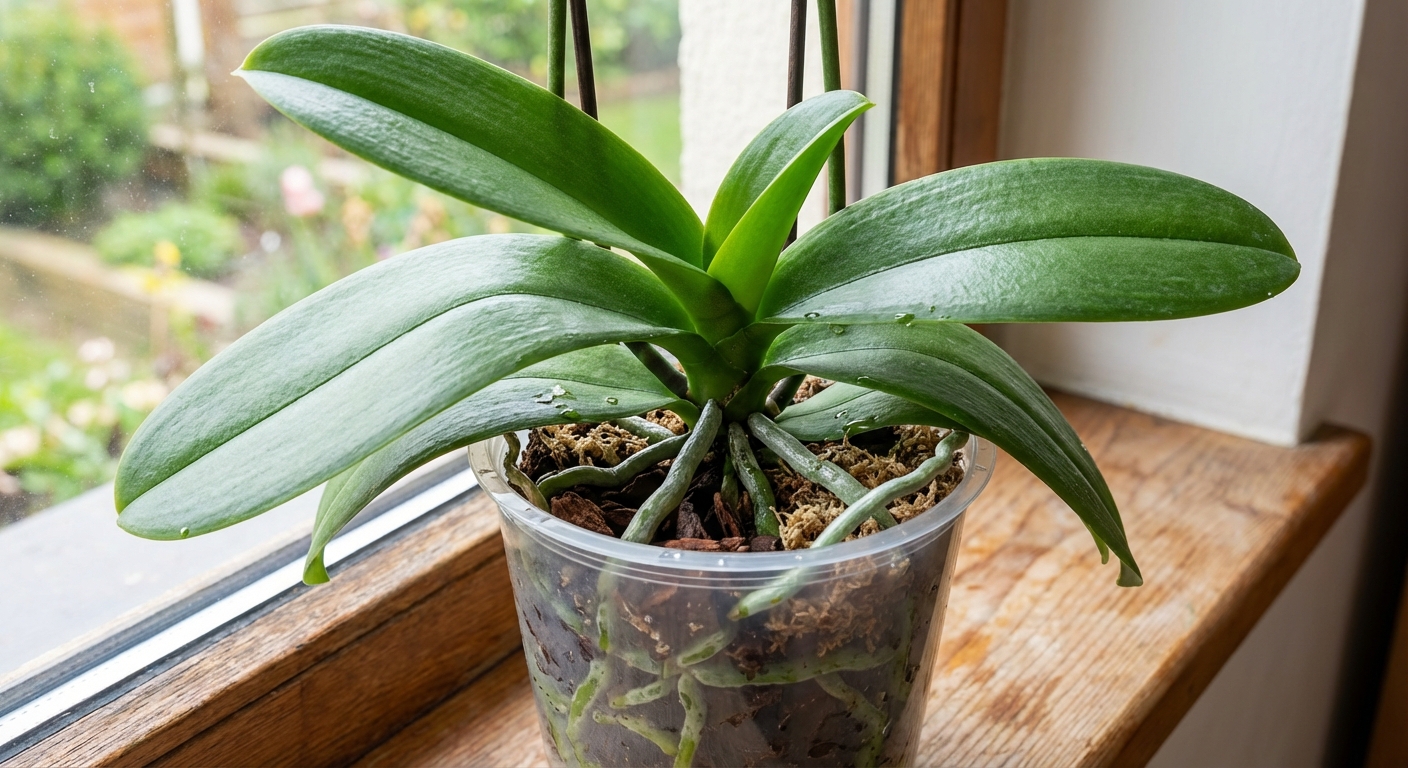
Few things spike a plant parent’s anxiety like an orchid that starts shedding leaves. I get it. Those broad, glossy Phalaenopsis leaves feel like the whole plant. But leaf loss is not always a disaster. Sometimes it is simply an older leaf retiring gracefully. Other times, it is your orchid waving a tiny green flag that says, “Hey, something is off.”
Let’s troubleshoot this together in a calm, practical way. We will start with what is normal, then move into the common problems that cause leaf drop and exactly how to fix them.
First: is your orchid losing one bottom leaf or several leaves fast?
Before you change anything, take 30 seconds to observe the pattern. This is the fastest way to separate normal shedding from an urgent problem.
Usually normal
- One oldest bottom leaf slowly turns yellow over a few weeks, then drops.
- The rest of the leaves stay firm and fairly green.
- Roots look mostly healthy: plump green when wet, silvery when dry.
Usually a problem
- Two or more leaves yellowing or dropping in a short window of time.
- Leaves that look limp, wrinkled, or accordion-pleated.
- Newest leaves affected first.
- Any soft/mushy area at the crown (the center where leaves emerge).
If you’re in the “problem” category, skip ahead to the sections on roots and crown rot. Those are the big ones where acting quickly matters.
When leaf loss is normal (and you can breathe)
Phalaenopsis orchids are not evergreens in the “never change” sense. They routinely shed their oldest leaves as they grow new ones, especially after blooming or during a seasonal shift in light.
What normal shedding looks like
- Only the lowest leaf (or two, but spaced out over time) turns yellow.
- The yellowing is even, starting at the base and spreading across the leaf.
- The leaf stays dry, not wet or smelly, and detaches easily when ready.
What to do
- Do not pull a leaf that is still holding on. Let it release naturally to avoid tearing tissue.
- Keep care steady: bright indirect light, thorough watering only when the mix is close to dry, and good airflow.
The most common culprit: overwatering and root rot
If your orchid is losing leaves and also looks droopy, root health is the first place I look. Phalaenopsis leaves often drop because the roots can no longer support them. Ironically, this is usually from too much water, not too little.
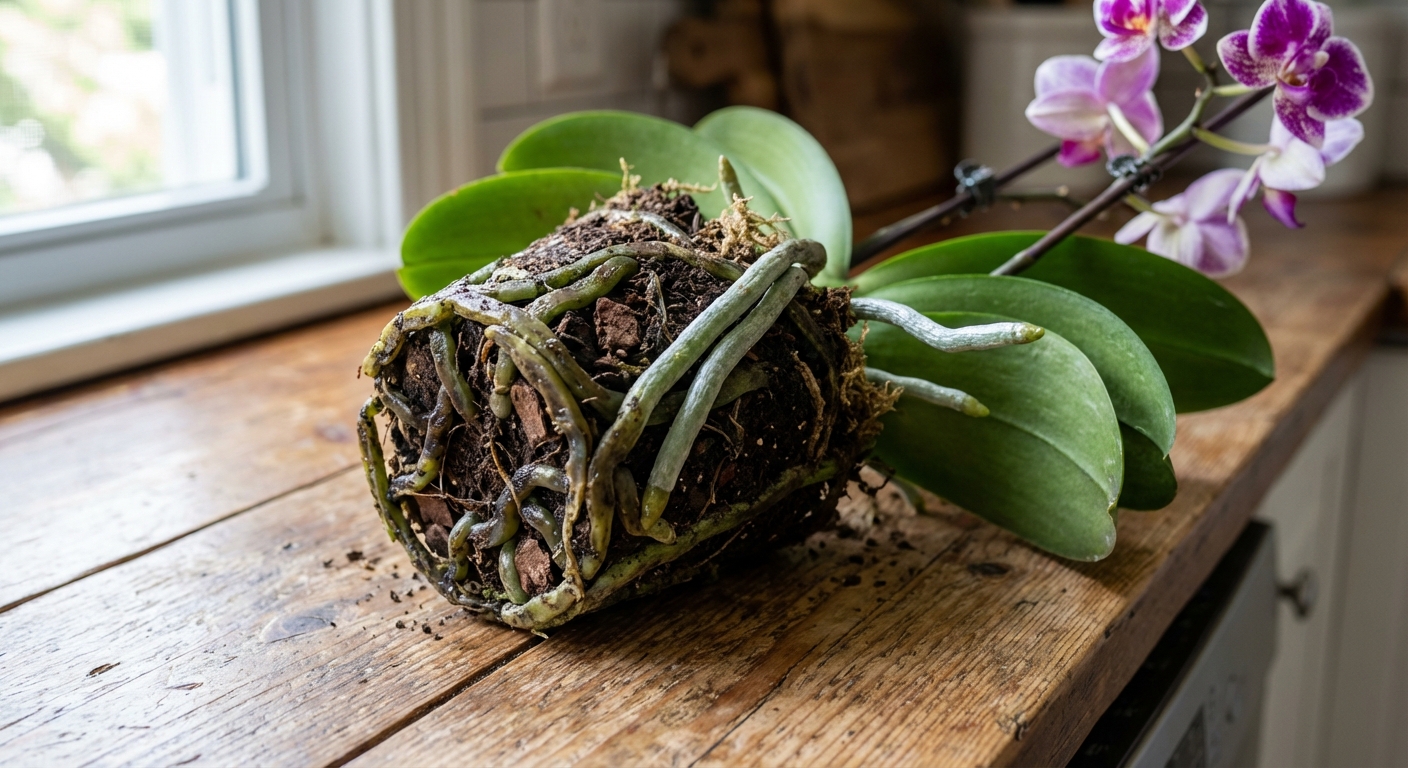
Signs of root rot
- Potting mix stays wet for many days.
- Roots look brown/black, mushy, hollow, or the outer layer slides off like a wet sock.
- A sour, swampy smell from the pot.
- Leaves may yellow, then drop, or become limp and leathery.
Why it happens
Phalaenopsis roots need oxygen. When the medium stays constantly wet or breaks down into fine particles, oxygen disappears and roots suffocate. Rot organisms move in, and the plant starts losing leaves because it cannot drink properly.
How to fix it (step by step)
- Unpot the orchid. Gently remove old bark or moss.
- Inspect roots. Healthy roots feel firm. Dead roots feel mushy or papery hollow.
- Trim dead roots with sterilized scissors. Cut back to firm tissue.
- Optional but helpful: rinse roots and let them air dry 15 to 30 minutes.
- Repot in fresh orchid bark (or a bark-dominant mix) in a pot with plenty of holes.
- Wait to water for about 3 to 5 days after repotting if you had to trim a lot, so cuts can callus.
Adjust your watering so it does not happen again
- Water only when roots look mostly silvery and the pot feels light.
- Soak thoroughly, then let it drain completely. No standing water in a cachepot.
- If you use moss, be extra cautious. Moss can stay wet much longer than bark.
Leaf loss with wrinkling: dehydration (sometimes caused by rot)
Wrinkled, limp, or floppy leaves often scream “thirst,” but here’s the trick: orchids can look dehydrated even when the pot is wet, because rotten roots cannot absorb water.
How to tell which type of dehydration you have
- Dry mix, silvery roots, crisp wrinkling: underwatering or very dry air.
- Wet mix, smelly pot, mushy roots, wrinkling: root rot causing functional dehydration.
What to do
- If roots are healthy: water more deeply, and consider a slightly more moisture-retentive mix (like bark plus a touch of moss).
- If roots are unhealthy: follow the root rot rescue steps above first. More water will not help.
- Increase humidity gently: a pebble tray (pot not sitting in water) or grouping plants can help without turning the pot soggy.
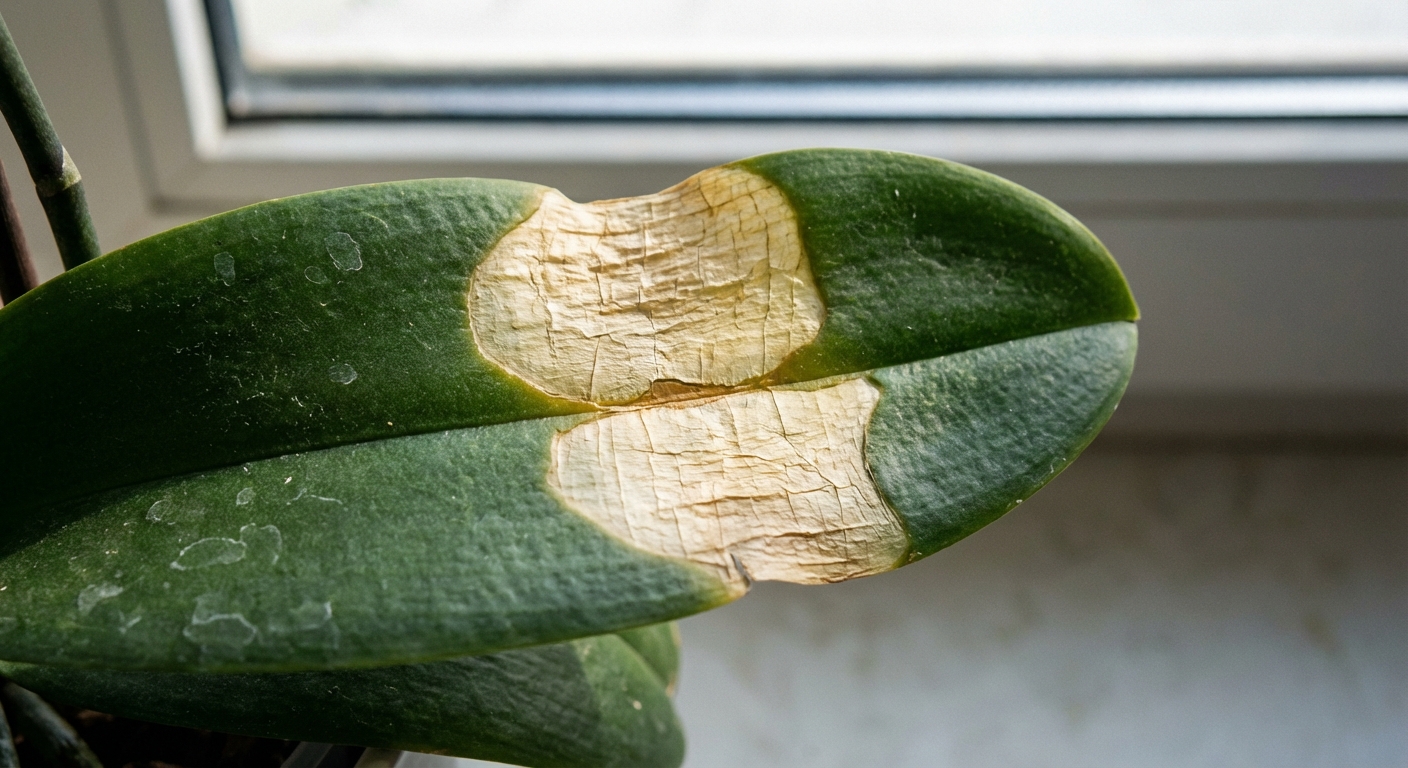
Sunburn: yellow patches that turn papery
Phalaenopsis orchids love bright light, but direct hot sun can scorch leaves. This often happens after moving an orchid to a sunnier window or putting it outdoors without acclimating.
Signs of sunburn
- A bleached yellow patch or pale area on the leaf surface.
- The patch may turn tan, dry, and papery.
- Damage is usually on the side facing the window or sun.
What to do
- Move to bright indirect light. An east window is often perfect. South or west usually needs a sheer curtain.
- Do not cut the leaf unless it is rotting. A scarred leaf can still photosynthesize.
- Watch for secondary issues: sunburned tissue can crack, but it should stay dry and firm.
Cold damage: sudden yellowing after a chill
Phals are tropical. A cold draft, a night against a winter windowpane, or a quick trip in a cold car can cause leaf cells to collapse. Cold-injured leaves often yellow fast and may drop.
Signs of cold damage
- Yellowing that appears quickly, sometimes within a day or two of exposure.
- Leaves may look water-soaked at first, then soften.
- Damage often affects the side closest to the window or draft.
What to do
- Move the plant to a stable spot: ideally 65 to 80 F (18 to 27 C).
- Keep water out of the crown, and avoid extra misting during recovery.
- If a damaged leaf turns mushy at the base, treat it like a rot risk and monitor closely.
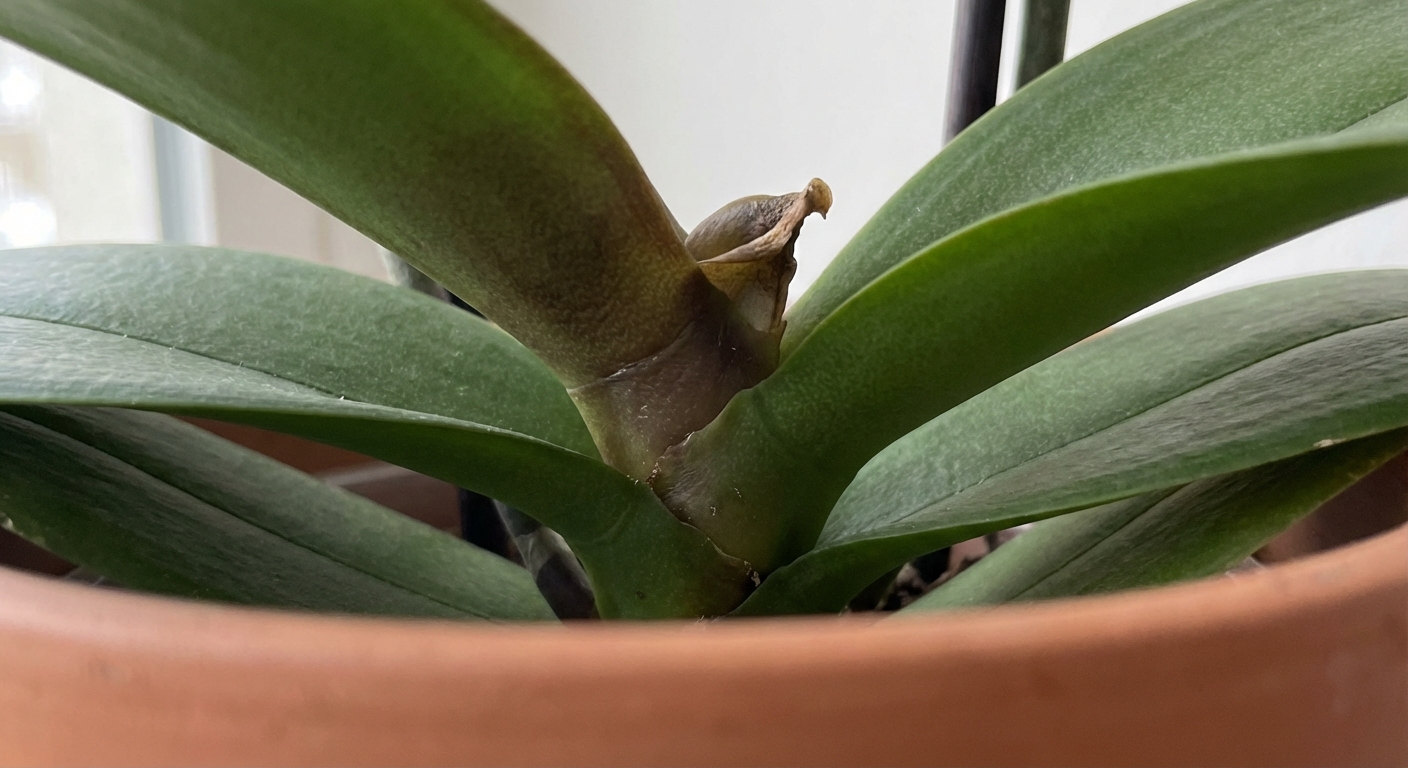
Crown rot: the urgent one (act fast)
If your orchid is losing leaves from the top or the center looks wet or black, pause everything and check the crown. Crown rot can take down a Phalaenopsis quickly because it attacks the growth point where new leaves emerge.
Signs of crown rot
- The newest leaf loosens or falls out easily.
- The crown looks dark, soft, or mushy.
- You may notice a foul smell.
- Water sits in the crown after watering or misting.
What to do right now
- Keep the crown dry. Tilt the orchid and blot moisture with a paper towel.
- Improve airflow around the plant.
- Treat the rot. Many growers dust the affected area with ground cinnamon (a drying agent). Use it only on the crown tissue, not on roots or mix.
- Hold watering back slightly while you monitor, but do not desiccate healthy roots.
Important: If the crown is severely rotted, the plant may not produce new leaves. Sometimes a Phal can still form a basal keiki (a baby plant at the base) if the root system remains healthy. That is why checking roots matters too.
Other reasons orchids drop leaves
Potting mix breakdown and poor airflow
Even if you water perfectly, old mix can compact, hold too much moisture, and starve roots of oxygen.
- Repot every 1 to 2 years, or sooner if bark is crumbling.
- Choose a pot with lots of holes. Clear plastic pots make root-checking easier.
Fertilizer burn and salt buildup
Too much fertilizer can damage roots, leading to leaf decline and drop.
- Use a balanced orchid fertilizer at quarter to half strength.
- Flush the pot with plain water monthly to rinse salts, especially if you use hard tap water.
Shock after repotting or moving
Orchids can sulk when their environment changes. A single older leaf dropping after a move is not uncommon.
- Keep conditions stable and avoid “fixing” everything at once.
- Focus on roots, light, and a predictable watering rhythm.
Quick diagnosis checklist (my go-to routine)
If you only do one thing after reading this page, do this little check. It prevents guesswork, and it has saved more orchids in my care than any fancy product ever has.
- Count leaves lost: one old bottom leaf slowly, or multiple quickly?
- Touch the leaves: firm or floppy?
- Look at the crown: dry and clean, or dark and wet?
- Check roots through the pot: green/silvery and plump, or brown and collapsing?
- Smell the pot: fresh and woody, or sour and swampy?
When to take immediate action
Some leaf loss can wait. These situations should not.
- Newest leaf falls out or pulls out easily: check for crown rot immediately.
- Multiple leaves yellowing at once: unpot and inspect roots.
- Mushy tissue anywhere on the stem or crown: isolate the plant and improve airflow.
- Strong bad smell from the pot: suspect rot and repot promptly.
How to help your orchid regrow strength after leaf loss
Once an orchid drops a leaf, that leaf will not come back. The goal is to stabilize the plant so it can grow a new leaf or two from the crown and rebuild its root system.
Recovery care basics
- Light: bright indirect light. Enough to read comfortably nearby, but not harsh sun.
- Water: only when the mix is close to dry and the pot feels light.
- Warmth: steady household temperatures, away from cold windows and heater blasts.
- Airflow: gentle movement helps prevent rot, especially after watering.
- Patience: new leaf growth can take weeks. Root recovery can take months.
If your orchid has at least a few firm roots and a clean crown, it has a very real shot at bouncing back. I have watched “honestly, stubbornly” ragged-looking Phals rebuild into glossy, leafy plants again. They just need the right conditions and time.
FAQ
Should I cut off a yellow orchid leaf?
If it is the oldest bottom leaf and it is yellowing evenly, I usually let it fall on its own. If the leaf is turning mushy, wet, or foul-smelling, remove it carefully and address the underlying rot issue.
My orchid lost leaves but the roots look fine. What now?
Look next at light, temperature, and crown moisture. Sunburn and cold damage can trigger leaf drop even when roots are healthy. Also check if the plant recently bloomed and is shedding an older leaf naturally.
Can an orchid live with only one or two leaves?
Yes, sometimes. If the crown is healthy and there are viable roots, a Phalaenopsis can survive and slowly regrow leaves. Prioritize stable conditions and avoid overwatering during recovery.