Why Is My Jade Plant Dropping Leaves?

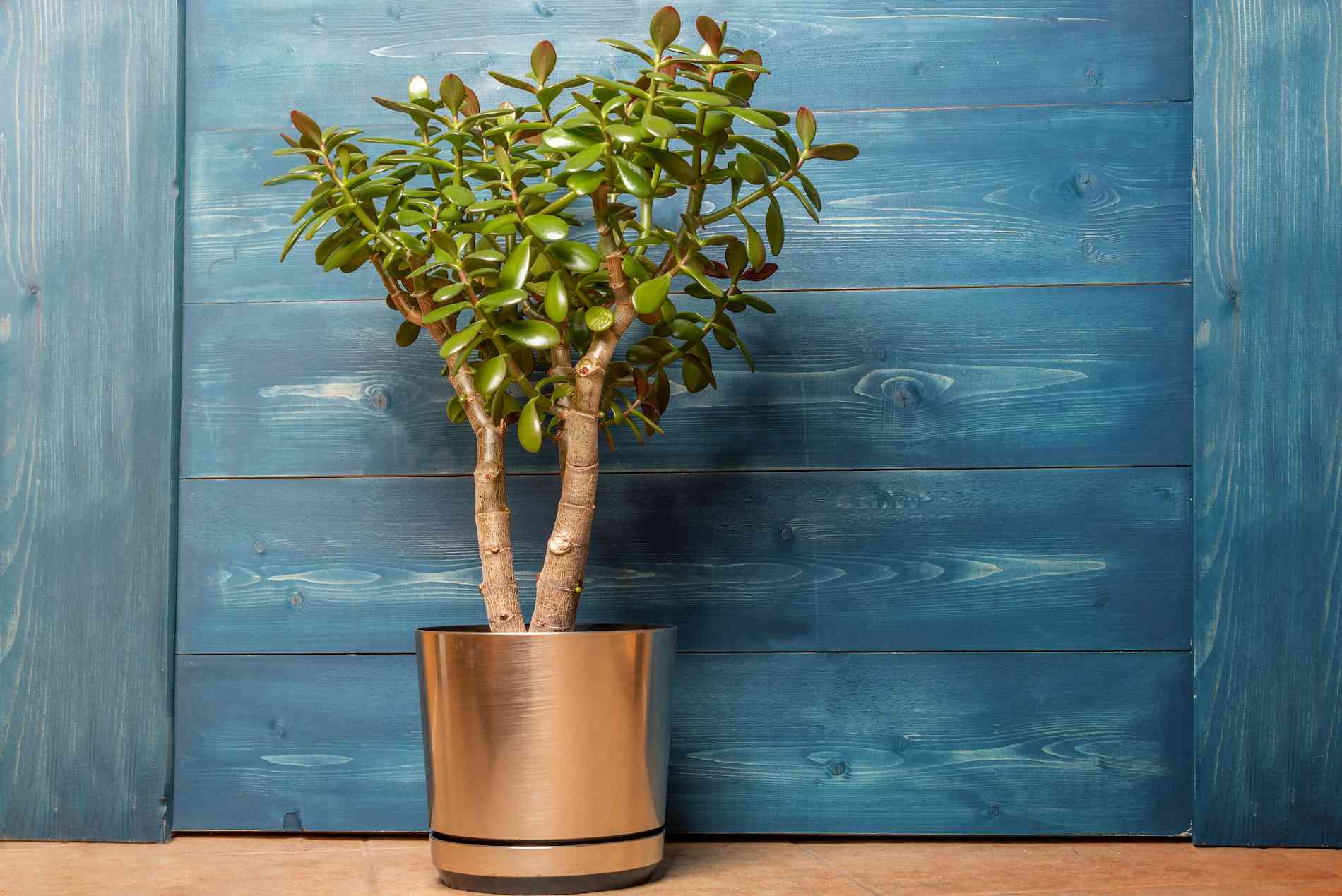
If your jade plant is dropping leaves, take a breath. Crassula ovata (often called a “money plant”) is tough, but it is also pretty honest. When something is off, it will shed leaves like little green clues.
The good news is that most leaf drop comes down to a few common care hiccups: watering that does not match the season, sudden temperature changes, not enough light, sneaky drafts, repotting stress, or pests like mealybugs. And sometimes it is simply the plant aging gracefully and letting go of lower leaves.
Use the sections below to match what you see on your plant, then follow the fix steps. If you want the fastest diagnosis, start with watering and light. They cause the majority of jade leaf drop.
What healthy jade leaves look like
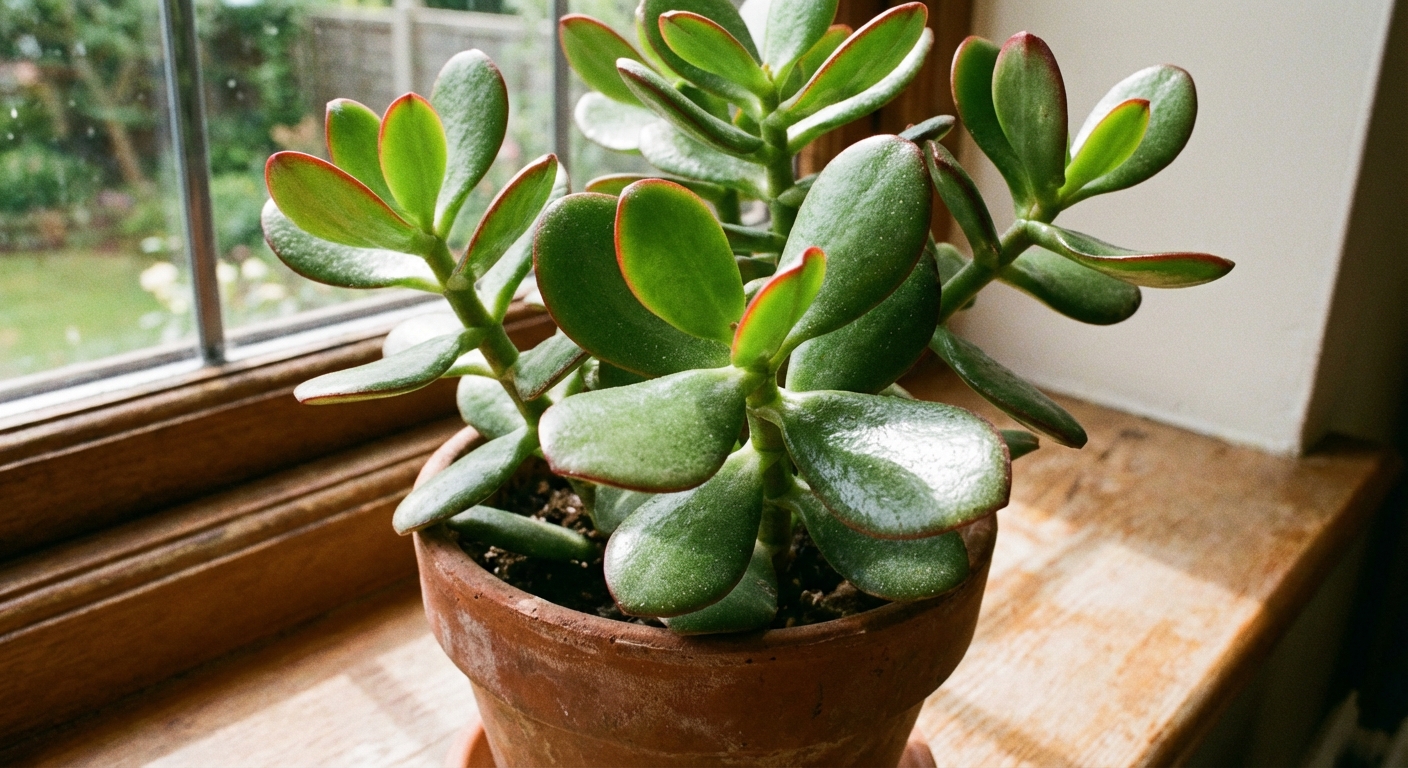
A happy jade has leaves that feel firm and slightly springy, like a well-hydrated succulent should. Color varies by variety and light level, but in general you are looking for:
- Plump, smooth leaves that do not wrinkle when you pinch very gently
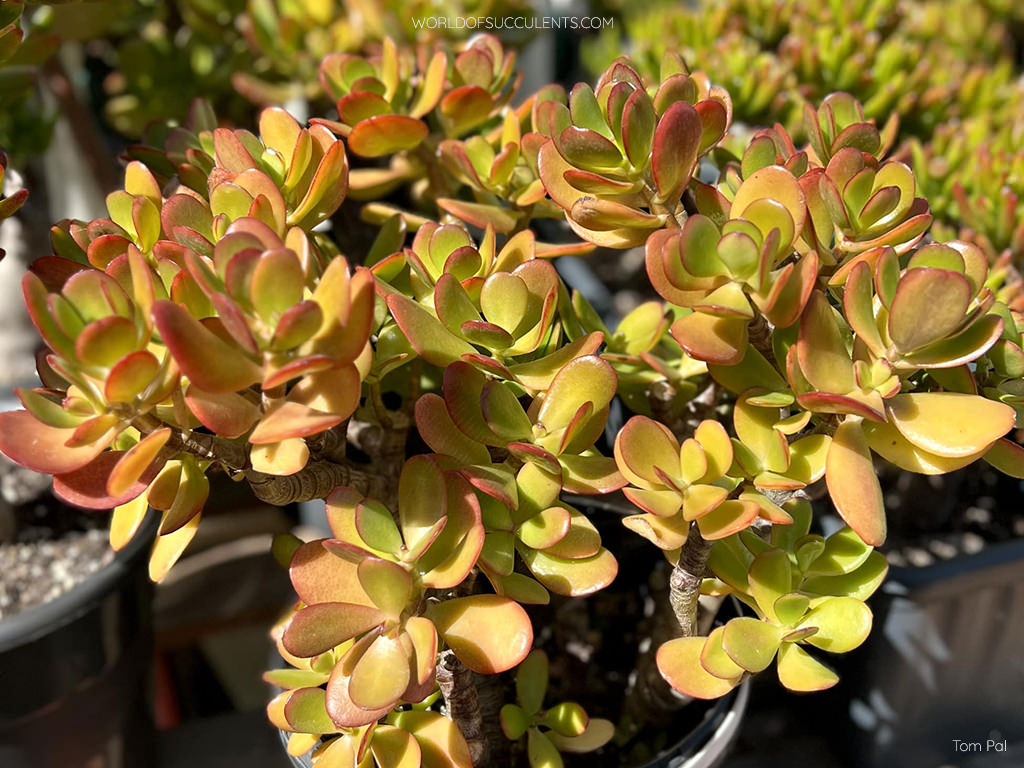
- Even color, usually medium to deep green, often with a red edge when grown in bright light
- Leaves held upright on stems, not dangling or dropping with a light touch
Stressed jade leaves tend to go soft, thin, wrinkled, yellowing, translucent, or they drop easily.
Quick triage: 60 seconds
Before we dive into each cause, do these quick checks. They narrow things down fast.
- Check the soil 2 inches down: is it wet, damp, barely moist, or bone dry?
- Look at the dropped leaves: are they mushy and yellow, or shriveled and papery?
- Think back 1 to 2 weeks: repotting, moving to a new spot, a cold night, heater turning on, open window, travel, missed watering?
- Inspect stems and leaf joints: any cottony white fluff (mealybugs), sticky residue, or bumps (scale)?
- Check light: is it in a bright window, or several feet back in the room?
Most common cause: overwatering
Overwatering is the classic jade plant leaf-drop trigger because jades store water in their leaves and stems. When roots sit wet too long, they struggle to breathe and can start to rot. The plant responds by dropping leaves.
What it looks like
- Dropped leaves are soft, pale, or yellowing
- Leaves may look slightly translucent or feel watery
- Soil stays wet for many days
- Pot feels heavy long after watering
- In more advanced cases, you may notice a musty smell or a dark, soft stem base
Why it happens
- Watering on a schedule instead of by soil dryness
- Potting mix that holds too much moisture
- No drainage hole, or a cachepot that traps runoff
- Low light or cool temperatures, which slow drying
- Oversized pots that stay wet too long
How to fix it
- Stop watering immediately.
- Move to brighter light if possible (more on that below). More light helps the soil dry and strengthens growth.
- Check drainage. Make sure excess water can exit freely. Never let the pot sit in a saucer full of water.
- Assess the mix. If soil is dense or peat-heavy and stays wet, repot into a gritty succulent mix.
- If you suspect root rot: slide the plant out, trim black or mushy roots with clean scissors, let roots air-dry for a few hours, then repot into dry, fast-draining mix. Wait 5 to 7 days before the next watering.
Simple watering rule: With jade, “less often, but thoroughly” beats “a little bit all the time.” Treat watering like a seasonal habit, not a weekly chore.
Underwatering (or uneven watering)
Jades are drought-tolerant, but not drought-proof. Long dry spells can lead to leaf drop, especially in small pots, very bright windows, or hot weather. The plant may also drop leaves if it swings between bone dry and soaked repeatedly.
What it looks like
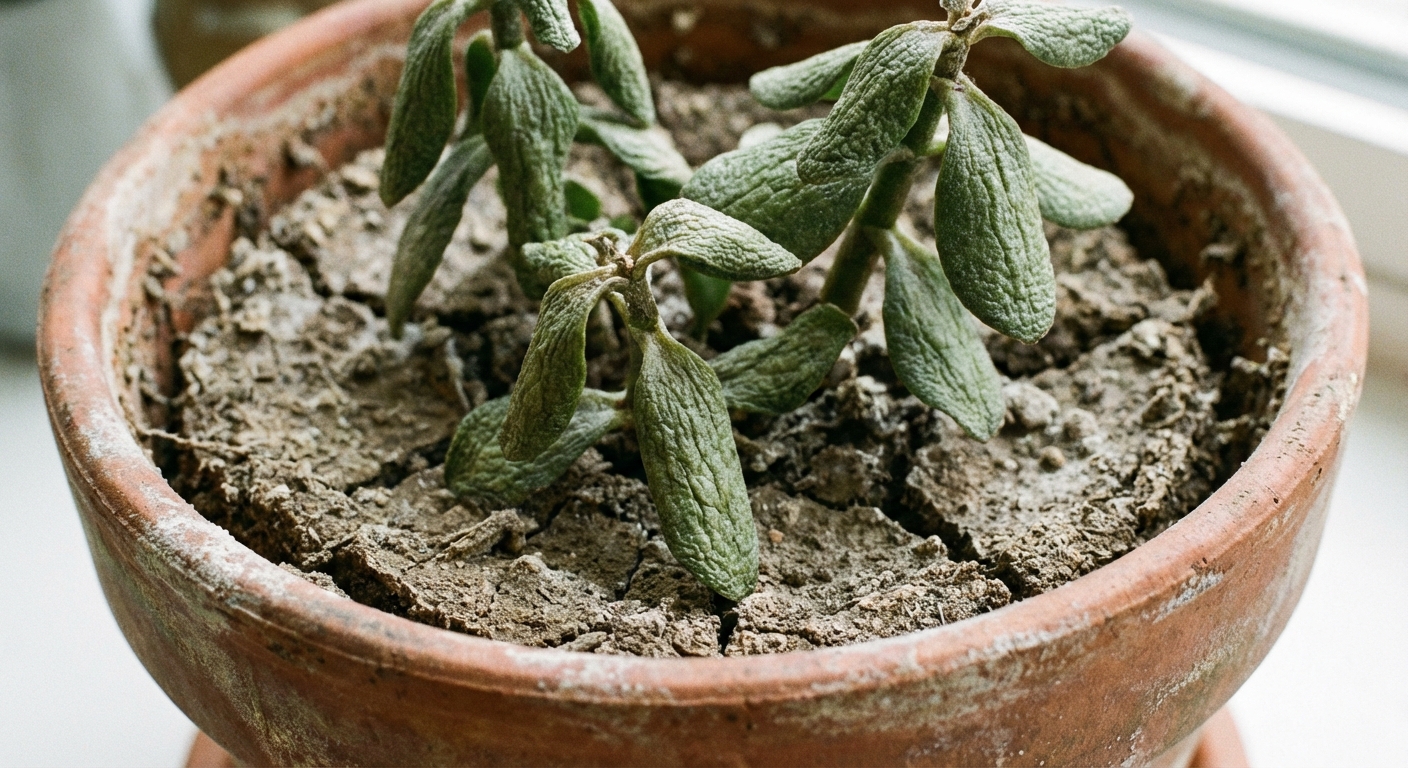
- Dropped leaves look wrinkled, thinner, or slightly shrunk
- Leaves on the plant may feel less plump
- Soil pulls away from the pot edges and feels dry deep down
- Lower leaves may yellow and drop after a long dry period
How to fix it
- Rehydrate slowly but thoroughly. Water until it runs out the drainage hole, then empty the saucer.
- Use the soak method if soil has become water-repellent: set the pot in a bowl of water for 10 to 20 minutes, then let it drain completely.
- Then wait. Do not water again until the mix is dry several inches down.
- Stabilize your routine. In bright light, you might water every 2 to 4 weeks. In winter or low light, it may be every 4 to 6 weeks or longer. Always confirm with a finger check, chopstick, or moisture meter.
Temperature shock and cold
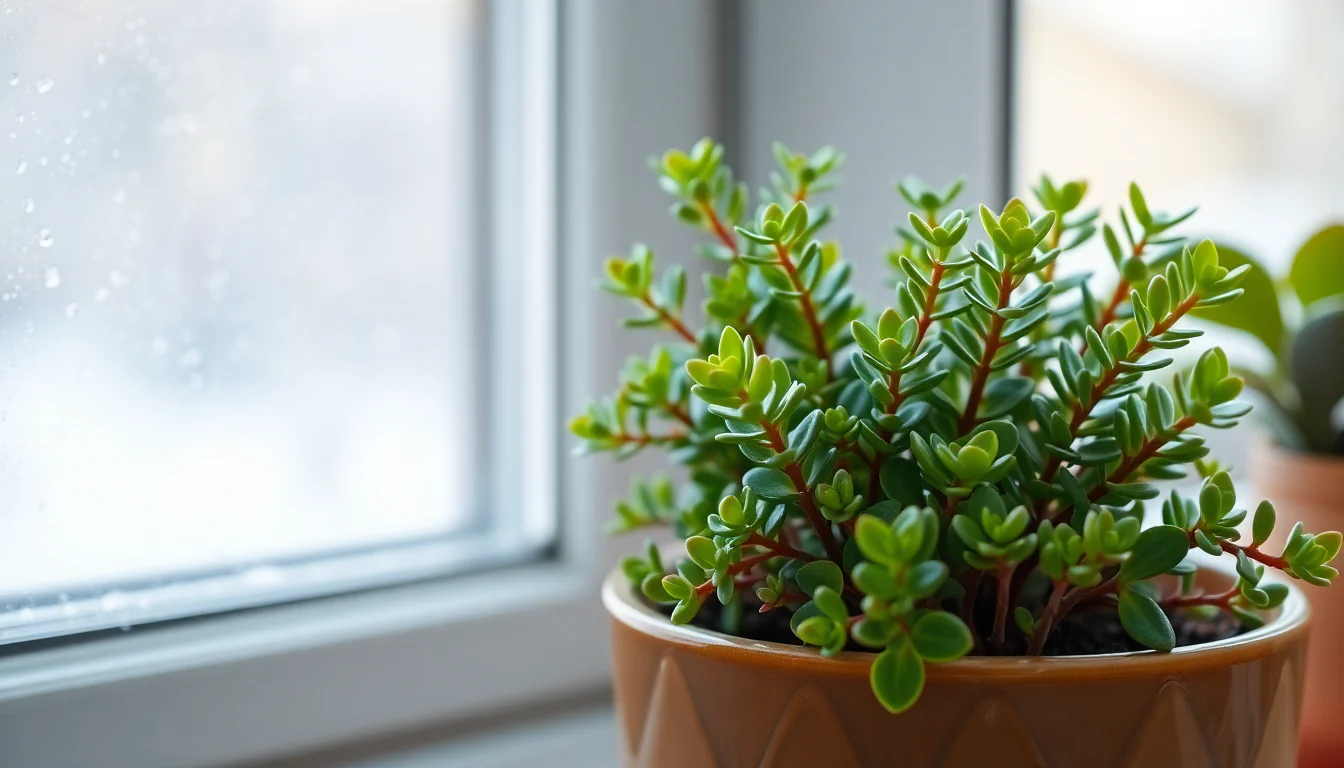
Jade plants dislike sudden temperature swings. A chilly night by a window, a blast from an AC vent, or a warm day followed by a cold draft can trigger leaf drop even if watering is perfect.
What it looks like
- Leaves drop soon after a cold event
- Some leaves may develop soft, darkened patches
- Growth may pause for a while
How to fix it
- Aim for a steady indoor range around 65 to 75°F when possible.
- Avoid prolonged time below 50°F, and protect it from near-freezing temperatures. Brief dips can be tolerated better when the soil is dry, but it is not something to test on purpose.
- Pull the plant back from cold glass at night, especially in winter.
- Avoid placing jade directly under heating or AC vents.
Drafts and harsh airflow
Fresh air is great. Constant drafts are not. Repeated drying wind from a door, fan, heater, or air conditioner can stress leaves and cause drop.
What it looks like
- Leaf drop is concentrated on the side facing the airflow
- Leaf edges may look slightly desiccated
- Soil dries unevenly and quickly
How to fix it
- Relocate the pot a few feet away from doors, vents, and fans.
- If you keep it near a window, make sure it is not in the direct path of cold air leaks.
Not enough light
Low light is a sneaky cause because the leaf drop can feel random. In dim conditions, jade cannot use water efficiently, stems stretch, and leaves may drop as the plant sheds what it cannot support.
What it looks like
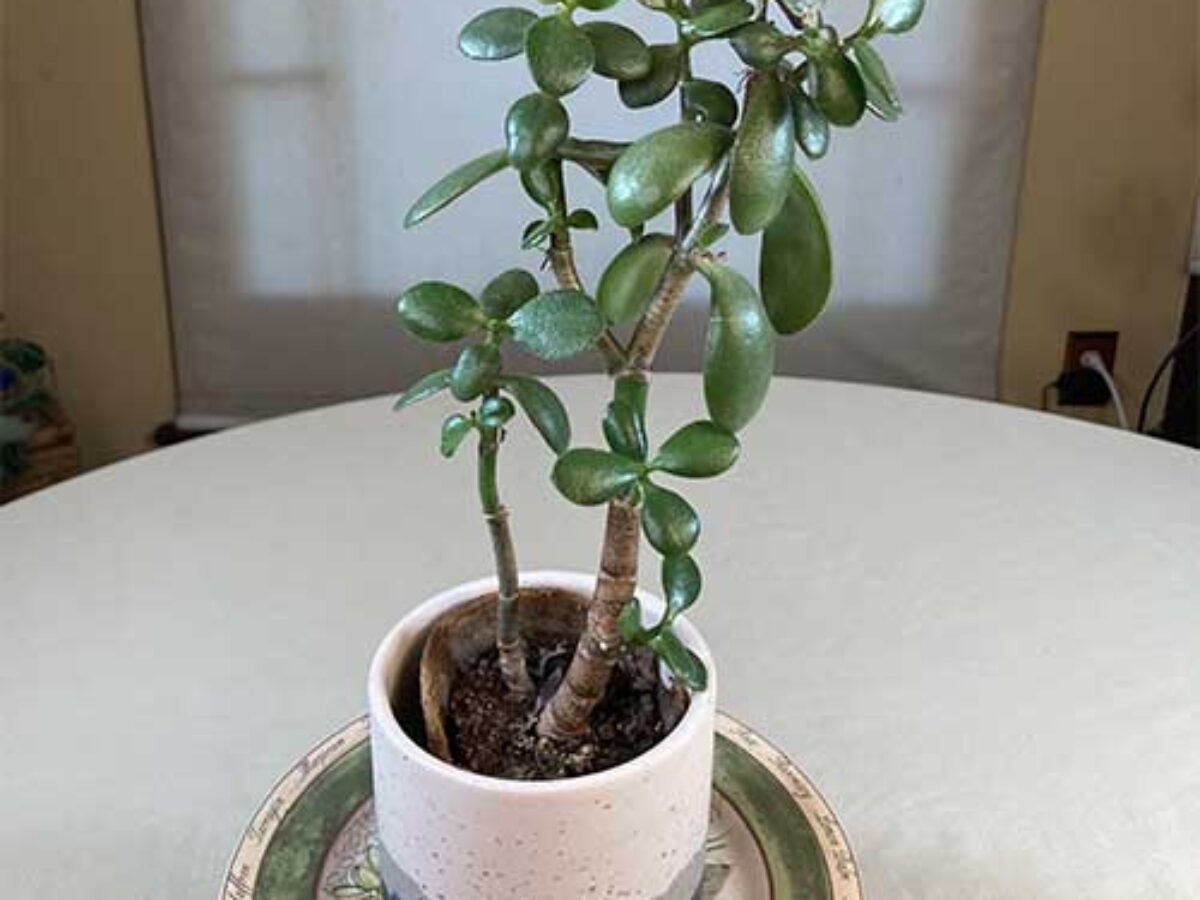
- Leggy growth with wider gaps between leaves
- Leaves are smaller and sometimes lighter green
- Soil stays wet longer than expected
- Leaf drop increases after watering
How to fix it
- Move to brighter light. An east or south window is ideal in many homes. West can work with a little acclimation.
- Acclimate slowly. Increase light over 1 to 2 weeks to prevent sunburn.
- Consider a grow light if you do not have a bright window. Aim for 10 to 12 hours daily.
- Adjust watering downward in low light. Less light means the soil must dry more fully between waterings.
If your jade has gotten very leggy, you can prune it once it is stable and in good light. Those cuttings can become new plants, which is my favorite kind of “oops.”
Too much sun (sunburn)
Bright light is good for jade. Sudden, direct hot sun is different. If you move a jade from low light to a blazing window without a slow transition, leaves can burn and later drop.
What it looks like
- Bleached, tan, or papery patches on leaves, often on the sun-facing side
- Scarring that does not turn green again
- Leaf drop after a recent move into stronger sun
How to fix it
- Move it back to bright, indirect light, then reintroduce direct sun gradually.
- Do not remove damaged leaves unless they are falling off on their own. The plant can still use them while it recovers.
Pests: mealybugs, scale, mites
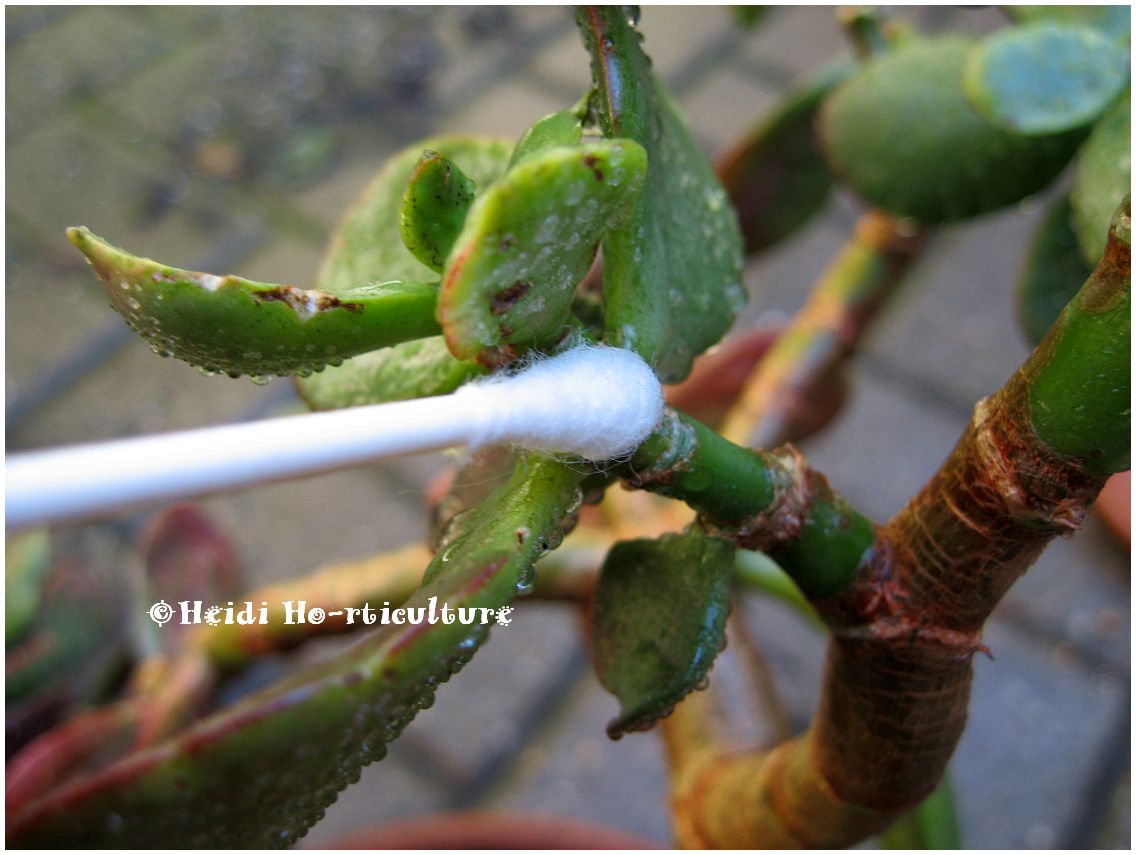
Mealybugs are the most common jade pest. They look like tiny bits of cotton tucked into leaf joints or along stems. Scale insects can look like small tan or brown bumps. Both suck sap, weaken the plant, and can cause leaves to yellow and drop.
What it looks like
- White, cottony clusters in leaf axils and stem creases (mealybugs)
- Brown or tan bumps that do not wipe away easily (scale)
- Sticky residue on leaves or nearby surfaces
- New growth looks weak or misshapen
- Leaf drop continues even when watering and light seem fine
How to fix it (organic-friendly)
- Isolate the plant from other houseplants.
- Manual removal: dab pests with a cotton swab dipped in 70% isopropyl alcohol. This dissolves their protective coating.
- Repeat weekly for several weeks. Hatch cycles vary, and consistency is what wins here.
- For heavier infestations: use insecticidal soap or horticultural oil, following the label, and keep the plant out of harsh sun until dry.
- Check hiding spots like pot rims, undersides of leaves, and stem forks.
If you see fine webbing and stippled leaf surfaces, check for spider mites. Treatment is similar: isolate, wash down, and repeat.
Repotting stress
Leaf drop after repotting is common, especially if roots were disturbed or the plant moved to a very different light level at the same time. Jades like change about as much as they like wet feet.
What it looks like
- Leaf drop starts within days to a couple of weeks after repotting
- Leaves may drop while still green
- The plant otherwise looks structurally fine (no mushy base, no pests)
How to fix it
- Keep it in bright, indirect light for about a week, then increase sun slowly if desired.
- If you repotted into fresh mix that is slightly moist, do not immediately water again. Let the mix dry down.
- Avoid fertilizer until you see new growth.
Soil and pot basics
If leaf drop keeps happening, the pot and mix are often the quiet culprits.
- Use a fast-draining mix: cactus/succulent soil cut with perlite or pumice (roughly 1:1) is a solid, simple option.
- Pick the right pot size: too large means too wet for too long. A jade generally prefers a pot only slightly larger than the root ball.
- Terracotta vs plastic: terracotta dries faster and is more forgiving for heavy waterers. Plastic holds moisture longer and can be fine in very bright light if you water carefully.
- Always use a drainage hole. If you love a decorative cachepot, keep the jade in a nursery pot inside it and dump runoff.
Normal lower leaf drop
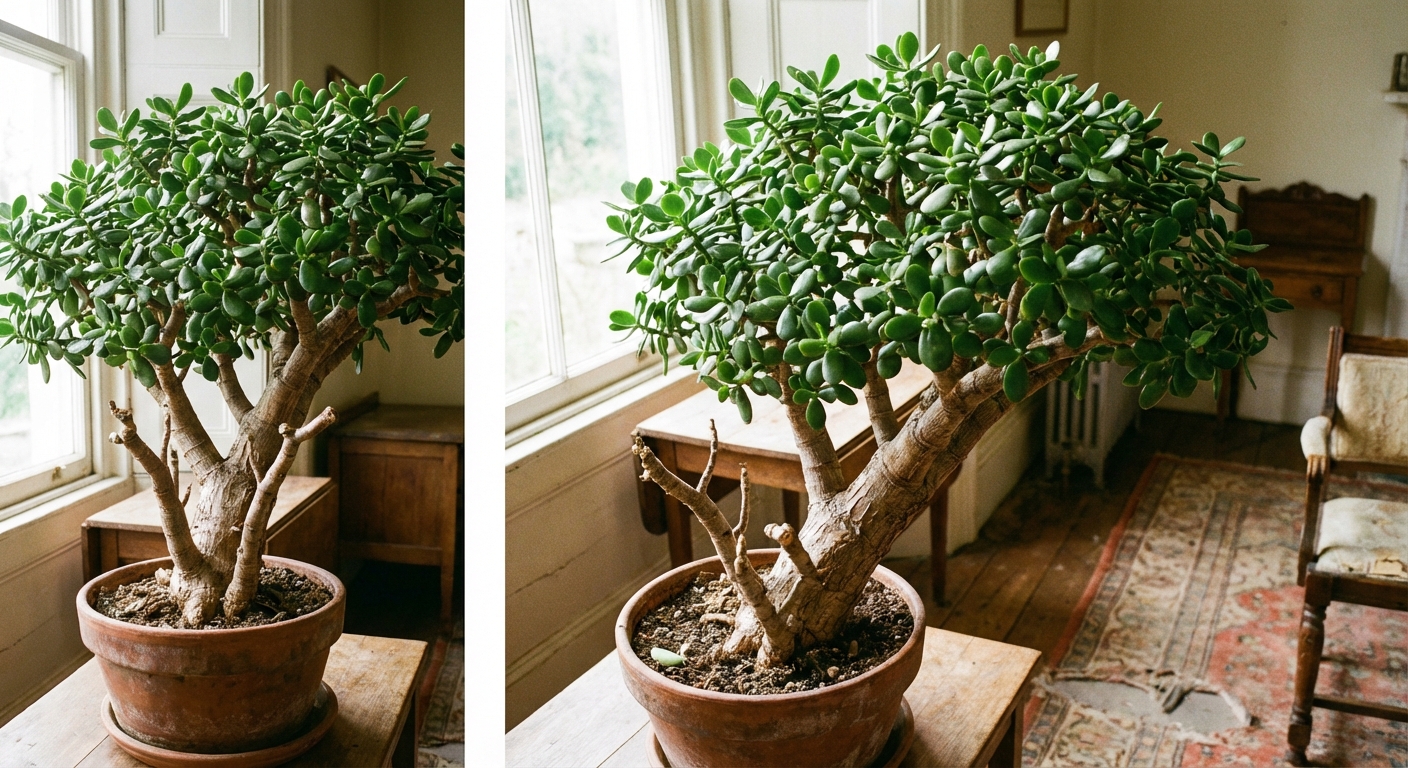
Sometimes jade leaf drop is not a crisis. As jades mature, they often shed older, lower leaves as stems thicken and the plant becomes more shrub-like. A few leaves dropping now and then, especially from the lowest layers, can be normal.
Signs it is normal
- Only a few older bottom leaves drop
- New growth at the tips looks healthy and firm
- No mushy stems, no pest signs, no rapid defoliation
What to do
- Do nothing beyond steady care.
- Remove fallen leaves from the soil surface to discourage fungus gnats and mold.
- If you want a fuller look, prune lightly in spring or early summer and root the cuttings.
Step-by-step recovery plan
If you are not sure which issue you have, this gentle reset works for most jades.
- Put it in bright light near a window, but avoid sudden harsh midday sun if it has been living in shade.
- Let the soil dry out well before watering again. Jades prefer a full dry-down.
- Confirm drainage and empty saucers after watering.
- Inspect for pests at stems and leaf joints.
- Hold off on fertilizer until you see steady new growth. Fertilizing a stressed plant can backfire.
Most jades stabilize within a few weeks once their environment is steady. They are slow growers, so patience pays.
FAQ
Why is my jade plant dropping green leaves?
Green leaves dropping usually points to overwatering, temperature change, draft stress, or repotting stress. Check soil moisture first. If the soil is wet, pause watering and improve drainage and light.
Will jade leaves grow back after dropping?
Dropped leaves do not reattach, but jade can grow new leaves from branch tips once conditions improve. If stems went bare, pruning in the growing season can encourage branching.
Should I remove leaves that are about to fall?
If a leaf is yellow and comes off with the gentlest touch, you can remove it. Avoid tugging firmly. Let the plant decide, especially while you troubleshoot.
Can I propagate the dropped leaves?
Often, yes. Let healthy dropped leaves callus for a few days, then place them on top of dry succulent mix in bright, indirect light. Avoid frequent misting, which can encourage rot. Once roots or tiny plantlets appear, water very sparingly (think light sips, not a soak) until the new plant is established.
When to worry
Act promptly if you see any of the following:
- Rapid leaf drop over days
- Mushy stem base or blackened, soft roots (possible rot)
- Active pest clusters spreading to other plants
- Foul smell from the potting mix
If you catch these early, jade plants are wonderfully forgiving. I have rescued jades that looked like sad little sticks, and a season later they were back to being glossy and sturdy, like nothing ever happened.
Pet note
Jade plants are considered mildly toxic to cats and dogs if chewed. If you have a curious pet, keep the plant out of reach or choose a pet-safe alternative.