
Why Is My Dracaena Turning Yellow?

Yellow leaves on a dracaena can feel like a personal insult. You were just trying to love it. The good news is that dracaenas are wonderfully forgiving once you pinpoint what is bothering them. Most yellowing comes down to a few repeat offenders: tap-water additives and salts (especially fluoride), overwatering, low humidity, natural aging, too much direct sun, temperature stress, underwatering, or a nutrition gap.
Let’s walk through the likely causes in the order I see them most often, with simple checks you can do right now.
Quick note: Symptoms can vary a bit by species (Dracaena marginata, fragrans, etc.), but the fixes below cover the usual culprits.
Quick check: which leaves are yellow?
Before you change anything, look closely at where the yellowing is happening. This little detail is the fastest shortcut to the right fix.
- Only the lowest, oldest leaves are yellowing slowly: often normal shedding, mild light adjustment, or occasional underwatering.
- Many leaves yellowing at once, especially newer growth: often overwatering/root stress, water quality, temperature stress, or a nutrient issue.
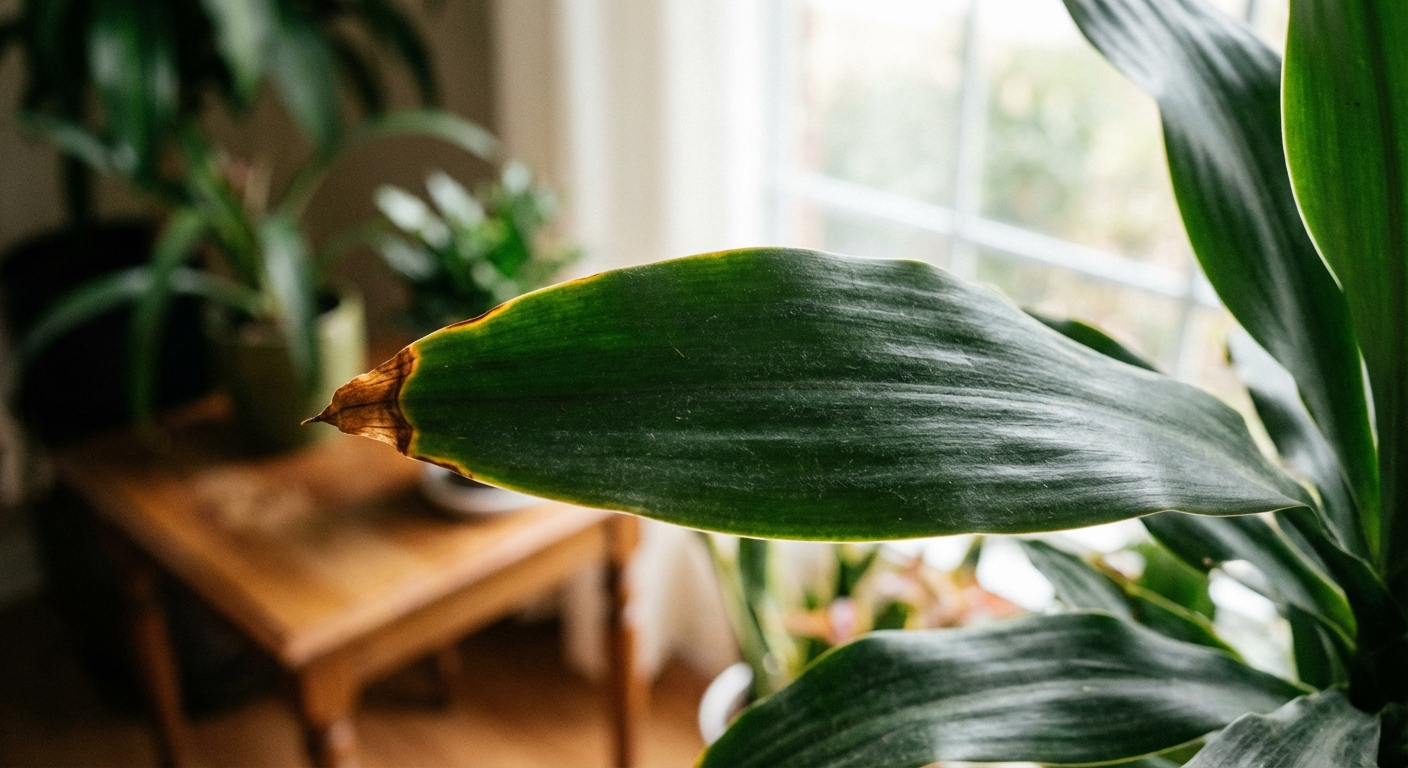
- Yellow with brown tips or edges: commonly fluoride or salt buildup, low humidity, inconsistent watering, or too much fertilizer.
- Pale, washed-out yellow patches on the side facing the window: too much direct sun.
1) Overwatering (root stress)
Overwatering is one of the most common reasons dracaena leaves turn yellow. Dracaenas like a rhythm: a thorough drink, then a partial dry-down. If the soil stays wet for too long, roots cannot get enough oxygen. Stressed roots struggle to deliver water and nutrients, and the plant responds with yellow leaves that may feel soft or limp.
Signs it is overwatering
- Soil feels damp several days after watering.
- The pot is heavy and slow to dry.
- Lower leaves yellow, and some may drop.
- A musty smell from the potting mix, or fungus gnats hovering.
What to do
- Pause watering until the mix has dried appropriately for your pot size: small pots (4 to 6 inch) should dry about the top half; larger pots can dry 2 to 3 inches down. A chopstick test (push in, pull out, feel for dampness) works great.
- Check that the pot has a drainage hole. If it does not, repot.
- If the mix is dense or stays wet, repot into a chunkier, faster-draining blend. I like a quality indoor potting mix plus orchid bark and perlite for extra air.
- If you suspect root rot (sour smell, black mushy roots), trim damaged roots and repot into fresh mix.
Quick note: A dracaena would rather be a little dry than a little swampy. If you are stuck between “should I water?” and “maybe wait,” waiting usually wins.
2) Tap water issues (fluoride and salts)
Dracaenas can be picky about what is in their water. Many municipal water supplies contain fluoride, and hard water and fertilizer can add extra salts. In sensitive plants, this can show up as browning tips, tan patches, and sometimes a slow creep of yellowing along the leaf edges. It is not always the main cause, but it is a very common compounding stressor, especially if your water is hard or fluoridated.
Signs it is water quality
- Leaf tips turn brown first, then yellowing creeps in.
- There is a white crust on the soil surface or pot rim.
- Yellowing appears even though the soil is not staying soggy.
- You fertilize regularly and light seems fine, but the plant still looks a bit stressed.
What to do
- Try filtered, distilled, or reverse osmosis water. For fluoride-sensitive dracaenas, this can be one of the most impactful changes you can make.
- When you water, flush the pot: water thoroughly until it drains freely to help wash out accumulated salts.
- If your pot has a saucer, empty it so the plant is not reabsorbing mineral-heavy runoff.
If you only take one tip from this page, make it this: if your dracaena keeps getting brown tips and yellow edges, test a switch to filtered or distilled water for a few weeks and see if new growth improves.
3) Underwatering (or irregular watering)
Underwatering is the quieter cousin of overwatering, and it can also lead to yellow leaves, especially on the lower part of the plant. If a dracaena dries out too hard too often, it may sacrifice older leaves first. Irregular watering (swinging between bone-dry and soaked) can create the same look.
Signs it is underwatering
- Soil pulls away from the pot edges or feels very dry throughout.
- Leaves feel a bit thin, papery, or curl slightly.
- Water runs straight through the pot quickly because the mix is too dry to absorb at first.
What to do
- Water slowly and thoroughly until it drains. If the mix is hydrophobic (water beads and runs through), water once, wait 10 minutes, then water again.
- Aim for consistency: water when the mix is dry to the depth that matches your pot size (see the overwatering section).
4) Low humidity
Most dracaenas tolerate average home humidity, but when air gets very dry, leaves can yellow gradually and develop crisp edges or tips. Indoor heating is usually the culprit.
Signs it is humidity stress
- Brown, crispy tips along with yellowing.
- Yellowing is worse in winter or near heating vents.
- Soil moisture seems fine, but leaf edges keep degrading.
What to do
- Move the plant away from heaters, radiators, and forced-air vents.
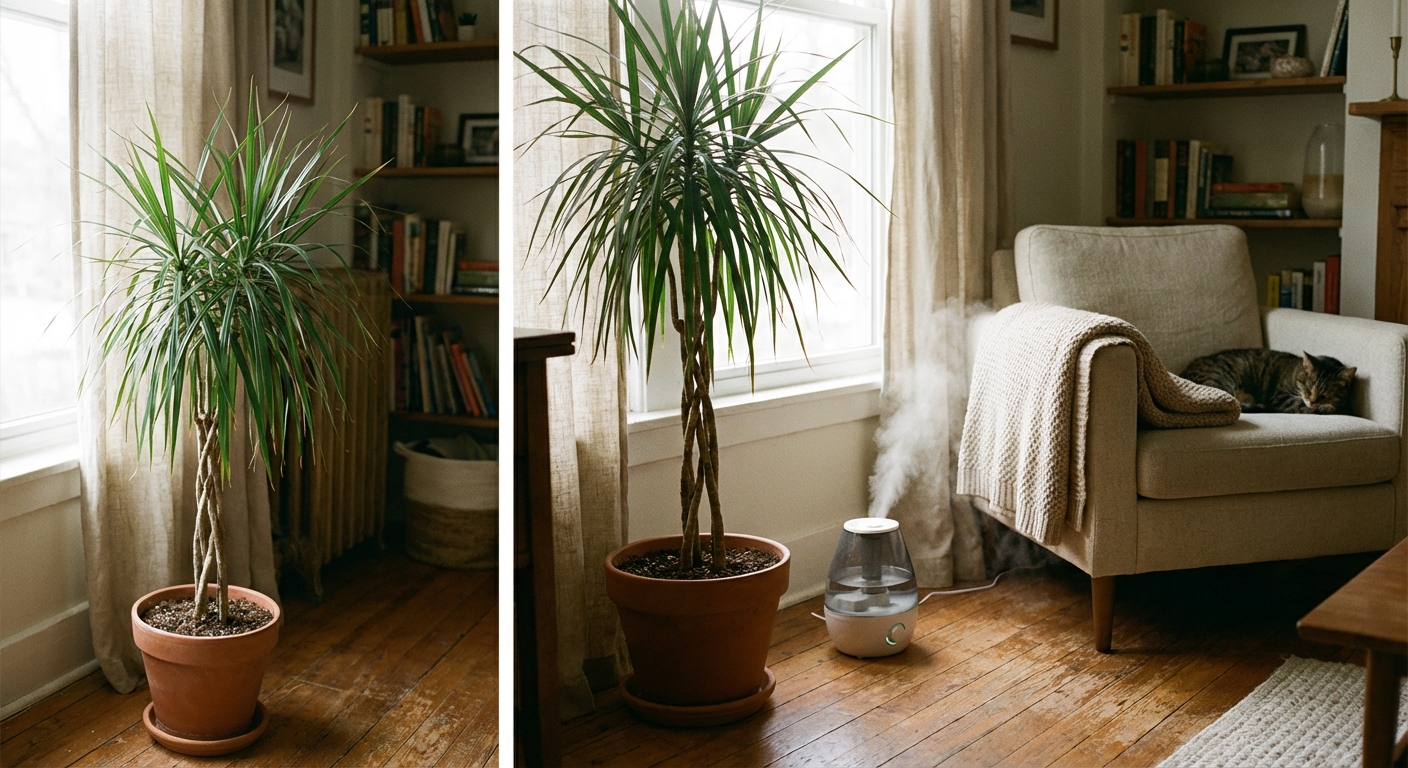
- Run a small humidifier nearby, aiming for 40 to 60% if you can.
- Group plants together to create a slightly more humid microclimate.
5) Natural leaf aging
If your dracaena is otherwise growing and the yellowing is limited to the lowest leaves, you might be seeing normal leaf turnover. Dracaenas grow from the top. As they put energy into new growth, older leaves at the bottom slowly fade, yellow, and drop.
How to tell it is normal
- Only one or two lower leaves yellow at a time.
- The rest of the plant looks sturdy and green.
- New leaves are emerging at the crown or growing points.
What to do
- Let the yellow leaf fully fade, then gently pull it away, or snip it off with clean scissors.
- Do a quick care check anyway: light, watering, and water quality. Normal shedding can be faster if conditions are slightly off.
6) Too much direct sun
Dracaenas love bright light, but they prefer it indirect. Strong direct sun can bleach leaves, creating pale yellow areas, especially on the side facing the window. Some spots may later dry into tan or brown patches.
Signs it is too much sun
- Yellowing is strongest on the window-facing side.
- Leaf color looks washed out, not just older leaves fading.
- Dry patches appear after a very sunny day.
What to do
- Move the plant back a few feet from the window, or use a sheer curtain to soften the light.
- Rotate the pot every week or two for even exposure.
7) Temperature stress and drafts
Cold drafts, hot blasts from heating, or sitting right against a chilly window can trigger yellowing and leaf drop. Dracaenas like stable conditions more than they like “perfect” conditions.
Signs it is temperature stress
- Yellowing shows up shortly after a cold snap or heat wave.
- The plant sits near an exterior door, AC unit, radiator, or drafty window.
- Leaves drop more quickly than usual.
What to do
- Move the plant away from drafty spots and direct airflow.
- Aim for steady room temperatures and avoid sudden swings.
8) Nutrition and tired soil
Dracaenas do not need heavy feeding, but they do appreciate gentle nutrition during active growth. If a plant has been in the same pot for a long time, the mix can become depleted or compacted. That can lead to overall yellowing or weak, smaller new leaves. That said, yellowing is more often watering, light, or root-related, so fix those first.
Signs it might be nutrition
- Slow growth during the growing season (spring and summer).
- New leaves look smaller or paler than older ones.
- You have not fertilized in 6 to 12 months, and the plant has been in the same pot for years.
What to do
- If the plant is stressed (active yellowing, soggy soil, recent move), skip fertilizer for now. Correct watering and light first.
- During spring and summer, feed with a balanced houseplant fertilizer at half strength every 4 to 6 weeks.
- Fresh potting mix often contains nutrients already, so if you just repotted, wait a bit before fertilizing.
- Avoid overfertilizing, which can cause tip burn and additional yellowing.
Tip for fluoride-sensitive plants: Fertilizer salts can build up in soil. If you fertilize, flush the pot with filtered or distilled water occasionally to prevent accumulation.
Quick check: rootbound?
A rootbound dracaena can dry too fast, yellow, and generally look cranky. It is easy to miss because it can mimic underwatering.
Signs it is rootbound
- Roots circling the bottom or poking out of drainage holes.
- Water rushes through quickly and the plant needs watering unusually often.
- The plant feels top-heavy or the soil seems to be “all roots” and not much mix.
What to do
- Repot one size up, or refresh the mix in the same pot if you want to keep it compact.
Rescue plan
If you are not sure which cause fits, this is my simple order of operations. It fixes the biggest issues first without shocking your plant.
- Check moisture at the right depth for your pot size. If it is wet, wait. If it is bone-dry, water thoroughly.
- Confirm drainage and empty any saucer after watering.
- Move to bright, indirect light, not harsh sun.
- Stabilize the environment: keep it out of drafts, away from vents, and off cold windowsills.
- Switch to filtered or distilled water if you suspect fluoride, hard water, or salt buildup (brown tips, crusty soil, yellow edges).
- Boost humidity slightly if your home is dry.
- Feed lightly only in spring and summer, and only once the plant is stable.
Then give it a little time. Dracaenas recover slowly but steadily, and new growth is the best sign you are back on track.
Should you cut yellow leaves?
Yes, with a small caveat. A leaf that is more yellow than green will not turn green again. You can:
- Remove the whole leaf once it is mostly yellow, pulling gently downward, or snipping close to the cane with clean scissors.
- Trim only brown tips for appearance, following the natural shape of the leaf.
Try not to remove lots of leaves at once. I prefer to take a few, then let the plant photosynthesize and recover.
When yellowing is serious
Sometimes yellowing is your plant waving a bigger flag. Consider a deeper investigation if you notice:
- Yellow leaves plus soft, mushy stems or a sour smell from the soil.
- Rapid leaf drop across the plant.
- Sticky residue on leaves or visible pests like scale or spider mites.
If that sounds like your dracaena, it is worth unpotting to check roots and inspecting leaves closely. Catching issues early is half the battle.
FAQ
How long does it take a dracaena to recover?
Once conditions are corrected, you will usually see improvement in new growth within a few weeks to a couple of months. Existing yellow leaves will not green up again.
Can I use tap water if I let it sit out overnight?
Letting water sit helps chlorine dissipate, but it does not reliably remove fluoride. For dracaena, filtered, distilled, or reverse osmosis water is the safer bet.
How often should I water dracaena?
Water when the mix has dried appropriately for your pot size. In many homes that is every 1 to 3 weeks, depending on light, pot size, and season. When in doubt, test with a finger or chopstick instead of watering by the calendar.
Is dracaena toxic to pets?
Yes. Dracaena is toxic to cats and dogs if chewed. If you have a curious pet, place the plant out of reach or choose a pet-safe alternative.