
Why Is My Boston Fern Turning Brown?

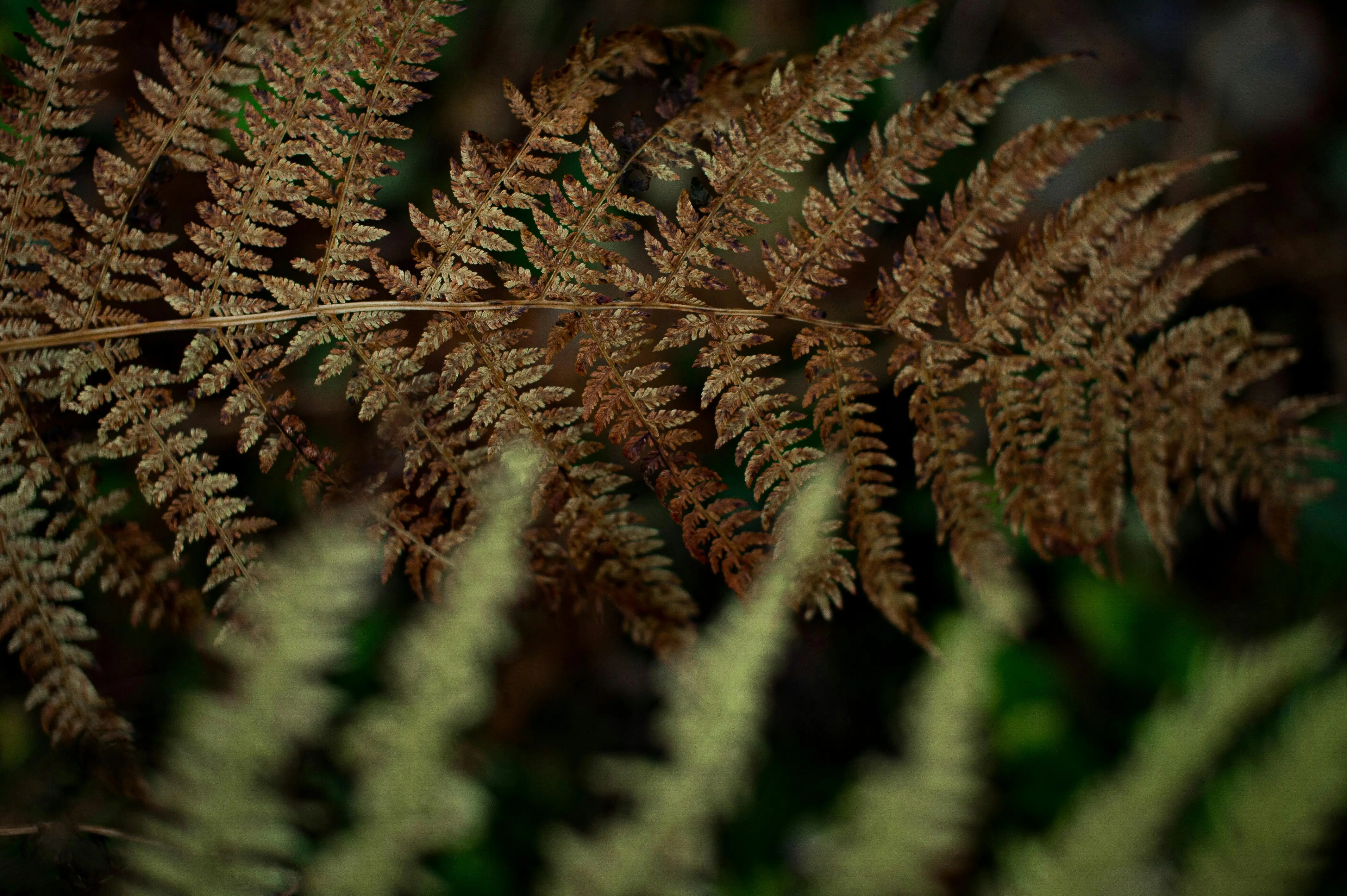
Boston ferns have a way of looking lush one week and then suddenly showing off crunchy brown tips the next. If yours is turning brown, you are not alone and you are not a bad plant parent. Ferns are just honest about their comfort level.
The trick is separating normal frond aging from stress signals like underwatering, dry indoor air, salt buildup, and sun scorch. Once you know which one you are dealing with, the fix is usually simple.

First, identify what kind of brown you are seeing
Look closely at a frond. The pattern tells you the story.
- Brown tips on many fronds: often dry air, inconsistent watering, or mineral salts.
- Whole fronds turning tan then crisp: underwatering, hot drafts, or too much sun.
- Brown, bleached, or papery patches: sun scorch.
- Older fronds browning from the base: normal aging, especially if you see new growth in the center.
- Brown plus yellowing and a musty smell: overwatering or poor drainage can be involved, even if the tips look dry.
If you can, check two things right now: the soil moisture and your humidity.
- Soil test: stick a finger 1 to 2 inches deep. If it is dry down there, underwatering is likely. If it is soggy and smells sour, drainage is the issue.
- Humidity check: if your home is typically under about 40% humidity, a Boston fern will often brown at the tips. Many look their best around 50% to 60%.
Cause 1: Underwatering or inconsistent watering
Boston ferns like evenly moist soil. Not swampy, not bone dry. When they dry out too far, the fine roots shut down and the fronds crisp quickly, especially at the ends.
Clues it is underwatering
- Soil pulls away from the pot edge or feels dry 1 inch down.
- Fronds feel brittle and lightweight, not just discolored.
- Plant perks up a little within a day after a thorough watering.
Fix it
- Rehydrate deeply: water slowly with room-temperature water until it runs from the drainage holes, then let it drain completely. If the soil is hydrophobic and water runs straight through, bottom water for 20 to 30 minutes, then drain.
- Reset the rhythm: aim for consistently moist soil. In active growth (spring through early fall), most indoor ferns need water when the top 1 inch is dry.
- Use the right pot: a pot with drainage holes is non-negotiable.
A low-stress method is a quick touch test every few days. Ferns are not “water once a week” plants, especially in heated or air-conditioned rooms.
Indoor vs porch watering schedules
These are starting points, not strict rules. Temperature, light, pot size, potting mix, and airflow change everything.
Indoor Boston ferns
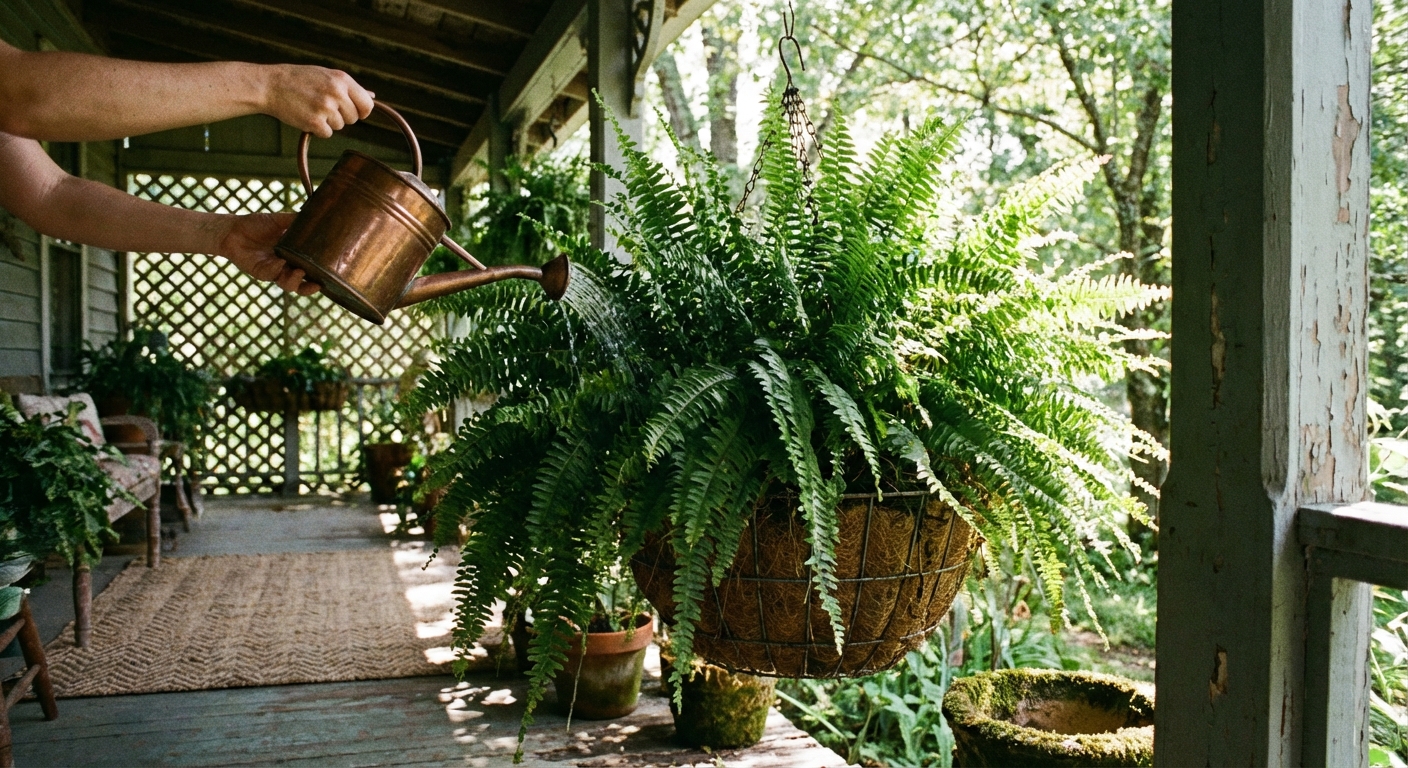
- Spring and summer: check every 2 to 3 days. Water when the top 1 inch feels just barely dry. Often this is 1 to 2 times per week.
- Fall and winter: check weekly. Water when the top 1 to 2 inches are dry. Often every 7 to 12 days if growth slows.
Porch or outdoor shaded ferns (covered porch, bright shade)
- Warm months: check daily in hot weather. Many porch ferns need water 3 to 5 times per week, sometimes daily during heat waves or windy stretches.
- Cooler weather: reduce as temperatures drop, but do not let the root ball fully dry.
If your porch fern is in a hanging basket, assume it dries faster than a floor pot. Wind is sneaky like that.
Cause 2: Dry indoor air (low humidity)
Boston ferns are humidity lovers. In many homes, especially in winter, humidity drops low enough that frond tips dry out even when the soil is fine.
Clues it is dry air
- Brown tips appear even though you are watering appropriately.
- Edges look crisp but the rest of the frond stays green.
- Plant sits near a heat vent, radiator, fireplace, or air conditioner.
Fix it
- Aim for about 50% to 60% humidity for best looks. Boston ferns can survive lower, but browning is common when homes sit around 40% or below.
- Use a small humidifier near the plant. This is the most reliable solution.
- Group plants together to create a little humid microclimate.
- Move it away from drafts and direct heat sources.
About misting: it feels nice, but it is usually short-lived. Think of misting as a quick refresh, not a real humidity plan.
Cause 3: Salt buildup from fertilizer or hard tap water
Those classic brown tips can also come from mineral salts accumulating in the potting mix. Boston ferns are sensitive to buildup, especially if you fertilize often or have hard water.
Clues it is salt buildup
- White crust on the soil surface or pot rim.
- Tip burn that keeps returning even after humidity improves.
- You fertilize more than once a month in the growing season.
Fix it
- Flush the soil: take the pot to a sink or shower. Slowly run room-temperature water through the soil equal to about 2 to 4 times the pot’s volume (or until you see a steady stream draining freely for a minute or two). Let it drain completely. If you have hard water or fertilize regularly, flushing about every 4 to 8 weeks often helps.
- Switch water: use rainwater, distilled, or filtered water when you can.
- Fertilize lightly: during spring and summer, use a balanced houseplant fertilizer at 1/4 to 1/2 strength about every 4 weeks. Skip feeding in winter for most indoor ferns.
If the potting mix is old, compacted, or always crusty, a refresh can help. Repot in spring into fresh, airy mix that holds moisture but drains well. Also note that a root-bound fern can dry out fast, so check whether roots are circling the pot.
Cause 4: Sun scorch
Boston ferns want bright, indirect light. Direct sun, especially afternoon sun, can scorch fronds fast.
Clues it is sun scorch
- Brown or tan patches that look bleached or papery.
- Damage appears on the side facing the window or the sun.
- Happens after moving the plant outdoors or to a brighter spot.
Fix it
- Move to bright shade: near an east window, or a few feet back from a south or west window with a sheer curtain.
- Acclimate porch ferns: if moving outdoors, start in deep shade for a week, then gradually increase brightness.
Sun-scorched tissue will not turn green again, but your plant can grow fresh fronds once the light is corrected.
Cause 5: Normal frond aging (yes, some browning is healthy)
Boston ferns constantly replace older fronds. Older ones often brown from the base or fade, especially when new growth is coming in.
Clues it is normal
- Browning is mostly on older, outer fronds.
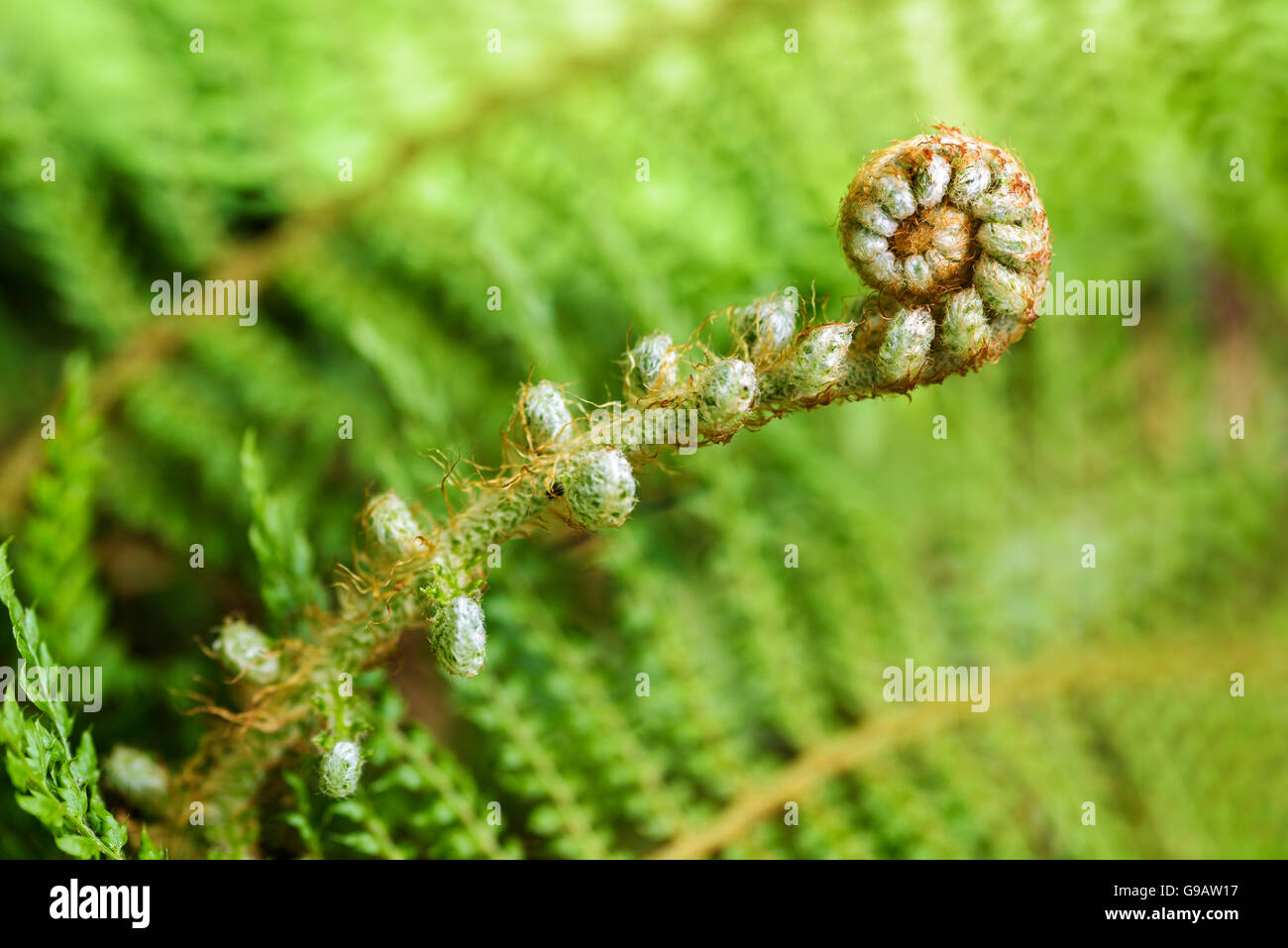
- The center crown looks firm and you see new little curls emerging.
- Overall plant still looks reasonably full and green.
What those curls are (and why they matter)
New fern fronds emerge as tight spirals called croziers or “fiddleheads.” When you see croziers, your fern is actively replacing what it sheds. That is your green light to be patient with minor browning and focus on steady care.
Should you trim the brown fronds or wait?
Trimming can make a fern look better fast, but timing matters. You want to remove what is truly spent without stealing the plant’s ability to photosynthesize.
Trim lightly when
- Only the tips are brown: snip just the brown portion, following the natural shape of the leaflet edges.
- A frond is mostly green: leave it, even if it is imperfect. It is still feeding the plant.
Trim heavily when
- A frond is more than 50% brown or fully crispy.
- You have corrected the issue (watering, humidity, light), and the damaged fronds are not improving.
Where to cut
- For whole fronds: cut the stem near the soil line, without tearing the crown.
- For tip browning: use clean scissors and only remove the dead ends.
If your fern is struggling and you see new croziers, you can trim the worst fronds to make room and light for new growth. If you do not see new growth, go slower. Fix the environment first, then prune.
A quick rescue plan for a browning Boston fern
If you are not sure which cause is the main culprit, this gentle reset covers the most common problems without shocking the plant.
- Check moisture: water deeply with room-temperature water if the root ball is dry. Let it drain fully.
- Check placement: move to bright, indirect light and away from vents.
- Boost humidity: target around 50% to 60% with a humidifier if possible.
- Flush salts: run water through the soil (about 2 to 4 times the pot volume) if you see crust or fertilize regularly.
- Trim thoughtfully: remove fully brown fronds, tidy tips, and then wait for new croziers.
When browning means a bigger issue
Most browning is environmental, but a few red flags suggest you should investigate further.
- Constantly wet soil and yellowing fronds: possible root rot. As a first step, let the top couple of inches dry and confirm drainage holes are clear. If the pot stays wet, or the roots smell foul or look dark and mushy, do not rely on drying alone. Inspect the roots and repot sooner into fresh, airy mix, trimming any rotten roots.
- Fine webbing or stippled, dull fronds: spider mites love dry air. Rinse the plant thoroughly and treat with insecticidal soap if needed.
- Sudden collapse after cold exposure: porch ferns can brown quickly after a chill. For best growth, protect from temps below about 55 to 60°F (13 to 16°C), especially if the plant is not acclimated.
If you want a simple rule to remember: consistent moisture plus higher humidity fixes most Boston fern browning.
FAQ
- Will brown tips turn green again? No. Once tissue is brown and crispy, it will not recover. The win is stopping the cause so new growth comes in healthy.
- Why do overwatered ferns sometimes look dry? Damaged roots cannot move water well, so fronds can brown even while the soil is wet. When symptoms are confusing, check the roots and drainage.