
Why Is My Aloe Plant Turning Brown?

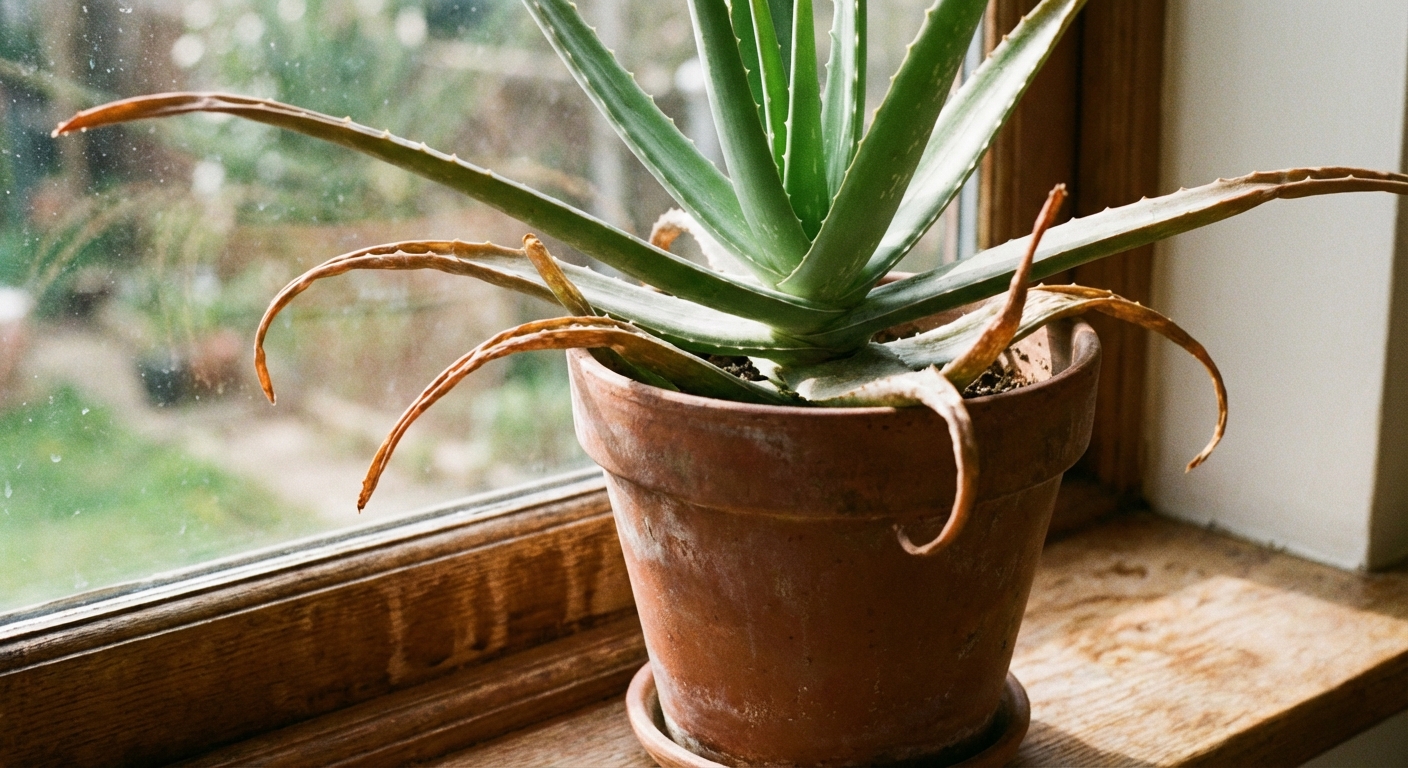
Aloe is the kind of plant that makes you feel like you have your life together. It sits there quietly, storing its own water, looking sculptural and calm. So when those plump green leaves start turning brown, it can feel personal.
The good news is that browning aloe is usually a very fixable care mismatch, not a mysterious curse. Below, I will help you diagnose the most common culprits and give you exact steps to get your plant back on track.
Quick diagnosis: what kind of brown are you seeing?
Before you change anything, take 30 seconds to look closely. Aloe browning patterns are surprisingly distinct.
- Crispy brown patches on the side facing the window or outdoors sun: usually sunburn.
- Whole leaf turning amber, translucent, or mushy at the base: overwatering or rot.
- Brown, soft, collapsing leaves plus a sour smell: root rot.
- Water-soaked spots that later turn tan or brown after a cold night: cold damage.
- Brown tips soon after feeding, white crust on soil: fertilizer or salt burn.
If more than one seems to fit, that is normal. For example, an overwatered aloe often gets sunburn more easily because its tissues are already stressed.
Cause 1: Sunburn (too much direct sun too fast)
Aloe loves bright light, but it hates being tossed from low light into intense sun without a transition. Sunburn is especially common when you move an aloe outdoors in spring, or when you set it into a west-facing window after it lived in softer light.
Sun stress vs sunburn
Sun stress is when the plant turns bronze, reddish, or purple-ish but stays plump and firm. That color shift is protective pigment, and it can fade back toward green once you move the plant to slightly gentler light.
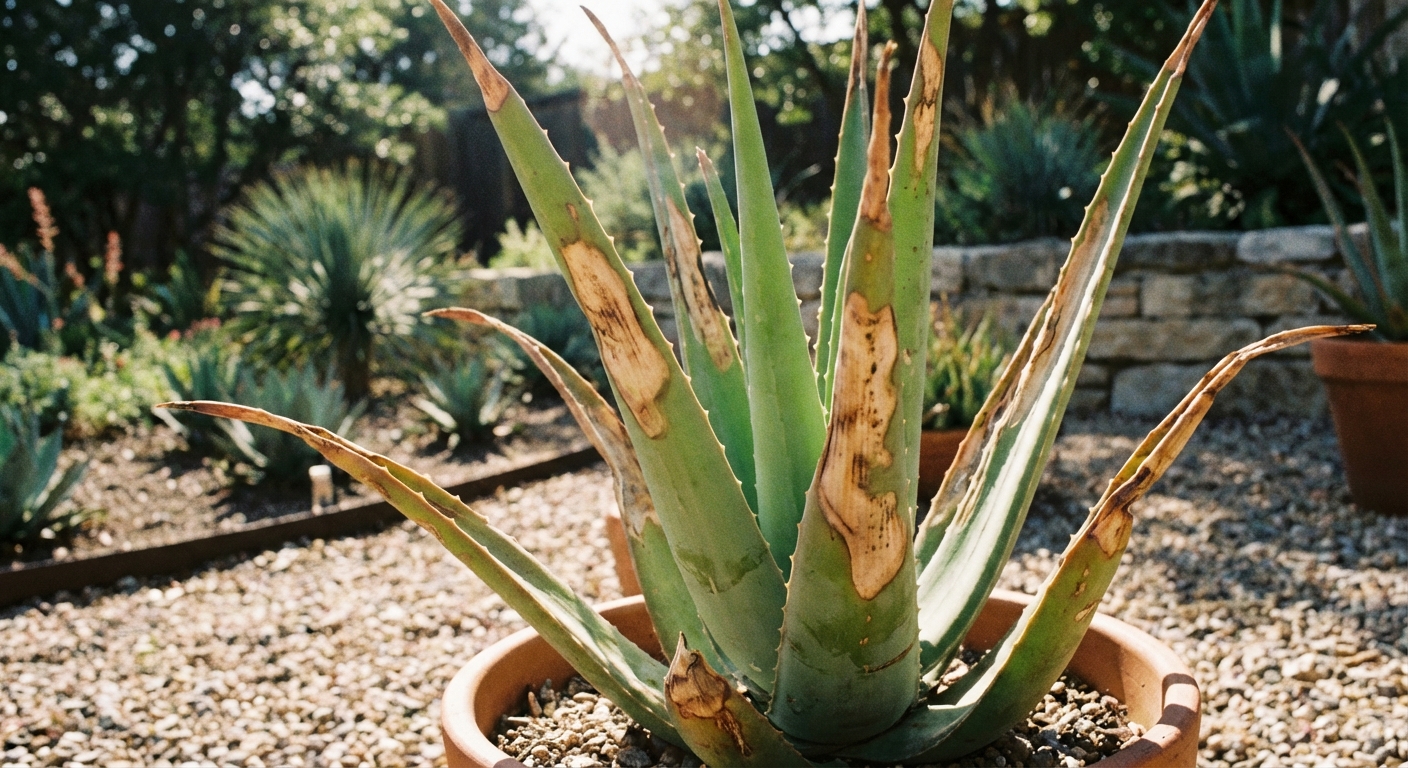
Sunburn is actual tissue damage. It shows up as bleached, tan, or brown patches that feel dry or papery. Those spots scar and do not turn green again.
What it looks like
- Brown, tan, or rusty patches on the sun-facing side
- Leaves may look bleached, dull, or bronzed before they turn brown
- Tissue feels dry or papery where burned
Fix it
- Move to bright but filtered light for 1 to 2 weeks. Think: sheer curtain, a few feet back from a hot window, or dappled shade outside.
- Do not cut off lightly burned leaves right away. Aloe can still use partially damaged leaves for stored water and energy.
- Water correctly (see the overwatering section). A sunburned aloe does not necessarily need more water, and extra water can backfire.
Will the brown parts turn green again?
No. Burned tissue stays scarred. (If your plant is simply bronzed or reddish but still plump, that is sun stress, and that coloring can fade back to greener tones.) Your goal is healthy new growth in the center, and over time you can remove the worst leaves once the plant has recovered.
Prevent it
- Acclimate slowly. Increase direct sun by 30 to 60 minutes every few days.
- Aim for morning sun if possible. Harsh afternoon sun is where many aloes get toasted.
- Rotate the pot weekly so one side is not constantly frying.
Cause 2: Overwatering (the most common reason)
Aloe is a succulent, which means it is built to survive drought, not frequent sips. When it stays wet, the roots cannot breathe. The leaves often turn brown from the base upward, or they turn a dull amber color first.
What it looks like
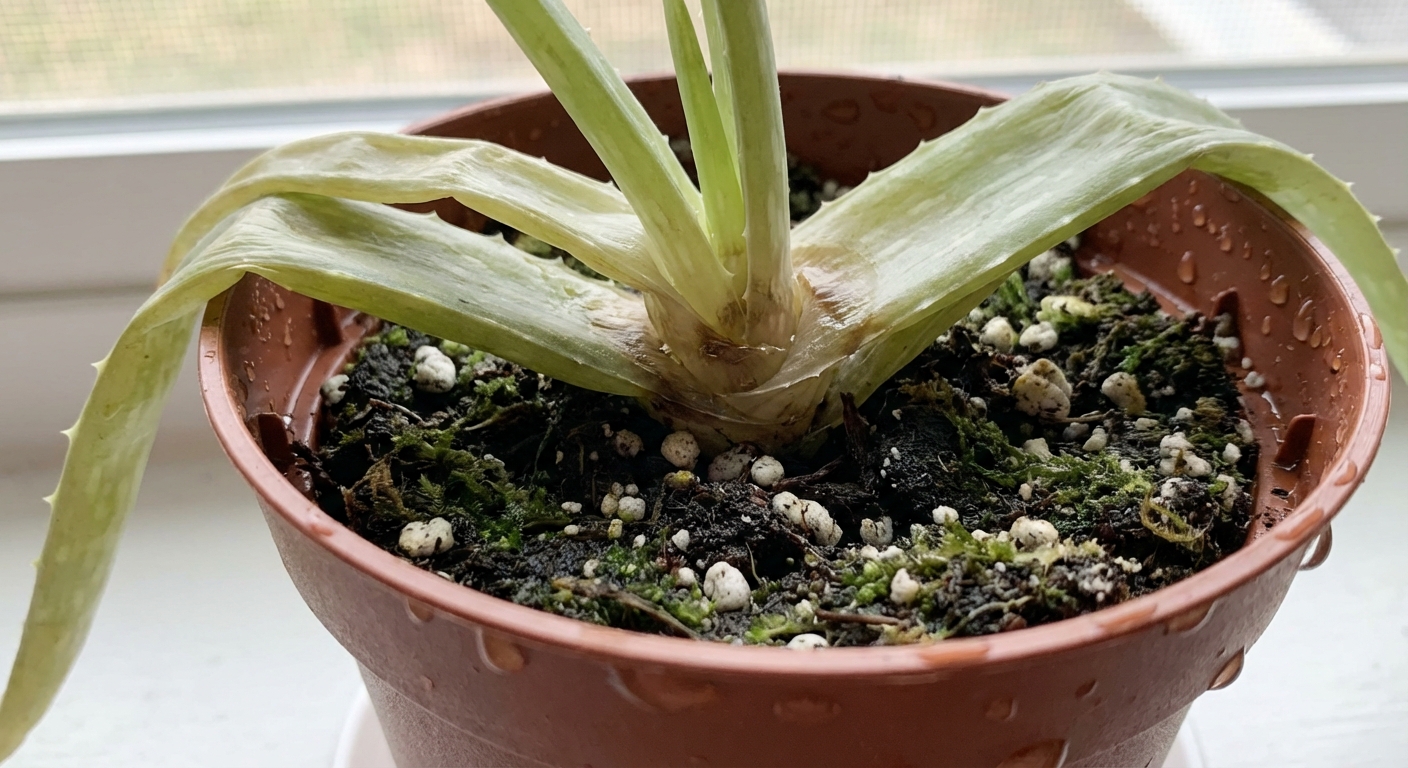
- Leaves feel soft, heavy, or a little jelly-like
- Brown or darkened areas starting near the base
- Leaves may droop or slump instead of staying upright
Fix it
- Stop watering until the potting mix is dry deep down.
- Check drainage. The pot must have a drainage hole. If it does not, repot.
- Right-size the pot. A small aloe in a big pot is a classic overwatering trap because extra soil stays wet for too long. Choose a pot that is just a bit wider than the root ball (often 1 to 2 inches wider).
- Use a wet-dry cycle. Water only when the mix is mostly dry. In a 4 to 6 inch pot, that often means letting it dry almost completely.
How to water aloe (calm, consistent, and effective)
- Use your finger or a chopstick to test dryness near the root zone.
- When dry, water thoroughly until it runs out the bottom.
- Empty any saucer. No standing water.
Prevent it
- Use a gritty succulent mix or amend potting soil with pumice or perlite (more on that below).
- Match watering to seasons. Aloe often needs much less water in winter.
- Do not mist. Misting does not help aloe and can encourage spotting and rot.
Cause 3: Root rot (waterlogged soil and slow drying)
Root rot is what happens when overwatering goes far enough that roots die and opportunistic fungi and bacteria move in. The usual setup is waterlogged mix, poor drainage, a too-large pot, and conditions that slow drying (low light or cool temperatures). It can escalate quickly. If your aloe is browning and collapsing, do not wait and hope.
What it looks like
- Leaves become mushy, especially at the base
- Plant feels loose or wobbly in the pot
- Soil smells sour or swampy
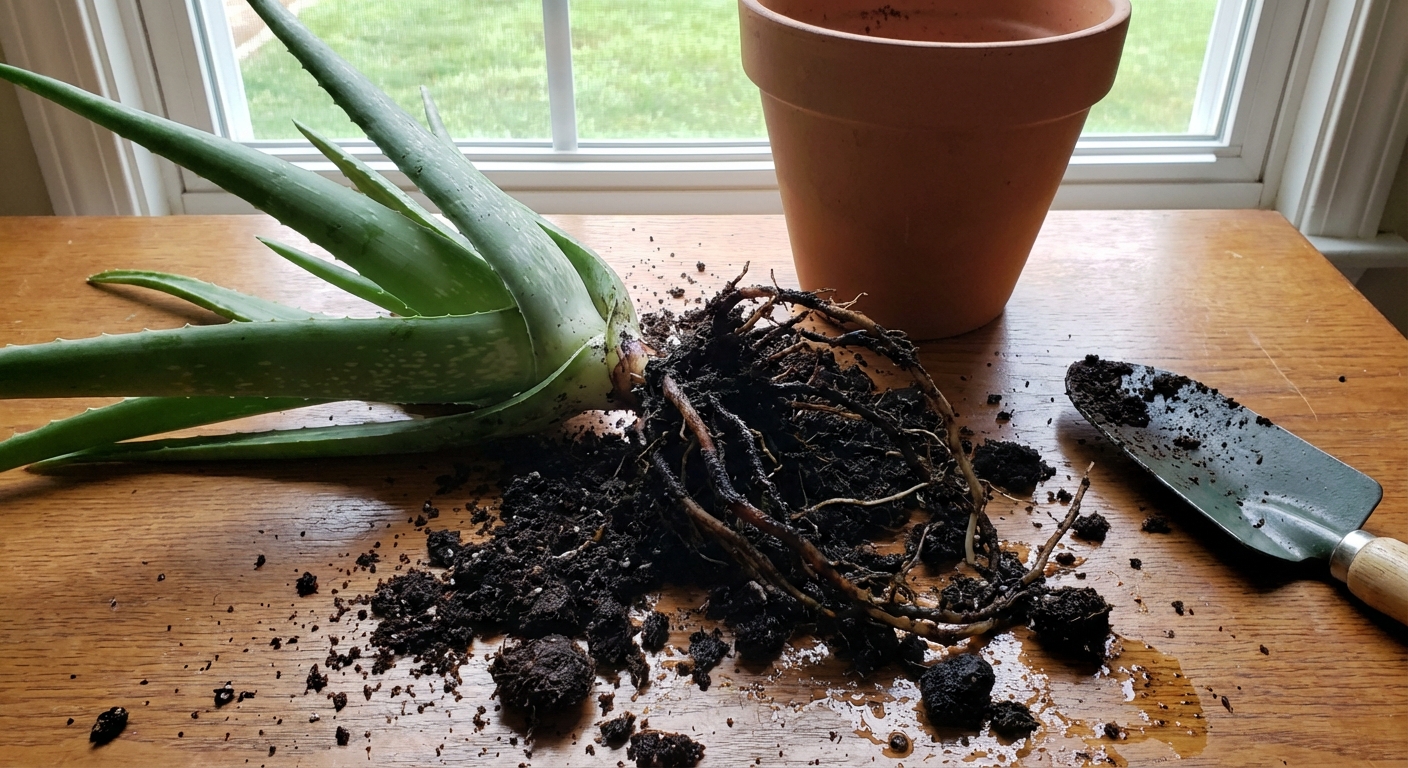
- Roots are brown or black and slimy instead of pale and firm
Fix it step by step
- Unpot the aloe. Gently shake off as much wet soil as you can.
- Inspect the roots. Trim off any roots that are black, soft, or hollow using clean scissors.
- Remove severely rotted leaves at the base if they slip away easily. If the crown (the center growing point) is mushy, the plant may not be salvageable.
- Let the plant air-dry in a shaded, airy spot for 24 to 48 hours so cuts can callus.
- Repot into dry, fresh mix in a pot with drainage. Do not reuse the old wet soil.
- Wait to water for at least several days after repotting. Wait longer if you removed a lot of roots, your home is cool, or the pot is on the large side.
If the base is rotted but the top looks okay
You may be able to save the plant by taking offsets (pups) or, in some cases, letting a healthier section callus and reroot. Aloe is tough, but it needs a firm, healthy growing point to come back.
Prevent it
- Potting mix matters. Use a cactus or succulent blend, or mix regular potting soil with 30 to 50% pumice or perlite for faster drying.
- Choose breathable pots. Terracotta is forgiving because it lets moisture evaporate.
- Keep the pot size sensible. Too much soil volume around a small root system stays wet longer than you think.
- Light helps the soil dry. Low light plus wet soil is rot heaven.
Cause 4: Cold damage (chills, drafts, frost)
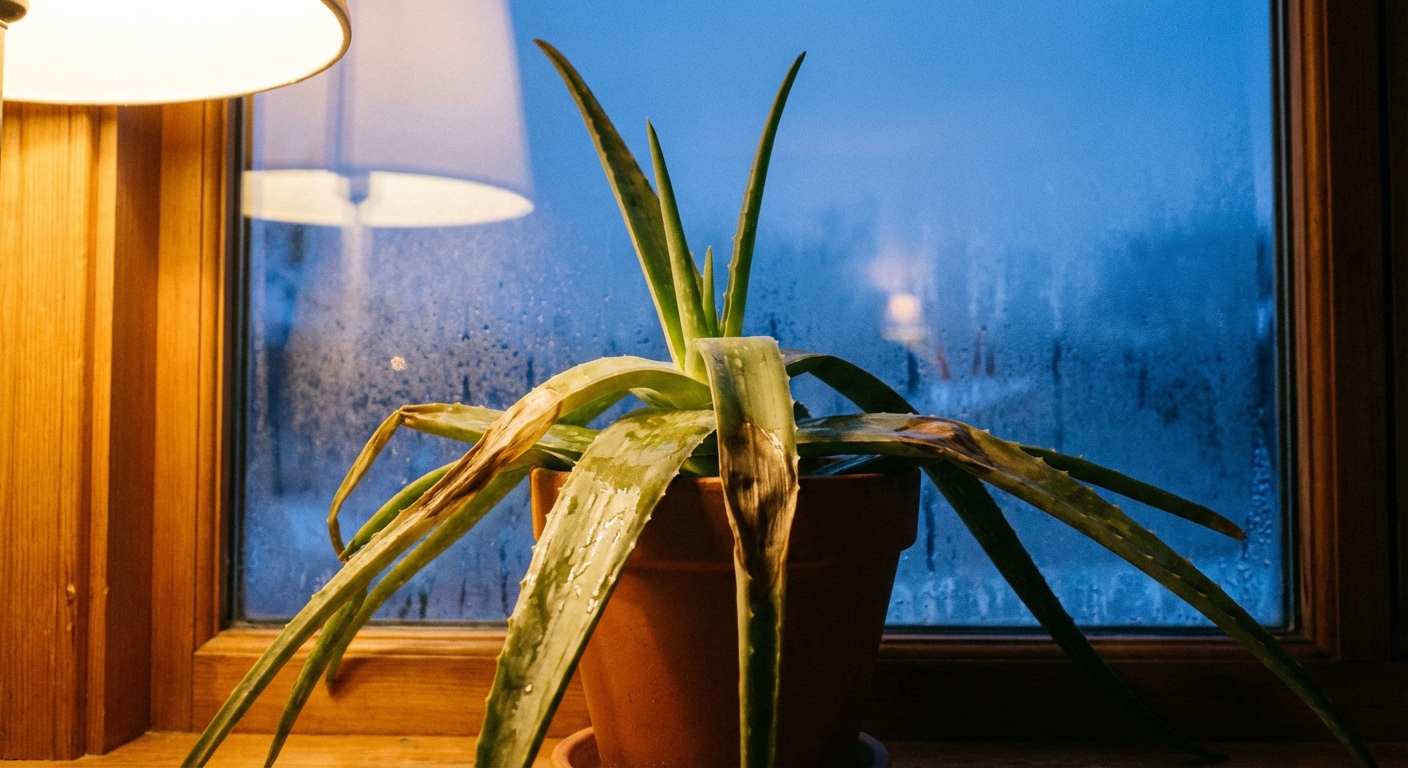
Aloe is not a cold-hardy houseplant. A single cold night near a windowpane, a drafty door, or an accidental frost outdoors can injure cells inside the leaves. The damage often starts looking like watery, translucent patches that later turn tan or brown.
What it looks like
- Leaves look water-soaked, then turn brown
- Soft, collapsed sections, especially on outer leaves
- Damage appears after a cold event, often overnight
Fix it
- Move the plant to warmth right away. Aim for steady indoor temperatures, away from cold glass and drafts.
- Hold off on watering if the plant is soft. Cold-stressed aloe often cannot use water well.
- Trim only truly mushy tissue with clean scissors once you can see what is permanently damaged.
Prevent it
- For best growth, keep aloe ideally above about 55°F / 13°C. Try to avoid prolonged exposure below roughly 45 to 50°F / 7 to 10°C, and protect it from any frost risk.
- In winter, pull plants a few inches back from cold windows at night.
- Do not transport aloe in freezing weather without wrapping it well.
Cause 5: Fertilizer burn and mineral salt buildup
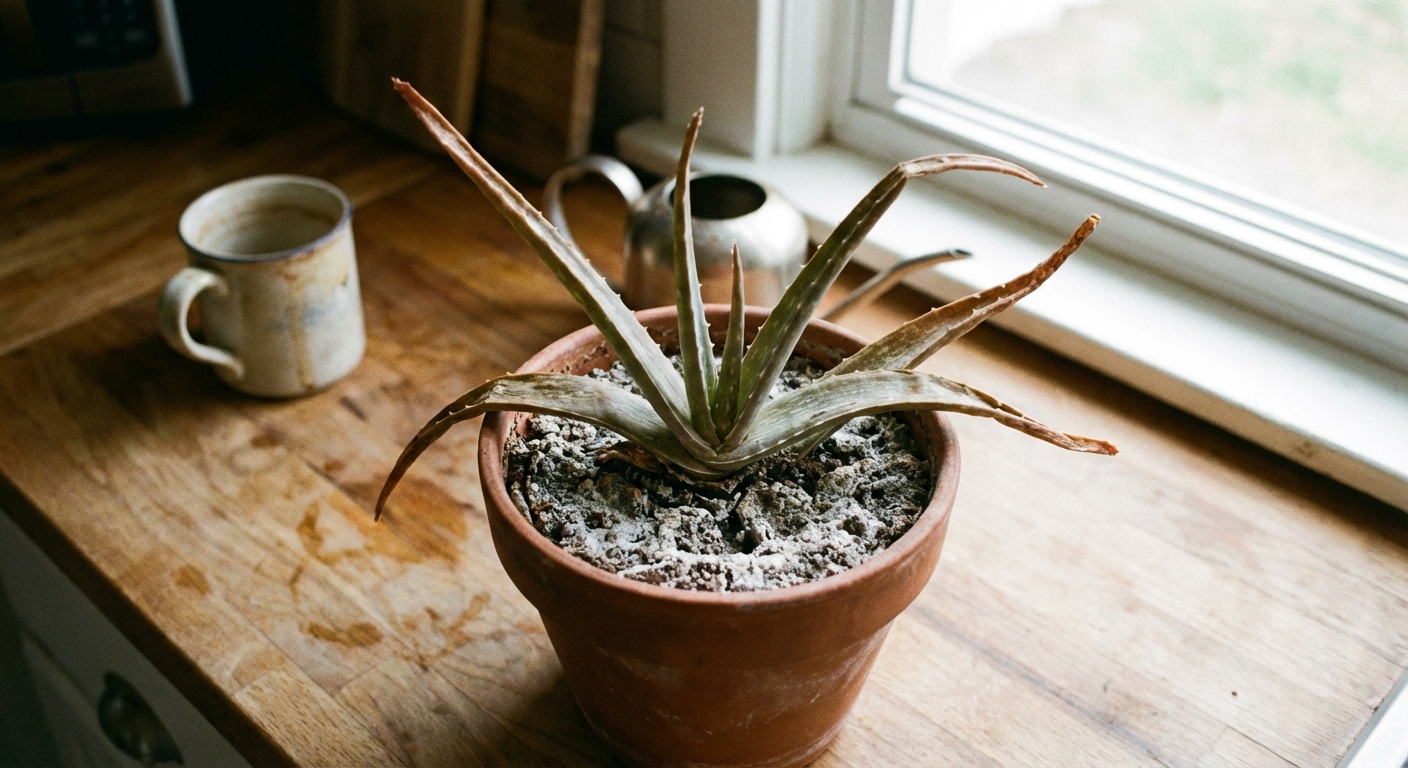
Aloe does not need much fertilizer. Too much, too often, or the wrong kind can burn roots and show up as brown tips and edges. Tap water minerals can also build up in the soil over time, especially if you never flush the pot.
What it looks like
- Brown, crispy tips that spread along the edges
- Newer damage appears not long after feeding
- White crust on soil surface or around the pot rim
Fix it
- Pause fertilizer for at least 6 to 8 weeks.
- Flush the soil if the pot drains well: slowly run water through the pot using about 2 to 3 times the pot’s volume, then let it drain completely.
- Repot if you suspect heavy salt buildup, the mix stays soggy, or flushing is not practical.
- Trim crispy tips for looks once the plant is stable. Use clean scissors and follow the natural shape of the leaf. For the neatest result, avoid cutting deep into healthy tissue.
Prevent it
- Fertilize only during active growth (often spring and summer), and only 1 to 2 times per year for most indoor aloes.
- Use a diluted succulent fertilizer (often 1/4 strength is plenty).
- If your tap water is very hard, consider filtered or rainwater for occasional watering, or flush the pot every few months.
Other reasons aloe can brown
Natural aging
Outer leaves eventually age out. If only the oldest, lowest leaves are browning and the center is pushing out firm green growth, your aloe might simply be doing aloe things.
Underwatering and severe dehydration
Yes, aloe can brown from the opposite problem too. Underwatered aloe tends to look thinner and slightly puckered, with dry brown tips. The difference is texture: dehydration is usually dry and shrunken, not soft and translucent.
Pests
It is not the most common cause of browning, but it is worth ruling out. Check the leaf bases and undersides for:
- Mealybugs or scale: cottony clusters or small bumps that can cause yellowing, browning, and sticky residue
- Spider mites: fine webbing or dusty stippling and bronzing, especially in dry indoor air
If you spot pests, isolate the plant, wipe it down, and treat with insecticidal soap or a careful alcohol swab for mealybugs. Repeat weekly until clear.
Low light stress
Aloe can survive in lower light, but it will stretch (etiolate), weaken, and become more stress-prone. If your plant is leaning hard toward the window with longer, thinner leaves, increase light gradually. An east or south window is often a sweet spot indoors, or use a grow light if you do not have strong natural light.
Physical damage
A bruise from a bump, a curious pet, or rough repotting can create a brown scar that stays forever. If the rest of the plant looks healthy, this is cosmetic.
Step-by-step triage: what to do today
If you feel overwhelmed, do this in order. Aloe likes calm, consistent care more than constant tinkering.
- Check the soil moisture. If it is wet, stop watering and move to brighter, warmer conditions.
- Inspect the pot. Drainage hole? If no, repot. Also check if the pot is much larger than the plant. Oversized pots stay wet longer.
- Look at the light. If browning is on the sun-facing side and dry, reduce direct sun and acclimate slowly.
- Smell the soil. Sour or swampy means you should unpot and check for rot.
- Check for pests. Especially around leaf bases.
- Think back 7 to 14 days. Did you fertilize, move it outdoors, or have a cold snap? Timing is a big clue.
Repotting aloe the right way
Repotting is often the turning point for a struggling aloe, especially if the mix stays wet too long.
What you need
- A pot with a drainage hole (terracotta recommended)
- The right size pot (usually just 1 to 2 inches wider than the root ball)
- Cactus or succulent mix, or potting soil amended with pumice or perlite
- Clean scissors for any damaged roots
Steps
- Gently remove the aloe and brush off old soil.
- Trim dead or rotting roots.
- Let any cuts dry and callus for a day if you removed significant rot.
- Repot at the same depth as before. Do not bury the crown.
- Wait several days before watering, then water deeply. If you did heavy root trimming or your home is cool, wait longer.
FAQ
Should I cut off brown aloe leaves?
If the leaf is mushy, smelly, or rotting, yes, remove it promptly. If it is dry and scarred from sunburn or old age, you can leave it until the plant is actively growing and looks stable. Aloe uses its older leaves like a pantry.
My aloe is brown but still firm. Is it dying?
Not necessarily. Firm leaves with bronzing or dry brown patches often point to sun stress, sunburn, or mineral buildup. Watch the newest center leaves. If the center stays firm and green, you are usually okay.
Can a brown aloe turn green again?
Brown, damaged tissue does not turn green again. If the plant is simply bronzed or reddish from sun stress (but still plump), that coloring can fade back toward green in gentler light. Either way, what you are looking for is healthy new growth and gradually less browning as conditions improve.
A gentle reminder
If your aloe is browning, you are not a “black thumb.” You are a person learning a plant’s language. Aloe is dramatic about a few things: wet feet, sudden sun, and cold nights. Once you dial those in, it goes right back to being that calm, low-maintenance roommate that never asks for much.
If you want, tell me where your aloe lives (window direction, pot type, pot size, and how often you water), and what the brown looks like. I can help you narrow it down.