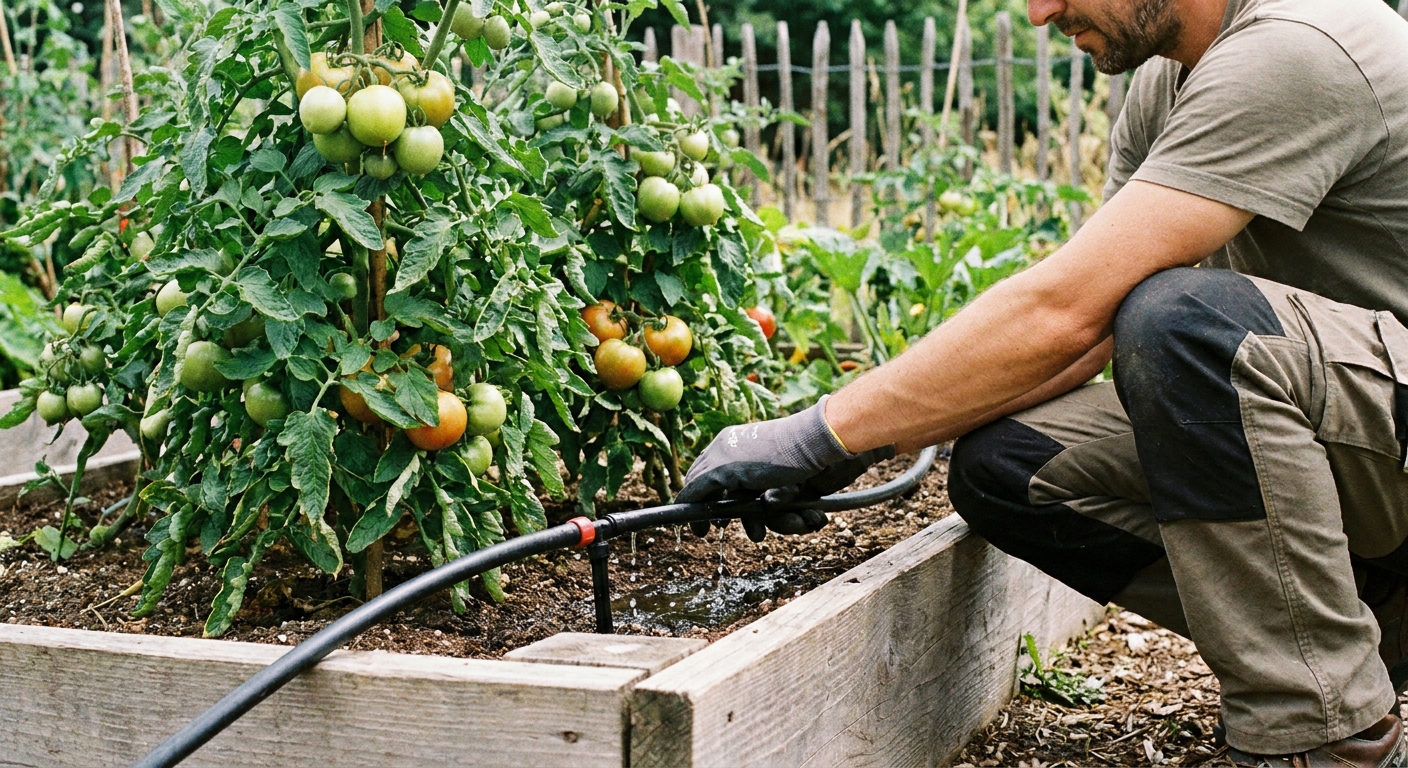
Why Are My Tomato Plants Wilting?

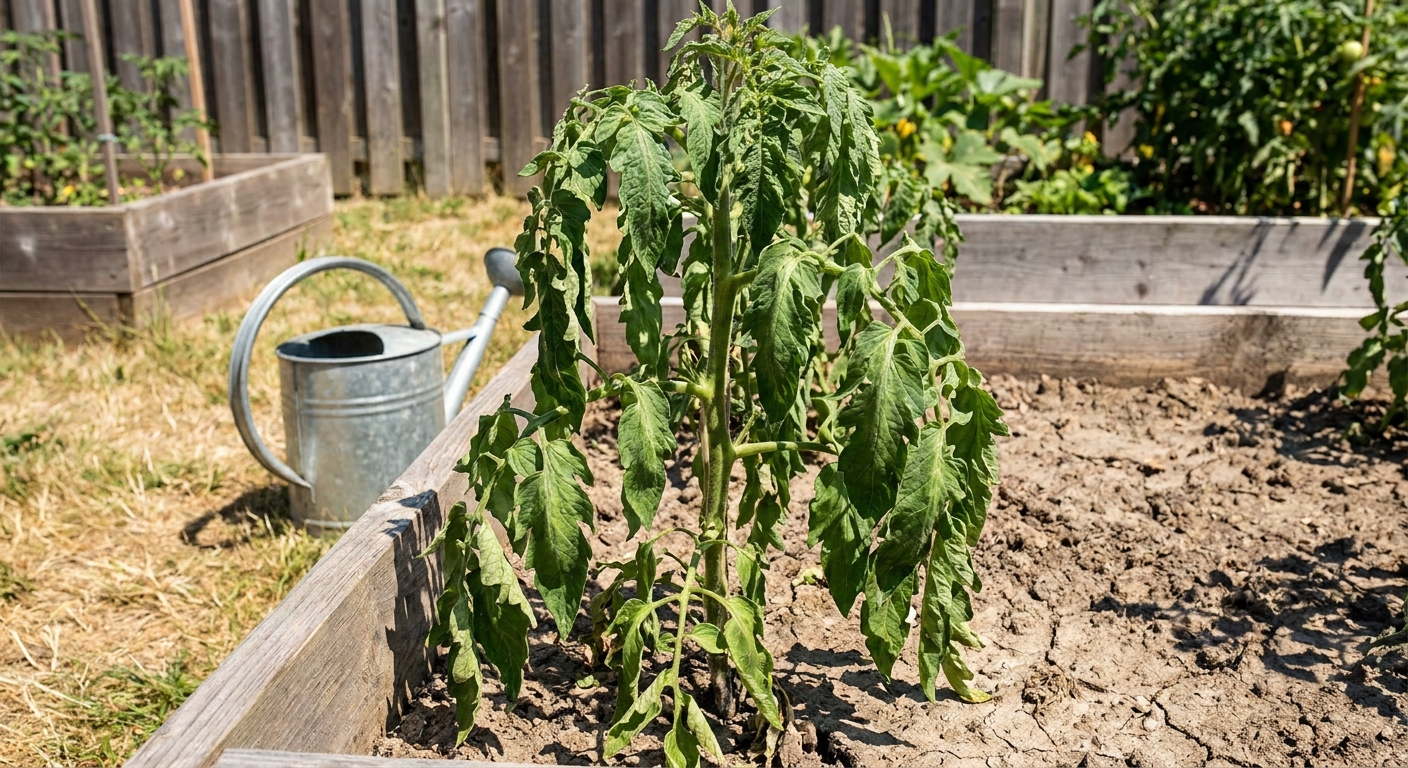
Few garden sights make my heart drop faster than a tomato that looked perky yesterday and suddenly looks like it needs a nap in the shade. The good news is that wilting is not a diagnosis, it is a symptom. And in tomatoes, symptoms have patterns.
This page will help you figure out whether your wilt is sudden or gradual, run a couple of two-minute field tests, and choose the right fix for container vs in-ground plants. I’ll also tell you when it’s time to stop troubleshooting and pull a plant to protect the rest of your garden.

First, decide: sudden or gradual
This one decision cuts your troubleshooting time in half.
Sudden wilt (hours to 1 or 2 days)
- Underwatering (especially in containers or sandy soil)
- Heat stress (midday flop that improves in the evening)
- Stem damage (cutworm, cracked stem, wind snap, mower string, staking wire)
- Bacterial wilt (fast collapse, often stays green)
- Herbicide drift or contamination (twisted growth plus droop after nearby spraying, or after using certain compost/manure)
Gradual wilt (days to weeks)
- Root rot from chronically wet soil or poor drainage
- Fusarium or verticillium wilt (often starts on one side or on lower leaves)
- Root issues in containers (rootbound, compacted mix, inconsistent watering)
- Root pests (nematodes, grubs, severe root chewing)
- Virus issues like tomato spotted wilt virus (less common, but important)
If you only remember one thing: tomatoes can wilt from too little water and too much water. The fastest way to tell is to test the soil and the stem, not the leaves. Leaves are dramatic and often the last to tell the truth because heat, wind, and fruit load can make them droop even when roots are fine.
Quick field tests
Before you spiral, do these. They’re fast, and they save plants.
1) The finger test (60 seconds)
Push a finger 2 to 3 inches into the soil (or as deep as you can in a pot).
- Dry and dusty: think underwatering or heat stress.
- Cool and evenly moist: think disease, root damage, stem injury, or a root pest.
- Soggy, smells sour, or feels swampy: think root rot and oxygen-starved roots.
2) The evening rebound test (same day)
Check your plant at dusk.
- Wilts at midday but perks up in the evening: classic heat stress, sometimes mild underwatering, and sometimes a heavy fruit load pulling water faster than roots can keep up.
- Stays wilted day and night: look harder at roots, stem, and wilt diseases.
3) The stem check (2 minutes)
Gently inspect the main stem from soil line up to the first branches.
- Pinched, cracked, girdled, or hollowed: physical damage is likely.
- Dark, wet-looking lesion at soil line: can signal rot or fungal issues.
Common causes and how to confirm
Underwatering
Pattern: Leaves droop, soil is dry, plant perks up after deep watering. Containers are the usual suspects.
Confirm it: Soil is dry 2 inches down, pot feels light, droop improves within a few hours of watering.
Fix it:
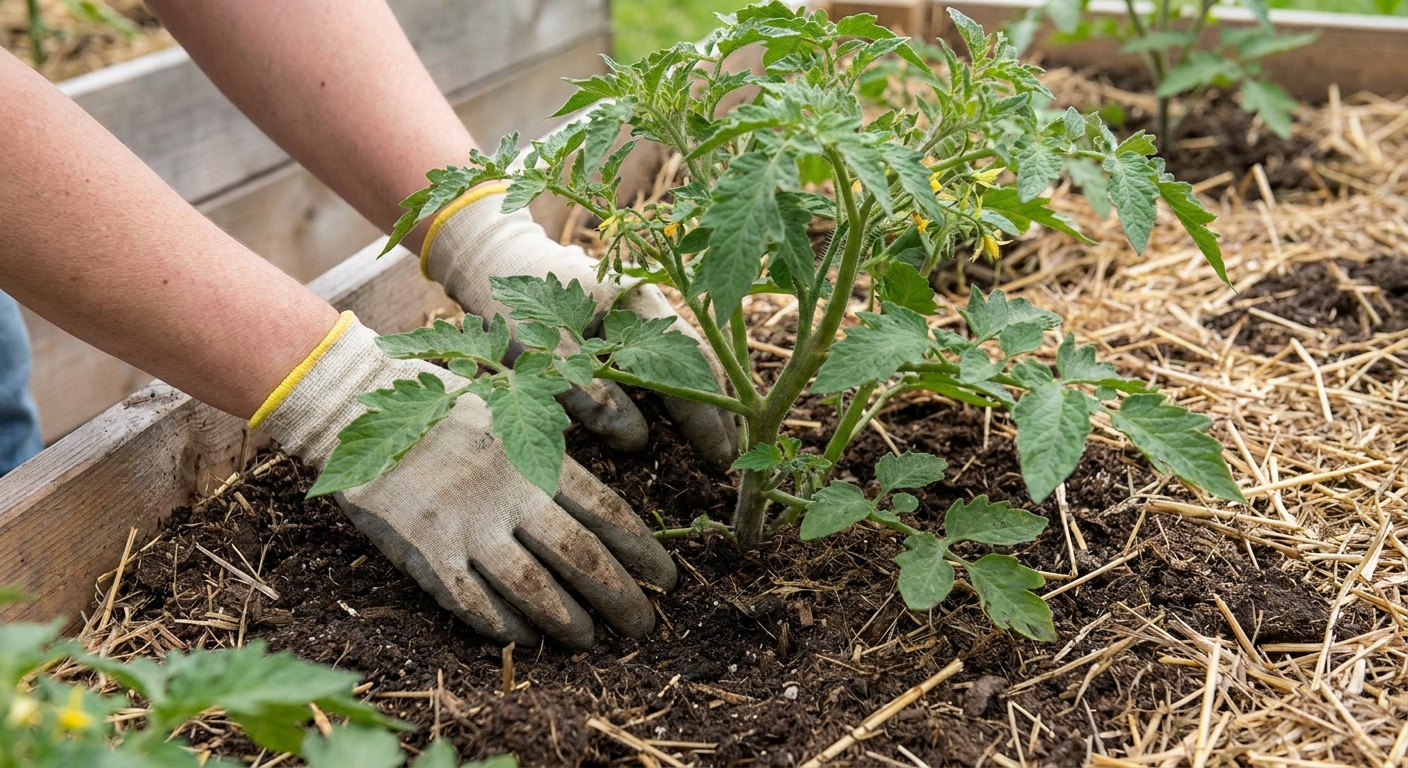
- In-ground: Water slowly and deeply. Aim to wet the root zone 6 to 10 inches down. Add 2 to 3 inches of mulch (straw, shredded leaves) to reduce evaporation.
- Containers: Water until it runs out the drainage holes, then again 10 minutes later (dry mixes can repel water at first). Consider moving from a daily splash to a deep soak routine. In hot spells, a large fruiting tomato may need water daily.
Gardener note: If the plant is repeatedly wilting in a pot, it often needs a bigger container or a more water-retentive mix. Tomatoes are thirsty roommates.
Heat stress
Pattern: Midday wilt during hot sun, recovery at night, leaves may curl slightly to conserve moisture. Flowers can drop in extreme heat.
Confirm it: Soil is not bone-dry, wilting is worst between late morning and late afternoon, and the plant looks better by evening.
Fix it:
- In-ground: Add mulch, water early in the day, and provide temporary shade cloth (30 to 50 percent) during heat waves. Avoid heavy pruning in high heat.
- Containers: Move pots to morning sun and afternoon shade if possible. Use a light-colored pot or wrap dark pots to reduce root-zone overheating.
Root rot and wet feet (overwatering or poor drainage)
Pattern: Wilting even though soil feels wet, yellowing may appear, growth slows, fungus gnats may hover around pots, and the plant looks worse after watering.
Confirm it: Soil stays wet for days, pot has poor drainage, or your in-ground spot puddles. If you gently slide a container plant out, roots may look brown and mushy rather than creamy white.
Fix it:
- In-ground: Pause watering until the top few inches dry. Improve drainage with raised beds or by planting on a mound. Water at the base, and avoid routines that keep foliage wet overnight. The bigger issue is chronically saturated soil, not the clock.
- Containers: Make sure there are real drainage holes. If the mix is heavy or compacted, repot into fresh, airy potting mix with compost and perlite. Discard the old mix (do not reuse), and wash the pot if you are replanting in the same container.
About trimming roots: You can trim obviously rotted roots, but recovery is mixed once rot is advanced. If you repot, consider planting the tomato a bit deeper so it can grow fresh roots along the buried stem, as long as the stem itself is not diseased or mushy at the soil line.
Important: If the lower stem is rotting at the soil line, the plant may not recover. Focus on protecting nearby tomatoes from splash and stress.
Fusarium vs verticillium (fungal wilts)
Pattern: Gradual wilting, often starting on older lower leaves and sometimes on one side of the plant. Yellowing may creep upward. Plants may wilt during the day and partially recover at night early on, then worsen.
Confirm it (home clues):
- Wilt progresses over time even with decent watering.
- One side of the plant may look more affected.
- If you cut a lower stem lengthwise, you may see brown discoloration in the vascular tissue.
Fix it: There is no curative treatment once the plant is infected.
- Remove the plant and dispose of it (do not compost).
- Rotate tomatoes out of that spot for at least 3 to 4 years (often longer is better, depending on pathogen pressure and region).
- Choose resistant varieties. Look for letters on tags: F (fusarium), V (verticillium). Note that fusarium resistance can be race-specific, so more than one F (like F, FF, or F1/F2/F3) is even better when you can find it.
- Boost soil health long-term with compost, mulch, and gentle watering habits.
Sudden collapse: bacterial wilt
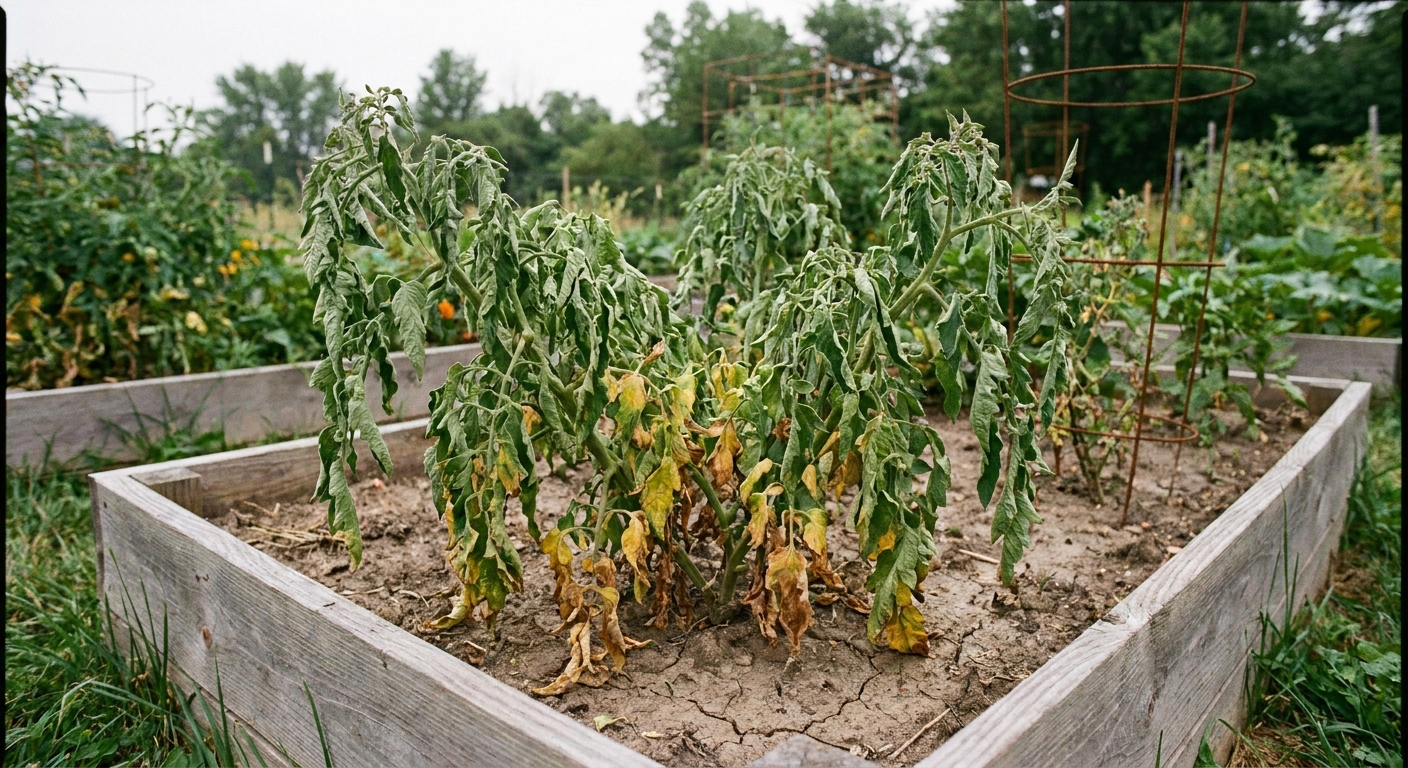
Bacterial wilt can look like underwatering, except watering does not help. The plant can go from “fine” to “flopped” very quickly.
Pattern: Sudden, dramatic wilt. Leaves may stay fairly green. Entire plant can collapse.
First, rule out the obvious: Check for a chewed or severed stem at the soil line (cutworms), a cracked main stem, or truly bone-dry soil. Those can also cause a fast, green collapse.
Quick stem-in-water test (5 minutes): Cut a wilted stem near the base and place the cut end in a clear glass of water. If you see milky, cloudy strings streaming from the cut, that is a strong clue for bacterial wilt. It is not a guarantee, and other bacterial issues can muddy the picture.
Fix it: If symptoms fit strongly, remove and trash the plant promptly. Disinfect pruners. Avoid moving soil from that area to other beds. If you’re on the fence and the stakes are high (lots of plants, repeated losses, or a new-to-you garden), your local extension office or a plant diagnostic lab can confirm.
If you suspect bacterial wilt: It’s better to pull one plant today than lose five next week.
Stem damage
Sometimes the roots are fine and the leaves are fine. The plumbing is the problem.
What it looks like
- One branch wilts while the rest of the plant looks normal
- A plant wilts after a windy day or after tying to a stake
- Stem has a crease, crack, or a chewed ring at soil line
How to confirm
Follow the wilt upward and downward. Look for a point where the stem is pinched or damaged. At the base, gently brush soil away and look for cutworms or a thin, gnawed band around the stem.
Fix it
- Support: Splint a cracked stem with a small stake and soft tie, or tape it gently with garden tape. Tomatoes can scar over surprisingly well.
- Prune: If one branch is doomed, prune it cleanly to reduce stress.
- Cutworms: Add a stem collar (cardboard or foil) around the base and check at dusk for the culprit.
- Staking: Replace tight wire ties with soft cloth or Velcro ties.
Herbicide drift and contamination
Tomatoes are famously sensitive to certain herbicides, especially growth-regulator types used on lawns and pastures. A little drift can cause a lot of weirdness. And lately, the sneaky version is not drift at all. It is contaminated compost, manure, hay, or mulch (often linked to persistent herbicides like aminopyralid or clopyralid).
Pattern: Wilting plus distorted new growth, cupped leaves, twisted stems, ferny-looking tops, or strappy leaves. Often shows up days after spraying nearby, or after adding new compost or manure.
Confirm it: Ask if anything was sprayed recently within a few houses, along a fence line, or on a nearby field. Also think back to any new soil amendments or straw mulch. Look for that telltale twisted new growth.
Fix it:
- Rinse foliage with water if exposure was very recent.
- Keep the plant evenly watered (not soggy) and do not fertilize heavily. Let it recover if symptoms are mild.
- If distortion is severe and new growth stays deformed, it is often best to remove the plant and start over.
Prevention: Avoid spraying on windy days, and consider physical weed control around tomatoes (mulch, hand weeding). My ferns and I are big fans of boring, safe solutions.
Viruses and root pests
Tomato spotted wilt virus (TSWV)
Pattern: Stunting, drooping or wilt-like behavior, bronzing or purpling on young leaves, and sometimes ringspots or blotchy patterns on leaves or fruit. Plants usually do not bounce back with watering.
Confirm it: Look for the color changes and ring patterns, plus a general “not thriving” look that keeps progressing. Thrips spread TSWV, so heavy thrips pressure nearby is another clue.
Fix it: There is no cure. Remove the plant to reduce spread, and focus on thrips management and resistant varieties where available.
Nematodes and other root damage
Pattern: Chronic wilt despite regular watering, weak growth, and a plant that never really takes off.
Confirm it: If you pull a declining plant, check roots. Root-knot nematodes often cause knobby galls. Chewing pests cause missing or shredded roots.
Fix it: Rotate crops, add organic matter, consider resistant varieties (often marked N for nematode resistance), and in warm regions consider soil solarization in the off-season.
Container vs in-ground
Containers
- Check drainage holes first. No holes or clogged holes equals wilt drama.
- Measure dryness by weight. Lift the pot. Light usually means dry, heavy usually means wet.
- Watch for rootbound plants. If roots circle the pot tightly, water runs through too fast and the plant wilts easily. Size up if possible.
- Hot pot problem: Dark pots in full sun can overheat roots. Move to afternoon shade or insulate the pot.
In-ground
- Think drainage and disease pressure. Compacted soil, low spots, and frequent shallow watering invite root problems.
- Mulch is your best friend. It smooths out moisture swings, which is half the battle with wilt.
- Soil-borne wilts are more common. If a plant steadily declines despite good watering, consider fusarium, verticillium, bacterial wilt, viruses, or root pests.
Wilt checklist
- Soil dry 2 to 3 inches down? Deep water and mulch.
- Soil wet and plant still wilting? Pause watering and check drainage, roots, and root pests.
- Wilts midday, recovers at dusk? Heat stress, add shade and steady moisture (and remember heavy fruiting can exaggerate this).
- One branch wilting? Inspect for stem damage or a tight tie.
- Sudden total collapse, green leaves, watering does nothing? Check for stem severing, then consider the stem-in-water clue test for bacterial wilt.
- Twisted new growth after nearby spraying or new compost? Suspect herbicide drift or contaminated amendments.
When to pull a plant
I’m all for nursing plants back to health, but sometimes the kindest move is to remove a sick tomato to protect the rest.
- Pull and trash the plant if you strongly suspect bacterial wilt or a serious viral disease like TSWV.
- Remove plants with progressing fusarium or verticillium wilt, especially if multiple plants start showing symptoms.
- If the stem is rotting at the base and the plant is collapsing, recovery is unlikely.
After removal: disinfect pruners, wash hands and gloves, and avoid splashing soil onto neighboring plants. A little garden hygiene goes a long way.
Prevention habits
- Water deep, not often. Aim for consistent moisture, not rollercoasters.
- Mulch 2 to 3 inches. Keep it a couple inches away from the stem.
- Stake early and tie gently. Prevent wind cracks and stem stress.
- Choose resistant varieties. Look for V and F on the label when possible (and N for nematode resistance in problem areas).
- Rotate and refresh. Rotate beds, add compost, and avoid replanting tomatoes in the same spot year after year.
If you want, tell me whether your wilt happened suddenly or gradually, whether the soil is dry or wet, and whether it recovers at night. With those three clues, we can usually narrow it down fast.