
Why Are My Plant Leaves Turning Brown? 8 Causes and Fixes


If your plant leaves are turning brown, your plant isn't being dramatic. It's sending a very specific message. The trick is figuring out which kind of brown you're seeing, because brown tips, crispy edges, and soft brown patches usually have different causes.
I like to think of this as plant detective work you can do in slippers. Take a breath, grab your watering can, and let's narrow it down.
Quick note before we start: your watering “rules” depend on the plant and the pot. A cactus, an orchid, and a peace lily do not play by the same schedule. When in doubt, follow the soil and the roots, not the calendar.
Quick diagnosis: what does the brown look like?
- Brown, crispy tips on many leaves: often underwatering, low humidity, mineral buildup, or tap water sensitivity.
- Brown, crunchy edges that spread inward: often underwatering, hot or cold airflow, sun stress, or fertilizer salts.
- Brown spots (sometimes with yellow halos): can be sunburn, pests, or leaf spot disease. If spots are spreading fast, isolate the plant and treat it like a pest or disease issue first.
- Soft, dark brown patches plus drooping: often overwatering or root rot.
Now let's walk through the biggest culprits, how to recognize each one, and what to do today.
1) Underwatering
What it looks like
- Leaf tips turn tan, then brown and crispy.
- Edges may curl, and older leaves often brown first.
- Pot feels unusually light, soil pulls away from the pot sides, and water may run straight through.
Why it happens
When the root zone stays too dry for too long, the plant prioritizes survival. Leaf tissue dries out at the furthest points first, which is why tips and edges crisp up.
The fix
- Check moisture correctly: for many houseplants, stick a finger 1 to 2 inches into the soil. If it's dry at that depth, it's usually time to water. Exceptions: succulents and cacti often want the mix nearly dry throughout, while some ferns prefer consistently lightly moist soil.
- Water deeply: water until it flows from the drainage holes, then empty the saucer.
- Rehydrate hydrophobic soil: if water runs straight through, bottom-water for 20 to 30 minutes or soak the pot in a basin, then let it drain.
- Fix the swing: if you tend to forget, then overcorrect (bone dry, then flood), aim for more even moisture. Inconsistent watering can brown tips just as reliably as chronic dryness.
Clara note: If only the very tips are brown, you can trim just the crispy part with clean scissors. Follow the leaf shape, and don't cut into healthy green tissue more than necessary.
2) Overwatering
What it looks like
- Leaves may turn brown but feel soft rather than crispy.
- Lower leaves yellow, then brown and drop.
- Soil stays wet for days, pot feels heavy, and fungus gnats may appear.
Why it happens
Roots need oxygen. Constantly wet soil fills the air pockets and stresses roots. Stressed roots can't supply leaves properly, and tissues decline.
The fix
- Pause watering: let the top layer of soil dry out before watering again. That might be about 1 inch in a small pot, or 2 to 3 inches in a larger pot, depending on the plant and the mix.
- Improve drainage: make sure the pot has a drainage hole and the plant isn't sitting in water.
- Increase light and airflow: brighter indirect light helps the plant use water faster.
- Check the potting mix: if it's dense and muddy, repot into a chunkier mix with perlite or bark.
Safety note: If you suspect rot, discard the old soil (don't reuse it), and wash the pot with hot soapy water before replanting.
3) Low humidity
What it looks like
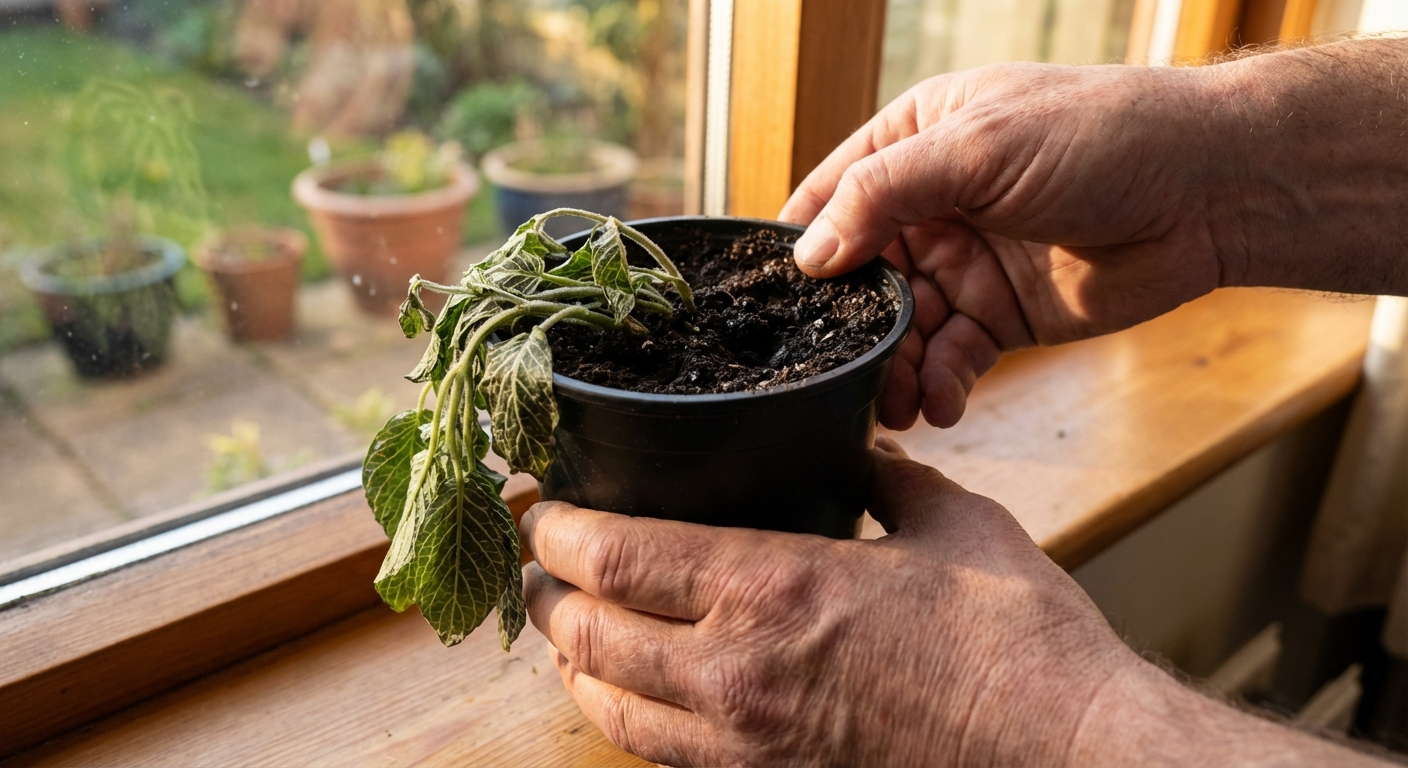
- Brown, crispy tips and edges, especially on thin-leaved tropical plants.
- New growth may be smaller, and leaves can look slightly puckered.
- Common in winter when heaters run, or in very dry climates.
Why it happens
Plants lose water through their leaves. When indoor air is dry, they lose moisture faster than roots can replace it, so leaf margins dry out.
The fix
- Group plants together: it creates a small humidity pocket.
- Use a humidifier: aim for 40 to 60 percent for many tropicals. Some picky plants (like calathea) often prefer higher.
- Move plants away from vents: forced air can dry leaves fast.
- Skip constant misting: it's short-lived and can encourage spotting on some plants.
4) Sun stress
What it looks like
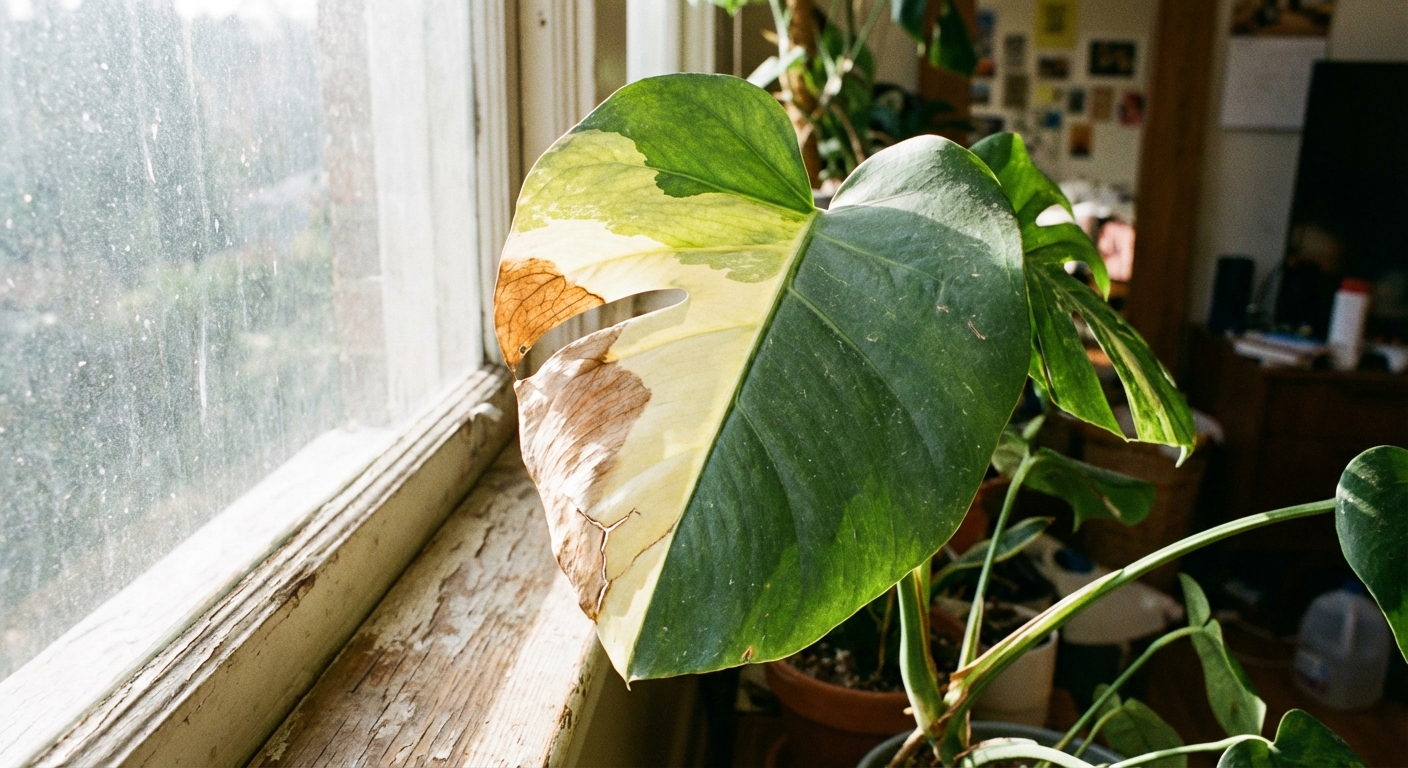
- Bleached, pale patches that later turn tan or brown.
- Brown spots often show up on the side facing the window or afternoon sun.
- Damage appears quickly after moving a plant to brighter light.
Why it happens
Leaves grown in lower light aren't prepared for strong sun. The cells get damaged, and the injured tissue turns papery and brown.
The fix
- Move it back to bright indirect light, or pull it 1 to 3 feet away from the window.
- Filter harsh sun: use a sheer curtain for hot afternoon exposure.
- Acclimate slowly: increase light over 7 to 14 days when changing locations.
- Watch for heat stress: hot glass and summer heat can scorch leaves too, even without “full sun.” Keep foliage from pressing against hot windows.
- Don't expect browned tissue to recover: focus on healthy new growth instead.
5) Fertilizer salts
What it looks like
- Brown, crispy tips or edges that appear after feeding.
- A white crust on the soil surface or pot rim.
- Newer leaves can look damaged first if the dose was strong.
Why it happens
Fertilizers are salts. Too much, too often, or applied to dry soil can pull moisture out of roots and leaf tissue, creating a “burned” look.
The fix
- Flush the soil: run room-temperature water through the pot for several minutes to wash out excess salts. Let it drain completely.
- Pause fertilizing for 4 to 6 weeks.
- Feed lighter: use half-strength for many houseplants during active growth, and always fertilize on already moist soil.
- Consider repotting if the soil is heavily crusted or the plant is struggling despite flushing.
6) Root rot
What it looks like
- Leaves brown and droop, often with yellowing first.
- Stems may feel soft near the soil line.
- Soil smells sour, swampy, or “off.”
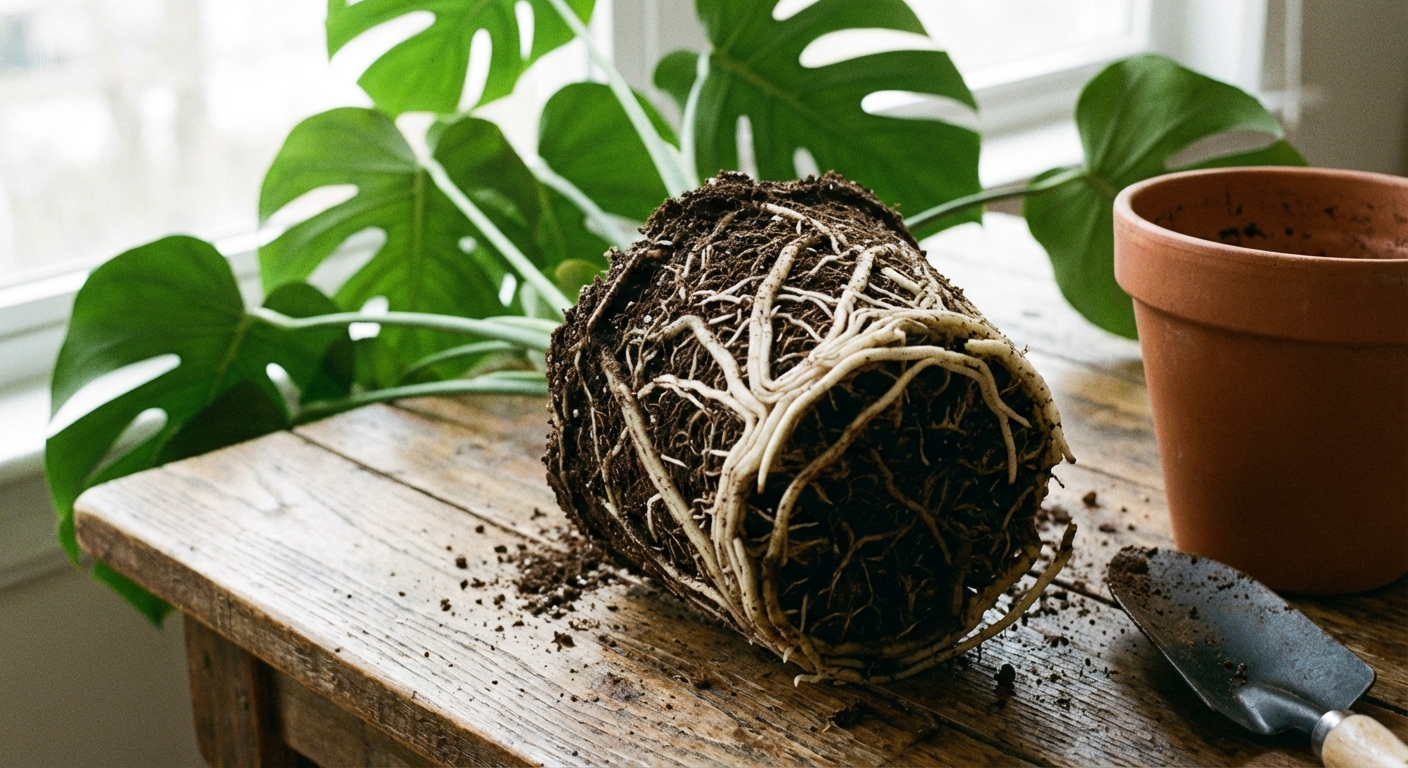
- When you unpot it, roots are dark, mushy, and may slough off.
Why it happens
Root rot is typically caused by roots staying wet long enough for decay organisms to take over. Once roots rot, the plant can't drink even if the soil is wet.
The fix
- Unpot and inspect: gently remove soil and rinse roots so you can see what is healthy.
- Trim rot: cut away mushy, dark roots with sterilized scissors.
- Repot into fresh mix: use a clean pot with drainage and a well-aerated medium.
- Water sparingly for the first week, then resume a soil-feel based routine.
Clara note: If a plant has lost most of its roots, take a few healthy cuttings as backup before you do anything else. It's like making a safety copy of a file.
7) Drafts and temperature swings
What it looks like
- Brown or blackened patches that appear after a cold night.
- Leaves may look water-soaked at first, then turn brown.
- Often happens near exterior doors, drafty windows, or unheated rooms.
Why it happens
Many houseplants are tropical. Cold air damages leaf cells, especially when temperatures dip quickly or the plant touches a cold windowpane.
The fix
- Relocate the plant away from drafts, doors, and single-pane windows.
- Aim for stability: most tropical houseplants prefer 65 to 80°F and dislike drops below about 55 to 60°F.
- Keep leaves from touching glass in winter.
8) Tap water and mineral buildup
What it looks like
- Brown tips that keep returning even when watering seems “correct.”
- White mineral crust on soil or pot.
- Common in sensitive plants like spider plants, dracaena (often fluoride sensitive), calathea, and some orchids.
Why it happens
Some municipal water contains chlorine or chloramine, plus dissolved minerals. Over time, these can accumulate in potting soil. The leaf tips often show stress first.
The fix
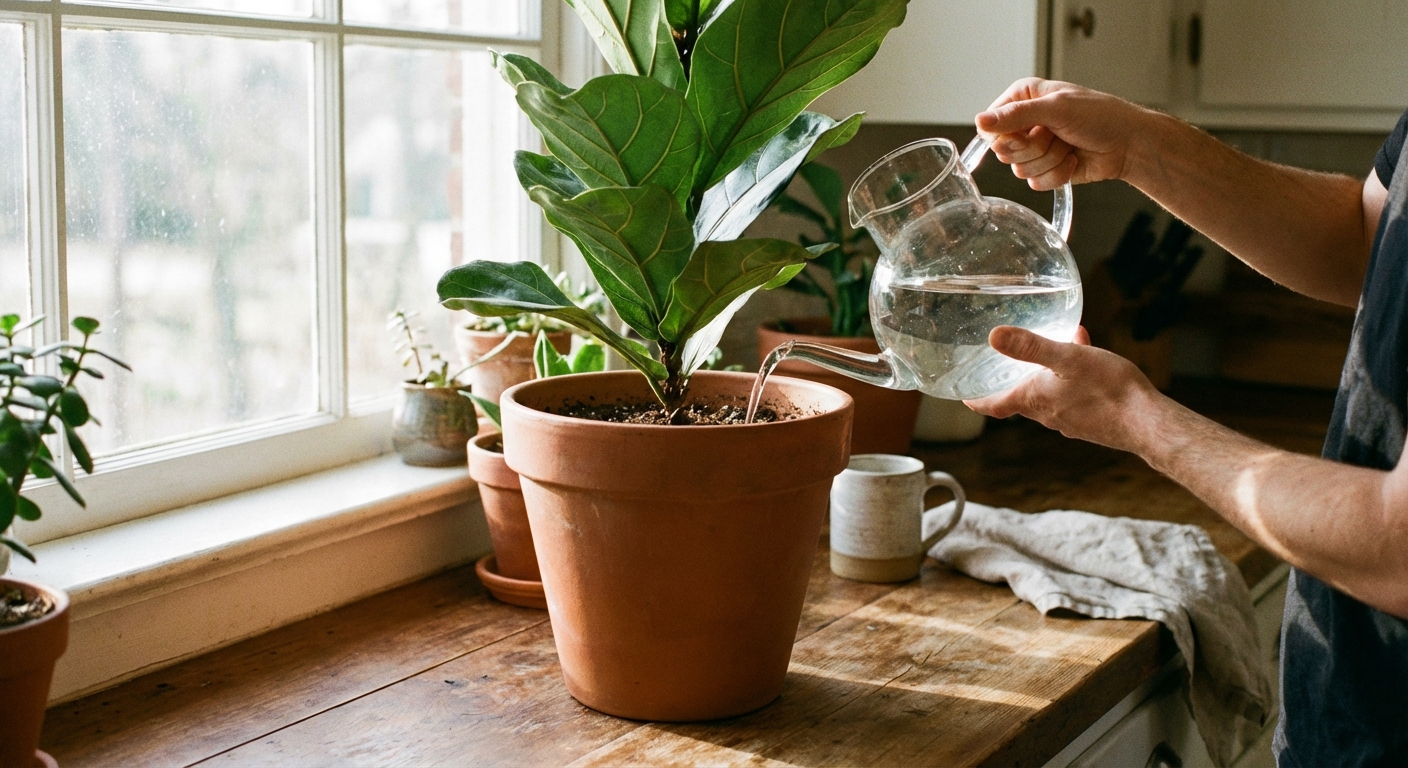
- Switch water sources: rainwater, distilled, or reverse osmosis water are the most reliable options for sensitive plants. Some filters can help too, but not all pitcher filters remove chloramine equally well. If you are unsure, go with distilled or RO.
- Leach the soil periodically: if you see crust or suspect buildup, flush the pot with plenty of water every 1 to 3 months, as long as drainage is excellent. Always let it drain completely.
- If your city uses chloramine: letting water sit overnight doesn't reliably remove it.
Other common culprits
- Root bound plants: crowded roots can make pots dry out fast, leading to crispy tips. If roots are circling the pot or poking out the bottom, consider upsizing one pot size.
- Old or compacted soil: tired mix can turn dense (stays wet too long) or repel water (dries in weird pockets). Fresh, airy potting mix often solves “mystery browning.”
How to trim brown leaves
Brown tissue won't turn green again, but you can tidy it up so the plant can focus on new growth.
- For brown tips: use sharp scissors and follow the natural point of the leaf. Leave a thin sliver of brown if needed to avoid cutting into living tissue.
- For heavily damaged leaves: remove the whole leaf at the base if more than one-third is brown, especially on plants that replace foliage quickly.
- For slow growers: don't remove too many leaves at once. If it's a plant that holds its leaves for a long time, trim tips and wait rather than stripping it bare.
- Disinfect blades: wipe with isopropyl alcohol between plants, and between suspicious leaves if you think disease might be involved.
When to check pests or disease
This guide focuses on the most common care causes, but keep your eyes open for these clues:
- Fine webbing and stippled leaves: possible spider mites.
- Sticky residue or tiny bumps on stems: possible scale or aphids.
- Rapid spreading spots with rings or fuzzy growth: possible fungal or bacterial leaf spot.
If you suspect pests or disease, isolate the plant first so you don't end up treating your whole windowsill jungle.
A simple checklist
- Feel the soil 1 to 2 inches down (more in larger pots). Is it bone dry or soggy?
- Look at the pattern. Tips only, edges, spots, or soft patches?
- Think back 7 to 14 days. Did you fertilize, repot, move it to brighter light, or turn on the heat?
- Check the basics. Drainage hole, saucer emptied, and no hot or cold drafts?
- If it's a sensitive plant, try distilled, rain, or RO water for a month.
If you want, tell me what plant you have and describe the brown pattern. Tips, edges, spots, or soft patches. I can help you narrow it down even further.