
Why Are My Hydrangea Leaves Turning Brown?

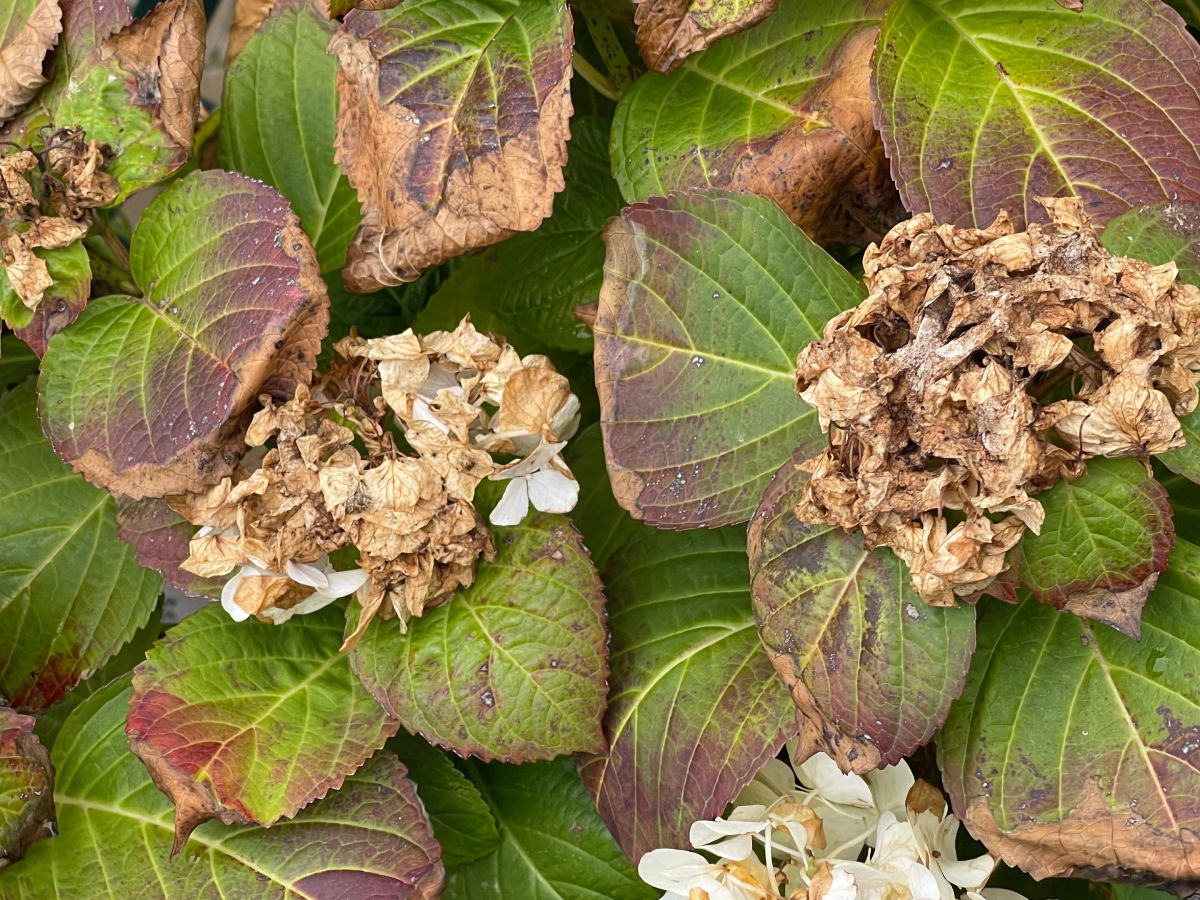
Hydrangeas are the drama queens of the garden in the most relatable way. One hot afternoon, one missed watering, one extra scoop of fertilizer, and suddenly those lush green leaves look like they got singed at the edges. The good news is this: brown leaves are usually a care clue, not a death sentence.
Below you will find the most common reasons hydrangea leaves turn brown, how to confirm what is happening, and exactly what to do next. I will also show you how to tell true damage from the totally normal color changes that come with fall.
Quick diagnosis checklist
If you only read one section, make it this one. Brown leaves usually follow a pattern. Match what you see to the clues below, then jump to the fix.
- Brown, crispy edges or tips after a hot, bright stretch: likely leaf scorch (sun, heat, wind).
- Whole leaves drooping, then browning, dry soil, fast decline: likely underwatering.
- Yellowing plus wilting in wet soil, slow decline, musty smell near the base: likely overwatering or poor drainage.
- Many small spots that merge into blotches, often on lower leaves first: likely leaf spot disease (often fungal, sometimes bacterial).
- Sudden browning after feeding, extra-dark green growth beforehand, crusty fertilizer on soil: likely overfertilizing.
- Blackened or water-soaked tissue after a cold night: likely frost damage.
- Even yellowing or bronzing in autumn, no crisp burn pattern, plant otherwise fine: likely normal fall change.
1) Leaf scorch
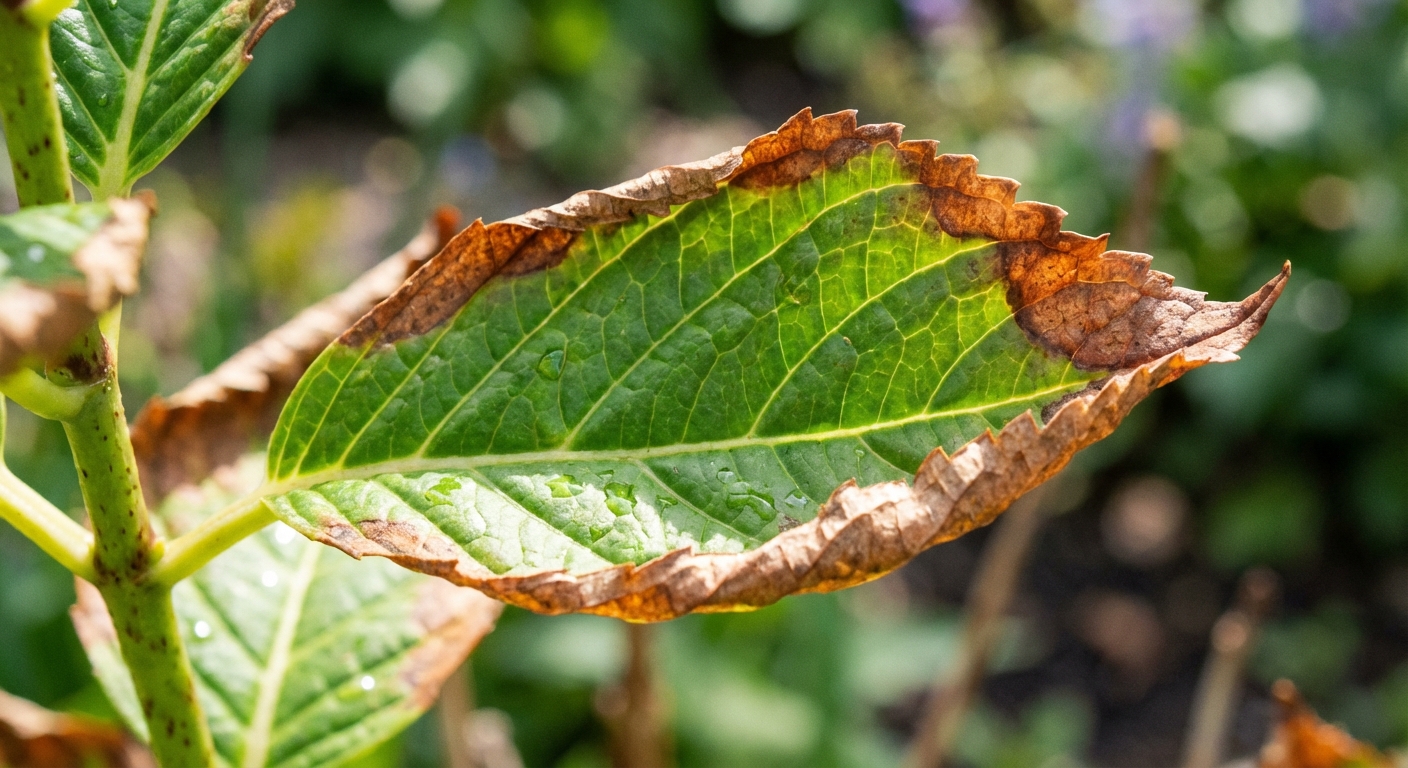
Hydrangea leaves are big, tender, and thirsty. In strong afternoon sun or drying wind, the plant can lose moisture faster than the roots can replace it. The result is classic scorch: crispy brown edges, sometimes a tan wash across the leaf surface, while the centers and veins may stay greener.
How to confirm
- Damage is worst on the side facing the sun or wind.
- Brown areas feel dry and papery, not mushy.
- It often appears during heat waves or after a windy, low-humidity stretch.
Fix it
- Give afternoon shade. Morning sun with dappled afternoon shade is hydrangea heaven. If yours is in full afternoon sun, consider a shade cloth, a patio umbrella during heat waves, or relocating the shrub in fall or early spring (when it is less stressed).
- Wind protection helps more than you think. A fence, hedge, or even a temporary screen can cut leaf-drying wind.
- Mulch like you mean it. Add 2 to 3 inches of compost, shredded leaves, or bark mulch, keeping it a couple inches away from stems.
- Water deeply, as needed. Go by soil moisture, not the calendar. Aim to moisten the root zone rather than spritzing the surface. More details in the underwatering section below.
What to do with damaged leaves
Brown tissue will not turn green again. If only the edges are crispy, it is fine to leave the leaf so it can keep photosynthesizing. If a leaf is more than half brown, snip it off at the leaf stem to tidy the plant and improve airflow.
2) Underwatering
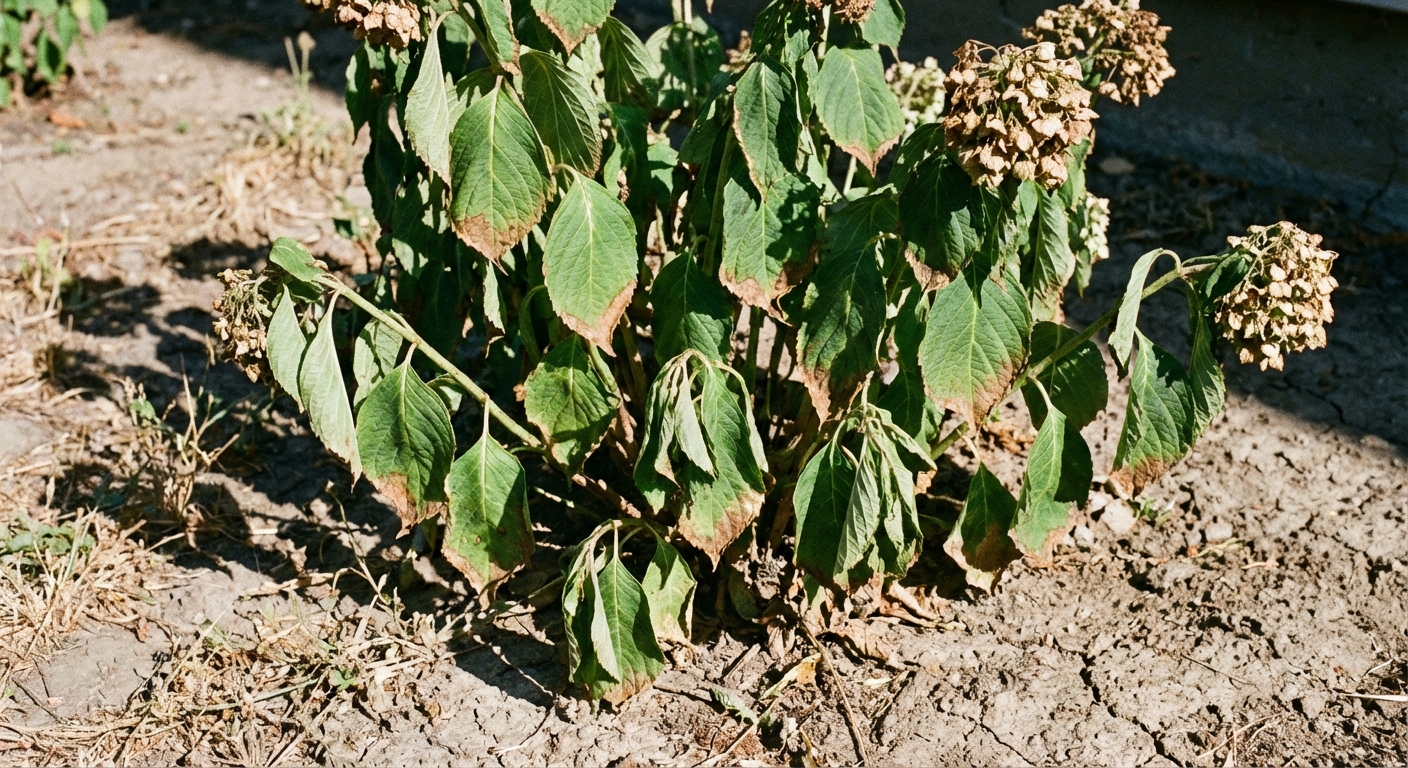
Hydrangeas are famous for wilting dramatically, then looking “fine” again after watering. The trouble is, repeated wilt cycles can lead to browning, especially on leaf edges and on newer, softer growth.
How to confirm
- Soil feels dry 2 to 4 inches down.
- Wilting happens midday and may recover in the evening.
- Brown tips show up a day or two after a hard wilt.
Fix it: a simple watering routine
- Check depth, not the surface. Poke a finger or trowel 3 inches down. If it is dry there, it is watering time.
- Water at the base. Use a soaker hose or slow trickle for 20 to 40 minutes so the moisture reaches roots.
- Morning is best. Leaves dry faster, and the plant enters the heat of the day hydrated.
- Containers need extra attention. Potted hydrangeas can need water daily in summer. If you can, move the pot out of harsh afternoon sun.
Extra tip for sandy soil
Work in compost around the root zone (top-dressing is fine) and keep mulch in place. Soil that holds moisture evenly is the real secret behind “effortless” hydrangeas.
3) Overwatering
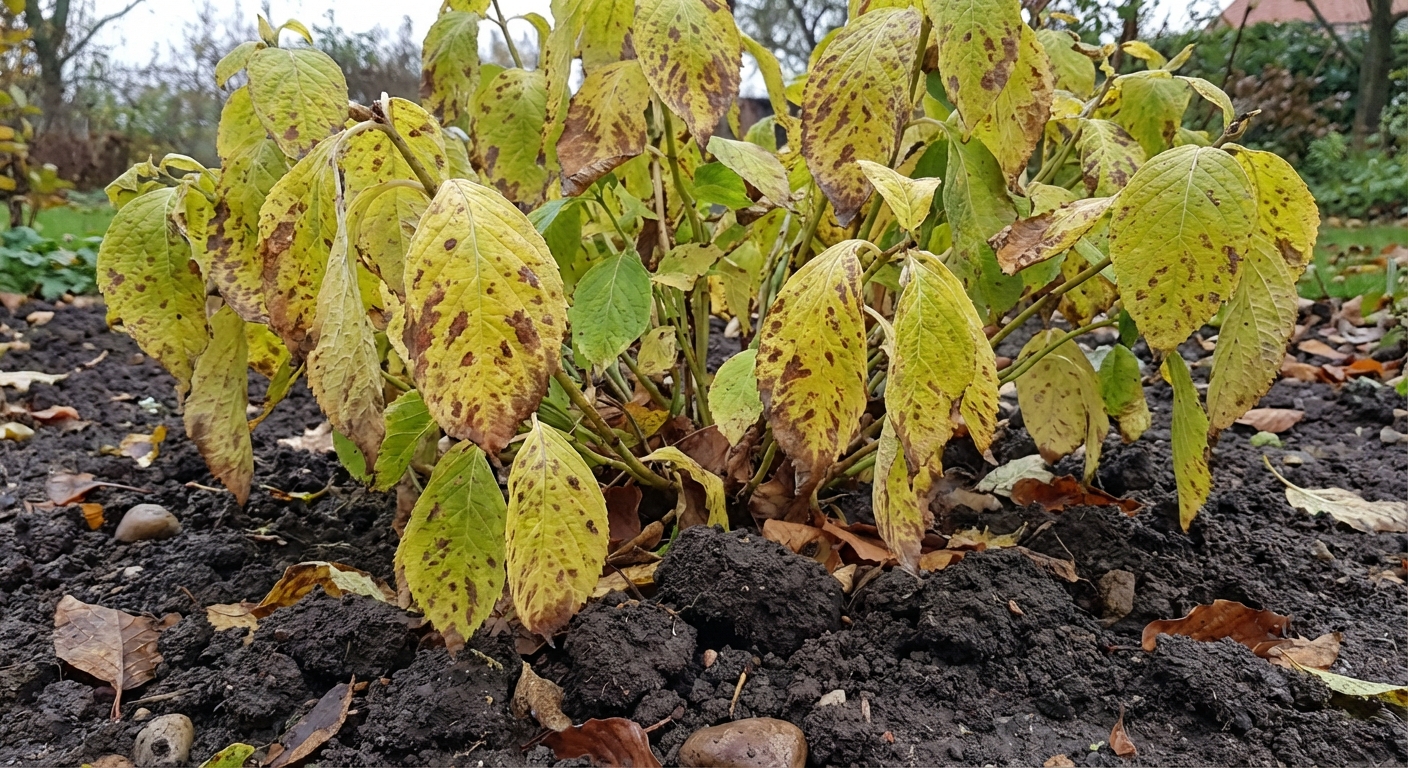
Yes, hydrangeas like moisture. No, they do not like swamp feet. If the soil stays soggy or drainage is poor, roots struggle to breathe, and the plant can look thirsty even when the ground is wet. Leaves may yellow, droop, and then develop brown patches as stress piles up.
How to confirm
- Soil feels wet or cold and sticky several inches down, even days after watering.
- Wilting is worst in the morning too, not just during hot afternoons.
- The base of the plant may smell musty, or you may see mushrooms in the mulch.
Fix it
- Pause automatic watering. Let the top few inches dry a bit, then water only when needed.
- Improve drainage. Pull back heavy mulch, avoid watering in frequent small sips, and consider raising the bed or amending with compost if water puddles.
- Keep water off the crown. Aim at the soil line, not the stems.
4) Leaf spot
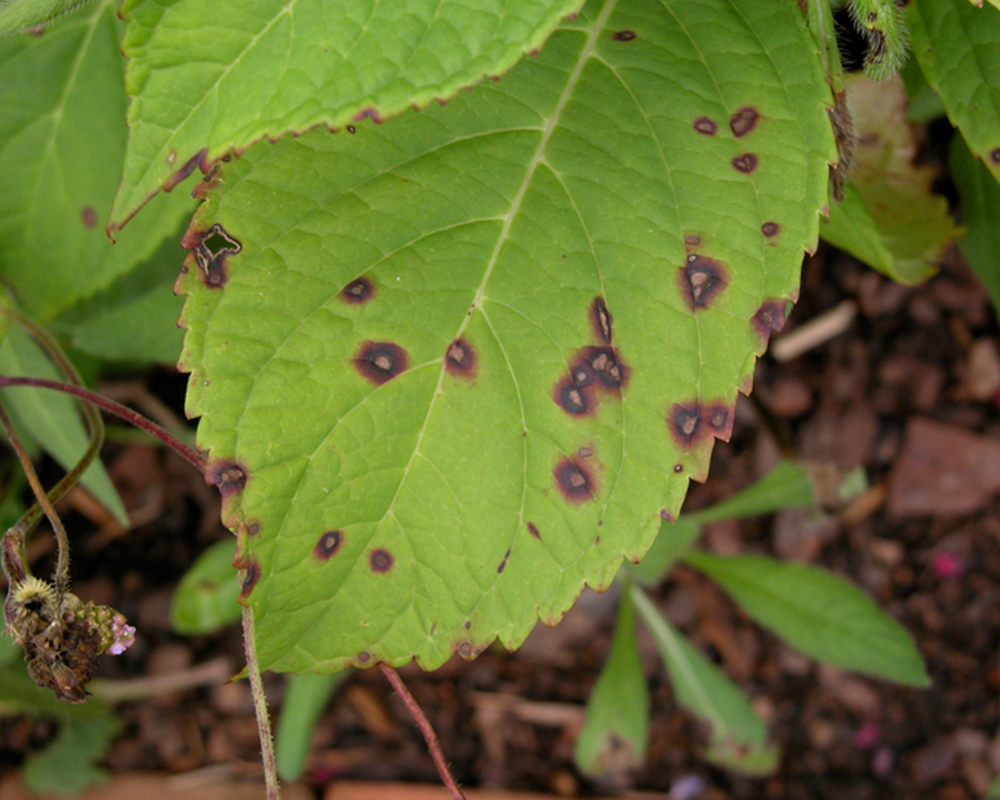
When you see lots of distinct spots that multiply and merge, think leaf spot disease. Hydrangeas can get several lookalike issues, including fungal problems like Cercospora leaf spot and anthracnose, and sometimes bacterial leaf spot. From a home-garden distance, the first steps are the same: reduce leaf wetness and improve airflow.
How to confirm
- Spots start small, then expand into blotches.
- Often begins on lower, older leaves where airflow is poorer.
- Leaves may yellow before browning and dropping.
Fix it (organic-friendly first steps)
- Stop overhead watering. Water the soil, not the leaves.
- Prune for airflow. Remove a few crowded interior stems and any leaves sitting on the ground.
- Clean up fallen leaves. Do not compost heavily infected leaves unless your compost gets hot.
- Water early. If leaves get splashed, they will dry faster in the morning sun.
Should you use a fungicide?
If leaf spot returns every year and the plant defoliates early, a fungicide can help, but it works best as prevention, not rescue. Look for products labeled for hydrangeas and leaf spot, and follow the label exactly. If spotting is severe, keeps spreading despite good care, or you suspect a bacterial issue, your local extension office can help with ID so you do not spray the wrong thing.
5) Overfertilizing
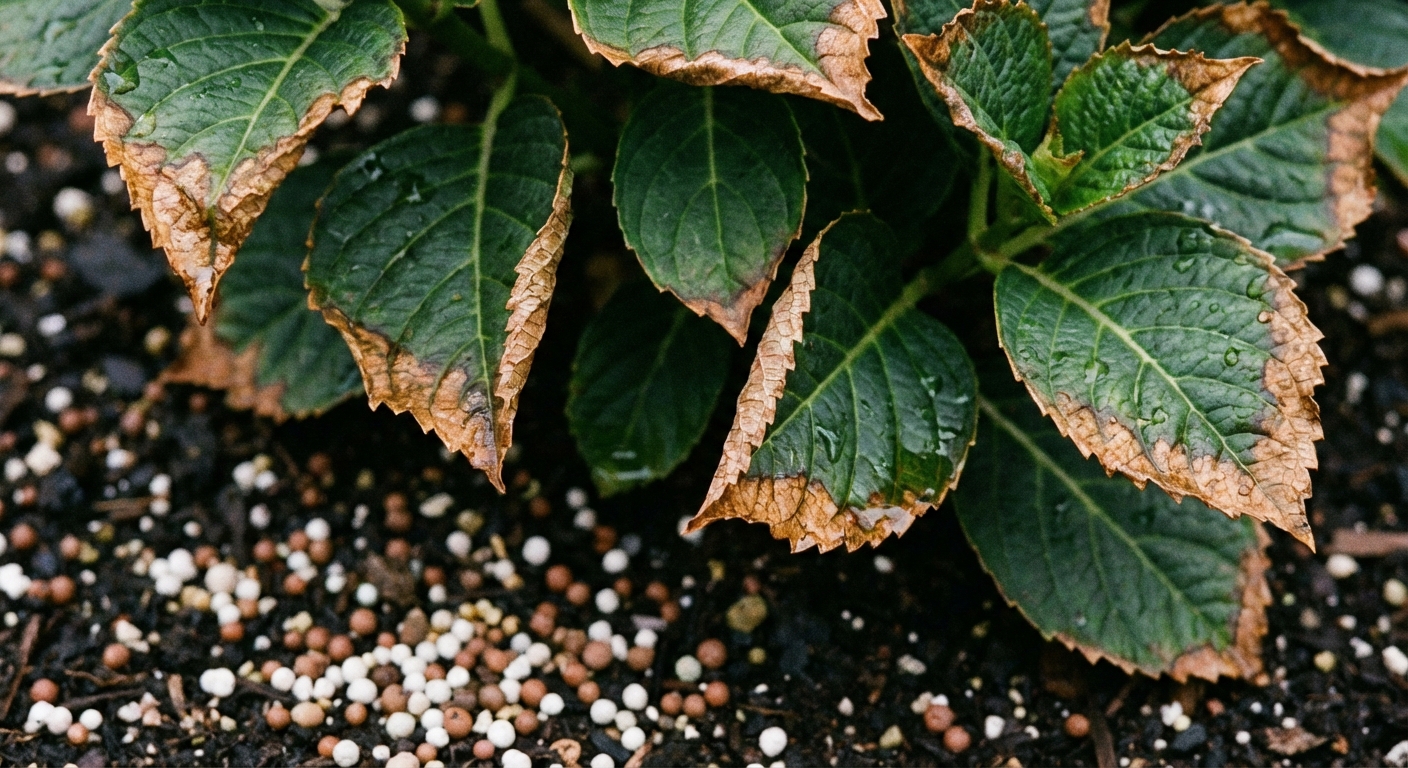
Hydrangeas do not need heavy feeding. Too much fertilizer, especially quick-release or high-nitrogen formulas, can draw water out of roots and scorch leaf tips and edges. It can also push soft growth that browns easily in heat.
How to confirm
- Browning appears shortly after fertilizing.
- Tips look sharply burned, sometimes with a thin yellow band before the brown.
- Plant may look extra lush and dark green before the browning shows up.
Fix it
- Flush the soil (carefully). Water deeply several times over a few days to help move excess salts down and away from roots. Make sure drainage is good so you do not waterlog the plant.
- Stop feeding for now. Let the plant recover.
- Switch to gentle nutrition. Compost top-dressing and slow-release, balanced fertilizers are safer than frequent high-nitrogen feeding.
- Follow timing rules. Avoid fertilizing during heat waves or drought. A stressed plant cannot “eat” well.
How often should you fertilize?
In many gardens, one spring application of a slow-release, balanced fertilizer is often plenty, especially if you top-dress with compost. That said, needs vary by hydrangea type, pot versus in-ground planting, and your soil. When in doubt, follow the label and consider a soil test.
6) Frost damage
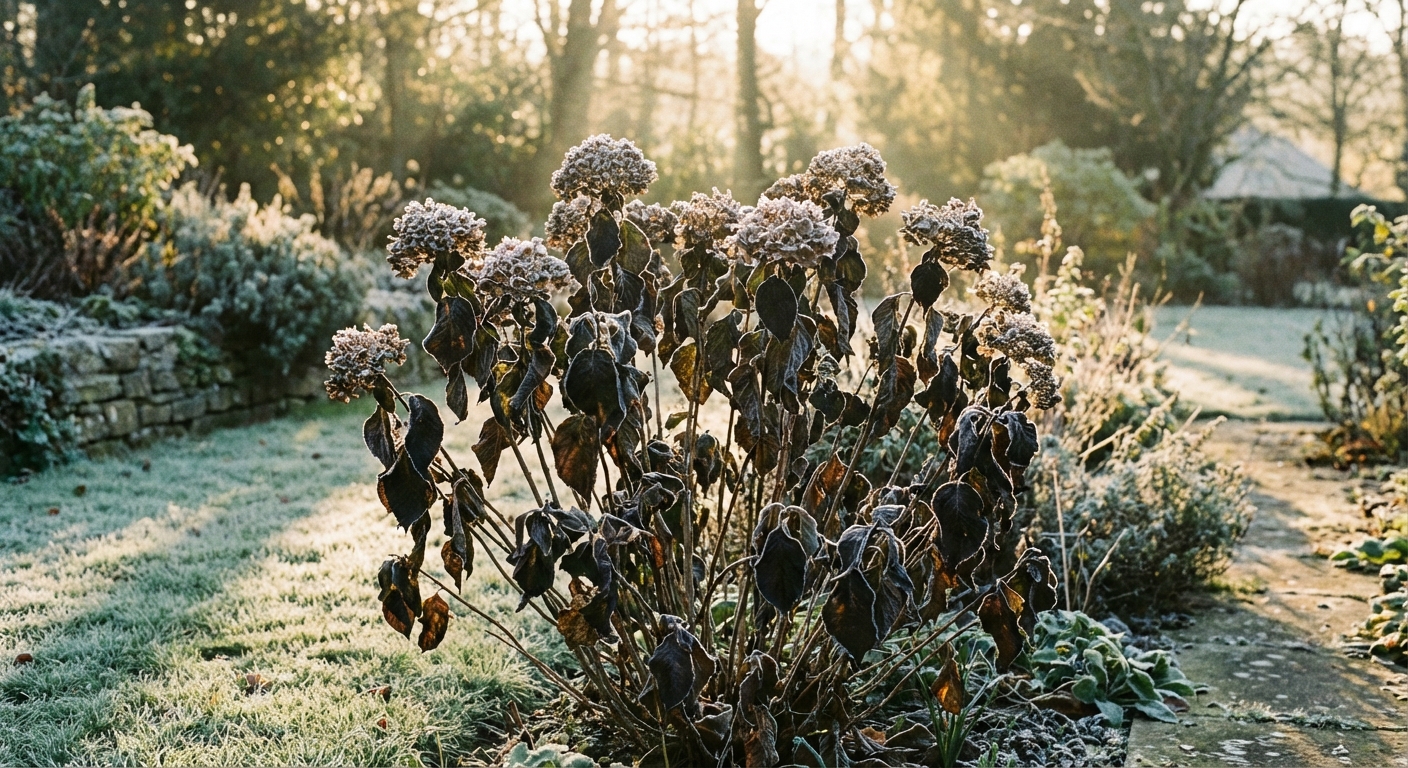
A late spring frost or an early fall cold snap can leave hydrangea leaves looking water-soaked, darkened, or browned overnight. The texture is different from scorch. Frost-damaged leaves often look limp at first, then turn papery and brown.
How to confirm
- Damage appears immediately after a cold night.
- Leaves may look translucent or darkened before turning brown.
- New growth is often hit hardest.
Fix it
- Wait a few days before pruning. You want to see what rebounds. Hydrangeas can surprise you.
- Remove mushy tissue. Once it is clearly dead, snip it off to prevent rot.
- Cover on cold nights. Use frost cloth or a bedsheet. Avoid plastic touching leaves. For best protection, drape the cover to the ground so it traps a little radiant heat.
- Keep soil evenly moist. Hydrated plants handle temperature swings better than drought-stressed ones.
Normal fall change
Sometimes brown is simply hydrangeas doing their seasonal wrap-up. As days shorten and nights cool, older leaves can yellow, bronze, or redden before dropping. This tends to look more gradual and uniform than scorch or fertilizer burn.
Signs it is normal
- It is late summer into fall, and temperatures are cooling.
- Leaves change color more evenly, not just crispy edges.
- The plant otherwise looks stable, with no sudden wilt pattern or spotting spread.
What to do
Let it happen. Keep watering until the ground freezes (especially in dry autumns), tidy up fallen leaves, and add compost or mulch to support roots through winter.
Other common culprits
Water quality and salt buildup
If you have very hard water, use a water softener, or fertilize often, salts can build up and cause leaf edges to brown like a slow-motion burn. A soil test can confirm it. The fix is usually gentler feeding, good deep watering with drainage, and occasionally leaching salts if your soil can handle it.
Pests
Pests are not the most common cause of “brown leaves,” but they are worth a quick check. Look under leaves for fine webbing and stippling (spider mites) or odd trails (leaf miners). If you find them, hose the plant off and treat based on the pest.
New plant stress
If your hydrangea was planted recently, a heat wave plus a small root system can lead to browning fast. Baby your new shrub with consistent moisture, mulch, and afternoon shade until roots catch up.
10-minute rescue plan
- Check soil moisture 3 inches down and water deeply if dry.
- Check drainage if the soil is wet. Pause watering and make sure water is not pooling.
- Look at the pattern: edges crisp (scorch), spots (leaf spot), sudden after feeding (fertilizer), blackened after cold (frost).
- Remove the worst leaves (more than 50 percent brown) and any fallen debris beneath the plant.
- Mulch 2 to 3 inches to stabilize moisture and temperature.
- Adjust one thing at a time so you know what helped.
When to worry
Most hydrangeas bounce back with better watering and placement. But if browning is spreading fast and the plant is declining week to week, it is time to dig a little deeper.
- Worry more if: stems are wilting even in cool mornings, the base of the plant smells rotten, or leaves are browning along with significant dieback.
- Consider a soil test if: you fertilize regularly, have hard water, use softened water outdoors, or see repeated burn symptoms. Excess salts and pH issues can make plants act “thirsty” even when watered.
- Get help with ID if: spotting is severe, keeps returning, or you are not sure if it is fungal or bacterial. Your local extension office is a great resource.
Prevent it next season
- Choose the right light. Morning sun, afternoon shade is ideal for many types.
- Water deeply and consistently. Check moisture and water as needed, then let the top inch or two dry slightly between waterings.
- Avoid wet leaves. Drip lines, soaker hoses, or careful hand watering reduce leaf spot problems.
- Go easy on fertilizer. Compost plus a gentle slow-release option is plenty in many gardens. Adjust based on plant performance, pot versus in-ground, and soil test results.
- Plan for weather swings. Keep frost cloth handy and shade new plantings during heat waves.
If you tell me your hydrangea type (bigleaf, panicle, smooth, oakleaf), your rough location, and when the browning started, I can help you narrow the diagnosis even further.