
Why Are My Calathea Leaves Curling?

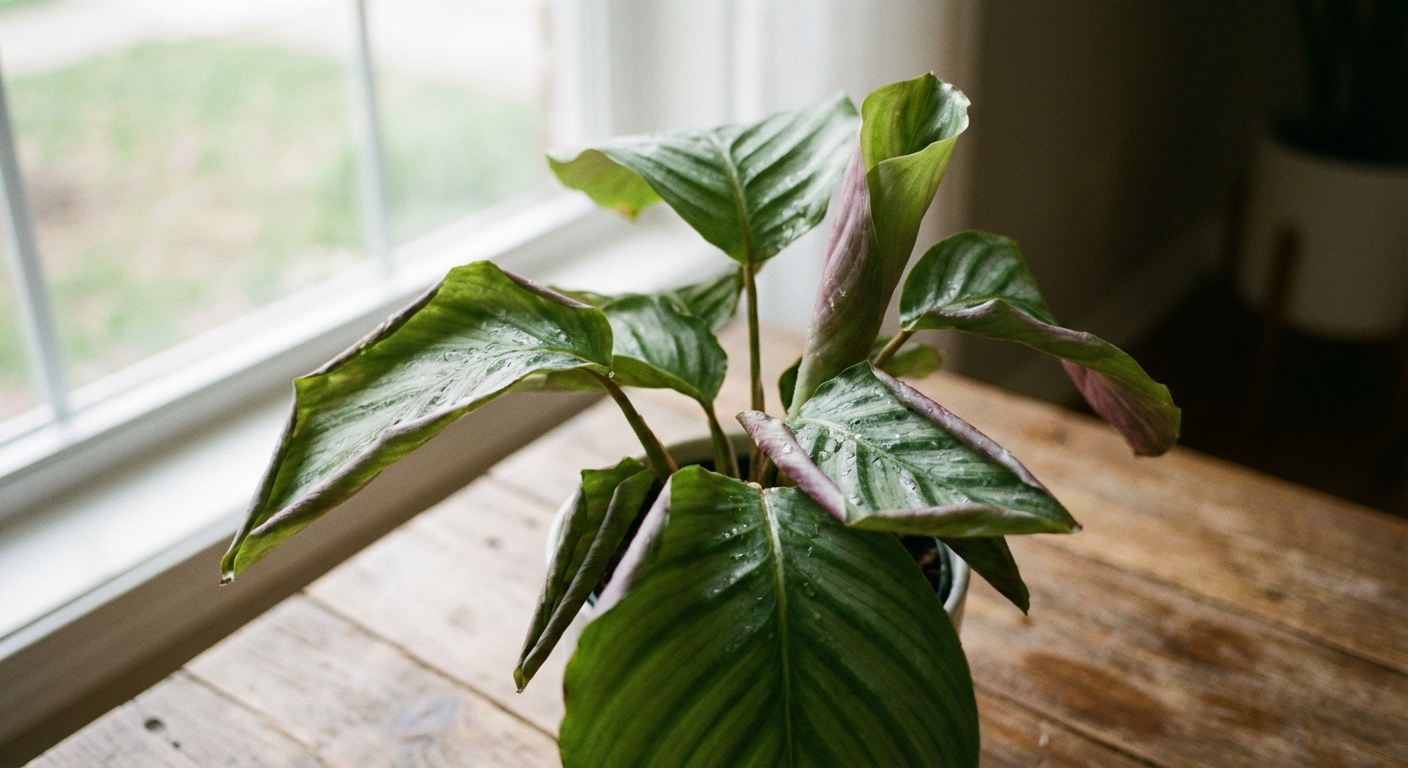
When a calathea curls its leaves, it is not being dramatic. It is usually responding to stress by reducing leaf surface area and limiting water loss. The good news is that curling is one of the more “fixable” calathea complaints once you pinpoint which kind of stress your plant is reacting to.
I have rescued plenty of crispy rattlesnakes and sulky medallions from the brink, and the pattern is almost always one of these: underwatering, low humidity, temperature stress, direct sun, root problems, or pests. Let’s troubleshoot like a calm plant detective.
Quick name note: many plants sold as “calathea” are now classified as Goeppertia (you will still see the old name everywhere, including on nursery tags).
Quick check: 5-minute curl diagnosis
Before you change everything at once, run through this quick checklist. It helps you choose the right fix instead of stacking stress on top of stress.
- Feel the soil 2 inches down: bone-dry, lightly damp, or wet and heavy?
- Check humidity: is the air dry (heated or air-conditioned room) or comfortably humid? A small hygrometer helps.
- Look at the light: any direct sun hitting the leaves, even for an hour?
- Note the temperature: is it near a vent, drafty door, or chilly window at night?
- Inspect the pot and roots: does the pot drain well, smell sour, or stay wet for a long time?
- Rule out pests: look under leaves for webbing, stippling, silvery patches, or tiny black specks.
Common combo (in my experience): slightly dry soil plus low humidity. Calatheas are rainforest understory plants. They like their roots evenly moist and their leaves under less transpiration stress in humid air.
Cause #1: Underwatering (or uneven watering)
This is the classic reason calathea leaves curl like little tacos. When the plant cannot move enough water to the leaves, it often reduces surface area to slow moisture loss.
Signs it is underwatering
- Soil feels dry at least 2 inches down
- Pot feels noticeably light when you lift it
- Leaf edges may feel papery or crisp
- Curling is often paired with drooping or a “sad” posture
Recovery plan
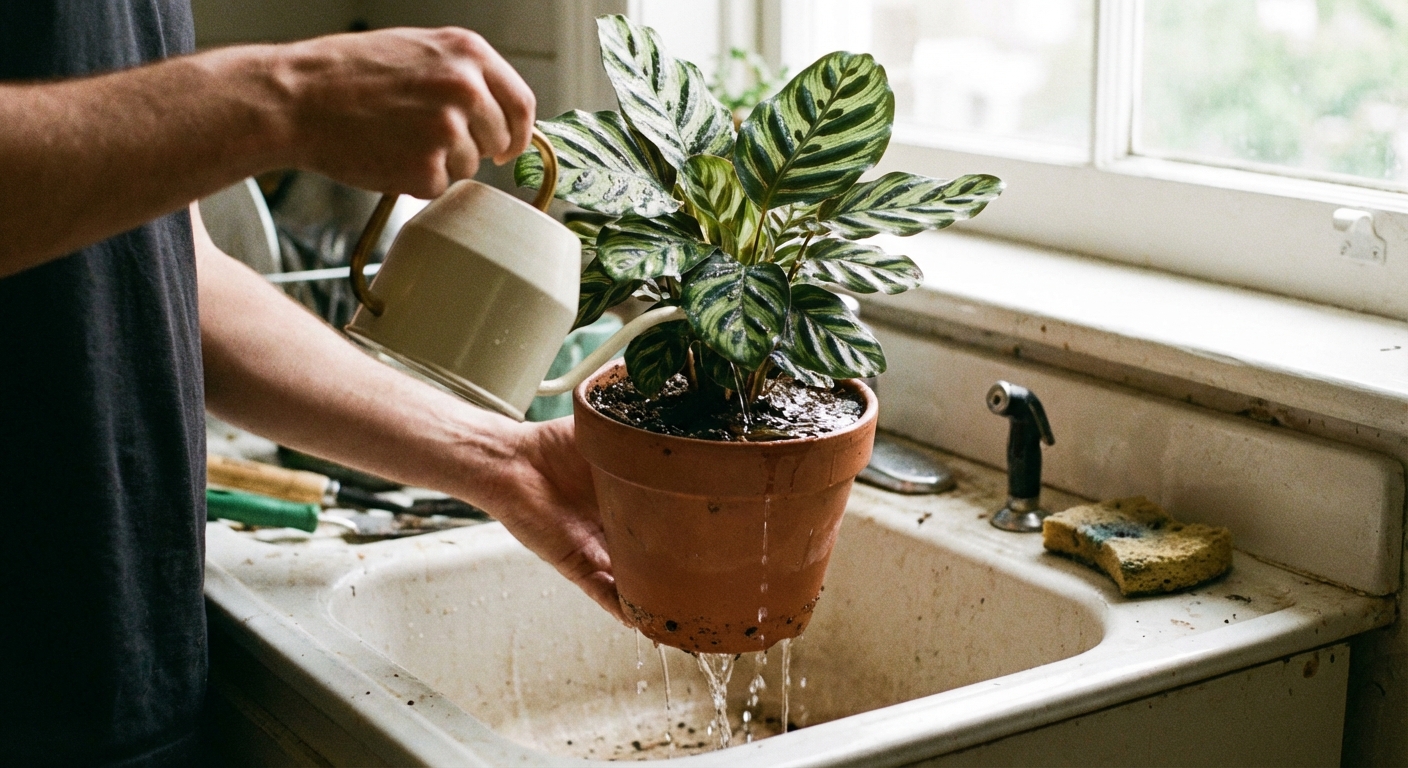
- Rehydrate thoroughly: water slowly until you see steady drainage from the bottom. Avoid a tiny sip. Calatheas usually prefer a full drink.
- If the soil is hydrophobic (water runs straight through): bottom-water, then let it drain well. Timing varies by pot size and soil, so stop when the top of the mix feels evenly moist and the pot feels heavier.
- Set a rhythm: water again when the top 1 inch is dry, not when the whole pot is dust.
- Use gentler water if possible: if your tap water is very hard or heavily chlorinated, try filtered, distilled, or rainwater. Some calatheas curl and crisp faster when salts build up.
Variety note: Calathea orbifolia has big, thin leaves that show thirst quickly. Medallion and rattlesnake (often sold as Calathea lancifolia, now commonly classified as Goeppertia insignis) are a bit more forgiving, but still curl when they dry out.
Cause #2: Low humidity
If your calathea’s roots are moist but the leaves are still curling, humidity is a common culprit. In dry air, the plant can lose water faster than it can replace it, especially through broad, thin leaves.
Signs it is humidity
- Soil is lightly damp, yet leaves curl and edges crisp
- Curling is worse in winter or in air-conditioned seasons
- Nearby plants may show browning tips too
- You notice static, dry skin, or a constantly running heater
Recovery plan
- Aim for a helpful range: many calatheas look best around 50 to 70% humidity, but plenty can tolerate 40 to 50% if watering is consistent (and they are not sitting in a draft).
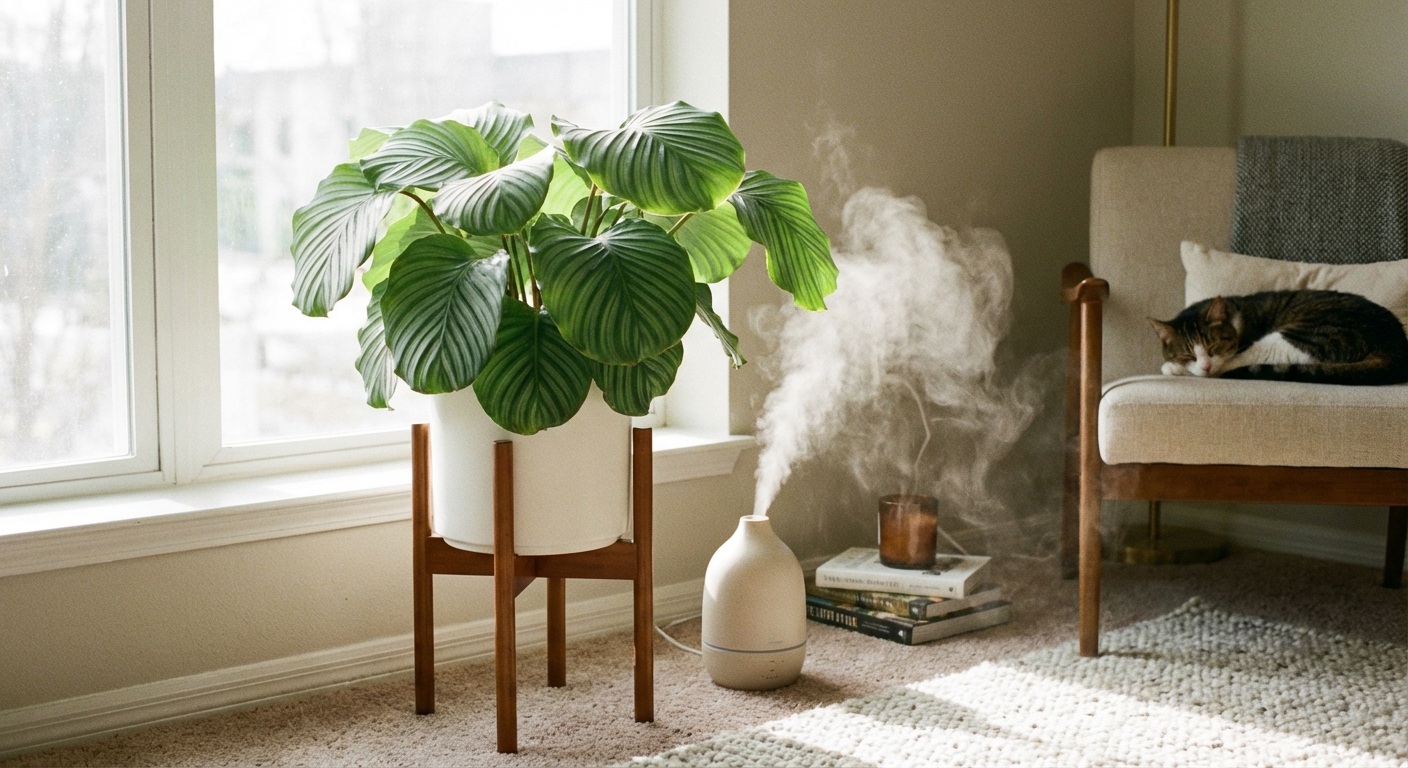
- Use a humidifier: this is the most reliable fix. Place it a few feet away and run it during the driest part of the day.
- Create a plant cluster: grouping plants can increase local humidity.
- Try a pebble tray correctly: water sits below the pot on pebbles, so the pot is not soaking in it. This is a small boost, not a miracle.
- Skip misting as the main strategy: it is brief and can encourage spotting if air circulation is poor.
Variety note: orbifolia is famously humidity-hungry. Medallion and rattlesnake will complain too, but orbifolia is the one that makes many people buy the humidifier.
Cause #3: Temperature stress and drafts
Calatheas like stable, cozy temperatures. Sudden swings can trigger curling because the plant struggles to balance water movement and transpiration.
What calatheas prefer
- Ideal range: about 65 to 80°F (18 to 27°C)
- Avoid: below 60°F (15°C), hot blasts from heaters, and cold drafts
Signs it is temperature
- Curling appears quickly after moving the plant
- Leaves curl most on the side facing a vent or window
- Soil moisture seems normal, but the plant still looks stressed
Recovery plan
- Move it away from vents: keep calatheas out of the direct path of heating and AC.
- Buffer cold windows: pull the plant back a foot or two at night, especially in winter.
- Keep it steady: a consistent spot often improves “mystery curling” within 1 to 2 weeks.
Cause #4: Too much light or direct sun
Calatheas are understory plants. They want bright, indirect light, like what you would find under a tree canopy. Direct sun can cause curling as leaves try to reduce exposure, and it can lead to scorch.
Signs it is light stress
- Curling happens on the sun-facing side
- Faded, washed-out color or bleached patches
- Brown, crispy spots that look “sunburned”
Recovery plan
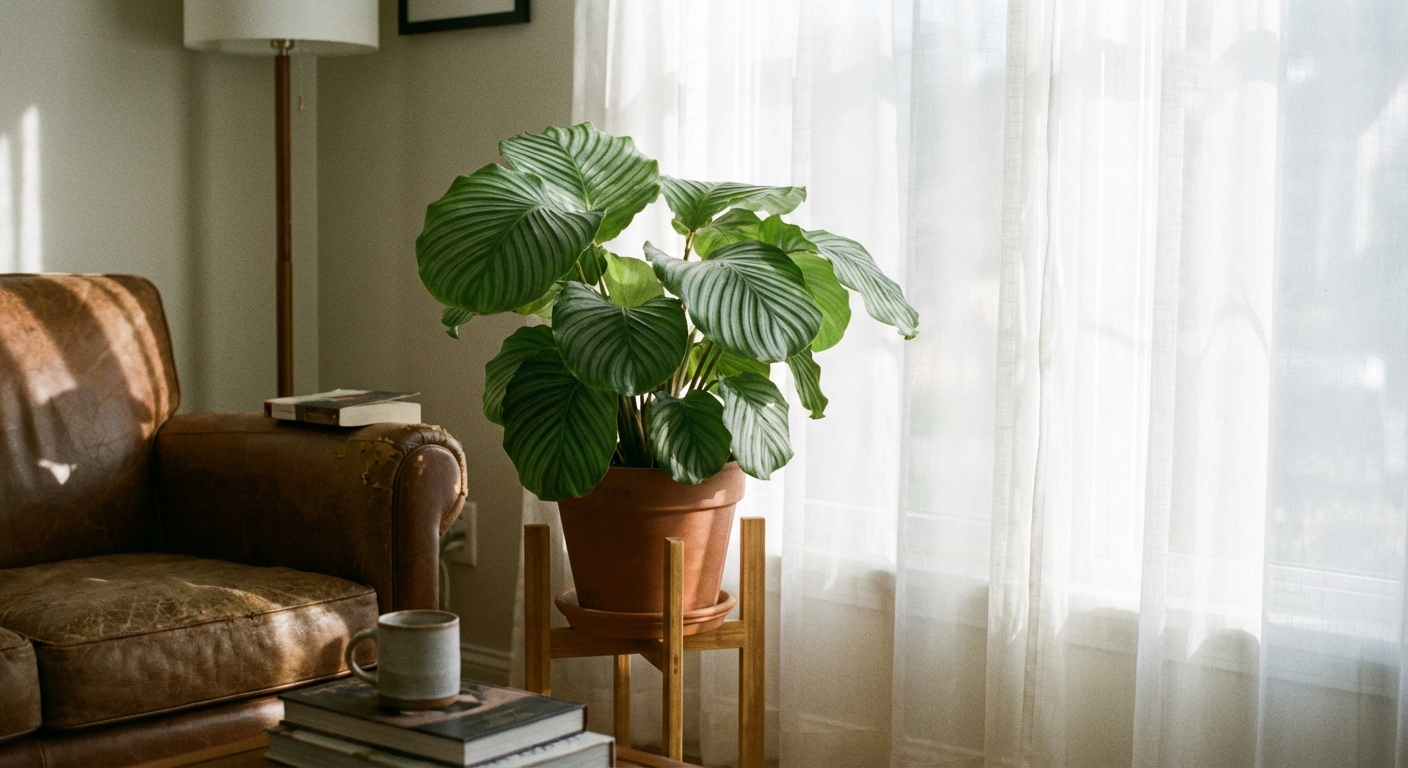
- Shift to bright, indirect light: an east window is often great. South or west windows usually need a sheer curtain.
- Rotate weekly: a quarter turn keeps growth even and reduces one-sided stress.
- Do not overcorrect into deep shade: too little light slows water use and can contribute to root issues. Aim for bright but gentle.
Cause #5: Root problems (overwatering, drainage, compacted soil)
This is the sneaky one because curled leaves can look like underwatering, but the roots are too stressed to absorb water. When roots lack oxygen from soggy soil, they stop functioning well, and the leaves curl from internal drought.
Signs it is a root issue
- Soil is wet for many days and the pot feels heavy
- Musty or sour smell from the potting mix
- Yellowing along with curling
- Fungus gnats hovering around the soil surface
- Plant perks up briefly after watering, then crashes again
Recovery plan
- Check drainage: make sure the pot has a drainage hole. Decorative cachepots should be emptied after watering.
- Pause watering: let the top 1 to 2 inches dry out, but do not let the entire root ball turn to dust.
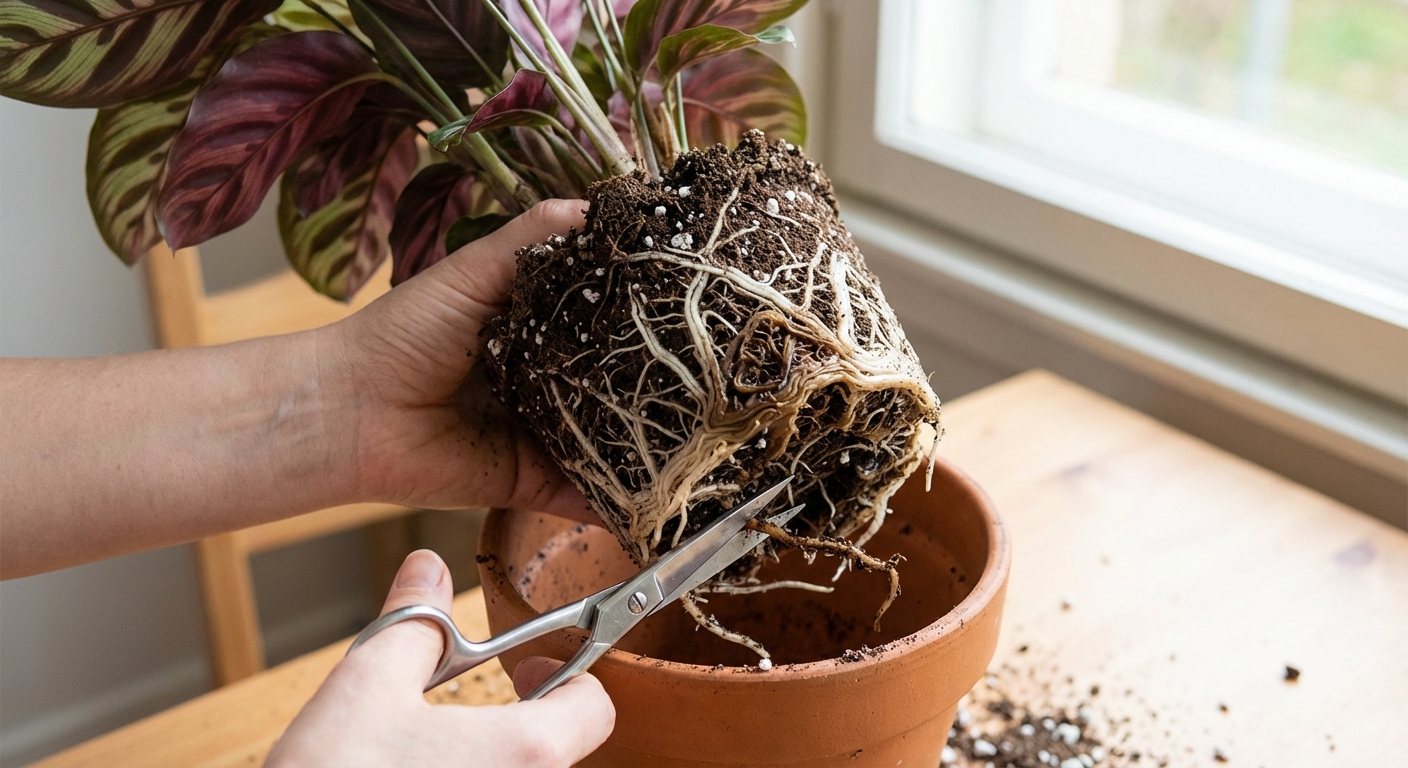
- Assess the soil texture: if it is dense (especially compacted peat) and stays wet, plan a repot. Also watch for “perched water” in very fine mixes where the lower layer stays saturated.
- Repot if needed: use a chunky, airy mix that still holds moisture. A good blend is high-quality potting soil + coco coir or peat + perlite + a little orchid bark.
- Trim rotten roots: healthy roots are firm and pale. Rotten roots are brown, mushy, and may smell bad. Use clean scissors and remove only what is clearly dead.
- After repotting: water once to settle, then wait until the top inch dries before watering again.
Pot-size tip: going too large keeps soil wet too long. Size up only 1 to 2 inches wider than the old pot.
Cause #6: Pests (mites and thrips)
If your care routine seems fine but curling keeps getting worse, check for pests. Spider mites and thrips can cause curling by damaging leaf tissue and stressing the plant.
What to look for
- Spider mites: fine webbing, pale stippling, dusty-looking leaf undersides
- Thrips: silvery patches, distorted new growth, tiny black specks (frass)
Recovery plan
- Isolate the plant: keep it away from other houseplants while you treat.
- Rinse and wipe: shower the foliage (especially undersides), then gently wipe leaves.
- Treat and repeat: use insecticidal soap or horticultural oil, following the label. Repeat every 5 to 7 days for several rounds to catch new hatchlings.
- Support recovery: keep light bright and indirect, and avoid fertilizing until you see healthy new growth.
Symptoms: match and fix
If you are still unsure, use this symptom path. Start with what you can see and feel right now.
1) Curling plus dry soil
- Most likely: underwatering or hydrophobic soil
- Do this today: deep water, then reassess in 24 hours
2) Curling plus moist soil plus crispy edges
- Most likely: low humidity (sometimes combined with mineral-heavy water)
- Do this today: run a humidifier or move to a more humid room, like a bright bathroom
3) Curling plus yellowing plus soil stays wet
- Most likely: root stress from overwatering, poor drainage, or compacted mix
- Do this today: stop watering, improve airflow, and consider repotting within a week
4) Curling plus faded color or scorch
- Most likely: too much sun
- Do this today: move back from the window or add a sheer curtain
5) Curling worse at night or near vents
- Most likely: temperature swings or drafts
- Do this today: relocate to a stable, draft-free spot
6) Curling plus stippling, webbing, or silvery patches
- Most likely: spider mites or thrips
- Do this today: isolate and start treatment
Variety notes: orbifolia, medallion, rattlesnake
Calathea orbifolia
- Common trigger: low humidity and inconsistent watering
- Best fix: humidifier plus evenly moist soil, never bone dry
- Watch for: edges crisping first, then curling
Calathea medallion (Goeppertia roseopicta ‘Medallion’)
- Common trigger: water quality and dry air
- Best fix: filtered water, flush salts during active growth, and raise humidity
- Watch for: curling paired with browning tips
Rattlesnake (Goeppertia insignis)
- Common trigger: drying out too far between waterings
- Best fix: consistent moisture and bright indirect light
- Watch for: long narrow leaves curling along the length like a canoe
What not to do
- Do not fertilize a stressed, curling calathea: wait until you see new healthy growth. Fertilizer can burn compromised roots.
- Do not water on a schedule: water based on soil feel and pot weight. Seasons change everything.
- Do not move it daily: calatheas like consistency. Make one thoughtful move, then let it settle for a week or two.
- Do not cut off every curled leaf: a leaf can recover. Remove only leaves that are mostly brown, mushy, or irreversibly damaged.
How long until it uncurls?
With the right fix, you may see slight improvement in 24 to 72 hours for thirst or humidity issues. Full recovery often takes 2 to 4 weeks, especially if roots were stressed or pests were involved. Some leaves stay a little curled even after conditions improve, and the real sign you are back on track is new growth that emerges flat and strong.
If you remember one thing: calatheas curl to protect themselves. Give them steady moisture, soft light, warm stable temperatures, and humid air, and they will stop folding up like umbrellas in a storm.
Calathea curling FAQ
Is leaf curling always a bad sign?
Not always. Calatheas naturally move their leaves up and down between day and night (nyctinasty). But tight curling inward, especially with crisp edges, droop, discoloration, or new distortion, is usually stress-related.
Should I mist my calathea?
You can, but it is not a dependable humidity solution. A humidifier or plant clustering works better long-term. If you mist, do it in the morning and keep airflow decent to reduce spotting.
Can curled leaves flatten again?
Yes, often. If the leaf tissue is still supple and green, it can relax after hydration and humidity improve. If it is crispy and brown, that part will not recover, but the plant can still grow healthy new leaves.
Is tap water making my calathea curl?
Sometimes. Hard water and mineral buildup can contribute to edge burn and overall stress. If you suspect water quality, switch to filtered or distilled for a few weeks. You can also flush the soil during active growth by watering until plenty drains out. Go lighter in winter when growth slows.