When to Plant Dahlia Tubers

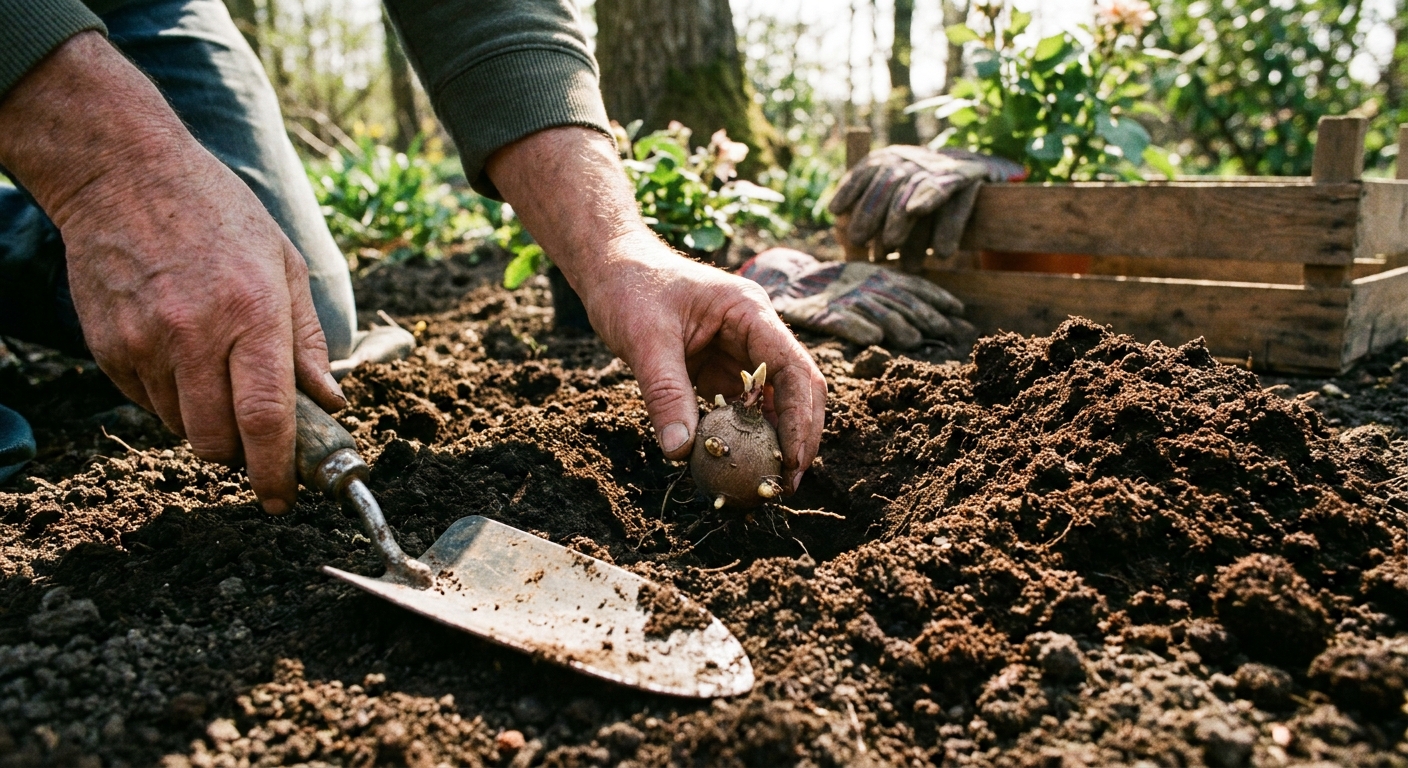
Dahlias are sunshine lovers with tender, tropical confidence. They will not thank you for being “early,” because cold, wet soil can stall them out or rot tubers before they ever wake up. The secret to big plants and long blooms is simple: plant after the danger of frost and when the soil has actually warmed up.
Below is my timing-first guide for when to plant dahlia tubers, with region-aware windows, soil temperature targets, and an easy checklist you can use in the garden. If you want the full step-by-step on planting depth, pinching, staking, and feeding, pair this with our grow-from-tubers guide. This page is all about when.
Note: Timing guidance below is written for the Northern Hemisphere. If you are in the Southern Hemisphere, shift the seasons accordingly.

The golden rule: frost-free, warm, well-drained
Dahlias are not frost hardy. Even a light frost can blacken new shoots, and cold, wet soil can encourage tubers to rot before they sprout.
Use two green lights before you plant
- Last frost has passed, and your forecast does not show a cold snap.
- Soil temperature is at least 55 to 60°F (13 to 16°C) at 4 inches deep, trending upward, and the bed drains well. Many growers aim for 60 to 65°F (16 to 18°C) for faster, more reliable sprouting and lower rot risk.
If you only remember one thing, remember this: cold, soggy soil is the bigger problem than the calendar. A warm week in early spring can fool us, but the ground is a slower learner.
How to check soil warmth
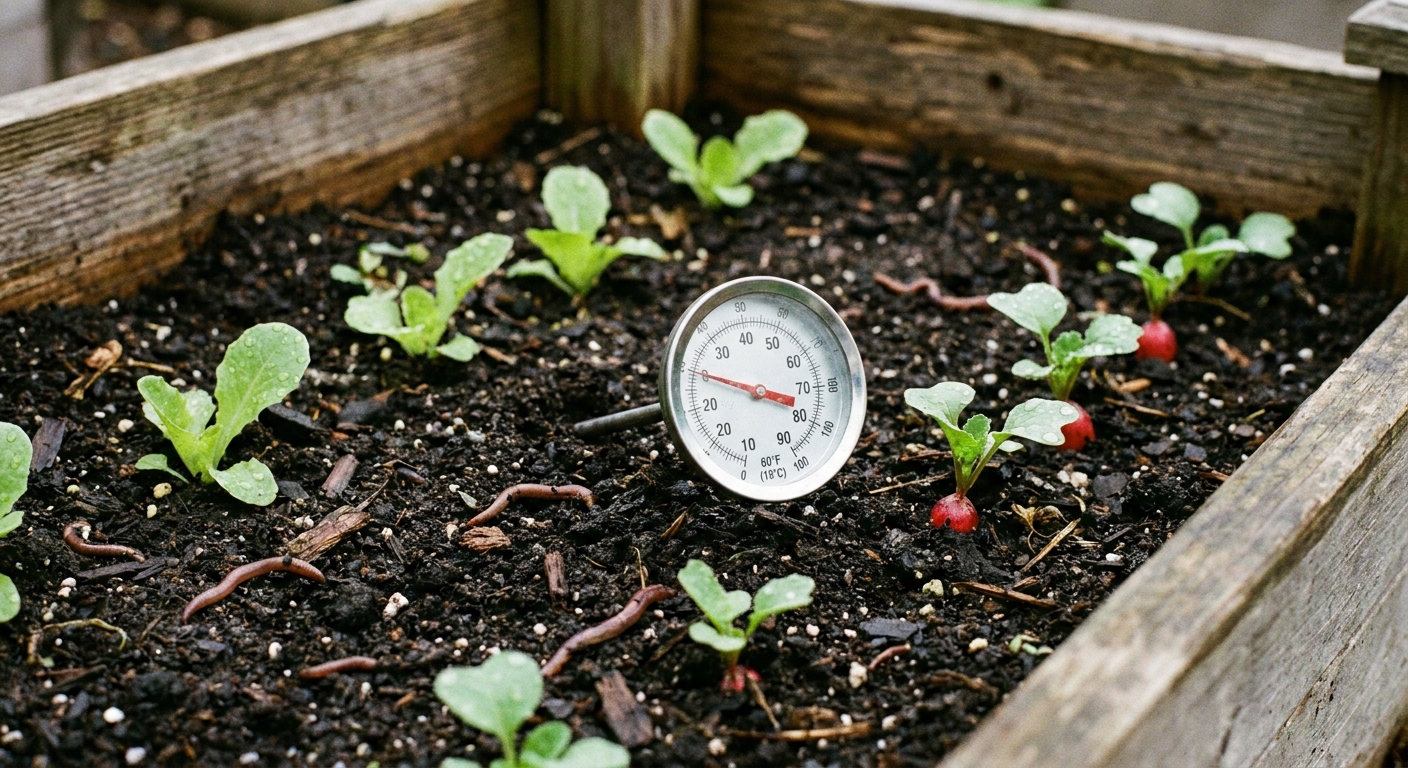
The fastest way is a simple soil thermometer. I keep mine near the potting bench like it is a kitchen tool.
Quick soil-temperature check
- Measure in the morning for a more conservative (coolest) reading.
- Push the thermometer 4 inches deep in the bed where you will plant.
- Check for 2 to 3 days in a row. If it is hovering at 55 to 60°F (13 to 16°C) or above and warming, you are in business. If it is closer to 60 to 65°F (16 to 18°C), you are really in business.
No thermometer? Use common-sense proxies, then confirm with timing: your lawn is actively growing, dandelions are blooming, and the soil no longer feels icy and sticky when you dig. Still, if your spring is rainy and chilly, waiting an extra week often beats replanting a mushy tuber.
Timing by region
Because “last frost” varies wildly, think in weeks around your average last frost date, then let soil temperature and drainage make the final call.
General planting windows
- Cold winter climates (roughly USDA Zones 3 to 5): typically plant 1 to 3 weeks after your last frost, once soil hits at least 55 to 60°F (13 to 16°C) and is not waterlogged. In many areas this lands in mid-May to early June.
- Moderate climates (Zones 6 to 7): often plant around last frost to 2 weeks after, depending on spring warmth. Commonly April to May.
- Warm winter climates (Zones 8 to 10): you can plant earlier, but your “risk” may be cold rain, not snow. Many gardeners plant in late winter to early spring once soils are warming, then protect shoots if a cold night threatens.
Hot-summer note (parts of Zones 9 to 10): in very hot, humid, or desert summer climates, dahlias can behave more like a shoulder-season crop. Some gardeners plant for spring bloom (or even late fall or winter where frost is rare), then give afternoon shade and steady moisture as heat ramps up.
Microclimates matter: raised beds warm sooner than in-ground beds, south-facing foundations warm sooner than open lawn, and heavy clay stays cold longer than a fluffy, compost-rich loam.
Direct plant vs pre-sprout
You have two good timing strategies. One is simpler. The other gives you a head start in short-season areas.
Option 1: Direct plant outdoors
This is the low-fuss approach. Plant when you have both green lights: frost risk is low and soil is at least 55 to 60°F (13 to 16°C), warming, and draining well.
- Best for: gardeners with longer summers, or anyone who wants the simplest workflow.
- Downside: if spring stays cold and wet, tubers can sit too long and sulk.
Option 2: Pre-sprout indoors, then transplant
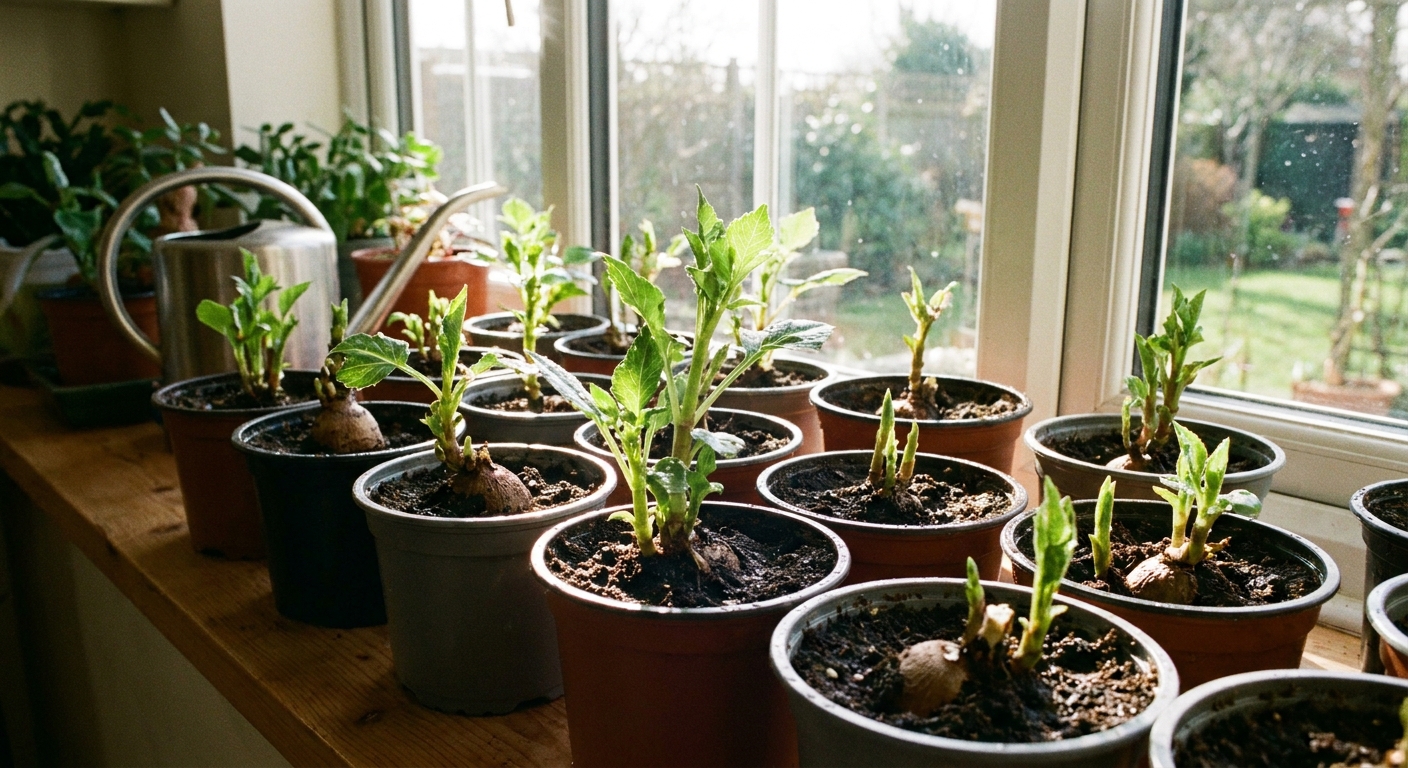
Pre-sprouting means waking tubers up in pots indoors so they already have shoots when the outdoor window opens.
- When to start indoors: about 4 to 6 weeks before your expected outdoor planting date.
- Room conditions: bright light and mild warmth, with soil kept barely moist. Wet soil plus cool rooms is an invitation to rot.
- When to move outside: after hardening off, and when nights are reliably above about 45 to 50°F (7 to 10°C), with soil at least 55 to 60°F (13 to 16°C), trending upward.
Pre-sprouting is not required, but it can be a game changer if your summer is short and you want earlier flowers.
Spacing at planting time
This page is about when, but spacing is part of the planting-day decision, because it affects how easily you can stake, weed, and water without breaking tender growth later. Give them room from the start and everything about the season runs smoother.
Simple spacing guide
- Small to medium dahlias: about 12 to 18 inches apart.
- Taller, large-flowered types: about 18 to 24 inches apart.
- Giant or very vigorous varieties: up to 24 to 36 inches apart.
If your bed is still crowded with spring bulbs or cool-season greens, it is okay to wait a week so you can plant dahlias into their real summer spacing. Dahlias perform best with minimal root competition once they get rolling.
Planting day checklist
“Can I plant my dahlia tubers today?”
- My average last frost date has passed, and the 7 to 10 day forecast shows no frost.
- Soil temperature is at least 55 to 60°F (13 to 16°C) at 4 inches deep for at least 2 days and trending upward (60 to 65°F is even better).
- The planting area drains well and is not holding cold water after rain.
- I can give each plant proper spacing for its mature size.
- I have stakes or support ready for tall varieties (it is easier to place supports early).
- If I am pre-sprouting, I have hardened off plants for several days before transplanting.
If you can check every box, go plant. If you are missing just one, especially soil warmth and drainage, waiting a little is not laziness. It is good horticulture.
If you planted too early
It happens, especially after the first sunny weekend of spring when everything in us wants to grow.
If frost is coming and shoots are up
- Water the soil earlier in the day if it is dry. Moist soil holds heat better than powdery dry soil.
- Cover plants in late afternoon with a frost cloth or an overturned pot or bucket for the night, then remove in the morning.
- Avoid plastic touching foliage. Plastic can cause cold injury where it touches leaves, especially if condensation freezes.
If tubers are in cold, wet soil
- Do not keep watering. Let the bed dry slightly.
- If you suspect rot and you can dig without destroying growth, lift one tuber to check. Healthy tubers feel firm, not slimy.
- In very soggy situations, replanting in a raised bed or mound can save the rest.
FAQ
Can I plant dahlias right after the last frost date?
Sometimes, yes. But only if the soil is warm enough and draining well. In many gardens, the ground lags behind the air by a week or two. If your soil is still below about 55 to 60°F (13 to 16°C), wait or pre-sprout.
What is the best soil temperature for planting dahlia tubers?
Aim for 60 to 65°F (16 to 18°C) at planting depth for the most reliable sprouting. You can often plant at 55 to 60°F (13 to 16°C) if the soil is warming and well-drained, but colder and wetter conditions increase rot risk.
Will dahlias grow if planted late?
Yes, they will still grow, but flowering may be delayed. If you are in a short-season region, late planting can mean fewer blooms before fall frost. Pre-sprouting is the easiest way to catch up.
Can I plant dahlias in containers earlier than in the ground?
Yes. Containers warm faster, and you can move them into a garage or against the house if a cold night threatens. Just do not overwater in cool weather.
Timing is the kindness
I talk to my ferns, so you can take this as quirky gardener wisdom, but it holds up: dahlias respond beautifully when you meet them where they are. Wait for warm soil and good drainage, give them room, and they will repay your patience with months of flowers.
When you are ready for the hands-on planting steps, head over to our grow-from-tubers guide, and if you are planning ahead for fall, our tuber storage article will keep your favorites safe through winter.