When to Harvest Corn

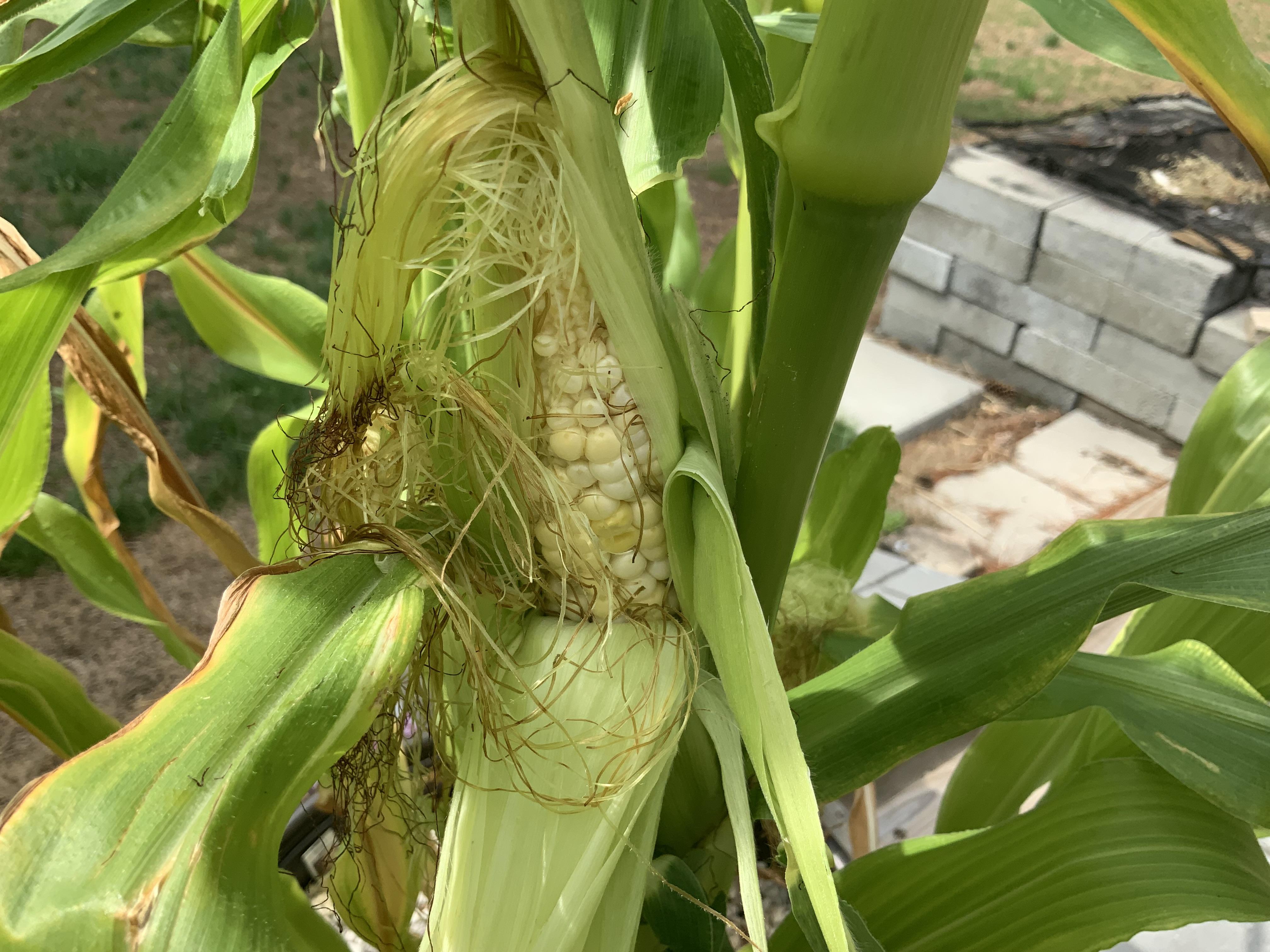
Sweet corn has a tiny window where it tastes like summer candy. Miss it by a few days and you will still have corn, but the kernels shift from juicy and sweet to starchy and chewy. The good news: you do not need guesswork. Your corn plants will tell you when the ears are ready if you know which clues to trust.

Quick yes or no checklist
If your stalks are tall, tassels are out, and you are hovering near the patch with a pot of boiling water in mind, run this quick check:
- Silks: Mostly brown and dry (not fresh and pale), with only a little green left near the tip.
- Ear feel: Ear feels full and firm through the husk from base to tip, with plump “shoulders” at the top.
- Husk color: Bright green to slightly dull green, still tight and not papery.
- Kernel test: Puncture one kernel on the side of the ear around the middle or slightly toward the base. If the juice is milky, harvest. If it is clear and watery, wait. If it is thick like paste and kernels look dented, you are late.
If the kernel test is milky and the other signs mostly match, pick today.
The most reliable timing: the milk-stage test
Gardeners talk about silk color, ear size, and “it just looks ready,” but the milk-stage test is the truth serum for sweet corn.
How to do it without ruining the ear
- Choose one ear that looks close, not necessarily your biggest.
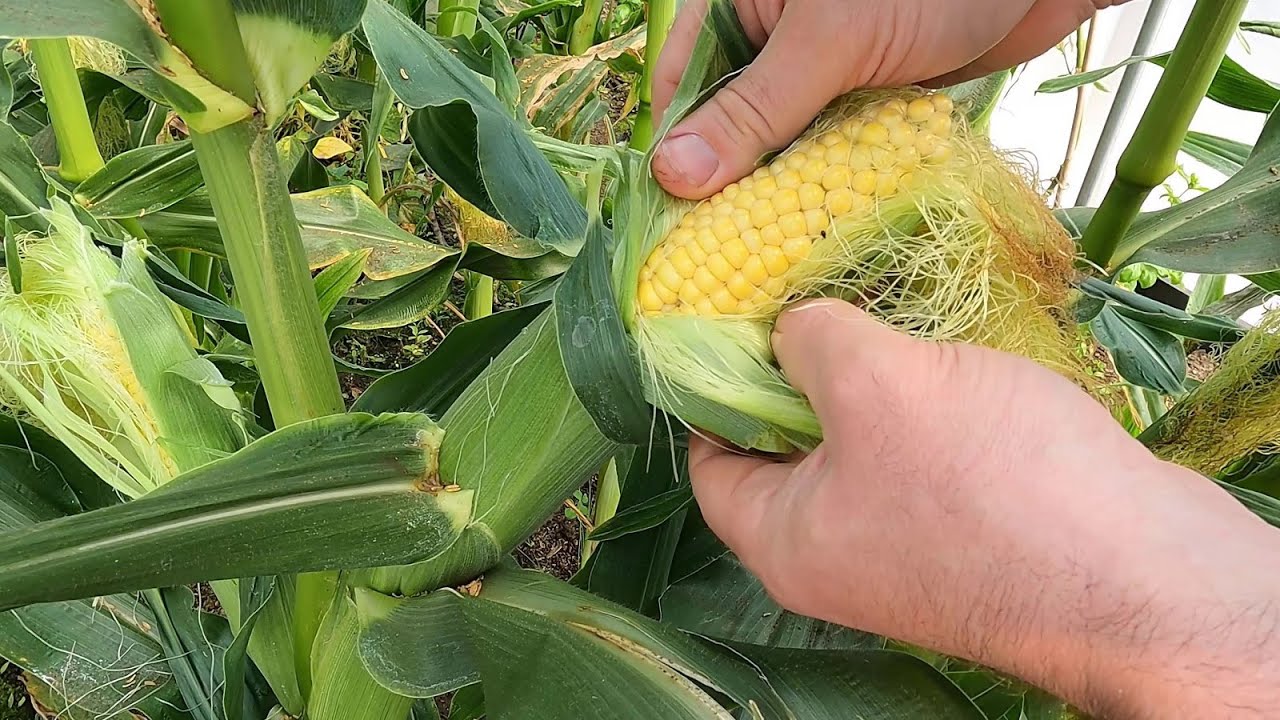
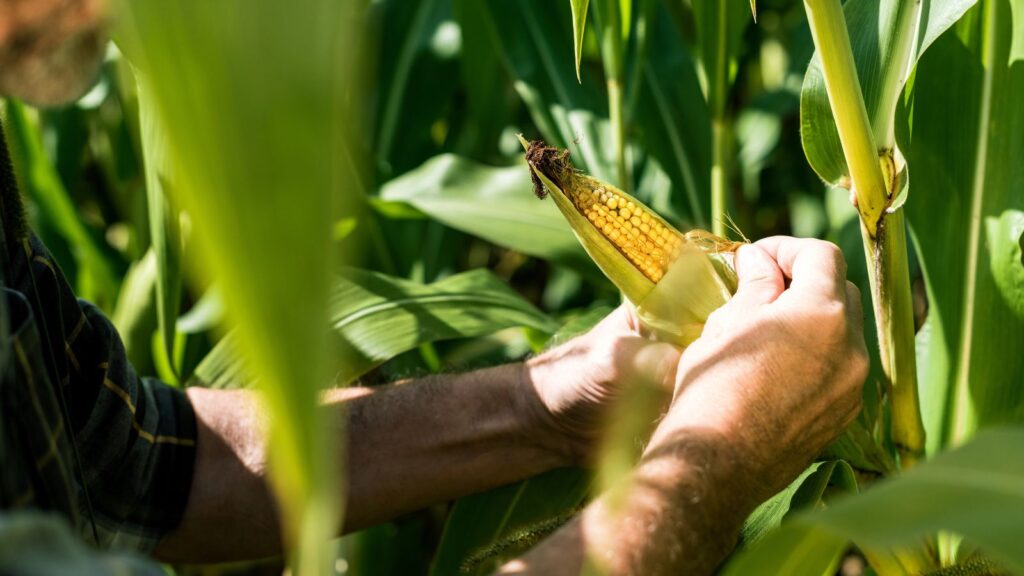
- Peel back just an inch or two of husk at the tip, enough to expose a few kernels. Try not to rip the husk off completely.
- Puncture a kernel on the side of the ear about halfway down or a touch closer to the base. (Kernels typically fill from the base toward the tip, so the middle to lower-middle is a better judge than the very tip.)
- Read the juice:
- Clear and watery = too early. Close it back up and check again in 1 to 2 days.
- Milky and opaque = perfect. Harvest now.
- Very thick or no juice = overmature. Harvest for a different use (more on that below).
- Wrap the husk back up snugly.
A small peek is usually fine if you rewrap it tightly and check again soon, but avoid repeated peeling and do not leave it open, since that can invite earworms, ants, birds, or drying.
Silk and husk clues
Before you do any kernel-poking, a quick look and squeeze gets you in the right neighborhood.
Silk color and texture
Silks start out pale and sticky, then darken and dry as pollination finishes and kernels fill. For sweet corn harvest, you are usually aiming for:
- Silks mostly brown (chestnut to dark brown), dry, and starting to look a bit “spent.”
- A small amount of green silk close to the tip can be fine if the ear is full and the milk test says go.
Ear size and “shoulders”
Run your fingers along the top of the ear through the husk. A ready ear feels full with rounded shoulders. If the ear tip feels skinny or pointy, it may still be filling. (And if your tips never fill, that is usually a pollination or stress issue, not you missing harvest day.)
Husk condition
- Ready: Husks tight and snug, green to slightly dull green.
- Too late: Husks start to look dry or loose, and you might feel hard, prominent kernels through the husk.
Days from silk (use as a guide)
If you like a calendar-based guide, count from when you first see fresh silks on that ear. Many sweet corn varieties hit peak eating quality about:
- 16 to 24 days after silks emerge in typical summer conditions
- Up to 28 days in cooler weather
- As fast as 14 to 18 days during hot spells, especially if plants are water-stressed
Use days-from-silk to know when to start checking, then let the milk-stage test make the final call. Variety matters a lot too. Supersweet (sh2) and some synergistic types can have slightly different timing and “holding” compared with standard (su) sweet corn.
Why same-day picking matters
Sweet corn is sweetest right after harvest because the plant immediately starts converting sugars into starch. That is why corn from your own garden tastes almost unfair compared with corn that sat in transit.
My “sweetest corn” routine
- Pick in the morning if you can. Ears are cool and crisp.
- Get them cold fast. Cook right away, or refrigerate unshucked ears immediately to slow sugar loss.
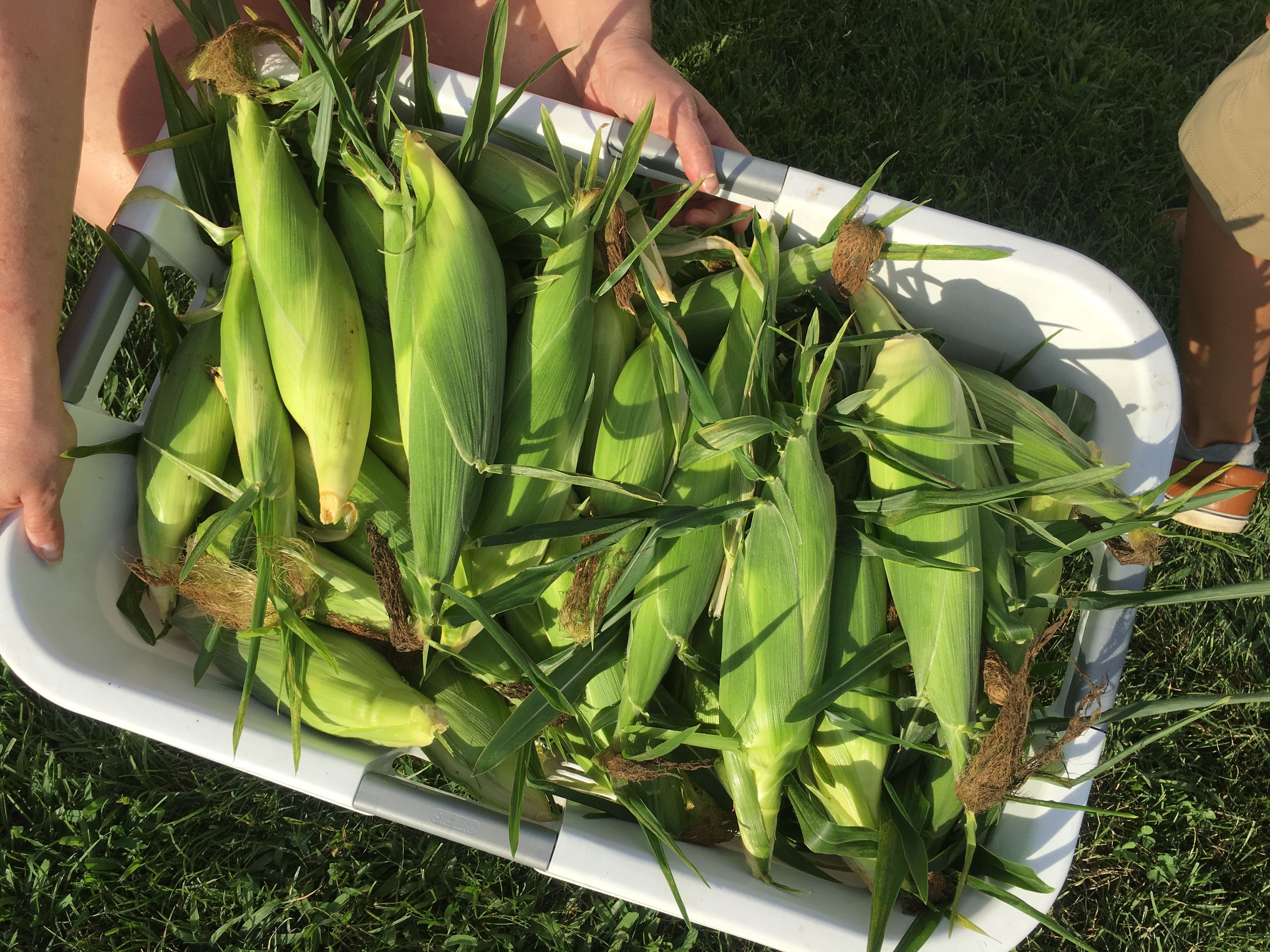
- Do not leave ears in the sun while you keep harvesting. Bring a basket into the shade or harvest into a cooler.
If you are planning to freeze corn, harvest and process the same day for the best flavor.
Signs you waited too long
Overmature sweet corn is not “bad,” but it is a different ingredient. Here are the telltale signs you missed peak milk stage:
- Kernels look dull instead of glossy and juicy.
- Kernels are dented or have a tougher, thicker skin.
- Little or no milky juice when punctured, or juice is thick like paste.
- Flavor is less sweet and more “corny,” with a chewy bite.
- Silks are very dark and brittle, and husks may be starting to dry.
If you are only a few days late, you can still enjoy it. If you are way late, see the ideas below for using late-picked corn.
If you picked too early
It happens, especially the first year you grow corn. Early-picked ears are usually smaller with kernels that are pale, watery, and not fully plumped.
What you can do
- Cook it anyway if the kernels are formed. It will be mild, more like a tender vegetable than dessert-sweet corn.
- Turn it into chowder or soup. Brothy dishes forgive a lack of sweetness, especially with onions, herbs, and a splash of cream or coconut milk.
- Use it in fritters. Corn mixed into batter with scallions and a pinch of salt is wonderfully forgiving.
- Let the rest of the patch mature. Harvesting one ear early does not hurt the plant much, but do not keep stripping ears “to check.” Use the milk test instead.
Can you leave a too-early ear on the plant to finish? If you barely disturbed it and closed the husk back up snugly, it may continue filling. If you fully removed it, that ear is done, but the remaining ears on the stalk will keep developing.
If you picked too late
Late-picked sweet corn gets tougher and starchier, but you still have options.
Best ways to use overmature sweet corn
- Cut kernels off the cob and use in chowder, corn pudding, cornbread, or casseroles where texture matters less.
- Simmer the cobs for stock. Corn cobs make a surprisingly lovely, lightly sweet broth base for soups.
- Grind or puree kernels for a rustic corn soup. (A blender plus straining works in a pinch.)
- Compost the tough cobs or use them in a deep mulch layer if you hot-compost and have time for breakdown.
If your corn is truly hard and dry, it has moved into a dry-maturity stage. Sweet corn can dry down, but it will not behave exactly like dent or flint corn for grinding. In most home gardens, it is best for decoration, limited experiments in grinding if the variety is suited, or compost.
Harvesting tips
How to pick an ear cleanly
- Hold the stalk steady with one hand.
- With the other hand, twist the ear and pull downward in one motion.
- A ripe ear snaps off easily. If it fights you, it may be early or you may need a firmer downward twist.
Try not to yank straight out. That can stress the stalk, especially in dry soil.
How often to check the patch
Once silks are browning and the first ears start passing the milk test, check daily. In hot weather, corn can change noticeably in 24 to 48 hours.
Common timing questions
Do I harvest all the ears at once?
Usually no. Even on the same row, ears can mature a few days apart. Harvest each ear when it hits milk stage.
Why is the tip not filled?
An unfilled tip is usually incomplete pollination, heat stress during pollination, or inconsistent watering. It is not a harvest-timing issue. Harvest based on the kernels that did develop.
My silks are brown but the kernels are watery. Why?
Silks can brown from heat, wind, or age even if kernels are still filling. Trust the milk test over silk color alone.
Could pests make an ear seem “off”?
Yes. Earworms often start at the tip, and damage can make kernels look ragged or dry. When you do your quick peek, glance at the tip too. If the rest of the ear is at milk stage, you can trim the damaged end and enjoy the rest.
Can I leave ripe corn on the stalk for a week?
For sweet corn, I would not. The plant keeps converting sugar to starch. If you want peak sweetness, harvest and refrigerate, freeze, or cook right away.
One last gentle nudge
If you are standing in your corn patch wondering if it is time, it probably is time to check. Peel back a little husk, poke one kernel, and let that milky bead make the decision for you. Corn is generous like that. It tells the truth, even when we are overthinking.