When to Cut Back Amaryllis Leaves (and When to Stop Watering)

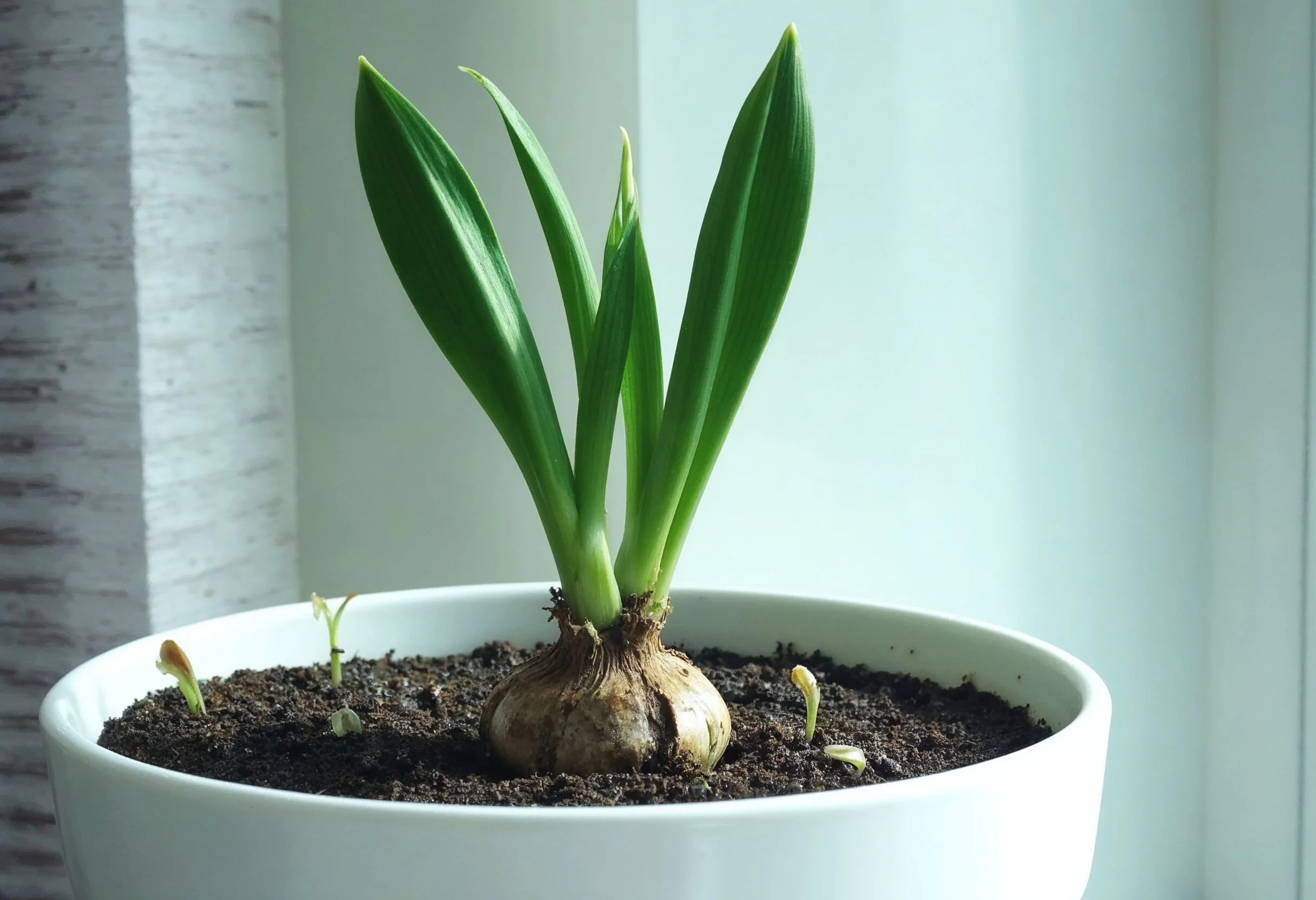
If you have an amaryllis on your windowsill right now, you are in the most confusing part of the whole cycle: the flowers are gone, but the plant is still very much alive. Those long, strap-like leaves are not leftover clutter. They are the bulb’s solar panels, quietly charging up energy for next season’s bloom.
So here is the simple rule I use every year, even when I am tempted to “tidy it up” too soon: do not cut green amaryllis leaves. You cut them back only when they are naturally finishing their job.
Quick note on names: Most “amaryllis” sold as holiday bulbs are Hippeastrum. True Amaryllis belladonna has a different seasonal rhythm. The care below is for the common indoor holiday bulb, Hippeastrum.

The quick answer
Cut back amaryllis leaves only after they turn mostly yellow and start to flop or dry on their own. For most indoor-grown amaryllis, that is usually late summer to early fall, depending on when it bloomed and how much light it received.
About watering and dormancy: Many people use a cool, drier rest period to help schedule rebloom, but not every bulb needs a fully dry dormancy to bloom again. If you are aiming for a traditional rest, reduce water as leaves yellow and stop once the foliage is mostly finished. A common rest period is 8 to 12 weeks.
Why you should not cut green leaves
After blooming, an amaryllis shifts from show mode to storage mode. The leaves photosynthesize and send sugars down into the bulb, which fuels next year’s flower stalk. If you cut the leaves while they are still green and firm, you are basically unplugging the charger mid-charge.
What happens if you cut too early?
- Smaller bulb over time, or a bulb that never “fattens up” enough to bloom well
- Fewer flowers next cycle, sometimes only leaves and no bloom stalk
- A stressed bulb that is less resilient overall (and stress plus wet soil is where rot problems can start)
I know the leaves can look wild and a little octopus-y, especially in a small apartment. But letting them do their full job is the single best rebloom tip I can give you.
When to cut back leaves
Use the leaves as your calendar. Timing varies by home, but the signals are wonderfully clear once you know what to look for.
Cut back when you see these signs
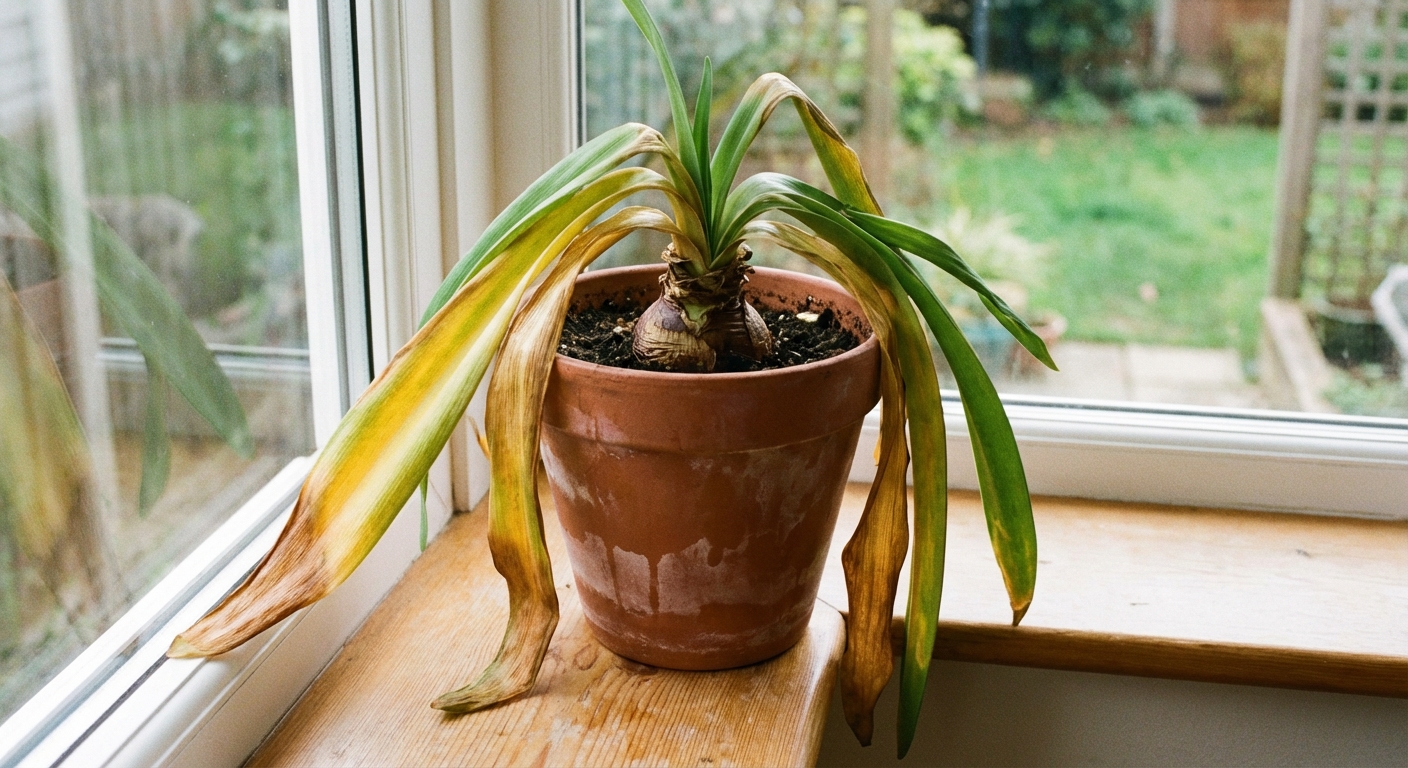
- Most leaves have turned yellow, not just one older leaf
- Leaves are soft, limp, or flopping and no longer hold themselves upright
- Tips are browning and the leaf is drying rather than staying green and flexible
At that point, you can trim the leaves down to about 1 to 2 inches above the bulb neck using clean scissors or pruners. “About” is the key. The goal is to leave a little stub so you do not nick the bulb.
What about one yellow leaf?
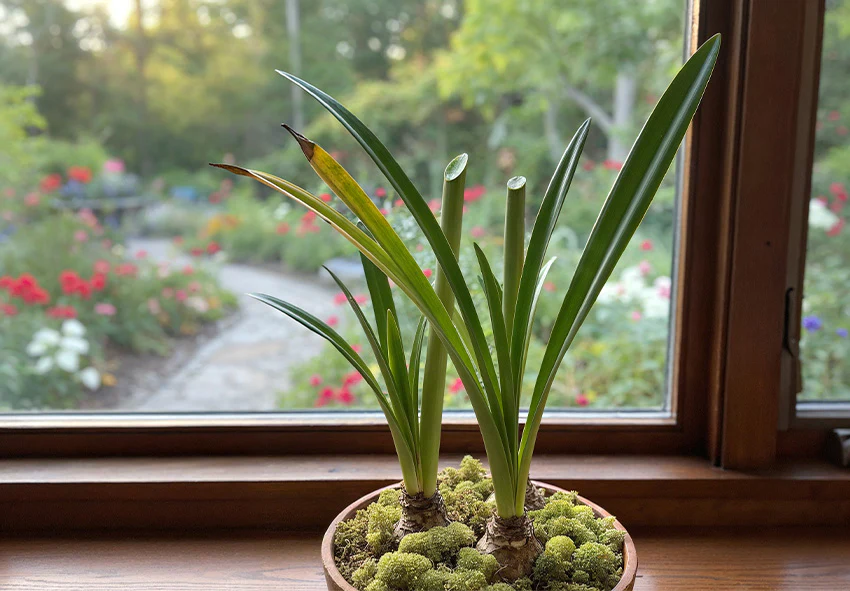
One yellowing leaf is normal and does not mean the plant is ready for a full haircut. If only a single outer leaf yellows, remove just that leaf once it pulls away easily, and keep caring for the rest of the plant.
If leaves fade slowly and unevenly
That is normal too. Some leaves may yellow over weeks or even months. You can remove individual leaves as they finish, and leave the rest to keep charging the bulb.
When to stop watering
This is where people accidentally rot bulbs or accidentally prevent a planned rest period, so let’s make it straightforward.
Keep watering while leaves are green
As long as the leaves are green, the bulb is actively storing energy. Water when the top inch of potting mix feels dry. Do not keep it soggy. Amaryllis bulbs like moisture, but they hate sitting in wet soil.
Reduce water when leaves are yellowing
When the plant starts yellowing broadly and you want to begin a rest, gradually reduce watering. Once most leaves are yellow and floppy, you can stop watering and let the potting mix dry out.
Do you have to force dormancy?
Not always. Some amaryllis will rebloom with good light, steady care, and time, even if they never go bone-dry. The reason many growers use a rest is to encourage flowering and control timing. If your goal is holiday blooms, a planned rest is often helpful.
If your leaves stay green for a long time
In bright light with regular feeding, amaryllis can stay green well into late summer. That is not a problem. Do not force dormancy in spring just because the flowers are gone. Let the plant recharge first.
A note on flower stalks
After the blooms fade, you can cut the flower stalk down to roughly 1 to 2 inches above the bulb. Do this early so the plant does not spend energy making seeds. Keep the leaves.
How to cut back safely
Sanitize your snips. A quick wipe with rubbing alcohol helps prevent introducing disease.
Cut only what is ready. Trim yellow, floppy leaves. Leave any leaf that is still green and firm.
Cut above the bulb neck. Leave a short stub so you do not nick the bulb.
Keep the bulb on the dry side if it is resting. Once you stop watering, do not “just give it a sip” out of habit.
Rot prevention basics: Use a pot with drainage holes and a fast-draining mix. Rot is most often tied to too much water, not to leaf trimming alone.
Month-by-month checklist
This timeline assumes a common winter bloom (December to February). If your amaryllis bloomed at a different time, shift the months forward or backward. The order matters more than the exact calendar date.
January to February
- Enjoy the flowers.
- As blooms fade, cut the flower stalk down to about 1 to 2 inches above the bulb.
- Keep leaves in bright light.
March to June
- Water when the top inch is dry.
- Fertilize lightly every 2 to 4 weeks with a balanced houseplant fertilizer at half strength.
- Rotate the pot weekly for even growth.
- If nights are reliably warm, you can move it outdoors to bright shade or morning sun for stronger leaves. Acclimate it gradually and avoid harsh midday sun at first to prevent scorch.
July to August
- Continue normal watering and light feeding.
- Do not cut green leaves for neatness.
- Watch for the first natural yellowing of older leaves.
Late August to September
- Reduce watering as leaves start to yellow broadly.
- When most leaves yellow and flop, cut them back to about 1 to 2 inches.
- Stop fertilizing as you begin the rest period.
- Stop watering if you are doing a traditional dry rest, and let the pot dry.
September to November
- Store the potted bulb in a cool, dry, dark place (often about 50 to 60°F, or 10 to 16°C, if possible).
- Keep it above freezing. Freezing temperatures can damage the bulb.
- Let it rest 8 to 12 weeks.
- Do not water during this rest.
November to December
- Bring it back to warmth and bright light.
- Resume watering lightly until you see growth, then water normally.
- When the bloom stalk appears, keep turning the pot for a straighter stem.
Fertilizer tip: During the leaf-building months, a balanced fertilizer is great. If you prefer, you can shift to a slightly lower-nitrogen, higher-phosphorus option later in the season. The big rule is to avoid overfeeding and to stop once you are starting the rest period.
Common mistakes
“I cut everything back right after flowering.”
If the bulb is healthy, it may still recover, but rebloom is less likely. Going forward, let the leaves grow for several months after bloom, with bright light and gentle feeding.
“My leaves are green, but I want dormancy now.”
Try to give it at least 8 to 12 weeks of strong leaf growth after blooming before you push a rest. If your plant bloomed late and you are off-season, shift your timeline. Amaryllis is flexible.
“I stopped watering, but the leaves never yellowed.”
In some homes, the leaves stay green longer. Move the plant to slightly cooler conditions and reduce water gradually rather than stopping abruptly. If it refuses dormancy, you can keep growing it as a foliage plant for a while, then try a planned rest later.
“My bulb got soft.”
Soft bulbs often signal rot, usually from overwatering or poor drainage. Unpot and inspect. If the basal plate is mushy or the bulb smells foul, it may not be salvageable. In the future, use a pot with drainage and a fast-draining mix, and let the mix dry slightly between waterings.
Leaf cues to trust
If you remember nothing else, remember this: green means feed the bulb, yellow means the bulb is ready to rest. Your amaryllis is not being messy, it is being productive.
Let those leaves soak up the light until they are truly done, then trim them back and adjust watering based on whether you are keeping it growing or giving it a proper rest. Next winter, you will be glad you let it keep its “hair” a little longer.