
When and How to Fertilize Houseplants


Fertilizing houseplants is a little like seasoning soup. A pinch at the right time makes everything sing, but too much too often can ruin the whole pot. The good news is you do not need to memorize complicated ratios or chase a perfect schedule. You just need to match fertilizer to your plant’s growth, your light levels, and the season.
Below is the simple, plant-parent friendly way I fertilize most indoor plants: feed when they are actively growing, ease up when growth slows, and always dilute more than the label suggests if you are unsure. Your houseplants want consistency, not intensity.
The seasonal fertilizing cycle
Most houseplants follow the light, even indoors. Longer, brighter days encourage new leaves and roots. Short, dim days signal rest. Fertilizer is most useful when your plant is building new tissue, not when it is basically holding its breath.
Spring (wake-up season)
- When to start: When you see new growth. Think unfurling leaves, fresh tips on vines, or new shoots at the crown.
- How often: Every 2 to 4 weeks for most plants using a diluted liquid fertilizer, or follow your slow-release product schedule.
- My rule: Start gentle for the first 1 to 2 feedings. Plants are waking up, not sprinting.
Summer (peak growth)
- How often: Every 2 to 4 weeks is still the sweet spot for most foliage plants. Fast growers in bright light may enjoy every 2 weeks at low dose.
- Watch-outs: Heat plus fertilizer plus missed waterings can stress roots. To reduce burn risk, do not fertilize a bone-dry plant.
Fall (taper time)
- What to do: Slow down as growth slows. Move from every 2 weeks to every 4 to 6 weeks, or stop entirely if your plant is not pushing new growth.
- Exception: Plants under strong grow lights that continue active growth can continue a light feeding routine.
Winter (rest for many plants)
For many homes, winter brings low light and slower metabolism. Fertilizer does not fix low light. In low light, feeding can encourage softer, stretched growth and can increase salt buildup in the pot.
- Most plants: Pause fertilizing, or feed no more than every 6 to 8 weeks at a very light dose if the plant is still growing.
- Plants under grow lights: If you have consistent bright light and see steady growth, you can keep a reduced schedule.
- Bloomers in season: Some plants bloom in winter with good light. If yours is actively budding and blooming, a gentle, consistent feeding can help, but keep it mild.
One more winter note: if you just repotted into fresh potting mix, you may not need fertilizer right away. Check the bag. If it says “feeds for X months” or contains compost or fertilizer, give the plant a calm start. If your mix is inert (like plain coco coir, bark, or a soilless mix with no added nutrients), you may need to start sooner, but still gently.
Before you fertilize, do these two checks
1) Check light and growth
If your plant is not growing because light is too low, fertilizer will not create growth. It often creates stress. The first “fertilizer” for a struggling winter plant is usually brighter light or a small grow light.
2) Check moisture
To reduce the risk of root burn, do not fertilize a totally dry root ball. Water first, then fertilize later the same day or at the next watering, depending on your routine.
What N-P-K numbers mean
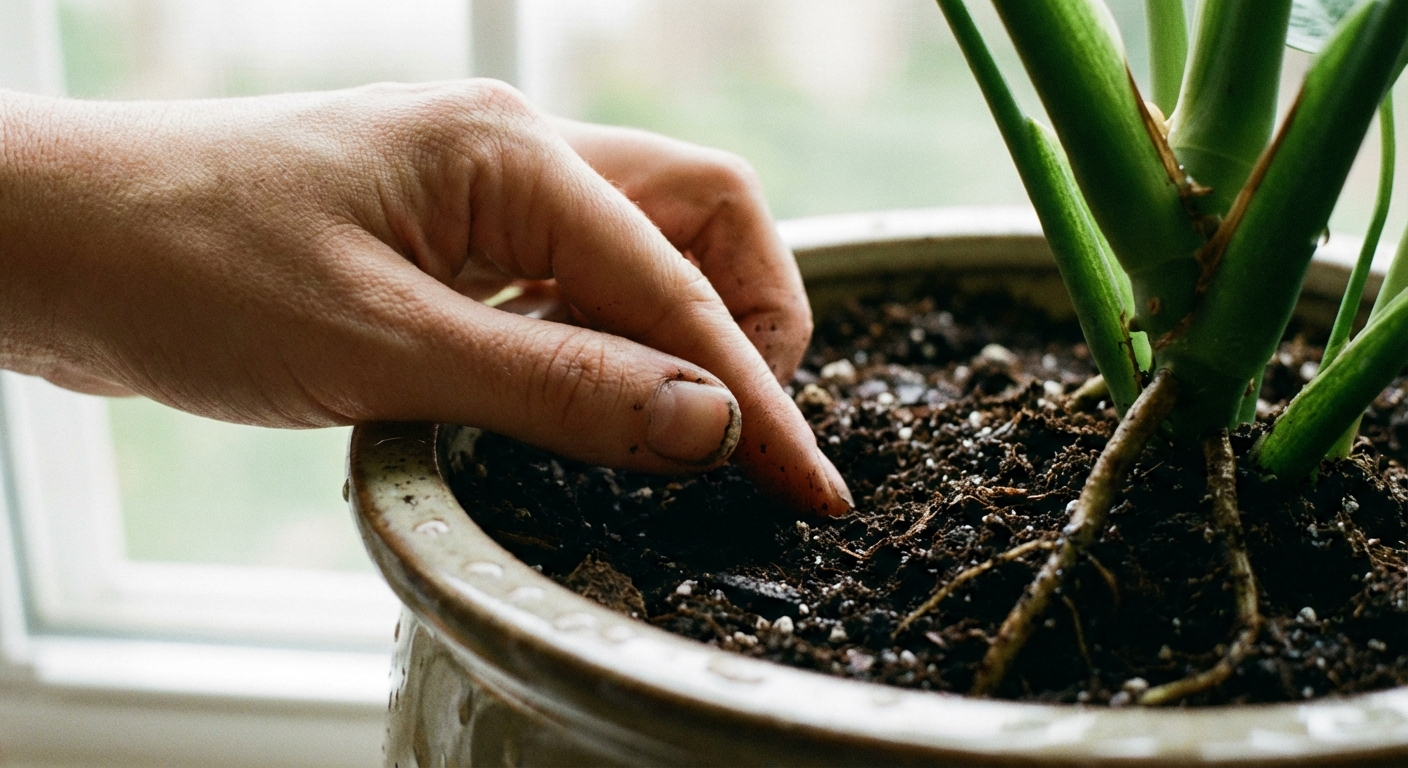
Most fertilizer labels have three big numbers, like 10-10-10 or 20-20-20. Those numbers are the N-P-K ratio:
- N = Nitrogen for leafy, green growth
- P = Phosphorus for roots and overall plant processes
- K = Potassium for vigor, resilience, and flowering support
A fertilizer where the numbers are similar (like 10-10-10) is considered balanced. Many houseplants do perfectly well with a balanced fertilizer used at a low dose. Higher numbers do not mean “better.” They mean “more concentrated,” so you dilute accordingly.
Choosing a fertilizer type: liquid vs granular vs slow-release
All three can work beautifully. The best choice is the one you will use correctly and consistently.
Liquid fertilizer
Best for: Beginners, people who like control, and anyone who waters regularly.
- Pros: Fast acting, easy to adjust dose, great for active growth.
- Cons: Easy to overdo if you fertilize too often, requires mixing.
- How to use: Add to your watering routine during spring and summer.
Granular fertilizer
Best for: Larger pots and plants that are hard to move, or anyone who prefers occasional feeding.
- Pros: Convenient, longer lasting than liquid.
- Cons: Can be uneven in small pots, harder to correct if you apply too much, salts can build up if overapplied.
- How to use: Sprinkle on the soil surface and water in thoroughly, following the label carefully.
Slow-release fertilizer (pellets or coated granules)
Best for: People who forget, or anyone who wants steady nutrition with minimal effort.
- Pros: Low maintenance, steady feeding over weeks or months.
- Cons: Releases faster in warm conditions, easy to accidentally double-feed if you also use liquid fertilizer, not ideal for plants that truly rest in winter unless you time it well.
- How to use: Mix into the top layer of soil or add at repotting, then water normally.
Clara’s practical pick: If you are nervous, choose a balanced liquid fertilizer and use it at a low dose during active growth. It is the easiest to steer if your plant reacts poorly.
Dilution ratios that keep you out of trouble
Many indoor plants need less fertilizer than the label implies, because they grow slower than outdoor plants. That said, some products are already calibrated for houseplants. When in doubt, start lower and adjust based on how your plant responds.
Simple dilution guidelines
- Routine feeding in spring and summer: Mix at 1/4 to 1/2 strength of the label rate every 2 to 4 weeks.
- Heavy feeders in bright light: Up to 1/2 strength every 2 weeks, only if the plant is clearly growing well.
- Winter or low light homes: Skip, or use 1/4 strength no more than every 6 to 8 weeks if growth continues.
If your fertilizer label gives a recipe like “1 teaspoon per gallon,” then 1/2 strength is 1/2 teaspoon per gallon, and 1/4 strength is 1/4 teaspoon per gallon.
The best beginner habit: alternate water and feed
If you tend to forget waterings and your plants sometimes get too dry, do this instead: alternate a plain-water watering with a diluted feed watering. This naturally lowers the chance of salt buildup and makes overfeeding less likely.
Foliage plants vs flowering houseplants
Not all houseplants use nutrients the same way. Leafy plants want steady support for green growth. Blooming plants need enough phosphorus and potassium to support budding and flowering, but they still need nitrogen too. The goal is balance, not forcing.
Foliage houseplants (pothos, philodendron, monstera, snake plant)
- What they like: A balanced fertilizer (often marketed as “all-purpose”) and consistent low-dose feeding during active growth.
- How often: Every 3 to 4 weeks at 1/4 to 1/2 strength is plenty for most homes.
- Note: Too much nitrogen can cause fast, floppy growth if light is not strong enough.
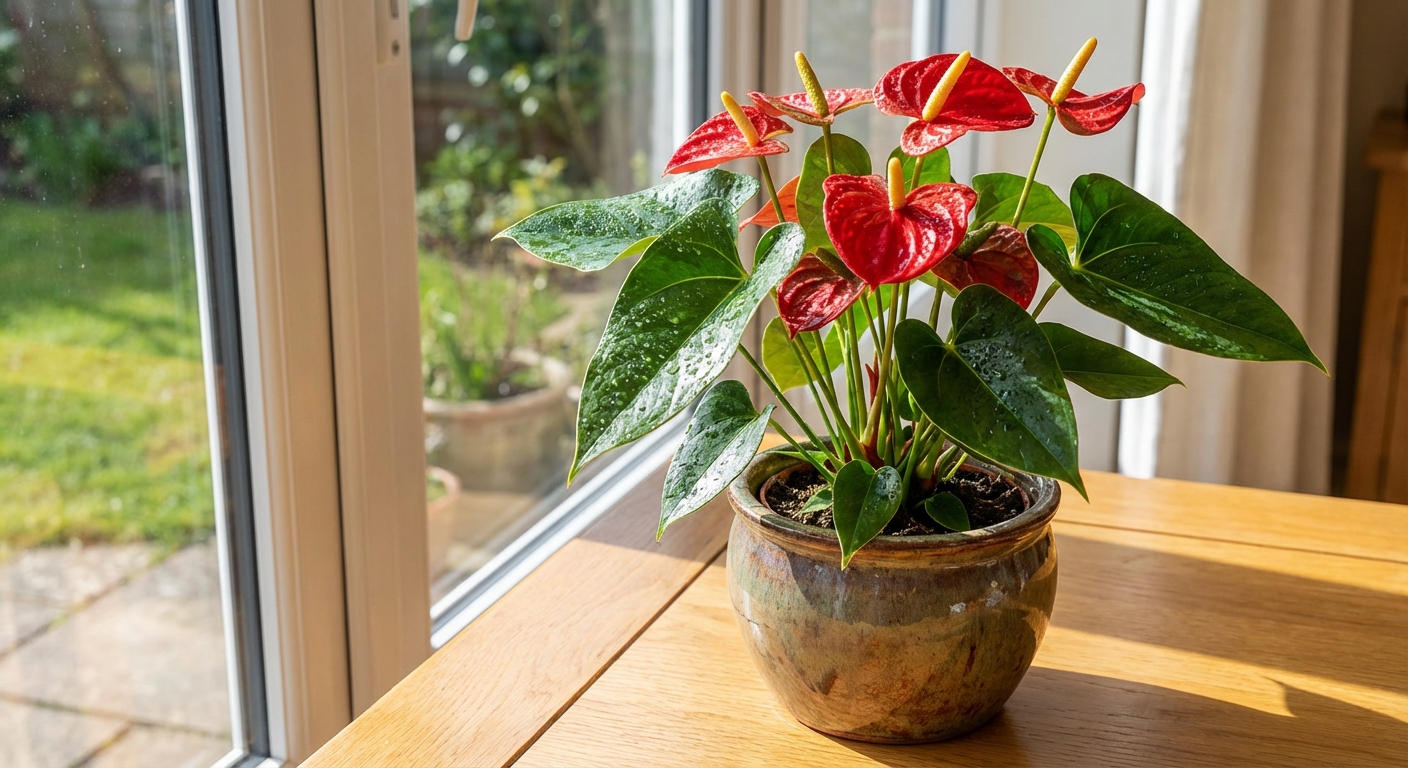
Flowering houseplants (African violet, anthurium, orchids, holiday cactus)
- What they like: A balanced fertilizer used consistently is often enough. “Bloom” formulas can be fine too, but you usually do not need a high-phosphorus booster to get flowers.
- How often: Light but steady during bud and bloom cycles. Many bloomers do better with smaller doses more consistently rather than occasional big meals.
- Orchid note: Many orchids grow in bark and are often fed very lightly but more often (you may hear “weakly, weekly”). If you grow orchids, follow the guidance for your specific orchid type and potting medium.
- Extra tip: Bud drop is often from light, temperature swings, or inconsistent watering, not a lack of fertilizer.
Succulents and cacti
- What they like: Very light feeding in spring and summer only.
- How often: Every 6 to 8 weeks at 1/4 strength, or skip if growth is modest.
- Big warning: Over-fertilizing can cause weak, watery growth that is more prone to rot.
How to fertilize houseplants step by step
For liquid fertilizer
- Water check: Make sure the soil is lightly moist, not bone dry.
- Mix: Measure fertilizer and dilute to 1/4 to 1/2 strength in room-temperature water.
- Apply: Water the plant until a little drains out the bottom.
- Empty the saucer: Do not let pots sit in fertilizer water for hours.
- Record: A quick note on your phone helps prevent accidental double-feeding.
For granular or slow-release
- Measure carefully: Small indoor pots need tiny amounts. Too much is the most common mistake.
- Apply evenly: Keep granules away from the stem base.
- Water in: Thoroughly, so nutrients begin to dissolve and distribute.
- Do not stack products: If you use slow-release, skip regular liquid fertilizing unless your plant clearly needs it and you reduce doses.
Signs of under-fertilizing
Under-fertilizing is usually slower and subtler than over-fertilizing. It often looks like “nothing is happening,” especially in bright months when you expect more growth.
- New leaves are smaller than older leaves
- Overall pale color or mild yellowing, especially on older leaves first
- Slow growth during spring and summer despite good light and watering
- Weak flowering or fewer blooms when light is adequate
Before you feed, confirm the basics: adequate light, appropriate watering, and the plant is not root-bound. A root-bound plant can look hungry because it dries too fast and cannot access what it needs.
Signs of over-fertilizing
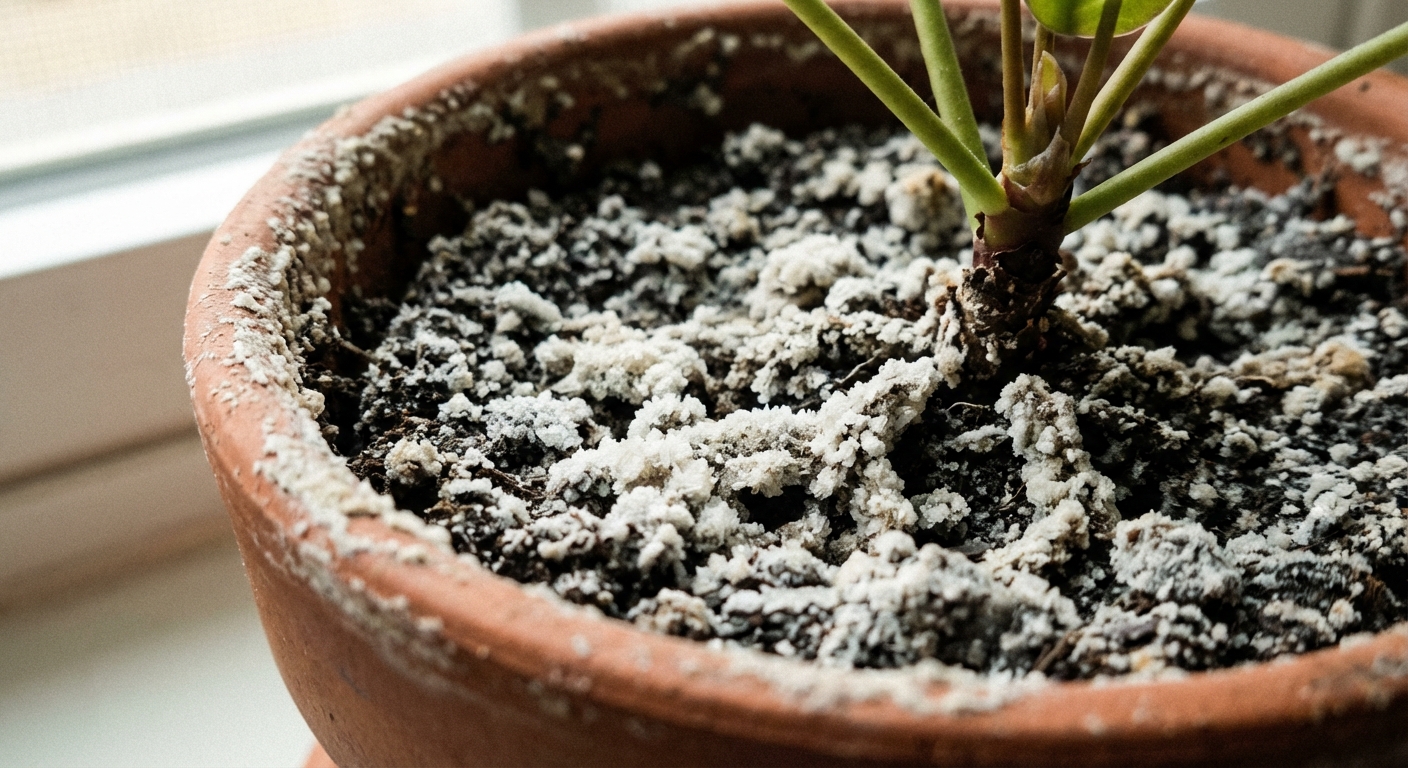
Over-fertilizing tends to show up quickly, and it can be dramatic. Think crispy edges, sudden droop, and mysterious white crust.
- Brown, crispy leaf tips or margins
- Sudden wilting even when soil is moist
- White crust on soil surface or pot rim (mineral and salt buildup)
- Leaf drop after a recent feeding
- Blackened, mushy roots in severe cases (often combined with overwatering)
What to do if you think you over-fertilized
- Stop feeding immediately.
- Flush the soil: Run room-temperature water through the pot and let it drain fully. A practical goal is to let a lot of water flow out the drainage holes, roughly a few times the pot’s volume if you can. Empty the saucer.
- Trim damage: Snip crispy tips if you want, but focus on new growth improving.
- Resume later: Wait 4 to 6 weeks, then restart at 1/4 strength only if the plant is actively growing.
If the soil is compacted, hydrophobic, or smells sour, flushing may not help much. In that case, a repot into fresh mix is the gentlest reset.
Quick note on crust: White crust is often fertilizer salts, but hard tap water can cause mineral buildup too. Either way, occasional flushing with plain water helps.
Houseplant fertilizing FAQs
Should I fertilize right after repotting?
Usually no, if your fresh potting mix contains compost or added fertilizer. Check the bag for something like “feeds for 3 months.” In that case, wait about 4 to 6 weeks, then start lightly if the plant is actively growing. If you repotted into a nutrient-free medium, you can start sooner, but keep it gentle.
Is it better to fertilize more often with a weaker mix?
For many indoor plants, yes. A consistent low dose is gentler on roots than occasional strong doses, especially in smaller pots.
Can I use outdoor garden fertilizer on houseplants?
Sometimes, but it is easy to overdo because outdoor formulas can be stronger and assume faster growth. If you use it indoors, dilute more than you think you need and watch carefully for tip burn or crusty buildup.
What about organic fertilizers for houseplants?
Organic options can work well, especially for people who prioritize soil health. Just know that many organic fertilizers release more slowly and depend on microbial activity, which can be slower indoors. Start with light applications and be patient.
A simple schedule you can copy
If you want a no-drama routine, here is one that works for a lot of common houseplants:
- March to September: Liquid fertilizer at 1/4 to 1/2 strength every 3 to 4 weeks.
- October: One last light feeding if the plant is still growing.
- November to February: Pause, or feed once mid-winter at 1/4 strength only if you see active growth and have decent light.
And if you forget and miss a month? Welcome to gardening. Just pick back up gently. Your plants do not need perfection. They need you to keep showing up.