
What To Do With Amaryllis After It Blooms

When your amaryllis finishes its grand little performance, it can feel like the party is over. But here is the secret I whisper to my own bulbs on the windowsill: the bloom is just the finale, and the real work happens afterward. What you do in the next few weeks decides whether you get another show next season.
Below is exactly what to do with amaryllis after it blooms, with a few gentle options depending on your space, your climate, and your patience level.
Quick note on names: The holiday "amaryllis" sold as big indoor bulbs is usually Hippeastrum. True amaryllis (Amaryllis belladonna) follows a different outdoor rhythm. The care below is for the common indoor Hippeastrum types.

Right after blooming: the two cuts that matter
1) Remove the spent flowers
As each flower fades, snip it off so the plant does not spend energy trying to form seeds. You can pinch off individual wilted blooms or trim the little flower stems back to the main stalk.
If a seed pod starts to swell at the base of a flower, remove it early unless you are intentionally saving seed. Seed-making is a big drain on the bulb.
2) Cut the flower stalk, but keep the leaves
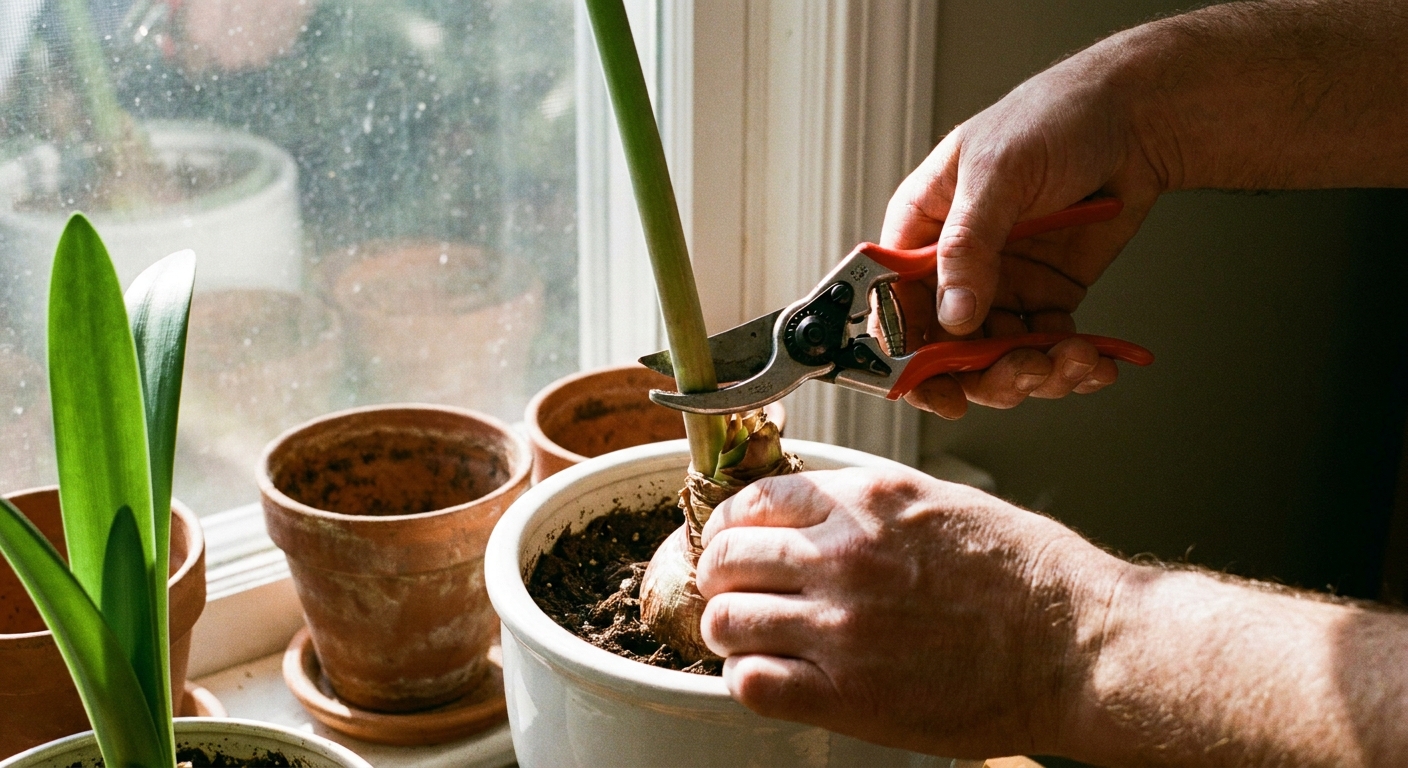
Once all the flowers on that stalk are done, cut the main flower stalk down to about 1 to 2 inches above the bulb or soil line. Use clean, sharp pruners.
- Do not cut the leaves. Those straplike leaves are solar panels. They recharge the bulb for next year.
- If sap irritates your skin, wear gloves and wash up after trimming.
Keep it growing: light, water, and feeding
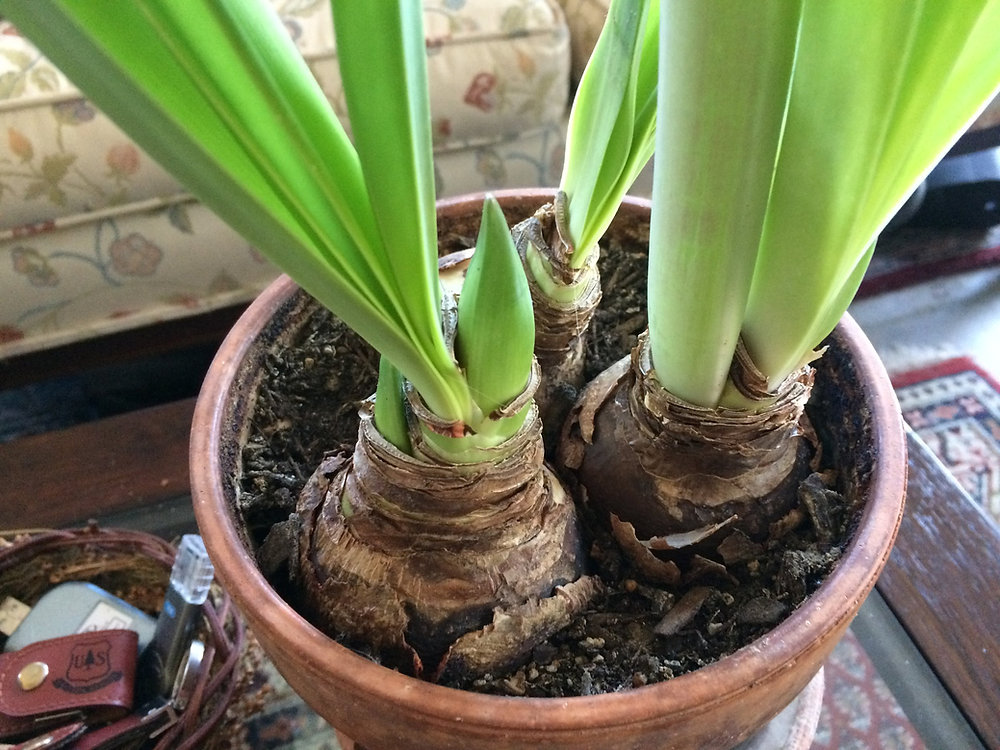
After flowering, your goal is simple: grow strong leaves so the bulb can store carbohydrates. This is what makes next season’s bloom stalk possible.
Give it bright light
Place your amaryllis in the brightest spot you have. A sunny south or west window is perfect. If it starts leaning toward the light, rotate the pot about a quarter turn weekly for even growth.
Water like a houseplant, not like a swamp
- Water when the top inch of soil feels dry.
- Water thoroughly, then let excess drain. Never let the pot sit in water.
- If the bulb is potted in a decorative cachepot, empty it after watering.
Fertilize to rebuild the bulb
Feed every 2 to 4 weeks during active leaf growth.
- A balanced fertilizer (like 10-10-10) works well, or a slightly higher potassium blend.
- Dilute to half strength if you fertilize more frequently.
- Always water first, then fertilize so you do not burn roots.
Move it outdoors for summer?
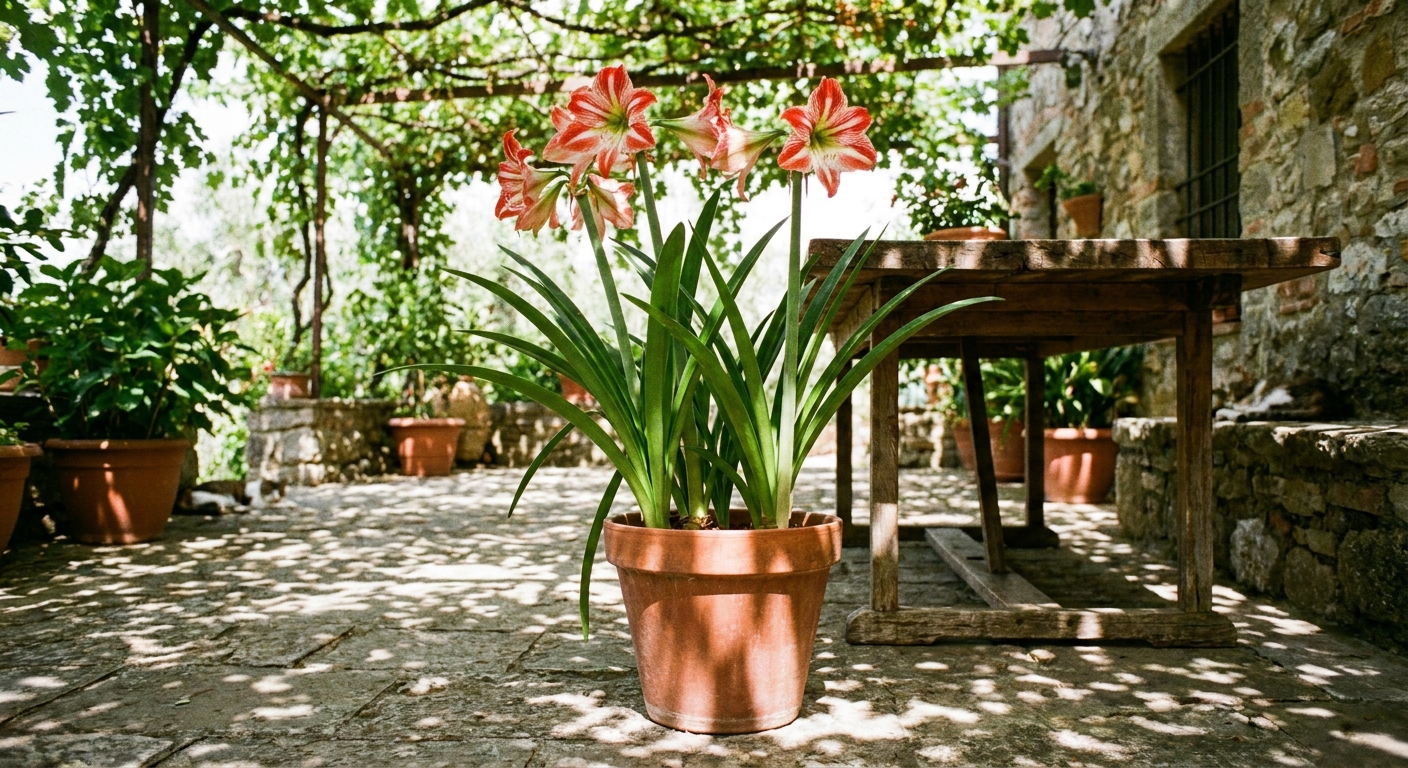
If you can, summering an amaryllis outdoors is like sending it to a spa retreat. The extra light helps the bulb bulk up.
When to move it outside
Wait until night temperatures stay above roughly 50 to 55°F. Introduce it gradually to brighter light for 7 to 10 days so the leaves do not scorch.
Where to put it
- Bright shade or morning sun and afternoon shade is ideal at first.
- In very mild climates, it can handle more sun once acclimated, but protect from extreme heat.
- Keep it in its pot, or sink the pot into a garden bed for easy lifting later.
Outdoor care basics
- Water when the top of the potting mix dries.
- Fertilize monthly (or every 2 to 4 weeks) through summer.
- Check occasionally for aphids, mealybugs, and slugs.
Repotting after bloom
Amaryllis actually blooms best when slightly snug in its pot, so repotting is not mandatory every year.
Repot if:
- The pot tips easily because the bulb is huge.
- Soil drains poorly or smells sour.
- You see crowded offsets (baby bulbs) and want to divide.
How to repot
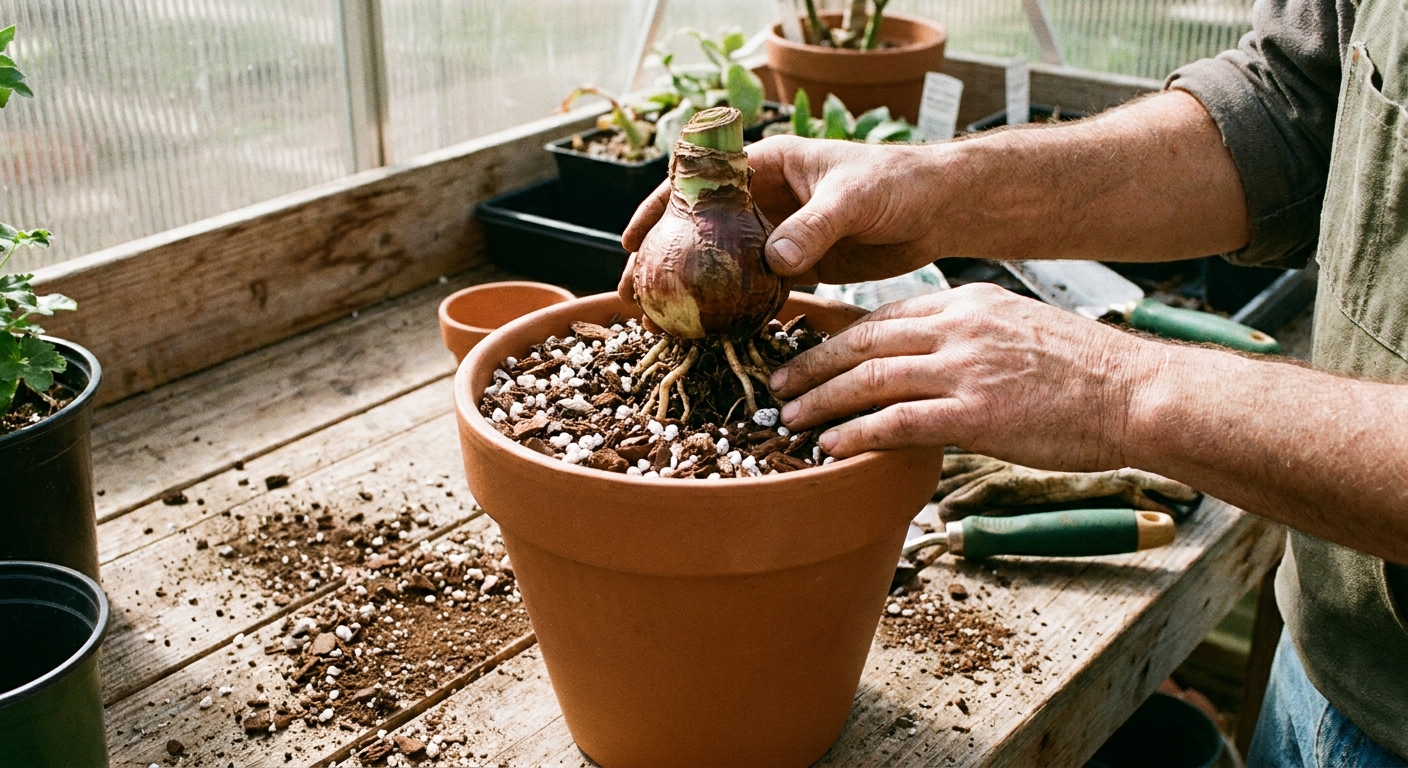
- Choose a pot only 1 to 2 inches wider than the bulb.
- Use a fresh, fast-draining mix (potting soil plus perlite or orchid bark works well).
- Plant with the top one-third to one-half of the bulb above the soil line.
- Water lightly, then resume normal watering once growth continues.
How to get it to bloom again
To rebloom indoors on schedule, amaryllis reblooms most reliably with a rest period. Some modern cultivars are more flexible and may bloom with continuous growth plus a reduced-water pause, but dormancy is still the most dependable way to cue a flower stalk.
Timing
From “wake up” to flowers is often 6 to 10 weeks depending on variety and conditions. (By “wake up,” I mean bringing the bulb back into warmth and bright light and restarting watering.) A rest period is commonly 8 to 12 weeks. Many gardeners start the process in early fall for winter blooms.
Step-by-step dormancy
- Late summer to early fall: Start reducing watering.
- Stop fertilizing once you begin drying down.
- When leaves yellow, let them fade naturally, then trim them off.
- Move the pot to a cool, dark place for 8 to 12 weeks (about 50 to 60°F is a common target).
- Keep it mostly dry. If the bulb is in soil, you can give a tiny sip once a month to prevent complete desiccation.
Waking the bulb up
- Bring it back to bright light and warmer temperatures.
- Top-dress with fresh mix if needed, or repot if the soil is tired.
- Water lightly at first, then more once you see new growth.
- When the flower stalk is 3 to 4 inches tall, resume regular watering.
If all goes well, you will see a thick flower stalk emerge before leaves, or sometimes along with them. Either is normal.
Storing bulbs: in the pot or bare?
You have two common ways to rest your bulb. Both work. Pick the one that matches your storage space and your forgetfulness level.
Option A: Dormancy in the pot
- Let foliage die back naturally.
- Store the pot in a cool, dark spot.
- Minimal disturbance to roots.
Option B: Store the bulb bare
- After leaves die back, unpot the bulb and brush off loose soil.
- Let it dry for a day or two in a shaded, airy spot.
- Store in a breathable paper bag or box in a cool, dark place, never freezing.
- If you use dry peat moss or coco coir, use a very lightly packed amount and make sure everything is fully dry to reduce rot risk.
Note: Bare storage can dry bulbs too much if the air is very dry. Check monthly. The bulb should feel firm, not shriveled, and it should not show mold.
What about the leaves?
If I could tape one note to every amaryllis pot, it would say: Leaves first, flowers later.
- Keep leaves as long as they are green.
- Only remove leaves once they yellow and soften.
- If a leaf gets damaged, you can trim just the brown tip for tidiness.
Common problems after bloom
Leaves but no flowers
- Not enough light: Give brighter light during the recharge phase.
- No rest period: Many varieties bloom more reliably after an 8 to 12 week rest, even if a few can manage without it.
- Bulb is depleted: Feed regularly after bloom, and do not cut leaves early.
Bulb feels soft or smells bad
- Likely rot from overwatering or poor drainage.
- Unpot, trim mushy roots, and repot into fresh, gritty mix in a pot with drainage.
- Water sparingly until you see strong new growth.
Leaves are floppy and pale
- Usually low light. Move closer to a bright window or add a grow light.
- Rotate the pot weekly for even growth.
Sticky leaves or white cottony spots
- Check for aphids or mealybugs.
- For aphids, a strong rinse in the sink or shower often works fast. Insecticidal soap is a good next step.
- For mealybugs, wipe with a cotton swab dipped in 70% isopropyl alcohol, then rinse gently.
- Isolate the plant until pests are gone.
Aftercare checklist
- Cut off spent blooms and the flower stalk (leave leaves).
- Give bright light and steady, careful watering.
- Fertilize every 2 to 4 weeks through spring and summer.
- Optional: summer outdoors once nights stay above 50 to 55°F.
- In fall, reduce watering, let leaves die back, and rest the bulb about 8 to 12 weeks.
- Bring it back to light and warmth, water lightly, then watch for the next flower stalk.
Frequently asked questions
Do I cut my amaryllis all the way back after it blooms?
Cut the flower stalk back after blooming, but keep the leaves until they yellow naturally. The leaves feed the bulb.
Can amaryllis stay indoors year-round?
Yes. It just needs bright light during the growing phase and, for most bulbs, a cooler, darker rest period to encourage reliable rebloom.
How long should I let an amaryllis bulb rest?
Aim for 8 to 12 weeks. Some bulbs are flexible, but a true rest period makes reblooming more consistent.
Will my amaryllis rebloom without dormancy?
Occasionally, especially with certain cultivars and strong summer growth, but it is less predictable. If you want dependable blooms, plan for a rest period.
What do I do with baby bulbs (offsets)?
You can leave them attached for a fuller pot, or separate when repotting. Offsets usually take a couple of years to reach blooming size, so patience is part of the deal.
If you take nothing else from this page, take this: an amaryllis is not a one-and-done holiday decoration. Treat it like a living bulb with seasons, feed it well after it blooms, let it rest on purpose, and it will happily reward you with another round of winter fireworks.