
Weeping Fig Care: Stop Leaf Drop and Browning

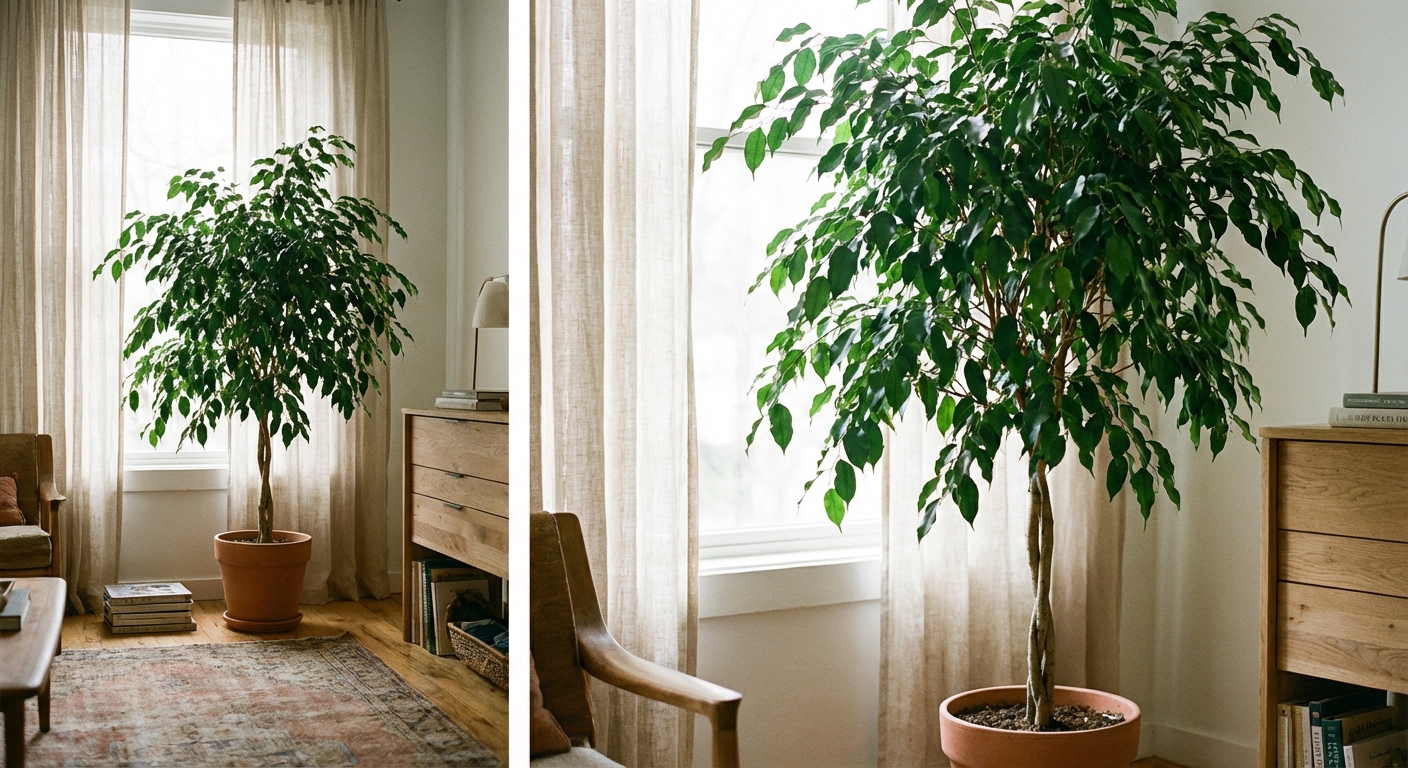
Weeping fig (Ficus benjamina) has a reputation for drama. One day it is glossy and graceful, the next it is shedding leaves like it is trying to redecorate your floor. The good news is that most leaf drop and browning comes down to a few fixable things: light that is just a bit too low, watering that swings between extremes, and air that is too dry or too drafty.
Let’s get your benjamina settled, steady, and back to looking like the elegant little tree it wants to be.

Safety first
Quick but important note: Ficus benjamina is toxic to cats and dogs if chewed or ingested, and the milky sap can irritate skin in some people.
- Pets: place it out of reach, especially if you have a dedicated leaf nibblers club at home.
- Handling: wear gloves for pruning or repotting if you are sensitive, and wash hands after. If sap gets on skin, rinse with soap and water.
Know its personality
Weeping figs are not difficult plants, but they are sensitive to change. When their environment shifts, they respond quickly, often by dropping leaves. This is not the plant being petty. It is the plant reducing its workload while it adjusts.
- Likes: bright, consistent light; evenly moist soil; stable temperatures; a calm spot without drafts.
- Dislikes: being moved; cold blasts from doors and windows; hot dry heat from vents; soggy soil.
Light, room by room
If you want to stop leaf drop long-term, light is the first lever to pull. A weeping fig can survive in medium light, but it rarely thrives there. Low light also makes watering trickier because soil stays wet longer.
Adjust based on intensity: window size, season, latitude, and trees outside all change the strength of light. A simple cue: if your plant casts a soft, blurry shadow for part of the day, you are usually in the right zone. If there is no shadow at all, it is probably too dim. If the shadow is sharp and the leaves feel like they are baking, back it up or filter the light.
South-facing window
Often the happiest option in many homes, especially in fall and winter. Keep the plant a bit back if sun is intense through the glass.
- Best placement: near bright light, typically a few feet from the window. Adjust based on heat and glare.
- Tip: If you see crisp brown edges on the side facing the glass, the plant may be getting too much direct sun or heat build-up near the window.
East-facing window
Gentle morning sun is a sweet spot for benjamina. This is a great choice if your plant has been sulking.
- Best placement: close to the window, often within a few feet.
West-facing window
Afternoon sun can be strong and drying, especially in summer. Use a sheer curtain if leaves bleach or crisp.
- Best placement: bright but buffered, a few feet back or with filtered light.
North-facing window
North light is pretty but often too dim for a weeping fig to hold dense foliage. If this is your only window, plan on supplementing with a grow light.
- Best placement: right at the window plus a grow light for 8 to 12 hours.
Room placement
- Living room: Great if you have bright, stable light. Keep it away from sliding doors that open often and away from fireplace drafts.
- Kitchen: Surprisingly good because humidity is often higher. Keep it out of the direct blast zone of oven vents or frequently opened exterior doors.
- Bedroom: Works well if you have a bright window and steady temps. Avoid placing it right above or beside a forced-air vent.
- Bathroom: Only if you have a bright window. Humidity helps, but low light will still cause leaf loss.
- Entryway: Usually the worst place, even if it looks perfect decor-wise. Repeated cold and heat drafts trigger leaf drop fast.
Grow light basics
If your home is dim, a grow light can be the difference between constant shedding and a steady canopy.
- Type: LED grow light or a bright full-spectrum LED fixture.
- Timing: 8 to 12 hours daily, consistent schedule.
- Distance: follow the manufacturer’s guidance. As a starting point, many small fixtures work best within 8 to 18 inches of the foliage, while stronger panels can sit farther away. If leaves bleach, raise the light.
Try to keep the plant in one spot once you find the sweet spot. Benjamina loves consistency more than perfection.
Watering rhythm
Most weeping fig issues are a rhythm problem, not a single “wrong watering.” The goal is even moisture, not constantly wet soil and not bone-dry swings.
The finger test
Water when the top 1 to 2 inches of soil feel dry to the touch. If the soil is still cool and damp, wait. If it feels dry and the pot feels noticeably lighter, it is time.
How to water
- Water slowly until you see water run out of the drainage holes.
- Empty the saucer after 10 to 15 minutes so roots are not sitting in water.
- Use room-temperature water. Very cold water can stress roots.
Seasonal timing
- Spring and summer: often every 5 to 10 days, depending on light, pot size, and temperature.
- Fall and winter: often every 10 to 21 days, sometimes longer in low light homes.
If you are watering on a calendar, your plant will eventually argue with you. Let the soil and the pot weight be your schedule.
Humidity
Average home humidity is often fine, but dry air can show up as brown tips and edges, especially once heaters run.
- Good range: typical indoor 30 to 50 percent is usually workable. Higher can help if your plant is getting crispy.
- Measure it: a cheap hygrometer removes the guesswork.
- What works: a small humidifier nearby beats misting. Misting is fine if you enjoy it, but it rarely changes humidity for long.
Drafts and temperature
Weeping figs are especially sensitive to sudden temperature swings. A plant that looks fine all summer can drop a pile of leaves the first week the heater kicks on.
- Avoid: direct airflow from heating and AC vents, space heaters, fireplaces, and frequently opened exterior doors.
- Ideal range: roughly 65 to 80°F.
- Cold warning: prolonged exposure below about 55°F, especially with drafts, can trigger heavy leaf drop and may cause twig dieback.
If you must place it in a drafty room, create a calmer microclimate: move it a few feet inward from the draft source and add a humidity tray or humidifier.
Soil and pot
Ficus benjamina wants a potting mix that drains well but does not dry out in a day. If water sits for too long, roots can suffocate and leaf drop follows.
A good soil mix
- Base: quality indoor potting mix
- Add for drainage: perlite or pumice
- Add for structure: fine orchid bark or coco chips (optional but helpful)
Aim for a mix that feels airy in your hand, not heavy and muddy.
Choose the right pot
- Drainage holes are non-negotiable.
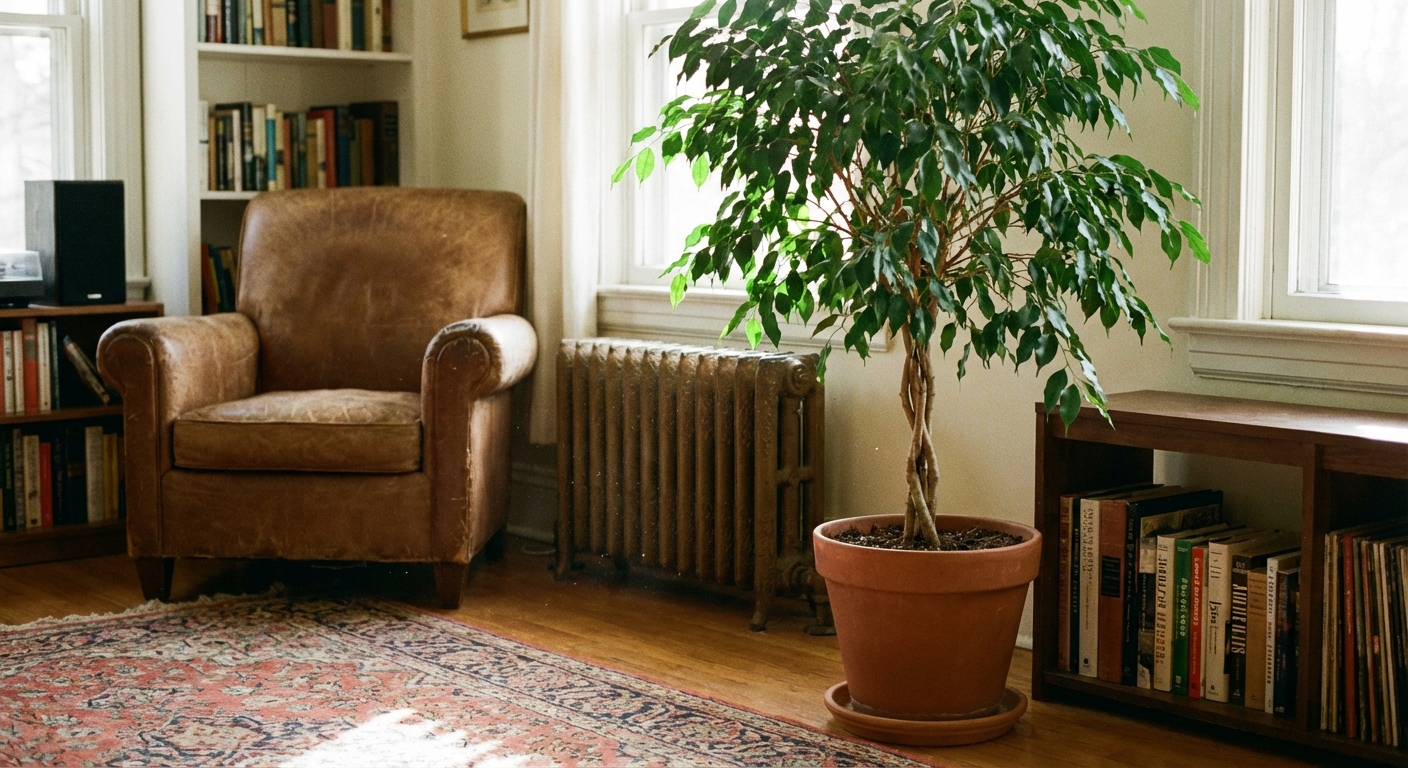
- Heavy pots (ceramic, terracotta) help prevent tipping as the plant becomes top-heavy.
- Terracotta dries faster, which can be good in humid homes and tricky in dry winter air.
Repotting
Weeping figs prefer to be slightly snug in their pots. Repotting too often can cause stress and leaf drop, so only do it when the plant truly needs it.
Signs it is time
- Roots circling the surface or growing out the drainage holes
- Water runs straight through the pot because the root mass is so tight
- The plant dries out extremely fast, even with good light
- Growth has stalled for a full season despite proper care
Best timing
Late spring through summer, when the plant is actively growing and can recover quickly.
How to repot
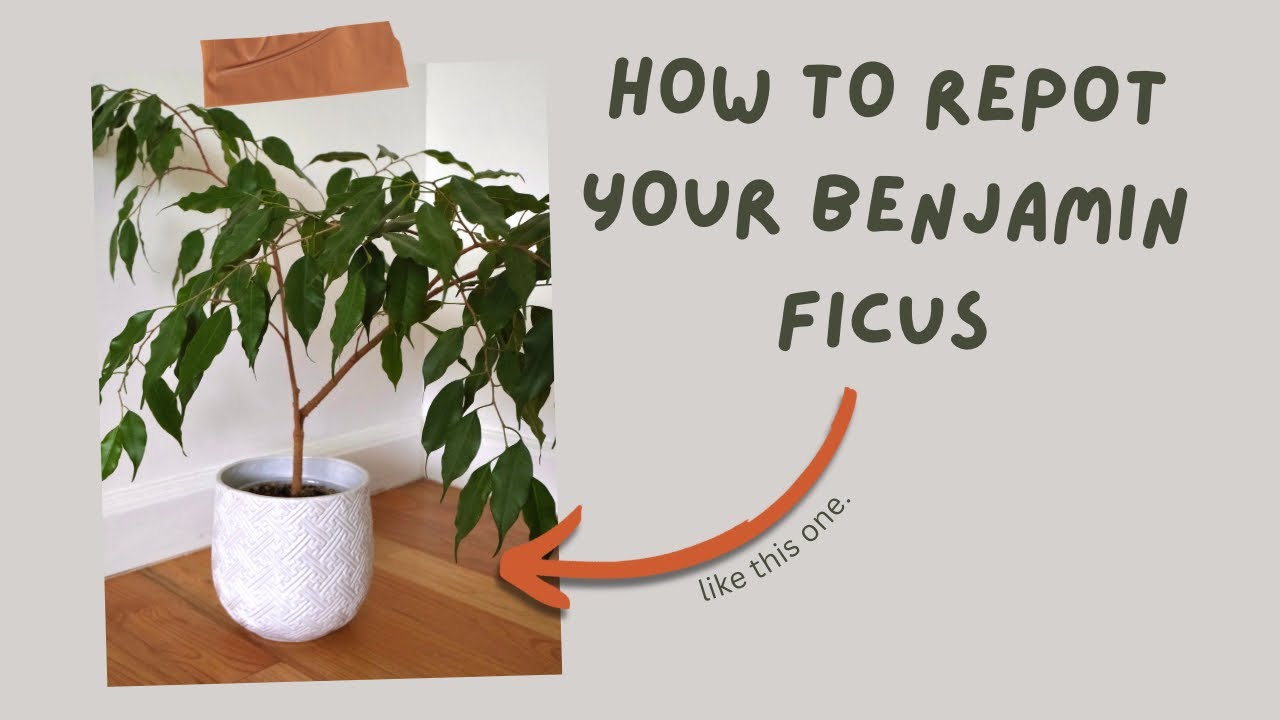
- Pick a pot only 1 to 2 inches wider than the current one.
- Slide the plant out and loosen the outer roots lightly with your fingers.
- Trim only clearly dead roots. Avoid heavy root pruning unless you are experienced.
- Set it at the same soil level as before and backfill with fresh mix.
- Water thoroughly, let it drain, and return it to the same spot.
After repotting, expect a small amount of leaf drop. What you do not want is a cascade. Keep light steady and do not overwater “to help it.”
Feeding
Over-fertilizing can contribute to brown tips and stressed roots. Under-fertilizing can lead to slow growth and sparse foliage. Think of fertilizer as a small, steady supplement, not a rescue remedy.
- When to feed: spring through early fall
- How often: every 4 to 6 weeks, or use a diluted dose every 2 to 4 weeks
- What to use: a balanced houseplant fertilizer
In winter, it is usually best to pause feeding unless your plant is under strong grow lights and actively pushing new growth.
Pruning and shaping
If your weeping fig is getting leggy or lopsided, pruning can help it branch and fill in. It can also reduce stress on a plant that is struggling to support too much top growth in low light.
- Best time: spring through summer.
- How: snip just above a leaf node to encourage branching. Take a little at a time, especially if the plant is already stressed.
- Sap note: expect milky sap. Protect surfaces and your skin if you are sensitive.
Troubleshooting
Here is the part where we stop guessing. Use these clues to figure out what kind of leaf drop you are seeing and what to do next.
After purchase or moving
A store-to-home transition is one of the most common triggers for leaf drop. Different light, different humidity, different airflow, and the plant responds with a dramatic wardrobe change.
- Pick a bright, draft-free spot and commit to it.
- Water by the 1 to 2 inch dry rule, not by the calendar.
- Give it 2 to 6 weeks to settle before you make big changes.
Sudden leaf loss
Most common causes: moving the plant, cold drafts, heat blasts, or a big watering swing.
- If you recently moved it: put it in its long-term spot and stop relocating it. Expect some drop while it adjusts.
- If it is near a door or vent: move it away from airflow. Even a few feet helps.
- If soil is soggy: pause watering until the top inches dry, increase light if possible, and ensure the pot drains freely.
- If soil is bone dry: water deeply, then return to the normal dry-top-1-to-2-inches rhythm.
Seasonal leaf drop
Some leaf drop is normal when days get shorter. It is often a light issue, not a disease.
- Move the plant closer to a bright window.
- Add a grow light if your home is dim in winter.
- Water less often because the plant is using less.
Leaves turning yellow before dropping
- Often: overwatering, low light, or a pot that stays wet too long.
- Try: more light, longer dry-down between waterings, and a better draining mix at the next repot.
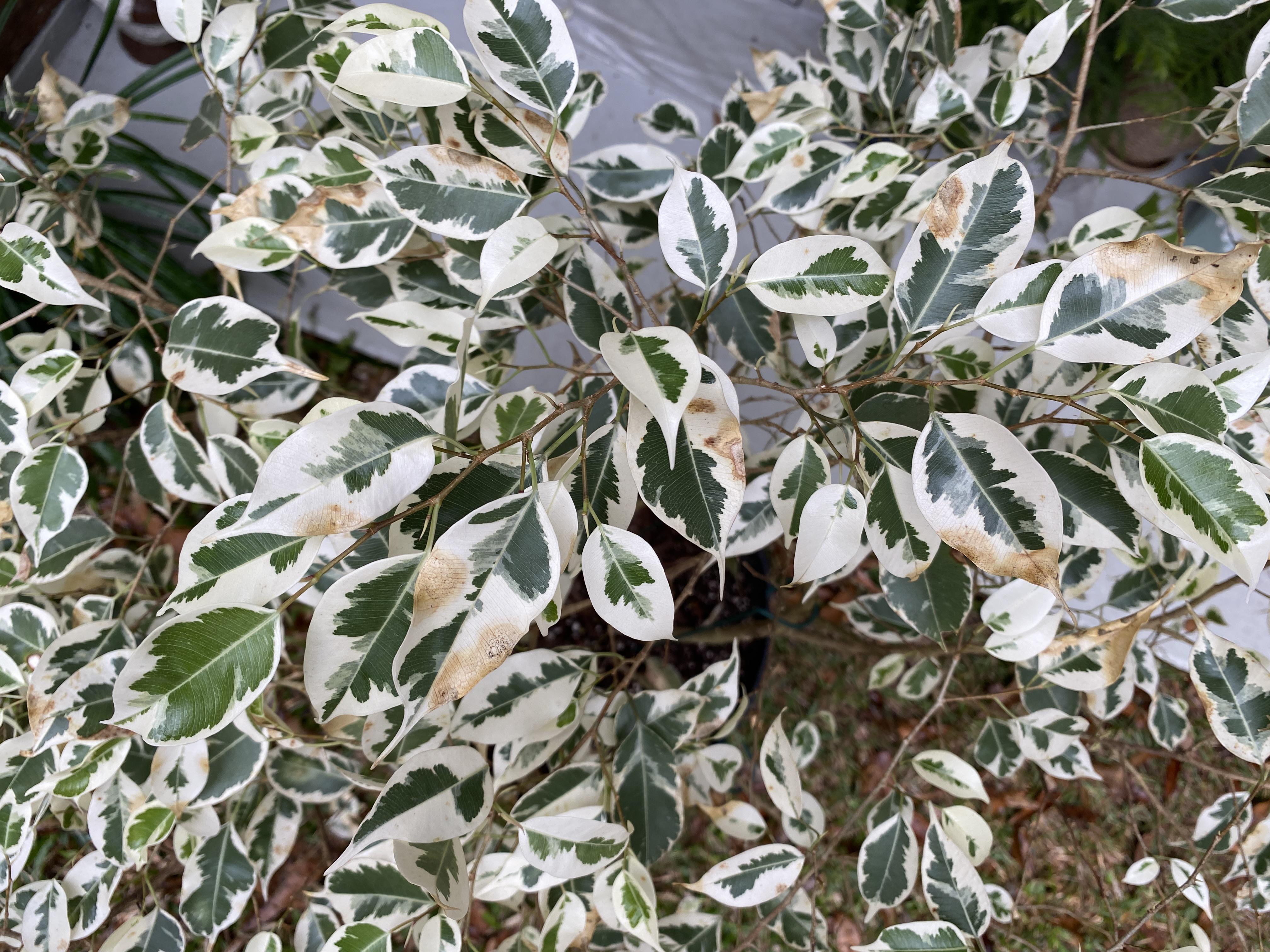
Brown tips and edges
- Often: dry air, inconsistent watering, salt buildup from fertilizer, or heat from vents.
- Try: a humidifier nearby, steadier watering rhythm, and flushing the pot with plain water once every month or two (water until it drains heavily for a minute or two).
Brown spots with yellow halos
This can be caused by leaf spot issues (fungal or bacterial) or stress plus opportunistic spotting. It is not a perfect diagnosis from a photo, but the care response is similar.
- Avoid wet foliage and water the soil only.
- Improve airflow in the room, but avoid cold drafts.
- Remove badly damaged leaves and monitor new growth.
- If spotting is spreading quickly, isolate the plant and consider reaching out to a local extension office or plant professional for ID.
Sticky leaves or bumps on stems
Sticky residue is most often honeydew from pests like scale, mealybugs, or aphids. Spider mites usually cause stippling and fine webbing rather than stickiness.
- Inspect undersides of leaves and along stems.
- Wipe leaves with a damp cloth.
- Treat with insecticidal soap or horticultural oil, repeating weekly for a few rounds.
When to worry
If leaf drop is paired with soft or blackening stems, a foul smell from the pot, or rapid decline despite good light and careful watering, check for root rot. Unpot the plant, inspect roots (healthy roots are firm and pale), and consider repotting into fresh, airy mix after trimming dead roots.
Quick checklist
- Light: bright, indirect light or gentle sun. More light usually means less leaf drop.
- Water: when top 1 to 2 inches are dry, then water thoroughly and drain.
- Drafts: keep away from exterior doors and HVAC vents.
- Humidity: 30 to 50 percent is often fine, but higher helps with crisp edges.
- Repot: only when rootbound, ideally late spring or summer.
- Safety: keep away from pets and watch for sap irritation when pruning.
Other ficus options
If you already love ficus plants, you can absolutely succeed with a benjamina. But choosing the right “ficus personality” for your home makes everything easier.
Weeping fig (Ficus benjamina)
- Best for: someone who can give it a stable spot and resist moving it.
- Look: many small leaves, airy canopy, classic indoor tree shape.
- Common complaint: leaf drop after changes in light, temperature, or location.
Fiddle leaf fig (Ficus lyrata)
- Best for: bright spaces and growers who like a bold statement plant.
- Look: large violin-shaped leaves, architectural form.
- Common complaint: leaf spots from watering issues and low airflow, plus slow adjustment.
Rubber tree (Ficus elastica)
- Best for: beginners who want a tougher ficus that forgives a bit more.
- Look: thick, glossy leaves, upright growth.
- Common complaint: slower growth in low light, occasional leaf drop if kept too wet.
If your home has frequent drafts or you love rearranging furniture, a rubber tree may feel easier. If you have steady bright light and can give a plant a permanent home, a weeping fig will reward you with lush, graceful growth.
My gentle reset plan
If your plant is currently dropping leaves, here is the calmest way to stabilize it:
- Pick one good spot with bright light and minimal drafts. Commit to it.
- Check soil moisture with your finger, then adjust watering to the 1 to 2 inch dry rule.
- Inspect for pests and wipe the leaves.
- Increase humidity slightly if your air is dry, especially in winter.
- Wait. Give it 3 to 6 weeks to show you new growth and a steadier canopy.
And if you catch me talking to my ferns while you are doing all this, just know it is mostly for us. A little encouragement helps us stay consistent, and consistency is exactly what your ficus wants.