
Watermelon Peperomia Care

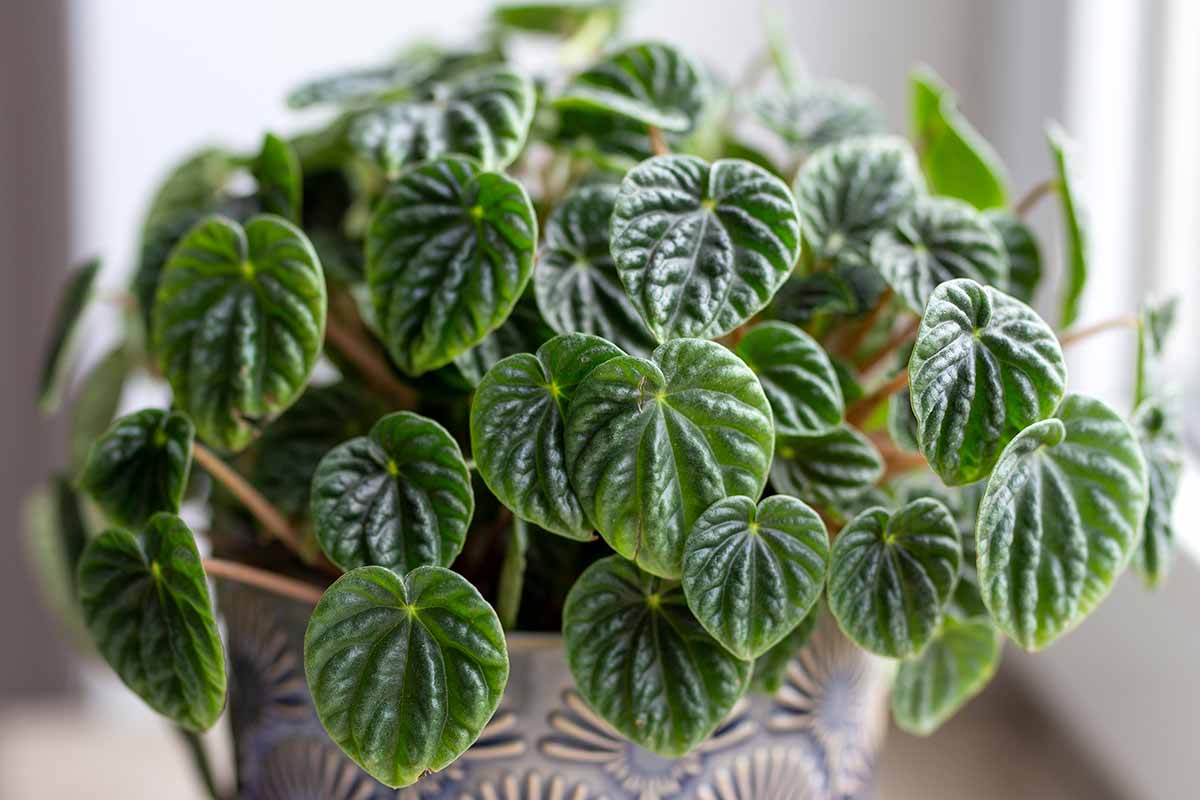
If you have ever seen a Watermelon Peperomia up close, you know why people fall hard for it. Those round leaves with silver stripes look like tiny watermelons perched on red stems, and the whole plant has a neat, sculptural vibe that makes a room feel instantly calmer. The best part is that Peperomia argyreia is friendly for beginners once you understand its two big preferences: bright, filtered light and a watering routine that respects its semi-succulent nature.
This guide is specific to Watermelon Peperomia, not the whole peperomia family. Like many peperomias, it does well in average homes, and it can also appreciate a little extra humidity. It also propagates especially well from leaf cuttings when you do it the right way.
Quick care snapshot
- Light: Bright indirect or filtered light, tolerates medium light, avoid harsh midday sun
- Water: Water thoroughly, then let a good portion of the mix dry before watering again (more in the watering section)
- Humidity: Average home is fine, but 45 to 60 percent keeps leaves happiest
- Soil: Airy, fast-draining mix (potting mix + orchid bark + perlite)
- Temp: 65 to 80°F (18 to 27°C), protect from cold drafts
- Growth: Compact rosette with long petioles, slow to moderate growth, can get leggy in low light
- Pet safety: Generally regarded as non-toxic to cats and dogs, but always confirm with a trusted source and discourage chewing
Light: keep the stripes, avoid scorch
Think “bright shade,” like the light under a patio umbrella. Watermelon Peperomia wants strong light without the burn.
Best window placements
- East-facing: Usually perfect. Gentle morning sun, then bright, filtered light.
- North-facing: Can work if the window is unobstructed and you are close to the glass.
- South or west-facing: Fine if you filter with a sheer curtain or pull the plant back a few feet.
Signs you need to adjust light
- Leggy growth: Longer stems, wider spacing, leaves reaching toward the window.
- Loss of striping or contrast: The silver bands look dull and new leaves appear less defined.
- Scorch: Bleached patches or crispy edges after direct sun hits the leaves.
If you are using a grow light, aim for a bright setting for 10 to 12 hours a day and keep the light far enough away that the leaves never feel warm to the touch.
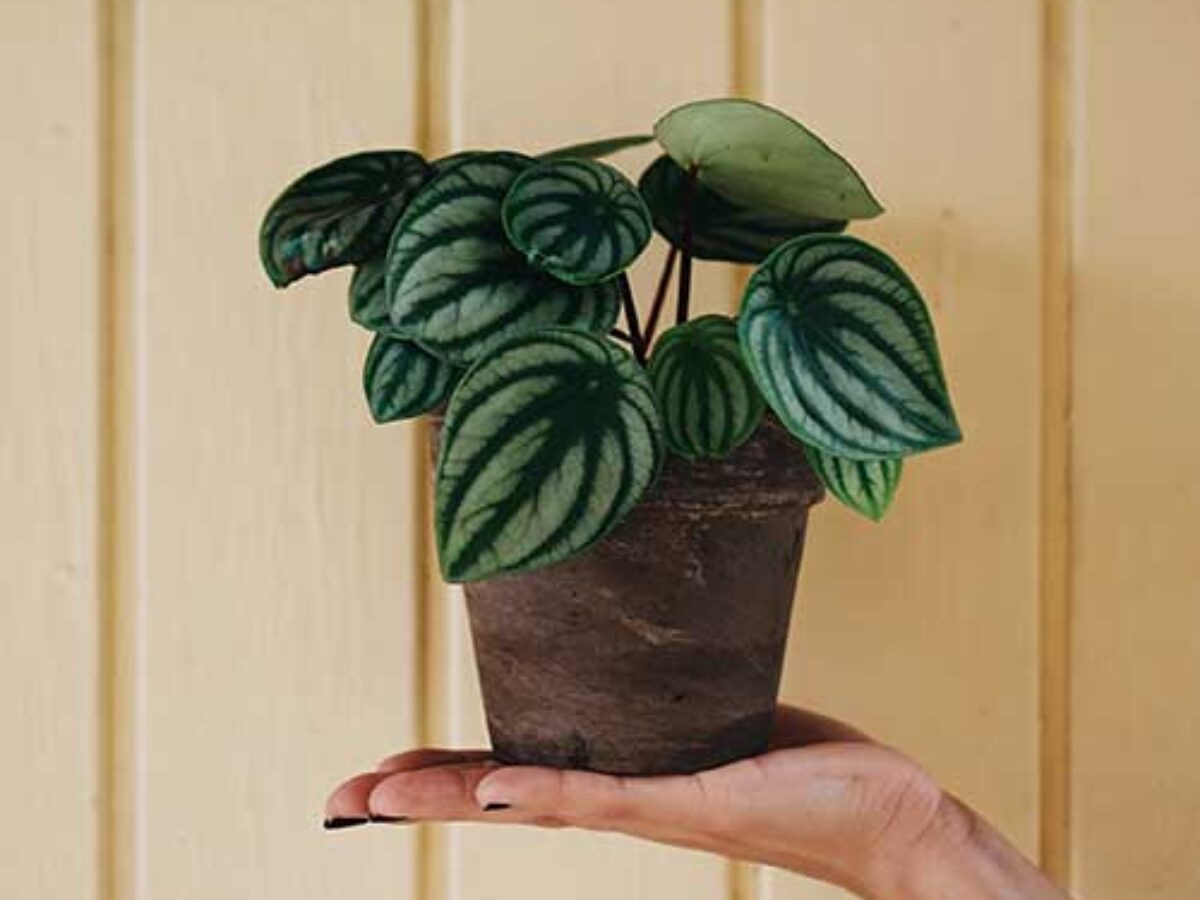
Watering: soak, then dry down
Watermelon Peperomia stores some moisture in its fleshy leaves and stems, so it hates staying soggy. At the same time, it will absolutely sulk if it is left bone dry for too long. The sweet spot is a thorough watering followed by a real dry-down.
How to water properly
- Check the pot before watering. Stick a finger in or use a wooden skewer.
- Water when the top 50 percent of the mix feels dry and the pot feels noticeably lighter. In a small, shallow pot, that might look like the top 1 to 2 inches drying quickly. In a deeper pot, you will need a deeper check.
- Water slowly until it runs out the drainage holes, then empty the saucer.
- In winter, expect to water less often.
Common watering mistakes
- Frequent sips: Small amounts on a schedule keep the center wet and invite rot.
- No drainage: A pretty cachepot is fine, but keep the nursery pot with holes inside it.
- Cold water: Cold water can stress roots. Room-temperature water is gentler.
Clara tip: I like to lift the pot every few days. Your hands learn the “just-watered” weight versus the “thirsty” weight faster than any app.
Fast overwatering clue: If leaves start looking translucent, mushy, or they droop while the pot still feels heavy, pause watering and check the roots and soil airflow.
Humidity: perkier leaves
Watermelon Peperomia tolerates average humidity, but it often looks its best with a little extra. Higher humidity helps prevent leaf edges from crisping and can reduce curling caused by dry air.
Ideal range
Aim for 45 to 60 percent if you can. If your home sits around 30 to 40 percent in winter, do not panic. Just help your plant out with one of these:
- Humidifier: The most reliable option.
- Plant grouping: Several plants together create a small humid pocket.
- Pebble tray: Mild help, best used alongside other methods.
Avoid misting as your main humidity strategy. It is temporary and can encourage spotting if leaves stay wet in low airflow.
Soil and potting: airy roots
Watermelon Peperomia needs oxygen at the roots. Dense, water-holding mixes are the fastest way to turn a cute plant into a sad one.
A great soil mix
- 2 parts high-quality indoor potting mix
- 1 part perlite or pumice
- 1 part orchid bark (or chunky coco chips)
This blend drains quickly but still holds enough moisture for a steady routine.
Pot choice
- Drainage holes are non-negotiable.
- Terracotta helps the mix dry faster, which is useful if you tend to overwater.
- Plastic holds moisture longer, which is helpful if your home is very dry or warm.
- Shape matters: Shallow pots dry faster than deep ones, so adjust your checks accordingly.
Repotting
Repot every 1 to 2 years, or when roots circle the pot. Size up only 1 to 2 inches. A pot that is too large stays wet too long.
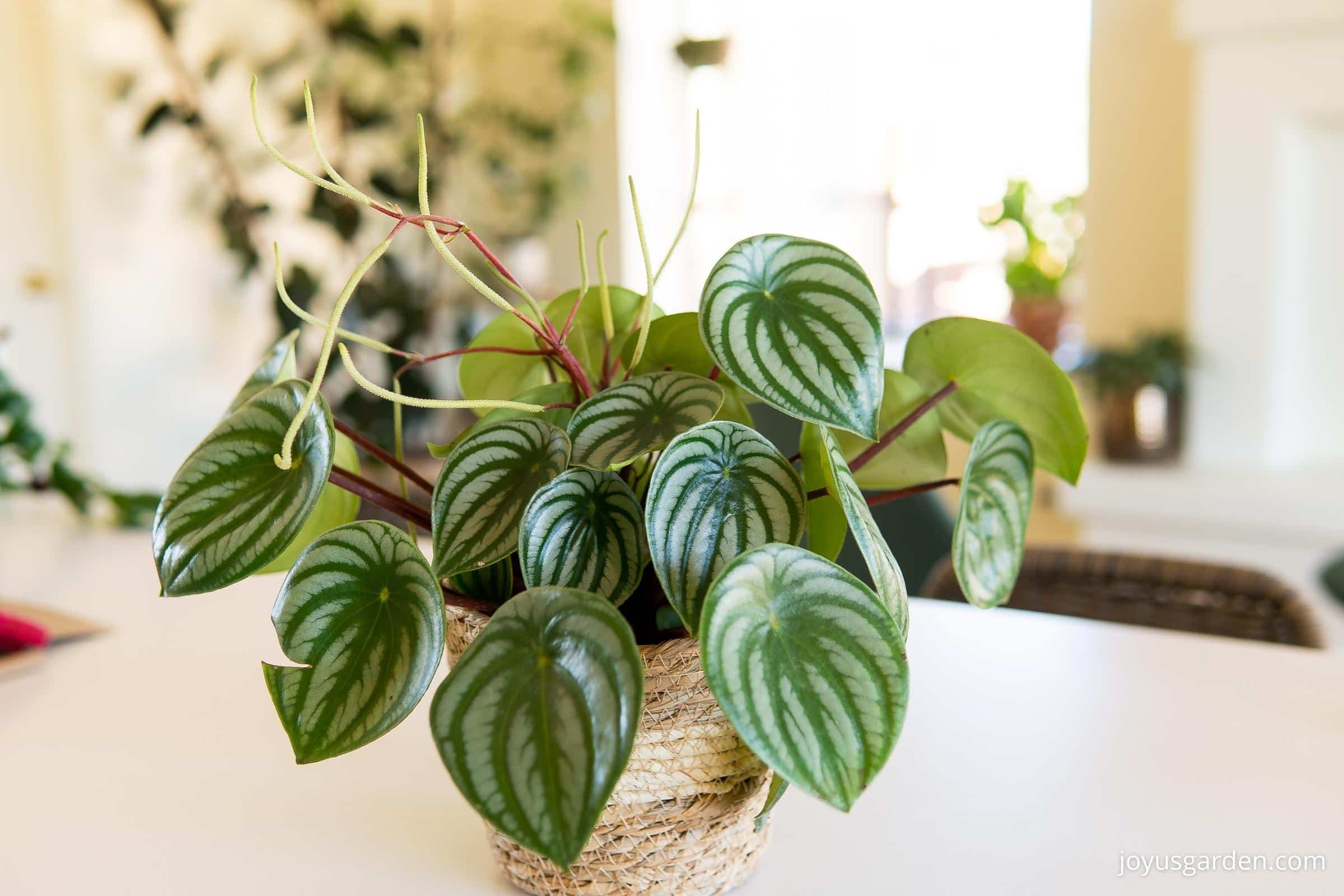
Temperature and airflow
Keep your Watermelon Peperomia cozy. It prefers typical indoor temps and does not enjoy sudden drops.
- Ideal: 65 to 80°F (18 to 27°C)
- Avoid: Below 55°F (13°C), cold windowsills in winter, blasts from AC or heating vents
- Airflow: Gentle airflow is good, but do not put it in a constant draft
Feeding: less is more
This plant is not a heavy eater. Too much fertilizer can cause weak growth and stressed roots.
- Feed in spring and summer with a balanced houseplant fertilizer at half strength every 4 to 6 weeks.
- Skip feeding in fall and winter when growth slows.
- If you use a rich soil mix, you can fertilize even less.
Calcium and magnesium note
One Watermelon Peperomia quirk: they can be prone to calcium or magnesium deficiency, which shows up as misshapen new growth (cupping, puckering, splitting, or oddly stiff new leaves). If your care is solid and the newest leaves keep coming in distorted, consider adding a gentle Cal-Mag supplement or using a fertilizer that includes calcium and magnesium. Go easy and follow the label. This is still a small plant with small roots.
Pruning and shaping
Watermelon Peperomia naturally grows in a tidy mound, but it can get uneven.
- Remove older, tired leaves at the base to freshen the look.
- Pinch or trim overly long stems to encourage a fuller shape.
- Rotate the pot weekly so it grows evenly toward the light.
Propagation: leaf cuttings
Watermelon Peperomia is one of my favorite plants to propagate because it can grow new plantlets from a single leaf. The trick is giving that leaf the right contact with moisture without letting it rot. Success rates can vary, so think of this as a small experiment and give it time.
Method 1: Leaf cutting in soil (my go-to)
- Choose a healthy, mature leaf with a firm stem (petiole).
- Cut the leaf with a clean blade. You can keep the petiole attached.
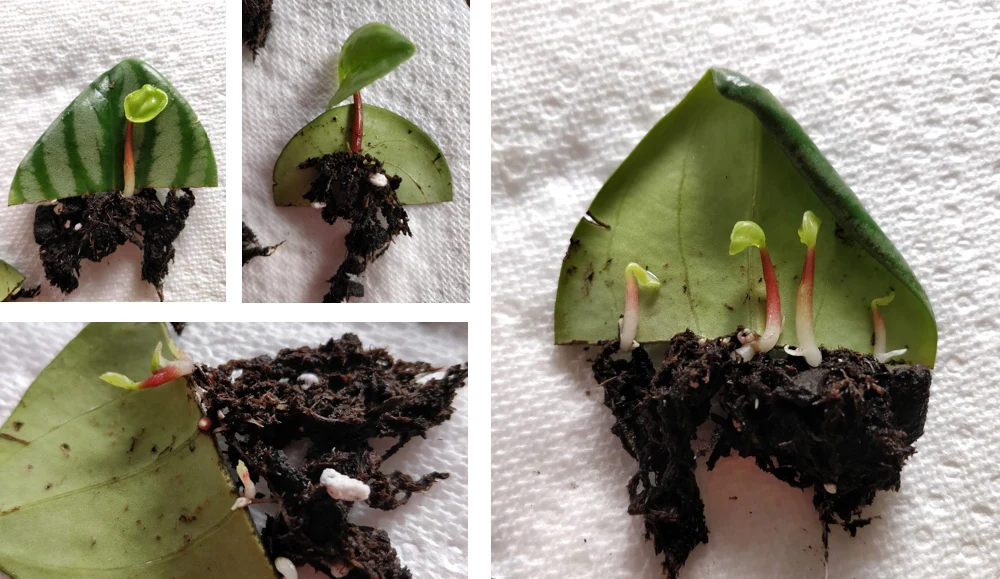
- Optional but effective: cut the leaf in half crosswise, then plant the cut edge slightly into the mix. Each half can produce plantlets, but some cuttings take longer than others.
- Use a small pot with lightly moist, airy propagation mix (potting mix + perlite works).
- Cover with a clear plastic bag or place in a propagation box for higher humidity.
- Keep warm in bright, filtered light. Vent daily for fresh air.
In 4 to 8 weeks, you may see tiny new leaves emerging at the base. Keep the mix barely moist, not wet.
Method 2: Leaf cutting in water
Water works, but rot is more common and the transition back to soil can slow things down. If you try water propagation, change the water regularly and move to soil as soon as you see a small cluster of roots.
Clara tip: If you are impatient like me, do a few cuttings at once. Propagation feels a lot more “successful” when you are not emotionally invested in a single leaf.
Troubleshooting common problems
Before you change care, do a quick pest check. Flip a few leaves, look at the petioles, and scan for webbing, cottony clusters, or sticky residue.
Curling leaves
Leaf curl is your plant waving a tiny flag. The cause is usually one of these:
- Underwatering: Leaves curl inward and feel slightly thinner. Solution: water thoroughly, then return to the soak, then dry-down routine.
- Low humidity: Curling with dry edges, especially in winter. Solution: add a humidifier or move away from vents.
- Too much sun or heat: Curling with faded patches or crispy spots. Solution: filter light and keep temperatures steady.
- Root stress from soggy soil: Curling plus soft stems or a musty smell. Solution: check roots, trim rot, repot into airy mix, and ease up on watering.
Misshapen new leaves
If new leaves are coming in cupped, wrinkled, split, or generally “off,” and your light and watering are reasonable, think nutrients and roots.
- Calcium or magnesium deficiency: Watermelon Peperomias are a little famous for this. Solution: add a mild Cal-Mag supplement or use a fertilizer that includes calcium and magnesium. Keep doses gentle.
- Root issues: Compacted, staying-wet soil can block healthy uptake. Solution: repot into a chunkier mix and let the mix dry more between waterings.
- Pests: Sap-suckers can distort new growth. Solution: inspect closely, then treat appropriately.
Leggy growth
Legginess almost always means not enough light.
- Move it closer to a brighter window or add a grow light.
- Rotate the pot weekly.
- Trim the longest stems to rebalance the shape. New growth will be sturdier in better light.
Fading stripes
Those watermelon stripes look best in bright, filtered light. In low light, new leaves may emerge with less contrast.
- Increase light gradually over 1 to 2 weeks.
- Wipe dust from leaves so they can photosynthesize efficiently.
- Do not over-fertilize, which can push weak, soft growth.
Yellowing leaves
- Older leaf yellowing now and then: Normal. Remove it.
- Several leaves yellowing at once: Often overwatering or compacted soil. Let the mix dry more between waterings and consider repotting into a chunkier blend.
Drooping leaves
Droop can mean thirsty or too wet. Check the soil moisture and pot weight.
- Dry and light pot: Water thoroughly.
- Wet and heavy pot: Pause watering, improve airflow, and check for root issues.
Brown tips or crispy edges
- Dry air, inconsistent watering, or mineral-heavy water can all cause browning.
- Try filtered water if your tap water is very hard, and aim for steadier moisture.
Pests to watch for
Watermelon Peperomia is not a pest magnet, but it can still get visitors.
- Mealybugs: White cottony clumps in leaf joints. Dab with isopropyl alcohol on a cotton swab.
- Spider mites: Fine webbing and speckled leaves, especially in dry air. Rinse the plant and raise humidity.
- Fungus gnats: Often from consistently wet soil. Let the mix dry more and use sticky traps.
Quarantine new plants for a couple of weeks if you can. It saves so much heartache later.
Leaf care and cleaning
Those glossy leaves collect dust, and dust blocks light. Wipe leaves gently with a soft, damp cloth when they look dull. Skip leaf shine products. They can clog leaf surfaces and make spotting problems harder.
Watermelon Peperomia care FAQs
How often should I water a Watermelon Peperomia?
There is no perfect schedule. In many homes it is every 7 to 14 days in spring and summer, less in winter. Water when about the top half of the potting mix has dried and the pot feels lighter.
Does Watermelon Peperomia like to be root bound?
It does not mind being slightly snug, and it often grows best that way. Repot only when roots are clearly filling the pot or watering becomes tricky because the mix dries extremely fast.
Can I propagate from a single leaf without a stem?
You may get better results with a leaf that includes at least a bit of petiole. Leaf halves can also work well when planted cut-side down in lightly moist mix with higher humidity, but results vary.
Why are my leaves flipping upward?
Often it is a light response, the plant angling leaves toward the brightest source. If leaves look healthy and firm, it is usually fine. If they are curling, crispy, or pale, adjust light and humidity.
A gentle finishing note
Watermelon Peperomia rewards consistency more than perfection. Give it bright, soft light, let the soil breathe between waterings, and bump humidity a little when your home feels dry. If your newest leaves look a little weird, do not assume you failed. Sometimes it just needs a small calcium and magnesium boost. Then do what I do and take a quiet moment to admire those stripes. It is hard to stay stressed while looking at a plant that literally resembles summer fruit.