
Water vs. Soil Propagation for Pothos and Monstera

If pothos and monstera had a love language, it would be “make more of me.” These aroids are famously generous with new growth, and propagation is one of the fastest ways to turn one happy plant into many. The big question I hear again and again is: Should I root cuttings in water or soil?
The honest answer is that both methods work. The better answer is that they work differently, and the best choice depends on your setup, patience level, and how quickly you want a cutting to settle into life in potting mix.
Quick safety note: pothos and monstera are toxic if chewed or ingested, so keep cuttings (and that tempting jar of water) away from pets and small kids.
Quick verdict
- Best for beginners and quick feedback: Water propagation (you can see roots forming, and it is very forgiving).
- Best for long-term strength and fewer transplant hiccups: Soil propagation (roots adapt to potting mix from day one).
- Best middle-ground: Sphagnum moss (great airflow and easy transitions, especially for monstera).
- Best overall for pothos: Water or soil, both are high success when the node is included.
- Best overall for monstera: Soil or moss tends to transition more smoothly, especially for bigger cuttings.
My gardener-to-gardener suggestion: if you are nervous, start in water. If you are propagating several cuttings at once and want them to become a full pot quickly, go straight to soil.
What makes a cutting root?
For pothos (Epipremnum aureum) and monstera (most commonly Monstera deliciosa and Monstera adansonii), the magic word is node.
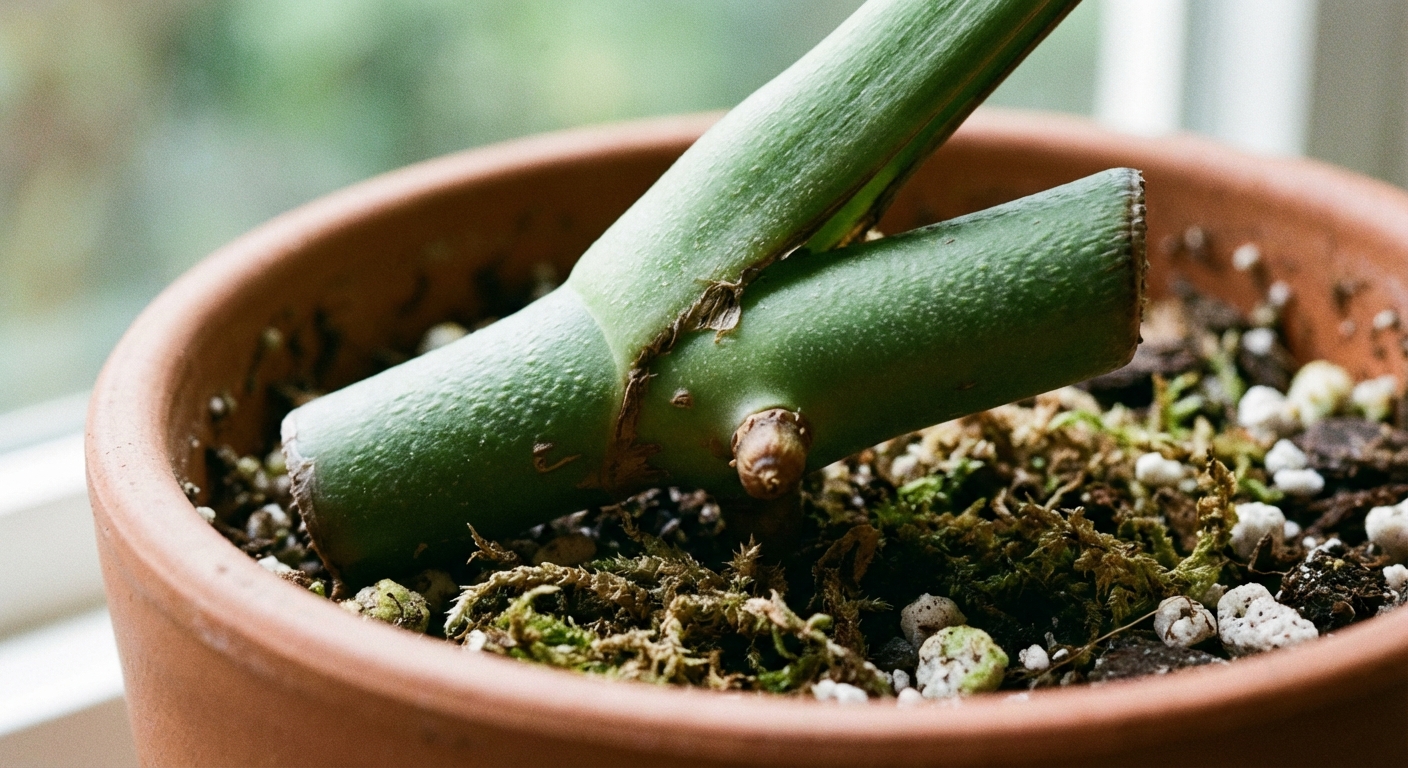
- Node: the slightly knobby joint on the stem where leaves, aerial roots, and new growth points emerge.
- Aerial root (monstera especially): a brownish nub or root-like structure that wants to grab onto something. It can help speed up rooting, but the node is the non-negotiable part.
No node, no roots. A leaf in water might stay pretty for weeks, but it will not become a new plant.
Common monstera confusion: a single leaf with just a petiole (leaf stem) is not a viable cutting. You need a piece of stem with a node attached.
Water propagation
Why people love it
- You can see everything. Roots, rot, progress, all visible.
- Easy to maintain. A jar, clean water, and a bright spot.
- Great for small cuttings. Single-node pothos pieces root like champs.
The drawbacks
- Water roots are different from soil roots. Roots formed in water are built differently, and they can sulk when moved into the airier, pore-filled world of potting mix.
- Higher chance of stem rot if neglected. Dirty containers, old water, and low light are the perfect storm.
- It is easy to wait too long. People let roots get long and fragile, then the transplant is rough.
Typical success
With healthy cuttings (node included), bright indirect light, warmth, and regular water changes, success is often high, especially for pothos and Monstera adansonii. Monstera deliciosa can be a bit more variable because cutting size, freshness, and temperature matter a lot.
Think of any percentages you see online (including mine) as “real-life ranges,” not lab data. Your windowsill is the deciding vote.
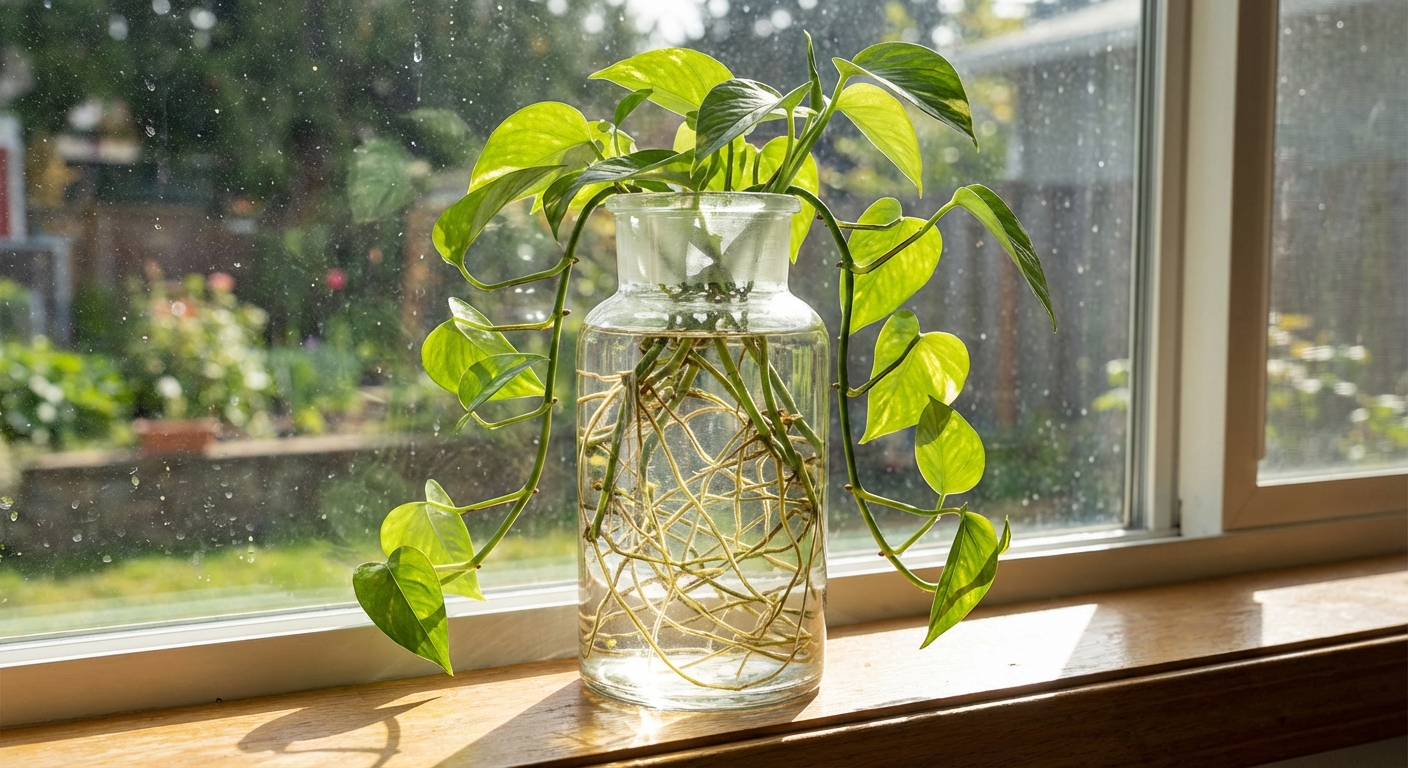
Pothos in water
- Cut below a node. Aim for a piece with 1 to 3 leaves and at least one node. Use clean snips.
- Remove the lowest leaf. Anything that would sit underwater should come off.
- Use a clean glass or jar. Add room-temperature water. If your tap water is heavily chlorinated, letting it sit out overnight can help. If your city uses chloramine (common), it will not off-gas, so use filtered water if you notice issues.
- Submerge the node, not the leaves. Keep leaves above the waterline.
- Place in bright, indirect light. A few feet back from a bright window is often perfect (east is ideal; south may need more distance or a sheer curtain).
- Refresh water regularly. Every 5 to 7 days is my sweet spot. Rinse the jar if it gets slippery.
- Pot up when roots are ready. When you have several roots roughly 2 to 4 inches long and/or you see some branching (secondary roots), move to soil.
Timing: Pothos often shows root nubs in 7 to 14 days and is pot-ready in 3 to 6 weeks.
Monstera in water
Monstera water propagation is similar, with one extra emphasis: stability. Monsteras are thicker and heavier, and wobbly cuttings tend to bruise and rot.
- Choose the right cutting. For adansonii, a 1 to 2 node cutting is great. For deliciosa, include a node and ideally an aerial root nub.
- Make a clean cut. Sterilize shears with rubbing alcohol.
- Let thick cuttings callous. For chunkier Monstera deliciosa pieces, let the cut end air-dry for a few hours before putting it in water (or soil). This can help reduce rot.
- Keep one leaf, remove extras if needed. Too many leaves can dehydrate the cutting faster than it can root.
- Anchor it in a jar. Submerge the node and any aerial root nub.
- Change water weekly. More often if it gets cloudy.
- Pot up earlier than you think. Do not wait for a jungle of water roots. Aim for a few strong roots (bonus points for branching), then transition.
Timing: Adansonii often roots in 2 to 4 weeks. Deliciosa commonly takes 4 to 8 weeks, sometimes longer in cool seasons.
Soil propagation
Why soil shines
- Roots form for soil from the start. Less shock later, and often sturdier growth after rooting.
- No transition step required. Your cutting is already in its forever medium.
- Great for making a fuller pot fast. You can plant multiple cuttings together immediately.
The trade-offs
- Progress is invisible. You cannot see roots, so you need patience and gentle tug-tests.
- Overwatering is the biggest risk. A cutting with no roots cannot drink much, and soggy soil invites rot.
- It requires a decent mix. Heavy, compacted potting soil is not your friend here.
Typical success
In a light, airy mix with careful watering, soil propagation is often very successful for pothos and monsteras. Monstera deliciosa in particular can transition more smoothly when it never has to “unlearn” water life.
My go-to aroid mix
You want something that stays lightly moist but breathes. For pothos and monstera, I like a “chunky but cozy” mix:
- 2 parts indoor potting mix (peat or coco-based)
- 1 part perlite or pumice
- 1 part orchid bark (fine to medium)
If you already keep an aroid mix for your adult plants, you can use that, just avoid huge bark chunks for tiny cuttings. Small roots like smaller nooks to grab.
Pothos in soil
- Prepare a small pot with drainage. A 4-inch pot is perfect for a handful of cuttings.
- Moisten the mix first. Slightly damp like a wrung-out sponge, not wet.
- Take cuttings with nodes. Remove any leaves that would be buried.
- Plant nodes shallowly. Bury the node about 1 to 2 inches. Firm gently.
- Boost humidity if your home is dry. A clear plastic bag tented over the pot can help. Keep it from touching leaves.
- Keep in bright, indirect light.
- Water sparingly. Water only when the top inch starts to dry.
- Check for rooting. After 3 to 5 weeks, a gentle tug should meet resistance.
Pro tip: If you want a lush pothos pot, plant 5 to 10 cuttings together. One cutting makes one vine, and one vine can look lonely in a big pot.
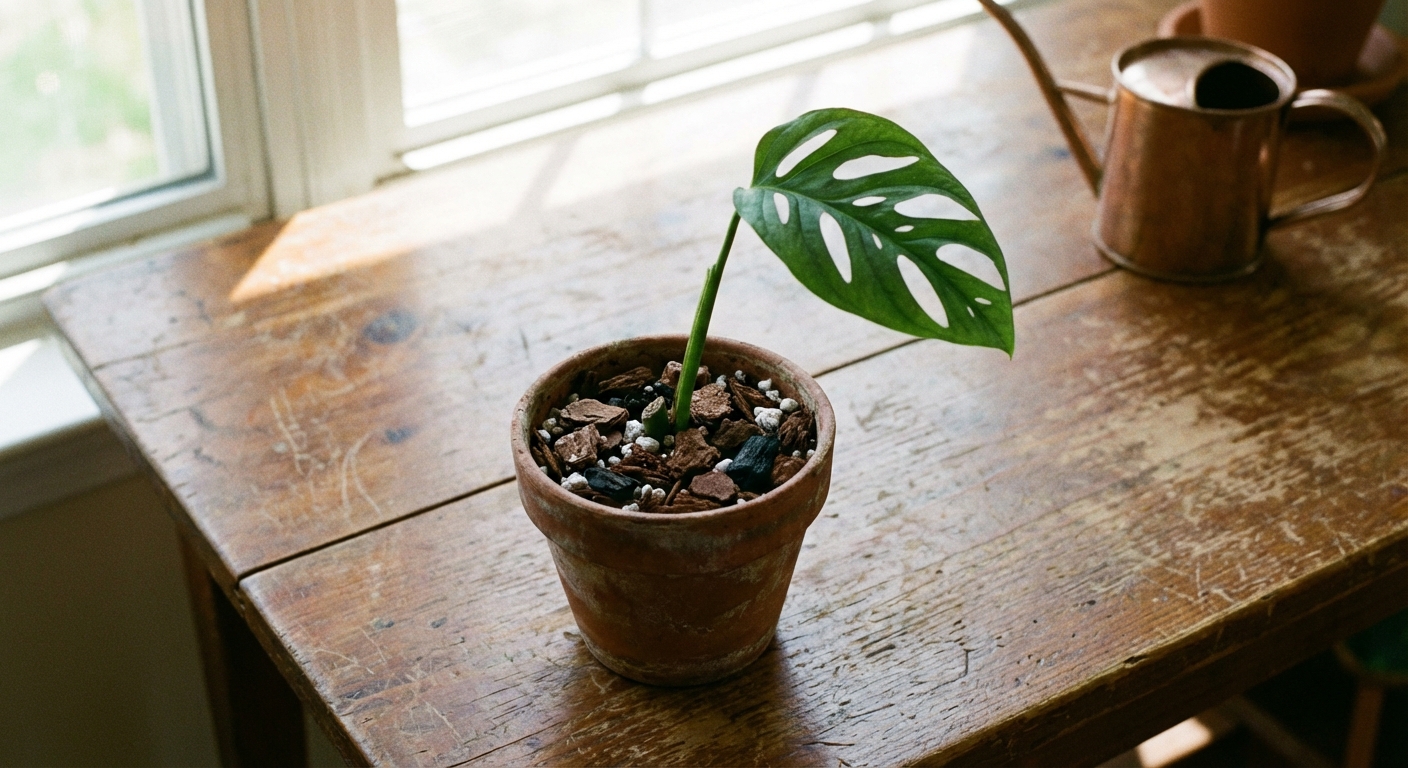
Monstera in soil
- Choose a stable pot. Monsteras get top-heavy quickly, even as cuttings.
- Use a chunky mix. Airflow matters more than “richness” right now.
- Let thick cuttings callous. For chunkier Monstera deliciosa pieces, let the cut end dry for a few hours before planting. This simple pause can help reduce rot.
- Position the node correctly. The node must be in contact with the mix. If there is an aerial root nub, tuck it into the soil too.
- Keep the leaf above soil. Burying petioles invites rot.
- Water in lightly. Just enough to settle the mix around the node.
- Bright, indirect light and warmth. Warmth is a rooting accelerant. If your room runs cool, a seedling heat mat on low can be a game-changer.
- Do not overwater. Let the top layer dry slightly between waterings.
Moss propagation
If you want the visibility and rot-resistance of a “middle method,” sphagnum moss is it. It holds moisture while still letting roots breathe, and it usually transitions to soil more smoothly than straight water.
- How it works: Moisten long-fiber sphagnum so it is damp, not dripping. Nestle the node into the moss, keep it warm and bright, and maintain light moisture.
- Best for: Monstera cuttings (especially ones with aerial roots), and anyone who tends to overwater soil.
- Watch-outs: Moss can stay too wet if packed tightly. Fluff it, do not compress it, and use a pot with drainage.
6 factors that matter most
- Node quality: Plump node, no black mush, no collapsing tissue.
- Light: Bright indirect light fuels rooting. Low light slows everything down.
- Temperature: Aim for roughly 68 to 80°F. Cooler rooms slow rooting, and rot is more likely if the cutting is kept too wet and in low light.
- Cleanliness: Clean tools, clean jars, fresh mix.
- Moisture balance: In water, refresh often. In soil or moss, keep it evenly damp, never soggy.
- Leaf load: Too many leaves can dehydrate the cutting. One or two healthy leaves is plenty.
Common mistakes
1) Leaf-only cuttings
Symptom: Leaf looks fine, no roots for weeks.
Fix: Take a cutting that includes a node. For pothos, the node is usually right where the leaf meets the stem. For monstera, it is a thicker joint on the vine-like stem (stem included, not just the leaf and petiole).
2) Rot in water
Symptom: Stem turns brown or black and feels mushy, water smells off.
Fix: Trim back to healthy firm tissue, rinse the cutting, wash the container, refill with fresh water. Move to brighter light. If it is a thick Monstera deliciosa cutting, let the fresh cut callous for a few hours before returning it to water. Consider switching to soil or moss if rot repeats.
3) Soil stays wet and cutting collapses
Symptom: Yellowing leaf, drooping, stem soft at the base.
Fix: Use a smaller pot, chunkier mix, and water less often. Make sure the pot has drainage. If rot has started, cut above the rot and re-root a healthy node.
4) Great water roots, then a rough soil transition
Symptom: After potting, plant wilts or stalls for weeks.
Fix: Pot up earlier (2 to 4 inch roots and/or branching roots, not 10-inch noodles). Keep soil evenly moist for the first 1 to 2 weeks, then gradually treat it like a normal plant. Higher humidity for a week can help.
Water to soil transition
If you started in water and want the smoothest landing in soil:
- Pot into slightly damp mix.
- Water in thoroughly once. Let excess drain fully.
- Keep in bright, indirect light.
- Maintain light, consistent moisture for 7 to 14 days. Not soaked, not dry.
- Then taper to normal watering. Let the top 1 to 2 inches dry before watering again.
This is basically “training wheels” for the roots as they switch from water life to soil life.
Which method fits you?
Choose water if
- You want to see progress and catch problems early.
- You are rooting small pothos cuttings or Monstera adansonii vines.
- You are propagating in winter and want tighter control.
Choose soil if
- You want soil-adapted roots from the start.
- You are making a full pot (multiple cuttings together).
- You are propagating thicker Monstera deliciosa cuttings and want fewer transition issues.
Choose moss if
- You want a happy medium between water and soil.
- You are rooting monstera with aerial roots and want less rot drama.
- You like a method that stays moist but still breathes.
If you are still torn: do one cutting in water and one in soil (or moss). Gardening loves a tiny experiment, and you will learn more from your own windowsill than from any rulebook.
FAQ
Is it faster to propagate pothos in water or soil?
Water often looks faster because you see roots early. Soil can be just as fast, but it is happening underground. In many homes, pothos is pot-ready in 3 to 6 weeks either way.
Can I propagate monstera without an aerial root?
Yes, as long as you have a node. An aerial root nub can speed things up and improve stability, but it is not required.
Should I add fertilizer to propagation water?
I do not recommend it. It can encourage algae and complicate rot issues. Clean water, good light, and patience are enough. Once potted and growing, then we can talk gentle feeding.
Do rooting hormones help?
They can, especially in soil or moss, but pothos and monstera usually do not need them. If you enjoy using them, use a light dusting and focus more on moisture balance and warmth.
What is a “wet stick” monstera cutting?
A “wet stick” is a node-only segment (no leaf) that you root in moss or a very airy mix. It can work well for monstera, but it takes patience and consistent warmth and humidity.
The Leafy Zen bottom line
Water propagation is the most confidence-boosting method for pothos and many monstera cuttings because you can watch roots form. Soil propagation tends to produce sturdier, soil-ready roots and can be especially satisfying for monsteras you want to establish quickly without a transplant tantrum. And if you love a best-of-both-worlds approach, sphagnum moss is a genuinely excellent option.
Whichever route you pick, promise me three things: include a node, give it bright gentle light, and do not rush the process. Your future self will be swimming in vines.