
Venus Flytrap Dormancy and Winter Rest

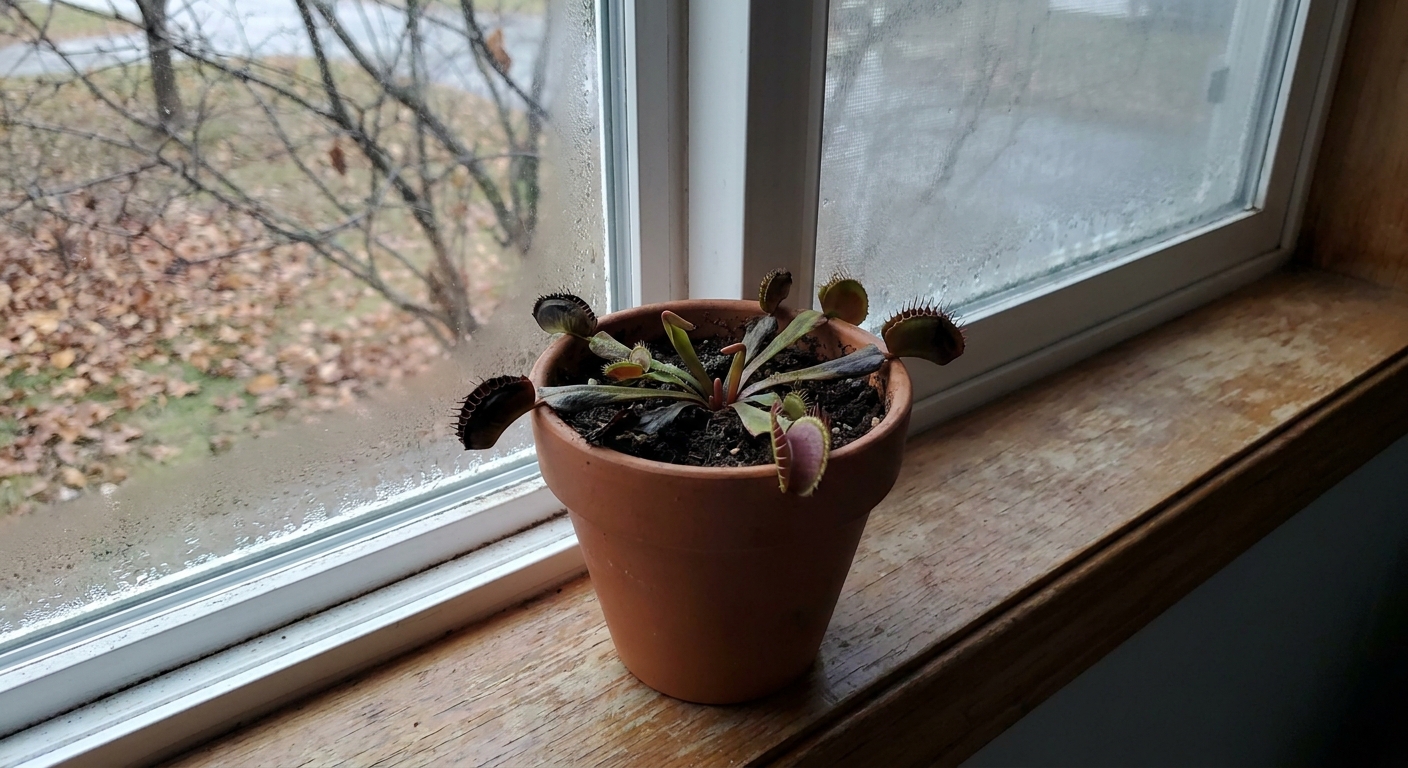
Venus flytraps are not tropical houseplants, even if they live on your windowsill. They are temperate perennials native to the coastal Carolinas, and they expect a cool, darker season every year. That winter rest is not a punishment. It is the reset button that helps them store energy, resist rot, and make strong new traps in spring.
This page is focused on dormancy only, so you can keep your flytrap alive for years without rereading an entire care manual.

What dormancy is (and why it matters)
Dormancy is a natural slow-down triggered by shorter days and cooler temperatures. In dormancy, a Venus flytrap often:
- Stops making big, upright traps
- Hugs the soil in a low rosette
- Lets some older traps blacken and die back
- Grows very slowly or not at all
Skipping dormancy occasionally is not always instantly fatal, but repeatedly avoiding it tends to weaken the plant. You can end up with smaller traps, less vigor, and a flytrap that is more prone to fungus and sudden decline.
One quick reminder for long-term success: flytraps do best with very bright light in the growing season , and they should not be “helped” with fertilizer in the soil, especially not during dormancy.
When to start dormancy (timing by zone)
A good rule is to plan on about 3 to 5 months of winter rest (roughly 10 to 14+ weeks), depending on your conditions. Outdoors, nature handles the schedule. Indoors, you are creating it.
Quick timing guide
- USDA Zones 8 to 10: Often possible outdoors with protection during rare freezes, but watch warm-winter areas. In some Zone 9 to 10 coastal or urban microclimates, nights may not cool enough to trigger a real dormancy, so a cooler spot (garage, porch) or fridge method may work better. Timing is often late November through February.
- USDA Zones 6 to 7: Reliable dormancy outdoors, typically November through March, with freeze protection when temperatures dip hard.
- USDA Zones 3 to 5: Outdoors can work only with serious protection, but many growers choose a controlled approach (unheated garage, cold frame, or fridge method). Aim for November through February or March.
- No true winter where you live: You will likely need to simulate dormancy (cool indoor space or fridge dormancy).
Cue to begin: nights consistently below about 50°F to 55°F (10°C to 13°C) and day length noticeably shorter. If your flytrap starts making smaller, flatter traps, that is your plant politely telling you, “I am ready.”
Minimum rest: if you are in a tricky warm climate, even 8 to 10 weeks of cool, short-day rest is better than none, but most plants do best with a longer winter.
Prep before dormancy (2-minute check)
Before you tuck it in for the season, do a quick cleanup. It lowers your odds of rot and mold later.
- Trim only the fully black traps and remove obvious dead debris sitting on the soil.
- Check for pests (especially aphids and mites) and address them before the plant is cold and sluggish.
- Confirm your water is distilled, rain, or reverse-osmosis. Minerals build up over time and winter is not when you want extra stress.
How to ease into dormancy
The gentlest dormancy is a gradual slide, not a sudden plunge. Start making changes over 2 to 4 weeks.
Water: damp, not boggy
During active growth many flytraps sit in a shallow tray of distilled, rain, or reverse-osmosis water. In dormancy, reduce that.
- Let the tray go empty for a bit, but do not let the pot dry out.
- Refill lightly as needed so the media stays evenly damp (think wrung-out sponge).
- How often depends on temperature, airflow, and pot size. Colder setups usually need less frequent refills.
- If your growing area is cold and stagnant, too much water invites rhizome rot .
Light: less is fine, darkness is not
Outdoors, winter sun is naturally weaker. Indoors, you can reduce intensity and duration.
- For indoor lights, reduce to about 8 to 10 hours daily.
- A cool, bright window is usually enough if temperatures are also cool. Avoid a “bright” window that is actually warm from a radiator, heat vent, or appliance.
- Avoid putting the pot in a truly dark closet for months. Dormant is slow, not dead.
Food: stop feeding
No feeding needed in dormancy. A flytrap is not trying to grow fast, and decaying prey can become a moldy mess in cool, wet conditions.
Outdoor wintering
If your winters are not brutally cold, outdoor dormancy is the most natural path. The big goal is protecting the rhizome while still letting the plant experience cool temperatures.
Best outdoor setup
- Place the pot where it gets sun and airflow but is shielded from harsh wind.
- Keep it out of gutters and low spots where pots stay flooded.
- If a hard freeze is coming, add temporary protection.
Freeze protection ideas
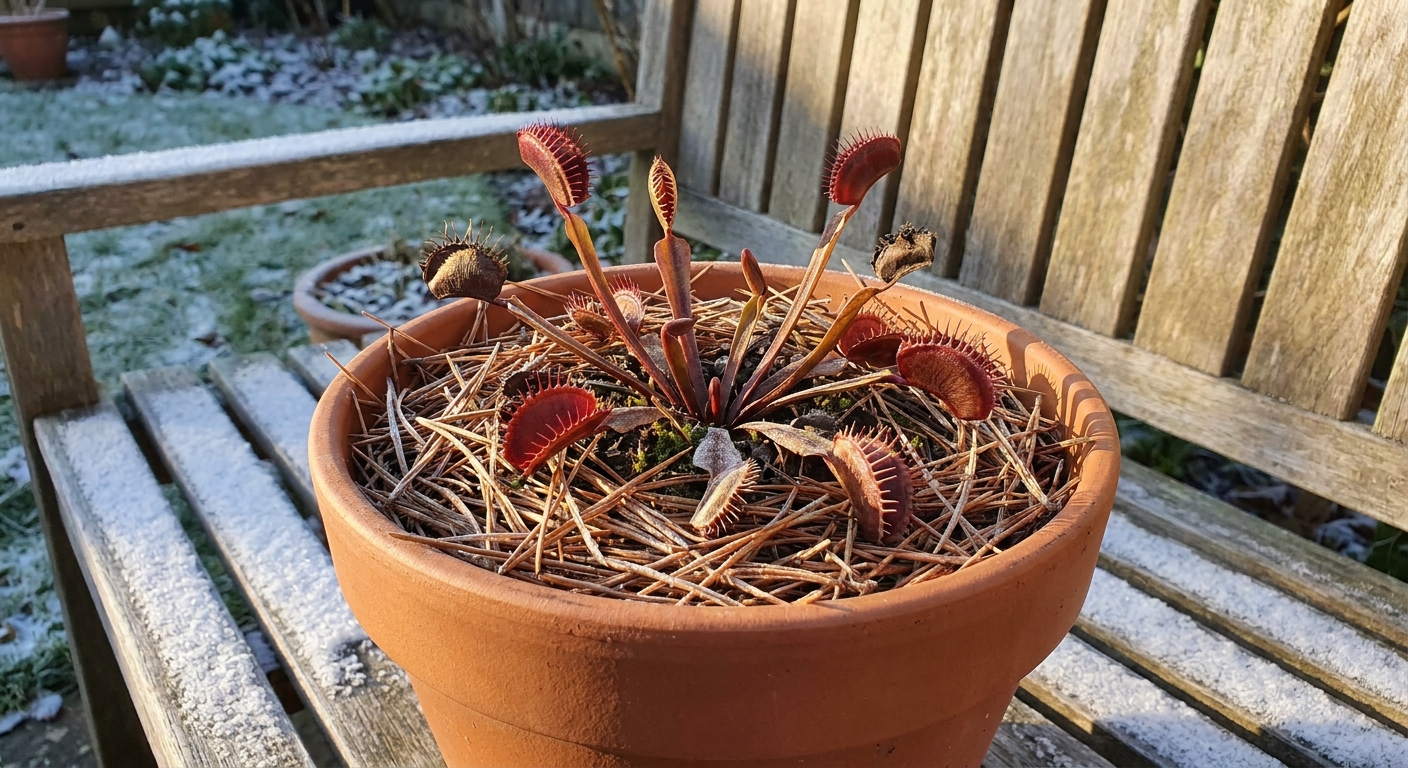
- Mulch around the pot (not packed into the crown) with pine needles or straw
- Move the pot against the house in a more sheltered microclimate
- Use a simple frost cloth overnight during cold snaps
- For very cold nights, an unheated garage or shed can be a perfect “pause button” for 24 to 72 hours
Temperature target: a common target range is roughly 35°F to 50°F (2°C to 10°C), though some growers overwinter a bit warmer (up to about 55°F / 13°C) with shorter days. Brief dips below freezing can be survivable for established plants, but pots can freeze solid quickly. Sustained freezes or repeatedly frozen media can kill the rhizome, especially in small pots.
Indoor cold space dormancy
If you cannot keep the plant outside, look for a place that stays cold but not freezing:
- Unheated garage with a window
- Enclosed porch
- Cold basement window
- Cold frame
You are aiming for cool temperatures and reduced light. Check moisture every week or two. The soil should feel like a wrung-out sponge.
Tip from my own slightly quirky routine: I set a repeating calendar reminder called “check sleepy flytrap.” It keeps me from fussing daily, but also prevents the dreaded “I forgot it for six weeks” situation.
Fridge dormancy
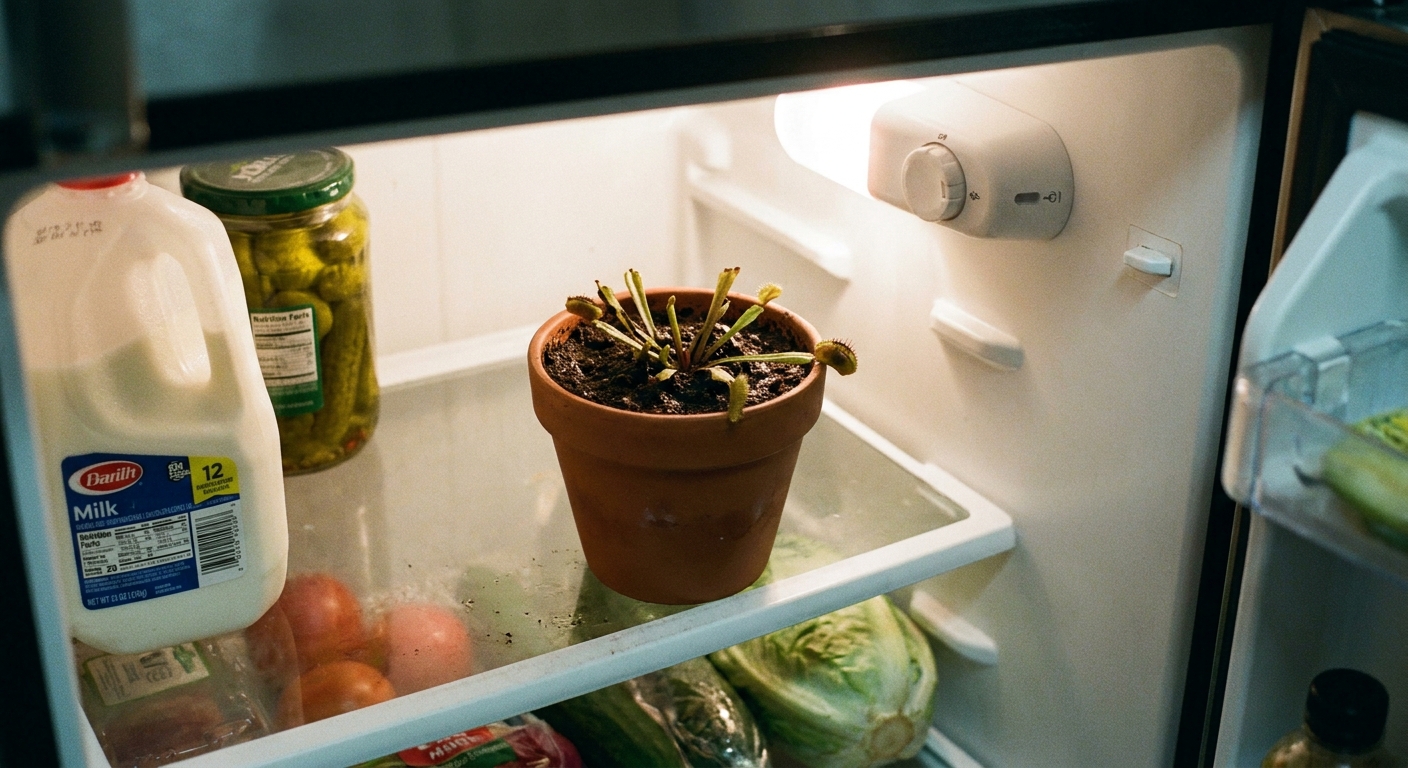
Fridge dormancy can work, especially in very warm climates or apartments with no cool winter corner. But it is not my first choice because it adds two risks: mold and accidental freezing.
When fridge dormancy makes sense
- You live where winter nights stay warm and the plant never gets a natural cue
- You cannot provide a stable 35°F to 50°F (2°C to 10°C) spot indoors
- You are comfortable checking regularly for mold and moisture issues
How to prevent the usual fridge problems
- Trim and tidy first. Remove dead traps and obvious debris so you are not refrigerating a compost pile.
- Do not seal a soaking-wet plant in a bag. Excess moisture is mold’s best friend. Aim for just barely moist media.
- Add a little air exchange. If you bag it, crack the bag or open it briefly during check-ins so it does not become a stale, swampy bubble.
- Do not let it freeze. Refrigerator back walls and freezer-adjacent spots can dip too cold. Keep it away from the coldest surfaces.
- Do not store with rotting fruit. Ethylene and spores can increase decay and mold pressure.
- Label the date. Future you will appreciate it.
Check every couple of weeks. If you see fuzz or rot, remove dead material and adjust toward a little less moisture and a little more fresh air during check-ins.
What “normal” dormancy looks like
Dormancy can look a little dramatic, especially the first time you do it. These are usually normal:
- Traps turning black from the tips inward
- Leaves staying small and low
- Very slow growth
- A somewhat messy appearance until spring cleanup
These are not normal and deserve a closer look:
- Soft, foul-smelling rhizome (possible rot)
- Soil staying swampy for days in cold conditions
- Gray fuzzy mold spreading quickly
- Entire plant collapsing rather than gradually shedding older leaves
If something seems off, the first fix is usually to reduce water slightly and improve airflow.
Spring wake-up
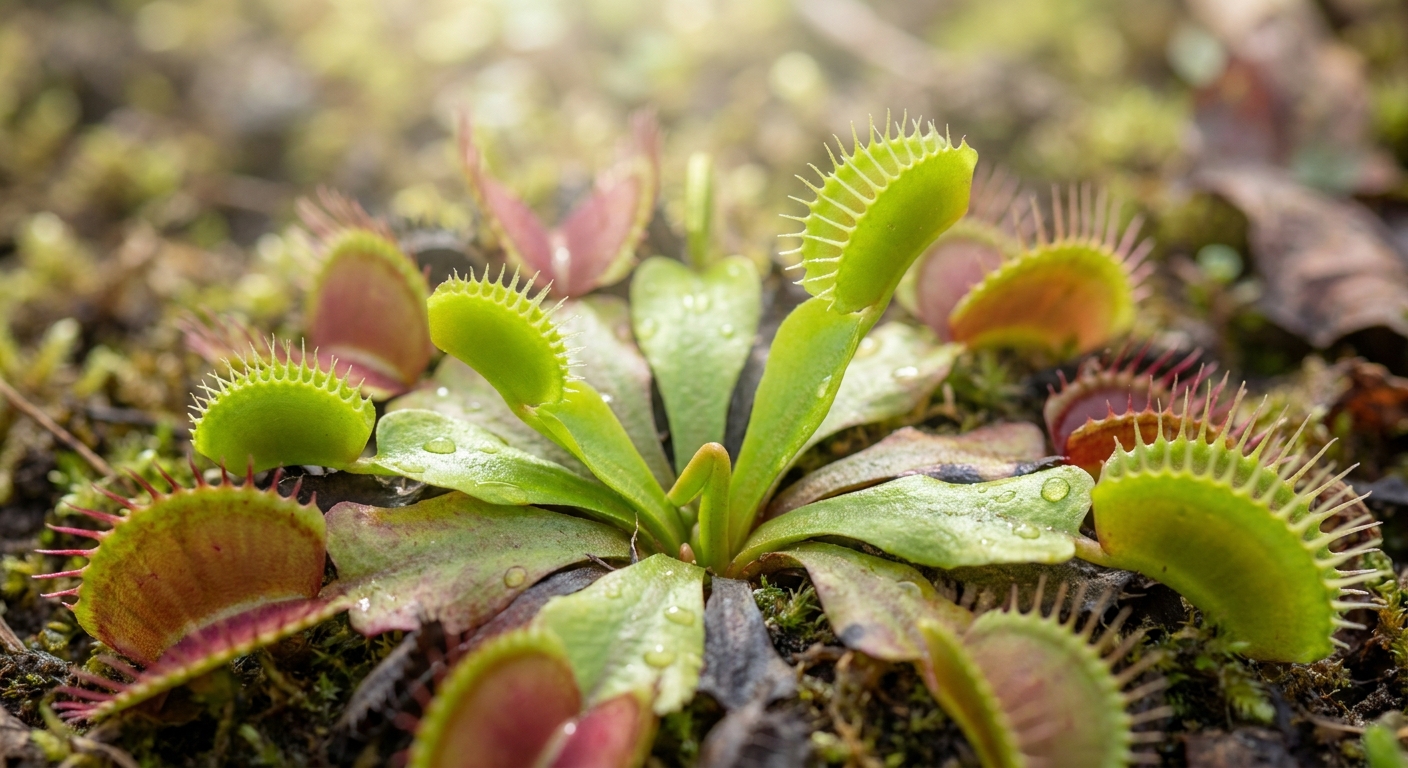
When days lengthen and temperatures rise, your flytrap will start pushing fresh leaves. This is your cue to slowly ramp care back up over 2 to 3 weeks.
Step-by-step wake-up
- Increase light: move back toward brighter sun or longer grow light hours (aim for strong light again).
- Increase water: return to the tray method gradually once nights are reliably warmer.
- Clean up: trim fully black, dead leaves at the base with clean scissors. Leave anything that is still partly green.
- Repot if needed: early spring is a great time if the media is old, compacted, or mineral-contaminated.
- Hold off on feeding: wait until you see active, healthy traps that are closing well.
Expect some wonky early traps. After a few weeks of real light, you should see stronger, larger growth.
Fast troubleshooting
My flytrap stayed green all winter. Did it skip dormancy?
Not necessarily. Some plants hold color but still slow way down. Look for reduced growth rate and smaller, flatter leaves as clues. If it truly kept growing fast in warm conditions, plan a more intentional dormancy next winter.
It is making tiny traps after dormancy
That is common right after wake-up. Increase light steadily and be patient. Strong spring sun is the “battery charger” for flytraps.
Can I do dormancy at room temperature?
Room temperature alone usually is not enough. Flytraps need the cool signal to fully rest. Without it, they often limp along instead of resetting.
The simple dormancy checklist
- Duration: about 3 to 5 months (minimum 8 to 10 weeks if you must)
- Temp goal: commonly 35°F to 50°F (2°C to 10°C), sometimes up to about 55°F (13°C) with short days
- Light: reduced, not pitch black
- Water: damp soil, avoid constant bog conditions in cold
- Feeding: none
- Spring: ramp light and water up gradually, trim dead leaves
If you remember nothing else, remember this: dormancy is not where flytraps go to die. It is where they go to rest, so they can come roaring back when the sun returns.