
Venus Flytrap Care for Beginners

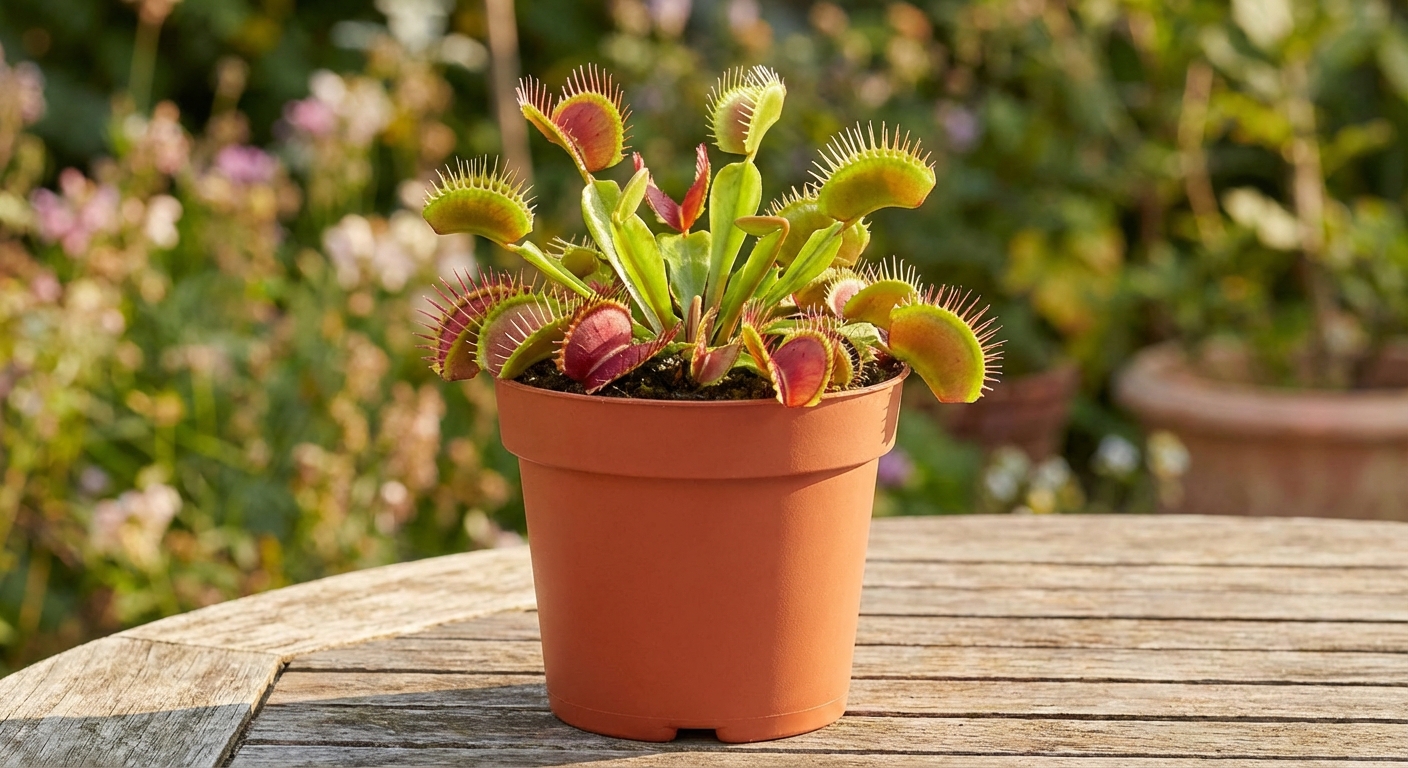
Venus flytraps look like they belong in a science museum, but they are simply small bog plants with very big opinions. If you treat one like a normal houseplant, it will sulk, then collapse. If you treat it like the sunny, soggy, nutrient-starved swamp creature it is, it can live for years and keep snapping happily.
This beginner guide covers the core needs that make or break flytrap success: full sun, low-mineral “pure” water, the right soil, winter dormancy, gentle feeding, and the classic mistakes that quietly kill them.
Quick start: the setup that works
If you want the fastest path to a thriving plant, copy this simple baseline.
- Light: 6+ hours of direct sun outdoors (more is better if temps allow), or a strong grow light indoors
- Water: distilled, rainwater, or reverse osmosis only (low mineral)
- Soil: 50/50 peat moss and perlite (or horticultural silica sand), no compost
- Pot: plastic or glazed ceramic with drainage holes, ideally 4 to 6+ inches deep; sit in a water tray during the growing season
- Fertilizer: avoid it, especially never fertilize the soil
- Dormancy: cool rest for about 3 to 4 months in winter
Light: yes, it wants full sun
This is the number one beginner surprise. A Venus flytrap is not a low-light terrarium plant. In nature, it grows in open, sunny bogs. More light equals stronger traps, better color, and more energy for the plant to recover after closing.
Best option: outdoors in full sun
- Aim for 6 to 8+ hours of direct sun. If your climate is mild, 8 to 12 hours can be fantastic.
- Sun from morning through afternoon is ideal. In very hot climates, a little afternoon shade can prevent scorching.
- If your plant came from a dim store shelf, acclimate it: increase sun exposure over 7 to 10 days so the leaves do not burn.
Indoor option: a real grow light, close to the plant
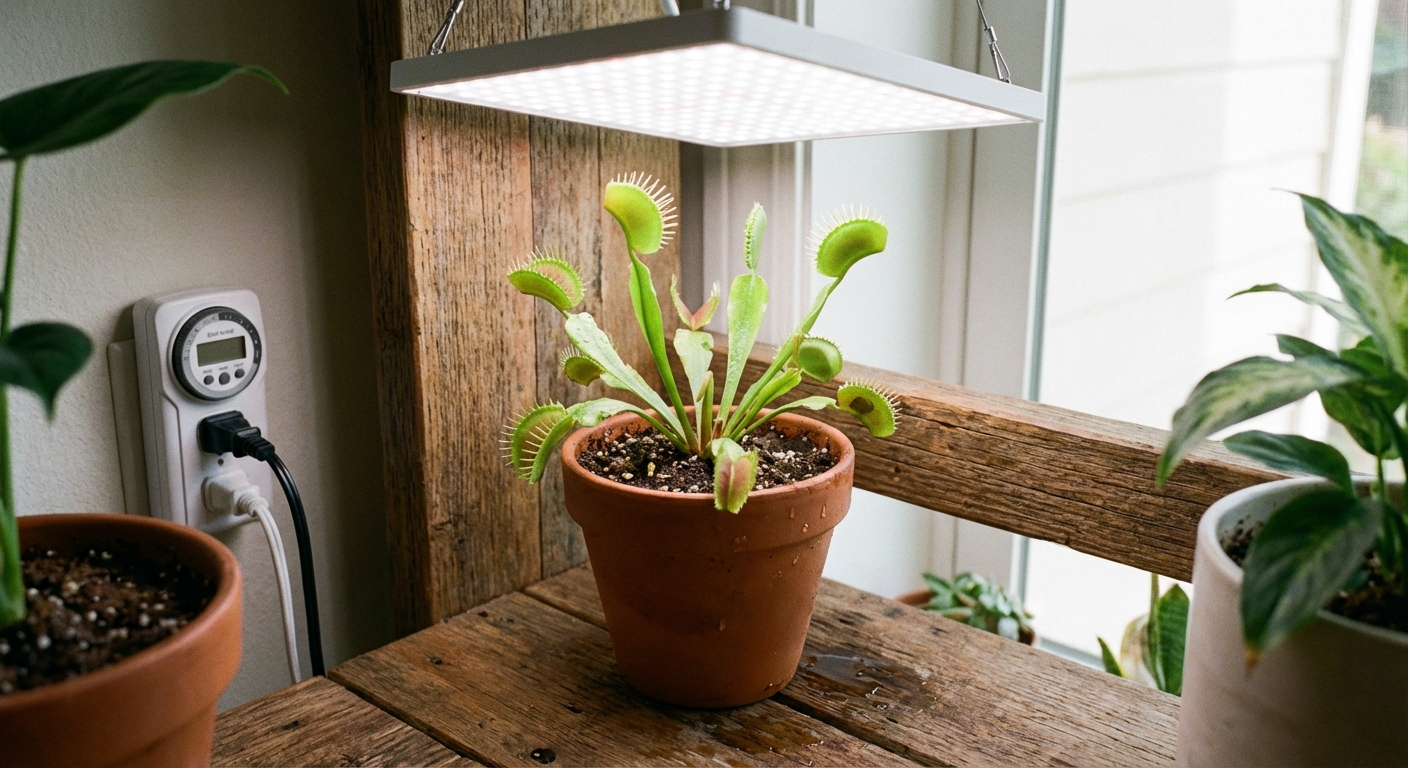
If outdoors is not possible, you can still succeed indoors, but window light is often not enough. Look for a dedicated LED grow light and keep it close.
- Photoperiod: 12 to 14 hours per day in spring and summer
- Intensity: “bright” matters. If your light has numbers, a rough goal is 200+ PPFD at the plant for solid growth (more helps with color).
- Distance: often 6 to 12 inches above the plant (follow the fixture guidance)
- Signs it needs more light: long floppy leaves, small pale traps, little or no red coloring
Water: distilled or rainwater only
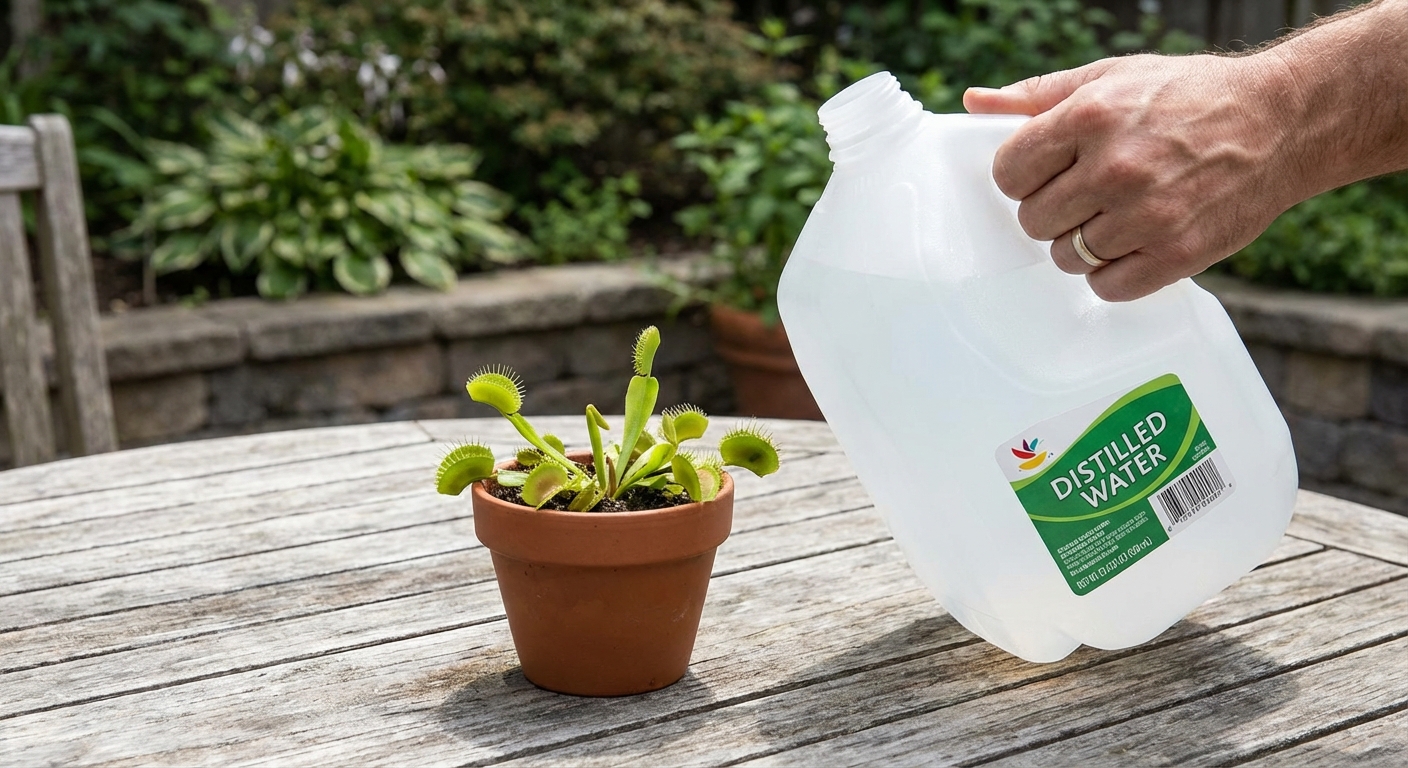
Flytraps are extremely sensitive to dissolved minerals and salts. Tap water slowly builds up minerals in the soil and can burn roots over time, even if the plant looks fine at first.
Use one of these
- Distilled water
- Rainwater (collected cleanly)
- Reverse osmosis water
A simple rule if you are unsure
If you have a TDS meter, aim for under 50 ppm if possible. Under 100 ppm is often considered acceptable by growers, but lower is safer long-term. If you do not have one, assume tap water is risky unless you know it is very low mineral.
How to water: the tray method
During the growing season, most beginners do best with the tray method because it mimics bog conditions.
- Set the pot in a shallow tray.
- Keep about 1/4 to 1 inch of pure water in the tray most of the time.
- Adjust for conditions: use a shallower level for small pots, cool weather, or indoor growing; use a bit more during hot, windy stretches.
- Let the tray go nearly dry occasionally, then refill. The soil should stay damp, not crunchy dry.
In winter dormancy, keep things just damp. Constant deep tray water in cold conditions can encourage rot.
Soil: peat and perlite, no rich mix
This is the second big shock. Venus flytraps evolved in nutrient-poor bogs. Their roots are not built to handle rich soil or fertilizer salts. They catch insects to supplement nutrition, not because they want potting mix packed with nutrients.
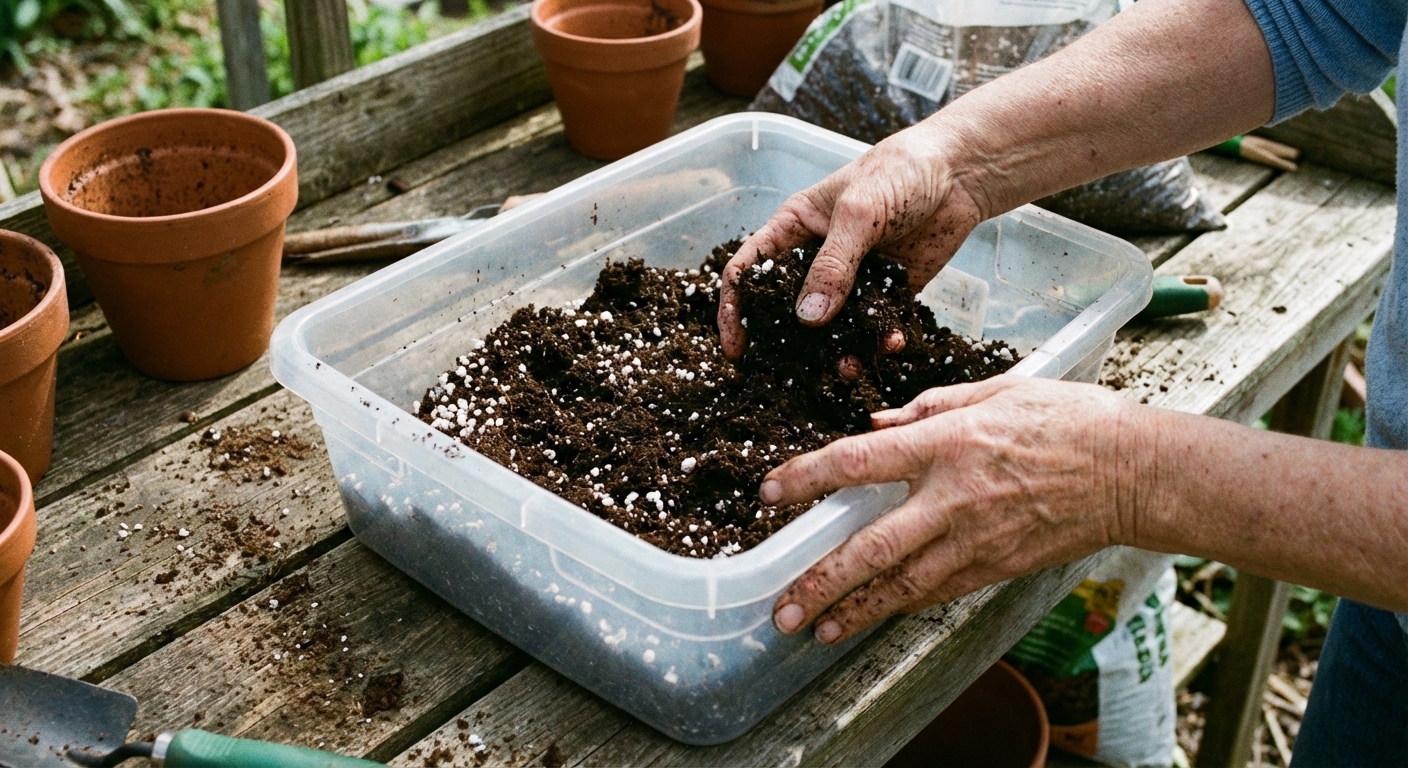
Beginner-proof soil recipe
- 50% sphagnum peat moss (not “peat-based potting mix” with additives)
- 50% perlite (rinsed to remove dust) or horticultural silica sand (not beach sand or play sand)
Mix it dry, then moisten with distilled or rainwater until evenly damp.
What to avoid
- Any soil labeled potting soil, compost, or moisture control
- Anything with added fertilizers, wetting agents, or “feeds for months” pellets
- Coco coir unless you can guarantee it is thoroughly rinsed and low-salt (peat is safer for beginners)
- Unglazed terracotta pots, which can leach minerals and dry the mix faster
Pot and placement basics
Flytraps are small, but they appreciate a pot that buffers heat and moisture.
- Depth: a deeper pot (roughly 4 to 6+ inches) helps keep roots cooler and more stable.
- Material: plastic and glazed ceramic are reliable. Avoid unglazed terracotta for the reasons above.
- Heat tip: small black pots in full summer sun can cook the roots. If your pot gets hot to the touch, use a lighter-colored pot, a deeper pot, or give a little afternoon shade in extreme heat.
Humidity is not the magic ingredient. Normal outdoor or household humidity is usually fine. What matters more is light, water quality, and airflow.
Terrarium vs open-air growing
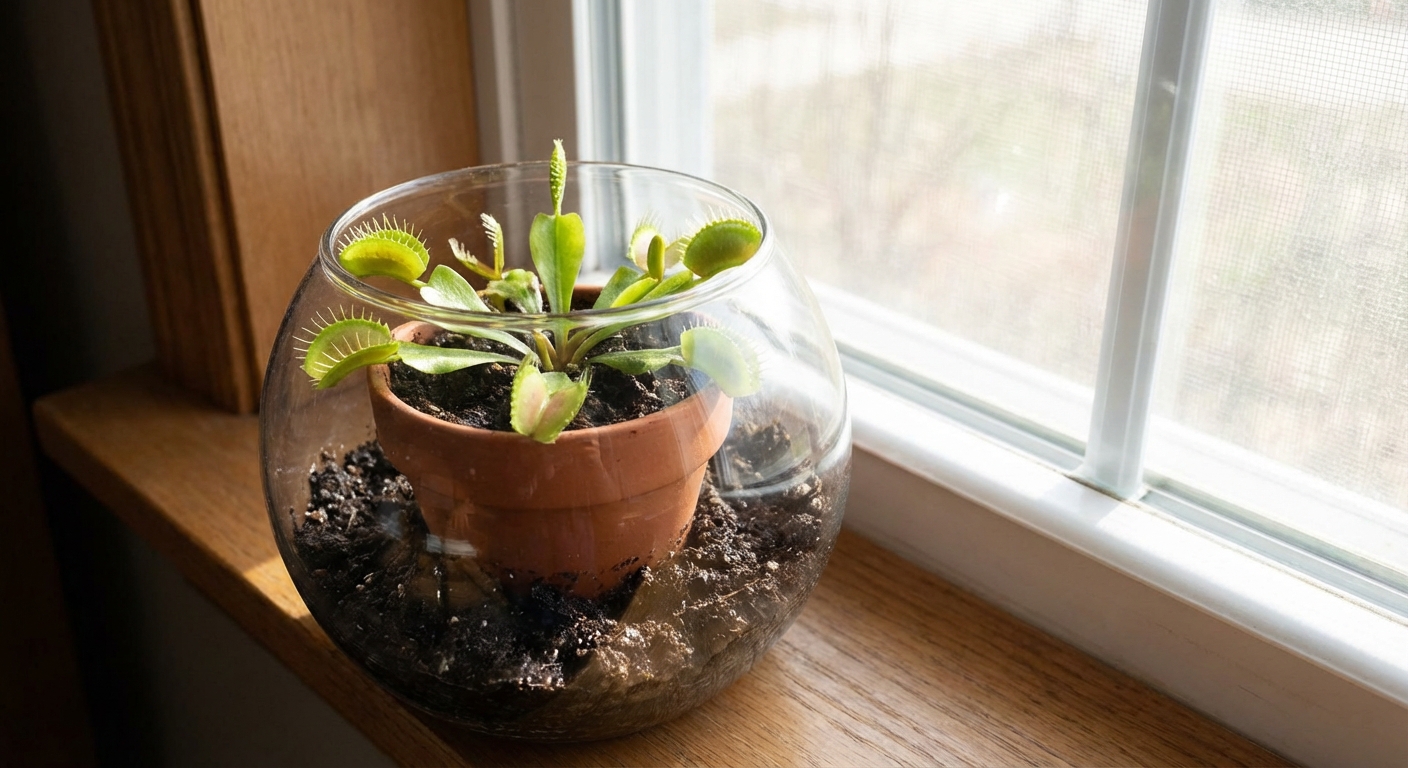
Venus flytraps are often sold in cute glass containers, which makes them look like terrarium plants. In reality, most terrariums cause more problems than they solve.
Why open air usually wins
- More light: glass and distance from the light source can reduce intensity
- Better airflow: helps prevent mold and rot
- Easier dormancy: moving an open pot to a cool spot is straightforward
When a terrarium can work
A terrarium can be workable if it is open at the top, extremely bright, and you are careful about stagnant moisture. Think “open bowl on a sunny porch” rather than “sealed jungle jar.”
What to avoid
- Sealed terrariums with constant high humidity and no airflow
- Flytraps kept indoors in low light “because it is humid”
Feeding: less is more
Your flytrap does not need you to provide dinner every week. With good light, it grows on its own schedule. Feeding is optional, and overfeeding is a real stressor.
Outdoors
If your plant lives outside, it will catch what it wants. Consider that “self-serve buffet” the perfect setup.
Indoors
If it is indoors and you want to feed it occasionally:
- Feed one trap every 2 to 4 weeks during active growth.
- Use small live insects (or rehydrated dried insects) that are about 1/3 the size of the trap.
- The prey must trigger the trap multiple times. If the bug is not alive, gently tickle the trigger hairs after it closes so the plant fully seals and digests.
What not to feed
- Hamburger, bacon, cheese, candy, or “people food”
- Large insects that bulge the trap open
- Anything that will rot before digestion finishes
Also, resist the urge to set off traps for fun. Each closure costs energy. I know it is tempting. I talk to my ferns, too. But flytraps prefer admiration over poking.
Flowering: to cut or not to cut
In spring, healthy flytraps often send up a tall flower stalk. It is normal, and yes, it is weirdly dramatic.
- If the plant is small, newly purchased, stressed, or recovering, consider cutting the stalk early so it saves energy for roots and traps.
- If the plant is strong and growing well in full sun, letting it flower is usually fine. Just expect a temporary slowdown in trap production.
Dormancy: the winter rest beginners skip
Venus flytraps are perennial plants from a region with cool winters. They need a dormancy period to reset. Without it, they often weaken over time, becoming smaller and more prone to sudden decline.
When dormancy happens
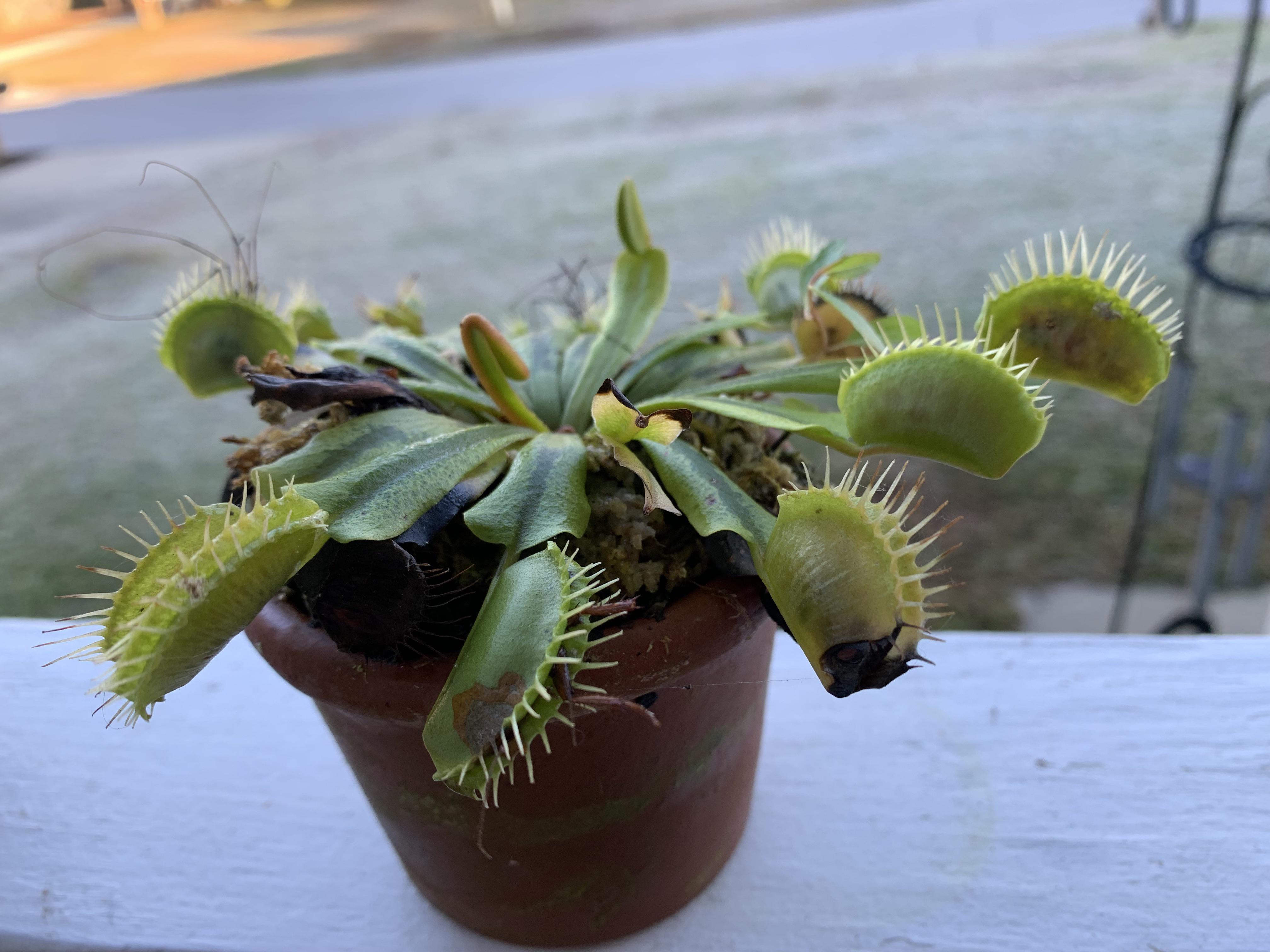
Typically late fall through winter, about 3 to 4 months. You will notice slower growth, smaller traps, and older leaves blackening back.
What dormancy should look like
- Cool temperatures, roughly 35 to 55°F (1 to 13°C) is a common target range
- Much less water, but the soil should stay slightly damp
- Light is still helpful, but it does not need blazing summer intensity
Easy dormancy options
- Outdoors: In many climates, leaving it outside is perfect. Protect from hard freezes and repeated freeze-thaw in small pots. Brief light freezes are often tolerated, but pots are more vulnerable than plants in the ground.
- Unheated garage or shed window: Cool and bright enough for many growers.
- Refrigerator dormancy: Possible for apartment growers, but hygiene matters. Keep the plant slightly damp, not wet, and check for mold regularly.
In spring, gradually increase light and resume tray watering as new growth ramps up.
Common mistakes that kill flytraps
If flytraps had a complaint box, these would fill it fast. Most “mysterious” deaths trace back to one or two of these issues.
1) Using tap water
Minerals build up, roots suffer, and decline can be slow but steady. Switch to distilled or rainwater and consider repotting in fresh mix if the plant has been on tap water for a while.
2) Not enough light
Low light leads to weak growth, small traps, and a plant that cannot pay the energy bill of trapping and digesting. If your flytrap is indoors, light is usually the limiting factor.
3) Fertilizing or using rich soil
Soil fertilizer burn can look like blackening traps, stalled growth, or sudden collapse. Use peat and perlite only. No compost, no slow-release pellets, no “plant food” mixed into the pot.
4) Sealed terrariums and stale air
High humidity is not the goal. Healthy flytraps tolerate normal outdoor humidity just fine. Airflow matters more than misting.
5) Skipping dormancy year after year
The plant may limp along for a while, then crash. Plan a winter rest like you would for a bulb or a fruit tree. It is part of the life cycle.
6) Triggering traps for entertainment
Occasional closures happen naturally. Repeated “showing it off” can drain a small plant, especially in low light.
Repotting and upkeep
Flytraps do not need constant fussing, but they appreciate a fresh home now and then.
When to repot
- Every 1 to 2 years, or when the mix breaks down and stays too soggy
- Best in late winter to early spring, right as dormancy ends
How to repot (simple version)
- Moisten new peat-perlite mix with distilled water.
- Gently remove the plant, supporting the white bulb-like base (rhizome).
- If the old mix is loose, shake off what falls away. If mineral buildup is suspected, you can gently rinse some mix from the roots, but it is optional and you do not need to scrub them clean.
- Replant so the white rhizome is buried and the growing point sits just above the soil.
- Water with pure water and return to strong light.
Black traps are normal, especially after digestion or during seasonal transitions. Snip off fully blackened traps with clean scissors if you prefer a tidy look, but do not remove green tissue that is still photosynthesizing.
Troubleshooting
Traps turn black quickly
- Normal after feeding, or after a trap closes several times
- Can also indicate mineral buildup, fertilizer exposure, or rot if the crown stays wet and cold
No red color inside the traps
- Usually low light, or a cultivar that stays greener
- Increase sun or strengthen your grow light
Long, floppy leaves with tiny traps
- Classic low-light stretching
- Move outdoors or upgrade lighting
Mold on soil surface
- Often from stale air and constantly wet conditions indoors
- Improve airflow, reduce standing water temporarily, and remove the affected top layer
Pests (aphids, mites)
- Aphids can deform new growth and hide in traps. Spider mites can cause stippling and weak growth.
- Start with rinsing and isolating the plant. For serious infestations, use a carnivorous-plant-safe approach (many growers use insecticidal soap or specific systemic products), and always spot test first.
Rot risk
- Most common when it is cold, wet, and stagnant.
- During dormancy, keep the mix slightly damp and prioritize airflow.
Beginner checklist
If you remember nothing else, remember this little mantra: sun, pure water, poor soil, winter rest.
- Give it full sun or a strong grow light
- Use only distilled, rainwater, or RO water
- Plant it in peat and perlite, no rich mix
- Use the tray method in the growing season (adjust depth to conditions)
- Let it go dormant each winter
- Feed sparingly, or let it hunt outdoors
Once you meet those basics, Venus flytraps become surprisingly steady plants. Not fussy, just very specific. Like a quirky friend who refuses tap water and insists on a sunny seat. I respect that.
One last good habit
If you can, buy nursery-propagated plants. Wild Venus flytraps are threatened in their native habitat, and cultivated flytraps are just as fun and far less controversial.