Understanding NPK Ratios

If fertilizer labels feel like they were written in secret code, you are not alone. Those big numbers on the front of the bag are not there to intimidate you. They are there to help you feed plants with intention, instead of tossing nutrients at the soil and hoping for the best.
This guide will walk you through what NPK means, how to read ratios like 10-10-10 or 3-1-2, and how to pick the right blend for seedlings, leafy houseplants, tomatoes, lawns, and everything in between. Think of it like learning a plant’s love language. Once you get it, you will stop overthinking every bag on the nursery shelf.
What NPK stands for
NPK is shorthand for the three “macronutrients” plants use in the largest quantities:
- N = Nitrogen for leafy growth and overall vigor
- P = Phosphorus for roots, flowering, and fruiting support
- K = Potassium for resilience, water regulation, and disease tolerance
When you see three numbers on a fertilizer label, they always correspond to N, P, and K in that order.
How to read fertilizer numbers
A fertilizer labeled 10-10-10 contains:
- 10% nitrogen (N)
- 10% available phosphate (P2O5 equivalent)
- 10% soluble potash (K2O equivalent)
The rest of the bag is typically carrier materials and fillers, and it may also include coating agents (for slow release), soil conditioners, secondary nutrients like calcium and magnesium, and micronutrients like iron, zinc, and boron.
Ratio vs strength
Here is the part that trips up beginners: the ratio tells you the balance, not how “strong” the fertilizer feels in real life.
For example, 20-20-20 has the same balance as 10-10-10, but it is twice as concentrated. That can be handy if you want to apply less product, but it also means it is easier to overdo.
A quick way to compare products
If two fertilizers have different first numbers, the one with the higher first number delivers more nitrogen per equal weight of product.
Example: 100 g of 10-10-10 contains 10 g nitrogen. 100 g of 20-20-20 contains 20 g nitrogen. Same ratio, different concentration.
One more practical note: if you measure by “scoops,” remember that products can have different densities. When in doubt, follow label directions (which are usually based on weight or area) and use the included scoop only for that specific product.
What each nutrient does
Nitrogen (N): green growth
Nitrogen is the engine behind leafy growth. When plants have enough nitrogen, leaves are lush, stems stretch steadily, and overall growth feels energetic.
Signs you might need more nitrogen:
- Older leaves yellowing first (especially on leafy greens)
- Slow growth, small pale leaves
- Lawns that look washed out or thin
When too much nitrogen is a problem:
- Lots of leaves, few flowers or fruits (hello, tomato plants that refuse to set fruit)
- Soft, sappy growth that attracts pests
- Higher risk of burning roots if overapplied
Phosphorus (P): roots and blooms
Phosphorus supports root development and helps with flowering and fruiting processes. It is most useful when establishing new plants or when plants are shifting into bloom.
Important beginner note: many soils already contain plenty of phosphorus, especially in established gardens. Overapplying it is common and can interfere with the plant’s ability to take up micronutrients.
When phosphorus helps most:
- Transplanting and root establishment (in moderation)
- Flowering ornamentals and fruiting crops when soil tests show low P
Potassium (K): resilience and balance
Potassium is like a plant’s stress coach. It helps regulate water use, supports strong stems, and improves resilience during heat, drought swings, and disease pressure.
When potassium matters:
- Flower and fruit quality (size, flavor, firmness)
- Plants under stress from heat or inconsistent watering
- Perennials heading into seasonal changes
Common NPK ratios
You will see lots of number combinations, but a few show up again and again. Here is how to think about them.
Balanced (like 10-10-10 or 5-5-5)
Balanced fertilizers are general-purpose and often used when you are not sure what your soil needs or for mixed plantings.
- Best for: new garden beds, mixed ornamental borders, general maintenance (especially if used lightly)
- Watch out for: repeated use without a soil test can overbuild phosphorus
Nitrogen-forward (like 20-10-10 or 24-0-6)
These push leafy growth.
- Best for: lawns, leafy greens, corn, plants recovering after heavy pruning
- Not ideal for: flowering and fruiting plants if you are already getting lots of leaves and no blooms
Bloom blends (like 10-30-20)
These are marketed for flowering and fruiting, but they are not automatically the right choice for every bloom situation.
- Best for: confirmed low-phosphorus soil, certain container routines, targeted use during bud set when needed
- My gentle warning: “bloom booster” is not a magic spell. If light is low, watering is inconsistent, or the plant is too nitrogen-fed, extra phosphorus will not fix it.
Higher potassium (like 5-10-10 or 4-6-8)
These are sometimes used for fruiting crops and for sturdier growth, especially once plants are established and shifting into flowering and fruit fill.
- Best for: tomatoes, peppers, flowering perennials that need sturdier stems
- Root crop note: root crops usually suffer more from excess nitrogen than they benefit from extra potassium. If your soil test shows potassium is low, a K-leaning fertilizer can help, but do not treat it as automatic.
Houseplant-friendly (like 3-1-2 or 9-3-6)
Many foliage houseplants do well with a fertilizer where nitrogen is highest, phosphorus is lower, and potassium is moderate. That is why you will see 3-1-2 described as a classic “foliage ratio.”
- Best for: pothos, philodendron, monstera, ferns, many tropicals
- Note: flowering houseplants may prefer a different balance during budding
Choosing NPK by stage
If you want a simple way to decide, think in seasons of a plant’s life. The right fertilizer is often less about the plant’s name and more about what the plant is doing right now.
Seedlings and young starts
Young plants need gentle feeding. Too much fertilizer can scorch tender roots or cause weak, leggy growth.
- Look for: a mild, balanced fertilizer or a low-dose liquid feed
- Common approach: start at half-strength once true leaves appear
Vegetative growth
This is when plants are building their framework.
- Look for: nitrogen-forward or slightly nitrogen-leaning balanced options (like a 3-1-2 style ratio for many plants)
- Great for: leafy greens, many houseplants, early growth on peppers and tomatoes before flowering begins
Flowering and fruiting
When plants shift from growing leaves to making blooms and fruit, you generally want to stop pushing lots of soft leafy growth.
- Look for: moderate nitrogen with higher potassium, and only higher phosphorus if your soil actually needs it
- Great for: tomatoes, cucumbers, squash, roses, flowering annuals
Late season and perennials
For many perennials, heavy late-season nitrogen can encourage tender new growth that struggles in cold weather.
- Look for: slow-release, moderate feeding earlier in the season; avoid pushing nitrogen late unless your climate and plant type support it
Type matters too
NPK is only one part of the story. How a fertilizer releases matters just as much.
Quick-release vs slow-release
- Quick-release (many water-soluble and some synthetics): fast results, easy to overapply, needs more frequent feeding.
- Slow-release (coated granules and many organic dry fertilizers): steadier feeding, lower burn risk, great for busy gardeners and containers.
Also worth knowing: some organic fertilizers can be fast, too, especially liquids like fish emulsion. “Organic” does not automatically mean “slow,” so check the label and your timing.
Organic vs synthetic
I garden organically because I care deeply about soil life, but I will never shame someone for using what fits their situation. Here is the practical difference:
- Organic fertilizers (like composted poultry manure, alfalfa meal, fish meal): nutrients become available as microbes break them down. They build soil over time.
- Synthetic fertilizers: nutrients are immediately available. They are precise, but they do not feed soil biology the same way and can contribute to salt buildup if overused.
If you are growing in containers, organic slow-release fertilizers can be wonderfully forgiving. If you are correcting a clear deficiency quickly, a carefully measured water-soluble option can be the right tool.
Real-life cheat sheet
Vegetable gardens
- Leafy greens: higher N (used lightly and consistently)
- Tomatoes and peppers: moderate N, higher K once flowering starts
- Root crops: avoid heavy N; consider K support only if soil tests suggest it is needed
- New beds: compost first, then supplement as needed
Lawns
- Most lawns: nitrogen-forward blends are common
- Tip: choose slow-release nitrogen if possible to reduce leaching and spikes
- Local note: some regions restrict phosphorus in lawn fertilizers. Check local rules and only use P if a soil test calls for it.
Houseplants
- Most foliage plants: a 3-1-2 style ratio, diluted, during active growth
- Winter note: if growth slows due to low light, fertilize less or pause
Flower beds and ornamentals
- Established beds: compost and mulch can do a lot of the heavy lifting
- Annual flowers in containers: regular feeding with a balanced or slightly bloom-leaning fertilizer often works well
Avoid common mistakes
1) Feeding when the issue is light or water
If a plant is not blooming, the culprit is often light or watering consistency, not a lack of bloom booster. Before you change fertilizers, ask:
- Is the plant getting enough sun for its job?
- Is it drying out completely, then getting drenched?
- Is it rootbound in a pot?
2) Overdoing it “just to be safe”
More fertilizer does not equal more growth. It often equals stressed roots, salt buildup, pest problems, and runoff that does not belong in our waterways.
- Start small: use the low end of the label rate
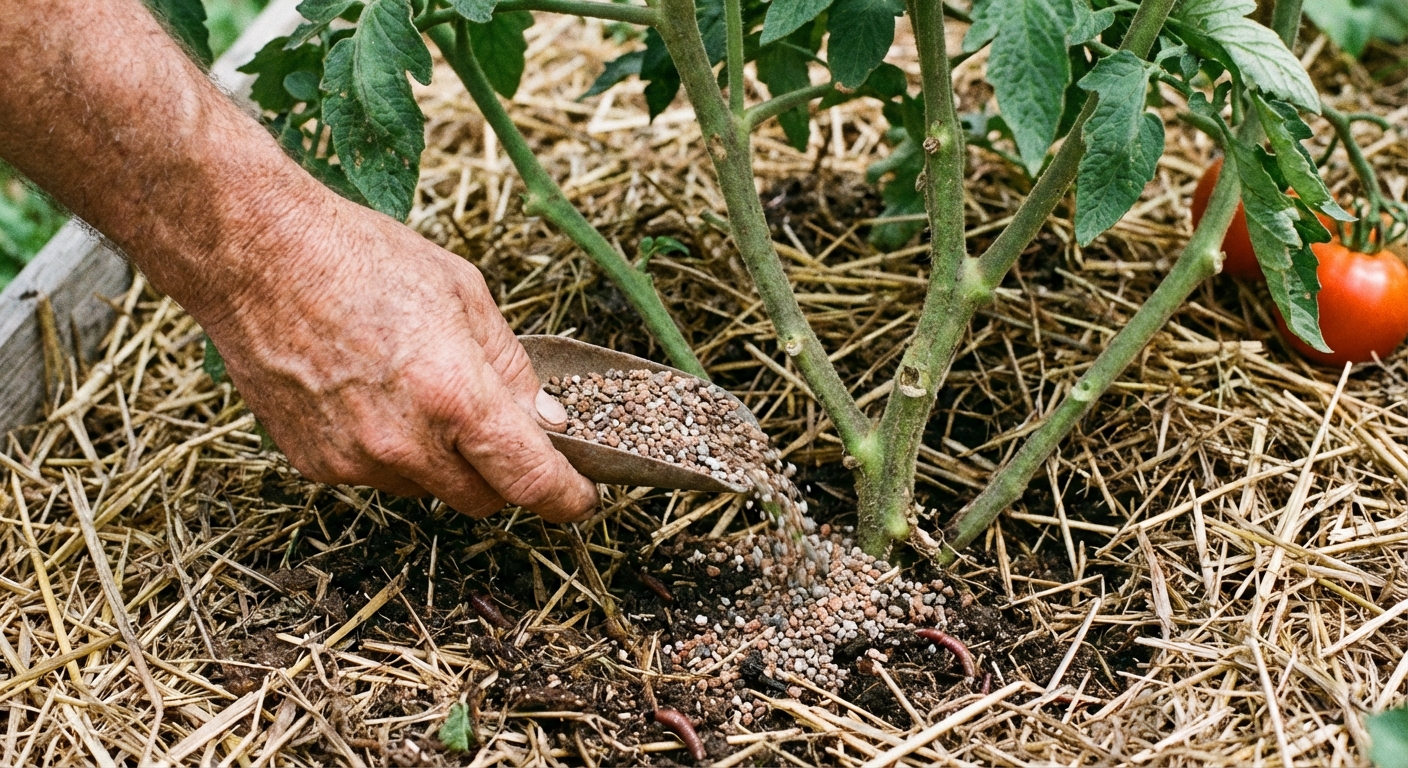
- Water in properly: especially with granular fertilizers
- Keep notes: what you applied and when, even a quick note in your phone
Quick safety tips
- Store safely: keep fertilizers sealed, dry, and out of reach of kids and pets.
- Keep it off leaves: many fertilizers can spot or burn foliage. Apply to soil, then water in.
- Do not fertilize before heavy rain: it increases runoff and wastes your money.
- Follow the label: especially for lawns and near waterways, and check local phosphorus restrictions.
The best tip: soil test
If you garden in the ground, a soil test is the clearest path through the confusion. It tells you what your soil already has so you are not guessing, especially with phosphorus.
While you are at it, glance at the soil test pH recommendation. pH affects nutrient availability, meaning your soil can have “enough” nutrients on paper, but plants still struggle to access them if pH is off.
If you garden in containers, refresh potting mix, use compost thoughtfully, and consider occasional leaching (watering until excess drains out) to reduce salt buildup. Container growing is its own little ecosystem, and it changes faster than in-ground soil.
Label glossary
- Complete fertilizer: contains N, P, and K (all three numbers are nonzero)
- Incomplete fertilizer: missing one or more of the N, P, K nutrients (like 0-0-60)
- Example: urea is a common nitrogen fertilizer labeled 46-0-0
- Water-soluble: dissolves in water for quick uptake
- Slow-release: releases nutrients gradually over time
- Micronutrients: nutrients needed in tiny amounts (iron, manganese, zinc, boron, copper)
My rule for beginners
If you want a simple starting point that works in a lot of situations:
- For foliage and steady growth: choose a fertilizer with higher N and moderate K, often in a 3-1-2 style balance.
- For flowering and fruiting: ease back on nitrogen and lean a bit higher on potassium.
- When in doubt: compost plus a light, balanced feed beats a heavy hand with any “booster.”
And if you hear me muttering encouragement to my ferns while I fertilize, just know it is part of the process. Plants like consistency, soil likes kindness, and you are allowed to learn as you go.