
Tradescantia Care Indoors

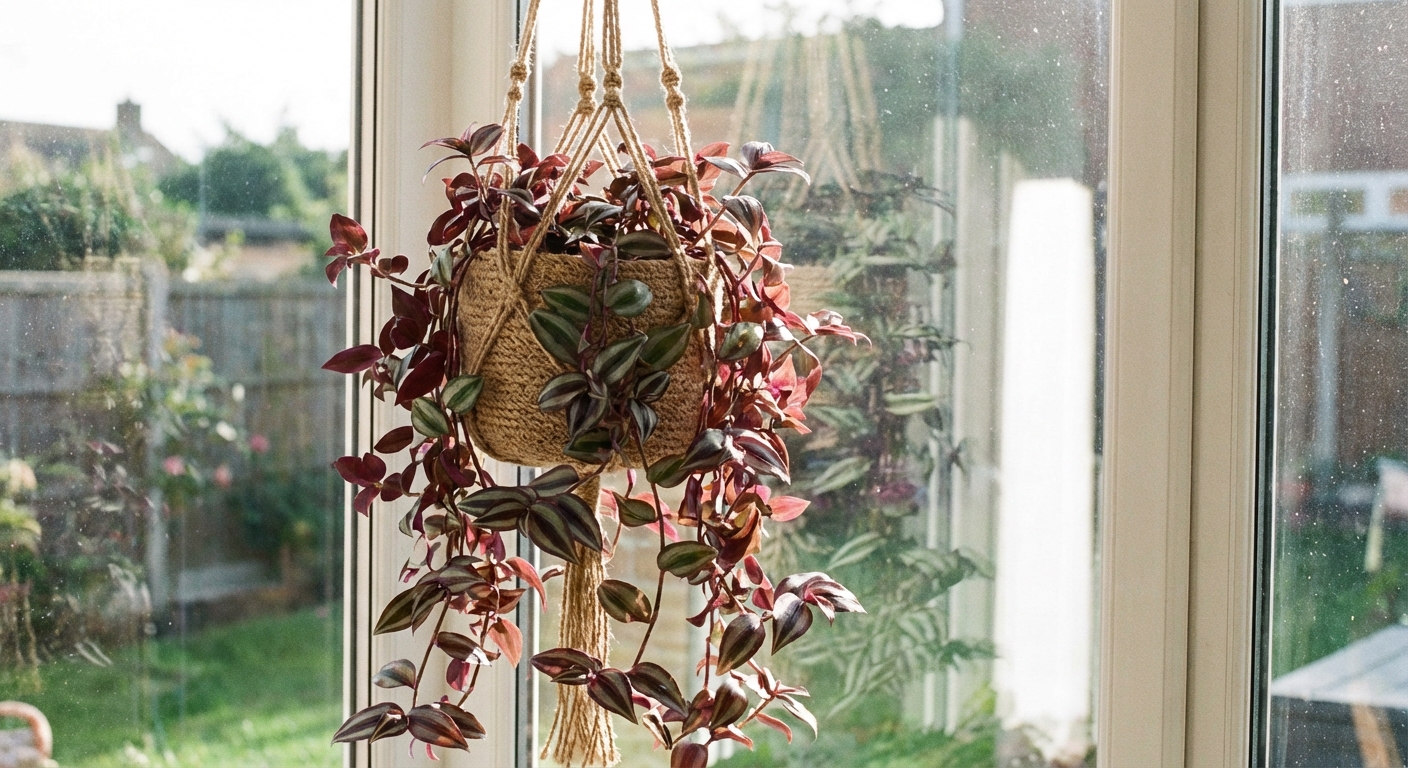
Tradescantia is the kind of plant that makes you feel like a gardening wizard. One week it’s politely trailing over the pot edge, and the next it’s tumbling like a living waterfall. You might know it by a few common names, including wandering dude (formerly often sold as “wandering jew”), inch plant, or wandering spiderwort. Whatever you call it, the care is happily beginner-friendly as long as you nail two things: bright light and pinching back.
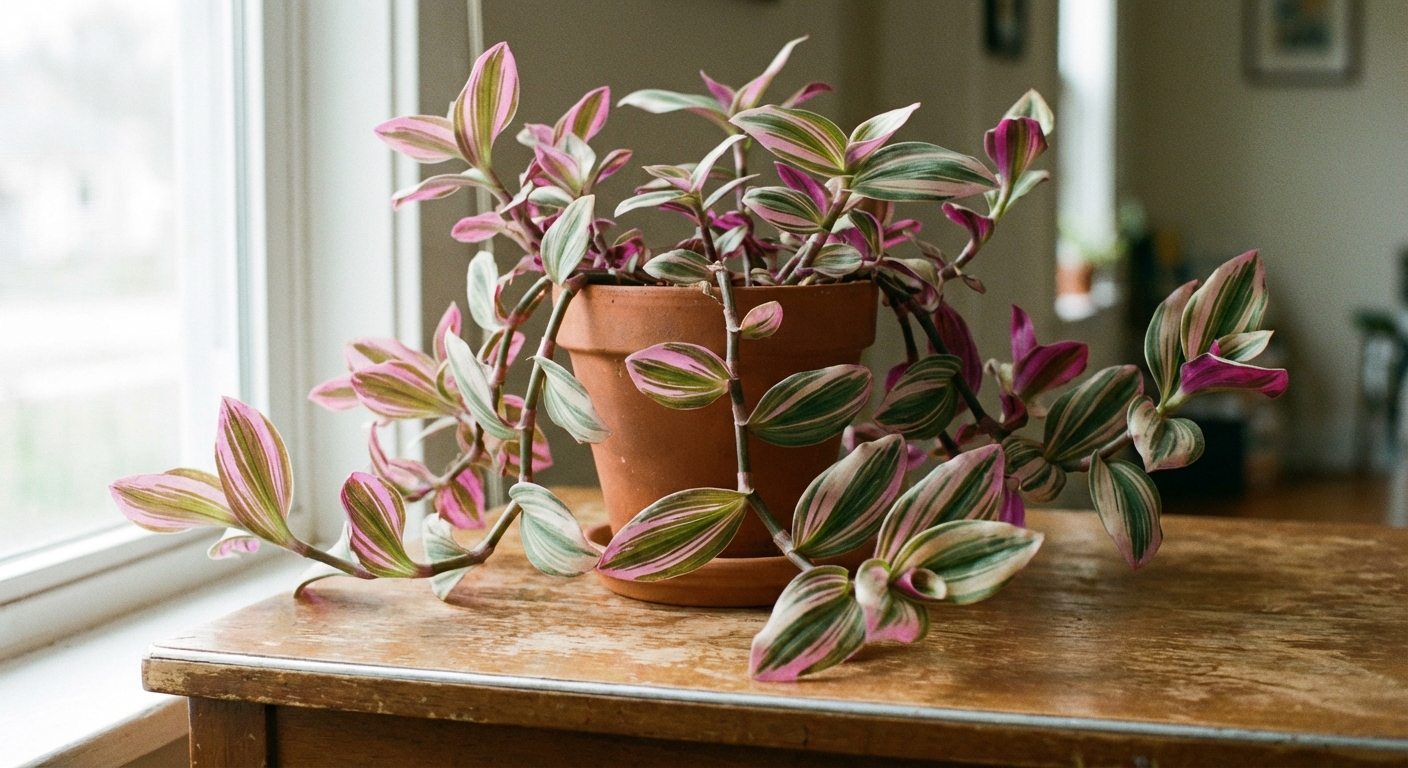
Below, I’ll walk you through indoor care for the most common houseplant types: Tradescantia zebrina (purple and silver stripes), Tradescantia ‘Nanouk’ (pink, green, and cream), and Tradescantia fluminensis (small glossy green leaves, sometimes variegated).
Quick note: When you see “Clara tip” in this guide, that’s me chiming in with the shortcut I’d tell a friend standing in my kitchen with a droopy vine and a watering can.
Quick care snapshot
- Light: Bright, indirect light; gentle sun is great.
- Water: Water when the top layer is dry and the pot feels lighter.
- Soil: Airy, fast-draining mix in a pot with drainage.
- Temp: 65 to 80°F (18 to 27°C); avoid cold drafts.
- Humidity: Average home humidity is fine.
- Fertilizer: Balanced fertilizer at half strength every 4 to 6 weeks in spring and summer.
- Pruning: Essential for bushiness and color.
- Propagation: Extremely easy from stem cuttings in water or soil.
- Pet safety: Sap can irritate skin; keep away from pets and kids who chew plants.
Meet the varieties
Tradescantia zebrina
This is the classic striped trailer. It grows fast, gets leggy quickly in low light, and colors up best with very bright light. The undersides are usually purple, which is part of the show.
Tradescantia ‘Nanouk’
‘Nanouk’ is thicker-stemmed and often more “upright-then-trailing.” It’s a little more sensitive to overwatering than zebrina, and the pink tones are most vibrant in bright light. It can also show brown patches if it stays wet for too long. (You’ll sometimes see it labeled under different Tradescantia species names depending on the seller, but the care is the same.)
Tradescantia fluminensis
Fluminensis has smaller leaves and can be a speedy grower. Variegated forms need brighter light than solid green forms, otherwise they fade back toward green.
Light
If Tradescantia had a love language, it’d be light. Brighter light keeps stems shorter, leaves fuller, and colors sharper.
Best indoor light
- Bright, indirect light near an east or bright north window is a sweet spot.
- Some direct sun can be a bonus, especially for zebrina. Gentle morning sun is usually easiest, but an acclimated plant can often handle more. Just increase sun exposure gradually and watch for scorch.
- Grow lights are fantastic for winter or dim homes. Aim for 10 to 12 hours daily.
How to tell if light is off
- Too little light: stems stretch, spaces between leaves get longer, leaf stripes fade, ‘Nanouk’ turns more green than pink.
- Too much direct sun: crispy edges, bleached patches, or a tired, washed look.
Clara tip: Rotate your pot every week or two. Tradescantia leans hard toward the window, and rotating is the simplest way to keep it evenly lush.
Watering
Tradescantia likes a steady rhythm: not bone dry for ages, but not soggy either. Overwatering is the quickest way to turn a healthy plant into a tangle of soft stems.
When to water
Water when the top layer feels dry and the pot feels noticeably lighter when you lift it. As a rough guide, many people use “top 1 to 2 inches dry,” but pot size matters a lot: small pots can dry fast, while big pots can stay wet longer than you think.
In bright light and warm rooms, that might be about weekly. In winter, it might be every 10 to 14 days.
How to water well
- Use a pot with drainage holes.
- Water until it runs out the bottom, then empty the saucer.
- Avoid repeatedly giving tiny sips. Deep watering encourages healthier roots.
Common watering clues
- Overwatered: limp stems, yellowing leaves, soil that stays wet, musty smell, stems that break easily.
- Underwatered: droopy vines, crispy tips, leaves dropping quickly after a dry spell.
Gentle reality check: A few dropped leaves now and then is normal, especially as vines age. The goal is “overall thriving,” not “never loses a leaf.”
Soil and potting
These plants aren’t picky about fancy blends, but they do hate sitting in heavy, waterlogged soil.
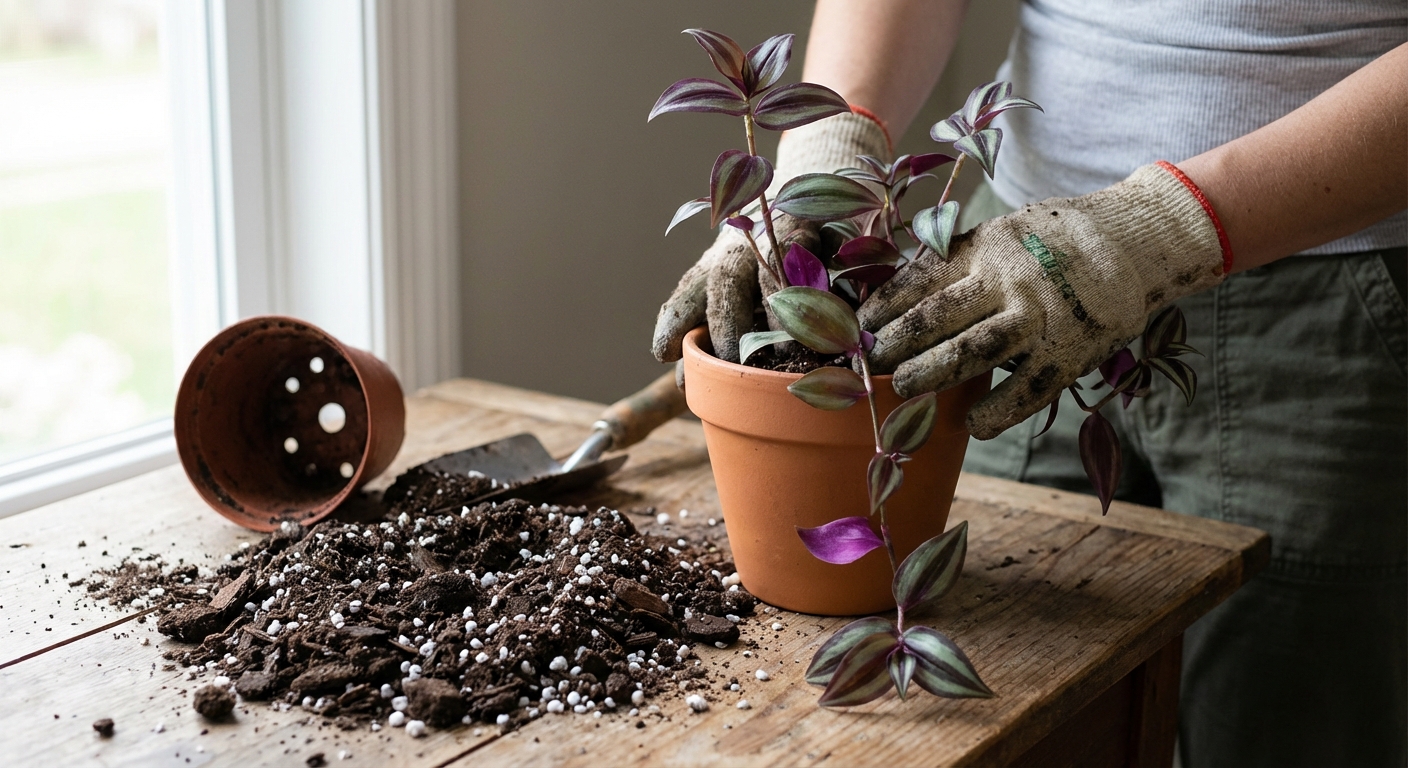
A simple soil mix
- 2 parts quality indoor potting mix
- 1 part perlite or pumice for airflow
- Optional: a small handful of orchid bark for chunkiness
Pot choice
- Choose a pot that’s just 1 to 2 inches wider than the current root ball.
- Terracotta helps soil dry faster, which is great if you tend to overwater.
- Hanging baskets look amazing, but check moisture more often because they can dry quicker in bright windows.
When to repot
Repot when roots circle the pot or water runs straight through. Many Tradescantia do fine with a yearly refresh, but here’s my favorite trick: instead of upsizing forever, restart the pot with cuttings every year or two. It keeps the plant dense and youthful.
Temperature and humidity
Tradescantia is comfortable in the same conditions most of us like indoors.
- Temperature: Aim for 65 to 80°F (18 to 27°C). Avoid windowsills that dip cold at night in winter.
- Humidity: Average household humidity is fine. If your air is extremely dry, you may see crisp tips, but it’s often watering inconsistency more than humidity alone.
If you add humidity, prioritize airflow. Still, damp air can invite fungal issues.
Pruning
If your Tradescantia looks like it’s auditioning for a role as “sad spaghetti,” don’t panic. Legginess is common and very fixable. The plant naturally grows in a way that benefits from regular pinching and re-rooting.
How to pinch back
- Find a stem that has long gaps between leaves.
- Cut just above a leaf node (the little joint where leaves attach).
- Remove the bottom leaves from the cutting and save that cutting for propagation.
Within a couple of weeks, the mother plant usually responds by sending out new branches below the cut, making it fuller.
How often should you prune?
Light pinching every 2 to 4 weeks during spring and summer is ideal. Big haircuts are best in the growing season, but you can tidy year-round if needed.
Clara tip: Don’t throw those cuttings away. Tradescantia is basically begging to be multiplied.
Propagation
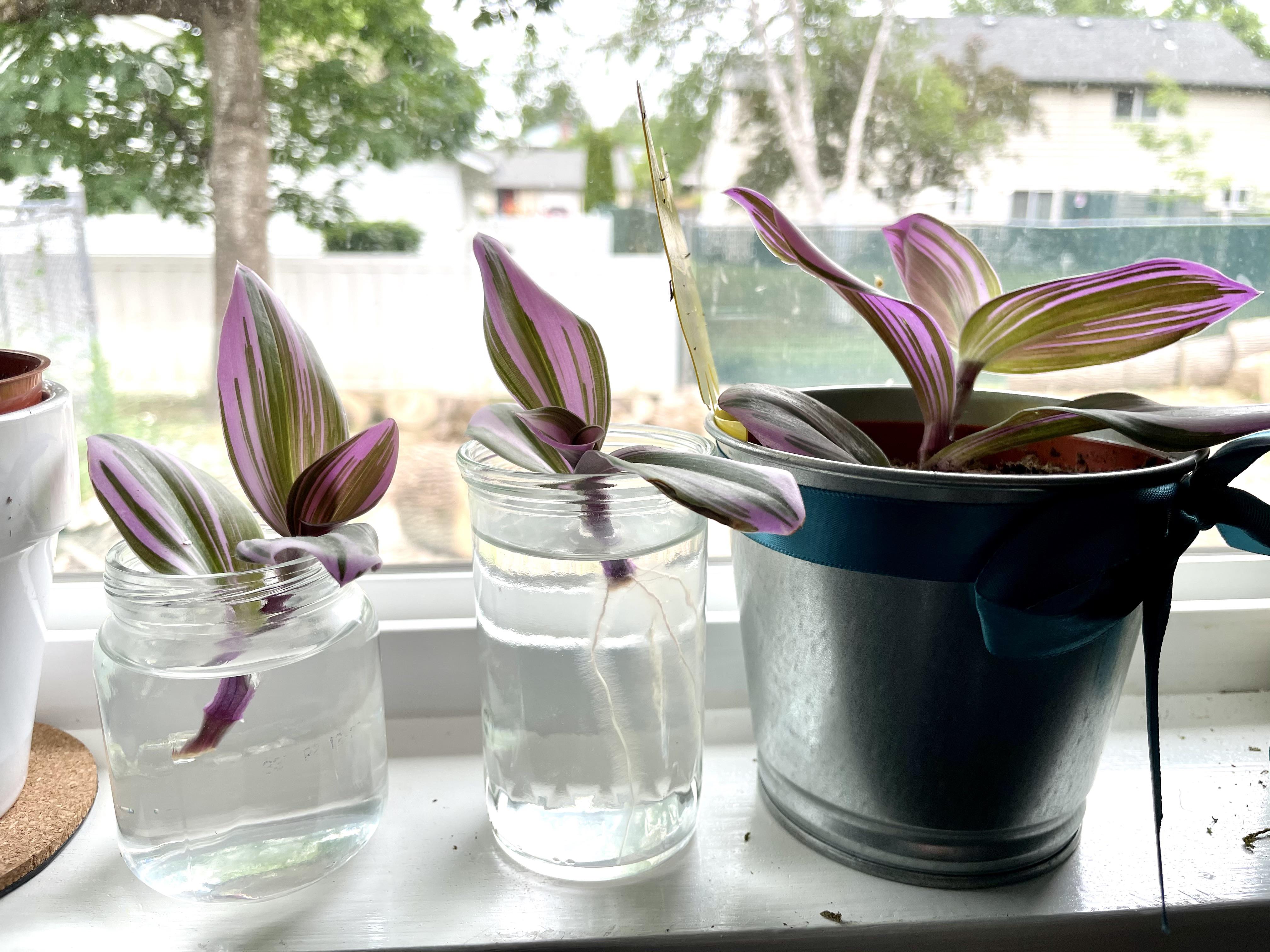
Tradescantia is one of the easiest houseplants to propagate. You can root it in water or directly in soil. Both work.
Water propagation
- Take a 3 to 6 inch cutting with at least 2 to 3 nodes.
- Remove leaves from the bottom 1 to 2 nodes.
- Place the cutting in a small jar of water so nodes are submerged, leaves stay above water.
- Change the water every few days, or anytime it looks cloudy.
- When roots are 1 to 2 inches long, pot it up into soil.
Soil propagation
- Fill a small pot with lightly moist, airy mix.
- Remove bottom leaves and push 1 to 2 nodes into the soil.
- Keep the soil slightly moist for 2 to 3 weeks, then switch to normal watering.
How to get a fuller pot instantly: Root several cuttings at once and plant them together. Or “pin” long vines back onto the soil surface so nodes touch soil. They often root while still attached, thickening the plant from the top down.
Fertilizer
Tradescantia isn’t a heavy feeder, but a little nutrition can keep growth steady and colors looking fresh.
- Use a balanced fertilizer (something like a 10-10-10 or 20-20-20 style ratio) at half strength every 4 to 6 weeks in spring and summer.
- Skip fertilizing in winter unless your plant is actively growing under strong light.
- Don’t fertilize a stressed plant (recently repotted, very dry, pesty, or dropping leaves fast). Get it stable first.
How to keep leaf color bold
Those stripes and pink blush are the whole point, right? Color is mostly a light story, with a little help from nutrition and good pruning.
1) Increase light gradually
If your plant is pale, move it closer to a bright window over 1 to 2 weeks. Sudden jumps into intense sun can scorch leaves.
2) Prune for fresh growth
New growth is usually the most vibrant. Regular pinching keeps the plant producing fresh leaves instead of long, tired vines.
3) Go easy on fertilizer
Too much fertilizer can push soft, fast growth that looks greener and leggier. If you feed, keep it light and consistent.
4) Keep watering steady
Big swings between “bone dry” and “soaked” can lead to leaf drop and dullness. A quick finger test and the “pot feels lighter” check work surprisingly well together.
Cleaning and routine care
Tradescantia leaves are a bit delicate, so I skip aggressive leaf-shining and go for simple, gentle care.
- Dust: Use a soft, damp cloth or a quick lukewarm rinse in the sink for smaller pots.
- Leggy ends: Trim and re-root them regularly.
- Rotate: Every week or two for even growth.
Common problems
Leggy growth
- Cause: Not enough light, not enough pruning.
- Fix: Move to brighter light and pinch back. Replant cuttings into the same pot for a thicker top.
Crispy tips or brown edges
- Cause: Underwatering, hot direct sun, or low humidity paired with inconsistent watering.
- Fix: Check soil more often, move a few feet back from harsh sun, and aim for steadier watering.
Mushy stems, yellow leaves, leaf drop
- Cause: Overwatering or poor drainage.
- Fix: Let soil dry more between waterings, switch to an airier mix, and take healthy cuttings as insurance.
Fading stripes or ‘Nanouk’ turning green
- Cause: Low light.
- Fix: Brighter light, a bit of gentle sun, or a grow light.
Pests (spider mites, mealybugs, aphids)
Tradescantia can attract pests, especially when stressed.
- Rinse the plant thoroughly and isolate it.
- Wipe stems and leaf undersides.
- Treat with insecticidal soap or neem oil, repeating every 7 to 10 days for a few rounds.
If a vine is heavily infested, it’s often easiest to prune and restart from clean cuttings.
Is Tradescantia toxic to pets?
Tradescantia is typically considered mildly toxic or irritating, not severely poisonous. The sap commonly causes skin irritation (contact dermatitis), and chewing can cause gastrointestinal upset. Cats and dogs may develop mouth irritation, drooling, vomiting, or a rash, especially if they like to rub against or nibble the plant.
- Place it out of reach in a hanging basket or high shelf.
- Wear gloves if you’re sensitive when pruning.
- If you suspect your pet has chewed it or has a rash, contact your vet for guidance.
Note: Reactions vary by individual pet and exposure amount. When in doubt, treat it as a plant to keep away from curious mouths.
Outdoor note
If you move Tradescantia outdoors for summer, keep it contained. Tradescantia fluminensis is considered invasive in some regions, so don’t toss clippings into the yard or dump old potting mix outside. Bag it and dispose of it responsibly.
Styling ideas
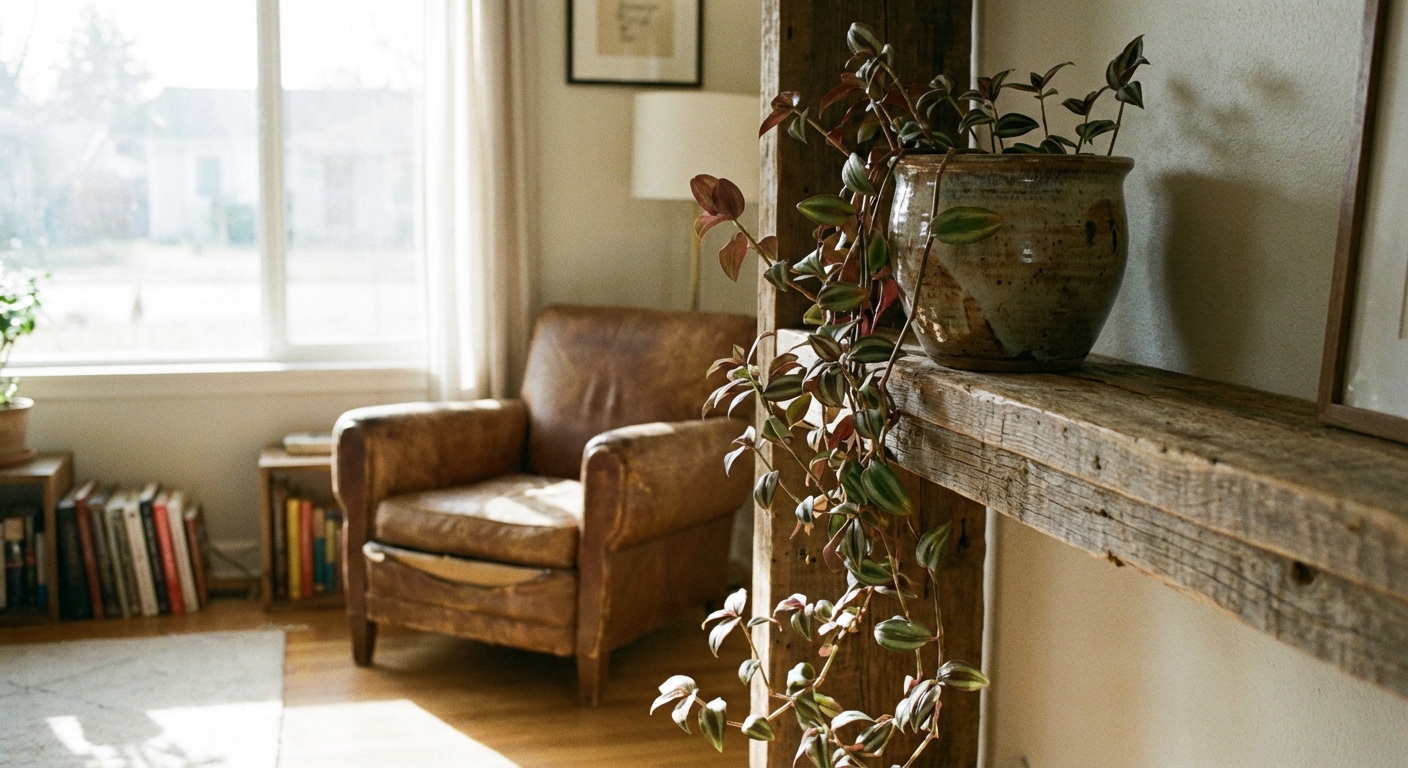
Tradescantia shines when it can spill and drape. A few easy ideas:
- A hanging pot near an east-facing window where morning light wakes up the leaf color.
- On a bookshelf edge, letting vines trail down like a curtain.
- In a mixed planter with upright plants, as the “softening” spiller around the edges.
Care checklist
- Give bright light for the best color and compact growth.
- Water when the top layer is dry and the pot feels light.
- Use a fast-draining mix and a pot with drainage.
- Pinch back often to prevent legginess.
- Propagate cuttings to thicken the pot and replace tired vines.
- Keep away from pets that chew plants and watch for skin irritation.
If you want, tell me which variety you have and where it sits in your home (window direction helps). I can help you fine-tune light and watering so it stays full and vibrant.