
Tomato Blossom Drop: Causes and How to Get More Fruit

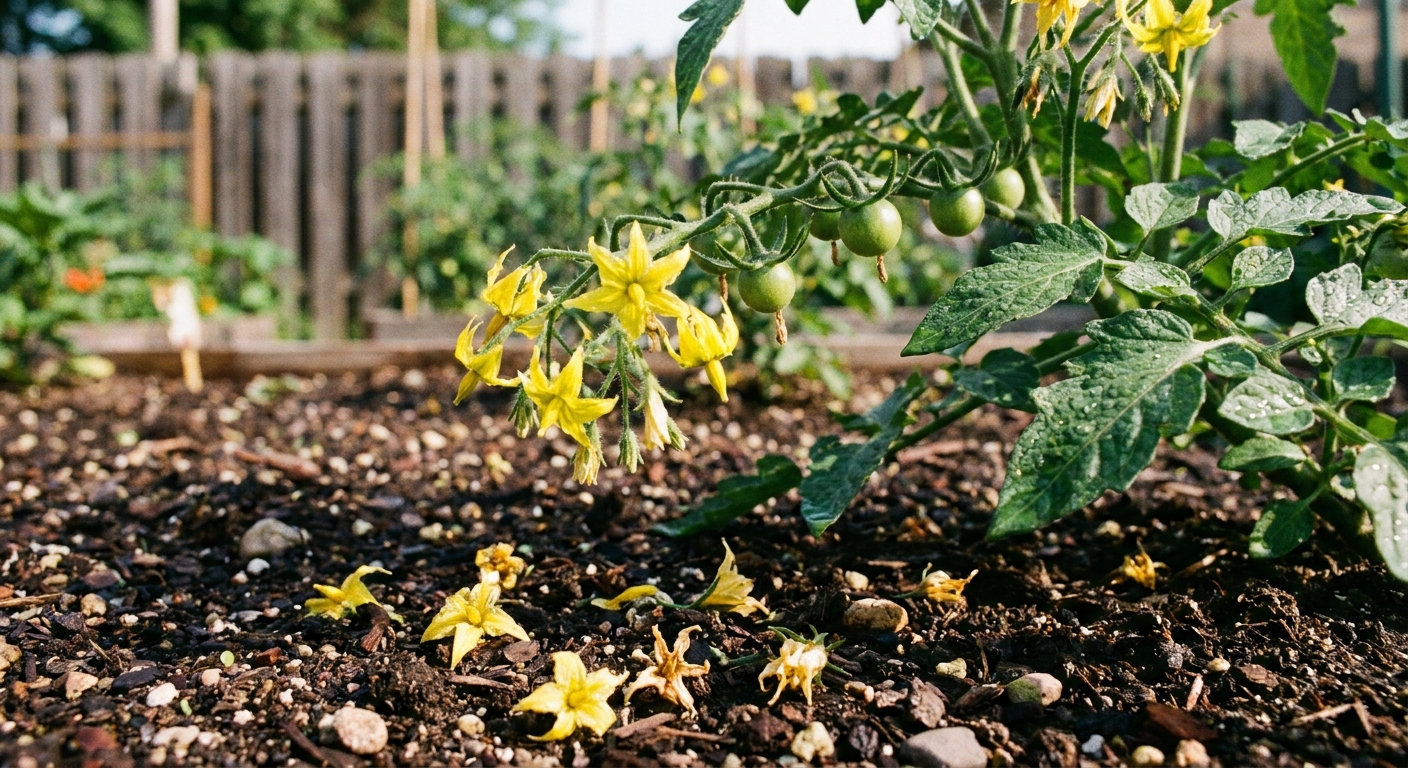
If your tomato plant is covered in cheerful yellow blooms and then... they quietly fall off without forming fruit, you are not alone. Blossom drop is one of the most common tomato frustrations because it feels like the plant is teasing you. The good news is that it is usually fixable once you match the plant’s needs to what the weather and soil are doing.
Tomatoes are generous, but they are also a little dramatic about timing. When conditions are off, they, in effect, hit pause and drop flowers to conserve resources. Let’s walk through what’s happening and how to coax those blossoms into becoming actual tomatoes.

What blossom drop looks like (and what it is not)
Blossom drop is when tomato flowers shrivel, close, or yellow, then fall off before you see a tiny green marble of fruit at the base of the blossom. Sometimes the entire little flower cluster looks like it stalled, then sheds.
A few dropped blossoms here and there can be normal, especially early in the season as the plant shifts from leafy growth into fruiting. Widespread drop across many clusters usually means one of these: poor pollination, temperature stress, water stress, or fertilizer imbalance.
One quick clarification: blossom drop happens before fruit forms. If you are seeing fruit that forms and then falls when it is still pea-sized, that is usually early fruit abortion from the same stressors (heat, cold nights, water swings, or poor pollination), not blossom drop itself.
And another clarification: if you are seeing fruit that forms and then develops a dark, sunken spot on the bottom later, that is a different issue and has different fixes.
How tomato pollination works
Tomatoes have “perfect” flowers, meaning each blossom has both male and female parts. They do not require cross-pollination from another plant the way squash does, but the pollen still needs vibration to shake loose inside the flower so it can land where it needs to.
Outdoors, wind, visiting bumblebees, and even you brushing past the plant can do the job. Indoors, in still greenhouses, or on sheltered patios, pollination can quietly fail even when the plant looks healthy.
Easy pollination fixes
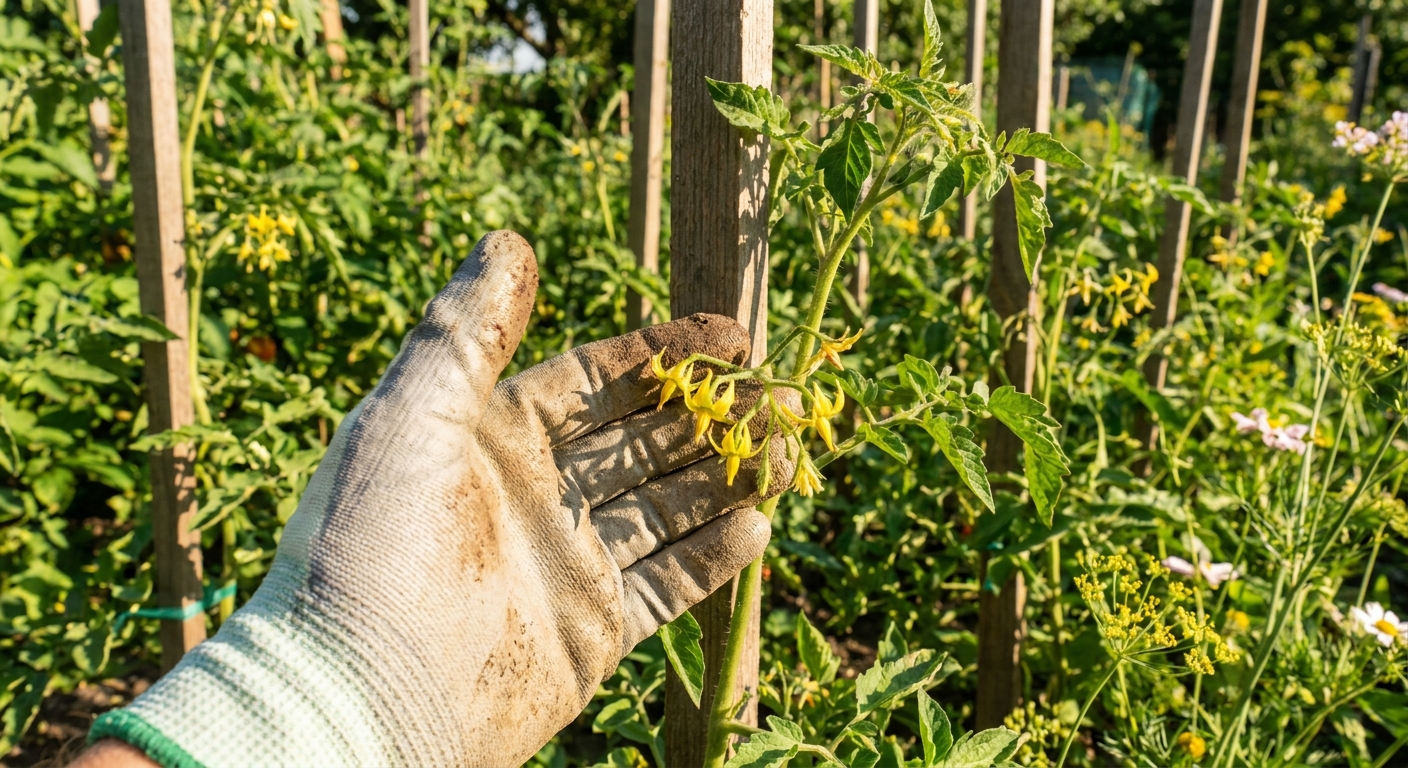
- Gently tap the flowering trusses in late morning to early afternoon a few times per week. Think: a soft flick, not a shake-down.
- Brush method: Use a small, clean paintbrush or cotton swab and lightly touch inside open flowers, moving from flower to flower.
- Air movement: In a greenhouse or covered balcony, run a small fan during the warmer part of the day to mimic wind.
- Invite bumblebees: Grow a few pollinator-friendly flowers nearby (sweet alyssum, basil allowed to bloom, borage). Bumblebees are excellent “buzz pollinators.”
Timing tip: Tomato pollen tends to be most viable in late morning to early afternoon when blooms are fully open and dry.
Heat stress: the mid-summer classic
Tomatoes set fruit best when temperatures are comfortably warm, not scorching. When days are very hot and nights stay warm too, pollen becomes less viable and flowers abort. Even if the plant looks green and strong, the reproductive side of the plant can hit pause.
Heat ranges linked to blossom drop
- Daytime highs often above about 90°F (32°C)
- Nighttime lows often staying above about 70°F (21°C)
These thresholds vary by variety and microclimate, and problems are more common when the heat is sustained for several days (especially with warm nights).
Humidity can amplify the issue. Very high humidity can make pollen clump and shed poorly. Very low humidity can also reduce pollen performance and lead to poor set.
Practical heat fixes that help
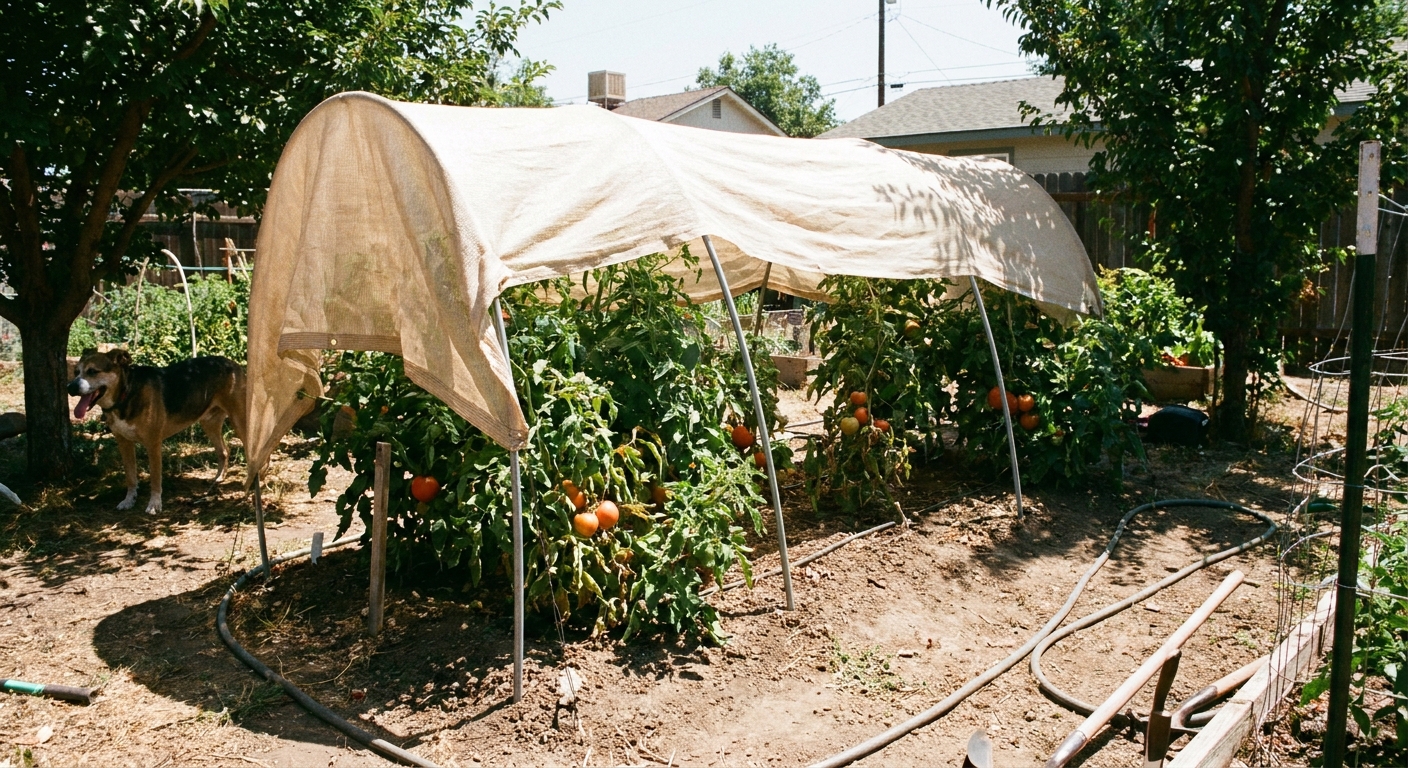
- Use shade cloth at the right time: Hang 30% to 40% shade cloth during heat waves, especially over plants that get intense afternoon sun. Put it up before the hottest stretch begins if possible, and remove it when temps normalize so plants still get plenty of light.
- Prioritize morning sun: If you garden in containers, move pots so they get strong morning light and some relief after 2 pm.
- Water early when you can: A deep morning watering helps plants handle the day’s heat better than evening “sips.” That said, if the plant is stressed and droopy in late day heat, water when needed. The goal is to prevent root stress, not follow a rigid clock.
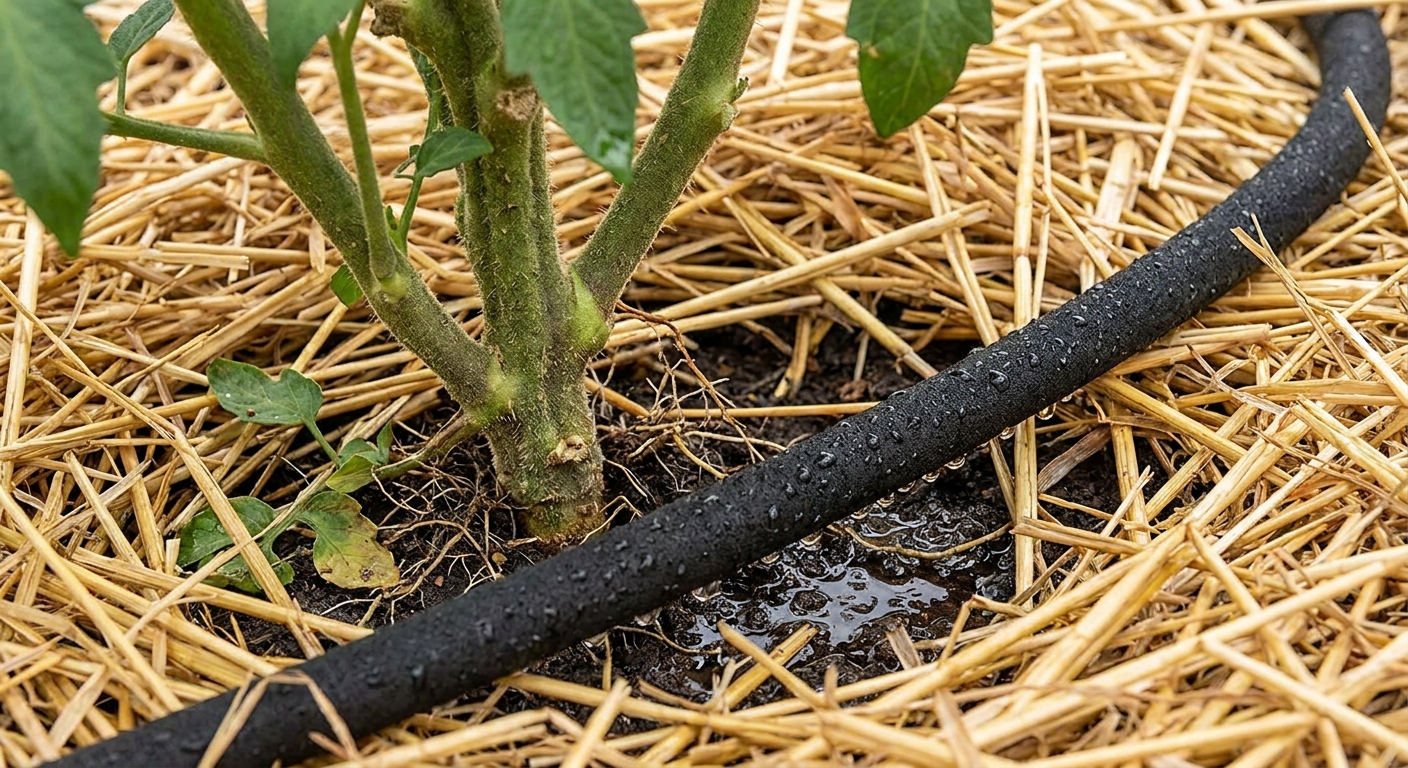
- Mulch the soil surface: A 2 to 3 inch layer of straw, shredded leaves, or untreated grass clippings (thin layers) keeps root zones cooler and more stable.
Cold stress: the early-season surprise
Blossom drop is not just a heat problem. If you are seeing flowers early in the season and the nights are chilly, cold stress can stop fruit set even when the days feel pleasant.
Cold ranges linked to blossom drop
- Nighttime lows dipping below about 55°F (13°C)
- Sudden temperature swings from warm days to cold nights
Simple cold-weather moves
- Cover on cold nights: Use frost cloth or row cover in the evening and remove it in the morning for light and airflow.
- Wait it out: Once nights warm up, new blossoms often set normally.
- Choose timing and varieties wisely: If your springs run cold, avoid rushing transplants, and consider early or cooler-tolerant varieties for that first flush of blooms.
Watering swings: feast, famine, repeat
Tomatoes want consistent moisture, not constantly soggy soil and not bone-dry soil followed by a flood. Big swings can cause the plant to drop blossoms because it cannot support fruit set reliably.
Signs your tomatoes are on a moisture roller coaster
- Blossoms drop after a dry spell, especially right after you water heavily
- Leaves look wilted in afternoon, perk up at night, then repeat daily
- Soil pulls away from the sides of a pot or feels dusty a few inches down
How to stabilize moisture (in-ground)
- Deep water at the root zone, then let the top inch dry slightly before watering again.
- Mulch 2 to 3 inches deep, keeping mulch a couple inches away from the stem.
- Watering schedule: In hot weather, many gardens do best with deep watering every 2 to 4 days rather than daily sprinkles.
How to stabilize moisture (containers)
Containers dry fast, especially on balconies with reflective heat. Most blossom-drop problems in pots come down to root stress from drying out.
- Use a bigger pot: Aim for 10 to 15 gallons per indeterminate tomato if you can. Smaller pots heat up and dry out faster.
- Choose the right potting mix: A quality mix with some compost holds moisture better than a light, fluffy mix alone.
- Water thoroughly: Water until you see runoff, then empty saucers so roots do not sit in water.
- Consider drip irrigation: Even a simple gravity-fed drip line can smooth out hot-weather swings.
Nitrogen balance: too leafy to fruit
Tomatoes need nitrogen, but too much pushes lush leaf growth at the expense of flowers and fruit set. Over-fertilized tomatoes often look gorgeous and green, but the blossoms drop or never seem to “stick.”
Clues you may have too much nitrogen
- Thick stems and big, dark green leaves
- Lots of new leafy growth, few fruits forming
- Blossoms appear but do not develop into small green fruit
Fixes for fertilizer-related blossom drop
- Pause high-nitrogen feedings for a couple weeks. Many “all purpose” fertilizers are nitrogen-forward.
- Switch to a tomato-focused fertilizer with a lower first number (N) relative to potassium. Follow label rates and do not double up.
- Do not overdo phosphorus: “Bloom booster” fertilizers can be phosphorus-heavy, and extra phosphorus is not always helpful (and can be an environmental issue). If you suspect a nutrient imbalance, a soil test is the most grounded way to confirm what your bed actually needs.
- Go easy on fresh manure and heavy doses of rich compost during peak flowering. These can be nitrogen-rich depending on source and age.
- Steady, light feeding beats big blasts: In containers, a dilute feed every 1 to 2 weeks can be gentler than occasional strong applications.
If you are unsure, the most grounded move is a simple soil test for in-ground beds. It takes the guesswork out of fertilizing and protects your soil long-term.
Container vs in-ground: why pots struggle
I love container tomatoes, especially for small spaces, but they live life on hard mode. Roots are more exposed to rapid heat and moisture changes, and nutrient salts can build up faster in potting mix.
Container-specific issues to watch
- Hot roots: Dark pots in full sun can cook root zones. Wrap pots with a light-colored cover, move them off hot concrete, or shade the container itself.
- Salt buildup from fertilizer: If you fertilize often, flush the pot every few weeks by watering slowly and deeply until plenty of water runs out the bottom.
- Rootbound plants: A tomato that has filled its pot can struggle to support consistent flowering and fruiting. Pot up if possible.
In-ground nuances
- Uneven watering from rain patterns: After heavy rain followed by heat, mulch is your best friend.
- Dense shade or poor airflow: Overcrowded plants can have less effective wind and bee activity around flowers. Give tomatoes room and prune lightly for airflow if needed.
- Stormy, windy weather: Strong winds and heavy rain can physically damage blossoms or shake them off. If you just had a storm, consider it a likely contributor, then focus on stabilizing conditions for the next round of blooms.
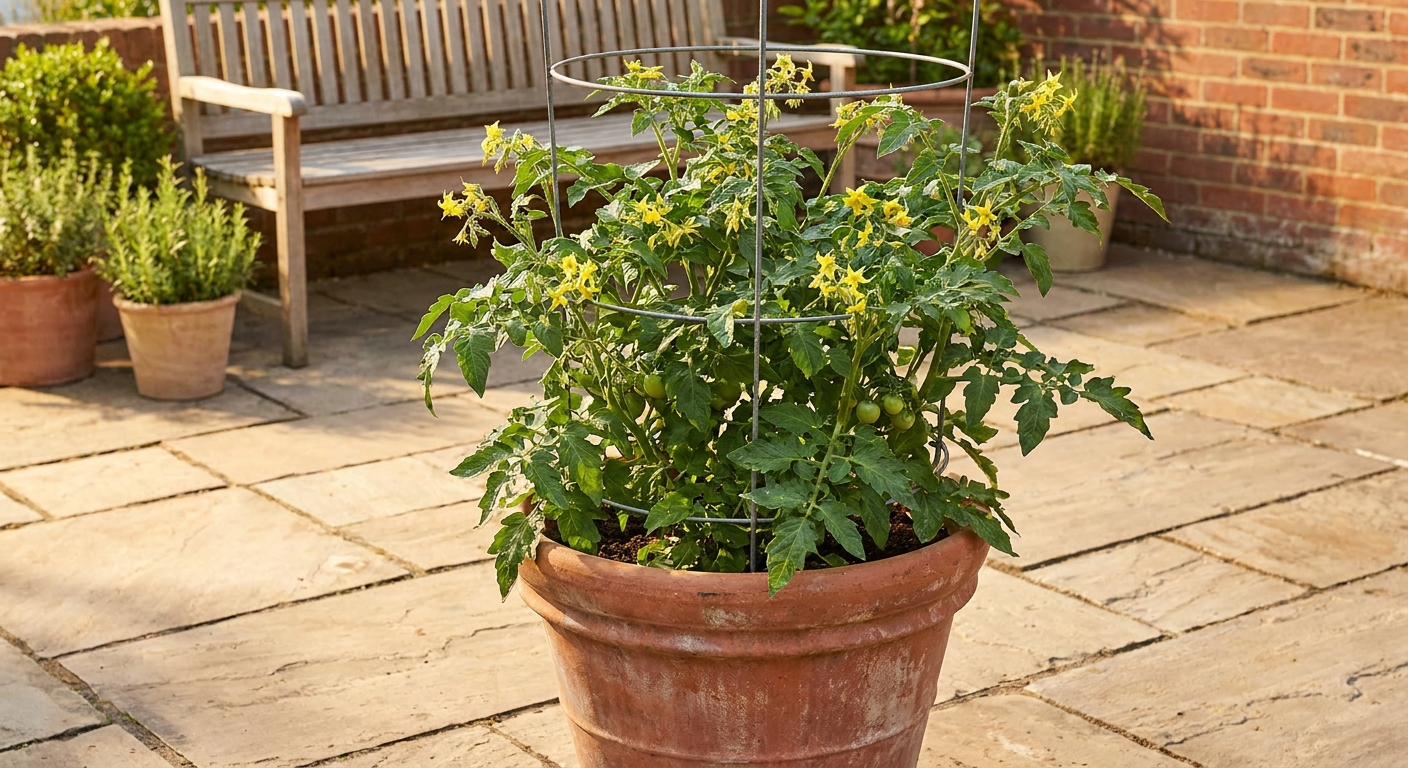
Tomato plants not setting fruit or not producing fruit
If your tomato plants are not setting fruit, that is usually the same problem gardeners call blossom drop: flowers appear, but they fail to turn into tomatoes. Sometimes the flowers fall. Sometimes they hang there for a while and never swell into fruit.
Work through the likely causes in this order:
- Heat or cold: hot days, warm nights, or chilly nights can make pollen less viable.
- Moisture swings: dry roots followed by heavy watering can interrupt fruit set.
- Poor pollination: still air, protected patios, or rainy stretches can keep pollen from moving.
- Too much nitrogen: a very leafy plant with few tomatoes may be growing foliage instead of fruit.
- Plant age: early blossoms sometimes drop while the plant is still building roots and stems.
For the next week, keep moisture steady, gently tap flower clusters in late morning, avoid heavy nitrogen feeding, and give heat-stressed plants afternoon shade. New flowers are the best scorecard; if conditions improve, the next set of blossoms should have a better chance of producing fruit.
Quick troubleshooting: what to do this week
If you want a simple plan, here is the order I use when my own tomatoes start dropping blossoms.
- Step 1: Check the forecast. If heat is coming, put up shade cloth and mulch. If cold nights are coming, have frost cloth ready.
- Step 2: Stabilize moisture. Deep water, then keep the root zone evenly moist. In containers, plan on checking daily during hot spells.
- Step 3: Help pollination. Tap flower clusters a few times a week in late morning to early afternoon, or add gentle airflow in protected spaces.
- Step 4: Review fertilizer. If you have been feeding heavily or using a high-nitrogen product, pause and switch to a tomato-focused blend at label rates. Avoid going heavy on phosphorus unless a soil test suggests it is needed.
- Step 5: Be patient for 7 to 14 days. Once conditions improve, new blossoms often set fruit quickly.
And one more gentle reminder from someone who has definitely over-worried a tomato plant: you do not need every blossom to become a tomato to have a great harvest. Healthy plants drop some flowers naturally. Your goal is to stop the mass drop so the plant can settle into steady fruit set.
When to worry (and when not to)
Do not panic if the first flower clusters drop early in the season, especially right after transplanting. The plant may be focusing on root growth first, or cold nights may be interfering with fruit set.
Pay closer attention if:
- Most blossoms across multiple trusses drop for more than two weeks
- The plant is in a pot that dries out daily by noon
- You are in a stretch of very hot days and warm nights, or very cool nights below about 55°F (13°C)
- You are seeing lots of lush leafy growth but very little fruit forming
- Flowers look damaged after storms or heavy wind
If foliage is also distorted, silvery, or heavily speckled, take a quick look for pests like thrips and check for disease signals. Those are less common than weather and watering issues, but they do happen.
Correct the main stress points, and tomatoes usually get back to business. They want to fruit just as much as you want to eat them.