
Syngonium Care (Arrowhead Plant)

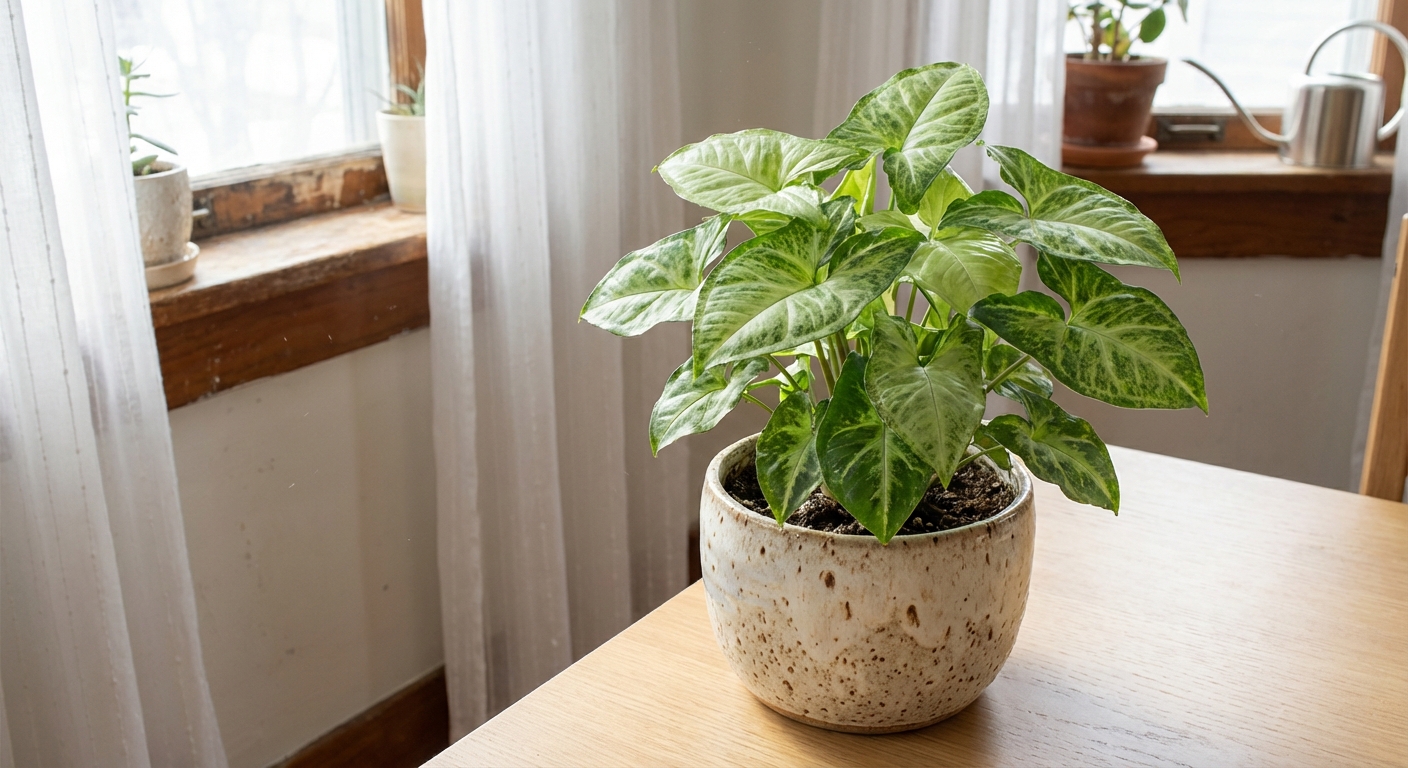
Syngonium, also called the arrowhead plant, is one of those houseplants that quietly turns you into a “plant person.” It grows fast, forgives the occasional missed watering, and has leaves that shift shape as it matures, like it is trying on new outfits just to keep things interesting. If pothos and philodendron feel like reliable best friends, Syngonium is their slightly quirky cousin who still shows up on time and brings snacks.
Below is exactly what this plant wants: light that is kind but not harsh, watering that is consistent but not clingy, a little humidity love, and the occasional haircut to keep it full and lush. We will also cover how to manage its climbing and trailing habit, how to feed it during the growing season, and how to propagate new plants from stem cuttings in water or soil.
Quick Syngonium care checklist
- Light: Bright indirect is ideal, but it tolerates medium and even low light.
- Water: Water when the top 1 to 2 inches of soil are dry. Do not keep it constantly wet.
- Humidity: Average home humidity works, but it looks best with moderate humidity (around 40 to 60%+).
- Growth habit: Naturally vining. Let it trail, or train it up a moss pole or stake.
- Pruning: Pinch and trim to encourage branching and a bushier look.
- Fertilizer: Feed lightly in spring and summer. Pause or reduce in fall and winter.
- Propagation: Easy from stem cuttings with a node, rooted in water or soil.
- Toxicity: Toxic if chewed or ingested (pets and humans).
Toxicity
Syngonium contains calcium oxalate crystals. That means it is toxic to pets and people if chewed or ingested. It can cause mouth irritation, drooling, and tummy upset. If you have curious cats, dogs, or tiny humans with grabby hands, place it out of reach and wash your hands after pruning or handling sap.
Light preferences
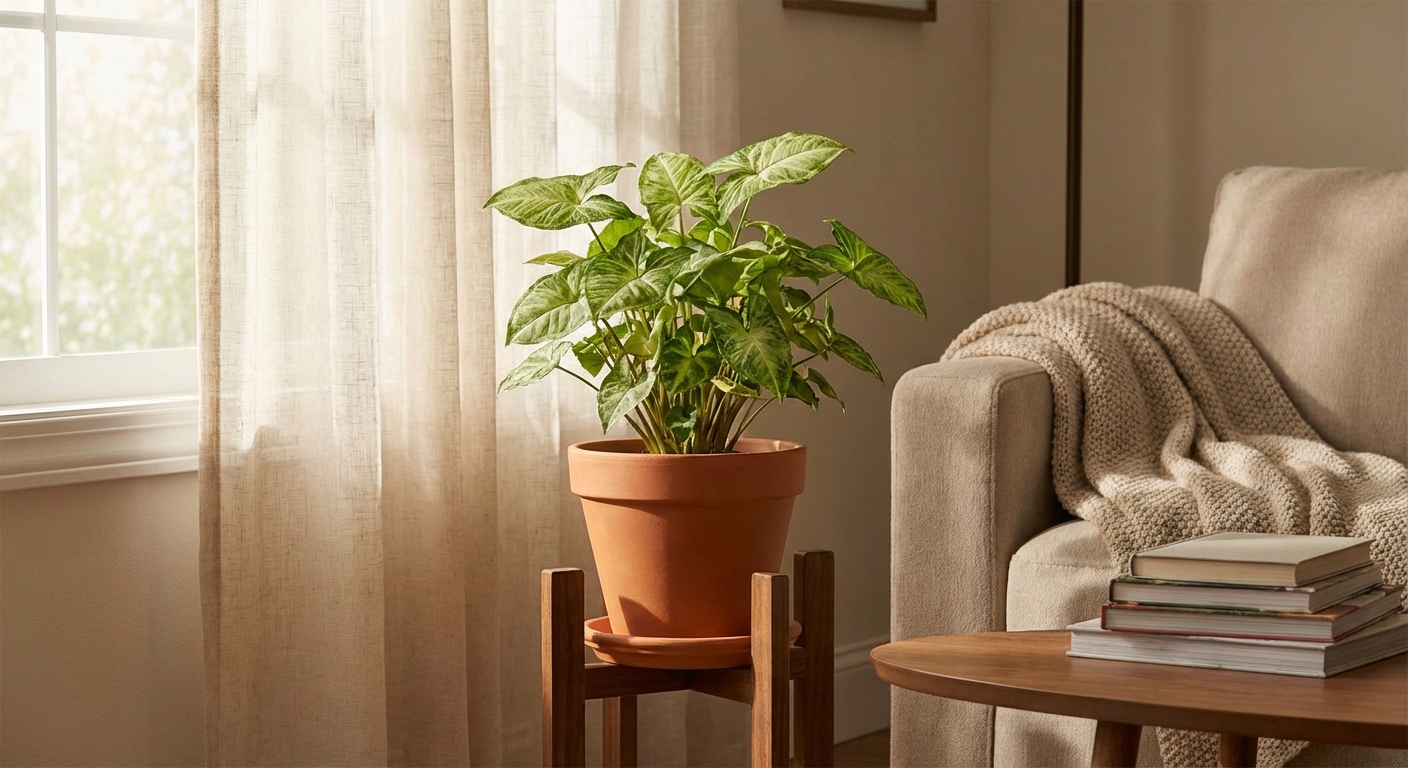
Syngonium is wonderfully adaptable, but you will get the prettiest growth in bright, indirect light. Think of the light you would find near an east window, or a few feet back from a sunny south or west window with a sheer curtain.
Bright indirect light (the sweet spot)
In bright indirect light, Syngonium tends to:
- Grow faster and fuller
- Hold stronger color and variegation (especially pink or white varieties)
- Develop sturdier stems that are less “floppy”
Medium to low light (yes, it can handle it)
Syngonium can live in lower light, which is why it is such a popular beginner plant. Just adjust expectations: growth will slow, spacing between leaves may increase, and variegated types may fade toward greener leaves over time.
Avoid harsh direct sun
Strong direct sun, especially afternoon sun, can scorch leaves. If you see crispy pale patches, move it back from the window or add a sheer curtain.
Watering (and the easiest way to avoid root rot)
If there is one thing Syngonium dislikes, it is soggy soil. The goal is a steady rhythm: water thoroughly, then let the mix breathe.
When to water
Water when the top 1 to 2 inches of soil feel dry. If you are a hands-on plant parent, stick a finger in the pot. If you prefer tools, a wooden chopstick works beautifully: insert it, pull it out, and if it comes out mostly dry, it is time.
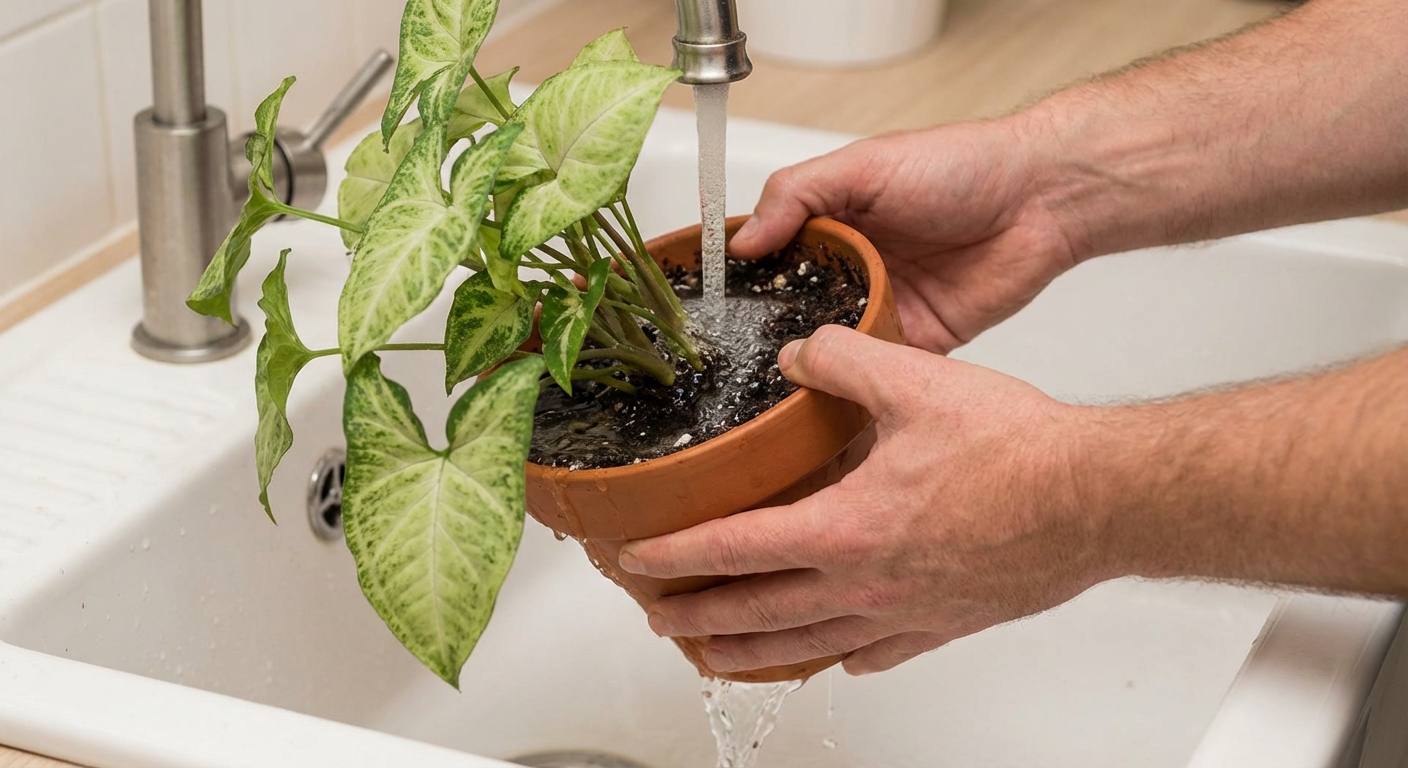
How to water correctly
- Water until it runs out of the drainage hole.
- Empty the saucer or cache pot after 10 to 15 minutes.
- Do not let the pot sit in water.
Common watering problems and what they look like
- Overwatering: Yellowing leaves, soft stems, a musty smell, fungus gnats, or leaves dropping quickly.
- Underwatering: Drooping, curling leaves, crispy brown edges, soil pulling away from the pot sides.
My most practical tip: In winter, most Syngoniums need less water because growth slows and evaporation drops. Keep the same “top inch or two dry” rule, but expect the calendar to stretch.
Humidity and temperature
Syngonium is a tropical aroid, so it appreciates humidity, but it will not punish you for normal indoor conditions.
Ideal humidity
Average homes (often 30 to 50% humidity) are usually fine. For the lushest leaves and fewer crispy edges, aim for 40 to 60%+.
- Easy humidity boost: Group plants together.
- Most effective: A small humidifier nearby.
- Okay but limited: A pebble tray under the pot, as long as the pot is not sitting in water.
Temperature
Keep Syngonium in typical indoor temperatures: 65 to 80°F (18 to 27°C) is great. Avoid cold drafts, and try not to let it sit below about 55°F (13°C). Cold stress often shows up as drooping and leaf yellowing.
Soil and potting basics
Syngonium likes a potting mix that holds some moisture but drains well. If you use a heavy, peat-dense mix that stays wet for days, you will be fighting yellow leaves and root issues.
A simple, beginner-friendly mix
- 2 parts quality indoor potting mix
- 1 part perlite or pumice
- Optional: a handful of orchid bark for extra airflow
Pot choice and repotting
Choose a pot with a drainage hole. Repot when roots circle the bottom or start poking out the drainage hole, usually every 1 to 2 years depending on growth. Spring and early summer are the easiest times to repot because the plant rebounds quickly.
Fertilizer
Syngonium is not a high-maintenance eater, but a little feeding during the growing season helps it look like it means business.
When to feed
- Spring and summer: Feed about once a month.
- Fall and winter: Pause, or feed at most every 6 to 8 weeks if it is actively growing under strong light.
What to use
A balanced liquid houseplant fertilizer works well. Dilute to half strength to keep things gentle and avoid the “too much of a good thing” leaf tip burn.
Two easy rules that prevent fertilizer drama
- Fertilize on moist soil, not bone-dry soil.
- Flush the pot with plain water every month or two to reduce mineral buildup, especially if you have hard tap water.
Managing Syngonium’s climbing or trailing growth
Syngonium starts out cute and compact, then it decides it has places to be. Mature stems elongate and the plant either trails down or climbs up if it finds support.
Option 1: Let it trail
Trailing Syngonium looks gorgeous on a shelf or in a hanging planter. To keep it from looking sparse, plan to prune regularly (more on that below), and rotate the pot every week or two so one side does not hog the light.
Option 2: Train it to climb
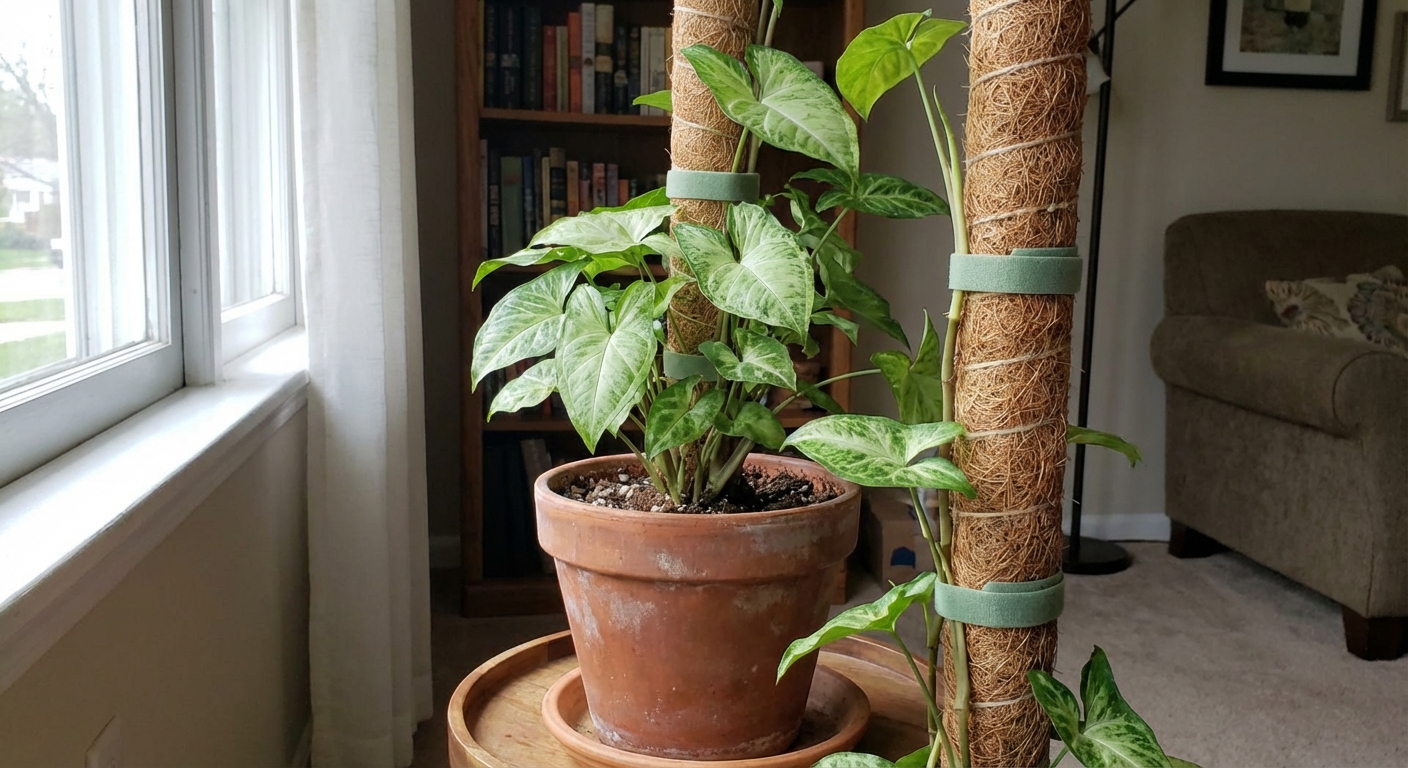
If you want larger leaves and a more dramatic, upright look, give your Syngonium something to climb. A moss pole, coco coir pole, or even a simple stake can work.
- Insert the support gently, aiming for the edge of the pot to avoid damaging roots.
- Loosely tie stems with soft plant ties or garden velcro.
- For moss poles: keeping the pole slightly moist can encourage aerial roots to grab on.
Pruning for bushier growth
If your Syngonium is getting leggy, congratulations: it is healthy enough to be ambitious. Pruning is how you turn that ambition into a fuller plant.
Where to cut
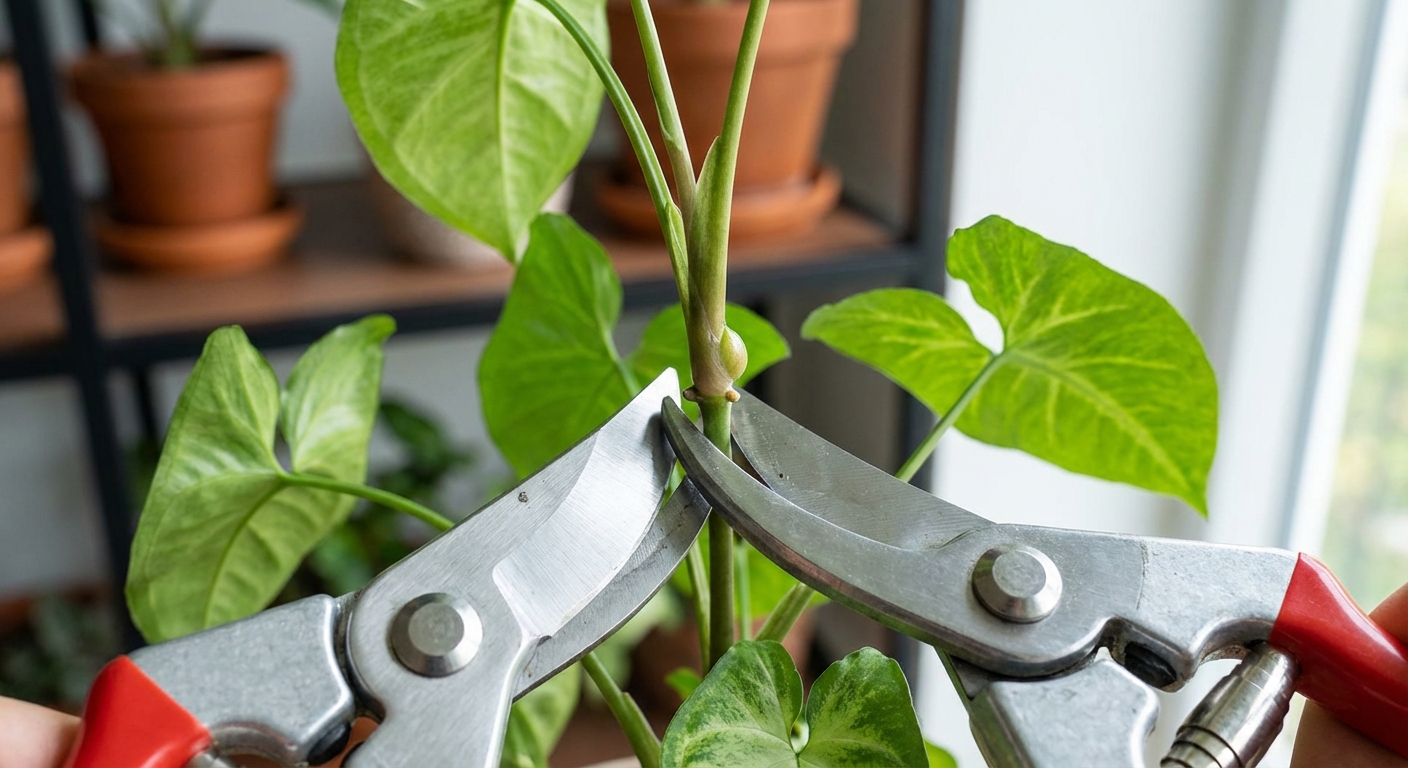
Look for a node, the little bump on the stem where a leaf and aerial root can emerge. Make your cut just above a node on the main plant to encourage branching. The piece you remove should ideally include at least one node so you can propagate it.
How often to prune
During spring and summer, you can prune lightly as needed. A good rule is to remove no more than about one-third of the plant at once if you are doing a bigger reshape.
Pinching tip for a fuller look
When new vines start to run, pinch the growing tip after it has a few leaves. That gentle “nope” encourages the plant to branch instead of sprinting in one direction.
Propagation from stem cuttings (water or soil)
Syngonium propagation is one of the most satisfying beginner plant skills because it is fast and forgiving. The key is simple: you need a node. A leaf alone will not root.
Before you start
- Use clean scissors or pruners.
- Choose a healthy stem with 1 to 3 leaves.
- Make sure the cutting includes at least one node.
Method 1: Rooting in water
This is my favorite for beginners because you can watch the roots form.
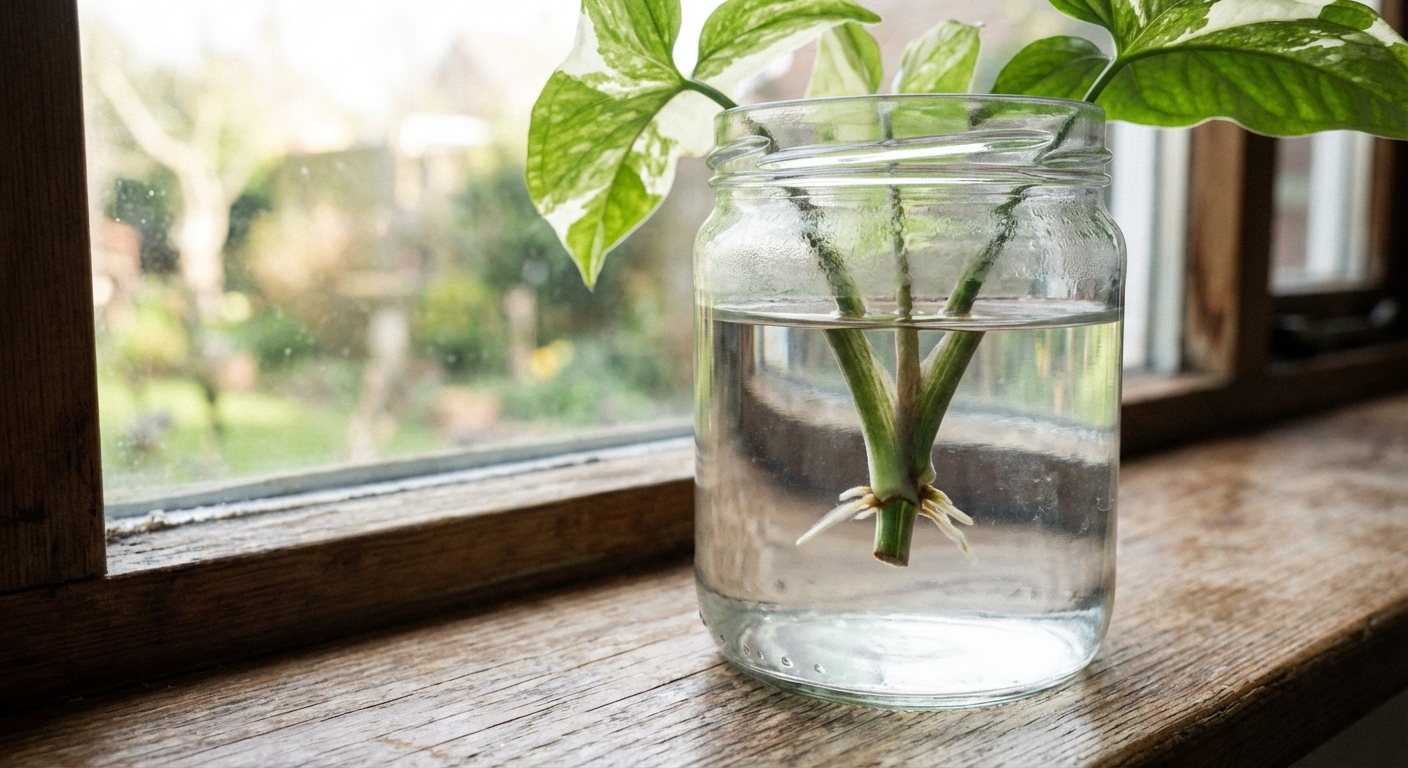
- Place the cutting in a jar of room-temperature water, with the node submerged and leaves above water.
- Put it in bright, indirect light.
- Change the water every 5 to 7 days, or sooner if it looks cloudy.
- Once roots are about 2 to 4 inches long and you see a few roots branching, pot it up in soil.
Note: Water roots can be a bit dramatic when moving to soil. Keep the soil slightly evenly moist (not soggy) for the first couple of weeks so the plant can transition.
Method 2: Rooting directly in soil
Soil propagation skips the transition step and often makes sturdier roots from the start.
- Fill a small pot with a light, airy mix (potting soil plus perlite is perfect).
- Make a small hole and tuck the node into the mix. Firm gently.
- Water lightly, then keep the soil evenly moist while roots establish.
- Keep in bright, indirect light. New growth is your sign rooting succeeded.
Troubleshooting common Syngonium issues
Yellow leaves
- Most common cause: Overwatering or a potting mix that stays wet too long.
- Also possible: Normal aging of the oldest leaves, especially if only one or two lower leaves yellow occasionally.
Brown, crispy edges
- Underwatering or inconsistent watering
- Low humidity
- Mineral buildup from hard water or heavy fertilizing
If your tap water is very hard, try using filtered water occasionally and flush the pot every month or two by watering thoroughly until lots of water runs out the bottom.
Leggy growth
- Not enough light (move closer to a bright window)
- Needs pruning to encourage branching
Pests
Syngonium can occasionally attract spider mites, mealybugs, or scale. Inspect leaf undersides and stems. If you spot pests, isolate the plant and wipe leaves with insecticidal soap or a diluted castile soap solution, repeating weekly until the problem is gone.
A gentle note from one plant-talker to another
Syngonium is one of those plants that teaches you to trust your eyes and your hands. If the leaves look perky and the soil is drying at a reasonable pace, you are doing it right. And if you mess up, welcome to gardening. We all learn by listening to what the plant tells us, then adjusting one small thing at a time.
If you want a simple next step, try this: give your Syngonium bright, indirect light and prune one long vine back to a node. Root that cutting in water. In a few weeks, you will have a brand-new plant, and the original will start filling in like it got a fresh haircut.