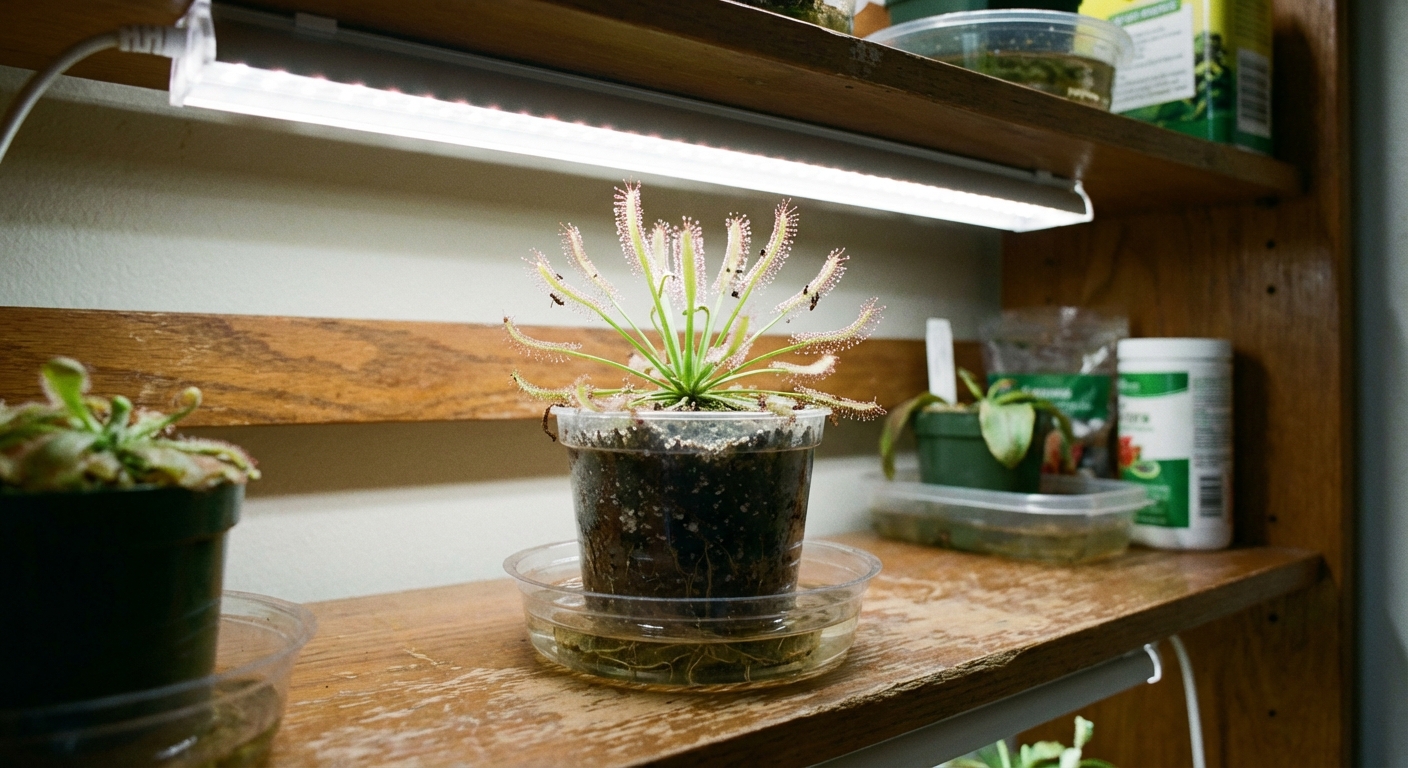
Sundew Care for Beginners


If Venus flytraps are the dramatic movie stars of the carnivorous plant world, sundews are the steady, hardworking friends who quietly do the job well. A healthy sundew (Drosera) sits there sparkling like it was dusted with morning dew, then calmly catches tiny insects with sticky tentacles and digests them over time.
The best part for beginners is this: common beginner sundews are forgiving. Give them strong light, consistently moist-to-wet media with low-mineral water, and the right soil, and they will usually reward you with new leaves and that signature glisten.
Quick note: This guide focuses on easy, subtropical species like Drosera capensis and Drosera spatulata. Many temperate, pygmy, and tuberous sundews have very different needs and are not nearly as “set it and forget it.”
How sundews work
Those jewel-like droplets are not water. They are a sticky mucilage that sundews produce at the tips of their tentacles. When a gnat or small fly lands, it gets stuck. Then the leaf slowly curls or pulls the prey inward, and the plant releases digestive enzymes to break it down.
Two beginner takeaways:
- Sticky dew depends on light. Most “my sundew is not dewy” problems trace back to weak lighting.
- You do not need to hand-feed often. Outdoors, they usually feed themselves. Indoors, they may catch very little, so occasional feeding can help, but it is optional.
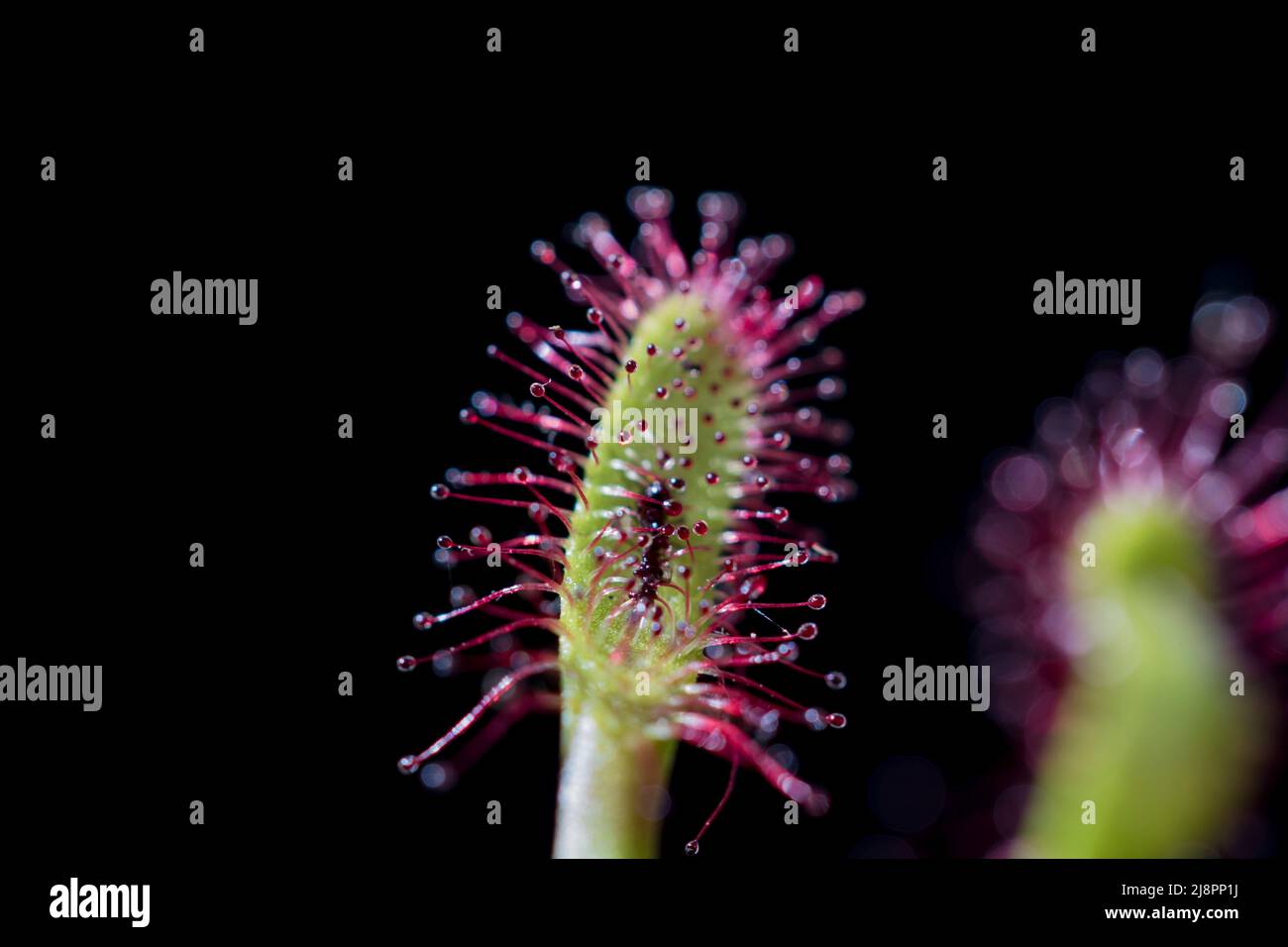
Best beginner sundews
There are many Drosera species, but two are especially welcoming to first-timers because they tolerate typical home conditions and bounce back from small mistakes.
Drosera capensis (Cape sundew)
This is the classic starter sundew. It grows upright, strap-like leaves that can turn beautifully red under strong light. It tends to grow fast, makes lots of leaves, and can even shrug off the occasional mishap like a tray drying briefly.
- Why beginners love it: hardy, fast-growing, very responsive to good light
- Fun fact: it can produce baby plants from roots or self-sow from seed in the right setup
Drosera spatulata
D. spatulata forms a low rosette of spoon-shaped leaves. It stays smaller and tidier than capensis, which makes it great for windowsills, terrariums with airflow, or small pots.
- Why beginners love it: compact, adaptable, steady growth
- Light effect: the rosette often blushes red when it is getting enough sun
Light
Sundews want bright light and often full sun. Outdoors, many beginner sundews thrive with several hours of direct sun, especially morning sun with some afternoon protection in very hot climates.
Indoors, a very bright south or west window can work, but many homes still need a grow light to keep the plant dewy and colorful.
- Signs your sundew is happy: lots of sticky dew, red or pink coloration (varies by species), steady new leaves
- Signs it needs more light: pale green leaves, long weak growth, little to no dew
If you add a grow light, here is a practical starting point for beginners:
- Schedule: 12 to 14 hours per day
- Distance: often about 6 to 12 inches above the plant (adjust based on heat and the manufacturer’s guidance)
The goal is bright enough that the plant looks like it is wearing glitter most days. If you are pushing intense light in a hot room, add airflow and keep the tray topped up so the plant does not cook.
Soil
Sundews naturally live in nutrient-poor wetlands. Regular potting soil and compost are too rich and can burn their sensitive roots. You want an unfertilized, low-mineral medium that stays moist and airy.
Beginner-friendly mix
- Classic mix: 1:1 sphagnum peat moss and perlite
- Alternative: peat moss and silica sand (not play sand, not beach sand)
- Long-fiber sphagnum: can work too, especially for some species, but beginners often find peat/perlite easier and more consistent
Important: Avoid anything with added fertilizer, wetting agents, or “moisture control” additives.
Choose a plastic pot with drainage holes. Terracotta dries out fast, and depending on the clay and your water, it can also contribute minerals over time. For most sundews, plastic is the simple, reliable option.
Water
Sundews like consistently moist-to-wet conditions, and the easiest way to provide that is the water tray method.
Tray method
- Place the pot in a shallow tray or saucer.
- Add about 1/2 to 1 inch of water to the tray during active growth (less for tiny pots, more for larger pots or very hot weather).
- Let the plant drink from the bottom. Refill as needed.
Some growers let the tray go dry for a day occasionally to re-oxygenate the root zone, especially in low light. For capensis and spatulata, you can keep it simple: keep the media wet, and if you notice the soil staying swampy and stagnant indoors, lower the tray level a bit and improve airflow.
Use low-mineral water so salts do not build up in the soil:
- Distilled water
- Reverse osmosis (RO) water
- Rainwater collected cleanly
Tap water is risky in most areas because dissolved minerals accumulate and slowly damage roots. If you use a TDS meter, a practical target is ideally under about 50 ppm, and many growers avoid water over about 100 ppm. When in doubt, go distilled or RO.
Temp and humidity
For beginner species like D. capensis and D. spatulata, typical home temperatures are usually fine.
- Temperature: roughly 60 to 85°F is comfortable for many common sundews
- Humidity: moderate household humidity often works, especially with strong light and consistently wet media
High humidity is nice, but it is not a magic fix for low light. If your plant is not producing dew, increase light first.
If you are growing in heat plus strong sun or a powerful grow light, add airflow and watch water levels. Hot, still air can turn “bright light” into “tiny oven” surprisingly fast.
Feeding
Sundews catch insects because their native soils are low in nutrients, not because they need constant meals to survive. If your sundew lives outdoors, it will almost certainly feed itself.
Indoors, do not assume it will catch much, even near a window. You do not need to keep a window open to “invite bugs,” and you do not need to hand-feed constantly either.
If you want to feed indoors, keep it gentle:
- Offer small insects (gnats, fruit flies, tiny ants) occasionally
- Avoid large prey that can rot on the leaf
- Do not feed every leaf. One or two leaves fed now and then is plenty
Never give them meat, cheese, or “people food.” Somebody always tries.
Sundews vs. flytraps
If you are deciding between a sundew and a Venus flytrap, here is the beginner-friendly truth.
Why sundews are often easier
- No trap “trigger rules” to worry about. Sundews catch prey passively with sticky mucilage.
- Many species tolerate indoor life better. D. capensis and D. spatulata can do well on a bright windowsill or under a grow light.
- Less dormancy pressure. Venus flytraps need a cool winter dormancy to thrive long-term. Many beginner sundews do not require a true dormancy.
Where Venus flytraps can be easier
- Outdoor sun lovers. If you can grow outside in full sun and provide dormancy, flytraps can be straightforward and tough.
- Less tray dependence. Both like moist conditions, but flytraps are often grown with slightly less constant saturation than some sundews, depending on setup.
If you want the most reliable first carnivorous plant for a bright windowsill, I usually nudge people toward a Cape sundew.
Common problems
No dew
- Most common cause: not enough light
- Also possible: mineral-heavy water, old exhausted soil, stress from a recent move, or winter slowdowns
- Fix: increase light intensity, switch to distilled/RO, and wait for new growth to show improvement
Black leaves
Older leaves naturally die back, especially after heavy feeding or during transitions. If the crown keeps making new leaves, you are fine.
- Fix: trim dead leaves if you like, improve light, keep using low-mineral water
Mold or algae
This can happen in constantly wet media, especially indoors or in setups with low airflow.
- Fix: increase airflow, remove surface algae gently, consider top-dressing with rinsed silica sand, and avoid sealed terrariums that trap heat and stagnant air
Slow decline
- Most common cause: minerals building up from water or enriched soil
- Fix: repot into fresh peat/perlite and use only distilled/RO/rainwater
Pests
Even carnivorous plants get bullied sometimes. Common pests include aphids, spider mites, and fungus gnat larvae in the soil.
- First steps: rinse pests off with low-mineral water and increase airflow
- Safe-ish options: insecticidal soap or neem can work on some setups, but test on a small area first and avoid coating the entire plant in oil
- Best prevention: strong light, good airflow, and not keeping plants in sealed, stagnant containers
Seasonal notes
Many beginner sundews do not need a true dormancy, but they can still slow down in winter indoors when days are short. You might see less dew and smaller leaves.
- Keep light strong (this is the big one)
- Consider lowering the tray level slightly if growth is slow and the pot stays cold and soggy
- Do not panic if it looks less sparkly for a few weeks. Watch for healthy new leaves as conditions improve
Repotting
Sundews do not need frequent repotting, but fresh media every year or two can help, especially if you suspect mineral buildup.
- Best time: spring or early summer
- How: gently tease the plant out, keep roots moist, replant into pre-moistened carnivorous plant mix
Keep the routine simple:
- Bright light daily
- Tray topped up with low-mineral water
- No fertilizer in the soil
- Enjoy the sparkle
Copy this setup
If you want a no-drama starting point, here is my favorite simple setup:
- Plant: Drosera capensis
- Pot: 4-inch plastic pot with drainage
- Soil: 1:1 peat moss and perlite (rinsed)
- Water: distilled water in a shallow tray, kept available most of the time
- Light: brightest window you have, or a dedicated grow light for 12 to 14 hours/day
Give it two to three weeks to settle in. When the dew starts glinting again, you will know you have the conditions right. And if you catch yourself leaning in to admire the sparkle like it is a tiny living chandelier, welcome. That is how it starts.