
Stromanthe Triostar Care

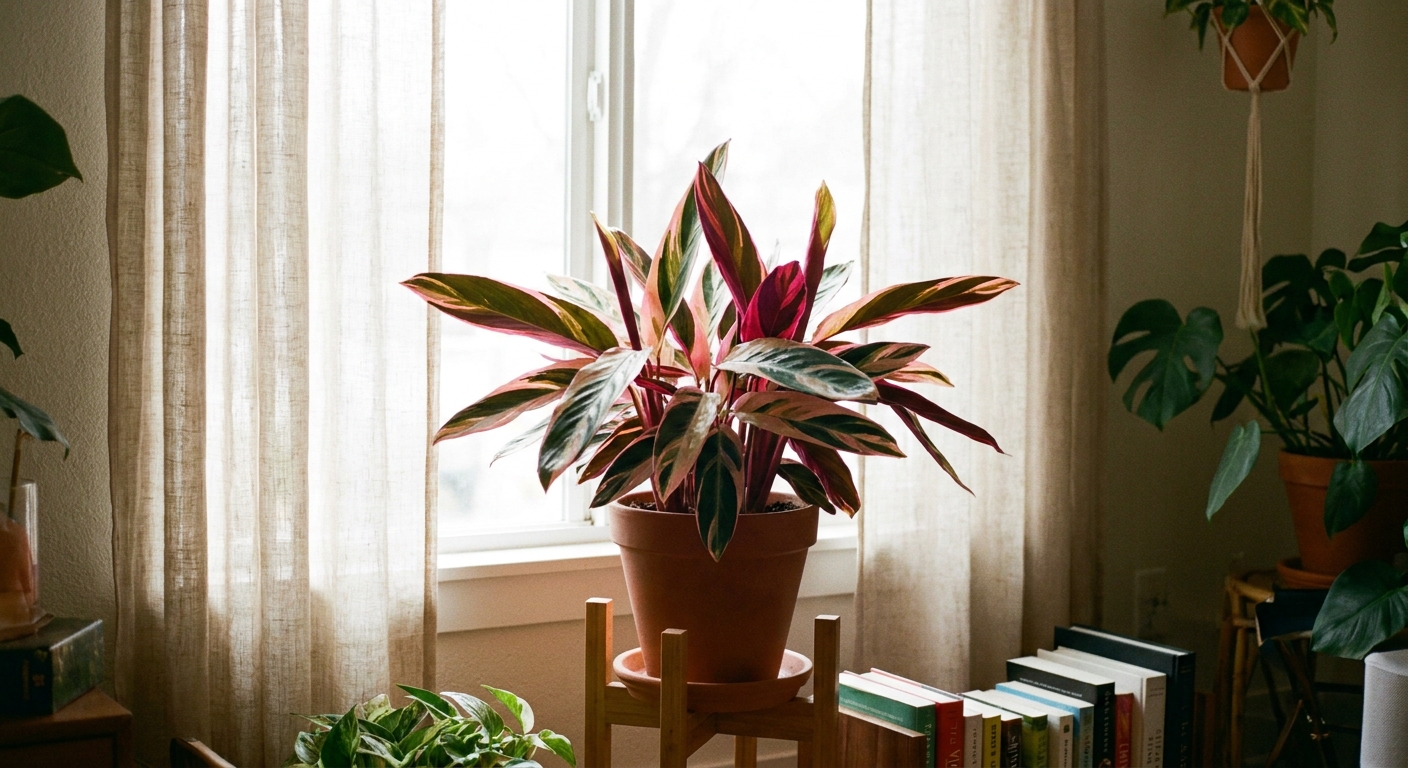
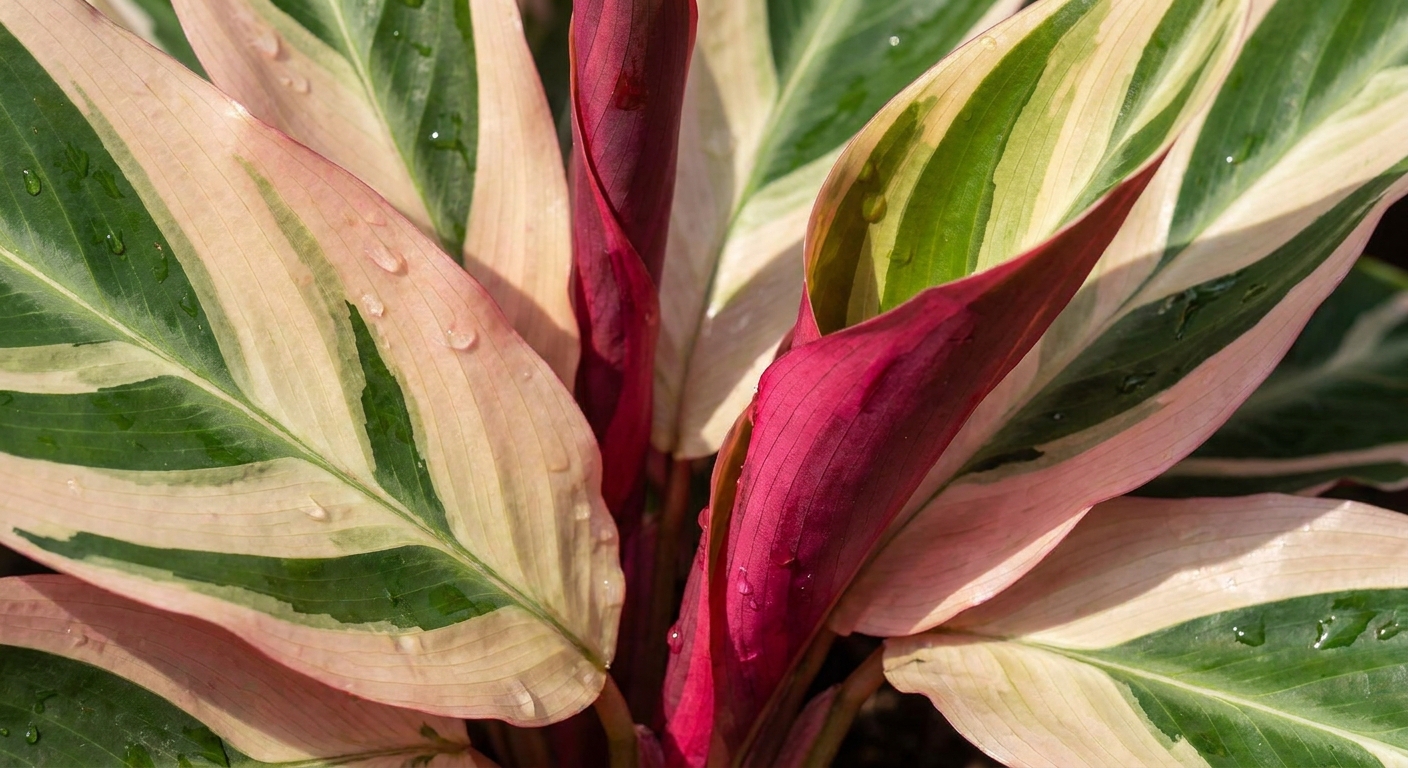
Stromanthe sanguinea ‘Triostar’ is one of those plants that looks like it was painted on purpose: splashes of cream, pink, and green on top, and that deep magenta underside that catches the light when the leaves lift and fold.
Quick naming note, because plant labels love to keep us humble: this plant is widely sold as Stromanthe sanguinea ‘Triostar’, but you may also see it listed as Stromanthe thalia ‘Triostar’ in horticulture. Same beloved houseplant, different name tags.
It is in the prayer plant family (Marantaceae) , so yes, it shares some needs with Calathea and Maranta. But Triostar has its own personality. It is often a little more light-hungry than many Calatheas, and it is especially honest about humidity. Translation: it will show you crispy tips if the air is too dry.
If you have ever whispered, “Please do not crisp on me,” to a tropical houseplant, you are in good company. I talk to my ferns. Triostar gets the same pep talks, plus a steady routine.

Quick care snapshot
- Light: Bright, indirect light. Gentle morning sun is usually fine.
- Water: Keep evenly moist, not soggy. Water when the top 1 to 2 inches of mix feels dry.
- Humidity: High, ideally 60% to 70% plus .
- Temperature: 65 to 80°F (18 to 27°C). Avoid cold drafts and hot, dry blasts.
- Soil: Airy, moisture-retentive mix with excellent drainage.
- Fertilizer: Light feeding in spring and summer.
- Pet safety: Generally regarded as non-toxic (often listed as non-toxic by the ASPCA for related prayer plants), but any plant can cause stomach upset. Keep out of reach and contact your vet if ingestion happens.
After you bring it home
Triostars can arrive stressed from shipping, store lighting, or a big humidity change. The first two weeks are about stabilization, not perfection.
- Quarantine: Keep it separate from other plants for 1 to 2 weeks while you check for pests.
- Hold off on repotting: Unless the soil is waterlogged or the roots are in trouble, let it acclimate first.
- Find the right spot: Bright, indirect light right away, plus higher humidity if you can manage it.
- Water carefully: Water only when the top 1 to 2 inches are dry. New plant plus soggy soil is a classic root rot setup.
Light
Triostar can handle slightly brighter conditions than many Calatheas. That is good news because its color is directly tied to light. Too little light and the plant survives, but the pink can fade and the leaves may get smaller and spindly.
Best light indoors
- Ideal: Bright, indirect light for most of the day.
- Good options: An east window (gentle morning sun), or a few feet back from a south or west window with a sheer curtain.
- Avoid: Harsh direct afternoon sun hitting the leaves. Cream sections can scorch first.
Signs the light is off
- Too much light: Bleached patches, crisp edges, sunburn spots that look tan or papery.
- Too little light: Variegation looks washed out, new leaves come in greener, growth slows.
If you are using a grow light , aim for a bright but comfortable setup: 12 to 14 hours a day, with the light a safe distance so the leaves never feel warm to the touch.
Water
Triostar wants consistency. In the wild it grows in humid, rain-washed environments with air around the roots. Indoors, that translates to a potting mix that holds moisture but does not stay waterlogged.
When to water
Water when the top 1 to 2 inches of potting mix feels dry. If you wait until the pot is bone dry, Triostar often responds with curling leaves and crispy tips. If you water again and again while the mix is still wet, the roots can suffocate and rot.
How to water (my no-drama method)
- Check moisture with your finger or a wooden skewer.
- Water thoroughly until it runs from the drainage holes.
- Empty the saucer after 10 to 15 minutes so the pot is never sitting in water.
Water quality
If your Triostar keeps getting brown tips even when your watering timing seems perfect, the culprit can be minerals and salts. Many plants in the prayer plant family are sensitive to hard water and chemical buildup .
- Best options: Rainwater, distilled, or filtered water.
- If you use tap: Letting it sit overnight may help if your water is treated with chlorine, but it does not remove chloramine (used in many cities). If your municipality uses chloramine, consider a filter certified for chloramine reduction or use distilled or rainwater. Also, flush the pot with extra water monthly to rinse out salts.
Humidity
Humidity is where Stromanthe Triostar stops being shy and starts giving you feedback. Low humidity often shows up as browned tips, crisp edges, and leaves that refuse to unfurl smoothly.
Targets
- Sweet spot: 60% to 70% plus
- Will tolerate: Around 50% if everything else is dialed in, but you may see some tip browning.
Ways to raise humidity
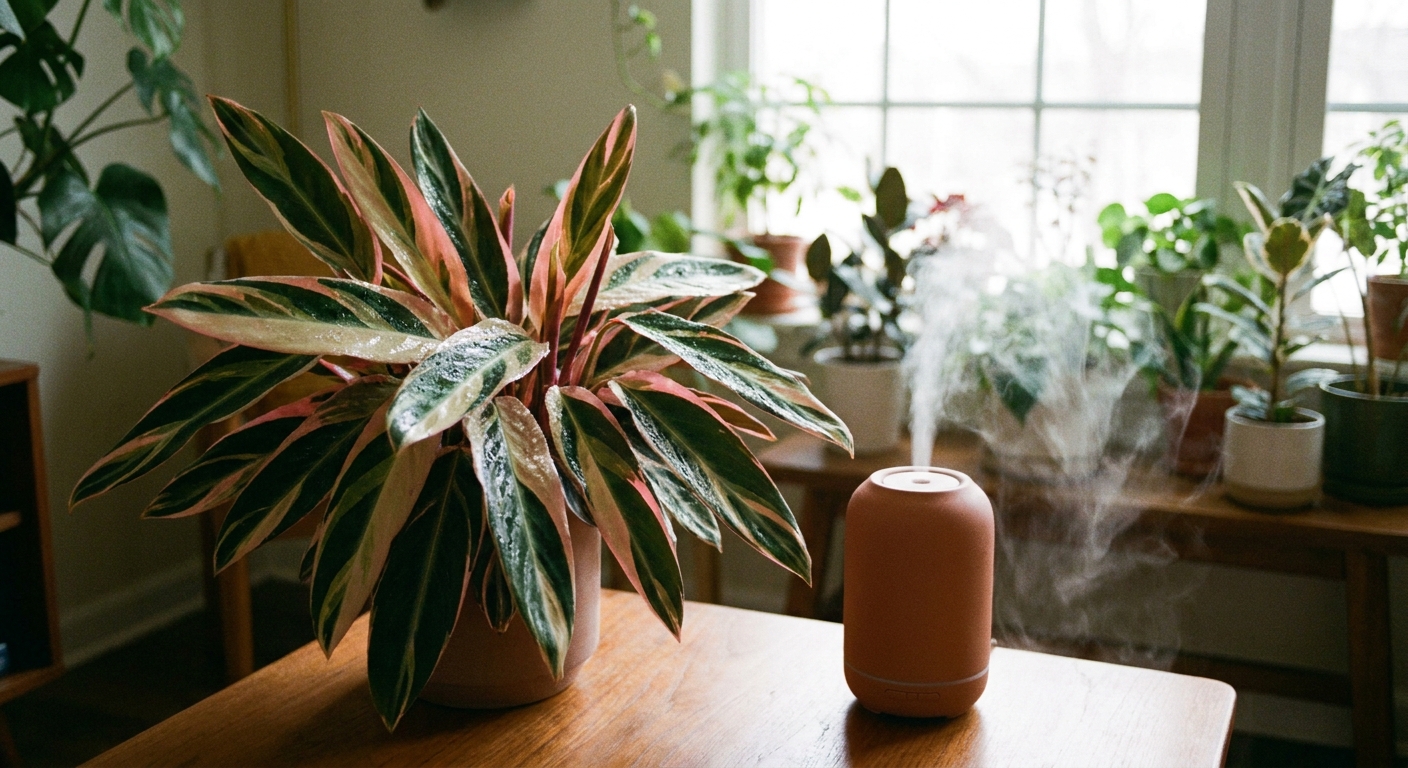
- Humidifier: The most reliable option, especially in winter heating season.
- Plant grouping: Creates a small humid pocket.
- Bathroom placement: Only if the light is adequate.
Tip: Pebble trays can help a little right around the plant, but they rarely move the needle for an entire room. I treat them as supportive, not a cure-all.
Temperature and airflow
Triostar likes it warm and steady. Big swings, cold drafts, and forced air vents are where the drama starts.
- Ideal range: 65 to 80°F (18 to 27°C)
- Avoid: AC blowing directly on the plant, heat vents, and cold window glass in winter.
- Airflow: Gentle room airflow is fine and can help with pests and fungus, but keep it away from constant blasts that dry the leaves.
Leaf movement
Those gentle daily leaf shifts are normal and part of the Marantaceae charm. Leaves often lift in the evening and relax outward during the day. This is driven by light cycles and plant hydration, not mood, although I still tell mine it is doing a great job.
When to worry: if leaves are tightly rolled all day, drooping despite moist soil, or crackling at the edges, it is usually a care signal, not a cute trick.
Soil and potting
Think of Triostar roots like they want a sponge, not a bathtub. The goal is a mix that holds moisture and nutrients, while letting oxygen reach roots.
Potting mix
- 2 parts high-quality indoor potting mix or coco coir based mix
- 1 part perlite or pumice
- 1 part fine orchid bark
A pot with drainage holes is non-negotiable. If you love decorative cachepots, keep the plant in a nursery pot inside.
Pot size
Triostar prefers being slightly snug. When you repot, go up one pot size (usually 1 to 2 inches wider). Overpotting can keep the mix wet for too long and invite root rot.
When to repot
- Every 1 to 2 years, or when roots circle the pot and watering becomes tricky.
- Best time: spring through early summer.
Fertilizer
Triostar does not need heavy feeding. Too much fertilizer can lead to crispy tips and salt buildup, especially if your water is hard.
Simple schedule
- Spring and summer: Fertilize every 4 to 6 weeks at 1/4 to 1/2 strength with a balanced houseplant fertilizer.
- Fall and winter: Pause, or feed very lightly only if you have strong grow lights and active growth.
Always water first, then fertilize. Feeding dry roots is like serving dinner on a hot pan.
Pruning and grooming
Triostar does not need much pruning, but it does appreciate a tidy-up.
- Trim fully brown leaves at the base with clean scissors.
- If only the tips are brown, you can snip just the crispy edge, following the natural shape of the leaf.
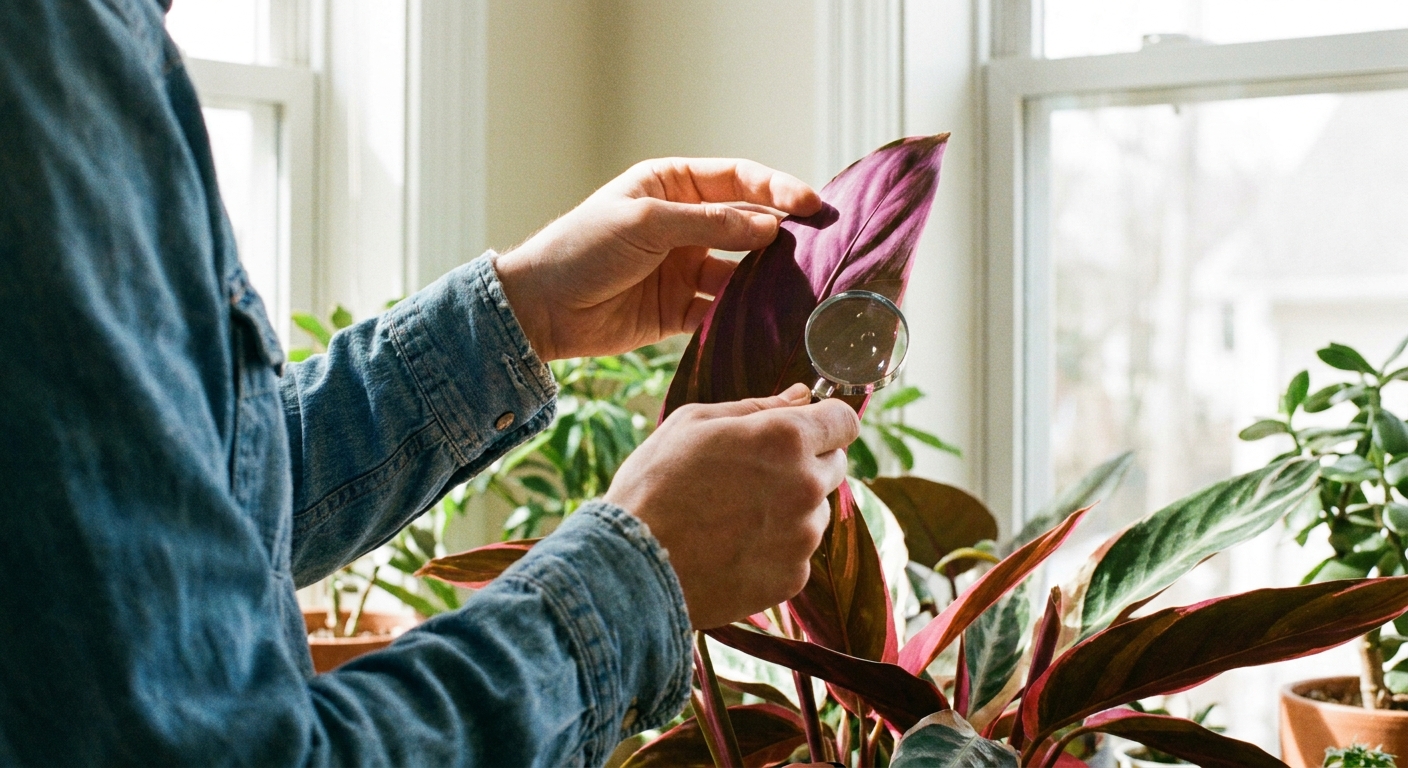
- Wipe leaves gently with a damp cloth to help it photosynthesize and to spot pests early.
Common problems
Brown tips and crispy edges
This is the number one complaint, and it is usually a combo issue rather than a single mistake.
- Low humidity: Raise humidity with a humidifier or move away from vents.
- Inconsistent watering: Do not let the pot dry out completely between waterings.
- Minerals or fertilizer salts: Switch to filtered, distilled, or rainwater and flush monthly.
- Hot sun: Move back from intense windows or add a sheer curtain.
Fading variegation or greener leaves
- Not enough light: Move to brighter indirect light or add a grow light.
- Normal variation: Some leaves will be greener than others, especially in lower light seasons.
Note: Very white or cream-heavy leaves are beautiful, but they have less chlorophyll. They can be slower to support the plant, so balanced light helps the whole plant stay strong.
Leaves curling inward
- Thirst: Check the soil. If it is dry down several inches, water deeply.
- Low humidity: Curling can also be a humidity protest.
- Cold draft: Keep it away from chilly windows in winter and from AC blasts in summer.
Yellowing leaves
- Overwatering: If the mix stays wet and heavy, let it dry a bit and confirm the pot drains well.
- Natural aging: An occasional older leaf yellowing is normal. Many at once suggests a root or watering issue.
Brown spots
- Sun scorch: Looks bleached then turns brown and papery.
- Wet leaves and cool air: Avoid frequent misting if your home is cool, and do not leave water sitting on leaves.
- Pest damage: Check undersides closely.
Pests
Triostar can attract the usual indoor suspects, especially when air is dry.
Spider mites
- Signs: Fine webbing, dusty stippling on leaves, leaves losing their shine.
- Fix: Rinse the plant in the shower, then treat with insecticidal soap or horticultural oil, repeating every 7 to 10 days for a few rounds.
Mealybugs
- Signs: White cottony clusters in leaf joints and along stems.
- Fix: Dab with isopropyl alcohol on a cotton swab, then follow up with soap spray.
Scale
- Signs: Small brown bumps that do not wipe off easily.
- Fix: Physically remove what you can, then treat repeatedly.
Any time you treat pests, isolate the plant from others for a couple weeks. Pests are tiny, persistent hitchhikers.
Triostar vs Calathea and Maranta
If you have grown Calatheas or Marantas, you are already halfway there. The differences that matter most:
- Triostar often wants brighter indirect light to keep its pink and cream vivid.
- It can be more sensitive to dry air, showing tip burn quickly.
- It still hates extremes: no scorching sun, no soggy soil, no cold drafts.
In other words: treat it like a prayer plant with a colorful wardrobe and a strong opinion about humidity.
FAQ
How fast does Stromanthe Triostar grow?
Moderate, with the most growth in spring and summer. In low light or dry air, it slows down noticeably.
Should I mist my Triostar?
Occasional light misting is not harmful, but it is not a reliable humidity solution. I would rather you put that energy into a humidifier or a better placement.
Can I propagate Triostar?
Yes. The practical method is division when you repot. Gently separate a clump with roots attached and pot it up in the same kind of airy mix.
Why do the leaves fold up at night?
Normal nyctinasty, the same prayer-like movement seen in many Marantaceae. It is a sign the plant is responding to its light cycle.
A calm routine
If you want a simple rhythm, here is the one I come back to again and again:
- Give it bright, indirect light and rotate the pot weekly for even growth.
- Check moisture twice a week, water when the top 1 to 2 inches dry.
- Run a humidifier nearby in dry months.
- Keep it away from vents and drafty windows.
- Wipe leaves every few weeks and peek under them for early pest signs.
Triostar is not a “set it and forget it” plant, but it is absolutely a “learn its language and you will be friends for years” plant. And if you get a few crispy tips along the way, welcome to the club. Plants grow. We do, too.