
String of Turtles Care

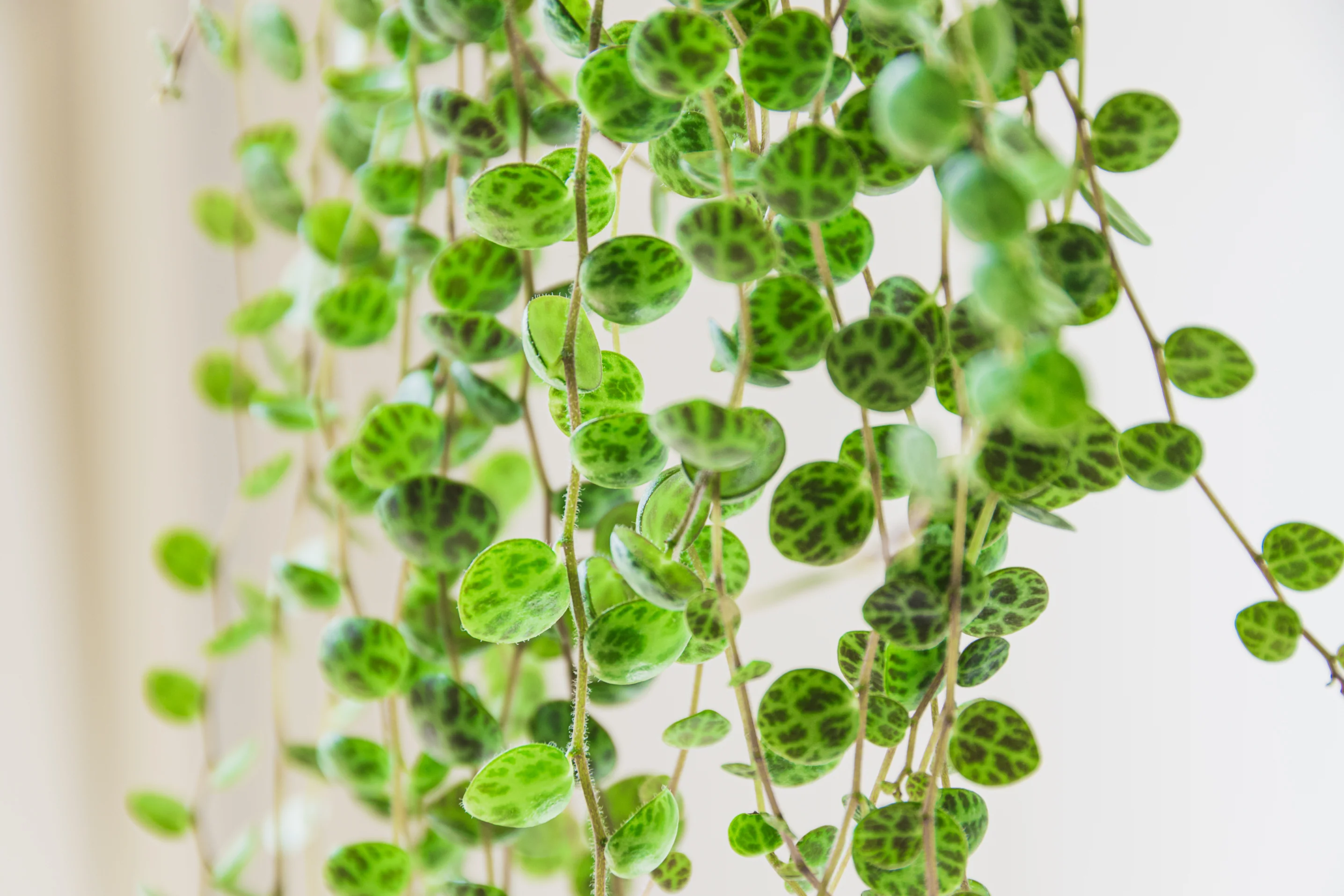
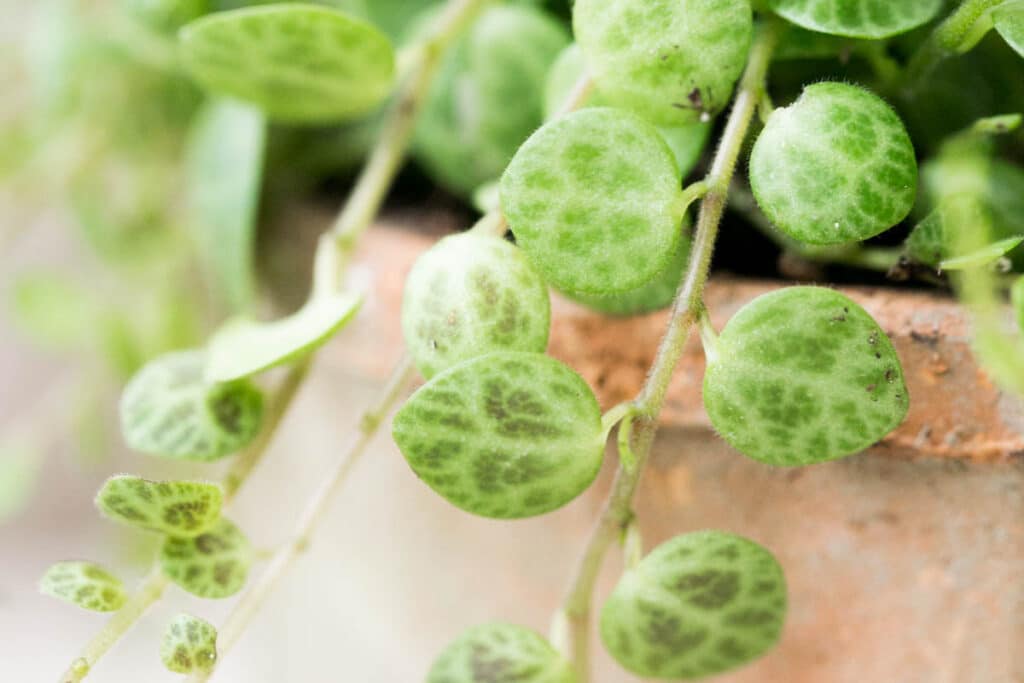
String of Turtles (Peperomia prostrata) is one of those plants that makes you lean in for a closer look. Each tiny round leaf is patterned like a little turtle shell, and when it’s happy, it drapes and trails in soft, lush strands that look almost too perfect to be real.
It also gets lumped in with other “string of” plants, which can lead to the quickest heartbreak: caring for it like a succulent. String of Turtles is not String of Pearls. It is a peperomia, and it has different roots, different leaves, and different needs. Once you understand that, it becomes a calm, cooperative houseplant instead of a mystery.
Quick facts
- Botanical name: Peperomia prostrata
- Common name: String of Turtles
- Plant type: Trailing peperomia
- Growth style: Creeps and trails, roots at nodes when given contact with soil
- Growth rate and size: Slow to moderate. Trails are commonly 6 to 18 inches (15 to 45 cm) long indoors, sometimes longer with time and strong light.
- Toxicity: Commonly listed as non-toxic to cats and dogs, but chewing any plant can still cause mild stomach upset. If your pet is determined, keep it out of reach.
String of Turtles vs others
If you remember nothing else, remember this: these three plants only share a “stringy” look. Their biology is different, so the care is different.
String of Turtles (Peperomia prostrata)
- Not a succulent. Leaves are thin and delicate compared to pearls.
- Prefers lightly moist but airy soil. Let it dry partway between waterings. It should not stay consistently damp.
- Likes steady indoor conditions. Not fussy, but appreciates moderate humidity and fewer big swings.
- Light: Bright, indirect light is the sweet spot. Tolerates medium light, grows slower.
String of Pearls (Curio rowleyanus, formerly Senecio)
- True succulent. Stores water in bead-like leaves.
- Needs sharper drainage and longer dry periods. Overwatering is the classic cause of mushy pearls.
- Light: Brighter light, often some gentle direct sun indoors.
String of Hearts (Ceropegia woodii)
- Tuberous, semi-succulent. Can handle drying out more than turtles.
- Soil can dry further between waterings. Not bone-dry for weeks, but less “evenly moist” than peperomia.
- Light: Bright light and often some sun brings out best color and tighter growth.
So if your care routine is “treat all string plants like succulents,” String of Turtles will be the first to quietly protest.
Light
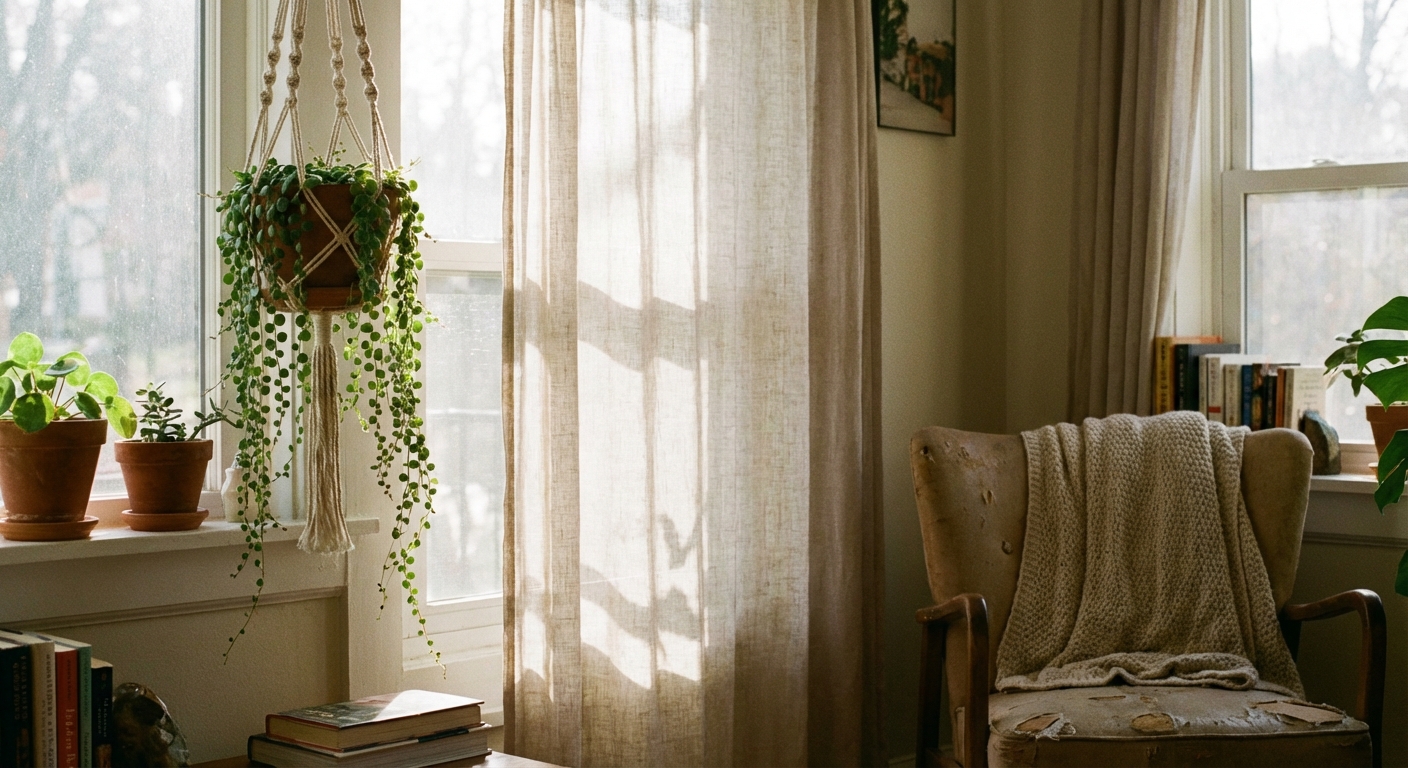
Give String of Turtles bright, indirect light. Think: a few feet back from an east or south window, or in your brightest window with minimal harsh direct sun. A bright north window can be great in the Northern Hemisphere, but in some homes it is simply too dim, so let the plant be your guide.
- Best: Bright, filtered light (sheer curtain is perfect).
- Okay: Medium light, but expect slower growth and longer gaps between leaves.
- Avoid: Hot direct sun, especially afternoon sun. The leaves can bleach or crisp.
Signs your light is off:
- Leggy, stretched strands: Not enough light.
- Leaves paling or looking “washed out”: Too much sun or too much intensity.
- Leaf drop near the soil line: Can be low light plus staying too wet, a cold draft, or simply older leaves aging out.
If you use a grow light, aim for a gentle, consistent setup rather than blasting it. A moderate LED grow light for 10 to 12 hours a day often keeps growth steady and compact. Practical starting point: place the light about 8 to 18 inches (20 to 45 cm) above the plant, then adjust based on growth and leaf color.
Watering
String of Turtles likes a rhythm that is water thoroughly, then let it dry partway. It does not want soggy soil, and it also does not want to sit bone-dry for long stretches. If you are choosing between two mistakes, overwatering is usually the bigger risk for this plant.
When to water
- Let the top 1 to 2 inches of soil dry out.
- Lift the pot. When it feels noticeably lighter, it is usually ready.
- Look at the leaves. Healthy leaves feel slightly firm, not limp.
How to water
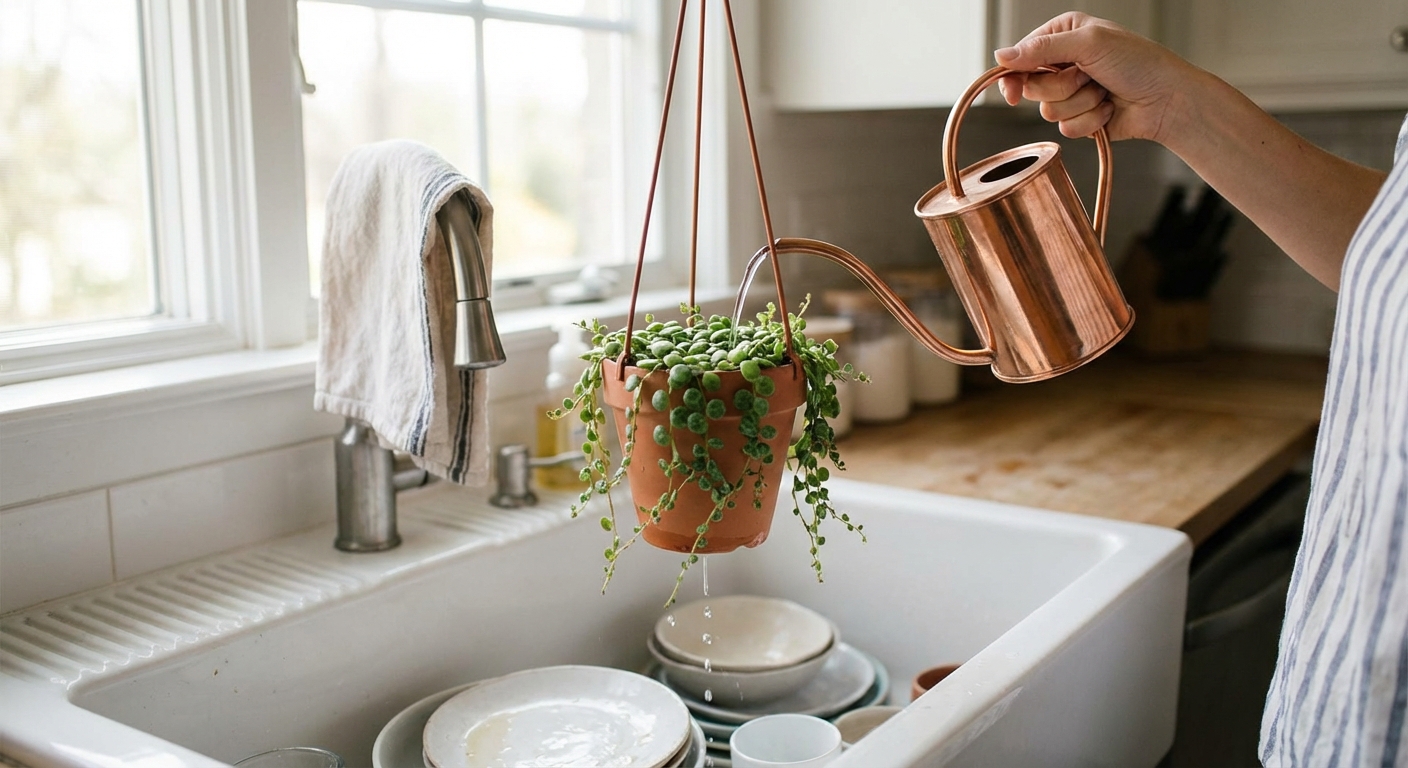
- Water slowly until you see drainage coming out the bottom.
- Let it drain fully. Do not let it sit in a saucer of water.
- Put it back in its spot and leave it alone until the top layer dries again.
Common watering mistakes (and what they look like):
- Overwatering: Yellowing leaves, soft stems near the soil, a musty smell, sudden leaf drop.
- Underwatering: Crispy edges, shriveled leaves, brittle stems, slower growth.
Because the leaves are small, the plant can look fine right up until it isn’t. If you are unsure, check the soil moisture with a finger or a wooden skewer. The goal is “damp below the surface,” not “wet.”
Soil mix
This plant wants oxygen at the roots. Heavy potting soil that stays wet is a fast track to rot, especially in lower light.
My favorite simple mix:
- 2 parts high-quality indoor potting mix
- 1 part perlite or pumice
- 1 part fine orchid bark (optional but wonderful for airflow)
If you prefer a ready-made option, look for a peperomia, epiphyte, or “chunky houseplant” mix that still has smaller particles. Some aroid mixes are great, but many are too coarse for fine peperomia roots. You want airy, not boulder-sized.
Pot choice
- Drainage holes are non-negotiable.
- Terracotta helps if you tend to overwater.
- Plastic works fine if your mix is airy and you water carefully.
- A shallow pot often suits the rooting style and encourages a fuller top.
Humidity and temp
String of Turtles is happiest in average home conditions, with a little extra appreciation for steadier humidity.
- Humidity: Aim for 40 to 60%. It tolerates lower humidity, but growth can slow and leaf edges can crisp in very dry air.
- Temperature: 65 to 80°F (18 to 27°C) is ideal.
- Avoid: Cold drafts, heat vents, and windowsills that get chilly at night.
If your home is dry in winter, try grouping plants together or running a small humidifier nearby. Also, keep the plant out of the direct blast zone of forced-air heat. It dries the tiny leaves faster than you think.
Feeding
String of Turtles is not a heavy feeder. Too much fertilizer can cause weak growth or leaf damage.
- When: Spring through early fall.
- How often: Every 4 to 6 weeks.
- What: A balanced liquid houseplant fertilizer diluted to half strength.
If you repot with fresh mix in spring, you can often skip fertilizer for a month or two.
Pruning for fullness
If your plant trails but looks a little sparse on top, you are not alone. The trick is to encourage new growth at the soil line.
- Pinch back the longest strands right above a leaf node.
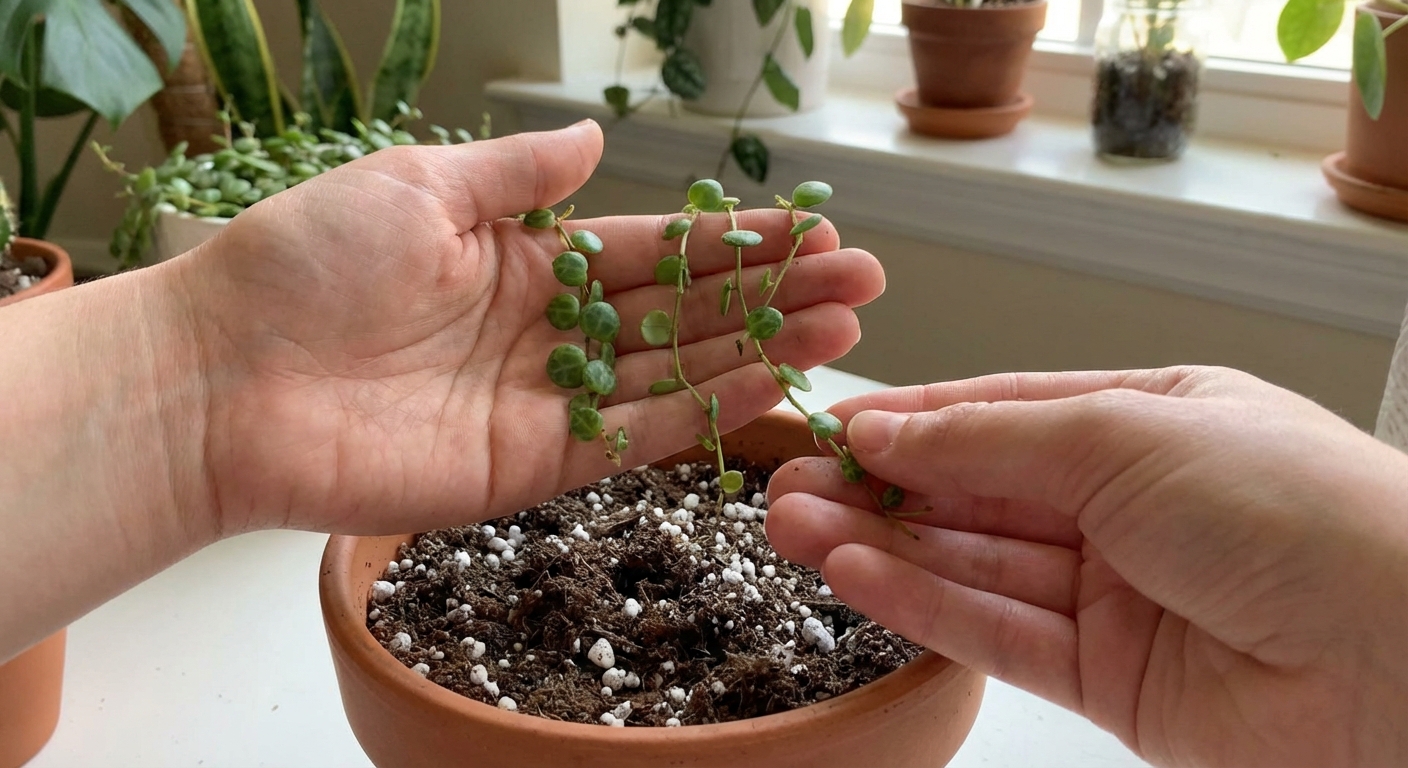
- Lay trimmed stems on top of the soil and lightly press them down. Nodes touching soil often root, thickening the plant.
- Rotate the pot every week or two so one side does not hog the light.
And yes, I talk to mine when I prune. It makes the whole process feel less like “cutting” and more like “helping it branch.”
Propagation
Propagating String of Turtles is wonderfully forgiving, as long as you include nodes. Nodes are the little joints where leaves attach and where new roots form.
What you need
- Clean scissors or snips
- A small pot with airy mix (or a propagation tray)
- Optional: hairpins or bent paperclips to hold stems down
Soil propagation steps
- Choose healthy stems with several leaf pairs. Aim for cuttings 3 to 6 inches long.
- Remove a few leaves near the cut end to expose 1 to 2 nodes.
- Lay the cutting on the soil surface and gently press the exposed nodes into contact with the mix. You do not need to bury it deeply.
- Lightly moisten the soil. Think “damp sponge,” not “rainstorm.”
- Place in bright, indirect light and keep humidity slightly elevated if possible.
- Wait for rooting, often 2 to 8+ weeks depending on warmth, light, and season. Tug very gently. Resistance means roots.
My favorite trick for fuller plants: Propagate directly back into the mother pot. You get more growth without needing a new container.
Water propagation
Sometimes, yes, but it is less reliable than soil for this plant. Thin peperomia stems can rot in water, and tiny leaves do not love being splashed. If you try water propagation, keep only the nodes in water, change water often, and pot up once roots are about 1 inch long.
Repotting
String of Turtles generally prefers being a bit snug. Repot only when you see clear signs it has outgrown its home.
When to repot:
- Roots circling the pot or poking from drainage holes
- Soil drying out unusually fast
- Plant declining despite good care, and the mix has broken down
How: Go up just 1 pot size, refresh with an airy mix, and avoid burying stems too deeply. After repotting, water once and then let it settle. Do not fertilize for a few weeks.
Rot prevention
If String of Turtles has an Achilles’ heel, it is staying too wet for too long. A few small habits make a big difference.
- Do not bury the stems. Keep the crown and nodes near the surface, not packed under wet soil.
- Prioritize airflow. Airy mix, drainage holes, and no constantly wet saucer.
- Match water to light. In lower light or winter, it will use less water. Stretch the intervals.
- If the base is failing, take cuttings. This plant propagates easily, and a few healthy strands can save the whole situation.
Pests
String of Turtles is not a magnet for pests, but it is not immune either. Check the undersides of leaves and along the stems when you water.
- Mealybugs: White cottony clusters at nodes. Remove with a cotton swab dipped in isopropyl alcohol, then follow with insecticidal soap as needed.
- Spider mites: Fine webbing, dusty stippling, and stressed-looking leaves, often in dry air. Rinse the plant, increase humidity a bit, and treat with soap or horticultural oil.
- Fungus gnats: Little flies around the pot, usually from soil staying too wet. Let the top layer dry more, use yellow sticky traps, and consider a BTi treatment if persistent.
Troubleshooting
Leaves turning yellow
- Most common cause: Too much water or soil staying wet too long.
- Fix: Increase light, switch to an airier mix, and let the top layer dry more before watering.
Leaves dropping suddenly
- Possible causes: Overwatering, cold draft, or a recent big change in light.
- Fix: Stabilize conditions, check roots for rot, and take cuttings if the base is failing.
Crispy edges or shriveled leaves
- Possible causes: Underwatering, very dry air, or hot sun.
- Fix: Adjust watering rhythm, move out of direct sun, consider a small humidifier.
Leggy growth
- Cause: Not enough light.
- Fix: Move closer to a bright window or add a grow light, then pinch and propagate to thicken.
Healthy plant signs
- Leaves: Firm, patterned, and not puckered or limp
- Spacing: Shorter gaps between leaves in brighter light, longer gaps in lower light
- Stems: Flexible and trailing, not mushy at the base
- New growth: Small leaf pairs appearing steadily during the growing season
Care checklist
- Light: Bright, indirect (brightest window without harsh sun)
- Water: When top 1 to 2 inches are dry, then water through and drain
- Soil: Airy mix with perlite and optional fine bark
- Pot: Drainage holes, shallow is fine
- Humidity: Average home, ideally 40 to 60%
- Fertilizer: Half strength every 4 to 6 weeks in growing season
- Propagation: Stem cuttings with nodes, best in soil
If you’re coming from String of Pearls or String of Hearts, the biggest mindset shift is this: turtles want airflow and consistency more than they want drought. Give them bright light, a fluffy soil mix, and a gentle watering rhythm, and they will reward you with that slow, steady cascade of tiny patterned leaves.