
String of Hearts Care and Propagation

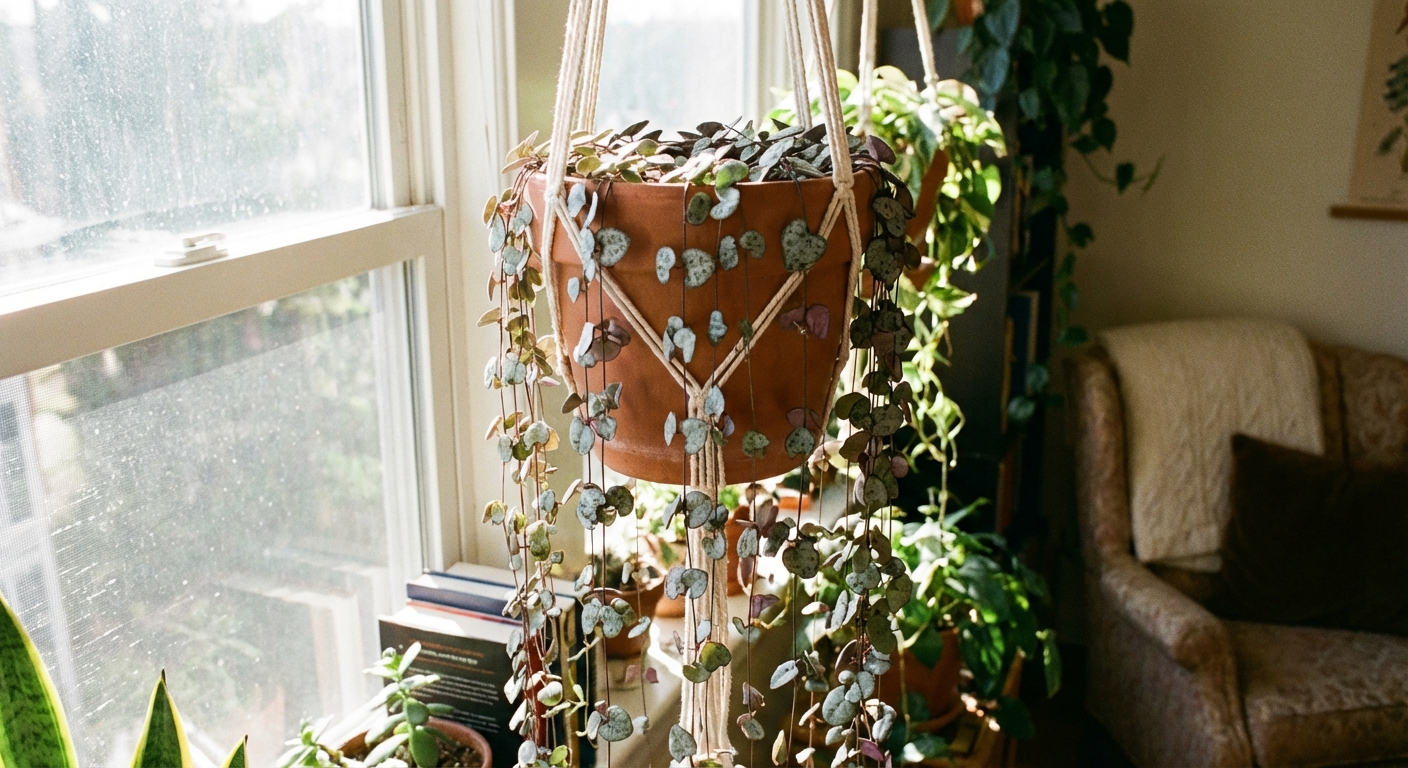
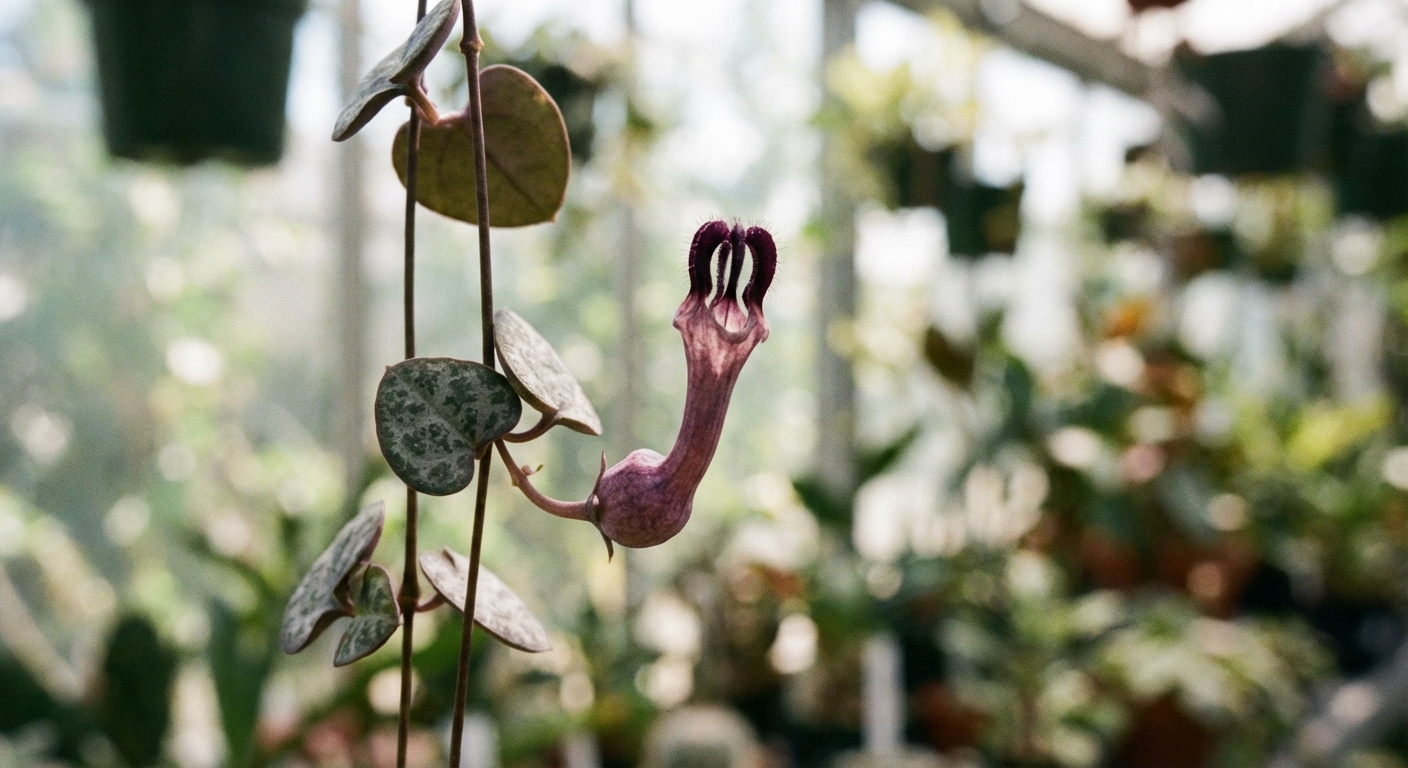
String of Hearts (Ceropegia woodii) is one of those plants that looks delicate but is secretly tough. Give it bright light, a fast-draining potting mix, and a watering rhythm that lets the soil dry, and it will reward you with long, trailing strands of heart-shaped leaves and the occasional little lantern flower that feels like a private garden secret.
I like to think of String of Hearts as a “succulent vine.” It stores moisture in its leaves and tubers, but it still wants consistent light and a pot that never stays soggy. If you have ever been personally victimized by overwatering, you are among friends here.
Name note: You will most often see it sold as Ceropegia woodii. Some shops and older tags may use related names within the group, so if it has heart leaves and trailing vines, you are likely in the right aisle.
Quick care overview
- Light: Bright, indirect light is ideal. Some gentle direct sun is great, think 1 to 3 hours of morning sun.
- Water: Let the mix dry out most of the way, then water thoroughly and drain.
- Soil: Very fast-draining, airy, gritty mix.
- Humidity: Normal home humidity is fine.
- Temperature: Comfortable room temps, protect from cold drafts.
- Growth habit: Trailing vine with tubers at the roots and sometimes little aerial tubers (bulbils) along the stems.
- Pet note: Toxicity info is inconsistent across sources and it is not listed on the ASPCA Toxic and Non-Toxic Plants database as of this writing. Because pets can still chew, vomit, or react to sap, treat it as “not for snacking” and keep it out of reach.
Light: fuller vines, better color
Light is the make-or-break factor for String of Hearts. In lower light it survives, but it tends to stretch, space out its leaves, and look a bit like it is trying to escape your home. In brighter light it grows more compactly, with tighter leaf spacing and stronger coloration.
Best window placements
- East window: Excellent. Bright morning sun is usually gentle enough.
- South or west window: Great with a little distance from the glass, or filtered through a sheer curtain if your sun is intense.
- North window: Often too dim unless it is very bright and unobstructed. Expect slower growth.
If you are short on window light, a simple grow light can make a noticeable difference. Aim it at the top of the pot so new growth stays compact.
Signs your plant wants more light
- Long gaps between leaves (leggy, stretched vines)
- Smaller leaves than usual
- Fading silver patterning or less pink and purple tinting
Clara tip: Rotate the pot every week or two. String of Hearts will lean toward the light, and a simple quarter-turn helps it grow more evenly.
Watering: soak and dry
String of Hearts does not want frequent sips. It wants a deep drink followed by a real dry-down. The leaves and tubers store water, so the plant is much more forgiving of underwatering than overwatering.
When to water
Water when the potting mix is dry at least 2 to 3 inches down, and ideally mostly dry throughout the pot. In a small pot with a gritty mix, that may be every 7 to 14 days in spring and summer and every 2 to 4 weeks in winter. Your home’s light, temperature, and pot size will shift the schedule.
Season note: Expect slower growth in winter. That usually means less water, not a stricter schedule.
How to water well
- Water until it runs freely out of the drainage holes.
- Let it drain completely. Do not leave it sitting in a saucer of water.
- If the mix became bone-dry and hydrophobic, bottom-water for 15 to 25 minutes, then drain.
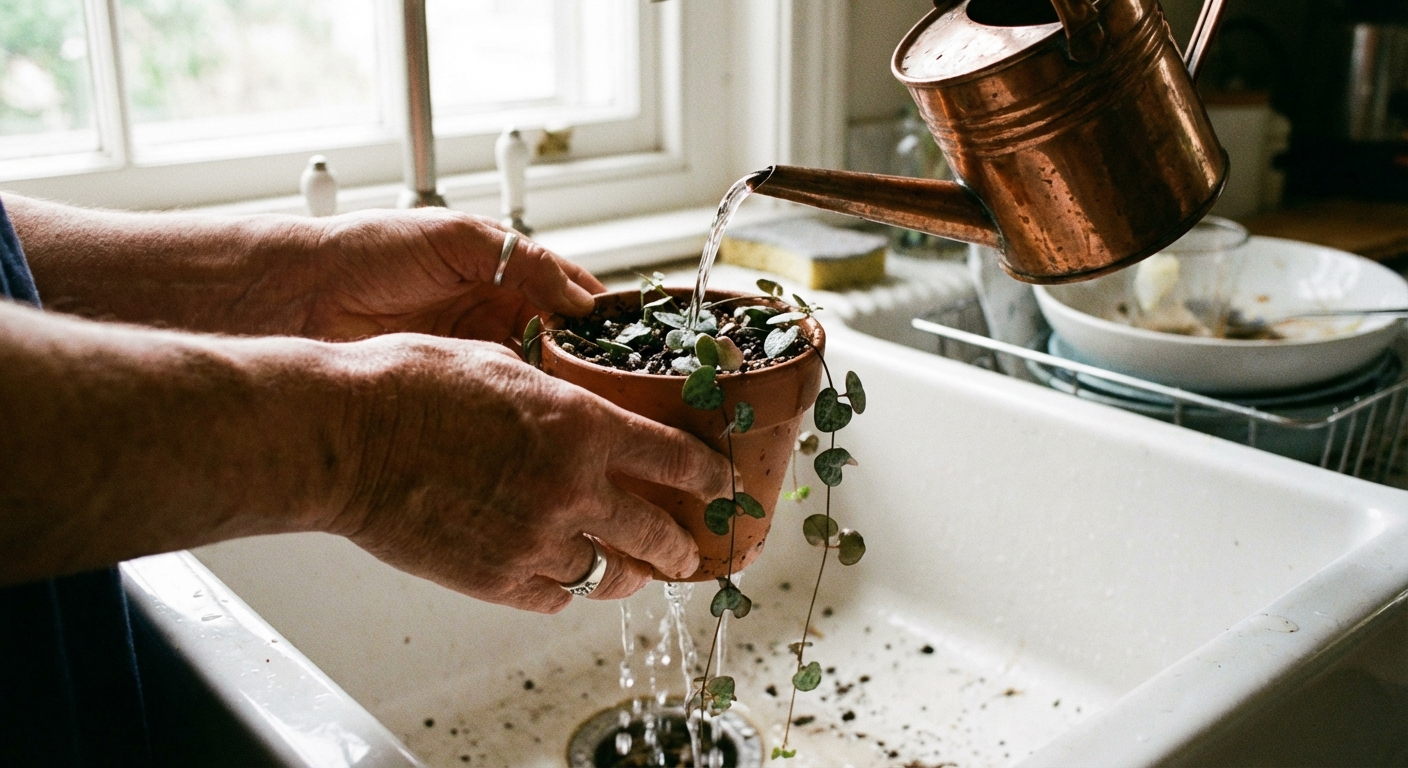
Common mistake: Watering “just a little” every few days. That can keep the upper soil damp, encourage a shallow root zone, and increase rot risk. If you are going to water, water properly, then let it dry.
Soil and potting
Think airy and fast-draining. String of Hearts roots want oxygen and hate staying wet. A standard houseplant mix straight from the bag is usually too dense unless you lighten it.
Easy DIY soil mix
- 1 part potting soil
- 1 part cactus and succulent mix
- 1 part perlite or pumice
If you prefer a simpler blend: take cactus mix and add extra perlite or pumice until it feels chunky and drains quickly.
Pot choice
- Drainage holes are non-negotiable.
- Terracotta is helpful if you tend to overwater, since it breathes and dries faster.
- Shallow pots often work well because the root system is not usually deep.
- Avoid self-watering pots for this one. They keep the mix evenly moist, and String of Hearts prefers a full dry-down.
Repotting timing
Repot every 1 to 2 years, ideally in spring. Move up only 1 pot size, or choose a pot just slightly larger than the root ball. A pot that is too large holds moisture too long, which increases rot risk.
Humidity and temperature
String of Hearts is pretty chill about humidity. Average household humidity is fine. In extremely dry homes, crisping can happen, but it is more common when dry air teams up with underwatering, too much sun, or mineral and salt buildup in the mix.
- Humidity: Aim for typical indoor levels. If you run a humidifier for other plants, it will not complain.
- Temperature: 65 to 80°F is a happy range. Avoid prolonged temps below 55°F.
- Drafts: Keep away from blasting vents and cold window glass in winter.
Fertilizing
This plant does not need heavy feeding. Too much fertilizer can lead to weak, floppy growth.
- In spring and summer, feed once a month with a balanced liquid fertilizer diluted to half strength.
- Skip fertilizing in fall and winter unless your plant is actively growing under strong grow lights.
Pruning and training
If you want a thicker, more lush curtain of hearts, the secret is pruning and replanting cuttings back into the pot. The vines often grow long before they branch, so you have to encourage fullness.
- Snip vines just above a leaf node (the point where leaves attach).
- Use the cuttings to propagate, then tuck them back into the pot once rooted.
- Pin vines on top of the soil with a bent paperclip or hairpin to encourage rooting along the stem.
Propagation
String of Hearts is one of the most satisfying plants to propagate because it gives you multiple ways to win. Below are my favorite methods, including the famous butterfly method, a simple layering trick that feels like plant magic, and the very on-brand tuber method.
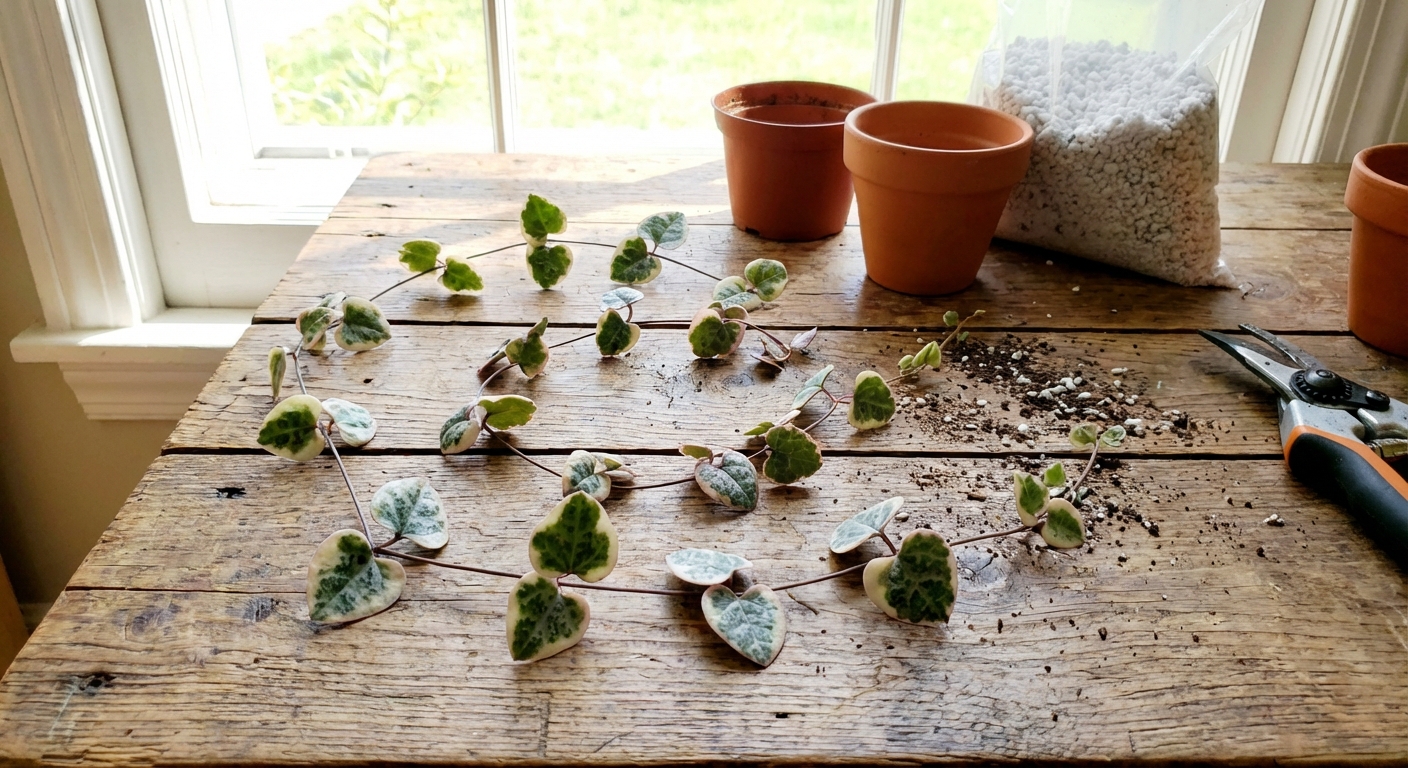
Before you start
- Choose healthy vines with firm leaves.
- Look for nodes. Roots form from nodes, not from the middle of a stem.
- Use clean scissors or snips to reduce rot and infection.
Method 1: Water propagation
Water propagation is great if you like seeing roots form. The key is keeping nodes in the water, not the leaves.
- Cut a vine into sections with 2 to 4 leaves each.
- Remove the lowest pair of leaves so you expose at least one node.
- Place cuttings in a small jar of clean water with the node submerged and leaves above water.
- Set in bright, indirect light. Refresh water every few days or whenever it looks cloudy.
- When roots are about 1 to 2 inches long, pot into a gritty mix.
- Keep the soil lightly moist for the first 1 to 2 weeks, then transition to normal soak-and-dry watering.
Troubleshooting: If the cutting turns mushy, the node stayed too wet or the water was stagnant. Start again with a fresh cutting and change water more often.
Method 2: Butterfly method
The butterfly method uses pairs of leaves with a tiny slice of stem and the node between them. It is called “butterfly” because the two leaves look like wings. This method is amazing for bulk propagation and a thick, fluffy plant.
- Cut the vine into small “butterflies”: two leaves with the node in the middle and about 1/4 to 1/2 inch of stem on each side.
- Fill a shallow tray or small pot with lightly damp sphagnum moss, or a mix of perlite and coco coir.
- Lay each butterfly on top and gently press the node into contact with the medium. Do not bury the leaves.
- Cover loosely with a clear dome or plastic bag to hold humidity, and air it out daily to prevent mold.
- Keep in bright, indirect light and keep the medium just barely moist.
- In 2 to 6 weeks, you should see roots and new growth. Then pot up into your regular gritty mix.
Clara tip: If you see any fuzzy white mold on the moss, increase airflow and reduce moisture. Moss should feel like a wrung-out sponge, not a wet towel.
Method 3: Soil layering
If you want the least fussy propagation, layering is my go-to. You root the vine while it is still attached to the mother plant, so it has a built-in support system.
- Place a small pot of gritty mix next to the mother plant, or use the same pot if there is room on top.
- Lay a section of vine on the soil surface and pin it down so several nodes touch the mix.
- Lightly cover the nodes with a thin sprinkle of mix, leaving leaves exposed.
- Water lightly so the top layer is slightly damp, then let it begin to dry before watering again.
- After 3 to 8 weeks, gently tug. If there is resistance, roots have formed.
- Cut the vine between the rooted section and the mother plant, and you have a new plant.
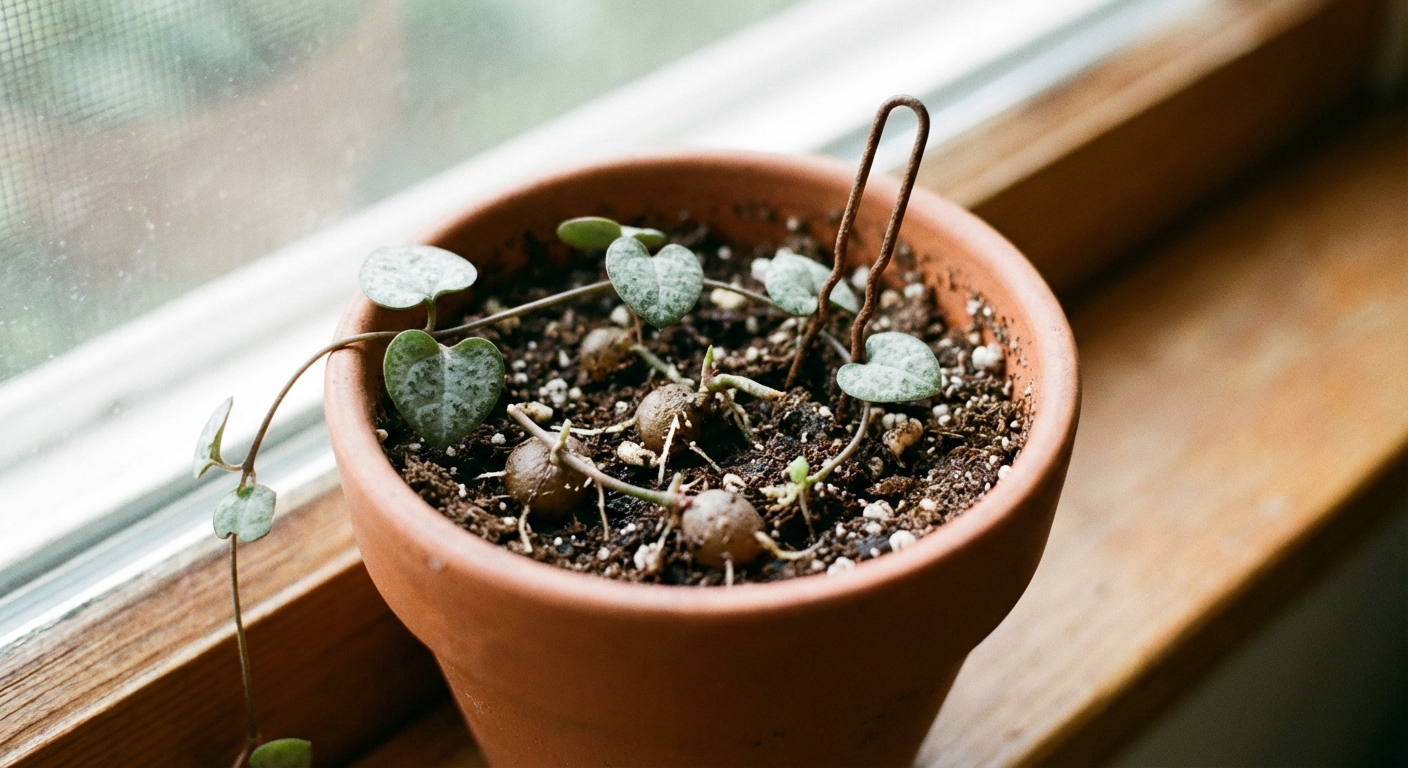
Method 4: Aerial tubers (bulbils)
Those little bead-like tubers that form along the vines are not just cute. They are basically propagation shortcuts.
- Find an aerial tuber on a vine (it looks like a tiny potato or bead on the stem).
- Set the tuber on top of gritty mix and press it gently into contact with the soil. You can pin the vine down so it stays put.
- Keep the top layer slightly moist, not wet, until it roots. Bright, indirect light helps.
- Once you feel it anchor and you see fresh growth, cut it free from the mother vine (optional) and care for it like a normal plant.
Clara tip: This method pairs perfectly with layering. If you already have the vine pinned down, let the tubers do the heavy lifting.
Common problems
Shriveling leaves
Shriveled, thin, or wrinkled leaves usually mean the plant is thirsty. Less commonly, it can also happen when roots are damaged and cannot take up water.
- Most likely cause: Underwatering or the mix drying too long.
- Fix: Water thoroughly, let drain, then check again in a few days. Leaves often plump back up.
- If watering does not help: Slide the plant from the pot and check roots. Healthy roots are pale and firm. Rotten roots are brown, black, or mushy. Trim rot, repot into fresh gritty mix, and water lightly until recovery.
Leggy growth
This is almost always a light issue. String of Hearts stretches when it is trying to find brighter conditions.
- Cause: Not enough light, or light coming from only one direction.
- Fix: Move closer to a bright window or add a grow light. Then prune and propagate the long vines to fill the pot.
Yellow leaves
- Common cause: Overwatering or soil staying wet too long.
- Fix: Let the mix dry more between waterings, switch to a grittier mix, and confirm your pot has drainage holes.
Leaves falling off
A little leaf drop during seasonal changes can happen, but lots of leaf loss is your plant asking for help.
- If stems are soft and leaves drop easily: Overwatering or rot. Inspect roots and repot.
- If stems are dry and brittle: Underwatering or extreme dry-down. Rehydrate with a deep watering, then watch your timing going forward.
- If it happens after moving locations: Light and temperature shock. Give it a couple of weeks to adjust.
Pests (mealybugs and spider mites)
These pests love cozy indoor plants, especially when air is dry and plants are stressed.
- Inspect nodes and the undersides of leaves.
- For mealybugs, dab with a cotton swab dipped in rubbing alcohol, then recheck weekly.
- For spider mites, rinse the plant thoroughly (especially undersides), then treat with insecticidal soap or horticultural oil. Repeat every 5 to 7 days for 3 to 4 rounds.
How to get flowers
String of Hearts flowers look like tiny purple-and-pink lanterns. You cannot force blooms, but you can set the stage.
- Provide strong light, including a little direct sun.
- Let the mix dry between waterings.
- Keep the plant slightly snug in its pot. Constant repotting can delay flowering.
- Be patient. Mature plants bloom more reliably.
Simple routine
If you want a no-fuss plan to follow, here is the rhythm I use at home.
- Weekly: Check soil dryness with a finger or skewer, rotate the pot, and glance for pests.
- When dry: Deep water and drain fully.
- Monthly in spring and summer: Fertilize at half strength.
- Seasonally: Prune and propagate to thicken the pot, especially after winter.
And if your String of Hearts ever looks a little scraggly, do not take it personally. This plant is wonderfully responsive. A brighter window, a grittier mix, and a few well-placed cuttings (or a sneaky little tuber) can turn it around fast.