
String of Bananas Care and Propagation

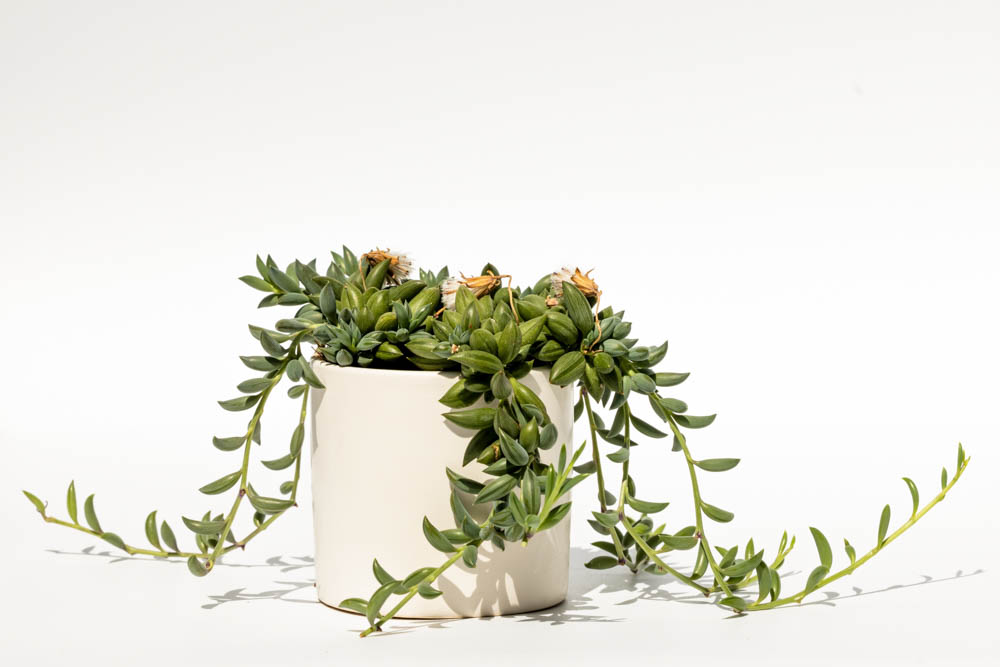
String of Bananas is one of those plants that makes people lean in for a closer look. Those plump little “bananas” spill over the edge of a pot like a succulent curtain, and somehow it looks both playful and tidy at the same time. If you have ever felt intimidated by trailing succulents, let me gently take your hand here. This one is forgiving as long as you give it two things: bright light and a chance to dry between drinks.
Botanical name: Curio radicans (often sold under its older name, Senecio radicans). It is a South African succulent that stores water in its leaves, so soggy soil is the main enemy. Everything else is negotiable.

Quick care checklist
- Light: Bright indirect light with a few hours of gentle sun is ideal
- Water: Soak, then let the pot dry out almost completely
- Soil: Fast-draining cactus or succulent mix with extra grit
- Pot: Drainage hole required, shallow pots work beautifully
- Growth: Trailing, fast in bright light, slower in lower light
- Pet safety: Consider it toxic if ingested for pets and people
Light: how to keep the “bananas” plump
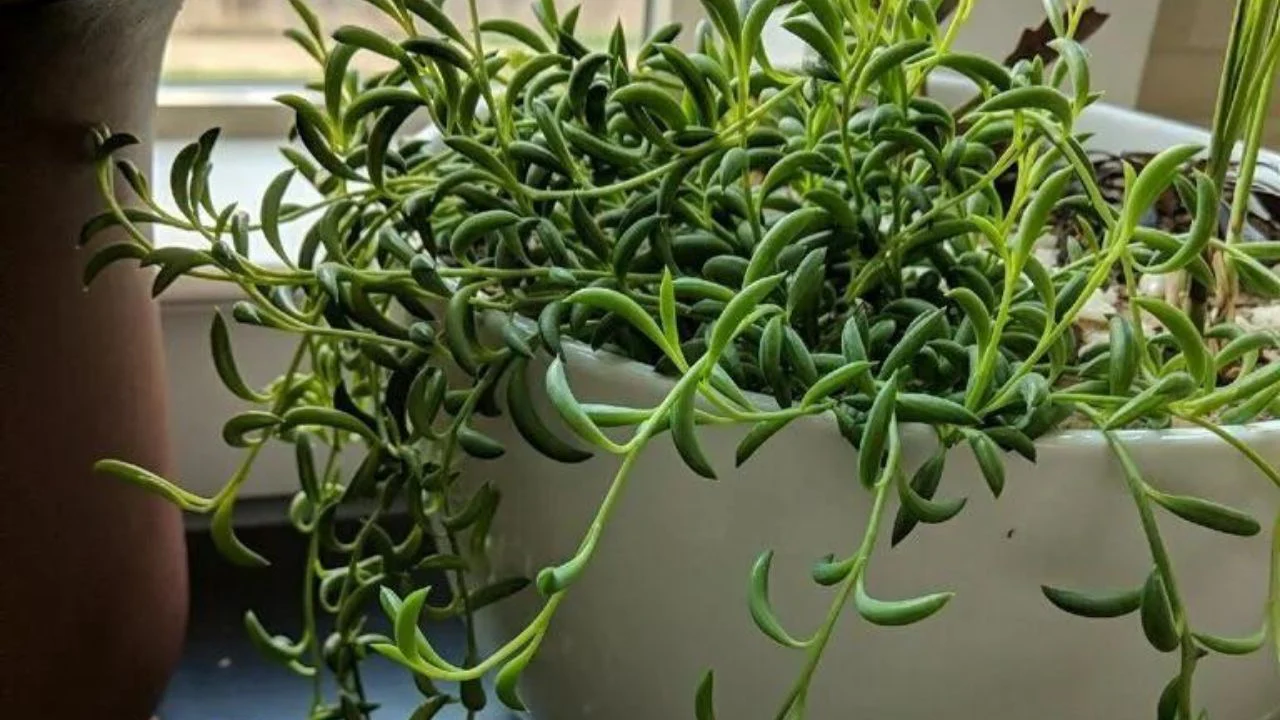
Light is what makes String of Bananas look like String of Bananas. In the right spot, the leaves stay fat, close together, and evenly spaced. In dim light, the stems stretch and the leaves space out, which we call leggy growth.
Best indoor light
- Near an east or south window is usually the sweet spot.
- Give it bright indirect light all day, plus 1 to 3 hours of mild direct sun if possible.
- If you move it into stronger sun, do it gradually over a week or two to avoid sun stress.
Signs your light is off
- Too little light: long bare stretches of stem, smaller leaves, slow growth, the plant looks “stringy.”
- Too much harsh sun: bleached patches, crispy tips, or a slightly scorched look on the side facing the window.
If your home is low light, a small grow light can be a total confidence booster. Aim for a consistent daily schedule and keep the light close enough that the plant does not have to reach.
Watering: the soak and dry rhythm
This is where most beginner heartbreak happens. String of Bananas wants thorough watering, but it also wants a real drying period afterward. Think desert rainstorm, then a long wait.
When to water
- Wait until the soil is dry at least 2 inches down, and ideally mostly dry throughout the pot.
- The “bananas” may look slightly less firm when it is ready for water, not shriveled into raisins, just a bit softer.
How to water (step-by-step)
- Take the pot to the sink or a tray.
- Water slowly until it runs freely from the drainage hole.
- Let it drain completely. No sitting in a saucer of water.
- Put it back in bright light and wait for the next dry cycle.
Seasonal watering tips
- Spring and summer: It may need water every 1 to 3 weeks depending on light and temperature.
- Fall and winter: Growth slows, so watering often drops to every 3 to 5 weeks indoors.
My simplest rule: if you are unsure, wait a few days. Underwatering is easier to correct than rot.
Soil and potting: fast drainage is everything
String of Bananas is happiest in gritty soil that dries quickly. If the mix stays wet for days, roots struggle to breathe and rot can creep in.
The best soil mix
- Start with a cactus or succulent mix.
- Improve it with pumice or perlite for extra airflow and faster drainage.
- A good home blend is roughly 2 parts succulent mix to 1 part pumice or perlite.
Pot choice
- Drainage hole required. Always.
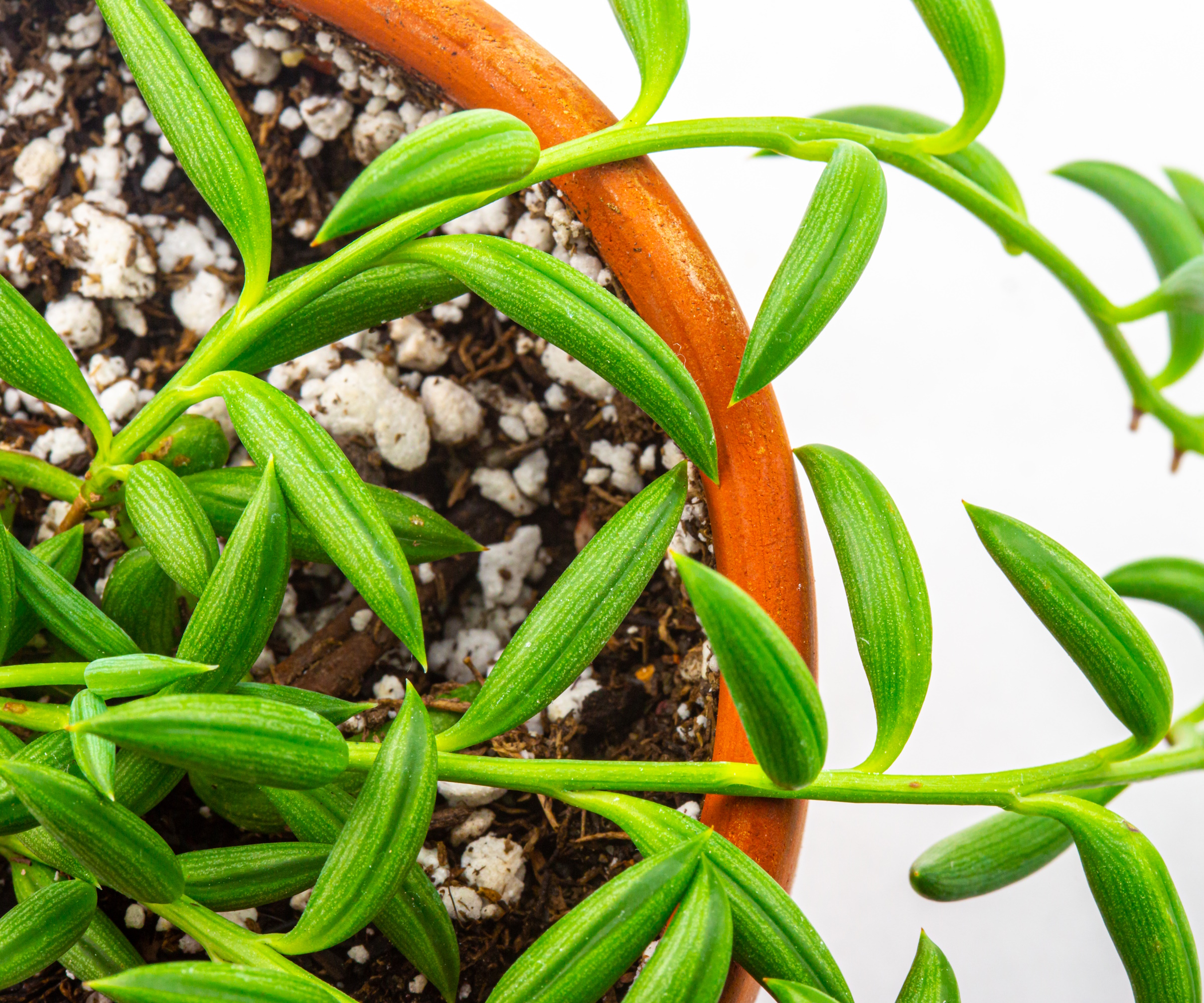
- Terracotta helps the mix dry faster, especially in humid homes.
- Shallow, wide pots are great because the roots are not trying to stay wet in a deep column of soil.
Repot only when it is truly crowded or the soil has broken down. Usually every 2 to 3 years is plenty.
Temperature, humidity, and fertilizer
Temperature
Average household temperatures are perfect. Keep it away from cold drafts and do not let it sit against a freezing window in winter. If you grow it outdoors seasonally, protect it from frost.
Humidity
Normal indoor humidity is fine. This plant is not asking for a humidifier or a misting routine. In fact, consistently damp conditions can invite problems.
Fertilizer
String of Bananas does not need much feeding. If you want to encourage growth in spring and summer:
- Use a diluted succulent fertilizer at about half strength.
- Feed monthly during active growth, then stop in fall and winter.
Pruning and training for a fuller trail
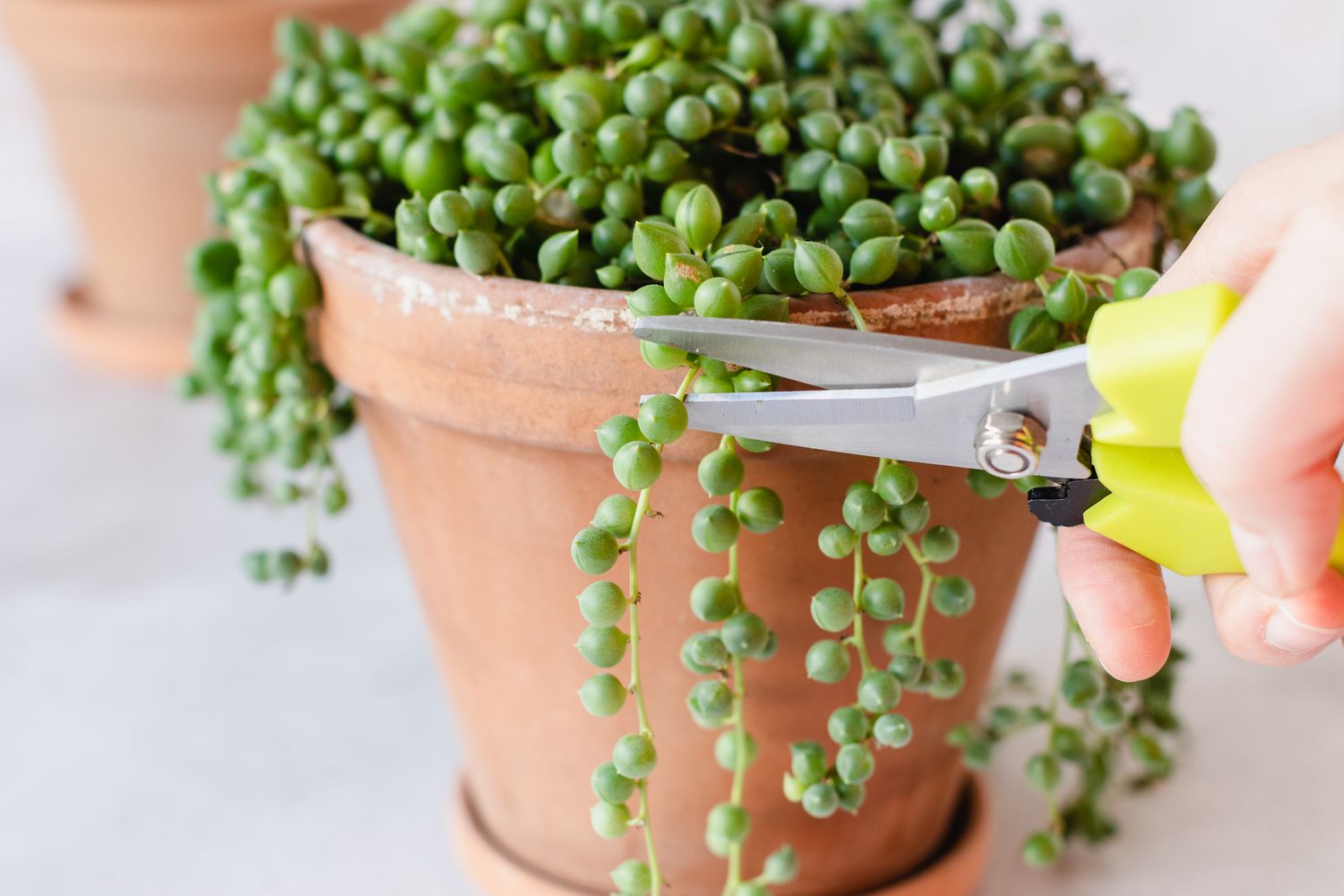
If you want a thick, lush “waterfall” instead of a few long strands, pruning is your best friend. And it is not mean, I promise. Succulents respond beautifully to a little haircut.
How to prune
- Use clean scissors or snips.
- Trim back long, sparse vines to just above a leaf node.
- Save the cut pieces for propagation.
Pinching back also encourages branching near the top of the pot, which is how you get that full, planted look.
Common problems and how to fix them
Leggy growth (stretched stems)
What it looks like: long vines with big gaps between leaves, “bald” sections near the soil line.
Why it happens: not enough light, sometimes paired with too much water.
- Move it to brighter light or add a grow light.
- Prune back legginess and propagate the cuttings to thicken the pot.
- Check your watering rhythm. Make sure the soil is drying properly.
Leaf drop
What it looks like: bananas falling off when you bump the plant, or dropping in clusters.
Common causes:
- Overwatering: leaves can detach easily as stems soften.
- Underwatering: leaves may shrivel and drop as the plant sacrifices older growth.
- Sudden change: moving from low light to strong sun too quickly, or temperature swings.
Fix: Inspect the stems near the soil line. If they feel firm and healthy, adjust water and light and be patient. If stems feel mushy, skip down to the rot section.
Wrinkled or deflated “bananas”
Wrinkling usually means the plant is thirsty or the roots are not working well. If the soil is bone dry, water thoroughly. If the soil is damp and it is still wrinkled, the roots may be compromised and you should check for rot.
Root rot (the big one)
Signs: mushy stems, blackened base, sour smell, sudden leaf drop with limp vines.
What to do:
- Unpot the plant and remove all wet soil.
- Trim off any black or mushy roots and stems.
- Let healthy cut ends dry and callus for 24 to 48 hours.
- Repot into fresh, dry, gritty mix and wait several days before watering.
- Propagate healthy sections as insurance.
Propagation: String of Bananas from stem cuttings
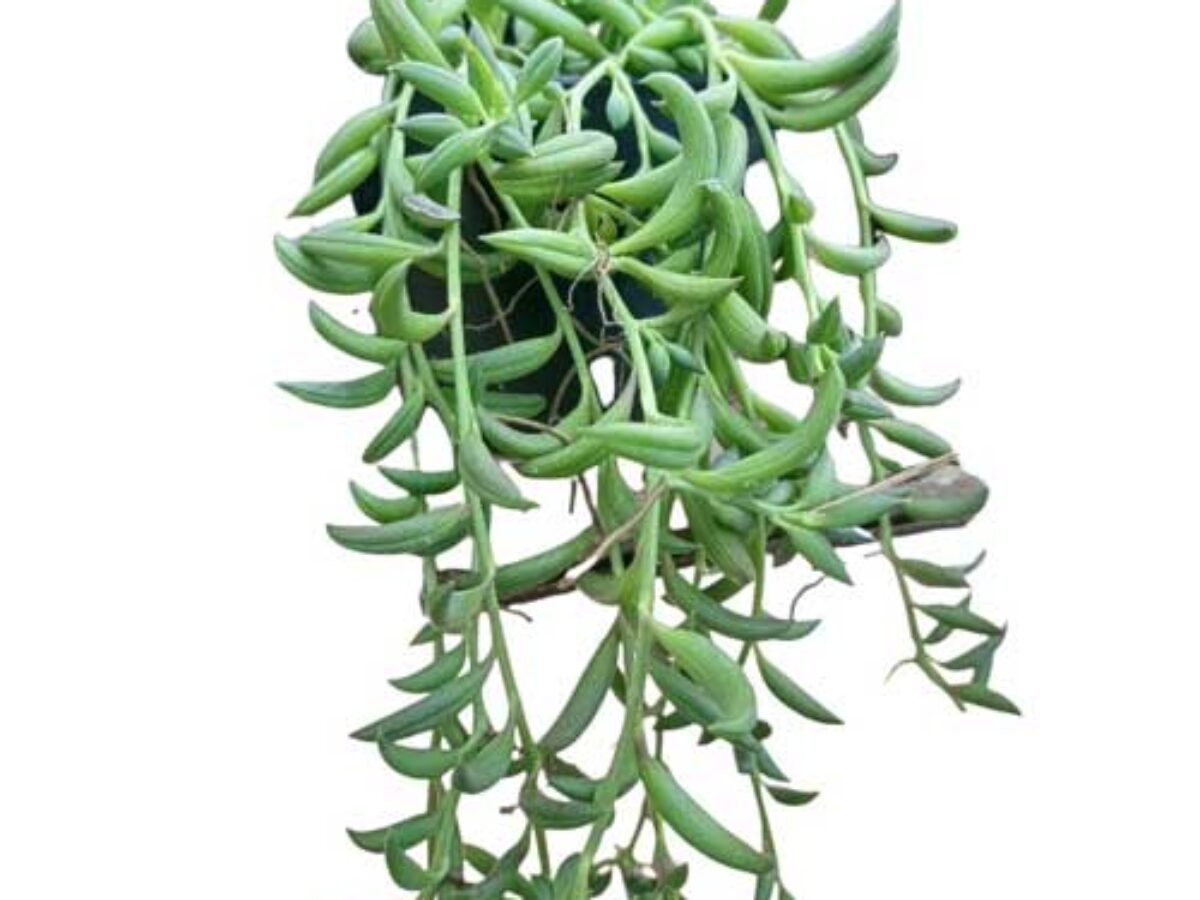
This plant is one of my favorite “confidence builders” because it propagates so easily. You can turn one pot into two, or use cuttings to fill in bald spots at the crown.
Best time to propagate
Spring through summer is ideal, when the plant is naturally growing and rooting faster. You can still propagate in winter indoors, it just takes longer.
What you need
- Clean scissors or snips
- A small pot with a drainage hole
- Gritty succulent mix
- (Optional) a few bobby pins or bent paper clips to hold cuttings in place
Step-by-step: soil propagation
- Take a cutting that is 4 to 8 inches long, with several healthy leaf nodes.
- Remove a few leaves from the bottom inch or two so nodes are exposed.
- Let it callus in a dry spot for 24 to 48 hours.
- Lay the cutting on top of soil and gently press the bare nodes into the mix. You can coil the vine in a circle to root multiple nodes in one pot.
- Wait before watering. Give it about 3 to 5 days, then water lightly.
- Keep in bright indirect light and water sparingly until you feel resistance when you tug gently, usually in 2 to 4 weeks.
Once rooted, switch to the normal soak and dry watering routine.
Can you propagate in water?
Yes, but it is not my first choice for this plant. Water rooting can work, yet those water-grown roots often struggle when moved to soil. If you do it anyway, keep only the nodes in water, change water regularly, and transplant as soon as roots are an inch or two long.
How to make a pot look fuller fast
If your plant is healthy but looks a little thin, you do not need to buy another. You can “layer” vines right back into the same pot.
- Choose a few longer trails.
- Coil them on top of the soil surface.
- Pin nodes down so they touch the soil.
- Water lightly and keep in bright light.
Those pinned nodes often root and create new growth points, which is the secret to that thick, plush look.
FAQs
How fast does String of Bananas grow?
In bright light during spring and summer, it can grow noticeably month to month. In lower light or winter conditions, growth slows and spacing between leaves increases.
Why are my bananas turning yellow?
Yellowing often points to overwatering or slow drying soil. Check drainage, reduce watering frequency, and make sure it is getting enough light to use the water you give it.
Is String of Bananas safe for cats and dogs?
No. Like many Curio and Senecio relatives, it is considered toxic if chewed or ingested. If you have curious pets, place it up high or choose a pet-safer plant.
Does it flower indoors?
It can. Given strong light and a stable routine, it may produce small, pale flowers with a cinnamon-like scent. Indoors, flowering is more occasional than guaranteed.
A calm ending, plus one gentle nudge
If you remember nothing else, remember this: bright light and dry soil between waterings. Everything gets easier from there. And if your first attempt is a little wonky, welcome to the club. Plants teach by doing.
If you want, send me the details of your setup like window direction, pot type, and how often you water, and I can help you fine-tune your routine so those little bananas stay plump and happy.