
Staghorn Fern Care and Mounting

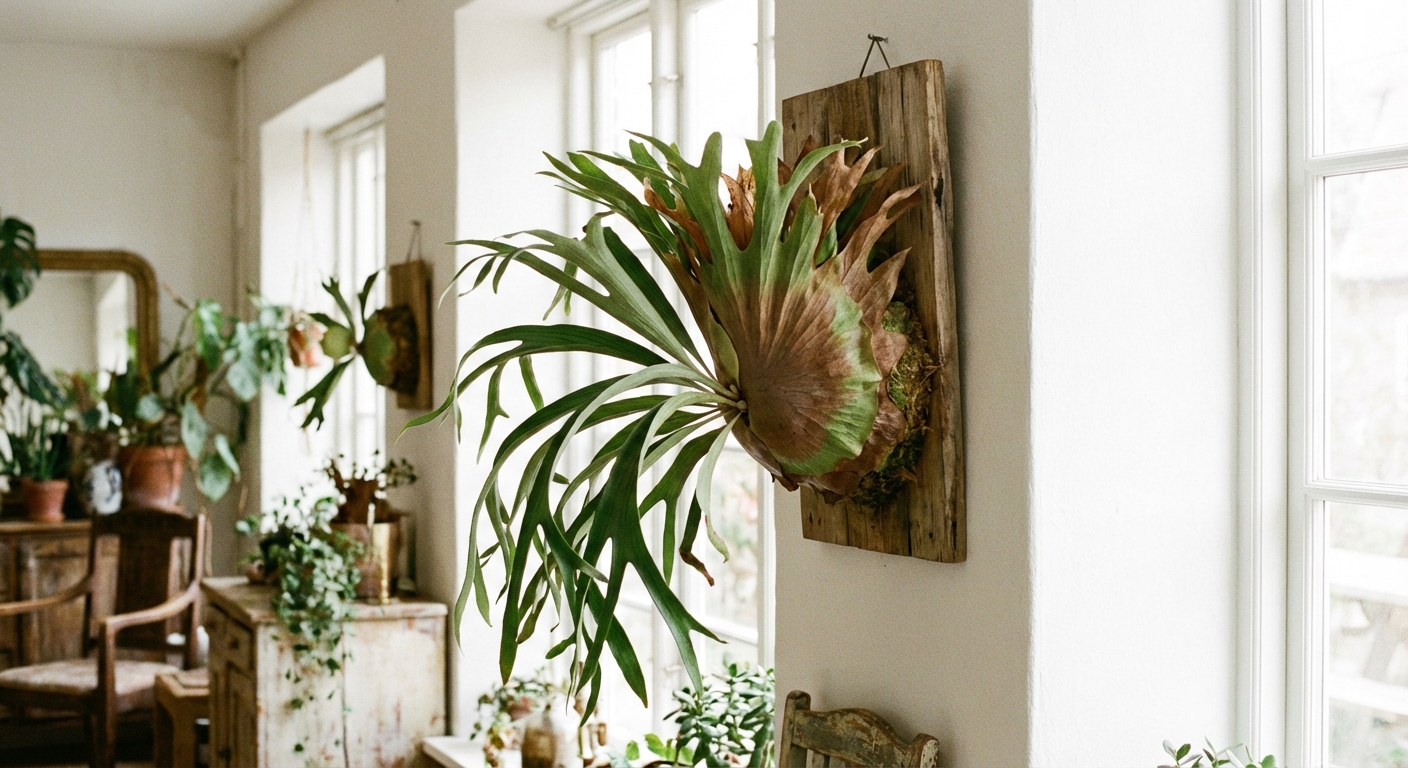
Staghorn ferns (Platycerium) are the houseplants that make people stop mid-sentence and say, “Wait, is that plant growing on wood?” Yes. Yes it is. And once you understand what those funky fronds are doing, staghorns become surprisingly easy to care for. They do not want a pot of soggy soil. They want bright, gentle light, airflow, and a watering routine that feels more like a spa soak than a sprinkle.
This page will walk you through staghorn fern care indoors and outdoors, plus exactly how to mount one on a board or grow it in a hanging basket without stressing the plant or your confidence.
Meet the fronds
Staghorn ferns grow two different kinds of fronds, and knowing the difference solves about 80 percent of new owner panic.
Shield fronds (basal fronds)
- Job: Protect the roots and “catch” water and nutrients in nature.
- Look: Rounder, flatter fronds that hug the mount or basket.
- Normal aging: They often turn tan or brown and papery with time. That does not automatically mean the plant is dying.
- Important: Do not peel them off. Those layers are part of the plant’s protective system.
Antler fronds
- Job: Photosynthesis, and in many common species, spore production.
- Look: The dramatic “antlers” that fork and cascade outward.
- Care note: These are what you watch for thirst and sun stress.
You may also notice a silvery, velvety coating on the fronds. Those tiny hairs help the fern manage moisture. Try not to rub them off when handling.
Light
Staghorn ferns love bright, indirect light. Think “under a canopy” rather than “in a spotlight.”
- Indoors: Near an east window is often perfect. South or west windows can work if you use a sheer curtain or keep the fern a few feet back.
- Outdoors: Bright shade is ideal. Morning sun is usually fine. Hot afternoon sun can scorch fronds quickly.
- Too little light: Slow growth, smaller antler fronds, and a plant that stays damp too long after watering.
- Too much sun: Bleaching, crispy edges, or patchy tan spots on antler fronds.
Watering (soak method)
If you take one tip and run with it, make it this: staghorn ferns prefer a thorough soak, then time to dry. Little daily sips tend to leave the mount damp and the center unhappy.
How to water a mounted staghorn
- Lift the mount off the wall.
- Soak the root area in a sink, tub, or bucket for 10 to 20 minutes. Keep the wood mostly above water if possible, and aim to submerge the moss/root pad.
- Drain well. Let it drip for several minutes.
- Return to its spot only after it is no longer actively dripping.
How often to soak
- Typical indoors: Every 7 to 14 days, depending on light, temperature, and humidity.
- Warm, bright, dry conditions: Closer to weekly.
- Cooler, dimmer months: Often every 2 weeks or even a bit longer.
My favorite “is it time?” test is to touch the moss or root pad behind the shield fronds. If it feels dry and lightweight, soak. If it still feels cool and slightly damp, wait.
How dry is “dry enough”?
After a soak, the moss pad should start trending from wet to just-damp within about 1 to 3 days (faster outdoors, slower in cool rooms). If it stays wet for many days, you likely need more airflow, brighter light, a looser moss pad, or a longer gap between waterings.
Underwatering vs overwatering
- Usually underwatering: Antler fronds look limp or slightly curled, tips crisp, mount feels very light, moss is dry all the way through.
- Usually overwatering: Base stays cool and soggy, shield area smells sour, black or mushy patches near the crown, fronds yellow while the mount never really dries.
Hanging basket watering
If your staghorn is in a basket (often lined with sphagnum), you can water by:
- Soaking: Lower the basket into a tub for 10 to 15 minutes, then let it drain.
- Drenching: Water thoroughly until it runs out, repeating once more to fully wet the moss. Then drain well.
Water quality
If you have hard water, the moss can slowly collect minerals. Rainwater, distilled, or filtered water is often gentler. If you notice crusty buildup on the moss or shield area, do an occasional longer soak with clean water and let it drain thoroughly.
Humidity and airflow
Staghorns appreciate moderate to higher humidity, but they also need airflow so the base dries between waterings.
- Great humidity range: Roughly 40 to 60 percent. Higher can work with warm temps and good airflow.
- In very humid, cool conditions: Be a little cautious. High humidity plus low temperatures and slow drying can invite rot or fungal issues.
- If your home is dry: Group plants, run a humidifier nearby, or hang the fern in a bathroom with bright light.
- Avoid: Constant misting in low-airflow rooms. It can encourage rot at the base.
Mounting on a board
Mounting looks intimidating, but it is basically “secure the root ball to a surface with moisture-holding material.” Your fern is not judging your craftsmanship, I promise.
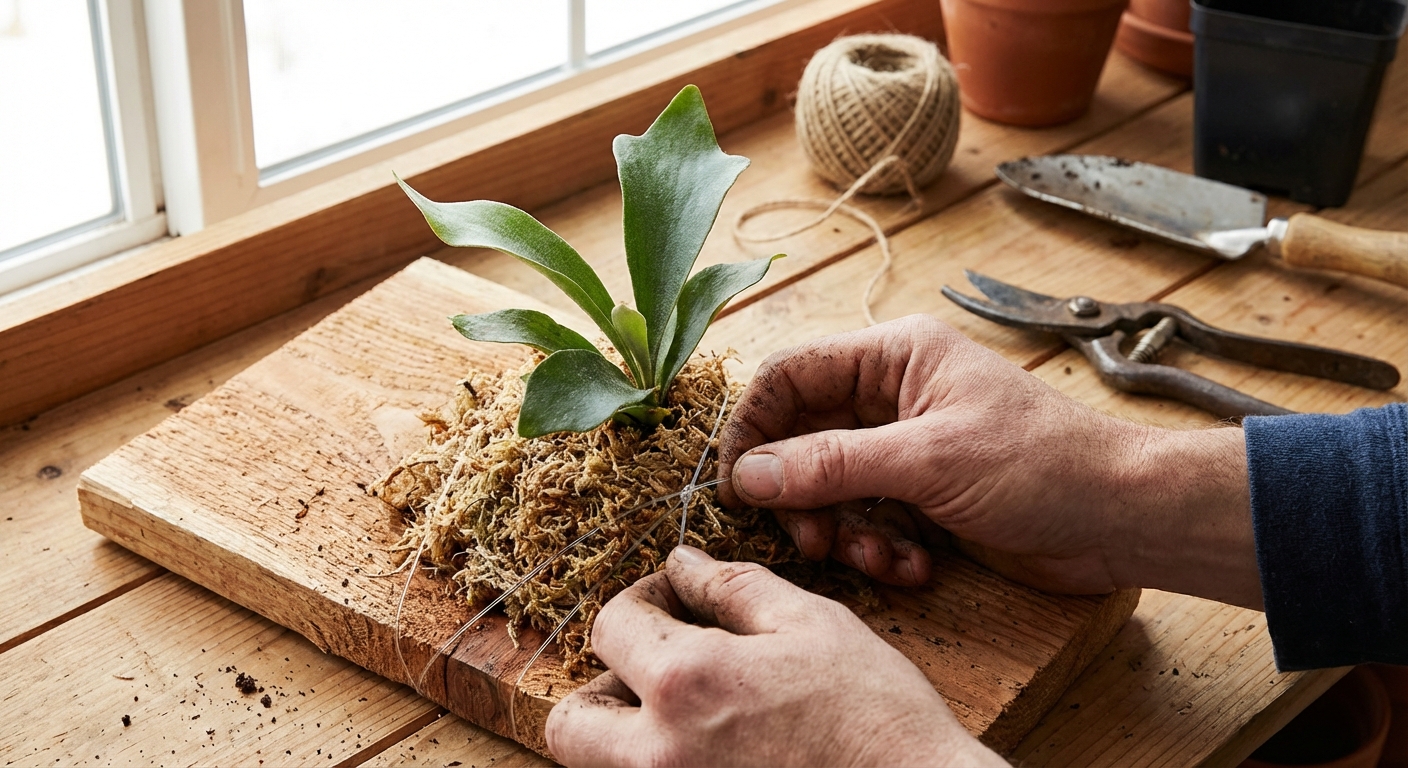
What you need
- Untreated rot-resistant board (cedar, redwood) or cork bark
- Long-fiber sphagnum moss (rinsed and rehydrated)
- Fishing line, coated wire, or soft twine (something that will not cut into the plant)
- Screws or a hanging hook on the back of the board
- Optional: a little orchid bark mixed into the moss for extra airflow
Step-by-step mounting
- Soak the moss for 10 minutes, then squeeze until damp, not dripping.
- Prepare the fern. If it is in a pot, gently remove it and tease away excess potting media. Keep the root mass intact.
- Create a moss pad on the board where the fern will sit.
- Position the fern with the shield frond side against the moss pad. The growing point should face outward and upward.
- Add more moss around the root mass like a nest.
- Secure it by wrapping fishing line or twine around the board, crossing over the moss and root area. Keep it snug but not strangling.
- Tie it off on the back of the board: run the line to a screw, staple, or small eye hook, then knot it tightly (a double knot works well). Trim the tail. If you used twine, you can also tie it off around the hanging hardware.
- Hang it in bright, indirect light, then water with a soak once the moss dries down.
Note: Your fern may look a bit like it is wearing a moss scarf at first. That is normal. As new shield fronds grow, they will cover the mechanics and the whole mount will look more natural.
Quick safety tip: Mounted staghorns get heavy over time, especially after watering. Use wall anchors or a stud, and choose hardware rated for more than you think you need.
Outdoor care
In warm climates, staghorns can live outdoors year-round and get huge. Outdoors, the main differences are faster drying, more airflow, and more seasonal weather shifts.
- Temperature: Many commonly grown staghorns (like Platycerium bifurcatum) prefer staying above about 50°F (10°C). Some tolerate brief dips if kept on the dry side, but cold plus wet is trouble. If you are unsure, bring it in when nights get chilly.
- Placement: Under a patio roof, in bright shade, or beneath trees where it gets dappled light.
- Watering: Expect to soak or drench more often in summer heat. Always let it dry somewhat between waterings.
- Rain: Natural rain can be great, but avoid spots where it stays drenched for days.
Fertilizer
Staghorns are not heavy feeders, but they appreciate steady, gentle nutrition during active growth.
- Best approach: A balanced liquid fertilizer at 1/4 strength every 4 to 6 weeks in spring and summer.
- Slow-release option: A small amount of slow-release fertilizer designed for epiphytes or houseplants can work, used sparingly.
- In fall and winter: Reduce or pause feeding, especially indoors with lower light.
- Avoid: Overfertilizing. It can burn fronds and create weak, floppy growth.
If you like organic methods, look for gentle options like fish emulsion or seaweed extract, diluted well. Use them when you can give the plant good airflow afterward.
Potting media
Staghorn ferns are epiphytes, meaning they naturally grow on trees, not in dense ground soil. That is why mounting works so well.
If you grow one in a basket, aim for a loose, airy mix that holds moisture but does not stay soggy. Common ingredients include long-fiber sphagnum, orchid bark, and a little perlite. The goal is roots that can breathe.
Pruning and upkeep
- Do not remove shield fronds just because they turn brown. They are supposed to age that way.
- Remove antler fronds only if they are fully dead, mushy, or badly damaged. Use clean snips and cut close to the base without disturbing the shield fronds.
- Dust gently if needed, but avoid scrubbing that natural fuzzy coating.
Troubleshooting
Brown shield fronds
Often normal. If the plant is still making healthy green antler fronds, let the shields be.
Black, mushy base or a sour smell
Usually rot from staying wet too long. Increase airflow, lengthen time between soaks, and make sure it drains thoroughly. If the moss pad is compacted and swampy, remounting into fresh, airy moss may be necessary.
Crispy edges on antler fronds
Often too much sun or too little water. Check light first, then adjust watering frequency.
Yellowing fronds
Can be low light, inconsistent watering, or hunger. Confirm it is drying between soaks, then consider a light feeding during the growing season.
Scale insects or mealybugs
Look along the undersides and at the base where fronds meet. For small infestations, mechanical removal is your friend: dab pests with a cotton swab dipped in isopropyl alcohol, then wipe gently. Insecticidal soap can also work. Horticultural oil works too, but it can mark fronds and disrupt those protective hairs, so spot-test first and avoid applying in bright sun. Repeat weekly as needed, and avoid saturating the crown.
Quick checklist
- Light: Bright, indirect. Outdoor bright shade.
- Water: Soak 10 to 20 minutes, then drain well. Repeat when the moss/root pad feels dry.
- Humidity: Moderate to high, with good airflow.
- Fertilizer: Balanced, diluted, every 4 to 6 weeks in spring and summer.
- Do not: Peel off shield fronds or keep the base constantly wet.
If you are new to staghorns, start by mastering the soak-and-dry rhythm. Once you get that cadence, these ferns settle in and reward you with steady, sculptural growth that feels like living wall art.