
Snake Plant Care


Snake plants are the definition of steady. They do not faint when you miss a watering. They do not complain about a less-than-sunny corner. And they keep their sculptural posture through seasons when other houseplants throw tantrums.
Botanically, many plants once labeled Sansevieria are now classified under Dracaena (you will still see “Sansevieria” everywhere, and that is totally fine). Common types include Sansevieria (or Dracaena) trifasciata (the classic upright sword leaves), ‘Laurentii’ (yellow-edged), ‘Moonshine’ (silvery), and the chunky, fan-shaped ‘Hahnii’ and ‘Cylindrica’ forms.
Why snake plants are so loved
- Extreme hardiness: They store water in thick leaves and tolerate dry indoor air.
- Wide light tolerance: They can survive in low light and thrive in brighter spots.
- Air-purifying reputation: Snake plants have been studied for their ability to remove certain VOCs in controlled settings. In real homes, ventilation and the number of plants matter more, but it is still a lovely bonus to grow a tough plant that contributes to a healthier-feeling space.
- Slow and tidy growth: Less pruning, less chaos, more calm.
One quick safety note: snake plants are mildly toxic if chewed (saponins), so place them up high if you have curious pets or toddlers who taste-test greenery.
Light: from low to bright
Snake plants are famous for “low light tolerance,” but here is the truth I tell my friends at the nursery: they tolerate low light, but they look their best with more.
Best light for strong growth
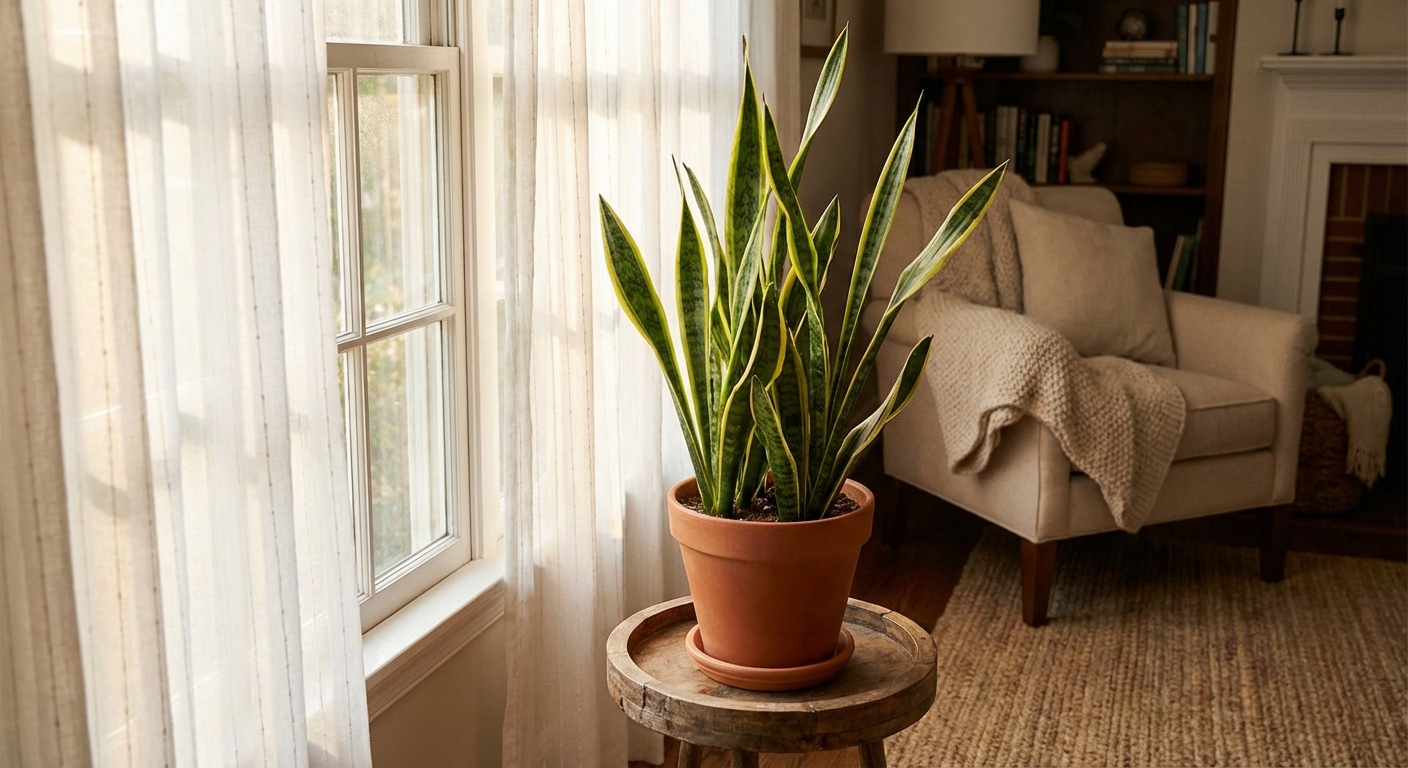
- Bright, indirect light: A few feet back from an east or south window, or near a west window with a sheer curtain.
- Gentle direct sun: Morning sun is usually fine. Harsh afternoon sun can scorch leaves, especially if the plant was grown in lower light and suddenly moved.
What low light looks like
A snake plant in low light typically grows slower, produces smaller new leaves, and may lean toward the light source. Variegated varieties can lose some contrast over time.
Rotate for even growth
Give the pot a quarter turn every couple of weeks. It is the easiest way to keep that upright, architectural shape.
Watering: the only place most people go wrong
If snake plants had a motto, it would be: When in doubt, wait. Overwatering is the fastest route to mushy roots and a collapsing plant.
How to check if it is time
- Stick a finger down 2 to 3 inches. If it feels cool or damp, do not water.
- Lift the pot. A dry pot feels noticeably lighter.
- Look at the leaves. Slight wrinkling or a less “plump” feel can mean it is finally thirsty.
Seasonal watering schedule (realistic ranges)
Use these as starting points, then adjust for your light, pot size, and indoor humidity.
- Spring and summer: About every 2 to 4 weeks.
- Fall: About every 3 to 5 weeks.
- Winter: About every 4 to 8 weeks, sometimes longer in low light or cooler rooms.
How to water correctly
- Water thoroughly until it runs out the drainage holes.
- Let it drain completely. Never let it sit in a saucer of water.
- Do not “sip water” frequently. Deep, infrequent watering is much safer.
A common winter trap
In winter, the plant uses water slowly. If your home is cooler and the light is weaker, the soil stays wet longer. Wet soil plus cold equals rot. Err on the dry side.
Soil and pots: fast drainage is everything
Snake plants want soil that dries quickly and leaves plenty of air around the roots. If your potting mix stays wet for a week, it is too heavy.
Best soil mix
- Easy option: Cactus and succulent mix.
- My favorite DIY blend: 2 parts high-quality potting soil + 1 part perlite or pumice + 1 part orchid bark (or coarse coco chips). This mix breathes, drains, and still has enough organic matter to feed the plant.
Pot choice
- Drainage holes are non-negotiable.
- Terracotta: Great for chronic overwaterers because it breathes and dries faster.
- Plastic or glazed ceramic: Fine, but water less often since they hold moisture longer.
How often to repot
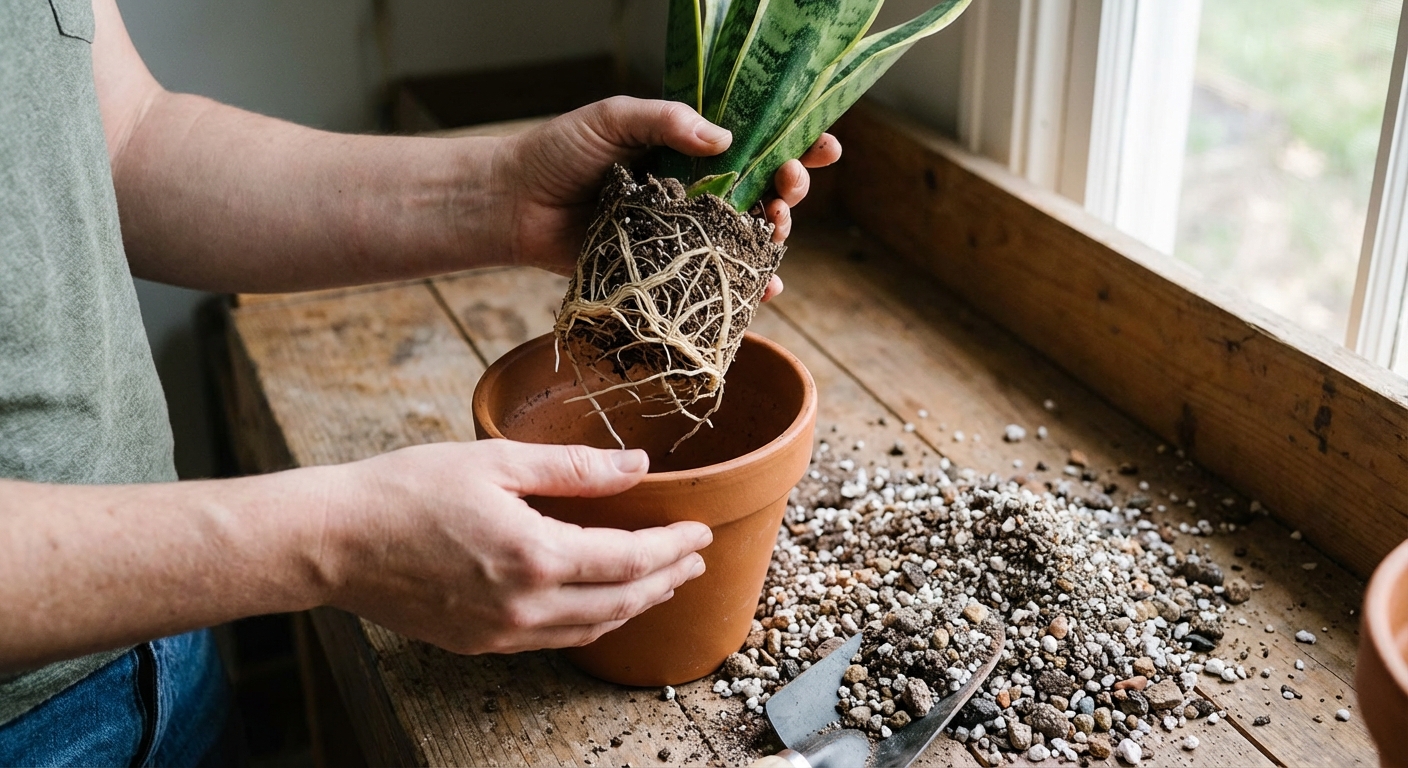
Snake plants like being slightly snug. Repot every 2 to 4 years, or when the pot is deforming, roots are circling heavily, or the plant is pushing itself up and out.
Temperature and humidity
- Ideal temperature: 65 to 85°F (18 to 29°C).
- Minimum: Try to keep it above 55°F (13°C). Cold drafts and chilly windowsills can cause soft, damaged patches.
- Humidity: Average home humidity is perfect. No misting required.
If you talk to your ferns (guilty), your snake plant will politely listen, but it does not need the spa treatment.
Fertilizer: less is more
Snake plants are light feeders. Too much fertilizer can cause weak, floppy growth.
- When: Spring through early summer.
- How often: Every 6 to 8 weeks, or just once or twice during the growing season.
- What: A balanced houseplant fertilizer diluted to half strength, or a gentle organic option like fish emulsion (also diluted, and yes it smells like a dock for a minute).
- Skip fertilizer: In fall and winter.
Propagation: two reliable methods
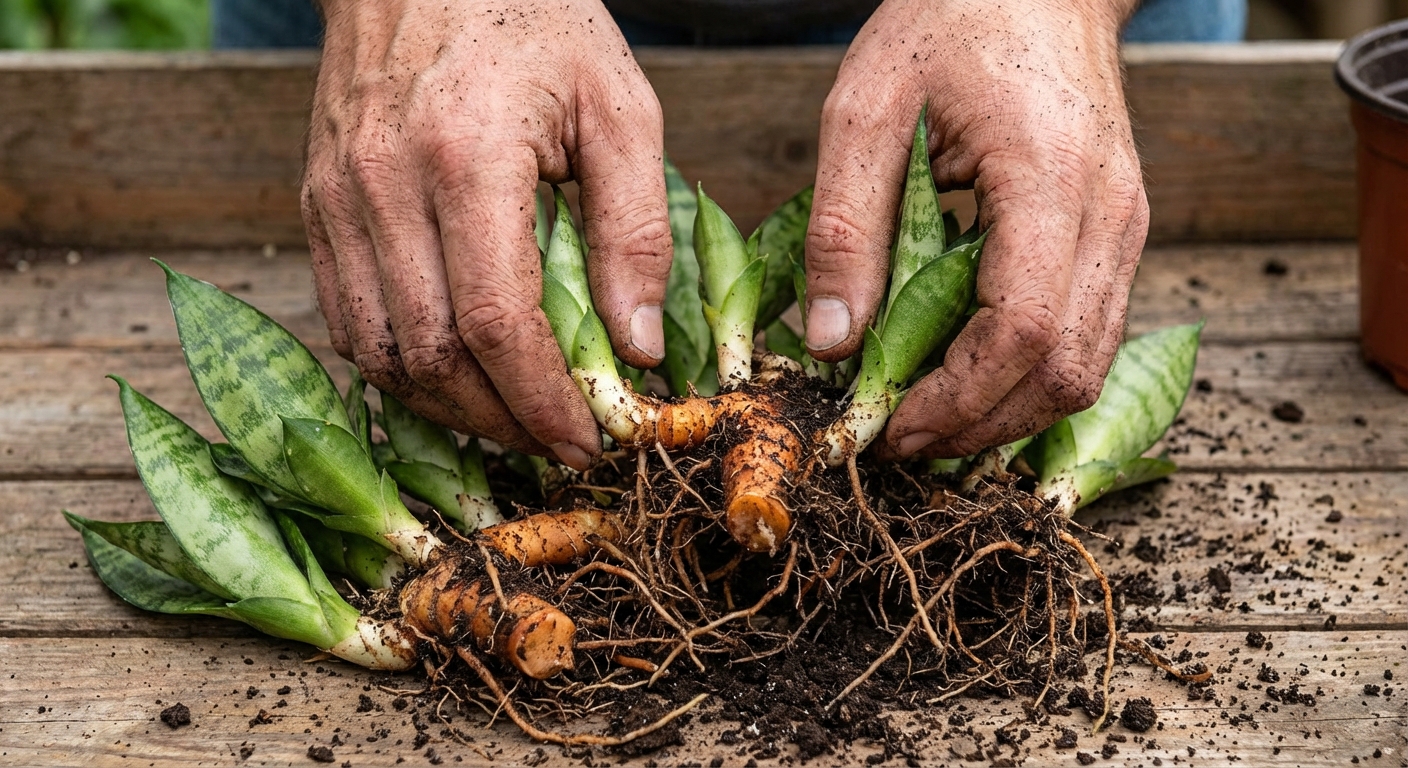
Snake plants are wonderfully generous. When they are happy, they send up pups (new shoots) from underground rhizomes. You can also root leaf cuttings, with one important “variegation” caveat.
Propagation by division (best for keeping varieties true)
If you have a variegated snake plant like ‘Laurentii’ with yellow edges, division is the method that keeps the same look.
- Water lightly a day before, so the plant is less brittle but not soggy.
- Slide the plant out of its pot and brush away loose soil.
- Find natural sections with their own roots and at least one pup.
- Use a clean knife to cut the rhizome between sections.
- Pot each division into a gritty mix, keeping the crown at the same depth.
- Wait 5 to 7 days before watering to let cuts callus, then water sparingly.
Propagation by leaf cuttings (fun, slow, and a little magical)
Leaf cuttings work best with solid green snake plants. With variegated types, leaf cuttings often revert to green because the variegation is not reliably carried through the cutting.
- Choose a healthy, mature leaf and cut it near the base with a sterile blade.
- Cut the leaf into 3 to 4 inch sections.
- Mark the bottom of each piece. They must be planted right-side up.
- Let cut ends dry and callus for 1 to 2 days.
- Plant the bottom end about 1 inch deep in barely moist cactus mix, or place it in water with only the bottom submerged.
- Keep in bright, indirect light. Water only when mostly dry.
Rooting can take 4 to 10+ weeks. New pups may take a few months more. Patience is part of the charm.
Common problems (and calm fixes)
Soft, mushy base or falling leaves
Cause: Overwatering or cold, wet soil leading to rot.
Fix:
- Unpot and inspect roots. Trim any black, mushy tissue.
- Let the plant dry for a day.
- Repot in fresh gritty soil in a pot with drainage.
- Water lightly after 5 to 7 days, then wait longer between waterings.
Wrinkled, curling, or thin leaves
Cause: Underwatering, root loss from past overwatering, or being severely rootbound.
Fix: Check roots. If healthy, water thoroughly and then return to a deeper, less frequent routine. If rootbound, repot one size up.
Brown tips
Cause: Usually irregular watering, salt buildup from fertilizer or hard water, or very dry heat blowing directly on the plant.
Fix: Flush the soil every few months (water until it runs freely for a minute), trim tips cosmetically, and keep the plant out of direct HVAC airflow.
Pale leaves or slow growth
Cause: Low light or depleted soil.
Fix: Move closer to a bright window and fertilize lightly during spring and early summer.
Leaning or splayed growth
Cause: Reaching for light or overcrowding.
Fix: Rotate the pot, give brighter light, and divide if the clump is packed tight.
Pests (rare, but possible)
Snake plants can occasionally get mealybugs or spider mites.
- Wipe leaves with a damp cloth.
- Spot-treat mealybugs with isopropyl alcohol on a cotton swab.
- Use insecticidal soap if needed, repeating weekly for a few rounds.
Quick care checklist
- Light: Low to bright indirect, brighter = faster growth.
- Water: Let soil dry almost completely, then water deeply. Much less in winter.
- Soil: Gritty, fast-draining mix.
- Pot: Drainage holes, terracotta if you overwater.
- Fertilizer: Light feeding in spring and early summer only.
- Propagation: Divide for easiest success and to keep variegation.
My favorite way to “set and forget” a snake plant
If you want the most foolproof setup, do this: pot your snake plant in terracotta with cactus mix, place it in bright indirect light, and put a reminder on your phone to check the soil every three weeks, not to water every three weeks. Checking is the habit. Watering is the reward only when it is truly dry.
Give it that, and your snake plant will quietly hold down the fort for years, looking sharp, staying green, and making your home feel a little more grounded.