
Siberian Iris Care and Dividing Clumps

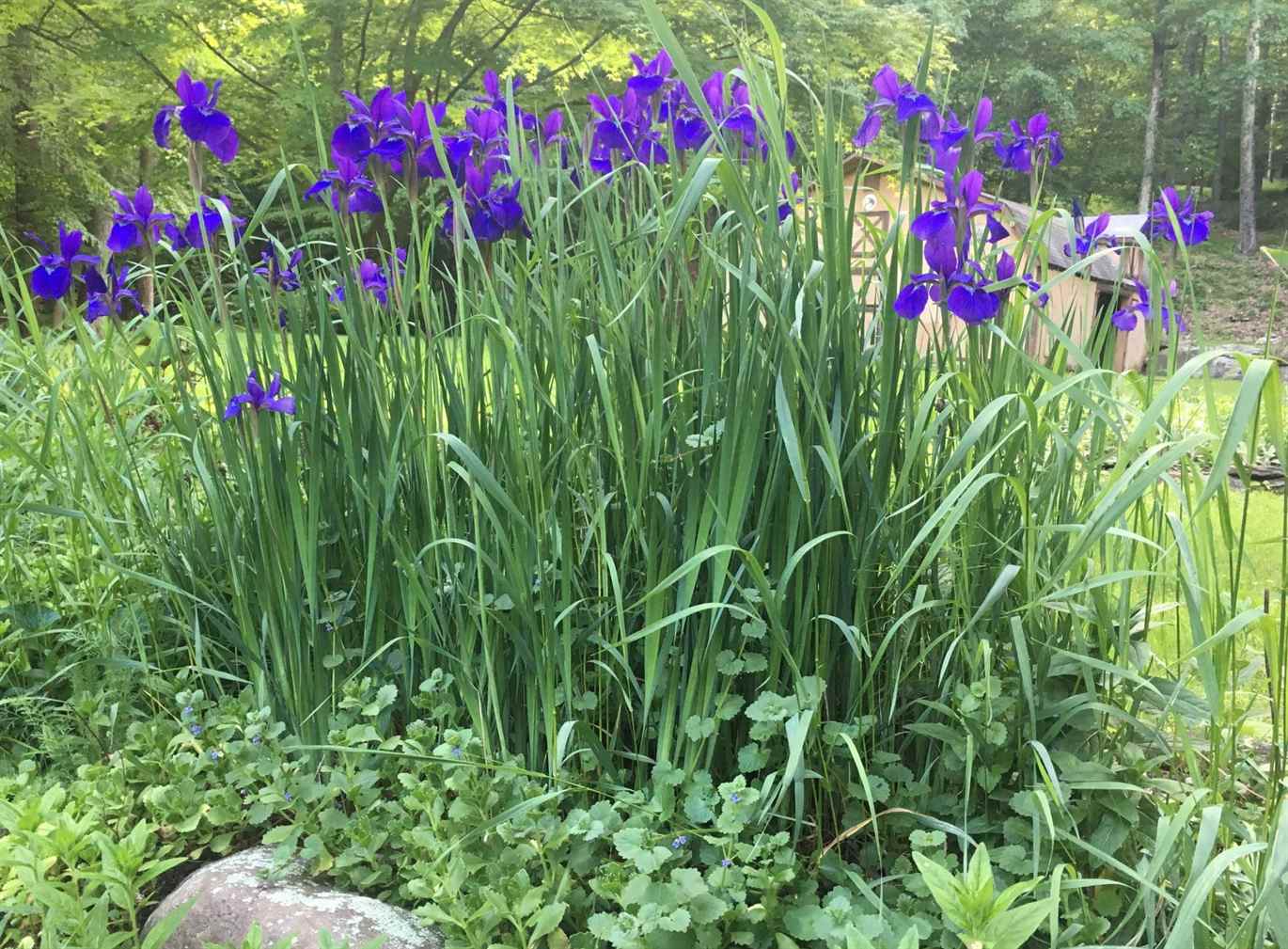
The first time I divided Siberian iris, I approached it like bearded iris and immediately realized I was holding the wrong mental map. Siberians do not have that thick, surfacing rhizome. What you get instead is a dense, fibrous crown that behaves more like a very well-mannered ornamental grass with fancy flowers.
That difference is exactly why Siberian iris care and division feel so satisfying. They like consistent moisture, they tolerate cold like champs, and when a clump gets too crowded, a split and replant can turn a tired patch back into a fountain of blooms.

Siberian vs bearded iris
Siberian iris (Iris sibirica and hybrids) and bearded iris (Iris germanica types) get lumped together because they share the word “iris,” but their roots and preferences are not the same. If you treat Siberians like beardeds, you can set them back for a season or two.
Roots and structure
- Siberian iris: forms a fibrous, tufted crown with lots of fine roots. Older clumps often get a woody, crowded center.
- Bearded iris: grows from a thick rhizome that creeps along near the soil surface.
Moisture and soil feel
- Siberian iris: prefers even moisture and soil that stays lightly damp through spring and early summer. They can handle short dry spells once established, but they bloom best when they do not dry out during bud and bloom season.
- Bearded iris: generally prefers drier feet and sharper drainage.
Division style
Beardeds are often divided by breaking apart rhizome pieces. Siberians are divided by splitting a fibrous clump into smaller chunks with roots attached. Think “split and replant,” not “set rhizomes on top.”
Light, soil, and water
Sun exposure
Siberian iris blooms best in full sun, meaning at least 6 hours. In hot climates, afternoon shade can prevent stress and crisped leaf tips, especially if the soil dries quickly.
Soil texture and pH
Give Siberian iris a soil that is fertile, moisture-retentive, and still well-draining. They love compost. A slightly acidic to neutral soil is typically ideal, but in most home gardens they are flexible if you keep the organic matter coming.
- If your soil is sandy: mix in compost and consider a summer mulch to hold moisture.
- If your soil is heavy clay: work compost into the top layer and plant on a slight berm if water puddles for days.
Watering rhythm
For established clumps, aim for consistent moisture in spring through early summer. If rainfall is sparse, deep water so moisture reaches the root zone, then let the surface dry slightly before watering again.
Container note: Siberian iris can grow in large pots, but they dry out faster. Choose a large container with generous soil volume (wide and deep is ideal), use a rich mix, and do not let it bake dry during the weeks leading up to bloom.
When to divide
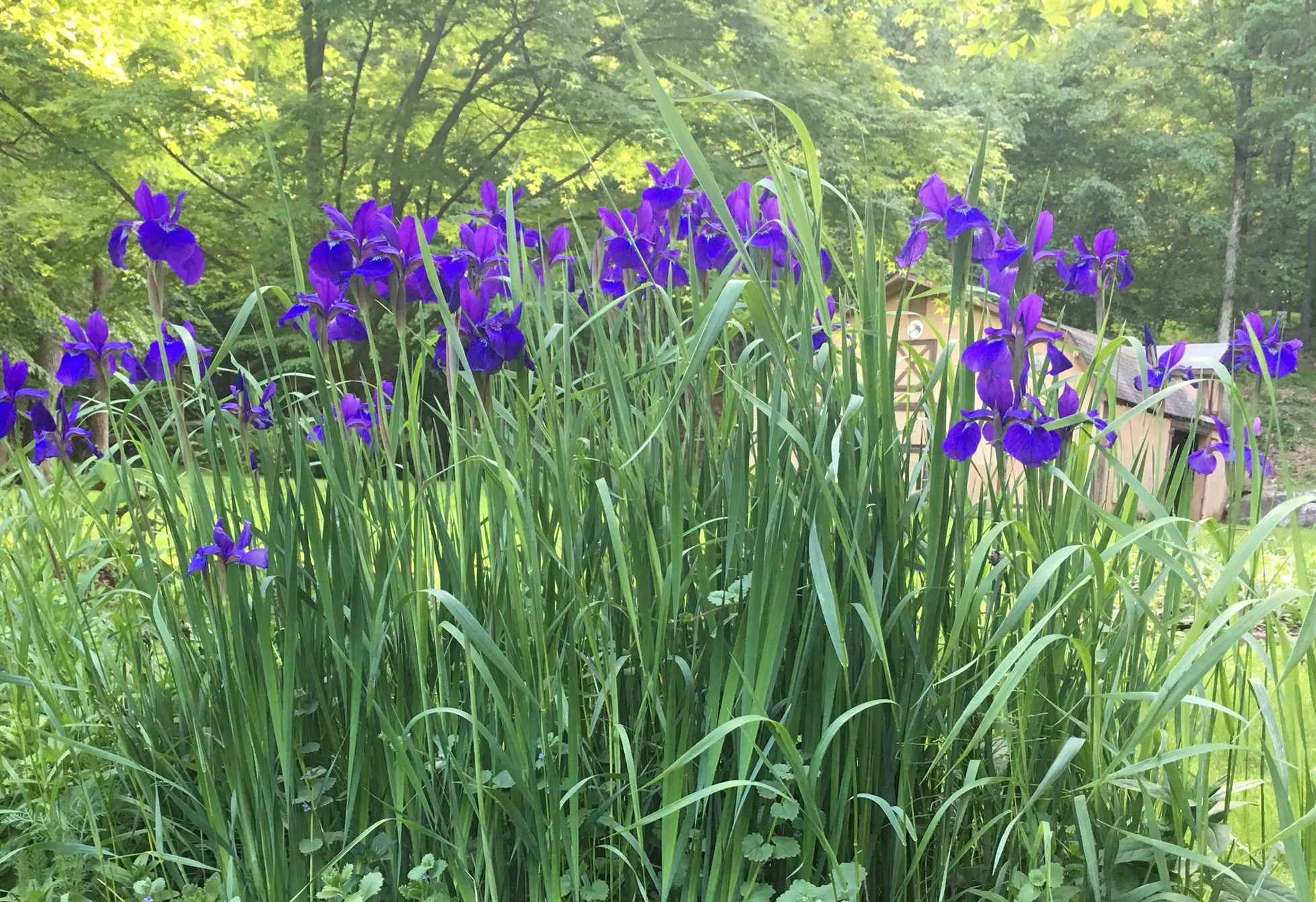
The best time to divide Siberian iris is usually late summer into early fall after flowering has finished and the plant has time to grow new roots before winter. In many gardens, that means roughly 4 to 8 weeks before the ground freezes. In regions with long, very hot summers, I prefer to wait until the worst heat breaks, then divide in early fall.
You can divide in early spring, especially in very cold regions where fall is short, but expect the plant to prioritize root recovery over bloom that season.
Signs your clump is ready
- Blooming slows down, even though the plant looks leafy and healthy.
- The clump has become a tight mound and seems to dry out quickly.
- You see a dead or sparse center with most growth around the edges.
- The plant is crowding neighbors or flopping because it is too dense.
How to divide
I like to do this job on a mild day when I can take my time. Siberians are tough, but the less they bake in the sun while their roots are exposed, the happier they are.
1) Prep the plant and new spot
- Water the clump the day before if the soil is dry. Damp soil is easier to dig and kinder to roots.
- Choose the new spot in full sun to partial shade and loosen the soil.
- Mix compost into the planting area, especially if your soil is lean.
2) Clean tools if needed
If you are dividing multiple clumps, or if you saw any soft rot or suspicious mushy tissue, take a minute to clean your blade between plants. A quick disinfecting wipe down helps keep problems from hitchhiking to the next division.
3) Cut foliage back (but do not scalp it)
Before digging, trim leaves down to about 6 to 8 inches. This reduces water loss while the roots recover, and it makes the clump easier to handle. I avoid cutting all the way to the ground because some leaf area helps the plant keep ticking.
4) Lift the clump
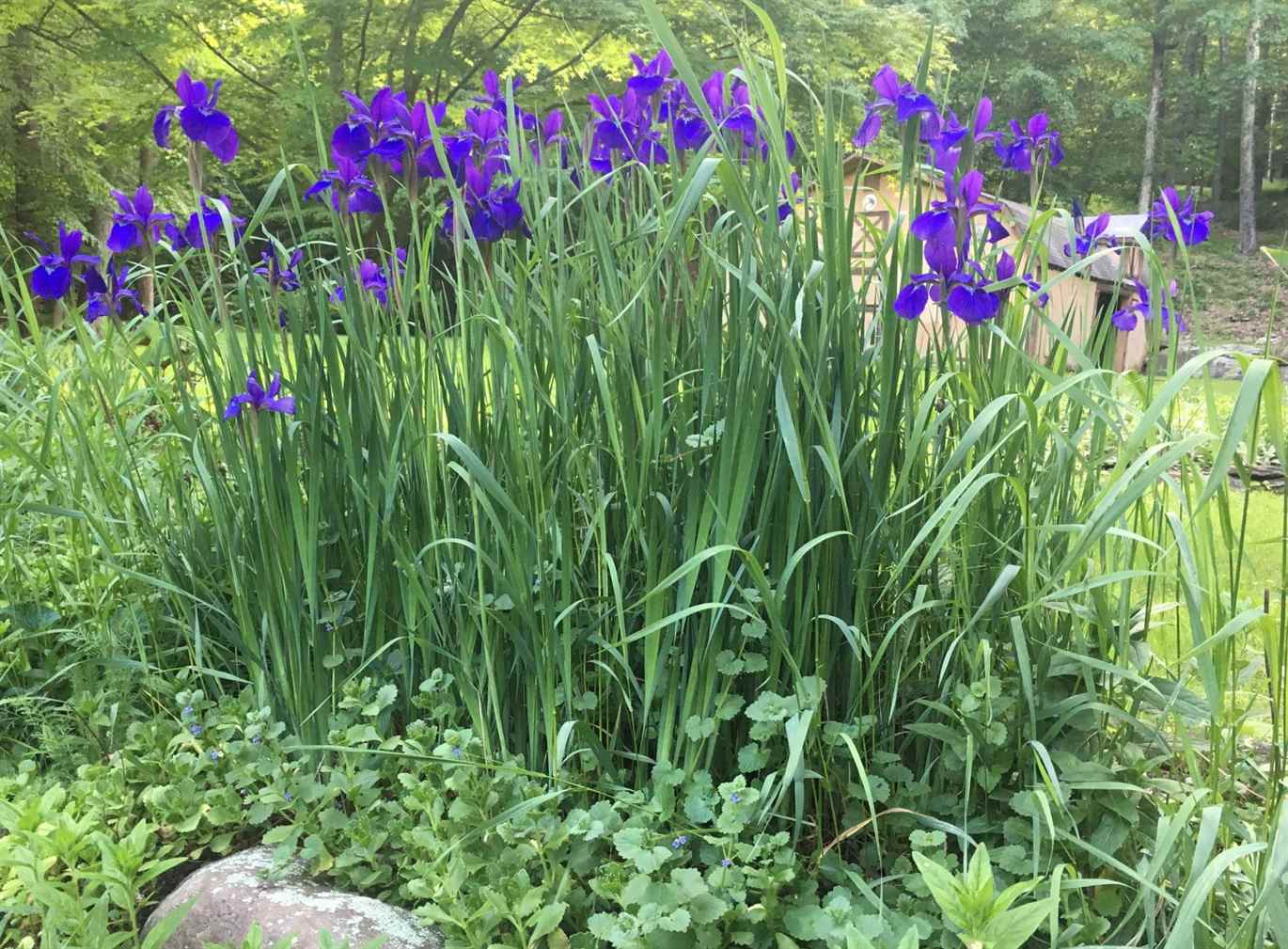
Use a spade or digging fork to cut a circle around the clump, then pry it up. Expect a heavy root mass. If it is huge, it is fine to lift it in sections.
5) Split the crown into divisions
Shake or rinse off some soil so you can see what you are doing. Then split the clump into smaller pieces. A serrated soil knife, spade, or two forks back to back can help.
- Each division should have a solid chunk of crown and plenty of roots.
- Aim for divisions roughly the size of your hand or a bit larger for fastest recovery.
- Discard the oldest, woody, or hollow center if it looks tired. The outer portions are usually the most vigorous.
- If you find truly rotten sections, do not compost them. Toss them.
How deep to replant
This is the part that trips people up if they have only grown bearded iris.
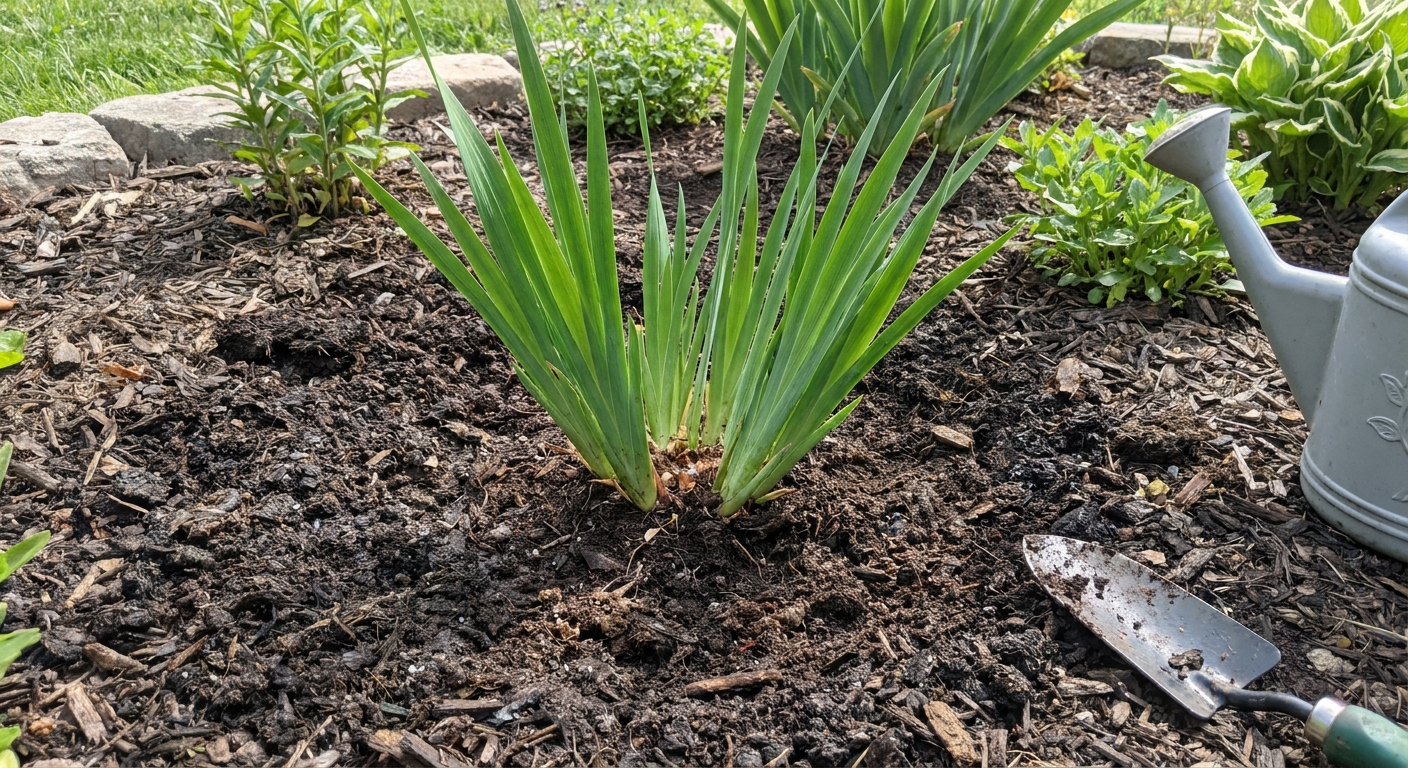
For Siberian iris, plant each division so the crown sits at the same depth it was growing before. In many gardens that means the crown is right at soil level or just barely below it. If you have heavier soil, err on the high side rather than burying the crown.
Planting steps
- Dig a hole wide enough to fan the roots downward.
- Set the division in place with the crown at the original soil line.
- Backfill, firm gently, and water thoroughly to settle soil around roots.
- Mulch lightly to hold moisture, keeping mulch from smothering the crown.
Spacing
Space divisions about 12 to 18 inches apart. They fill in over time, and good spacing improves airflow and makes future dividing easier.
What foliage to leave
After dividing and replanting, leaving some foliage is helpful. My rule of thumb is simple:
- Leave 6 to 8 inches of leaves on each division.
- Remove any yellowing, spotty, or damaged leaves entirely.
- If you divide in early spring, you often do not need to cut much at all. Just clean up winter-battered tips.
If you are dividing in fall, the trimmed foliage also prevents the division from rocking loose in wind, which can break new root tips as they form.
Aftercare
Newly divided Siberian iris need one thing more than anything else: steady moisture while they re-root.
- Water deeply right after planting, then keep soil evenly moist for the next couple of weeks.
- Mulch with shredded leaves or clean straw to reduce evaporation.
- Skip heavy fertilizer at planting time. If you want to feed, use a light top-dress of compost or a gentle, balanced organic fertilizer in spring.
You might see a little sulking, especially if your divisions were small or you divided in spring. Some leaf tips may brown, and that is normal after the upheaval. If the plant stays floppy and dry even with watering, check that the crown is not sitting too high and that soil is snug around the roots.
Troubleshooting
Lots of leaves, few or no flowers
- Too much shade: move or thin overhead growth for more sun.
- Clump too crowded: divide and replant with space.
- Drought during bud set: water consistently in spring and early summer.
- High nitrogen feeding: too much nitrogen can push foliage over flowers. Use compost and balanced feeding instead of lawn-type fertilizer near iris beds.
Brown tips on leaves
- Often from dry soil or hot wind, especially in summer.
- Salt buildup can be a factor in containers. Flush the pot with water occasionally.
Leaf spotting and tired-looking foliage
If you see persistent spotting, remove and trash the worst leaves, give the clump a little more elbow room, and avoid overhead watering late in the day. Cleaner airflow makes a difference.
Rot or a mushy crown
Siberians like moisture, but they do not like stagnant, airless soil. If a crown is going soft, improve drainage and replant healthy divisions into fresher ground. Avoid burying the crown under thick, wet mulch, and do not replant any pieces that smell foul or collapse in your hand.
Quick FAQ
How often should I divide Siberian iris?
Most clumps benefit from division every 3 to 6 years, but I would go by the plant more than the calendar. When bloom declines, the center thins, or the clump turns into a tight, thirsty mound, it is time.
Can I divide Siberian iris when it is blooming?
I do not recommend it unless you must move it. Division during bloom stresses the plant and shortens the show. Wait until after flowering whenever possible.
Will my divisions bloom next year?
Often, yes, especially if you divide in late summer and replant promptly. Very small divisions, or spring divisions, may take an extra season to size up.
Do Siberian iris like wet ground?
They like even moisture and can handle wetter conditions than bearded iris, but they still need oxygen around the roots. Consistently waterlogged, compacted soil is where problems start.
A gentle last nudge
If you are nervous about digging up a beloved clump, I get it. I still talk to my ferns before I move them, like that will make them feel emotionally prepared. But Siberian iris are forgiving plants. If you divide them at the right time, keep the crown at its natural depth, and water them steadily afterward, they settle back in with a quiet confidence. And when they bloom again, it feels like the garden saying, “Yes, that was the right call.”