
Scale Insects on Houseplants


Scale insects are the sneakiest houseplant pests I know. They do not flutter around like fungus gnats or leave obvious webbing like spider mites. Instead, they sit very still, looking like harmless little bumps, and quietly siphon your plant’s sap until everything feels sticky, dull, and just… off.
The good news: you can beat scale. You just need the right ID (soft scale vs armored scale), a plan that matches their lifecycle, and a little patience. Let’s get your plant back on track.
What scale insects look like
Scale insects are tiny sap-feeding insects that hide under a waxy or shield-like covering. The “bumps” you see are usually the settled stage (often adult females) that stay put while they feed.
On houseplants, they typically show up on:
- Stems and petioles (the leaf stalks)
- Leaf midribs on the underside of leaves
- Leaf nodes where stems branch
- New growth that is tender and easy to pierce
They often look like:
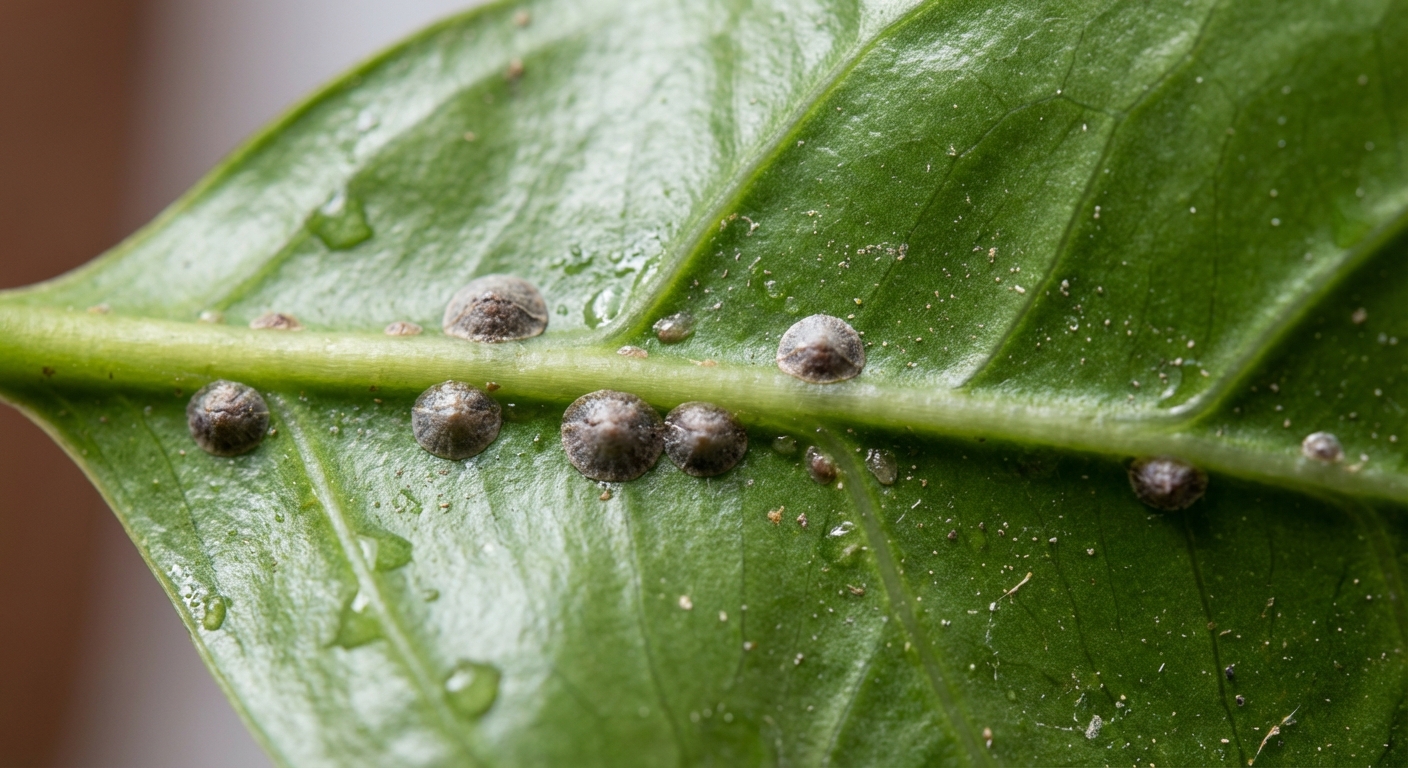
- Small, raised bumps that do not move when you poke them
- Tan, brown, gray, black, or sometimes white discs
- Clusters aligned along veins or stems like little barnacles
If you’re unsure, do the gentle “scratch test”: use your fingernail or a cotton swab and lightly scrape one bump. If it pops off and leaves a slightly different colored spot underneath, that’s a strong hint you are dealing with scale.
Confirm it is not something else
Before you go to war, it helps to rule out a few common lookalikes:
- Mealybugs: cottony, fuzzy, and often tucked into leaf joints.
- Edema or corking: plant tissue that looks bumpy or blistered but will not scrape off.
- Lenticels on woody stems: natural pores that can look like speckling and also will not scrape off.
- Old leaf scars: smooth, flat marks where leaves dropped naturally.
When in doubt, that scratch test is your best friend.
Soft scale vs armored scale
Soft scale
Soft scale have a waxy coating that is part of their body. They often produce honeydew, a sticky sugar-rich waste that can drip onto leaves, windowsills, and nearby furniture.
Signs that point to soft scale:
- Sticky leaves or sticky surfaces under the plant
- Sooty mold, a black dusty coating that grows on honeydew
- Ants (more common outdoors, but possible near open windows). If you see ants inside, follow the trail and address both the plant and the ant access point.
Armored scale
Armored scale have a separate, shield-like covering. They generally do not produce honeydew, so your first clue might simply be a plant that is declining despite “doing everything right.” (If you are seeing stickiness, it can also be a mixed pest situation, so take a closer look.)
Signs that point to armored scale:
- Firm, flat, shield-shaped bumps that feel like tiny shells
- Yellow stippling, pale patches, or overall dullness
- Less stickiness than a soft scale infestation
Common symptoms on houseplants
Scale feed by inserting needle-like mouthparts into plant tissue and drinking sap. Over time, that stress shows up as:
- Yellowing leaves or pale mottling
- Leaf drop (especially older leaves)
- Stunted growth and weak new leaves
- Sticky residue and sooty mold (soft scale)
- General decline, even with proper watering and light
Plants that commonly get scale indoors include citrus, hoya, ficus, schefflera (umbrella plant), pothos, philodendron, orchids, and many succulents.
Scale lifecycle, in plain language
Understanding scale’s lifecycle is what turns “I wiped them off” into “I actually solved it.”
- Eggs: Many species lay eggs under the female’s protective covering.
- Crawlers: This is the mobile baby stage. Crawlers are tiny, pale, and easy to miss, and they spread the infestation to new spots and new plants.
- Settled nymphs and adults: Once they find a feeding spot, many species stop moving and form that protective covering. This is the stage that resists casual spraying.
Why this matters: most sprays work best on crawlers and exposed young stages. The settled stages are protected, so treatment usually requires a combination of manual removal plus repeated follow-ups to catch the next wave of crawlers.
First steps: quarantine and assess
If you suspect scale, do these two things before you do anything fancy:
- Quarantine the plant in another room if possible. Crawlers can spread, and your hands and tools can spread them too.
- Inspect nearby plants, especially those touching leaves or sharing a windowsill.
Then decide how severe the problem is:
- Light: a few bumps on one stem
- Moderate: clusters on multiple stems or leaf veins
- Heavy: widespread scale, leaf drop, sticky residue, and visible decline
If a plant is heavily infested and sentimental value is low, it is okay to let it go. Your healthiest choice is sometimes protecting the rest of your indoor jungle.
How to remove scale (best methods)
You can mix and match methods. My favorite approach is: manual removal first, then a follow-up treatment plan for crawlers.
1) Manual removal (always step one)
This is the most satisfying part. Put on a podcast, take your time, and be gentle with the plant.
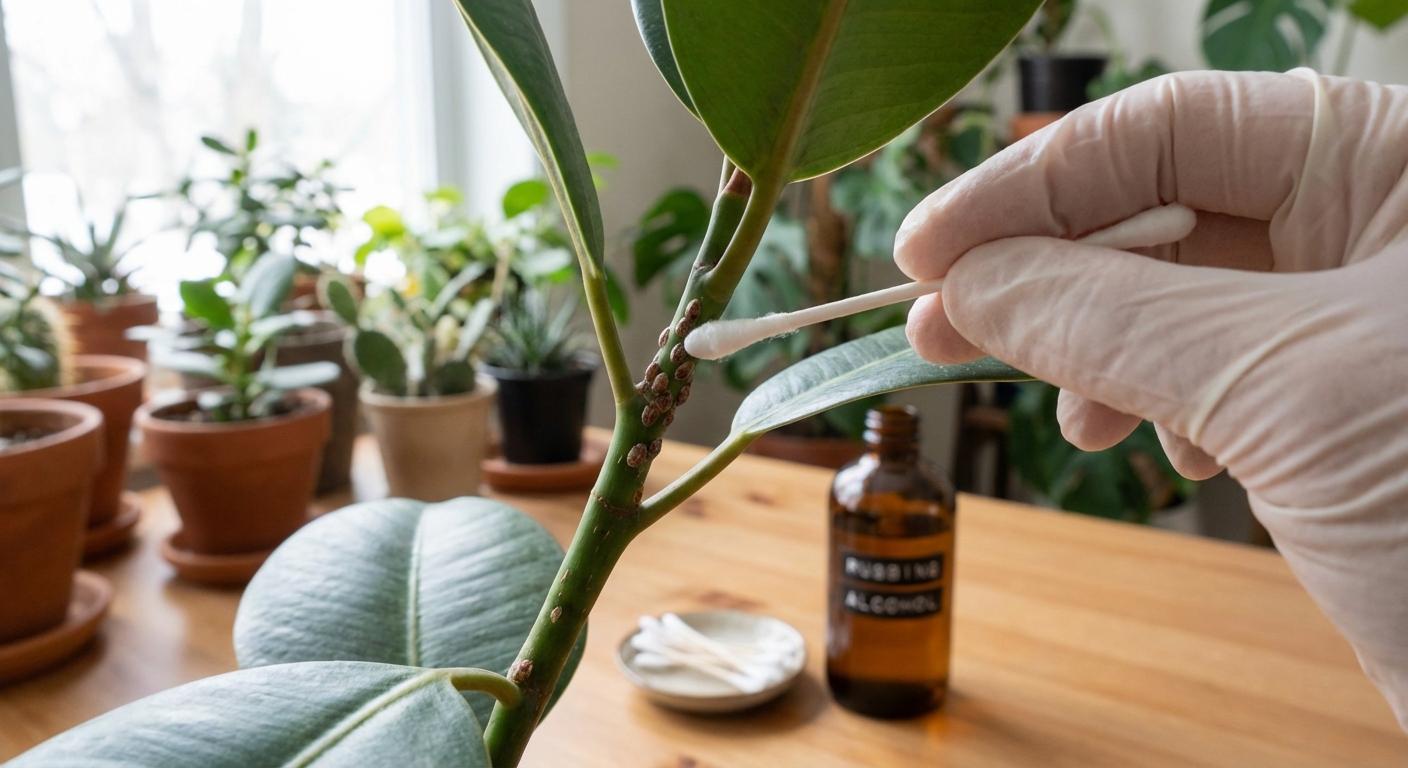
- Use a cotton swab dipped in isopropyl alcohol (70% is a great default).
- Press the swab onto each scale for a few seconds, then wipe or lift it off.
- For tougher shells, use a soft toothbrush or your fingernail, carefully.
- Wipe down the area with a clean damp cloth afterward.
Tip from my own windowsill jungle: focus on leaf nodes, undersides, and the base of petioles. Scale love those protected little nooks.
2) Rubbing alcohol (spot treatment)
Isopropyl alcohol works well for contact killing scale you can reach.
- Best use: apply with a cotton swab or soft cloth directly onto the scale, then wipe.
- If you want to spray: use a gentler dilution, like 1 part 70% alcohol to 4 parts water, and avoid soaking tender leaves. Spray a section, then wipe. For many houseplants, wiping is safer than misting.
- Test first: some plants (especially thin-leaved tropicals, ferns, and some succulents) can spot or burn. Try one leaf and wait 24 hours.
Important: alcohol is not a “spray and forget” solution. It is best paired with repeat inspections to catch crawlers.
3) Neem oil or horticultural oil (crawler control)
Oils work by coating pests and smothering vulnerable stages. Some neem-based products (especially those with azadirachtin or neem extract) can also reduce feeding and growth, but many ready-to-use “neem oil” sprays for houseplants act mostly like an oil. In other words, results depend on the exact product.
- When to use: after you have removed as much settled scale as possible.
- How to apply: spray tops and undersides of leaves, stems, and crevices until evenly coated.
- Repeat: every 7 to 10 days for at least 3 to 4 rounds.
- Light caution: oils can cause leaf burn in strong sun. Treat in the evening and keep the plant out of harsh light for 24 hours.
If you are mixing a concentrate, follow the label. More is not better here. Too strong and you can stress the plant you are trying to save.
Do not stack products: avoid applying soap and oil back-to-back on the same day unless the label says it is safe. Give the plant a few days between treatments, or rinse the foliage between product types. Also avoid mixing oils with sulfur products.
4) Insecticidal soap (helpful, but not magic)
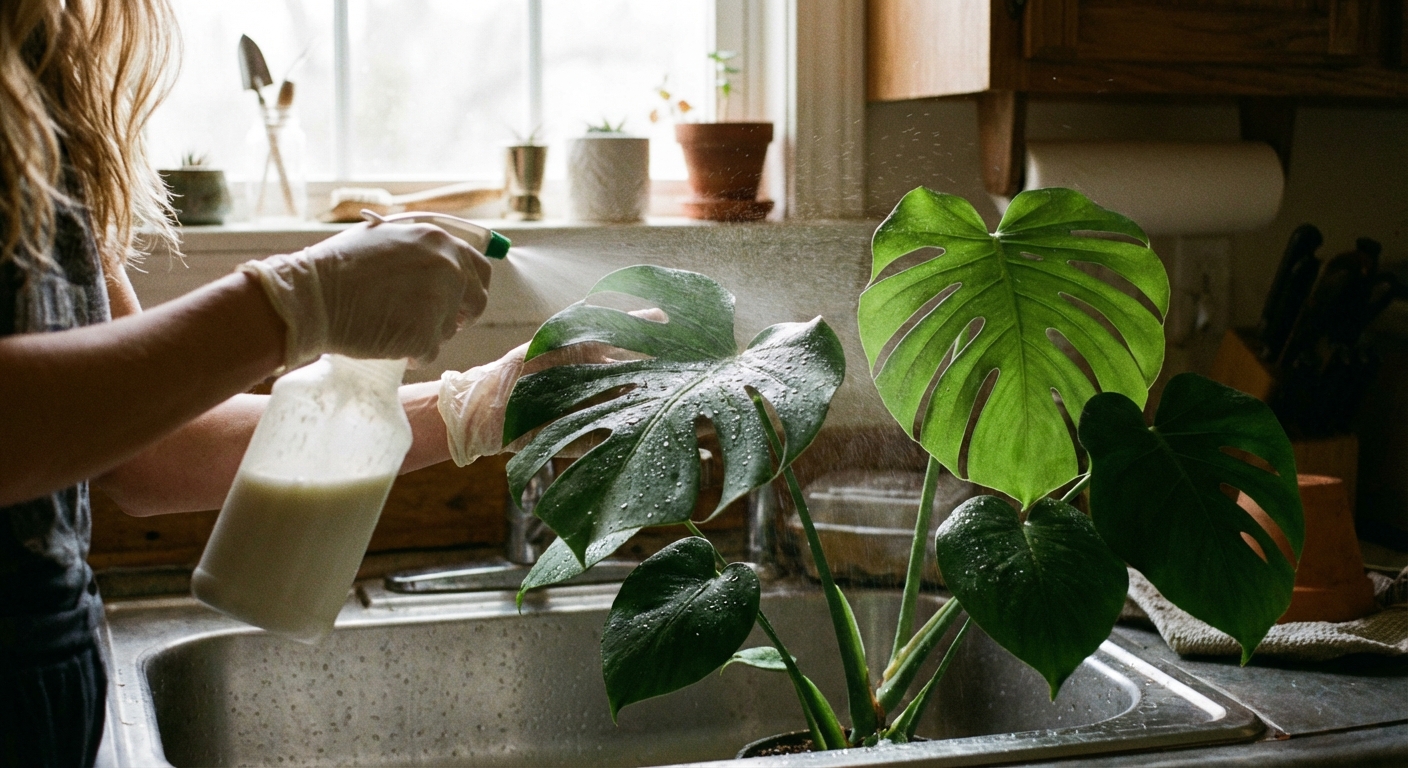
Insecticidal soap can help with crawlers and exposed young stages, but it may not penetrate heavy settled scale coverings. It is a good option if you want a lower-toxicity product and you are committed to repeat treatments.
- Spray thoroughly, especially undersides and stems.
- Do not use on plants that are soap-sensitive (test first).
- Repeat every 5 to 7 days during an active outbreak.
5) Systemic insecticides (when you need the big tool)
Systemic insecticides move through the plant’s tissues, so scale ingest the active ingredient when feeding. This can be very effective for stubborn infestations, especially when scale are tucked into tight stem joints where sprays never quite reach.
In the US, common actives you may see on labels include imidacloprid and dinotefuran. Availability and legality varies by region, and some products are restricted in places like the UK, EU, and Canada, so always check what is permitted where you live.
Systemics are best used when:
- The infestation is moderate to heavy
- The plant has lots of woody stems (ficus, citrus, schefflera)
- You have repeated outbreaks despite wiping and spraying
Safety note: follow the product label exactly and keep systemics away from edible indoor plants (like indoor citrus you plan to harvest from) unless the label explicitly allows it. Keep treated plants away from curious pets and kids, and consider avoiding systemics on plants that may flower indoors if pollinators could access them (for example, plants that go outdoors seasonally).
A simple treatment schedule that works
If you want a straightforward plan, here is one that I have used successfully on ficus and hoya:
- Day 1: Quarantine. Rinse the plant (lukewarm shower or sink spray). Manually remove scale with alcohol swabs. Wipe stems and leaf undersides.
- Day 7: Inspect closely. Remove any new bumps. Apply neem oil or horticultural oil thoroughly.
- Day 14: Inspect again. Repeat oil treatment. Keep wiping any settled scale you see.
- Day 21: Inspect. Repeat as needed.
How long until it is gone? Plan on 4 to 8 weeks of consistent follow-ups for most indoor infestations. Scale can be a slow problem, and the win is usually gradual.
If you still see new scale popping up after a month of consistent work, that is when I consider a systemic for certain plants, or I make the hard call to discard the plant and protect the rest.
Prune what you cannot reasonably clean
Sometimes the best “treatment” is removing the worst sections.
- Prune heavily infested stems, leaves, or tips if doing so will not ruin the plant’s structure.
- Bag the cuttings and put them in the trash. Do not leave them on a potting bench or compost pile indoors.
- Clean your pruners afterward with soap and water, then wipe with alcohol.
This step can dramatically reduce the number of scale you have to chase down in crevices.
Cleaning sticky honeydew and sooty mold
If you have soft scale, the sticky honeydew is not just annoying. It can block light on leaves and invite sooty mold.
- Wipe leaves with a soft cloth and lukewarm water.
- If needed, use a drop of mild castile soap in water, then wipe again with clean water.
- Clean the area around the plant, including windowsills and the outside of the pot.
Once the scale are under control, sooty mold usually fades as you keep leaves clean and the plant grows fresh foliage.
How to prevent scale from coming back
Scale often show up when a plant is stressed or when a new plant quietly brings them home. Prevention is mostly about slowing the spread and spotting them early.
Inspect new plants
Any time you bring home a new plant, do a quick check before it meets your other plants.
- Look along stems and at nodes
- Flip leaves and check midribs
- Check where stems meet the soil line
- Use your phone flashlight or a bright window for better visibility
Then quarantine for 2 to 3 weeks if you can. It feels fussy until the first time it saves your collection.
Keep leaves easy to inspect
- Dust leaves occasionally so you can spot bumps early.
- Avoid overcrowding plants so leaves are not constantly touching.
- Prune dense, tangled growth where pests can hide.
Support plant health
Scale love plants that are limping along. You do not need a rigid routine, just solid basics:
- Match the plant to the light you actually have.
- Water properly and avoid chronic soggy soil.
- Do not overfertilize. Overly soft new growth can be especially attractive to sap-feeders.
FAQ
Are scale insects contagious to other houseplants?
Yes. The crawler stage can spread to nearby plants, and scale can hitch a ride on your hands, tools, and shared watering trays. Quarantine and inspection are your best defenses.
Do I need to repot a plant with scale?
Usually not. Scale are primarily a stems-and-leaves pest, not a soil pest, and replacing soil alone will not solve scale. Repotting can help in specific cases, like severe infestations where crawlers may be hiding around the pot rim, drainage holes, or lower stems near the soil line. If you do repot, wash the pot well and discard the old soil rather than reusing it.
Will scale go away on its own?
In my experience, no. Scale do not typically disappear without intervention. They tend to build slowly, then suddenly the plant is sticky and stressed.
Why do I keep seeing scale after treatment?
Most often, it is because you are seeing a new wave of crawlers maturing, or you missed scale hidden in tight crevices. This is why repeat treatments and inspections for several weeks matter.
When it is time to call it
I am all for plant rehabilitation, but I am also for sanity. If a plant is severely infested, dropping leaves, and has scale embedded everywhere, it may be kinder to let it go and protect your other plants.
If you do discard it, bag it before carrying it through the house, and clean the area where it lived. Then give your remaining plants a quick “scale patrol” once a week for the next month.
If you want, tell me what plant you have and what the scale look like (sticky or not, flat shields or waxy bumps). I can help you choose the gentlest treatment that still gets results.